Bootstrap
W.E. Best

The Invisible God

John 1:18
W.E. Best November, 15 1981 Audio
0 Comments
Best's Corner

Sermon Transcript

Auto-generated transcript • May contain errors

100%
verse 17 Now to the king eternal
immortal Invisible The only wise God be honor and
glory forever and ever amen turn to the sixth chapter of the same
epistle and let us read I'd like for us to go back and begin reading
with about the the 12th verse, and read through the 16th, verses
12 through 16. Fight the good fight of faith,
lay hold on eternal life, whereunto thou art also called, and hast
professed a good profession before many witnesses. I give thee charge
in the sight of God, who quickeneth all things, and before Christ
Jesus, who before Pontius Pilate witnessed a good confession.
that thou keep this commandment without spot, unrebukable, until
the appearing of our Lord Jesus Christ, which in his times he
shall show, who is the blessed and only potentate, the King
of kings and Lord of lords." Now the 16th verse. "...who only
hath immortality, dwelling in the light which no man can approach
unto." whom no man hath seen nor can
see, to whom be honor and power everlasting. Amen. I want to read one other
verse. Turn now to 1 John, 1st epistle
of John, chapter 4, and I think it's verse 12. No man has seen God at any time. If we love one another, God dwelleth
in us and his love is perfected in us. Now we have read verses of scripture
from the Bible, some which say they saw God. And verses which specifically
state no man has seen God, no man can see God and live. How do we explain these passages?
Our subject tonight, the invisible God. Let's stand as we sing. Let us read John 1, verse 18. After we have read this text,
I will give to you the verses that I mentioned before we had
our last song. and before the beginning of the
exposition of this text, verses that I would like for you to
study in connection with it. We'll mention some things about
some of the verses tonight. We'll be reading some of them
again, but you need to get the references down to study in connection
with this verse. What I would like to do would
just be go back and review the high points of the first 17 verses. If we had time to do that, the
18th verse would mean much more to us. What a climax the 18th
verse is to the prologue. No man has seen God at any time,
the only begotten God. who is in the bosom of the Father. He has declared Him. Great text of scripture. Jesus
Christ is the revealer of the invisible God. That's my subject. The eternal Son is the revealer
of the invisible God. There are several things I'd
like to say by way of introduction to the study of this subject
tonight. And I'd like to mention three
things that we will be looking at. Number one, man's natural
eyes and what they see. Secondly, man's intellectual
eyes and what they behold. And thirdly, spiritual eyes and
what they're able to see. First of all, man's natural eyes
have seen many wonderful things in the universe. We must emphasize the fact that
even though men have seen many wonderful things in the universe, They have not seen God. I said they have not seen God. They may have beheld his beauties
in nature, in the heavens, under the earth, in the seas,
but yet man never has seen God. That's a fact. We could say that the astronomers
have seen wonders of space through giant telescopes. We might say the oceanographers
have been able to see wonders in the depths of the seas. We could say that geologists
have brought forth some great scientific knowledge by their
discoveries that have been made in the study of the formations
of the earth. But men, with their natural eyes,
have not seen God. Secondly, let's think about the
intellectual eyes of men. Man's intellectual eyes can invade
many facts which are veiled from persons of lesser skill. The various sciences of the world
have made unusual discoveries. And they have been able to see
some things, understand some things that men of lesser skills
do not understand, they do not see. And it isn't necessary for me
to enumerate a lot of these things. We know this is a fact. Then let's look at the spiritual
eyes. I'm sure that most of you are familiar that the prophet
of the Old Testament is also called a seer. So men of God
in the past, the prophets were seers. They were able to see
a lot of things spiritually. And they have brought to you
and me much valuable information, which we have in the Old Testament
scriptures, in the historical books, in the poetical books,
in the prophetical books. But the prophets, even though
they had spiritual eyes, were never able to see God. Natural eyes have never seen
God. Intellectual eyes have never seen God. And even spiritual
eyes, I'm talking now about the eyes
of faith, have never seen God. These are facts. No man has seen
God at any time. That's a fact. God absolutely considered cannot
be seen. Why? Because he is a consuming
fire. No man can see God and live. I can illustrate it in a very
simple manner. We're told that persons who look through the
giant telescopes and they're able to look in and look at the
sun, but they cannot do it without certain shades over the telescope. In other words, if men were to
look at the sun, directly at the sun, without the shaded glass
over the telescopes, their eyes would be burned in their sockets. If that is true, when a person
looks at the S-U-N, do you think that God can be seen by man without
being consumed? Because after all, he's the creator
of the sun. I have no problem with that.
God absolutely considered never has been seen by man. Furthermore,
he never will be seen by man. Now I'm going to say something
that may shock some of you. Some of you are no doubt saying,
oh, I'll be so glad when I get to heaven and I can see God. You will not see God. You never
will see God absolutely considered. Does that take you by surprise? The only manifestation that we
will ever see of God absolutely considered is in His Son, Jesus
Christ, the Son of Man. I can remember the first time
I made that statement. It surely did shock some folk. And it may be rather shocking
now. I hope not. Study the Revelation carefully. Closely. When Jesus
Christ came into this world, the Word made flesh, or the Word
who became flesh, He is the divine human person. He is now in His
glorified body. And we will see Him He will occupy
our attention. He will occupy, and I'm going
to have to use this word, it's not a good word, our time. We're
going to be in eternity, and there'll not be any time in eternity. We'll be occupied throughout
the ceaseless ages of eternity with Jesus Christ, the divine
human person. You'll never see God absolutely
considered. No man has ever seen him. No
man will ever see God absolutely considered. He's invisible. He is spirit, the Bible says. So when we think about the natural
eyes and what they have been able to behold, yet we have to
say they've never seen God. Do you remember the cosmonauts
that came back from space and said, while we were in space
we didn't see God? Remember that a few years ago? I'll laugh when I read it. Those
atheistic cosmonauts from Russia? Those natural eyes did not see
God? We might go so far as to say
those intellectual eyes of the cosmonauts didn't see God. They saw some things that will
not be seen by most people from space. They didn't see God, and
I have no problem with that. And they thought because they
couldn't see God, that God doesn't exist. That was the implication. Even spiritual eyes do not see God, absolutely considered. Now what is the testimony of
the Christian? It's a very simple testimony. I came across this
statement recently in studying this subject. And here is what
the Christian says with simplicity, quote, no man has seen God except
God, end of quote. That is a profound statement.
No man has seen God except God. And that gives us the teaching
of John 1 verse 18. I like a comment that was made
after this statement. The man went on to say, we may
use many words to declare our thoughts, thereby manifesting
our incoherency and the imperfection with which we convey them. Now these are the kinds of things
that appeal to me. They may not appeal to you as
much as they do me. He went on to say, the more powerful
the mind, the fewer and clearer the words it uses to disclose
itself. Do you now wonder why the scripture
is so profound? God doesn't have to use as many
words as I have to to try to express myself and then I make
a blunder of it when I try to express myself and you do too.
I don't care how great the theologian might think he is or how great
he might be in the eyes of religionists or even Christians. This statement is great. We may
use many words to declare our thoughts. thereby manifesting
our incoherency, which means there's no really logical connection.
And the imperfection with which we convey them, the more powerful
the mind, the fewer and clearer the words it uses to disclose
itself. That is why the Bible is such
a profound book. That's why when you come to a
verse of scripture like John 1 18, No man has seen God at any time. Doesn't take a lot of words to
say that, does it? The only begotten God, who is in the bosom of the
Father, He has narrated Him. Some are such fools that they
say they cannot believe what they do not see. And that reminds
me of Psalm 14, verse 1. The fool has said in his heart,
there is no God. Who is it that says it? A fool? There surely are a lot of fools
today. A lot of fools. The worship of
false gods, and you're going to see where this subject will
take us, has always been associated with idols, images, and pictures. Where you find a false god, you're
going to find an image of that false god. Wherever you find
an image, you're going to find that which the image represents. I'm always amazed today of people,
and even Christian people, who like to have pictures, say, of
the Lord Jesus hanging around in the home. I always just feel
a little bit kind of funny, you know, when I go into a place
and I see a picture here that they think that this is a picture
of Jesus, they say. Here's one over here and something
else. I want you to know, and I have somebody here to testify
to this tonight, Mrs. Bertha knows well that when
I went to Tabernacle Baptist Church, of which she was a member,
they had pictures all over the auditorium. They had four huge pictures.
One of the Lord Jesus, you know, with a crook, the Good Shepherd
picture. And they had four of them hanging
in the auditorium. And every time I preached, I'd
have to look at those. And I felt like I was somewhere other than
so-called Protestant Church And I'm not through yet. They even
had a room up on the balcony They call it the upper room and
when you walked into that room the entire room the ceiling was
painted blue with stars all in it and Then on one wall there was
a huge picture painted of the Lord Jesus with a crook and And
right over the door, as you walked out, there was a big, all-seeing
eye, about two feet long. Now, can you imagine this preacher
pastoring people like that? So I was determined as soon as
I got there that something had to be done about it. Well, I
tried to be clever, but I'll tell you something, you can't
even be clever. When you start dabbling with people's superstitious
beliefs, believe me, you're going to cause trouble. Well, the auditorium
needed painting badly. And so we finally voted to repaint
the auditorium, and I was longing for that day. When the painters
came, they asked me, what should we do with these pictures? I
said, drop and break every one of them. Accidentally. Well, they destroyed the pictures.
And I want you to know there must have been a half a dozen
of the elderly women who crawled all over this preacher. And when
they got to that so-called upper room, what should we do? I said, give it as many coats
of paint it'll take to cover it up. And there was a dear elderly
lady's Bible class that met there every Sunday, and they almost
worshipped Those images. And so when they came one Sunday
morning and it was all painted over, this preacher got it. So I was in hot water from the
time I got there until I left. I resigned. And I'll tell you what, after
four years of that, I was glad to resign. The worship of false gods, let's
listen to it. has always been associated with
idols, images, and pictures. And where you find a false god,
you find an image to represent the false god, and wherever you
find a false god, you find the picture that represents it, and
vice versa. Let's look at some scripture
at this point. John 4, verse 24. God is spirit. The spirit is invisible. That's
a fact. God is spirit. And then it says,
they that worship him must worship him in spirit and in truth. But
I have three things that I want to mention here. God is spirit,
therefore omnipresent. Omnipresent. Secondly, God is
spirit, therefore he can be comprehended only by the spirit. Thirdly,
God is spirit, and they that worship him must worship him
in spirit and in truth, or in spirit according to truth. Now let's look at those three
things for a moment. First of all, God is spirit, therefore
omnipresent. Let me give you a passage which
we will not take time to read. It is Psalm 139, 7-10. This proves the omnipresence
of God. Secondly, God is Spirit, therefore
He can be comprehended only by Spirit. This is 1 Corinthians
2, beginning with verse 9-16. 9-16. Thirdly, God is Spirit,
therefore Persons who worship Him must
worship Him in spirit and according to truth. After having given these statements,
can't you now see why the Apostle Paul said what he did in 1 Timothy
1.17? Now unto the King, eternal, immortal,
invisible. Now, if you'll stay with me,
I'll show you the beauty of our subject before we finish tonight.
Invisible, the only wise God, to whom be glory and honor forever.
Amen. Then looking again at 1 Timothy
6.16, who only hath immortality dwelling in the light which no
man can approach unto. Now, I'm going to give you two
verses that seem to contradict each other. Here in this passage
it says that God dwells in light that is unapproachable by man. I'll be giving you some verses
in a few minutes from the Old Testament which says that God
dwells in darkness. I want you to know that both
darkness and light are mysteries that you and I cannot explain. Cannot explain. When we look
at 1 Timothy 6.16 in connection with 1 Timothy 1 verse 17, we
come to the conclusion that the transcendence and the invisibility
of God distinguish him from all false gods. His transcendence and his invisibility
distinguish him from all false gods. God would not be infinite if
he were comprehensible or if he could be terminated by sight. If you could see God, he would
cease to be God. That's how simple it is. If you could comprehend God,
he would cease to be God. And I'll explain that if I can
in a moment. Suppose you went down to Galveston,
you're walking down the beach, and you came upon some children
playing in the sand. And one little boy had digged
a large hole in the sand with his spoon and bucket. You know,
a lot of the children, when they go to the beach, they like to
take their little buckets and their little shovels, and they'll
shovel and dig holes in the sand. So here's a little fella, he
has digged a hole in the sand, pretty good sized hole. And maybe
he's 3 or 4 years of age, so he takes his little bucket and
he walks out about 6 or 8 inches in the water, where it's about
6 or 8 inches deep. And he dips him a little bucket
of water and he comes back and he pours it in the hole. And
he goes back out and he gets him another bucket and he comes
back and he pours it in the hole. And you ask him, what are you
doing son? I'm emptying the ocean in this hole. Well, I'm trying
to illustrate something. That makes as much sense as your
finite mind comprehending the infinite God. The infinite God cannot be contained
by the finite mind. So anytime a person thinks he
can understand God, he cannot understand the God of the Bible. He cannot understand the sovereign
God of the universe. The finite cannot comprehend
the infinite. Now let's look at these seemingly
contradictory verses and see if we can come up with a conclusion.
This is the way I like to study the scriptures. I hope it is
the way you like to study the scriptures. I affirm that there
is no contradiction between John 1.18, John 4.12, 1 Timothy 1.17, and Exodus chapter
24, verses 10 and 11. There is no contradiction between
the passages. You'll find in Exodus 24 they
saw God. Here it says no man has seen
God. Now I can remember the day before
the grace of God came into my heart, and I'd been reading the
Bible with a natural mind and had come across these verses,
I would have said, why here, here is a contradiction in the
Bible. And this is exactly what is taking
place today with so many people who are church members and they
say they cannot understand the scriptures. They come across
passages that seemingly contradict themselves and they stop. They
don't have the desire to know what the mind of God is. And
so they just shut everything out and they say, well, what's
the use anyway? And that is a good sign of no grace. That's a good sign of no grace.
Since the grace of God came into my heart, when I come across
something in the scriptures that I cannot reconcile, I cannot
be satisfied until I study the text and the context and try
to the best of my ability to arrive at some conclusion as
to what the meaning is. No man has seen God at any time. Turn back, if you will, to Exodus
33-11. Let's begin here. I want to show you what this
verse teaches, first of all. And the Lord spake unto Moses
face to face, as a man speaketh unto his friend. If you'll notice, Exodus 33-11
does not say Moses saw the face of God. It doesn't say that. So don't read into it what isn't
there. You say, but that does not explain
Exodus 24, 10, 11. No, it doesn't, but we'll explain
it in a moment. I said, we'll explain it in a moment. So look at verse 11 of Exodus
33. The Lord speaking to Moses face
to face as a man speaketh unto his friend. It does not say Moses
saw the face of God. That would contradict verses
20 and 23. And those verses are within the
context of Exodus chapter 30. And verses 20-23 state, and it
said, Thou canst not see my face, for there shall no man see me
and live. And I will take away mine hand,
And thou shalt see my back parts, but my face shall not be seen. My face shall not be seen. Now there is a simple statement
that can be made which I believe will clear this up. It is possible
for a person to talk to his friend face to face without seeing his
face. Does that make sense? I may be talking to you in the
dark, so to speak. It may be as dark as midnight,
the moon not shining, cloud and no stars giving any light, and
I may be talking with you face to face and yet not see your
face. Therefore, it is possible for
a friend to talk with a friend face-to-face and not see his
face. Moses talked with God face-to-face,
but he did not see his face. And we'll see why in a moment. Look at Psalm 18, verse 11. He
made darkness his secret place, His pavilion round about him
were dark waters and thick clouds of the sky. God dwells in darkness. Psalm 18, 11. Moses drew near
the thick darkness according to Exodus 20, 21, Deuteronomy
5, 22, and 2 Chronicles 6, 1. Thick darkness. Now the question, is there any
contradiction between these verses, Exodus 20, 21 and the 18th division
of the Psalms, verse 11, Deuteronomy 5, 22 and so forth, and 1 Timothy
6 and verse 16? What light and darkness are remain
a mystery to you and to me and they will ever remain a mystery. So it can be said that God dwells
in light unapproachable by man, a light that you and I cannot
penetrate. That's a mystery. And He can
dwell in darkness, that can be His pavilion, and we cannot penetrate
that darkness. Now how do we explain these passages? Wherever God made himself visible
in the Old Testament, it was always in the form of a, I'm
going to use a large word now, in the form of a theophany. If
you don't know what the word means, go on and get your dictionary. I'll explain it before we get
through. He always manifested himself in the form of a theophany. Now let's go a little further
with that. Old Testament theophanies are the only explanation of the
seeming contradictions between the passages that we have given
to you tonight. All of these were Christophanies. Christophanies. Listen carefully. the invisible God appearing to
his creatures in the form of a man. That's the explanation. He appeared to his creatures
in the form of a man. Thus we have Christophanous.
You remember in the study of Daniel's prophecy when the three
Hebrew children went into the burning fiery furnace? And you
remember when One looked into the burning fiery furnace, and
he saw not three, but four, and one like unto the Son of Man. That's a Christophany. One like unto the Son of Man. So this is the answer to such
a passage as Exodus 24, 10, and 11. They saw God. They saw a Theophany or a Christophany
God appearing to his creatures in the form of a man. They did
not see God. No man can see God and live God
his spirit. Now I have some things down here,
but we will not have time to investigate them. You can do
this when you have time. I'd like you to study, when you
have time, a couple of chapters in the book of Ezekiel, chapter
1 and chapter 10. This will also be helpful in
explaining the Christophanies or the Theophanies. God alone
can reveal God. Turn with me, if you will, to
Matthew chapter 11 and verse 27. Here is a verse that should
be studied in connection with John 1, verse 18, and you'll
see why as I read it. All things are delivered unto
me of my Father, and no man knoweth the Son but the Father, neither
knoweth any man the Father save the Son, and he to whomsoever
the Son will reveal him. Jesus Christ, the Divine Logos
of verse 1 of John 1. Who became flesh? Verse 14. It
is the Lord Jesus, the Divine Logos, that reveals or narrates
the invisible God. I do want to call attention to
one thing in connection with this that I think is important. So when you look at verse 18
of John chapter 1, no man has seen God in any time, the only
begotten God. Who is? Now let's look at this
for a moment. Who is? Let's look at that little
word, is. Look at the verb, who is? This Greek word is om, omega
nu in the Greek. It is a present participle of
I Me, I Am. And it could be interpreted being,
who being, who being in the bosom of the Father. Then let's look
at the word bosom for just a moment. What does the word bosom mean?
The word bosom refers to an intimate position, an intimate position. So the only begotten God who
is, not who was, I want you to see
something, not who was in the bosom of the Father, but now
even in a state of incarnation, who is, who being in the bosom
of the Father. You remember how important The
word was is in the study of verse 1 of John. The word was in the
beginning. The word was with God. The word was God. Here we have
another form of that verb I am. I am. And here being, not was
in the bosom of the Father, but is. Being. Being in the form
or in the bosom of the Father. So hence it is not he was but
being, being in the bosom of the Father. And you see the relationship
this has to verse 1. Now the reason the Father was
revealed in the Son is that God absolutely considered cannot
be seen. I've already stated he's never
been seen, he never will be seen by you and me, even in our glorified
bodies. God is a consuming fire. God, absolutely considered, is
a consuming fire. And God, absolutely considered,
who is a consuming fire, demands justice and condemnation. He's holy. However, God manifested
in the flesh. Now we come to the gospel. 1
Timothy 3.16 is a purifying fire, not a consuming fire, but he
who is full of grace and truth is a purifying fire who gives
satisfaction and grace with commendation, not condemnation. Do you see
the beauty of that? God is a consuming fire. No man
can see God and live. Why? Because he's a consuming
fire. But Jesus Christ, God becoming flesh, is a purifying fire that
has satisfied divine justice. And we are commended, not condemned. There is therefore now no condemnation
to those who are in Christ Jesus, who walk not after the flesh,
but after the Spirit. Let us not overlook the fact
that the Son is not simply the revealer of God, He is God Himself
revealed. As far as He will ever be revealed to you and me. God manifest in
the flesh. Now let's observe something else
that I think is interesting in bringing this study to a conclusion.
The prologue of John 1. Have you observed the difference
between Matthew and John? Matthew begins with Christ's
manhood and goes to his godhood. John begins with a godhood and
goes to the manhood. Isn't that interesting? What
a difference between the two gospels. The two evangelists. Matthew
begins with the birth of Jesus Christ. Begins with a manhood. And then the Godhood is made
manifest or revealed. John, on the other hand, begins
with a Godhood. And he goes to the manhood. The Word was in the beginning.
The Word was with God. The Word was God. He begins with
a Godhood. Before he gets through in the
first chapter of the gospel according to John He is discussing the manhood
of Jesus Christ, so he goes from godhood to manhood Matthew goes
from manhood to godhood. Let's observe some things about
this as We said this morning in the fullness of time the eternal
son lay in the Virgin's womb Now there are men who disagree
with this statement that I'm making, and you might not be able to
prove it one way or the other, and I'll give you both sides
of the picture. Did you know that there are a great number
of grace men who believe that Jesus Christ did not assume the
human nature until the human nature came forth from the womb
of Mary? I like what the Puritans have
said. And really what I'm giving to
you now actually comes from the Puritans. I've reworded it because
of the Puritanical language. So in the fullness of time, the
eternal son lay in the virgin's womb. That means that I believe
he assumed the human nature even during the time of gestation. But there are those who do not
believe that. And I'm not going to give you all the arguments
on both sides. I just want to illustrate something
now. Because we're wanting to show the difference between an
ordinary generation and an extraordinary generation. And this takes us
back to what we've been studying, but it needs to be said at this
point because we're talking about the only begotten God in the
bosom of the Father, who alone narrates the Father. So in the
fullness of time, the Eternal Son lay in the Virgin's womb,
and the Puritans would say it like this, He was as holy in
the Virgin's womb as He was in the Father's bosom. I like that. That to me is a precious thought. He was as holy in the Virgin's
womb as He was in the Father's bosom. I like that puritanical
language. And then they give some statements
that I like very much. The incarnation involved neither
a change of personality nor the assumption of a new personality.
In other words, there was no change in the personality of
the Eternal Son. He did not assume a new personality. There was no change when he came
into the world in his personality. He did not assume a new personality. He was God, he is God, he will
ever be God. No change in him at all. The same divine personality. I want us to see once again the
difference between ordinary generation and the eternal generation of
the Son of God. So the Puritans would say he
assumed a human nature which he had not possessed. He entered
into experiences which were new, but his original personality
remained unchanged. When the Lord Jesus Christ walked
among the sons of men on this earth, they were new experiences
for him. But the same personality, no
change in his personality. When it says in Hebrews that
he learned some things by his sufferings, they were new experiences,
but the same personality. He had never been on earth before. He had not assumed a human nature
before. He had not walked among the sons
of men before. He had not become weary with
his journey before. New experiences, but the same
unchanged personality. I'll tell you the Puritans had
a lot of truth. Christ's human nature, they would
say, did not exist before it was assumed, but as soon as the
flesh existed, here's what I like, it was the flesh of the divine
Logos. Therefore we have the Father
in the Son by the Spirit. Now listen to that statement. In him dwelleth all the fullness
of the Godhead by the Lamb. So the Puritans were right when
they said. His human nature did not exist
before it was assumed, but as soon as the flesh existed, it
was the flesh of the divine Logos. Therefore, we have the Father
in the Son by the Holy Spirit. Does that sound a little foreign
to you? If it does, listen to this verse in John 14, 9 and
10. Will you turn to it and read
with me? The Lord Jesus is speaking. What did he say? He that has
seen me has seen the Father. Why did he say that? Because
the Father was in him. And the only thing that you and
I will ever know about the Father is narrated in the Son. Since he's the Son, there must
be a Father. See? He goes on to say, And how sayest
thou, Show us the Father? Believest thou not that I am
in the Father, and the Father in me? You say, Well, now that
surely is hard to understand. Well, beloved, we're dealing
with the Trinity. We're dealing with the Godhead. It's a great
mystery. It'll always be a mystery. There
is not anything on earth by which you can compare the Godhead. That would be a good comparison.
It's unique. Just like the hypostatic union
of the sun. He's the unique one. The only
one like him. Now, the Lord Jesus is called
Son in different respects. In different respects. For instance,
He is called, first of all, Son by divine decree, Psalm 27. Now, regardless of what you believe
about Acts 13.33 and the verses we studied last Sunday evening,
You've got to admit this. This is the decree. This is the
law. This is the statute of God. And he is called son by the decree,
by the law, by the statute of God. Secondly, he is called son
by being born of the virgin. Luke 1 verse 35. Now these two
things we must see. And these things harmonize with
what we've already said about the two sonships and the one
son. First of all, He's called Son by divine decree. Secondly, He's called Son when
He was born of the Virgin, Luke 1.35. John goes to the bosom of the
Father, if you'll notice now, in John 1.18. And I like to give
this interpretation of the bosom, the eternal habitation. The eternal
habitation. So John goes to the bosom of
the Father, the eternal habitation, and calls Him the only begotten
God. That's what it says in the original
text. Now this is important. The Father vindicated the son's
declaration that he and the father are equal by saying in John 5
23 he that honoreth not the son honoreth not the father which
has sent him or who sent him if you honor the father you honor
the son you cannot honor the father without honoring the son
you cannot honor the son without honoring the father it's just that simple You cannot
have the Father without embracing the Son. You know what that does? That
destroys the heresy that is being proclaimed by modernists that
fatherhood of God and the brotherhood of man. There is no fatherhood of God
to be embraced apart from the Sonship of Jesus Christ because
it is through the Son that we have the Father. I want you to see how the Scriptures
tie in. And that's what John is doing,
he's just tying a knot in this 18th verse. He's taking all that
he said in the first 17 verses, and he's tying a knot that cannot
be untied. The title son permeates, it literally
permeates the writings of John. Especially the first epistle
of John. I went through, just this afternoon, the first epistle
of John. The word, weos, is found 23 times. 23 times. Would you open your
Bible to the epistle of John? Found many times in the gospel
of John, but I want to major on the epistle tonight, because
John also gives us the epistle. Now, we're not going to look
at all the passages, but it's found 23 times. Now, you may
find more. I counted 23. And you can go
through and see how many times that you counted. Now there is
some discussion, and I'll call attention to this, in verse 23
of chapter 2. When you look up in some works,
you'll find that the word son is found only one time in this.
And in your King James Version, you'll see all the italicized
words and the word son is italicized. But you can look that up and
you can study that for yourself. But there are at least 23 times
the word hwios, the word son, is found in this gospel. And
I like to reduce all of the references where the word son is found to
seven things. Seven things. Showing you that
John just simply permeates his whole epistle by using the term
son. We'll begin with the seventh
verse of the first chapter. It is the blood of Jesus Christ
God's son that cleanses us from all sin. Secondly, now there
are many references, but I'm giving you seven things. You'll
find in the second chapter, verses 20 through 24, that it is in
the sun that the unction causes the believer to abide. Number
three, you'll find in chapter 4, chapter 5 rather, verses 4
and 5, that it is faith in the sun that gives victory in the
world. and over the world. Number four,
you'll find in verses 9 through 13 that the record testifies
of God's Son. You'll find number five, we have
life in the Son. That's verse 12 of chapter 5. Number six, the Son gives understanding. That's chapter 5, verse 20. And
finally also, in the 20th verse, you will find that it is the
Son who is the true God and eternal life. Now we're coming to the
conclusion. But oh, what a conclusion. the invisible God narrated by
the God-man. So the invisible God is made
visible to the eye of faith in the Son of God who became the
Son of Man. I repeat that. The invisible
God is made visible to the eye of faith in the Son of God who
became the Son of Man. I want to explain this because
this is the climax. Turn with me, if you will, to
Hebrews chapter 2. Hebrews chapter 2. I want us to look at two verses
of Scripture. Verses 8 and 9 of the second chapter. Now we do
not have time to give you all of the things that are related
to these verses. I'm just picking these verses
out of the context, and I'm hoping that you're familiar enough with
the context to follow. So look at verse 8. Thou hast put all things in subjection
under his feet, for in that he put all in subjection under him. He left nothing that is not put
under him, The last part of verse 8. But now we see not yet all
things put under him. Now there's no contradiction
here in this verse. It just needs to be studied. Now the first part of verse 9.
But we see Jesus. But we see Jesus. We see not
yet all things put under him, but we see Jesus. So in verses 8 and 9, we are
told two things. First of all, but now we see
not yet all things put under him. Then in the 9th verse, but
we see Jesus. Do you see Jesus? Christ? I do. Well, how do you see Him? I don't see with my natural eyes
and you don't either. He doesn't reveal himself to
natural eyes. What about all these people today
who are always seeing visions? And they're always talking about
their subjective experiences or subjective revelation? God does not reveal Himself to
any individual either by vision or subjective revelation. He reveals Himself to you and
me through His Word, and we see Him through the eye of faith. And I want you to see the beauty
of this in just a moment, and we won't leave you dangling. So the writer of Hebrews said,
we see Jesus. We see not yet all things put
under him, but we see Jesus. Now there is no contradiction
between this statement in Hebrews 2 verse 9 and in 1 Peter chapter
1. And turn if you will to 1 Peter
chapter 1 and verse 8. 1 Peter 1 verse 8. Listen to
this. Peter said, whom having not seen, whom having not seen, no contradiction,
ye love. In whom though now ye see him
not, yet believing ye rejoice with joy unspeakable and full
of glory. The writer of Hebrews said, we
see Jesus, we see not yet all things put under his feet, Now
God has enemies, and his enemies continue to exist, and they will
continue to exist until the establishment of the kingdom. We see not yet
all things put under his feet, but we see Jesus, who was made
a little lower than the angels. And go ahead and look at the
rest of the ninth verse. For the suffering of death, crowned
with glory and honor, that he by the grace of God should taste
death for every man, By the eye of faith we see him
who suffered 2,000 years ago. We see him who was made a little
lower than the angels. But we see not yet all things
put under his feet. He's not reigning as king. But
Peter said, whom having not seen, yet we love. We love. And what else does he say? whom
having not seen, we love. Are ye loved? In whom though
now ye see him not, no contradiction, yet believing, ye rejoice with
joy unspeakable and full of glory. Now let's put these verses together
and see the beauty of the passage. First of all, naturally speaking,
I do not love someone whom I do not know. Neither do I love someone whom
I have never seen with my physical eyes. I said naturally speaking. You might tell me about somebody
in Europe, in China, or someplace else. I don't know the individual? I've never seen the individual?
I cannot love, naturally speaking, I cannot love someone whom I
do not know and whom I've never seen. How then can I love Jesus Christ
whom I've never seen with my natural eyes? I'll tell you how. The love of God has been shed
abroad in our hearts by the Holy Spirit in regeneration. I've never seen Him, but the
love of God has been shed abroad in my heart by the Holy Spirit. And since the love of God has
been shed abroad in my heart by the Holy Spirit, And through
the eye of faith, which is the gift of God, I see Him, I behold
Him by faith, and I love Him devotedly. I like this statement someone
made. Divine love, which is kindled by the unseen Lord, does not
need God's visible presence to our physical eyes to be a fountain
of joy to the eye of faith of God's elect. I'm going to give
that again. Divine love, which is shed abroad
in the heart by the Holy Spirit in regeneration, which is kindled
by the unseen Lord, that is unseen with our physical eyes, does not need God's visible presence. That means God's visible presence
to the natural eyes, to our physical eyes, to be a fountain of joy
to the eye of the faith of God's elect. And that's why Peter said,
whom having not seen ye love, though ye see him not, ye rejoice
with joy unspeakable and full of glory. And I'll tell you something,
as much as I love my wife, whom I've seen, whom I know,
my love for Jesus Christ is much greater than my love for my wife,
even though I've never seen Jesus Christ with my physical eyes. You know what I'm talking about?
You do if you have grace, and you don't if you don't have grace. So this love And Peter said,
though having not seen Him, we love Him with a joy that's unspeakable
and full of glory. And I like what Solomon said
in the book of Proverbs, in the Song of Solomon it is. Love is
stronger than death. Pretty strong, isn't it? Now
when you think about love being compared to death, death holds
things in its grip. I want you to know when you die,
you're dead. And you can't get out of it. It'll have you. And it'll hold you. And love
is as strong as death. Now, here's the conclusion. Turn
to Romans 8. As death holds those who come
into its embrace, Divine love shed abroad in the heart will
never let the believer go. Here it is. Let's begin in Romans
8 with about the 35th verse and read through the rest of the
chapter for our concluding remarks. Who shall separate us from the
love of Christ? Who shall separate us from the
love of Christ? Shall tribulation? Now some of you may have experienced
a little tribulation in life. Has it separated you? No it hasn't. Will it ever separate you? No.
Our distress, I don't care what the distress is. If you have
the love that has been shed abroad by the Holy Spirit, that love
will never let you go. It is as strong as death. Persecution,
it doesn't make any difference how much you're persecuted. Persecution
will never separate you from the love of God. Famine, you
may get hungry. Now we've never known what hunger
is. And I hope we don't in our lifetime,
but we might. But hunger cannot separate a
person from the love of God. What else does he say? Famine,
Persecution, meekness, peril, sword? As it is written, for
thy sake we're killed all the day long, we're counted as sheep
for the slaughter. Nay, in all these things we're
more than conquerors through him that loved us. For I am persuaded
that neither death, death can't separate us, Life can't separate
us. Angels can't separate us. Principalities
can't separate us. Powers can't separate us. Things
present can't separate us. Things to come can't separate
us. Don't worry about tomorrow. Nothing can separate you from
the love of God which is in Christ Jesus. Nor height. Nor depth. And Paul just ran
out of things and he said, I'm just going to throw this in for
good measure. Nor any other creature. shall be able to separate us
from the love of God which is in Christ Jesus our Lord. What a climax. Verse 18. No man has seen God at any time. The only begotten God, who being
in the bosom of the Father, He has declared. Let's stand.
W.E. Best
About W.E. Best
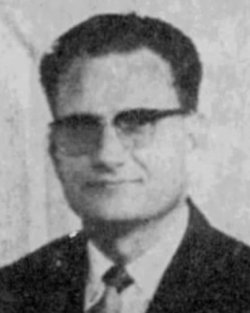
Wilbern Elias Best (1919-2007) was a preacher and writer of Gospel material. He wrote 25 books and pamphlets comprised of sermons he preached to his congregation. These books were distributed in English and Spanish around the world from 1970 to 2018 at no cost via the W.E. Best Book Missionary Trust.

Comments

0 / 2000 characters
Comments are moderated before appearing.

Be the first to comment!

Joshua

Joshua

Shall we play a game? Ask me about articles, sermons, or theology from our library. I can also help you navigate the site.