Bootstrap
W.E. Best

#1 A Panoramic View of Romans

Romans 1:1
W.E. Best July, 1 1973 Audio
0 Comments
Remastered Oct/Nov 2024
Bro. Best's books in pdf can be downloaded from Spring Assembly of Christ website @ http://springassemblyofchrist.org/uimages/bg1.gif

Sermon Transcript

Auto-generated transcript • May contain errors

100%
I'm asking you once again to
memorize the first 17 verses of this chapter over the next
eight weeks. That should not be too difficult
for any person to do. It'll be a real joy to you if
you will do so. I'm going to read with you this
morning the first 17 verses. This gives to us Paul's foreword. And then I want to give to you
the general introduction to the entire book of Romans in this
first message. Paul, a servant of Jesus Christ,
called an apostle. Notice I'm omitting the two words
to be, they are italicized. You'll see the reason for doing
so in a few minutes. Paul, an apostle, separated under
the gospel of God, which he had promised afore by his prophets
in the holy scriptures, concerning his son Jesus Christ our Lord,
which was made of the seed of David according to the flesh,
and declared, not to be, but declared the Son of God with
power according to the spirit of holiness for the resurrection
from the dead. By whom we have received grace
and apostleship for obedience to the faith among all nations
for his name. Among whom are ye also the called
of Jesus Christ. To all that be in Rome, beloved
of God, called saints, not called to be Grace to you and peace
from God our Father and the Lord Jesus Christ. First, I thank
my God through Jesus Christ for you all, that your faith is spoken
of throughout the whole world. For God is my witness, whom I
serve with my spirit in the gospel of his Son, that without ceasing
I make mention of you always in my prayer. making request,
if by any means now at length I might have a prosperous journey
by the will of God to come unto you. For I long to see you, that
I may impart unto you some spiritual gift, to the end ye may be established. That is, that I may be comforted
together with you for the mutual faith, both of you and me. Now
I would not have you ignorant, brethren, that oftentimes I purpose
to come unto you, but was left hitherto or was hindered, that
I might have some fruit among you or in you also, even as among
other Gentiles. I am debtor, both to the Greeks,
to the barbarians, both to the wise and to the unwise. So as
much as in me is, I am ready to preach the gospel to you that
are at Rome also, for I am not ashamed of the gospel of Christ,
for it is a power of God unto salvation to every one that believe
it, to the Jew first and also to the Greek. For therein, that
is in the gospel, is the righteousness of God revealed from faith to
faith, as it is written, the just shall live by faith. I stand in awe before the book
of Romans. This book has been considered
Paul's most excellent work. It has been called his masterpiece In fact, this book has been referred
to as the opened door to all the treasures in Scripture. It has been called the cathedral
of the Christian faith. Some have said it contains the
perfect gospel. What was the occasion for the
book of Romans? That is an important question.
The occasion was the close of Paul's earthly life. He knew
that the end of his earthly sojourn was at hand. He had but a short
time to live. In the study of the Acts of the
Apostles, references made in the 28th chapter of Acts, about
his desire and God's purpose for him to preach to the Romans. Knowing that his journey had
just about run its course, he wanted to close his earthly ministry,
as any man of God desires to do so. with presenting one comprehensive survey of the
redeeming purpose of God in Christ Jesus. That is given us in the
book of Romans. I've often said, and I repeat
again today, that if you have a workable knowledge of Romans
you have a workable knowledge of the Bible from Revelation
1, 1, I mean from Genesis 1, 1 to Revelation 22, 21. In other words, in order to understand
Romans properly, you're going to have to have a workable knowledge
of the entire scriptures from the very first verse of the Word
of God to the last verse. We're told that Romans was written
in A.D. 58 in the home of Gaius. You don't have to wonder about
this. If you'll turn to the 16th chapter, Paul's final word begins
with the 14th verse of the 15th chapter and takes us through
the 27th verse of the 16th chapter. between Paul's foreword and his
final word, we have every major doctrine in the Bible discussed
by the apostle. You will notice in the 23rd verse
of the 16th chapter, this statement is made, Gaius mine host, and
of the whole church saluted you. The apostle was in the home of
Gaius, and according to 1 Corinthians, chapter 1, verse 14, Gaius was
a Corinthian Christian. Thus, Paul was in the home of
Gaius, a Corinthian Christian, as he wrote his epistle to the
Roman saints. After he had written the epistle,
it was sent by Phoebe According to the first verse of Romans
16, to the church are the Christians in Rome. I commend unto you Phoebe,
and Phoebe means radiant. She was therefore a radiant Christian. Evidently she was going to Rome
on business, or for business purposes. Being the radiant Christian
she was, Paul felt that he could send this letter that he had
written by the hand of his secretary, and we'll discuss his secretary
in just a moment, to the Roman Christians. You will notice he
says, which is a servant of the church, that is Phoebe was a
servant of the church, that you receive her in the Lord as become
his saints and that ye assist her in whatsoever business she
hath need of you. For she hath been a succorer
of many, and of myself also." Several references to the church
or churches of the Lord Jesus Christ are given us in the 16th
chapter of Romans. Who was Paul's secretary? Notice
the 22nd verse. His secretary was Tertius, who
wrote this epistle, Salute you in the Lord. Now what does Tertius
mean? Tertius means the third. You may not see anything of significance
in that at the beginning, but let's consider that for a moment.
First of all, we have the Holy Spirit of God, number one. You're
already following me, aren't you? The Holy Spirit of God used the
apostle Paul to give to us the book of Romans. So we have the
Holy Spirit, number one. We have the instrument whom the
Holy Spirit used, number two, and that person was none other
than Paul. And thirdly, we have Tertius.
his secretary. Now do you see the importance
of Tertius, which means the third. He's not the second. He could
not take the place of the Apostle Paul, whom the Holy Spirit was
using to give to us the Holy Scriptures. Tertius was simply
Paul's secretary. As you know, Paul had bad eyes,
according to our study of Galatians. And so he used Tertius, and many
of the apostles had secretaries. So the Holy Spirit must stand
out as number one in giving to us the scriptures. The apostle
Paul, whom the Holy Spirit used, should come next in the order. And finally, Tertius, which means
the third, was Paul's secretary. So we have the epistle of Romans
written by Paul through his secretary, Tertius, delivered by Phoebe
to the Christians at Rome. This is meaningful, very meaningful. Now let's go a little further.
I stated that I stand in awe before this epistle. I've enjoyed
Going into this study once again, I have taught Romans only three
times in more than 30 years of proclaiming the gospel. I told
my wife the other day, after having spent two or three weeks
in the study of the first 17 verses and preparing eight messages,
you say, well, how can you get them separated? That isn't going
to be difficult. I don't have to get them separated. It's all
the truth of God. But I said all of the studies
that I've made before have only prepared me for the study that
I am now making of Romans. I told Brother Pennington after
he gave an excellent exposition, approaching it from a little
different point of view than I've heard him before on Ephesians
1. I said at the close of the service
last Wednesday evening to him, whenever you study a passage
that you have studied before, and you find new and fresh truths
that are contained in that portion of Scripture. What that does
to the Christian is this. It brings glory to the subject
that is being discussed and strength to the individual who is studying
it. And that's true. Every time you
study a portion of Scripture, beloved, you can't help but enlarge
upon that particular subject. Now you might say, after having
made a word study of all the principal words of the first
17 verses, what could be added? Oh, much could be added. I'm
amazed when I go to bed at night and usually I start quoting Romans
until I get sleep and go to sleep. And while I'm quoting Romans,
this is what I'm concentrating on now for our Sunday services,
especially the Sunday morning service. That doesn't mean that
I'm not studying Timothy, it doesn't mean that I'm not studying
Revelation, but I'm concentrating, I suppose, more at the present
time and getting some messages ahead. But when I go to bed at
night and begin to quote Romans, then other things begin to flood
my mind that I've studied through the years. And many times things
will come to my mind, and this is the work of the Holy Spirit,
because the Holy Spirit will never bring anything to your
mind, beloved, but what you have not already studied at some previous
time. We have so many ignorant people
today. My wife and I turned the television on last night, and
I ran across this channel 26, the 700 Club, and it didn't take
about five minutes of that rock to do. I said, I've never seen
so many spiritual idiots in one place at one time. You see, that's
strong language. I intend for it to be strong.
And if it's too strong for you, you don't have to listen to it.
Beloved, I haven't heard one thing that would honor my God.
But everything that is said is building up the individual. And
if my preaching and my teaching is such in this church that it
does nothing but honor or elevate man, I might as well quit the
ministry today and the sooner I'd get out of it, the better
off you would be and the better off the cause of Jesus Christ
would be. When we come together, we're to come together for one
purpose. And may I say there are not many genuine Christians
today, because people who are saved by the grace of God are
not satisfied if their souls are not being fed by an exposition
of God's Word. This is a great book, one before
you stand in awe as you think about the great truths that are
contained in it. What is the subject of the Book
of Romans? Do you know what the subject is? Do you have any idea
what the subject is? Don't assume that you know something.
And don't take for granted what I say to be the final word. But I do ask you to take it down.
And as you study the Book of Romans to see if this is the
chief subject. The chief subject of the Book
of Romans is the righteousness of God. Now we'll discuss that
more later. The righteousness of God. In
a moment, I hope I am able to draw a mental picture before
your mind's eye of this great subject called the righteousness
of God. But before I do that, what is
the key phrase of the Book of Romans? There are two words that
are found some 70 times in the 16 chapters of the Book of Romans. And those words are of God. Now, when you take the first
chapter, let me show you the importance of that statement.
I can't go all through the book of Romans now and point out each
time that statement is found. But just follow me now in the
first chapter. In verse 1, the gospel of God. In verse 4, the Son of God. In verse 7, the beloved of God. In verse 10, the will of God. In verse 16, the power of God. In verse 17, the righteousness
of God. In verse 18, the wrath of God. In verse 19, because that which
may be known of God. In verse 20, the invisible things
of him that is of God. from the creation of the world
are clearly seen. Then drop down, if you will,
to the 25th verse, the truth of God. And the last verse, the
judgment of God. Now, these are just a few of
the statements, and here they are in the first chapter. You
could go on and on in giving an exposition of the praise of
God. and the great truth that is related
to that particular phrase. So the righteousness of God is
the chief subject. The key phrase of the book of
Romans is of God. Now I stated a moment ago that
I hope I am able this morning to draw a mental picture before
you of the entire book of Romans that portrays the righteousness
of God. I want to do it in this manner. You that have traveled to some
extent in these United States of America have, I am sure, seen
mountains. Personally, I enjoy the mountains. I enjoy the majesty of Suppose this morning you're looking
at a range of mountains and the entire plateau, and on that plateau
is inscribed the statement, the righteousness of God. Now we
want to divide up. The Book of Romans between Paul's
foreword in the first 17 verses and his final word beginning
with the 14th verse of chapter 15 going through the 27th verse
of the 16th chapter. We'll break it down more as we
continue this morning to get this picture, this panoramic
view of the Book of Romans. But here we see a mountain range.
and the plateau, or it is inscribed the righteousness of God. You
that have been to Colorado, some of you that have been to the
state of Washington and other places, you have seen mountain
peaks that go up, they rise up above the plateau. Francis Pike's
peak in Colorado Springs, that's the highest point, we're told,
in Colorado. then Mount Rainier is the highest
point in the state of Washington. Now, see there are three great
peaks in Colorado. Pikes Peak number one, and then
two other peaks. And they stand up above the mountain
range. They're easily seen from a distance. And when you get close to the
mountains, you can't help but just feel that here is something
majestic. You know what the mountain is
a symbol of in the study of the scriptures. But here are the three peaks
and their name. Notice now I've said the righteousness
of God is inscribed on the plateau. The first great peak that you
see in Onoia is inscribed, the righteousness of God communicated. the righteousness of God communicated. We'll break that down a little
more later, but not right now. That begins with the 18th verse of the first chapter. And this great truth takes us
through the 39th verse of the 8th chapter. Now, it has many
sub-headings. There are divisions within that
major division and we'll break it down in a few moments. But
I want you to see beginning with the 18th verse. For the wrath
of God is revealed from heaven against all ungodliness and unrighteousness
of men who hold the truth and unrighteousness. And going on
through to the last verse of the 8th chapter, what do you
see? The one principal subject is the righteousness of God communicated. chapters 9 through 11, and we'll
look at these in more detail later. This has been called a
parenthetical section, but beloved, I can't go along with that all
the way. I say that this portion of Scripture
is very important, and here's why I say it. In this section
of Romans you have the second mountain peak And the title of
the second mountain peak is the righteousness of God vindicated. I said vindicated. Now you don't
know what I'm talking about unless you have some idea, unless you
have some mental picture at this time of what is contained in
Romans 9 through 11. Unless you have some mental picture
of the content of those chapters, you don't know what I'm talking
about, so we'll break it down more later. But I do recall an
outstanding statement of the ninth chapter, verse 14, to prove
that this section of Scripture vindicates the righteousness
of God. So righteousness communicated,
righteousness vindicated, chapters 9 through 11, beginning with
the 12th chapter through the 13th verse of the 15th chapter,
we have the righteousness of God. And here is the third peak,
the third mountain peak, the righteousness of God demonstrated. Here we come to the practical
section of the entire book. So what do we have? Three major
divisions between Paul's foreword and his final word. Righteousness
communicated, righteousness vindicated, and righteousness demonstrated. Isn't that simple? Now, I think
we need to go a little further in the development of those points. So I would like for you to turn
with me, if you will, please, to the 18th verse of the first chapter. Beginning with this major division
of doctrine, having now left Paul's foreword, which we will
spend two months discussing with you, Paul, like a wise master builder
that he was, begins with the foundation of the Christian message. You notice what I said, he begins
with the foundation of the Christian message. Where does one begin
when he discusses the Christian message? This is not what you
hear today when you listen to the average message on radio
or watch it on TV. This is not what you read when
you read some religious publication. or something on the religious
section of the daily newspaper. But Paul, beginning with the
18th verse, begins with a subject of condemnation. Now, we're breaking up the first
division, righteousness communicated, beginning with the 18th verse
and going through the last verse of Romans 8. But what do we have
in the following order? Paul begins with condemnation. He shows, beginning with the
18th verse of chapter 1, that man is a depraved creature. There is no hope for him apart
from the righteousness of God. He's a stranger of God. He's
an enemy of God. He deals with the subject of
sins beginning in this chapter. Chapter one. Before we will have
finished this first great division of doctrine, he will leave the
subject of sins plural and deal with a subject of sins singular. You say, what are you getting
at? I can't develop it now. I'm giving you, what? A panionic
view of the book of Romans. But he begins with condemnation.
The subject of condemnation, which begins with the 18th verse
of the first chapter, takes one through the 20th verse of the
third chapter, and notice the conclusion in the third chapter,
after discussing the catalog of sins in chapter 1 in the last
verses. And there are some horrible sins
discussed. Yes, even homosexuality. Did you see in the religious
section of yesterday's Houston Post? They admit that Catholic
priests, many of them are homosexuals. Well, that's nothing. A lot of
partisan ministers are homosexual. And they want to make a place
for them. I'll tell you, God gives a place for them. Are you
ready for it? Just read and believe. Verses 24 through 28 of Romans
1, leaving the natural use of the woman. There it is, and God
pronounces a judgment upon them, that all the religious institutions
today want to make a place for them in the church. But certainly
they're human beings, but they're depraved human beings. And then Paul, in the third chapter
of Romans, says there is none righteous, no, not one. He goes
on to say, all are under sin, none that understand it, none
that seeketh after God. I read an outstanding religious
leader the other day, and he's talking about men seeking Lost
men do not seek God. Unregenerate men do not seek
God. Are you going to believe the
Bible or to believe some religious leader? I don't know. I know
what I believe. I believe the book of God. Then
coming to the 20th verse. Paul closes the section that
deals with the subject of condemnation. Therefore by the deeds of the
law There shall no flesh be justified in his sight, for by the law
is the knowledge of sin." And he makes a statement in the 19th
verse that every mouth must be stopped and the whole world become
guilty before God. Where does Paul begin in discussing
the subject of righteousness communicated? He discusses the
subject of condemnation, showing that man is depraved, he's condemned,
he's doomed, he's damned! All right, but let's not stop
here. I want you to get the panoramic view. He leaves the subject of
condemnation, chapter 1, 18, through chapter 3, verse 20.
And he goes to the subject of justification. The subject of
justification is dealt with by Paul, beginning with the 21st
verse of chapter 3, and this takes us through the 21st chapter,
the 21st verse of chapter 5, the subject of justification.
How can a man be just with God? The only way that a man can be
just with God is to be justified by the righteousness that has
been provided by Jesus Christ. We don't stop with justification.
We believe the Bible teaches the great truth of sanctification. When God has saved an individual,
he doesn't leave him there. Provision is made for that justified
person. And provision is made in sanctification. I believe in holiness. Not sinless perfection, but Christian
holiness. And so the subject of sanctification
begins with the first verse of chapter 1, follow me now, and
takes us through the 17th verse of the 8th chapter. Now we have
seen three great divisions of righteousness communicated. Paul
begins with condemnation, then he discusses the subject of justification. So beginning with the 9th chapter,
righteousness vindicated. I would like to give to you at
this time the chapter title for each of these three chapters
that take up the subject and give to us Paul's vindication
of the righteousness of God. In chapter 9, we have a setting
forth of God's sovereignty, his sovereignty of relationship and right over the nation of
Israel. That's what is dealt with in
chapter 9. Then look at chapter 10. In chapter 10, that deals
with Israel's past in chapter 9. Look at it again. If you don't
get these things, you'll be found lost in trying to study this
great book. So Israel's past, you see, chapter
9 deals with Israel's past, chapter 10 deals with Israel's present
while Paul was alive, and chapter 11 with Israel's future. So in chapter 9, Israel's past
is setting forth of God's sovereignty of relationship to and right
over Israel. Chapter 10, Israel's present. My heart's desire and prayer
to God for Israel is that they might be saved. For I bear them
record that they have a zeal of God, but not according to
knowledge." And he goes on. Here we have in this chapter
a setting forth of God's righteousness revealed in the gospel which
is going out to both Jews and Gentiles. And then finally in
chapter 11, Israel's future. Here we have a setting forth
of God's faithfulness. I don't care if Israel has been
unfaithful. Notice what I said. Israel's
unfaithfulness cannot thwart God's eternal purpose. So here
we have a setting forth of God's faithfulness, in contrast to
Israel's faithlessness. And God's faithfulness here concerns
his purposes to redeem or make good every promise that he has
made to national Israel. Now I want you to see how Paul
closes his section on the sovereignty of God, beginning with the 33rd
verse of the 11th chapter. Notice how Paul closes his chapter. Bishop Moe, and all I'll give
you is quotation this morning, but makes one of the most profound
statements on this section of Scripture that I've ever read.
Paul closes now his vindication of the righteousness of God by
saying, Oh, the depth of the riches! Oh, the depth of the
riches! More for the wisdom and knowledge
of God! How unsearchable are his judgments
and his ways past finding out! for who hath known the mind of
the Lord, or who hath been his counsellor, or who hath first
given to him, and it shall be recompensed unto him again. For
of him, and through him, and to him, all things to whom be
glory for ever. Amen.' Isn't that some conclusion
to his vindication of the righteousness of God? Beginning with chapter
12, verse 1, We have the demonstration of God's righteousness. I don't
believe a person can possess the righteousness of God without
demonstrating it in his life. Notice what I said. This destroys
once and for ever this idea of antinomianism. Paul said, I beseech you therefore,
brethren, by the mercies of God, that you present your bodies
a living sacrifice, wholly acceptable unto God, which is your reasonable
service. And be not conformed to this
world, but be ye transformed by the renewing of your mind,
that ye may prove what is that good and acceptable and perfect
will of God. For I say, through the grace
given unto me to every man that is among you, not to think of
himself more highly than he ought to think, but to think soberly,
according as God hath dealt to every man the measure of faith."
Now, that's his personal address. Now, the duties of the Roman
Christians begin, that is, their duties begin with the fourth
Let's look now. Beginning with chapter 12, we
have the demonstration of God's righteousness. A close investigation
of the first 11 chapters will show righteousness needed, beginning
with the 18th verse of chapter 1. Righteousness communicated,
beginning with the 21st verse of chapter 3, and vindicated
in chapters 9 through 11. Paul says, the righteousness
of God must be demonstrated, and demonstrated it will be.
Service is not self-effort, it is the outliving of the in-living
Savior, the Lord Jesus. The fountain of service is the
inward urge of the Holy Spirit of God, motivated by what? by the knowledge of condemnation,
justification, sanctification, glorification, and now it's demonstration. The three spheres of demonstration
are beginning with the fourth verse of chapter 12, and it has
to do with the Church. I said with the Church. Three spheres of demonstration,
beginning first of all with the church. Secondly, the social
sphere, beginning with the 14th verse of the 12th chapter, going
through the 21st verse. And finally, the civil sphere,
chapter 13, verses 1 through 7. So we have the church sphere,
the social sphere. and the civil sphere. Yes, I
believe that grace that has been bestowed upon individuals will
manifest itself in the local church first of all. That this
grace will be made manifest with persons that you come in contact
with socially and plainly as to your responsibility to the
state. your civil responsibility, chapter
13, verses 1 through 7. Do you see what all is taken
up in this great subject? Now what do we have? Panoramically
speaking, we have righteousness communicated, righteousness vindicated,
and righteousness demonstrated. with the various subheadings
of each major division. Now I want to discuss with you
a moment the subject of righteousness. There's a lot of confusion about
this. The apostle said, for I'm not ashamed of the gospel of
Christ, for it is the power of God and the salvation to everyone
that believe it, to the Jew first and also to the Greek. For therein,
that is, in the gospel, is the righteousness of God revealed
from faith to faith, and as it is written, the just shall live
by faith. What is this righteousness? I
have the work of one man, I have a lot of regard for the man as
an interpreter of the scriptures, and he's supposed to be an outstanding
Greek scholar as well as a Hebrew scholar. I know him personally,
I've had some association with him in times past. But I was amazed at his interpretation
of righteousness, the Greek word that is used for righteousness,
in Romans 1, verse 17. First of all, we must get this
picture. Paul ever makes a distinction
between the righteousness of God and human righteousness. Human righteousness is nothing
more than filthy rag. The individual who has been saved
by God's grace is clothed with God's righteousness, God's garment. But what about the righteousness
that is revealed in the gospel? Is Paul talking about the righteous
character of God? Follow me now. Is Paul talking
about the righteous character of God, the inherent righteous
character of God, when he says, For therein is the righteousness
of God revealed from faith to faith, as it is written, The
just shall live by faith. No, beloved, Paul is not talking
about the inherent righteous character of God. You say, Well, I don't understand
that. You need to follow me. This is a very important point
and a distinction that must be made by you in order to handle
the scriptures properly. What is Paul talking about all
the way through his four words? He talks about the gospel of
God, the source of the gospel, in verse 1. And his separation
unto the gospel of God. He talks about the gospel of
Jesus Christ. He talks about his desire to
go to Rome that he might impart unto the Romans. Some spiritual
gifts to the end, they may be established. He said, I'm debtor both to the
Greeks and to the barbarians, both to the wise and to the unwise.
So as much as in me is, I'm ready to preach the gospel to you that
are at Rome also. For I'm not ashamed of the gospel,
why? It's the power of God unto salvation. Now, it takes the inherent righteous
character of God to provide a righteousness for you and me, but this is not
what Paul's talking about. The righteousness that Paul is
talking about is the righteousness that was wrought out by Jesus
Christ when he died on the cross of Calvary for you and me. He isn't talking about the inherent
character of God that is the source of this, but he's talking
about what was accomplished, what was provided by the death
of Jesus Christ. That's what he was talking about. Now, let's consider this righteousness
of God for a moment. Not the inherent character of
God that provided it, but that which was provided by this righteous
God. God provided righteousness, not
his essential righteousness. must be contemplated at five
periods. This is important. This is important. First of all,
when God purposed it, when did God purpose this righteousness?
Jesus Christ is the Lamb that was slain from the foundation
of the world. When did God purpose this righteousness
that was provided by Jesus Christ, and he turned it to death when
he purposed it? That's the first thing. Follow me now. This is
important. If you don't get this, you cannot write and abide the
Word of Truth. Second, when he promised it,
when did God promise this righteousness? Where is the first promise in
the Bible of this righteousness? I'll tell you where it is, Genesis
3.15, after the fall. When did God purpose this righteousness? In eternity. When did he promise
it? After the fall. Thirdly, when
did he provide it? He provided it in the death of
Jesus Christ 2,000 years ago, when he went to the cross and
shed his precious blood. That's when this righteousness
was provided. When was it revealed? It has
been revealed in the gospel, the gospel of God which he had
promised before by his prophets in the Holy Scripture, concerning
his son Jesus Christ, our Lord, which was made at the seat of
David according to the flesh, and declared the Son of God with
power according to the spirit of holiness for the resurrection
from the dead. Now you can see why Paul said,
I'm not ashamed of the gospel. Why? It's the power of God and
the salvation to everyone that believeth, to the Jew first and
also to the Greek, for therein, that is, in the gospel, is the
righteousness of God! Not God's righteous character,
that's understood! But the righteous provision!
By the death of Jesus Christ, the righteousness which was planned
and purposed by God in eternity, promised in Genesis 3.15, provided
in the death of Jesus Christ, revealed in the gospel, but I'm
not through, and finally, the fifth period of time, when it
is applied, it is applied in regeneration. Beloved, do you
see there's no end to discussing Romans? no end, just in discussing God's
righteousness. So the righteousness of God is
seen in relation to sins and sin in chapters 1 through 8, in relation
to the calling of Israel, chapters 9 through 11, and in relation
to everyday life chapters 12 through 16. Does that give you a panoramic
view of Romans? It often does. I don't know how else to do it.
Let's break a few things down now in closing. I want to try
to keep all of these lectures within a period of an hour. Jesus Christ is referred to by
the prophet Jeremiah as the Lord, our righteous Jeremiah 23, verse
6. So the Lord Jesus Christ is the
one in whom that righteousness is imbibed. He is the one by
whom it is vindicated, and he is the one through whom it is
communicated, who of God is made unto us righteousness. 1 Corinthians
1, verse 30. There are three parts to the
salvation of the elect of God, as we think about righteousness
communicated. We deal with the subjects of
justification, sanctification, and glorification. I'll give
you just a panoramic view of these great truths, and we will
break them down later. But I want you to see the beauty
and the connection of them. You can't have one without the
other. Did you get what I said? You can't have one without the
other. In justification we are made free from the condemnation
of sin. That's past tense. In justification we are made
free from the condemnation of sin. That's past tense. Secondly,
in sanctification we are released from the power of sin. That's
present tense. And in glorification we are delivered
from the presence of sin, that's future tense. I said you can't
have one without having the other. If you've been justified, you're
being sanctified and you shall be glorified. But there's no
need for you to anticipate glorification without, first of all, sanctification,
justification and sanctification. Let's break this down a little
more. In justification, you and I are sons. Sons. The Greek words, we are. The plural, we are. Denotes our
dignity in our relationship to Jesus Christ. I said in justification,
we are sons. In sanctification, we are saints. And in glorification we are sharers. We shall sit on the throne with
Christ. We shall reign with him in the
kingdom. Sons, saints, and sharers. Let's go a little further, if
you will. In justification, you see the Lord Jesus on the cross.
And that's all that's necessary for you to see in order to be
justified. Do you see the Lord Jesus on
the cross dying for your sins? Have you embraced him as your
Savior, the one who stood in your place? That's justification. In justification you see the
Lord Jesus on the cross. In sanctification you see self,
self on the cross. Now, ask yourself the question,
Are you being sanctified? Do you see yourself on the cross?
With all of your desires being crucified? Finally, in glorification,
yes, we're on the throne. On the throne, reigning, ruling
and reigning with Jesus Christ in the kingdom. And now, in conclusion. Some ministers today expound
without applying. I don't want to be guilty of
that. And some endeavor to apply what
has never been expounded. Why do I take the time to go
into these things and share them with you? Because you will never
grow in grace until you get a knowledge and a grasp of biblical I'm sure there are some Christians
today who make terrible statements. And I wouldn't say that all the
persons that I hear on radio are lost. But I'll tell you,
some of them are so ignorant when it comes to biblical doctrine
that I'm horrified by what I hear. And the average church member
today doesn't hear enough Bible doctrine in a year to take a
nap. That's not very much, is it? I want to show you what Paul
did. And every man of God ought to seek to emulate the apostle
Paul, as Paul emulated the Savior, the Lord Jesus. So some ministers
expound without applying, and some seek to apply what has never
been expounded. Paul both expounded and applied. I make no bones about it. Sometimes
I'm going to get right down and make you squirm, and I intend
to make you squirm because I squirm all week long. And if I squirm
all week long in preparing to preach to you, I want to see
you squirm on the Lord's Day. Anything wrong with that? And you see, by this I know whether
you're saved or not. If you keep squirming and you're
looking for a way out, I say goodbye. What you think is regeneration,
I can't give it to you. But if you strive when you hear
the truth and you want to apply what you heard, I say, that person
has grace. So you notice doctrine and practice,
knowledge and action are inseparable. Will you agree with that? Don't
come to me and tell me how much you love the Lord when you're
disobedient to Him. When you make no effort whatsoever
to obey what you know, don't tell me you're wasting your breath,
you won't get any sympathy from me. You say you're hard. Well, you don't know what truth
is. You see, Paul presented doctrine and then he closed with practice.
Knowledge and application, they're insufferable. I like what Dr. Barnhouse, an illustration he
gave. He said these two are like two parts of salt. Salt is composed of two poisons,
sodium and chlorine. Either one by itself is poison. Doctrine without practice is
poison, and practice without doctrine is poison. Do you agree
with me? I know some folks today who have
a little knowledge, but there is no practice. And I tell you,
their lives are full of poison. And then I see people who are
always trying to practice what they don't know, and their lives
are filled with poison. Dr. Farnhouse was exactly right
when he said that knowledge and practice, doctrine and action,
are inseparable, like the common table salt. that has two poisons
in it. Sodium and chlorine. If you separate
one of them, you have a poison. But by the mixture of what you
have, you have something that is palatable to the taste. And
that will season the food. And unless you and I, as Christians,
know nothing, and then put into practice what we know, we're
poisonous to persons that we come in contact with. So the Christian message is doctrine. The Christian message is an origin,
and the Christian life is an issue. The message tells of Jesus
Christ for us, and the life relates Jesus Christ in us. So the message
unfolds the need of salvation, and the life unveils the way
of salvation. Levit, we've just in an hour
tried to give to you a panoramic view of the book of Romans. Calls
forward the subject The great theme, the righteousness of God,
righteousness communicated, righteousness vindicated, righteousness demonstrated,
and his final word. Do you know the Lord? Do you have a desire to know
the mind of God? And then having known it, the
following.
W.E. Best
About W.E. Best
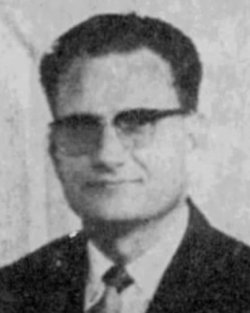
Wilbern Elias Best (1919-2007) was a preacher and writer of Gospel material. He wrote 25 books and pamphlets comprised of sermons he preached to his congregation. These books were distributed in English and Spanish around the world from 1970 to 2018 at no cost via the W.E. Best Book Missionary Trust.

Comments

0 / 2000 characters
Comments are moderated before appearing.

Be the first to comment!

Joshua

Joshua

Shall we play a game? Ask me about articles, sermons, or theology from our library. I can also help you navigate the site.