Bootstrap
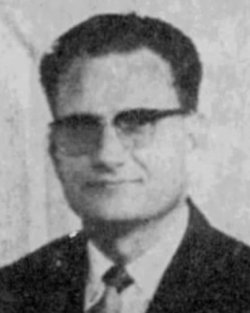
W.E. Best

#4 Paul's Dedication to the Message of Christ

Romans 1:1
W.E. Best July, 1 1973 Audio
0 Comments
Remastered October/November 2024

Sermon Transcript

Auto-generated transcript • May contain errors

100%
open your Bibles once again to
Romans 1. This is the fourth Sunday that
we have been in the study of the book of Romans. The first message, we sought
to give an outline of the entire book. The Sunday following, we tried
to give a telescopic view of the 17 verses of chapter 1, Paul's
foreword. Last Sunday we began an exposition
of the foreword. In the study of verse 1, we have found that there are
three great truths. We have only dealt with one of
all a servant or a bondsman or bondslave of Jesus Christ. There are two other great truths
given us in this text. If we get the truth of these
three great points of biblical doctrine at the very beginning
of our study, it will make it easy for us to see some of the
things that God has for us in Paul's four words. I want to review just briefly
what I said last Sunday in order to bring us to the third great
truth of verse 1, and it is on this point this morning that
we will be directing your attention. The three great truths of Romans
1 are, first of all, Paul's personal relationship to Jesus Christ
as a bondsman, or slave, of Christ. I like what Bishop Mole had to
say. I'm giving you this in addition
to what I've already given on this particular point. Bishop Mole said, and I quote,
to be a bondsman is terrible in the abstract, but to be Christ's bondservant
is true liberty in the concrete. Self-surrender, taken alone,
is a plunge into a cold void. However, when it is surrender
to the Son of God, it is coming to understand the meaning of
true freedom. I like the way he stated that.
He doesn't have a lengthy exposition of Romans, but he has some significant
statements. The second great truth of Romans
1 is Paul's official relationship, not personal, but official relationship
to the service of Christ as a called apostle. All functions of Christians are
alike, expressions of the one will of him who has purchased
and who calls." All are not apostles. All are
not called apostles. All are not called elders. Therefore,
we are not all either apostles or elders. But all of God's people
are to be witnesses of the Lord Jesus Christ. The third great truth, and this
is the one to which I will be directing your attention this
morning, Paul's dedicational relationship to the message of
Christ as a separated person unto the gospel of God. Quote the verse with me now as
we review these three great biblical truths. Paul, a servant of Jesus
Christ, Paul, an apostle, separated unto the gospel of God. Paul was separated from all other
ruling aims to the ruling aim of God's that has a spiritual
application for you and me. It has been said that in some
respects, Paul was the least isolated of men. He was in constant contact with
men. Therefore, being separated did
not mean that he was isolated, so separation is not isolation. Another man made the statement
concerning the gospel of God, which I think is very important
for us to consider today. He said, The gospel of God to
which Paul was separated, and to which all Christians are separated,
is a statement so familiar that it is both misunderstood and
misapplied. In other words, the simple statement,
the gospel of God, in the day in which you and I live, is not
only misunderstood, but misapplied. As we consider the first verse,
and summing up before we begin our message on the last part
of the text, Paul was related personally, officially, and dedicationally
to Christ, to the service of Christ, and to the message of
God. Now, that should be very simple
for us to remember. I'm dividing the message this
morning into three parts. First of all, separation is one
of the great themes of Holy Scripture. We cannot discuss the subject
of separation too much. Secondly, and I think this is
very important, separation unto the gospel is internal. I'm not elaborating on that point
right now. just giving to you the outline.
So the first point, separation is one of the great themes of
Holy Scripture. The second point, separation
unto the gospel, is internal. And finally, separation by the
gospel is external. Now let us begin, first of all,
with a definition of separation, one of the great themes of Scripture. Even though I may be following
an outline this morning, I'm not going to be sharing with
you the various points of the outline. I've given to you the
three major headings, and we're not teaching like we do on Monday The first thing to which I call
attention is separation in the sense that it is given in this
text is unto the gospel. Now the question arises, what
is separation? What does the word really mean?
I suppose over the years I have read as many as at least twenty
or more different scholars on this particular passage of Scripture
and the meaning of the various words that are used within the
text, you will find that even Greek scholars do not always
agree on everything, just like English scholars do not always
agree. Sometimes an individual might
read one book and he has a lot of confidence in the writings
of one particular person, and he accepts what that individual
says without any question whatsoever. I think this morning, after I've
given to you three major views of the word separation, that
we can see, if we desire to see, the meaning of the word in the
light of its context. Separation has been defined as
follows. Having been separated, having
been ordained, having been dedicated, we will not go into the various
Greek interpretations. We'll simply give to you as simply
as we possibly can, the meaning of the word. I stated that this word has been
interpreted in various ways. Let me share with you now, at
the very outset, three major views of this text, and the word
separation in the light of the text. There is some truth and the first
truth, this cannot be denied. All one has to do is to look
up the meaning of the word, and he can find what the word separation
means. But we need to look at that word
in the light of its context, and this is one of the principles
of biblical interpretation. I have read several men who say
almost the same thing. and it goes something like this.
I have summarized it into just a few words. The dedication of
Paul to the gospel was preordained in God's eternal purpose. They give the three references
in the New Testament where the word is used. I am familiar with
those texts. Some of you may be. I'm sure
most of you are not. Galatians 1.15, Acts 9.15, and
Acts 13, verses 2 through 5. So one interpretation is the
dedication of Paul to the gospel was preordained in God's eternal
purpose. Galatians 1.15 revealed at his
conversion experience, Acts 9.15, And the divine purpose was historically
fulfilled by the Church at Antioch, Acts 13, beginning with verse
2. There is a lot of truth in this,
but the question is this. Is the Apostle Paul really referring
to God's eternal decree in this particular passage? Another interpretation goes something
like this. I could give to you the names
of the persons, and you're acquainted with some of them, and they are
sound as far as doctrinal truth is concerned. This may regard
either God's eternal purpose or to the separation of Paul
to that work by the order of the Holy Spirit as recorded in
Acts 13. In other words, this individual
was not going to commit himself one way or the other. He simply
stated that separation in Romans 1 could either refer to God's
eternal purpose to the separation of Paul to
that word by the order of the Holy Spirit, Acts 13. Now we come to the last interpretation
of the word that I shall give to you this morning, and without
any reservation I subscribe to this interpretation. The separation here does not
refer to the predestination of Paul to the office. That's understood. That is understood. And as I develop this theme this
morning, I think that you'll be able to see what I'm talking
about. But we must get into this aspect of the subject before
we go that far. The separation here does not
refer to the predestination of Paul to the office. That's understood,
as in Galatians 1.15, but to the
effectual dedication that occurred in the actual call to apostleship,
and indicates what is entailed in that call. Another man who
was of the same opinion, recognized Bible student and basically sound
in the faith once delivered to the saints, made this statement
in connection with what I've already given you. The statement
does not differ materially from the expression, called to be
an apostle. Separation in Romans 1 must be
interpreted in the light of the context. Paul's only boast at this time
was that the author of his call, he is not talking about his regeneration
in the latter part of the text, he was not talking about his
calling as a result of regeneration, being called effectually for
the gospel, which resulted in a conversion experience in the
second point of this text. But he was talking about being
a call apostle, or being called to the apostleship. He did not take this honor unto
himself. In other words, he was saying,
I am not an apostle. as a result of my own choice
to be one. My response to the apostleship
is the result of God's calling of me to be an apostle. I am
not one who is running without being sent by God. That's the
substance of it, and I think this is easily understood. There are many who have run.
There were many running in Jeremiah's day whom the Lord did not send.
Paul had to contend with false apostles in his day. He wanted
the Corinthians to know, as well as the Romans to know, that he
was an apostle, even though his apostleship was questioned by
many. So I am a servant, I'm a slave
of Jesus Christ, I am a called apostle. And having been called
an apostle, I am separated under the gospel of God. That doesn't
mean that as a Christian he was not separated under the message,
but it does mean that when you connect the two, being an apostle
he was separated in a unique unto the gospel of God. I am
not running as one unsent. I am going forth, committed to
the gospel of God, because, as one said, God dedicated Paul
and Paul dedicated himself. Just as he was a slave, but there
was the surrender on his part. his willingness to be a slave
of Jesus Christ. Paul was not preaching against
his will, he was preaching because it was the desire of his heart,
because the Lord had given to him that desire. So he was not taking this honor
unto himself. I'm afraid that today there are
many who are doing that. Last Wednesday I received a phone
call from a preacher friend of mine. He was telling me about
a certain individual. I've known him for 17 years,
and many of you in this church know him. Instead of leading people, he
is usually led by people, and therefore he doesn't last too
long in any place. This man was telling me that
just in the last few days that he has now left what he was doing
and has been doing for almost a year. As a result, a number
of men who have put a lot of money into the work, and when
I say a lot of money, when you take three or four families will
pay a person nearly a thousand dollars a month to begin a work,
And within a year's time or a little less, they're able to have $8,000
in the treasure for the purchase of a piece of property. These
folk are putting some money into it, and this was the case. This pastor was telling me that
these families have been visiting his services, and they're quite
upset, quite despondent over what has taken place. Beloved,
I don't understand these things. And maybe it's because the feeling
which I have concerning the glorious gospel of the blessed Son of
God to which I have been committed, first by the Lord and my own
willingness to be committed as a result of God having dealt
with me. So Paul did not take this honor
unto himself. He wanted him to know that. Another thing I think we need
to observe in the very opening statement of Paul in his foreword
to the Roman Christians, he did not use God's eternal selection to arrogantly promote himself. In other words, he didn't go
around saying, I am an apostle, you'd better bow down to He proved his apostleship, he
proved his cause, he proved his sincerity, he proved his dedication
to all persons to whom he ministered. Something else we need to observe,
and that is that God dedicated Paul
and Paul dedicated himself. What does this mean? It means that the apostle Paul
was so devoted to Jesus Christ and the message of Christ that
he disregarded his own personal interests. I don't see why any child of
God would not appreciate that, and I believe that every born-again
person does appreciate that spirit. And that was the spirit that
characterized the apostle Paul, and may I hasten to say it is
the spirit that characterizes every God-called person today. God's separation of Paul in his
eternal purpose and I'm not denying this, was actualized in Paul's
effectual call to the apostleship and his separation under the
gospel of God. Please observe what I said. Paul's
separation by God's sovereign decree was actualized in Paul being effectually
called in time to be an apostle and his separation under the
gospel of God. Someone has said that when God
acts in a perfect participle, using the Greek terminology here,
his action is characterized by eternity. This can be understood in the
light of another great biblical truth, divine election. The word
election does not always refer to the electing decree. It is sometimes used in the sense
of a manifestation of that decree in time. I'm not going to take
the time this morning to give to you several examples of this.
I'm assuming that you're acquainted enough with the Scriptures to
know that to be true. But listen to this, as there is an election
unto salvation, or sanctification by the Spirit, which is performed
by the gospel of the Lord Jesus Christ, so there is a separation
unto the gospel by the effectual call of God. And this is the
of Paul's message. Many things were understood and
were assumed. We come now to the second point.
Separation unto the gospel is internal. Internal. There is a spiritual lesson in
this for everyone in this auditorium this morning, and I would not
be doing justice to the subject unless I sought to make an application
of it. What did I say? Separation unto
the gospel is eternal. Paul was set apart for a particular
ministry. He was an apostle. Everyone cannot
be set apart to be an apostle. Everyone cannot be set apart
to be an elder. But everyone, by the grace of
God, has been set apart unto the glorious message of the Lord
Jesus. This message is referred to as
being the gospel of God because God is the author of this message.
We'll be dealing with that later. Separation unto something is
automatic separation from something. Dr. Barnhouse, in his exposition,
or in his messages we might say, rather than an exposition, his
messages from the Book of Romans illustrate this in a very interesting
way. I'll use a present application. It is impossible for you or me
to be separated unto Dallas without being separated from Houston. Paul is dealing with a positive
side here. I have a very important application
of this in just a moment, so get set for it. You and I have been separated
unto the gospel of God, and having been thus separated, we are automatically
separated from things that are contrary to the gospel of God. There are two extremes today
concerning the interpretation of the word separation. The first is rank Arminianism.
There are many religionists today who are trying to separate themselves
from things who have never been separated unto the gospel of
God. There is something about every
individual Even in his depraved state, he
wants to be religious. He wants to do something to earn
his salvation. Thus we have the contrast between
salvation by works, of course that's impossible, but many persons
who are trying to be saved by their works, and the salvation
of God which is by God's grace. Persons who are trying to separate
themselves, and they do separate themselves from many things of
the world. And they will go to church, they
will become active in church work, they will have the appearance
of being very religious for a time, But since they have never been
separated by the grace of God unto the gospel of God, their
separation will not last. They'll be like the Jews who
followed the Lord Jesus for a while just for what they could get
out of him. There are many religionists today
who are following religious institutions for one purpose, and one purpose
only, and that is in order that they might get something out
of their followings. They'll separate themselves from
various and sundry things for a time, but after a while they
say, what is the advantage of all of this? They become tired with their
religious works. The labor of the foolish wearieth
every one of them, because they do not know the way to the
city. That's the language of Ecclesiastes. They become weary
in their religious efforts. And they raised the question,
what is the value of all of this? I am not receiving anything from
it in a personal way. One night this past week I had
the privilege of talking at length to my daughter-in-law over the
phone. She said, Dad, I'm reading the
Bible, the only Bible that we have, the one that you gave to
Jason when he was born. But she said, I'm not getting
anything out of it. I said, Kathy, why are you reading
the Bible? What is your motive for reading
the Bible? I knew what her motive was because
of previous conversations. I said, you're trying to find
a quick solution. to a problem, and you think that
you might find it by reading the Scripture. I said, that's
the wrong motive. You won't get anything out of
it. You're looking for a solution to a particular problem. I said, unless there has been
a work of grace in your heart, unless there is a sincere desire
within you, a desire which is prompted by the indwelling Holy
Spirit, you will not get anything out of it when you read it." I said, Do you understand what
I'm talking about? I said, I'm trying to be helpful. She said, I think I do. She then related that she was
reading another book, and she told me the title of it, and
I said, You might as well not read it. You're wasting your
time. It is heretical to the core. So what is one's desire when
he really comes to church? What is his desire when he sits
down and takes the Word of God in his hand? What is his desire? Unless a person has been born
again by the Spirit of God, he does not have a genuine, true
desire. The born-again person desires
the sincere milk of God's word that he might grow thereby. He
not only has a desire to know the mind of God, but when he
knows it, he has a desire to apply it. Too many people are trying to
separate themselves from things who have never been separated
unto the gospel for the grace of God. Now there is another extreme. There are the religionists who
are boasting of their separation by God's eternal decree and calling,
who are without any manifestation of practical holiness in their
lives. And I want you to know That is
just as heretical as the former illustration I gave. For one
to say that I am sure that God separated me in his eternal decree without any manifestation of
practical holiness, without any growth, without any desire to
know and to apply, you're only deceiving yourself. Yes, I believe in divine election,
but election is unto salvation and practical holiness. And unless there is a manifestation
of practical holiness, the individual might as well take down his sign.
His so-called belief in the absolute sovereignty of God doesn't mean
any more to him than the subject of divine election meant to the
Jews to whom our Lord spoke in John chapter 8, when they said,
Abraham is our father. The Lord Jesus said, if Abraham
were your father, you would do the works of Abraham. And Abraham never sought to kill
me. Separation has been expressed
in this manner. Dr. Barnhouse has said, in his
interpretation of the word separation, going back to the original, he
said, the word reminds us to a great extent of our word, horizon. Now, you may not see the meaning
on the surface. I'm quoting him. Let's explain it. Paul's pre-salvation
days had been circumscribed to the little circle of Judaism. His horizon, therefore, was very
small. It included Judaism. Paul's salvation in Jesus Christ
had given him a new horizon. He was lifted out of the circle
of Judaism into the circle of Christianity that included some
persons from among all nations and tongues. His horizon, therefore,
was enlarged. The new life in Jesus Christ,
therefore, is the cause of the old dead leaves. of Judaism falling
off. It is the life in Jesus Christ
that pushes off those old leaves. We all are familiar with the
pin oak tree. It doesn't shed its leaves like
other trees. The new leaf pushes off the old
leaf, or the old When a person has been separated
by the grace of God, this is an internal separation onto the
gospel of God, there will be an automatic separation from
those things that are opposed to that old
horizon, that old circle, that little circumscribed circle. Therefore, we are lifted, we
are elevated into a realm where the horizon is larger, because
it is the realm of Christianity. Did you know there is nothing
in the whole circle of doctrine which does not surpass the capacity
of man and confound his utmost reach? The extent of the horizon may
vary from one Christian to another Christian. One no sooner learns a great
biblical truth that when he learns it, it only opens up avenues,
horizons, that he could never imagine. We never cease to grow. We never
cease to be amazed at the knowledge of God. It seems that when you learn
a little bit of truth, that it just opens up doors that
you never expected to be open, into areas that are unexplored. And you'll start off in this
direction And when you learn something in that direction,
it opens up avenues that are amazing to you. I want you to
know that Christian life is the most interesting life in the
world. It never becomes a boredom. Some people are always looking
for something to do to occupy their time. the Christian who
is interested in the themes of the war and endeavors to pursue
the study of God's Word, he's always reaching out and finding
out things that keep him amazed. And when he understands them,
he realizes that the one whom he serves is the infinite God. He is past life. The believer is not only saved
by Jesus Christ, but he is separated unto Christ. Or we would say that he is separated
by covenant, like John 17. He is separated by redemption,
Galatians He is separated by the effectual call, 1 Peter 2.9. Yes, God dedicated the apostle
Paul, and then Paul dedicated himself. This was accomplished by Paul obeying the command of
God, and by his continual dedication of himself. Thus far we have seen that separation
is a great biblical theme. Secondly, we have seen that separation
unto the gospel is internal. Now let's apply. Separation by the gospel is external. One man said, as he was commenting
on this particular phrase, God's separation of the elect by grace
results in a separation which will continue throughout the
life of God's people on earth. We're going to illustrate that
in a moment, but we want to make it very practical now, and this
is for you as well as for me. I can apply, I can try to apply Only the Holy Spirit of God can
apply to your heart. Believe me, if it is applied,
it will make a difference in your life. And we will be able to know in
time whether there has been any effort on your part to apply
what you have heard. Quoting Bishop Mole again, There are a number of books along
this line that are outstanding. I could recommend them to you
to read, but I'll take the time this morning to name them. Works
that have been a great blessing to me in my personal life. I
special like what Bishop Moore said in one brief statement.
I shared it with the folk last Monday evening. Quote, the cross
once for all. and the cross daily is an inexhaustible
paradigm. I want to finish this quotation,
then I want to preach on this point for a few minutes. On one side, a true and total
self-denial. That's the conversion experience.
when one has been regenerated and he is subjected to the gospel
for the first time, there is a total surrender. On one side, a true and total
self-denial, or a total self-surrender, and on the other side, and this
is what most persons don't want anything to do with, And I've
come in contact with a lot of so-called grace people, and I
have no patience with them. I hope that you're not one, but
if you're one, don't come and get in an argument with me because
I won't argue with you. I'm stating it as it is in the
Scripture, and that's fine, no argument. I'll discuss some things
with some people. There are some things I will
not discuss with anybody. It's a plain statement of fact
we either accept it or reject it. I said, on the other side,
there is a daily need of self-crucifixion. Let's look at this. There is,
first of all, the once-for-all crucified crime, and he refers
to it in this manner, the cross once-for-all. There isn't any
doubt in the mind of any one of us that Jesus Christ offered
himself once in the end of the age to put away sin, but the
sacrifice of himself. He'll never offer himself again.
He finished the work of redemption. His work is completed. He said
it is finished. So the cross, once for all, it
is never to be repeated. Now, the cross once for all and
the cross daily did not our blessed Lord say to take up the cross
daily and follow me? There is a daily cross for every
person who is under the protection, who is under the shed blood of
the Lord Jesus who offered himself once in the end of the year.
But there is a daily self-crucifixion. there is a daily cross to be
borne by you and me. On one side, total self-surrender,
total self-crucifixion. On the other side, there is a
continual self-crucifixion, and that is daily. When this great truth is understood,
You're not going to find people when you really get down and
discuss important things with them. They will not manifest
an obnoxious attitude. They will not be arrogant. They
know deep within their hearts that there is to be a daily crucifixion
of self, because self is always seeking to exert himself. Therefore, he has to be put down. Another man expressed it in this
manner. The cross line is not an attainment, but a lifelong attitude. He didn't stop there. It is not
a goal. But it is a road which one travels
as long as he is here. He travels this road. He is able
to crucify himself. He is able to mortify the deeds
of the body because of his union with Jesus Christ, who was crucified
once in the end of the age, to put away his sin. Let's apply this. Let's see the simplicity of this
separation now. I've given to you this morning
three different views of separation, what I believe to be the basic
meaning and the life of the context. But now let's see if we can't
word it even better. which began in God's eternal
decree before the foundation of the world, continued. Follow me now, step
by step, please. Continued in Christ's redemptive
work which was accomplished on the cross 2,000 years ago. Not only did it continue in the
redemptive work of Jesus Christ, but it continued from Paul's
mother's womb, Galatians 115, from his mother's womb. Here we have the great subject
of prevenient grace. Let's continue. Not only was Paul separated in
God's eternal decree, in the redemptive work of Jesus Christ
from his mother's womb by pervenient grace. But there came a time
in his life when he was regenerated, that was a separation, by the
Holy Spirit. He was separated by the effectual
cause, that was a separation. There was another separation
in his life when he was effectually called to be an apostle. of the
gospel of God, but we're not through yet. We find once again in the 13th
chapter of the Acts of the Apostles, when Paul and Barnabas were sent
out by the Church at Antioch on a special mission that was
a separation by the Church, of course, under the direction of
the Spirit of God. And I will conclude this separation,
which began in God's eternal decree by the daily dying of
Paul, in 1 Corinthians chapter 15. Now let's illustrate this,
and will you seek to apply it to your own life? In 1 Corinthians 15, verse 31, Paul makes the statement about
dying daily. Dying daily. So, we go from God's
eternal decree to the redemptive work of Jesus Christ, to regeneration,
to the effectual call that follows regeneration, to Paul's call
to be an apostle, separate of the gospel of God, being separated
by the church at Antioch and his daily diet. Let's see what the attitude of
a true minister is. We accept this as a testimony
of God's word. Will you believe it? Will you
seek to follow the precept? We're told in 2 Corinthians 7
and verse 3. Paul said in writing to the Corinthian
Christians, ye are in our hearts, now please observe the order,
to die and to live with you. When you look at the order, we've
already referred to that passage in the 15th chapter, 1 Corinthians,
dying daily. Paul said, you are in our hearts. to die and live with you." Now,
most people would think that the pastor or the shepherd of
the flock, he is to live and to die with his sheep. You see
what I'm talking about? You missed the point entirely.
Yes, I want to live and die with you. But, beloved, there is something
that precedes that. unless I am willing to die, I
can't really live with you effectively. So the order is to die and then
live with the Corinthian Christians. How many men today are willing
to first die to themselves, die to their selfish ambitions, die
to all of their personal desires, in order that they might live
with the people to whom the Holy Spirit has made them overseers. So here we have the true attitude of one whom the Lord
has called to lead a flock of sheep. to be the overseer. Paul said, you're in our hearts
to die and then live with you, with you. Now let's consider
the circumstances under which Paul made this statement. We're going to miss the point
entirely unless we consider the circumstances under which he
made this statement. If you have read 1 and 2 Corinthians
to any extent, you know how that some were criticizing Paul. His
apostleship was called in question. On one occasion he said, It is
necessary for me to speak as a foolish individual to you.
And so here it comes. And he told how that he had suffered,
all the things he had encountered, He said, Now I realize this is
speaking foolishly, but it's necessary for me to do it. The
false prophets and apostles have come in, and they've been bragging
about themselves. So I want you to know what I've
suffered, and what I'm telling you this, I'm speaking as a foolish
one, but I'll do it. When you read the 11th chapter
of 2 Corinthians, he describes the things that he had undergone
the things which he had suffered, the persecutions which he had
endured. Why did he do this? Because his
whole apostleship was questioned by some of the Corinthians, and
it was under these circumstances that Paul said, I'm willing to
die and live with you, even though you don't understand my If that were the attitude of
every member of the church, there would be great harmony and there
would be depth of spirituality in that church. Let's go a little further. I
said separation by the gospel is external. Dedication to the
gospel brings the elect of God who have been regenerated into
the lives of the cross. When you have been subjected
to the message of God, the message of God will have an impact upon
you and will cause you to want to do the will of God in your
life. Therefore, there will be a manifestation
of practical holiness in your life. The message of the cross
teaches that Jesus Christ came not to straighten us out, as
one said, but to cross us out. You see what I'm talking about?
Not to scrape us out, but to cross us out. Let me illustrate
it. The message of the cross contradicts our wills, affections,
wisdom, pride, and ourselves. You know, the most joyous moment
in the life of the bride should be when she loses her name and her self-dependence as she
takes the man whose hand she holds to be her lawful wedded
husband. Now, notice what I said. The
most joyous of her life should be, I'm talking
about her physical, natural life, should be when she drops her
name, she assumes the name of her husband. She drops her self-dependence,
and she looks to her husband for support. As that is true in the natural
realm, Beloved, how much more true is it when you and I embrace
Jesus Christ by faith, we drop, as it were, our old names as
Paul dropped the name of Saul, and the name of Paul was assumed. And we drop our self-dependence,
and we depend solely and completely on Jesus Christ, who is the captain
of our salvation. That's the most joyous experience
in one's life. That is a far greater experience. In fact, there is no comparison
between that and when the woman drops her name and assumes the
name of her husband, drops her own self-dependence and relies
on her husband for support. self-ownership does not exist
in the life of one who has surrendered to Jesus Christ. So there is
a once-for-all surrender, but there is a daily self-surrender
of one's life. There was a complete crucifixion,
and a once-for-all crucifixion with Christ, but there is a daily as long as we walk on this earth. Let us stand as we sing.
W.E. Best
About W.E. Best
Wilbern Elias Best (1919-2007) was a preacher and writer of Gospel material. He wrote 25 books and pamphlets comprised of sermons he preached to his congregation. These books were distributed in English and Spanish around the world from 1970 to 2018 at no cost via the W.E. Best Book Missionary Trust.

Comments

0 / 2000 characters
Comments are moderated before appearing.

Be the first to comment!

Joshua

Joshua

Shall we play a game? Ask me about articles, sermons, or theology from our library. I can also help you navigate the site.