Bootstrap
W.E. Best

#6 The Gospel of God Prophesied, Personified & Personalized

Romans 1:2-7
W.E. Best July, 1 1973 Audio
0 Comments
Remastered October/November 2024

Sermon Transcript

Auto-generated transcript • May contain errors

100%
Let us spend some four Sundays
giving a survey of Romans as a whole, all four words in particular, and then two messages,
or three I should say, on the first verse. This morning we're speaking from
the first seven verses of Romans chapter one. If you haven't memorized the
four words as yet, please do so. If you have not made any
attempts to do so, we will be preaching long enough from this
portion of scripture that you should know it, or almost know
it by memory, by the time we will have completed our study
of these verses. Let's look at the first seven
verses. Paul, a servant of Jesus Christ, called an apostle, separated
unto the gospel of God, which he had promised before by his
prophet in the Holy Scripture concerning his son Jesus Christ
our Lord, which was made of the seed of David according to the
flesh, and declared the Son of God with power according to the
spirit of holiness by the resurrection from the dead, by whom we have
received grace and apostleship for obedience to the faith among
all nations for his name, among whom are ye also the cause of
Jesus Christ. To all that be in Rome, beloved
of God, call Grace to you and peace from God our Father and
the Lord Jesus Christ. In the study of verse 1, we have
seen three major divisions of the past. We have already discussed
those with you. I want to begin this morning
by reviewing very briefly A few statements I made last Sunday
evening concerning the gospel of God. Our subject this morning
has three parts. First of all, the gospel of God is prophesied in the Old Testament. Number two, the gospel of God
is personified in Jesus Christ. And number three, the gospel
is personalized in the same, the elect of God. Those are three points easy for
us to remember, and we may not be able to complete
our study of these three points this morning. If not, we will
continue this evening. If we are able to complete our
study of these three points, then I will bring to you this
evening a message from John 1, 1 and 14 in connection with verses
3 and 4. Our subject this morning is entitled,
The Gospel of God. The Gospel of God, which I've
already stated, prophesied in the Old Testament, personified
in Jesus Christ, and personalized in the elect of God. Last Sunday evening I sought
to show how the gospel of God, which is the New Testament expression
of glad tidings of the Old Testament, glad tidings of the Old Testament This is the same meaning as the
gospel of God or the gospel of Christ in the New Testament. I brought into discussion of
that subject a Hebrew word which is translated flesh, to show forth and to bring forth
highly. Only the first word do I want
to review with you this morning. I was somewhat surprised when
I began to study the word flesh and how that the same Hebrew
word which is translated flesh is also translated glad-tidings. I went back, first of all, by
taking my importance, strongest importance, and checking the
first time that the word flash is found in the Scripture. The
first time the word is found is in Genesis 2, 21. And I gave an exposition, just
a brief exposition of verses 21 through 23, how that the Lord God of heaven
took a rib from Adam, and after the rib had been taken and woman
had been made from the rib, the flesh was closed up by Jehovah
God. Immediately I began to see the
connection, and what a wonderful spiritual lesson it has for us. completed man, and as soon as
the Lord God had made woman, he presented her to Adam because she was his completion.
When we turn to the New Testament pictures, we find in John 19.34
that one of the Roman soldiers took a spear and pierced the
blessed side of our blessed Lord while he was suspended between
heaven and earth on that cruel cross. We find in the very next chapter,
chapter 20 of the Gospel of John, where Dowding Thomas was absent
from one of the appearances of our blessed Lord to his own between
his resurrection and And Paul said, I won't believe
except I see. And he was told to put his hand
on the side. The wound had not been closed.
And the reason is because the bride of Christ is not complete. So you can see what a blessed
gospel message that gives to us, and how it appears, even
in the word flesh, in Genesis 2, 21 through 23, when you make
the proper connection between the Old and the New Testament. Now, look at verse 2, if you
will, of Romans 1. Paul, having been separated unto
the gospel of God which he had promised by his prophet in the
Holy Scripture. The second verse identifies the
divine gospel of the first verse with the promised son of verses
3 and 4. Can't you see the vital connection
between verse 1, the gospel of God, and the third and fourth
verses which state, concerning his son, Jesus Christ our Lord,
which was made at the feet of David according to the flesh,
and declared the Son of God the power according to the spirit
of holiness for the resurrection from the dead." In these two
verses we have the human nature of our blessed Lord and also
his divine nature. We will be discussing that more
later. We're not discussing now the
last part of the first verse. We're simply explaining the meaning
of the gospel of God, and verse 2 is the connecting link between
the divine gospel of verse 1 and the person and work of Jesus
Christ in verses 3 and 4. Now let us discuss the first
part. The gospel of God is prophesied in the Old Testament. The gospel
of God was prophesied, it was typified,
it was promised by the Old Testament prophets. Several things we ought
to consider in the light of verse 2. We not only will get into
the inspiration of the scriptures in this text, You will notice that the Apostle
Paul refers to the scriptures as being holy scriptures. We cannot discuss this verse
without getting into the subject of the inspirations of the scriptures. First of all, in discussing this
major point, the prophets were God's channel for the gospel. Prophets are known by their prophecy. Isaiah is known by his prophecy. Ezekiel is known by his prophecy. We could go on and on. So the gospel of God which he
had promised by his prophets in the Holy Scripture. A man
cannot be separated from his word and his word cannot be separated
from his person. This is easily understood. Dr. Barnhouse gives a good illustration
of this. When I quote Dr. Barnhouse, that
does not mean that I endorse all that he says and all of his
values. But I believe in taking what is good and what I know
to be true, and he gives a good illustration showing how. that a prophet cannot be separated
from his word or his word from his person. For instance, when
you sign your text and your signature is recognized
as being you, you know very well that your signature cannot be
separated from you, if you don't believe it, write a hot text.
or try to write a bunch of hot checks and see how long that
you'll be able to do so. So we know this to be true. Your
signature on a check cannot be separated from you as a person. Let's tear this a little further.
The prophet did not decide to write a book apart from the direction
of the Holy Spirit. Now, that is the indication and
the idea that is left by a lot of persons today who claim to
be religious. Many individuals deny the inspiration
of the Scripture. Therefore, it's necessary for
us, once again, to establish the fact and our assurance of
this fact, of the inspiration of the Scripture. I can illustrate
that in this manner. I have never written a book or
a work but what it did not need to be rewritten for the time
I had finished. You know why? Because when I
wrote I was not under the direction of the Holy Spirit, follow me
now, in the same sense that the prophets were under the direction
of the Holy Spirit when they gave to us the prophets. When I stand before you and speak
on the large day or any other time, for that matter, I am not
speaking by inspiration in the sense that the apostles were
able to do so, and the prophets were able to do so on certain
occasions. I speak from inspiration, and since I speak from inspiration,
I make minimal space, and so do you. I want to illustrate
this even further. You may be in school, or you
may anticipate school, especially in the study of the
Scriptures. You may be called upon to write a paper on a certain
biblical theme. You may spend much time and research
work in getting together all the data that you can muster
on that particular subject in a given period of time. You put
it down. It's well-worded. You hand it
in. Your professor reads it and he
writes on it A's. He should never write on it A's.
You get your paper and you feel all bloated and inflated. I made an A on my paper. No human being as he writes on
a biblical subject deserves an A because it is not perfect. Are you following me? An individual
may write on some particular subject, he may gather his data
on a subject apart from the scriptures and get a good grade and that
would be all right. But no individual deserves an
A when he speaks on a subject or when he writes on a particular
Bible theme. This is the infinite mind of
God, and we're foreign-eyed creatures, and we do not understand as we
ought to understand. I'm illustrating something, if
you'll follow me. I enjoyed studying this subject, and it brought
many things to my own heart and mind. I stated that I have never
preached the message, I have never written on a particular
subject, but what it did not need improvement for the time
I'd finished, even before I'd finished, for that matter. You see, it doesn't make any
difference what someone might say after having read it. That's
an excellent exposition of that particular subject. Beloved,
I want you to know that does not inflate my ego. There was
a day probably when it would. But the more I understand about
the Scriptures, the more I understand about myself, that doesn't mean
that there may not be much truth in a particular book or subject
that is written or discussed. But as far as deserving a real
commendation as though it is almost letter perfect, beloved,
that does not send me because I know my own shortcomings, I
know my limited knowledge, and therefore I do not deserve, and
neither do you deserve, a commendation in the sense that you have just
about arrived in writing or speaking on a particular subject. However, when the prophets and
apostles wrote, they didn't make a mistake. When they got through,
it did not need rewriting. Do you know why it did not need
rewriting? It is because they were under
the direction of the Spirit of God himself. Did you know that
the word inspiration found in 2 Timothy 3.16 is a compound word which literally means God breathed? Now think about that for a moment. I said the word inspiration comes
from a Greek word, a compound Greek word, made up of two words.
God, first of all, and the spirit, second. And thus it means God
breathes, because the word spirit also means breath, and can be
translated in that manner. So holy men of old, men separated
by the Spirit of the living God, directed by the Spirit of God,
have given to us the Holy Scripture. And in the original there is
not one mistake, my brethren. There are mistakes in the translations,
but there is not a mistake in the original manuscript. as it
came from the Spirit of God through the prophets and apostles. Holy
men of God spake as they were born of God by the Holy Spirit
of God. 2 Peter 1 and verse 21. Arthur W. Pink, I think, has given a good
statement concerning the inspiration of the Scripture. And we'll go
into this a little further this morning. I like what he said,
and I quote, "...it is not simply that their minds," he's talking
about the minds of holy men of God, "...were elevated, or their
spirits sublimated, but that their very tongues were regulated."
That's a great statement. The very tongues of the prophets
and apostles were regulated. We had a man who spoke for us,
Dr. Clayton, several years ago, and
when we were over at Griggs, and some of you remember his
message, he spoke the Sunday morning. He was there at a Bible
conference on the inspiration of the Scriptures, and I never
have forgotten what he said. He said, to put it in simple
words, the Scriptures are the word of
God in the words of God. Do you remember that? I remember
it as though he said it yesterday. That was a great statement. And
you don't forget, a real significant statement. So the Bible is the
word of God in the words of God. The gospel was no afterthought,
but God's forethought, which he had promised a poor in the Holy Scripture. This is
a trite saying, but one that needs to be constantly repeated.
The New Testament is in the all-concealed. The Old Testament is in the new
revealed. R is stated in a different manner,
which means the same, really. The New Testament is in the all-contained. The old is in the new, explained. Now, faith, beloved, cannot pick
and choose from the Holy Scripture. I'm getting down right where
we live. Don't come to me and say, I have
a favorite passage of Scripture, or I have a favorite subject. Because I'll not give you any
sympathy when you tell me that. I'll rebuke you and rebuke you
sharply. I want to illustrate it. I said faith cannot pick and
choose from within the Holy Scripture. Faith accepts the whole Bible,
not part of it. I'm talking about faith which
is the gift of God. How can you illustrate this?
I'll illustrate it with a Puritan example. Fruit is no afterthought
because it is all wrapped up in the seed. Now let that soak in for a moment.
Fruit is all wrapped up in the seed. Truth in the life of a
Christian is not wrapped up in one corner of that seed, but truth, truth that remains,
John 15, 16, is wrapped up in the seed, in the entire seed,
if you please, not in one little corner of the seed. So faith,
which is the gift of God, cannot pick and choose from within Holy
Scripture, but faith, which is the gift of God, accepts the
whole of Scripture. What do you think our blessed
Lord meant when he said to the two men on the road to Emmaus?
Beginning at Moses and all the prophets, he expounded unto them
in all the Scriptures. the things concerning himself. The scriptures are established
as being inspired by the term holy. I've already stated that inspiration
comes from the Greek word, a compound word, which literally means God-breathed. Paul's writings settle the question
that not only is the Old Testament inspired, but so is the New Testament
inspired. Scriptures mean writing. Inspiration has to do with the
writings of the men rather than the men themselves. Please get
that. What did I say? I said inspiration
has to do with the writings of holy men, with the writings of
holy men, rather than with the men themselves. Solomon was a man. He made many
mistakes. When I think of Solomon, I do
not think of his mistakes. Yet Solomon has given to us the
Proverbs, He's given to us the song of Solomon. He's given to
us all many wonderful things, but when I think of Solomon,
I'm not thinking so much of a person, but of the writing that he was
inspired to give us. Now, let's break that down. Beloved,
when we have that realization of the Scriptures, then it can
be applied in this manner. You're not to think of this person,
whatever truth this person gives, that is what you would appreciate,
and you're to hold up the man of God and esteem him highly
for his worth's sake, not for his worth's sake. Now, when that is done, you will
not have people who are worshiping a preacher. The people who are
honoring the Lord and recognize Holy Scripture, or recognize
truth that comes through the man of God. You see, there are many practical
things we can gain from this. Faith, therefore, is to be in
the God-breathed writing. rather than the men through whom
the writings have come. Your faith is to be in the truth
which I give, and not in the man who gives it." Does that
make sense? Does that make sense? Let's illustrate that. Will you
turn to 1 Corinthians, chapter 2, and let us begin with verse
1? Paul said, And I, brethren, when
I came to you, came not with excellency, of speech or of wisdom. You see, no man, and of course
no one today, is being inspired to give Scripture. We have the
complete revelation of God's mind, so when someone says to
you that God has given to him a revelation, that person is
a liar, and you are a very simple individual in the light of the
Scripture. No man is inspired today to give us or to give any
addition to the Scriptures. The Scriptures are complete.
The faith has been once delivered to the faith. So no one speaking from the Scriptures
deserves the terms of excellence. Paul said, and I, brethren, when
I came to you, came not with excellency of speech or of wisdom. He was not speaking by inspiration
as he preached to the Corinthians, declaring unto you the testimony
of God. For I determined not to know
anything along you, save Jesus Christ and him crucified. And
I was with you in weakness and in fear and in much trembling. Do you know why there was weakness? Do you know why there was fear?
Do you know why there was much trembling? Because he realized the solemnity of the occasion
and the awesomeness attached to being a proclaimer of a doctrine. The power of God. That is the
desire of every true man of God. Now this is important. The presence
of the article with prophets. Now you may not see some of these
things as we will review some other things in connection with
this in a few moments in your King James Version, but the presence
of the article with prophets signifies that prophecy is a
unitae. And beloved, there is a unitae
in the Old Testament. Now let's go a step further. Therefore, all prophecy speaks
with one voice to the promised Son of God. See? One voice. Beginning in Moses
and all the prophets. Beginning in Moses means beginning
with Genesis. Beginning with Moses and all
the prophets, he expounded unto them in all the scriptures the
things concerning himself. So all prophecy speaks with one
voice to the promised Son of God. Now the absence of the article
in the original from the word scriptures or writings further
reveals the son of prophecy to be the essence of scripture.
These are two important things. The presence of the article with prophets signifies the unity
of Scripture, and the absence of the article from Scriptures
further reveals the son of prophecy to be the essence of Scripture.
So the presence with the prophets and the absence with the Scripture
This is important in the study of the Word. Finally, I want
to make this statement concerning the Scripture. We believe in
the plenary verbal inspiration of the Scripture. What do you
mean by plenary? We mean the full, complete, and
by verbal we mean even the very word. That's why Dr. Crichton said, We have in the
Bible the word of God in the words of God. What do you believe about the
scripture? Now coming to the second point, the gospel of God
is personified in Jesus Christ, personified in the Son of God,
verses 3 and 4. The promise of the Old Testament
has become a person. The prophecy has now become a
personality. The scriptures have become a
character. That's what it means. What is
Christianity? Christianity is Christ. Christianity is not a system
of theology about Christ. Christianity is Christ. Christianity is not living up
to a set of religious rules, but it is living in Christ. Not living up to a set of rules,
but living in Christ. Do you see what I'm talking about? The Lord Jesus was not only divinely
born, but he was divinely raised. made of the seed of David according
to the flesh, declared the Son of God with power according to
the spirit of holiness for the resurrection from the dead. I like the way one man put it.
Our blessed Lord was conceived in a virgin womb and raised from a virgin tomb. Ain't that a wonderful thought? He was conceived in a virgin
womb. You see, we believe in the virgin
birth of Jesus Christ. That truth was being severely
attacked when I began preaching nearly thirty-four years ago
by men such as Harry Emerson Foster. It is being attacked, but in
a different manner today. They're not using the words that
Fawcett used 30-some years ago. They're now talking about the
peccability of Christ, which is the same thing. Conceived, some have worded it,
born in a virgin womb, but I would rather use the word conceived.
The birth of Jesus Christ was no different from the birth of
any other child, but the conception is what was different. Mary gave birth to Jesus Christ
just like any other woman gives birth to a child, but the conception
was different. So conceived in a virgin womb
and raised from a virgin tomb, he was placed in a tomb where
no man had ever been placed. Now I want you to look at three
things in verse 3 and compare them with three things in verse
4 in order to see the beauty of this second point. The gospel
of God was personified in Jesus Christ. And we'll go into this
a little more this evening. I don't have time to develop
it this morning and so we'll do it tonight. But let us now
make the comparison. Three things in verse 3 and three
things in verse 4. Let's read the verses, I'll point
them out, and then we will make the comparison. Concerning his
son Jesus Christ our Lord, which was made? Number one. Of the seed of David? Number
two. According to the flesh? Number
three. Now we will compare those three
things with three things in verse four. And declared number 1 in
verse 4, the Son of God, number 2, the Son of God with power,
and number 3, according to the Spirit of holiness for the resurrection
from the dead. Now, let's compare first of all. Are you following me? You say,
well, this necessitates a little thinking. Well, so what? Wait
until I get to the subject of faith in a few Sunday's. There
is a lot of talk about faith today, but there is very little
genuine faith in existence today, and I'm going to prove it. I
had intended in a few weeks, about another two or three Sundays,
or two I believe, to speak on verses 8 through 13, faith, fellowship,
and truth. in one message, but I'm going
to preach on faith, another one on fellowship, in fact I'm going
to speak on faith both Sunday morning and Sunday evening, fellowship
both Sunday morning and Sunday evening, and then on fruit, at
least one if not two messages. Now, let's make the comparison.
When you do it, you'll see the simplicity of it. The Word made,
in verse 3, is to be compared with the word declared, which
literally means constituted, in verse 4. The Lord Jesus Christ is a Son
different from the sons of men. The Son of God is sinless, but
the sons of men are sinful. The Son of God was born a man,
but he is unlike the sons of men. Christ has been constituted
by landmark, that is, permanent evidence, of his deity. Let's stress the word made for
just a moment as we're comparing made with declared. The Son of
God was made. We're told in this text he was
made to the seat of David. He was made flesh John 1.14,
made of a woman, Galatians 4.4, made lower than the angels, Hebrews
2.8, made himself of no reputation, Philippians 2.5-8, and finally
made a sin offering, 2 Corinthians 5.21. Look at what he was made. Made
of the seed of David. We have the genealogy of his
human nature. Made flesh. The word made flesh. This denotes incarnation. Made
of a woman. Still referring to the incarnation
by means of a virgin. Made lower than the angel speaks
of his humiliation. made himself of no reputation
for how he humbled himself and became obedient unto death, even
the death of the cross. He went to the cross and there
was made a sin offering for all of those whom the Father had given him in the covenant
of redemption. I must call attention to this
as we look at verse 3. The presence of the article with
the Greek word for sun places the emphasis of faith in the
person of Christ rather than the message. Now follow me closely. It is the message of God, the
divine message, that directs our attention to the person of
But the faith is in the Son of God, the one about whom the message
speaks. Now, follow me. I'm pointing
out something very important. So the presence of the article,
you do not see it, because it doesn't appear here in your King
James Version, but it is in the original concerning the Son,
the Son. the Son of God. So the presence
of the article places the emphasis of faith in the person to whom
the message has directed. So he who appeared in time existed
before time. He who appeared among us was
with God. He who appeared in the flesh
was by nature God. He who renounced his glory came into this world and assumed
our poverty in order that we might be made rich. One man stated
it like this, he renounced his glory to enter into our poverty,
yet he left eternity to enter into history. That's it. concerning the Son, Jesus Christ
our Lord, which was made. So we have compared the word
made with the word declared, or constituted, the Son of God. Now look at the second comparison.
The seed of David is to be compared with the Son of God. The seed
of David in verse 3 compared with the Son of God in verse
4. The first reveals Jesus Christ
as a member of the human race. The latter proves that he has
a nature superior to human nature. Because of Christ's human nature,
he can reach us. He can reach us. And because
of his divine nature, he has the power to help us. Since Christ being the son of
David proves that he was man, then his being the son of God
proves that he was God and he is God. Now before we leave that thought,
divine nature assumed a human nature. Christ suffered for you
and me in the human nature, not in the divine nature. The divine
nature cannot suffer. The divine nature cannot die.
So Jesus Christ assumed the human nature in which he might die.
So in the human nature he suffered for us. In the divine nature
he satisfied every demand of the holy law. So it takes both natures, both
natures. Now let's look at the next comparison.
According to the flesh in verse 3 is to be compared with according
to the spirit in verse 4. The first refers to the incarnation
and humiliation. The second applies to resurrection
and exaltation. concerning his son Jesus Christ
our Lord, which was made of the seed of David according to the
flesh, and declared the Son of God with power according to the
spirit of holiness for the resurrection from the dead." The nature of God is presented
in Romans 1, 1 through 4. In these verses we have the three
members of the Godhead in one context, the Father, the Son,
and the Holy Spirit. The simple rule of mathematics
states that things equal to the same thing are equal to each
other. Thus, the Father, Son, and Holy Spirit are one. The declaration is by the Spirit.
The resurrection is the proof of the declaration. Oh, beloved,
did you see the beauty of that? Now lastly, beginning with verse 5 through
verse 7, the gospel of God is personified in the same. God provides grace and then bestows
it. That was first the planning,
the providing, and then, of course, the bestowing of that which he
had planned and provided. Look at verse 5, if you will.
By whom we have received grace and apostleship. Please observe
the order. First grace, and number two,
apostleship. It is through the mediation of
Jesus Christ that grace is given. By whom literally means through
whom. And this is the teaching of the
scriptures. The Lord Jesus is the mediator
between God and man. When we look at the word grace
in verse 5, grace is for the person who deserves the full
penalty of the law without mercy. There is not a person in this
auditorium this morning who deserves the mercy of God. So grace coming
to you and grace coming to me simply means that grace has come
to us who rightfully deserve the full penalty of the divine
law. That's grace. Grace from heaven brings peace
to individual saints. by whom we have received grace
and apostleship. The plural pronoun we is most
likely the editorial we which was in custom then even as now. Grace and apostleship, observe
the order please. This means blessing and responsibility. Will you listen to that? I said we can't study Romans
without being helped. That means ability with obligation. God does not bestow grace upon
you without responsibility being attached to that grace. God does not give you and me
ability without there being beauty attached to that ability. Let me illustrate it. The gospel was given to the apostle
Paul on its way to the Gentiles. Would you look at that for a
moment? Paul was separated under the gospel of God, so the gospel
was given to him on his way to the Gentiles. I'm debtor both
to the Greeks and to the barbarians, both to the wise and to the unwise.
So as much as in me is, I'm ready to preach the gospel to you that
are at Rome also. As the gospel was committed to
Paul on his way to the Gentiles, beloved, there is an application
in this for you and me. The gospel was committed to you
and me on our way to others. Let us not miss that point. I have no confidence in people
who talk about grace who will not assume the responsibility
of being a Christian. Whenever a person has been saved
by the grace of God, he knows what his responsibility is, and
he's not happy unless he is seeking to fulfill that obligation. Then look at the word obedience. by whom we have received grace
and apostleship for obedience to the faith among all nations
for his name." Do you know what obedience is? Do you really know
what it is? Do you think you know what it
is? Here it is in simple language. Obedience is choosing to do what
God has chosen us to do. Unless you choose to do what
God has chosen you to do, you don't know what obedience is.
But God has committed to you and to me the gospel as we're
on our way to give it to somebody else. So obedience is choosing to do
what God chose you to do. Grace is not bestowed upon all.
Verses 6 and 7, by whom we have received grace and apostleship,
of course, for obedience to the faith among all nations, among
whom are ye also the called of Jesus Christ. I don't have time
this morning to develop this, but I will call attention to
it. I don't know if we'll even develop it in our study of this
first chapter. The word call is found in verse
1. again in verse 6, and then again
in verse 7. Now we are not called apostles, one who has actually seen the
Lord Jesus Christ in person as Paul saw him in verse 1, but
we are called holy. Look at verse 7. Called saints,
and the word saints comes from the Greek word which means holy.
Called holy. Now let's observe three things.
Oh, what a message can be developed on these three points. We have
in verse 6, called of Jesus Christ. That denotes privilege. Do you
know anything greater, do you know any greater privilege than
to be called of Jesus Christ? No greater privilege can be extended
to a human being than to hear the effectual call of Christ. John 5, 24 and 25. That's privilege. Verse 7, called holy,
called saint, which is the same as called holy, this speaks of
position. Privilege to be called of Christ. Position to be called saints,
holy ones. And I must leave the first chapter
in order to complete my thought. Romans 8, 28, called according
to God's purpose. That's his plan. That's his plan. Called of Christ. called saints, positioned, called
according to God's purpose, that's his plan. Grace is not distutible to all,
to all that be in Rome, the love that God called saints. Don't make a mistake about the
word all, it doesn't mean every person in Rome without exception.
but all call, effectually call, call Holy One. Those who are effectually called
shall be only those whom the Father elected to salvation. Grace and peace, and he says,
from God our Father and the Lord Jesus Christ. In closing, let
us look at the word God Father are the words God, Father, and
Jesus Christ. Grace and peace come from God
our Father and the Lord Jesus Christ. God denotes the ability
to give. That's number one. God denotes
the ability to give. Father signifies a disposition
to give. Every father knows what it is
to have a disposition to give something. Finally, Jesus Christ is the
mediator of grace and peace. He is the one through whom the
gift comes. Now let's sum it up. Do you see
the beauty of this? God denotes the ability to give. The Father signifies the disposition
to give, and Jesus Christ is the one through whom the gift
comes. On the way, the truth, and the
life, no man cometh unto the Father but by man. No person
can be a Christian, follow me now, who denies the three persons
of the Godhead. Now, you may say, Preacher, I
disagree with you. You can disagree all you want to, but it won't
affect me one bit. God denotes the ability, the
Father, the disposition to give, and it's through Jesus Christ,
his Son, that the gift is made available. And this gift is applied, of
course, by the Spirit of God. When we look at these verses
1 through 7, the gospel of God is the theme. This gospel prophesied in the
Old Testament, personified in the Son of the Living God, the
eternal Son of God. And we have his human nature
and his divine nature, united in the one person. In the human
nature he suffered, in the divine nature he satisfied divine justice. Then we have this gospel personalized
in the elect of God. Has this gospel of God which
is prophesied in the Old Testament, personified in the Son of God,
has it been personalized in you, in your life? I don't know. You know if this gospel has been
personalized in your life. If that be true in your life,
then you have received grace, peace, but there is an obligation
attached to that. obedient to the faith. Therefore,
you as a recipient of this grace choose to do what God has chosen
you to do. So to stand as we sing, and this gift is applied, of
course, by the Spirit of God. When we look at these verses
1 through 7, the gospel of God is the theme. This gospel prophesied in the
Old Testament, personified in the Son of the living God, the
eternal Son of God. And we have his human nature
and his divine nature, united in the one person. In the human
nature he suffered, in the divine nature he satisfied divine justice. Then we have this gospel personalized
in the elect of God in Rome. Has this gospel of God, which
is prophesied in the Old Testament, personified in the Son of God,
has it been personalized in you, in your life? I don't know. You
know if this gospel has been personalized in your life. If that be true in your life,
then you have received grace, peace, but there is an obligation
attached to it, obedience to the faith. Therefore,
you as a recipient of this grace, choose to do what God has chosen
you to do.
W.E. Best
About W.E. Best
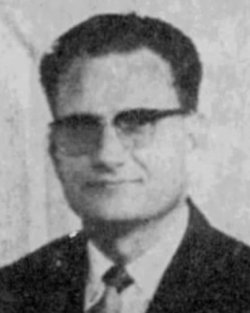
Wilbern Elias Best (1919-2007) was a preacher and writer of Gospel material. He wrote 25 books and pamphlets comprised of sermons he preached to his congregation. These books were distributed in English and Spanish around the world from 1970 to 2018 at no cost via the W.E. Best Book Missionary Trust.

Comments

0 / 2000 characters
Comments are moderated before appearing.

Be the first to comment!

Joshua

Joshua

Shall we play a game? Ask me about articles, sermons, or theology from our library. I can also help you navigate the site.