Bootstrap
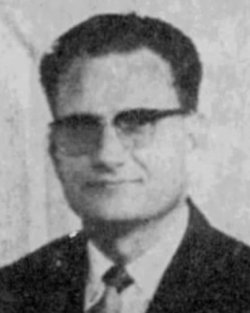
W.E. Best

#8 Faith - The Many Aspects of Faith

W.E. Best July, 1 1973 Audio
0 Comments
Remastered October/November 2024

Sermon Transcript

Auto-generated transcript • May contain errors

100%
Tonight at the very beginning,
after we look at the 8th verse, when Paul said, First I thank
my God through Jesus Christ for you all, that your faith is spoken
of throughout the whole world. When you think of that text of
scripture and what we said this morning concerning the subject
of faith, and I do not want to spend a lot of time reviewing,
but I do want to make one observation of what I said this morning. and elaborate on it just a little
bit further before we continue our discussion of the subject
of faith this evening. When I made this statement this
morning, quoting Dr. Machen and what he had to say
about faith, the statement that he made, which I think is so
important for us to know, he said that faith in his time,
and that's some 50 years was being considered as a benevolent
quality of the soul without any respect to the reality or unreality
of its object. You can see that many persons
today who are religious in their views, even though they are religious,
does not mean that they are Christians. How in the world can a person
who has faith in a peccable Christ be saved? You think about that
for a moment. What about the object of that
faith? I had a preacher who is with the Lord, I assume now,
and I'm certainly hopeful that he is. I have no right to say
that he isn't. But he was with us several years
ago, and he thought that I was a little too strong on my concept
of the person of Jesus Christ. He didn't think that a person
had to believe in the virgin birth of Christ, that he had
to believe in the impeccability of Jesus Christ in order to be
saved. So he was discussing that with
me while we were eating lunch one day. He said, I think you're
too strong on that particular point. I said, You do? He said, Yes, I do. And he was
a man much older than I am and given up to be quite a student
of the scriptures. I said, I would like to ask you one question.
He said, all right. I said, when you read Matthew
16, beginning with the 16th verse and going through the 17th, I
said, when Peter made the statement after giving the confession,
Thou art the Christ, the son of the living God, And the Lord
Jesus replied to the confession that Peter made by saying, "'Flesh
and blood have not revealed this unto thee, but my Father which
is in heaven.'" I said, Do you believe that salvation is a revelation? He said, Yes, I do. Do you believe
in regeneration by the Sovereign Spirit? Yes, I do. Do you believe
that conversion is the fruit of regeneration and our conversion
experience comes by means of the gospel and our embracing
the gospel of the Lord Jesus Christ?" His reply was, I do. I came back to make this statement.
I said, then, if that be true, and I believe it is, I believe
that regeneration is for the sovereign Spirit of God, I believe
that conversion is by means of the gospel, embracing the glorious
gospel. Furthermore, I believe all this
is a revelation of God to the heart of the individual. Do you believe that the Holy
Spirit of God will reveal a peccable person in his experience?" He said, and that's all I ever
got out of it. I said that to say this, when
Dr. Machen made the statement, faith
is being considered as a beneficent quality of the soul without respect
to the reality or unreality of its object, and then he went
on to say, in the moment faith is considered in that way, in
that moment it is destroyed. I believe that. In other words, it isn't enough
for a person to have faith, and I'm going to go into the study
of natural faith tonight and the various aspects of natural
faith, just as we will next Lord's Day, the Lord willing, give many
aspects of saving faith. So a person not only has to have
faith, but faith which is God's gift and the faith which is God's
gift is always rightly placed, and that is in the glorious person
and work of Jesus Christ. That is saving faith. If that
is not saving faith, then I'm wasting my time preaching and
teaching the scripture. I want to begin tonight by just
giving to you a few ideas concerning the many aspects of saving faith. I'm not discussing these with
you, but I want you to think about them. I'm hoping that not
any one of you, after having given a biblical example of weak
faith, but saving faith nevertheless, from the 9th chapter of the gospel
of Mark this morning, that you will not take refuge in weak
faith. Are you following me? Don't just
take refuge in it. There are other aspects of faith.
Even this man who had faith, though weak it was, came to Jesus
Christ and he asked, of course, that his faith might be strengthened.
We're going to look at that point next Lord's Day, not only from
the request by this father of the lunatic son, but also the
disciples of our Lord, ask that their faith might be strengthened. I'd like to just give to you
at the beginning tonight, before we get into natural faith and
what faith is not, several aspects of saving faith.
Yes, faith is weak. Remember what I said in making
one point this morning? It may be weak and in consternation,
but it is not under condemnation." That's a significant statement,
one that is easy for us to remember, one that you can put as a note
in your Bible, and when you read it, it will bring many things
to your mind. First of all, faith is the gift
of God. I'm talking about saving faith.
Not only is it the gift of God, But this faith has confidence
in God. We'll discuss this part of this
aspect of faith next Sunday. It has confidence in God. And of course, in order to have
confidence in God, faith must be rightly placed. Saving faith
is faithful knowledge. There has to be some knowledge.
In other words, faith is not a blind thing. So there has to
be some knowledge, and true faith is based upon knowledge, as we
will show. And of course, that leads even
to greater knowledge. Faith is a part of the new creature. If faith is a part of the new
creature, then it cannot be the cause of the new creature. Do
you see what I'm talking about? Most religionists believe that
human faith is a contributing factor to one's salvation. But
saving faith is a part of the new creature, and since it is
a part of the new creature, it cannot be the cause of the person
becoming the new creature. Now, we'll elaborate on that
more later. Faith, saving faith, makes all of life meaningful
and draws the elect of God out of themselves. The true meaning of faith is
forsaking all, I take him. I like that simple explanation.
You take the letters of the word faith, f-a-i-t-h, f, forsaking
all, and there are scriptures that will harmonize with that
statement. a, all, forsaking all, i, pay
or embrace the Lord Jesus Christ, him, that is, the Lord Jesus
Christ. Saving faith is not so simple
as to exclude the Spirit of God in producing it. We hear so much
faith today, oh, simple faith in Jesus Christ. I want you to
know, saving faith is a complex matter. Saving faith is a living faith
in the living God. When we think about saving faith
being a living faith in the living God, This is a faith which purifies
the heart, and any faith that does not purify the heart is
a natural faith and not saving faith. I don't care how much
one talks about having faith. Listen to this statement made by Puritans. The faith that
does not purify man's heart may illumine his head till he is
giddy." You'll like this. It may enlighten his understanding
till he is as proud as Lucifer. It may inflame his pride as a
professor till he is as vain as the devil could wish him to
be. But if it does not purify his
heart, it is not of God. Isn't that a great statement?
It's great enough I put it in my Bible. Saving faith leads to good works. You haven't thought about it?
Not through yet. Saving faith has the capacity
for increase. Saving faith has not reached
completion in one's life on earth. Therefore, it has the capacity
for increase. And this is the tenth aspect
of faith, and I may have more, and I may not be able to discuss
all of these. But faith in faith perseveres. So you see, it doesn't
make any difference So the individual who possesses this faith loses
all of his friends, loses all of his material possessions.
If he has faith in Jesus Christ, that's the most important thing. Most important thing. Now, you can see what all is
involved in saving faith. And I have it hard to touch the
surface. I mentioned to you this morning
that natural faith is being stressed a great deal today. I read this
past week some things that I thought should be brought before you. I want to give a few illustrations
before we finalize our message tonight by discussing four points,
showing what faith is not. As we consider illustrations
on natural faith, let's just go through and discuss some of
these things. We're told that in the ancient games, the runner
hoped to win the race, and this is true today in every athletic
event. The desire is to win the race,
if he is running a race, and win the crown or the prize. So, in the confidence of this,
in the faith of this, what does the person do? He strains every
nerve and sinew in order that he might win the race. That is natural faith. The student, for instance, hopes
to find his name in the honors list. Therefore he gives diligence
to his study. He talks about peace, that natural
peace. The farmer in the springtime
plows and sows, and he talks about peace in harvesting a good
crop in the fall. The Church of Rome will get down
to some of the religions of the day. The Church of Rome teaches
that faith consists in a mere assent to the doctrines of the
Church, a mental assent to the doctrines
of the Church. To Catholics, that is faith.
To them, that is faithing faith. The Church of Christ teaches that faith consists in a mere
assent of the mind to the facts of the
Bible. Such faith is won by argument. Think about that for a moment.
I know this to be true. one debate for the Church of
Christ minister many years ago. Nothing was gained by it. Personally,
I don't ever want to have another, not that I am afraid to debate,
but because of the convictions I have concerning the teaching
of God's Word, and that is, nothing is gained by mere debate. That
doesn't mean now that all debates are wrong. The Apostle Paul was
put on the spot. under certain circumstances,
and he debated with persons that he came in contact with in his
proclamation of the truth. But I do not believe that a person
can be convinced by mere argument, and having been convinced, he
will have faith in biblical facts and that faith will save him.
Saving faith is more than a mere mental ascent of a mind in embracing
certain biblical factors. Antinomians, and we have quite
a few of these in Houston, regard faith as an intellectual of certain propositions. For instance, like this, By sins
be forgiven thee. It doesn't make any difference
then how one might live or act. In fact, one preacher here in
the city of Houston, and I have his book, says you can become
an agnostic, you can even become an infidel and still be faithful.
How do you like that? You see, that is just looking
at faith from one particular point of view. That's why I stated
this morning that Hebrews 11.1 is not a complete definition
of faith, any more than to say God is love is a definition of
God. God is love, but God is just,
God is holy, God is righteous, God is omnipotent, God is omniscient,
and go on and on. So there are many aspects of faith.
So antinomians regard faith as an intellectual acceptance of
some particular proposition. Let's begin tonight by investigating
a verse that those who believe that human
faith is to be exercised, that is, man's part, in embracing
the work of Jesus Christ, thus faith is a contributing factor
to one's salvation. They do not understand the meaning
and the teachings of Ephesians 2, verse 8. So will you turn
with me to that portion of Scripture? You say, this is a familiar verse.
Yes, so was John 1.1 that we studied last Sunday evening. Now, one does not realize the
controversy that exists, even to this very day over Ephesians
2.8, unless he takes time to get on the other side of the
fence, so to speak, and he makes some investigations about what
persons believe who do not embrace faith as being the gift of God,
or the fruit of regeneration. Now, this is a verse that all
of us know by memory. For by grace that ye say through faith,
and that not of yourselves, it is the gift of God. Go ahead
and go to the 9th verse, not of works, lest any man should
boast. Let's look now at verse 8. Do you know where the controversy
exists in this text description? Do you know what word it is that
has caused all the controversy? between Arminianism, and I'll
use this term, Calvinism, I'm not ashamed of it, but I would
rather just use the terms free grace and free will. Those who
believe in free will have made one word in Ephesians 2.8, the
point of controversy, saying that this one word and the gender in which it is
found, destroys the idea of faith being the gift of God. Now, take some notes on this,
please, because you'll be confronted with this if you use this tactic
in witnessing for the Lord and you come up against an Arminian.
Read the verse with me now. For by grace are you saved through
faith, and that The pronoun that is the point where all the controversy has risen. And that none of yourselves
. . . Do you notice the two words, it is? They are italicized. The
five words, the gift of God. Now, the pronoun that is in the
neuter gender. Those who believe in free will
say that since the pronoun is in the neuter gender and the
word faith is in the feminine gender, that when Paul says,
and that not of yourselves, it is not talking about faith but
grace. So here's where all the ultimate
is. I've read so-called Greek scholars who have debated this,
and I've tried to take down brief point that they use in their
argument. Now I want to give you a statement,
and then we will try to interpret this text in the light of the
context in just a moment. The neuter pronoun refers not
to just the word faith, but the grace also. Both grace and faith
are in the permanent gender. Now, one outstanding Greek scholar
has made this particular statement, and I quote, he has said, "...a
neutral, demonstrative pronoun," and it's that in this case, "...is
frequently used to refer to a preceding masculine or feminine noun when
taken in a general sense." That's a great statement. I'll
repeat it. A neutral demonstrative pronoun
is frequently used to refer to a preceding masculine or feminine
noun when taken in a general sense. With that thought in mind,
remember what I said a moment ago. The neuter pronoun that
refers to the whole concept of grace. Grace and faith are both feminine. Now let me raise a few questions
and seek to interpret this verse in the light of its context.
It is through grace, beloved, that we believe. Does this make
sense? I'll prove that statement by
a verse of Scripture. I'll not take time to turn to
it. I'll give you the reference, Acts 18.27. It is through faith,
through grace, that we believe. Hence, grace is the efficient
cause of our believing. Notice what I said. Grace is
the efficient cause of our believing. Now, would it not be ridiculous
for me to say that faith is the efficient cause of faith? Are
you following me? Wouldn't that be ridiculous to
say that my faith is the efficient cause of faith? That is too ridiculous
to even consist. Grace is the efficient cause
of faith. What are we told in Acts 13.48? All that are ordained to eternal
life through And believing is the fruit of ordination, or divine
election. Both grace and faith in this
text of Scripture are God's gifts. Grace is a gift, faith is a gift. You don't have to accept my word
for this, Philippians 1.29, praying that faith is the gift of God.
If people want to debate about the word faith not being the
gift of God in Ephesians 2.8, what about Philippians 1.29,
which specifically says that faith is the gift of God? What
are you going to do about Hebrews 12, verse 1, looking on at Jesus
Christ, who is the author and finisher of our faith? I'm giving
you Scripture. So let a person argue if he pleases. all he wants to, and he may convince
us that the lunar pronoun in Ephesians 2.8 cannot refer to
faith, since faith is a feminine noun. Therefore, faith in this sense
is not the gift of God. Yet I can show you passages of
Scripture which plainly state that faith is the gift of God.
I'm talking about saving faith. Paul raises a question. In fact,
he makes the statement in writing to the Church of Thessalonica
that all men have not faith. So faith is the gift of God.
Grace, too, is the gift of God. Speaking of salvation as a whole,
it is by grace, is it not? Not of yourselves, in verse 9,
excludes man's faith in the new birth. not in a conversion experience,
but in the new birth or in regeneration. Faith is the instrument of receiving
and enjoying salvation or deliverance. What word is used thus to teach
us what the first act in salvation really is in this portion of
scripture, Ephesians 2, it is the word quickened, verse 5. Even when we were dead in sin,
have quickened us. Faith is not the procuring cause
of our salvation. So both faith and and callings
are of grace according to 2 Timothy 1. Ephesians 2 verse 8 does not
teach that all is of grace except faith. You look at it, and this
is what all persons who believe in free will teach. All is of grace, including faith,
Is that the teaching of the passage of Scripture? Yes, beloved, that is what the
passage teaches. Now, we'll give you four things
that saving faith is not in the 30th edition. First of all, there is natural
faith, which looks at the ability of the natural man. This faith looks to the will
of the sinner as preceding the will of God. They have the will of the sinner
preceding the will of God. All who believe in free will
say, you must be willing to be saved, and when you manifest
your willingness to be saved, then God will save you. That
places the will of the sinner before the will of God. That
makes the will of a sovereign God dependent upon the will of
the sinner, and that is nothing short of heresy. And I want to
be as dogmatic as I know how. Let me show you the simplicity
of that. We're told in Philippians 2, verses 12 and 13, that it
is God who works in us as Christians the will and the do of his good
pleasure. If the Lord works in his own,
making them willing, and he doesn't work in a center to make him
willing, does that mean that the center has more power in
his will than the Christian has? You hear what I'm talking about? You see how ridiculous it is?
Here I am, I'm a Christian! And in order for me to be made
willing, it is the grace of God, the Spirit of the Lord working
in me, making me willing to do the will of God. And I must have that power within
me. And I'm a Christian. But oh, those who believe in
the free will of man, they believe that a sinner has more power
than the Christian possesses. Do you think about that? analyze that statement for a
little bit. Now do you see why that the Church
of Christ people are so heretical? My wife and I were listening
to one on the way to church this morning. It got so ridiculous
I finally turned it off. But I've heard their arguments
over and over and over again. I came to Houston in 1947 to
work with a Baptist priest. I did not know it until I was
with him a few months, about three months, just how far off
base he was in his theology. I was young, just getting into
the study of the Doctrines of Grace. I didn't have much help. There were very few Puritan books
being reprinted then, and they were difficult to get. Most of the training that I got
at that time, that is, during the first few years of my ministry,
came from Dr. T.T. Fields, who was at that
time pastor of the Jarvis Free Baptist Church of Toronto, Canada,
called the Spurgeon of Canada. I got his weekly paper, and he
usually had a great doctrinal message in every weekly paper.
I was not taught the doctrines of grace when I went to the Bible
Institute. They didn't teach me. Beloved, some of you do not
realize what you, the opportunity that you have today. I did not
have, actually, Mark and David, I'm sure, are better versed in
these things right now than I was after I had been preaching for
several years. They have access to material and things that I
did not have access to. So I came into the knowledge
of these things through diligent study and through the help of
men like Dr. T.C. Shields and two Plymouth
brethren, men who were strong in the doctrines of grace that
put a few books in my hand as a young minister. I said that to say this, when
I came here to work with this man, I mentioned this to my wife today,
and she said, you know, it kind of scares you when you think
about it. I said, it sure does. He told me one day that he did
not make any distinction whatsoever in the mind and the heart. In other words, when a person
believes with his mind, he automatically believes with his heart. In fact,
there's no difference, he said, between the mind and heart. After I got through analyzing
what he believed, I realized that he believed that a person
could be won by argument, that faith was simply a mental asset
of one's mind, just as the Church of Christ teaches. And I'd already
had some discussions with Church of Christ people while I was
pastor in Big Spring, Texas. I asked him one day, I said,
that is very close to the doctrine of the Church of Christ. He smiled and said, Well, I was
raised one. I said, You were? He said, Yes.
But he said, That's one point that they're right about. If that be true, then why would
the Apostle Paul go so far as to say, in the 10th chapter of
Romans, that with a heart man believeth on the righteousness,
and with a mouth confession is made with reference to exaltation? He believed that faith was nothing
more than the middle asset of the mind, and that scared me.
Finally, I told him, I said, we are poles apart on some basic
doctrinal views. Therefore, I'm leaving, and I
left, not knowing where I would go or what I would do, but the
Lord didn't let me miss a Sunday without preaching, and I'm grateful
for it. I've made many mistakes, and
I've stumbled, but you know, it's wonderful to look back and
see how the Lord has directed me. Many of you have also stumbled,
made many mistakes, but you are thankful that the Lord has brought
you to the place where you now see some things that you never
did see before. I do not believe that the will
of God is dependent on the will of man, do you? That, to me,
is ridiculous. There is not one verse of scripture
to substantiate that view. So there is a natural faith which
looks to the ability of a natural man. I think this came from John
Bunyan. When you think about a man who
spent twelve years in Bedford jail with nothing but a Bible
and Faustus' Book of Martyrs, and to have come out with as
much real biblical truth as he did possess, you can attribute
it to one thing, and that is the leadership of the Spirit
of God in his life. Bunyan, who gave this statement,
natural faith looks to the will of the sinner. Supernatural faith, which is
the gift of God, looks to the will of God. Natural faith looks to the ability
of the sinner to come to Christ. Supernatural faith looks to the
ability of God to draw the sinner to Christ. Finally, natural faith makes
the will of God dependent on the will of the sinner. Supernatural
faith makes the will of the sinner dependent on the will of God.
If thou wilt, thou canst make me clear. That was the cry of
the leper. Secondly, there is historical
faith, which is theoretical, but not practical. Theoretical
but not practical. The devils profess this kind
of faith. We have an illustration of it
in James 2.19, the devils believe you tremble. It isn't enough
for a person to say, I believe in God, the devils believe that.
But there's a great difference between the devils and religionists
today. They tremble and religionists
don't even tremble. Simon Magus, in the 8th chapter
of the Acts of the Apostles, is another biblical illustration
of theoretical faith that is not practical. When Simon Magus
saw many of the Samaritans believing, the record states that he also
believed in this that time. But he was not saying this. It
was simply a theoretical faith. But it did not purify his life. It did not purify his heart.
Or Peter told him that he must repent and pray to God lest the
thought of his heart condemn him. He thought he could purchase
the power which he saw Peter exercise. When he saw all the
people that he witnessed believing and
following the Lord in baptism, he said to himself, this is popular. If I'm going to continue to bewitch
the people, I'd better join up with them. If you can't beat
them, join them. That was his philosophy. And
that's the philosophy of a lot of religions today. This was the same kind of faith
that Nicodemus had when he came to Jesus Christ by night. I'm
giving you biblical examples of this theoretical faith. He
said, Why, I know that no man can do the miracles that thou
doest, except God be with him. I know thou art a teacher come
from God." Nicodemus possessed a theoretical
faith, but it did not purify his heart. Now, I've given you
three biblical examples of theoretical faith that is not practical.
The Devils, James 2.19. Simon Magus, Acts 8, verses 12
and 13. You'll want to read the following
verses in connection with those two verses. And finally, Nicodemus,
who came to our blessed Lord by night. That historical faith, if you
want to call it that, or theoretical faith, that does not purify the
heart. The third example. There is a
temporary faith which continues only for a time. I have witnessed this so many
times in my ministry for the Lord. I have seen people make professions
of faith, follow the Lord in baptism, become active in church
work. But when some real tragedy happens,
when some trial or temptation comes, when a little bit of persecution
comes to that person's life, He ceases to follow the Lord.
It's a le tempore. All right, I'll give you some biblical examples
of this. Turn with me, first of all, to Luke, chapter 8, verse
13. The 8th chapter of the gospel of Luke. We want to look at Luke's
account, and then we'll turn to the 13th chapter of the gospel
according to Matthew. We want to read the text found
in Luke, chapter 8, because it makes a statement that I like
very much in connection with the point that I'm giving. Look
at verse 13, you remember the familiar story of the sower and
the poor sower. Only the last sower represents
a heart prepared with the Spirit of God for the receiving of the
Word when it has been sown. Verse 13, they on the rock are
they which when they hear receive the Word with joy. And these have no roots. which
for a while believeth." Those words, which for a while believeth. And in time of temptation falls
away. That's temporary. That's believing
for a while. Turn to Matthew. Let's look at
Matthew's account of this in the 13th chapter. Let's just
read the interpretation beginning with the 18th verse, "'Hear ye
therefore the parable of the sower. When any one heareth the
word of the kingdom and understandeth it not, then cometh the wicked
one and catcheth away that which was sown in his heart. This is
he which receiveth seed by the wayside.'" Now verse 20 and verse 21. But he that receiveth a seed
into stony places, the same is he that heareth the word, and
anon, at once, with joy, receiveth it. But beneath the thin surface
of dust lay the old rock, the unrepentant," or unprepared, hath he not rude in himself, but doeth for a while." You see,
you need to compare those words with the words found in Luke
8, verse 13, "...doeth for a while." He goes on to say, "...for when
tribulation or persecution ariseth because of the word, by and by
he is appending." I have seen this a great number of times,
and so have you. I never rejoice when I see it,
but I've seen it. I'd like to give you another
biblical example of this. Turn with me, if you will, please,
to the 33rd chapter of the prophecy of Ezekiel. Here is a classic
example of persons going to church receiving the message for a while. But as soon as persecution comes,
or temptation comes, they can't stand the test, and the reason
they can't stand the test is because the Word did not fall
into a prepared heart. Ezekiel is God's prophet. He
is the watchman that was to stand upon the wall. The watchman must
not give an uncertain sound when he blows the trumpet according
to 1 Corinthians 14, verse 8. Truth is dogmatic and should
be definitely proclaimed. Now, what are the duties of the
watchman? He is to be faithful to the Lord in proclaiming the
message, warning the people. concerning impending judgment. Ezekiel was to the exiles to
whom he ministered as a lovely song. Now, get this. The excitement was only the excitement
of passion, which could have been equally aroused by the harmonies
of a concert. I don't like to see this, but
I've seen it. I've seen people's passions aroused,
and they could have been aroused by a musical concert just as easily as they were aroused
even for the preaching of the Word. Now, let's begin with the
30th verse and read through verse 33, and then I'll explain some
We're talking about temporary faith. Also thou, son of man,
the children of thy people still are talking against thee by the
walls and in the doors of the houses, against thee," you'll
notice your marginal reference, "...of thee." In other words,
they were talking about his evil. They were carried away from him
with his preaching. and speak one to another, every
one to his brother, saying, Come, I pray you, and hear what is
the word that cometh from the Lord." Haven't you seen people
like that? Oh, they get enthused, and for
a time they receive the message with joy, but when some trial
comes, when temptation comes, they throw up their hands and
they say, I tried, but it doesn't work, and so I quit. I've seen
many, many people like that. Verse 31. Observe some things as you read
this text. And they came, or and they come, notice the words,
they come, unto thee as the people cometh, and they sit, first they
come, number two, they sit before thee as my people, number three,
they hear thy But they will not do them. Now, we see three things
thus far. They come, they sit, they hear.
That's easily understood. Now, look at something else.
But they will not do them. But they will not do them! For
with their mouth they show. Here is the fourth thing. They
come, they sit, they hear, and number four, they show. When
I was studying this this afternoon, reviewing this really, I said
something to Juanita, we both laughed about it. I've seen people, when I
preach, you know, some great subject, people smile and give
some indication, oh, that's wonderful. You know what I'm talking about?
Oh, that's great. Notice this now. They show, when
you look at your marginal reference, You can have this new wide margin
Bible, there's a number 7 by the word, by the pronoun they.
And in the margin it says, they make love our guest. In other
words, they give some indication of, boy, that's good, that's
good. We used to have a little fella,
he was a minister but he never did preach. And Brother Pennington
will remember him, he always sat on the second seat to my
right over Griggs. And I'd get on something and
he'd just jump up out of his seat and raise up about two or
three inches. And if somebody was sitting next to him he'd
punch them, you know. And yet he didn't do anything
about what he heard. So a lot of these things came to my mind
when I read this. They come, they sit, they hear,
they show. In other words, they make love
or guess. But their heart groweth after
their covetousness." Verse 32, "...and lo, thou art unto them
as a very loveless song of one that hath a pleasant voice."
Now, of course, you can't say that about me. I don't have a
pleasant voice. When I'm preaching sometimes I sound like I'm chomping
at you, quacking at you, I'm sure. I don't have a pleasant
voice, and I know that. The Lord didn't give me one,
but I'm just glad He gave me one that He did, and I use it
some way for His glory.
W.E. Best
About W.E. Best
Wilbern Elias Best (1919-2007) was a preacher and writer of Gospel material. He wrote 25 books and pamphlets comprised of sermons he preached to his congregation. These books were distributed in English and Spanish around the world from 1970 to 2018 at no cost via the W.E. Best Book Missionary Trust.

Comments

0 / 2000 characters
Comments are moderated before appearing.

Be the first to comment!

Joshua

Joshua

Shall we play a game? Ask me about articles, sermons, or theology from our library. I can also help you navigate the site.