Bootstrap
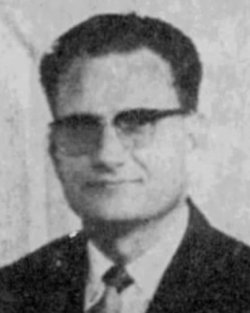
W.E. Best

#9 Faith - Biblical Faith

Romans 1:1
W.E. Best July, 1 1973 Audio
0 Comments
Remastered October/November 2024

Sermon Transcript

Auto-generated transcript • May contain errors

100%
Open your Bibles to Romans 1. I introduced the subject last Sunday
morning, and we spent both services, morning
and evening, discussing the subject of faith. Today we are continuing our discussion
of that subject. We will be studying the subject
of faith and the service this morning and again in our evening
service. I've made up my mind that in
these last years of my ministry I'm going to do my best to stay
with subjects that are of great importance. I believe there is
enough biblical material on all the great biblical themes to
keep me busy if I were to live 20 more years and am able to
speak effectively for that period of time to keep me busy. There are so many things in God's
word that are so important that we must spend our time discussing,
I feel, the most important things. With all the discussion on the
subject of faith, there is very little understanding of biblical
saving faith. If you do not believe it, I challenge
you to take notes on the subject which I am now discussing with
you, learn more about the subject, discuss this subject with religionists
that you come in contact with, and you'll find what I am saying
this morning to be true. I heard a preacher say one time
in the discussion of the subject of prayer that prayer is used
were understood less than any of the Bible subjects. That was
his comment on the subject of prayer. I could say the same
about the subject of faith. Faith is discussed a great deal,
but it's abused much and understood very little by the average person
who seeks to discuss the subject of faith. I was delighted last
Sunday evening when I asked how many of you were memorizing all
four words. I think every hand in the auditorium
was raised, and we had almost every person present, not all,
but almost, Sunday evening than we had Sunday morning. Many of
you have already memorized the first 17 verses. Some of you
have memorized the first seven. This is encouraging. I hope the
time never comes in your lifetime or mine when this book that we
cherish so much will be taken from us, but it could happen. It has happened, and it could
happen again. Let us look at verses 8-13. division of Paul's four words.
You that have memorized it, just quote it along. I'll read verses
8 through 13 with just a few comments on what we discussed
last Sunday on the subject of faith. There are three great
themes in these verses, and around these three themes we're seeking
to give a verse-by-verse exposition of this division of the four
words. First, I thank my God through
Jesus Christ for you all, that your faith, or the faith of you,
is spoken of throughout the whole world. For God is my witness,
whom I serve with or in my spirit, in the gospel of his Son. that
without ceasing I make mention of you always in my prayers,
making requests, if by any means now at length I might have a
prosperous journey for the will of God to come unto you. For
I long to see you, that I may impart unto you some spiritual
gift to the end you may be established. That is, that I may be comforted
together with you by the mutual faith both of you and Now, I
would not have you ignorant, brethren, that oftentimes I purposed
to come unto you, but was led hitherto or hindered, that I
might have some fruit among you also, even as among other Gentiles."
The three subjects around which we are going to give a verse-by-verse
exposition of this division of the four words are, first of
all, the faith of youth, verse 8, Then we have the subject of fellowship
in verses 11 and 12, and finally the subject of fruit in the 13th
verse. Last Sunday, I introduced the
subject of faith by giving a biblical example of faith in Jesus Christ. saving
faith in Jesus Christ. I use for the example Mark 9,
when the Lord Jesus and three of his disciples, Peter, James,
and John, came down from the Mount of Transfiguration, they
found the other nine disciples being confronted by a father
of a lunatic son. The father had brought the son,
hoping that the disciples would be able to do something for him. They were not able to do anything
for him because they lacked power. You see, the Lord Jesus was not
present with them. Without the presence of Jesus
Christ, you and I cannot accomplish anything as Christians. That's the lesson we need to
remember. That is the lesson that is set forth in that portion
of Scripture. The man who brought his lunatic son had faith, but
it was a weak faith. His faith, however, did not stop.
with the discouragement that he had received by confronting
the disciples and asking for help, to which they replied that
they could not. They lacked the power, the ability,
to help. The man was driven on by his
faith, faith which is the gift of God, and he found himself
in the presence of none other than Jesus Christ, who is the
source of the strength of his people. He manifested that his faith
was weak, and he asked the Lord to strengthen him. He said, I believe, help thou
mine unbelief. All I want to say in connection
with that this morning, to bring us to the place where we shall
begin our study today, is that faith, which is the gift of God,
will not be discouraged. It will drive one on to the person
of Jesus Christ, and there is where the individual receives
help. Instinct will lead us to individuals
when we are in need. But faith, which is the gift
of God, drives us on till we find ourselves at the feet of
Jesus Christ. That's the point I want to emphasize. I gave a quotation, brief quotation,
from a Puritan preacher who said, Faith may find itself in consternation,
but not under condemnation. true faith may find itself in
consternation just as this father of the lunatic son was in consternation,
but his faith was not under condemnation. We need to remember that. That
is an important statement, and one that should be placed in
the margin of your Bible in the discussion of the subject of
faith. Last Sunday evening, we spent
the entire period of time showing that there are many references
to faith, and these references do not give to us true saving
faith. It is not enough for a person
to say, I believe. Such faith may be historical,
it may be It may be occasioned by miracles
that one has seen, or great works that have been demonstrated,
and yet the faith is not in the person who has performed those
works. There are many references to
faith. that are not indicative of the fact that that faith is
savior. The devils believe in criminals. Many believe when
they saw the miracles that Jesus Christ performed, but the Son
of God did not commit himself unto them because he knew what
was in their hearts. The last part of the second chapter
of the gospel according to John. Tonight, I'm going to give at
least ten ingredients of saving faith. Would you now turn with me to
Hebrews chapter 11 for our subject this morning, and this will prepare
us for the study of the ingredients of saving faith that we will
discuss with you tonight. I'd like for us to read, beginning
with the 10th chapter of Hebrews, and verse 32. reading through
the 6th verse of the 11th chapter. Most of our comments this morning
will be on the 1st and 6th verses of the 11th chapter. Verse 32, Hebrews chapter 10.
The call to remembrance of former days in which, after ye were
illuminated, he endured a great fight of affliction, a great
fight of affliction, partly while he remained a gazing stock both
by reproaches and affliction, and partly while he became companions
or co-sharers of them that were so used. For ye had compassion
of me in my bonds, and took joyfully the falling," and the word falling
comes from the Greek word which means unjust seizure, "...of
your goods, knowing in yourselves that ye have in heaven a better
and enduring substance." Isn't that a good subject for us to
discuss this morning, in the light of all that's taking place
in our own nation today? Verse 35. Cast not away, therefore,
your confidence, which hath great recompense of rewards, for ye
have needed patience." Confidence is an important word in verse
35, and now patience in verse 36. "...that after ye have done
the will of God ye might receive the promise." for yet a little
while, and he that shall come will come and will not perish. Now the just shall live by faith."
Our subject is faith, so please connect the word faith in verse
38 with the word belief in verse 39, with the word faith in verse
1 of chapter 11, the words for by it in verse 2 of chapter 11,
and then verse 6. Now, they don't all mean the
same, but you need to make the connection. Now, let's read beginning
with verse 8-38 again. But the just shall live by faith,
but if any man draw back, my soul shall have no pleasure in
him. in contrast to those who draw
back. In other words, those who believe
for a little season that we discussed last on the evening. But we are of them? No, we are not of them. Look at the contrast. Remember
what I said the other evening in Discussing this conjunction,
this has been called the corner word of Scripture. That's the
best definition of the conjunction, but, that I know, the corner
word of Scripture. But ye are not of them who draw
back unto permission, but of them that believe for the saving
of the soul. The chapter division is in the
wrong place here, which is true in many places throughout the
Scripture. Let us not stop. Let's read verse 39 again and
go through the 6th verse of the 11th chapter without stopping.
But we are not of them. Here is the corner word of Scripture,
and that corner word of Scripture either leads us from something
good to bad or from something bad to good. corner word of Scripture, but
we are not of them who draw back onto perdition, but of them that
believe for the saving of the soul. Now, faith is the substance
of things so far the evidence of things not seen, for by it,
or for in this is another translation, the elders obtained a good report
Through faith we understand that the worlds were framed by the
word of God, so that things which are seen were not made of things
which do appear. By faith, Amos offered unto God
a more excellent sacrifice than kings, by which he obtained witness
that he was righteous, God testifying of his gift, and by it he being
dead yet speaking. By faith, Amos was translated
that he should not see death, and was not found because God
had translated him, for before his translation he had this testimony
that he pleased God. For without faith it is impossible
to please God, to please him or to please God, for he that
cometh to God must believe that he is and that he is a rewarder
of them that diligently seek him." General things by way of introduction
into the study of verses 1, 2, and 6 of Hebrews chapter 11. In verse 1 we are told what faith
is. As I stated last Sunday morning,
But we're not told all that faith is. Many persons say that Hebrews
11 gives to us a definition of faith. It is only a partial definition
of faith. It is not the whole definition
of faith. Anymore, and I illustrated it
last Sunday for you, For us to turn to 1 John 4,8 which states
God is love, that's not a definition of God, that's just a partial
definition of God. God is more than just the God
of love. He's a just God, he's a holy
God, he's an omnipotent God, he's an omniscient God. Notice
what I said, an omniscient God. In contradiction to Dr. Howard,
the Southern Baptist professor, who said that Ananias knew more
about Paul than the Lord did. Now, I could go ahead and tell
you some other things, but I won't take the time. I don't want to
give him that much publicity. But you see, God is love. God is
holy. God is just. God is righteous.
God is omniscient. God is omniscient. God is omnipresent. He'd go on and on. So, this is
not a definition of faith per se. It is a partial definition
of faith. Notice this. Now, faith is. The word faith occurs without
the article, therefore it is treated in its abstract conception, not particularly as New Testament
faith. And then he goes on to prove
the faith of Abel, the faith of Enoch, the faith of Noah,
the faith of Abraham, and on and on we can go. That will lead
us to something very important at this moment. It is important that
the preliminary definition be understood, since the following
examples illustrate it. Now, faith is the substance of
things hoped for, the evidence of things not seen. What do you believe about the
word faith in this text? I asked you last Sunday morning
to be thinking about it between the time I mentioned it to you
last week and the service this morning. I'm going to give you
this morning what many say this word means, and then I will give to you what
others believe, and it will be the latter interpretation of
this word that this pastor holds to with all others being. because it is the truth's interpretation
in the light of the content. Do you remember one statement
I made last Sunday morning about faith? I quoted a statement made
by Dr. Machen. I want to give it again
because it's important. We want to tie these things together.
Dr. Machen said, quote, much of that
which is called faith is nothing more than a benevolent quality
of the soul without any respect as to the reality or unreality
of its options." Now, beloved, if you take that statement down
and study it, you'll see how important that one statement
is. I'll illustrate it. There's a
lot of talk about faith today. You can turn your television
on and look at the news sometimes, and I've seen this when the sportscaster
would come on, and he would be interviewing some athlete. Well,
do you believe you're going to win the next game? I have faith
that we will. You see what I'm talking about? I have faith that we will. Now, what kind of faith does
he have? He's not talking about faith in the Lord, is he? He's
really talking about faith in himself and faith in his teammates. What is that true faith? It's
faith, but is it saving faith? This reminds me, and I don't
recall exactly who it was, I think that George Whitfield made this
statement, and he may have gotten it from someone else. But he
was talking to an individual one day, And he said to this
person who professed faith in the Lord, he said, what do you
believe? The man's reply was, I believe what my church believes.
Of course, that didn't say anything.
He said, what does your church believe? His reply was, my church
believes what I believe. He said, well, since you believe
what your church believes, and your church believes what you
believe, what do both of you believe? He was trying to get
to the bottom of it. He said, each one believes what
the other believes. Now, that is just about as sensible
an answer as you would get from a lot of people today if they
were asked to define their faith. I believe! I believe! An athlete can be interviewed.
Do you believe you're going to win in the next race or in the
next game? I believe that we'll win. I believe it. He has faith in
himself. He has faith in his fellow teammates. So you see,
the word faith can be used in many ways. So when Dr. Mason made this statement, he
did. that much of that which is called faith today, and I'm
talking about in the religious realm, is nothing more than a
beneficent quality of the soul without respect to the reality
or unreality of its object. That's a great statement. And
any time faith, I'm talking about religious faith, is put in that
context, it is destroyed. has no meaning, no basis whatsoever. What do you think the word faith
in Hebrews 11 refers to? Do you believe that the writer
of Hebrews is talking about subjective faith or objective faith? What do you believe? Well, let's
give a little preview to our interpretation of this text.
The 11th chapter of Hebrews has been rightly called, quote, the
hall of faith, end of quote. The chapter division comes at
the wrong place. In chapter 10, that's why we
went back and read some references where the word faith is found.
In chapter 10, faith is mentioned as the principle of Christianity. and the impetus of patient endurance."
Now let's look at this in the light of its context. Notice
what I said. In chapter 10, faith is mentioned
as the principle of Christianity and the impetus of patient endurance. Isn't that what he's talking
about, beginning with the 32nd verse through the last verse
of the 10th chapter? Doesn't he mention in verse 35,
"'Cast not away therefore your confidence, which hath great
recompense of reward, have ye, for ye have need of patience,
that after ye have done the will of God ye might receive the promise.
For yet a little while, and he that shall come will come and
will not perish. Now the just shall live by faith, But if any man draw back, my
soul shall have no pleasure in him." In contrast to that, the
writer says, but we are not of them who draw back but believe. Now, believing here, of course,
is the verb, and this is believing. This is
the activity of faith. We believe to the saving of the
soul. Now, let me stop and explain
that. 1 John 5, verse 1, "...whosoever believeth that Jesus is the Christ
is born of God." Believeth is in the perfect tense. It simply
means that he who believes continues to believe, and there will never
come a time in his life when he will cease to believe that
Jesus is the Christ. That's just like the person who
comes to Christ. He not only comes, but he keeps on coming. keeps on coming, so the rioter
is stressing. They should endure in view of
the conflict, in view of the persecution, in view of the affliction. We are not of them that draw
back under perdition, but we are them that believe to the
saving of the faith. Now, let's go a step further.
The faith that is answered by salvation, in Hebrews 10.39,
cannot be separated from its enduring quality in chapter 11. And I'm emphasizing enduring
quality so that I could never discuss
a subject more important than the one I'm discussing with you
today. This is the very principle of salvation, the very principle
of Christianity. The question to be raised at
this point of our study is, what gives faith its enduring quality? And stop that for a moment, let's
just think about that. What gives faith its enduring
quality? Is it faith in oneself? Is it faith in your government? Is it faith in politics? Is it
faith in some religious denomination? Is it faith in your church? Is
it faith in your preacher? What is it that gives an enduring
quality to faith? That's the question. But brother,
I'm going to be frank with you. I had the wrong concept of Hebrews
11.1 for the larger part of my ministry. In fact, only recently
have I really seemed to approve of this text. Now that doesn't mean I've been
a heretic on faith, but I didn't know what this particular verse
taught. I'm talking about Hebrews 11.1. So whenever a person thinks
because he studies a passage of scripture for some given period
of time, and he's done a lot of research work, he's arrived,
he hasn't. He never completely arrives. All right, now we've
come to the first verse of Hebrews chapter 11. And I don't know
how far we'll get, but wherever we leave off this morning, we'll
take up there tonight. Now faith is the substance of
things hoped for, the evidence of things not seen. What gives
faith? It's enduring quality, that's
my question. First of all, this morning, I
want to give you the common interpretation of Hebrews 11.1. And when I say
common, I mean most of the commentaries and books that you read, you
will find that what I am now about to give you, this is the
interpretation of this particular verse. That doesn't mean that
all men embrace this. I have some in my library who
do not believe that. Now let's see what it really means. Is
this subjective faith or is it objective faith? I'll give to you, first of all,
the common interpretation. It is commonly taught that Hebrews
11.1 is the definition of faith. I've already stated that this
is not the definition of faith. It's only a partial definition
of faith. The writer of Hebrews simply
gives the definition that is to be used in connection with
that about which he was speaking. And that's as far as he went.
Alright, there are two words that we will study for a little
while now. The first word is translated into King James Version,
substance. The second word is the word evidence. Alright, now look at these words.
The word substance means, and I'll give you the meaning, quote,
that which stands under a foundation, end of quote. In other words,
the Greek word translated substance is actually made up of two words,
and I'm not going to go into this and give you the Greek word
that isn't necessary. You want to check me out, you
have all the time that you want to do that. But putting the two
Greek words together, they mean that which stands under the foundation. In other words, it speaks of
the ground on which one builds a hope. Notice what I'm saying. The foundation on which one builds
a hope. We're talking about something
very important here. We're talking about your faith. Three things I want to say about
this. Substance, they say, means assurance or confidence in what
is promised. Now, there's proof in this, but
this is not the basic proof, and I'll just go ahead and tell
you that now. It is true, and I've checked
this out, that the same Greek word is used in chapter 1 verse
3 of Hebrews, and means the representation of the reality of him that is
God. It is also translated confidence
in Hebrews 3 verse 14. Morgan and Milligan, two Greek
scholars, say, quote, Faith is the tidal bead of things hoped
for." End of quote. Now, these are good definitions
of faith, and I'm not limiting this, but you see what I'm getting
at in a moment. Now secondly, let's look at the
word evidence. The writer of Hebrews says, now faith is the
substance of things hoped for, and secondly, the evidence of
things not seen. The word evidence means, quote,
a proof that by which a thing is proved or tested, end of quote. Thayer, the renowned Greek scholar,
defines the Greek word as, quote, that by which invisible things
are proved and we are conceived and we are convinced of their
reality." This word, translated as evidence in Hebrews 11.1,
is used in the verb form in John 8.46 when our Lord said, which
one of you can convince me of something? And it is used in the noun form
in 2 Timothy 3, verse 16, and to be translated conviction. Now, here's what some say about
this verse. Evidence serves as a telescope by which we can see
what we cannot see without a telescope. Now, some good statements are
made about faith, but you'll see what I'm getting at in a
moment. It does not put stars where there are none, but it
enables us to see stars without which we could see none. You
see what they're doing? They're defining subjective things. Another person says, evidence
is the demonstration of things not seen. This embraces not only
future reality, but all that does not fall under the cognizance
of the senses, whether past, present, or future. Now, what does Hebrews 11-1 really
teach? The writer says, Faith is the
substance of things hoped for, the evidence of things not seen. I want to raise a question. Please
follow me now. Did the inspired writer of Hebrews
intend us to understand that our subjective faith is the substance
of what we hope for and the evidence of what we do not see? Do you get the point? Let me
repeat. Is the writer of Hebrews suggesting that you and I are
to have confidence in our subjective faith? Is he saying that our subjective
faith is the foundation of the very thing for which we look? Is that what he's saying? If
that's your concept of it, then your faith is no different than
the faith of a Christian scientist. Now don't forget that. Your faith is no different than
the faith of a Christian scientist. Remember I made the statement
last Sunday morning that Christian science and their concept of
faith is nothing short of hyper-subjectivism. I said hyper-subjectivism. Is that your concept of this
word here, faith? Faith is the substance of things
hoped for. The evidence of things not seen.
Let us go back. You remember I raised the question
when we had made a few statements about the last verses of the
tenth chapter. What gives faith its enduring quality? Wasn't
that the question I raised? I'm still raising that question.
What is it that gives saving faith its enduring quality? It's
not faith in oneself, it's not faith in the Church, it's not
faith in some denomination, it is faith, follow me now, in Jesus
Christ! And this is what is explained
in the entire 11 chapters. You see why I'm as dogmatic as
I am? The context proves. that the
faith spoken of in verse 1 is objective and not subjective. Now, we have subjective faith
in the last verses of the 10th chapter, and we have subjective
faith in the 6th verse. Without faith it is impossible
to please God, but what is it that gives subjective faith its
enduring quality? It is the message of Jesus Christ. The message of Jesus Christ.
What we believe in regard to Christ is the substance of things,
so far, isn't it? What we believe in regard to
Christ, that is the foundation. It's not my subjective page merely
that is the foundation. You remember, we can go right
back and interpret that word, substance, which means that which
stands under. It's a foundation, and what is
it that gives foundation? What is it that gives substance
to my subjective page? It's the person and work of Jesus
Christ. So, what we believe in regards
to Christ is the substance of things for which we hope. We
can go further and say the truth of Jesus Christ is the substance
and evidence of all the promises of God in reference to unseen
things to be realized eschatologically. Isn't that true with Abel when
he offered his sacrifice? He was looking forward to the
one perfect sacrifice of Jesus. Is there any doubt about this?
The faith of Enos is mentioned, he walked with God, he looked
forward to the translation of the faith of God. The faith of Abraham, he saw Christ's day and rejoiced
in what he saw. What is it that gains substance
or a foundation to the faith of Abraham? What was it that
gave substance or a foundation to the faith of Israel? What
was it that gave substance or a foundation to the faith of
Abraham? It was none other than Jesus
Christ, the message of Christ. That's why we've said that the
word faith is without the article. This is not talking about New
Testament faith. New Testament faith is no different than Old
Testament faith. They had faith in Christ, but the coming of
Christ. And our faith looked back. It is proved in Christ,
but it looked back to the finished work of Christ. What do you think the Lord Jesus
meant when he said, as he spoke to the two men on the road to
Emmaus, beginning with Moses and all the prophets, beginning
with the Pentecost, he expounded unto them in all the scriptures
the things concerning himself. If faith is the mere subjective
act of believing, then we would have nothing more here in verse
1 than hyper-subjectivism, and that's what the Christians find.
Now, let's look at the second verse
for a moment. By subjective faith? No, objective
faith! By it! Or, for in this, that
is, the objective message concerning Christ, the elders were a pestilence. In other words, it was the objective
message of Christ that gave foundation to the subjective faith of the
elders. That, to me, is as simple as
it can be. Now, faith is not without knowledge. Saving faith is not only based
upon knowledge, but it leads to more knowledge. But to further
prove the point, when you look at the 27th verse, talking about
seeing him who is invisible, we're talking about Christ. We will now look at the fate
of Moses, beginning with the 24th verse. By faith, Moses,
when he was come to years, refused to be called the son of Pharaoh's
offspring, choosing rather to suffer affliction with the people
of God than to enjoy the pleasures of sin for a fee. In steaming
the reproach of Christ, greater riches and the praises in Egypt,
for he had respect under the recompense of the reward. By
faith he pursued Egypt, not fearing the wrath of the king, for he
endured as," here's the key, as seeing him who is invisible. But it was the invisible Christ
that gave substance, the message of Christ that gave substance,
gave foundation to the faith of all the elders. So when it
says in verse 2, for by it, by this message of Christ, The elders
obtained a good report. A good report. Faith is not without
knowledge. Saving faith is not only based
upon knowledge, but it leads to more knowledge. The entire
passage of Hebrews chapter 11 should be read with the definition,
quote, what we believe in regard to Christ, end of quote. Faith,
you see, is the positive recognition of truth. It embraces it through
all that God tells in his Word. Faith is concerned with spiritual
things. I'm talking about faith in faith now. Faith in faith
is concerned with eternal things. If faith in faith is the acceptance
of Christ as he is offered in the gospel, naturally questions
should be raised. How much of the gospel must one
know before he can be saved? Now, I'm not equating salvation
with regeneration. I hope you understand this. You see, in the exercise
of faith in verse 6, but without faith it is impossible to please
him, for he that cometh to God must believe in me, and that
he is a rewarder of them that believe in him. How much of the gospel must one
know in order to be saved? The answer is simple. He must
have enough knowledge to know that Jesus Christ is the Savior.
He must know something about the person and worth of Jesus
Christ. And when he hears that message, as a result of the principle
of faith which has been given him in regeneration, he embraces
the Christ. If faith in faith is the acceptance
of Christ, as he is offered in the gospel, then one must know
something about the person, the work of Christ. This is brought
out in 2 Timothy 1, verse 20. When Paul embraced Christ, when
he believed on him, he committed every sin to him. I know whom
I believe, and I am persuaded that he is able to keep that
which I have committed unto him against that man. Subject to faith alone does not
save, are you following? If this were true, then Christian
scientists, Jehovah's Witnesses, and all of their costs would
be saved because they all have faith, but their faith is not rightly
placed. Their faith is not in Jesus Christ.
Do you believe what Jehovah's Witnesses say? If he believes
in the doctrine of Jehovah's Witnesses, he is not faithful. And any person who says he is,
doesn't know anything about faith, he said he was going to claim
to have faith. He denies the duty of Jesus Christ. Someone
will come back and say, oh, but he believes in Jehovah! But doesn't
the Bible say, doesn't it claim to say, that no one has access
to the Father except through Jesus Christ? No man can come
to the Father except by means. That's what the Bible says. Do
we believe it? We're talking about faith right in the place!
And any institution that denies the deity of Christ, I don't
care how much they talk about faith, whether it be the Christian
scientists, the Jehovah's Witnesses, and on and on it can go, they
are not faith! If I made myself clear? If this
Bible is true, You say, well, do you think you're right and
everybody else is wrong? The Bible is right. And the only person who can believe
its message is those in whose hearts the grace of God has brought
a work of grace. What is it that gives foundation
to faith and faith? It's Christ. It's Christ. Now let's look at the sixth verse.
I want to illustrate something this morning if I have time.
In the 6th verse, without faith it is impossible to please God. For he that cometh to God must
believe that he is, and that he is a rewarder of them that
diligently seek him. You know what Paul tells us in
Romans 14.23? Whatsoever is not of faith is sin. Now, Paul is
talking about two faiths. He's talking about faith in faith.
So here's an individual, he is a religious individual, his faith
is in his immobilization, or his faith is in Joseph Smith,
or his faith is in Judge Rutherford, or somebody else. His faith is
not, you see, in Jesus Christ. So that's a sin, isn't it? Whatsoever
is not of faith, two faiths is sin. Beloved, it is not presumption
for you and me to believe God's promise. Distinction must be made in the
study of Hebrews 11.1-6 between the act of believing, Solomon
asked, and that which is believed. Distinction must be made between
the act of believing and the message that is believed. I've
already stated that faith begins with knowledge. Faith is not
a blind thing, I want you to know. It is not a blind thing,
and I'm going to prove that now. It is not presumption for you
and me to believe the promises of God. It is not presumption for you
and me to rest the full burden of our hope upon God's promise. Someone has said earthly blessings
may smooth in part the rugged journey of life, but they cannot
fill the deep void which sin has left in the human soul."
Oh, that's a great thing. It is true that earthly blessings
may smooth and pass the rugged journey of life, but they cannot fill up the deep
void which sin has left in the human soul." I can illustrate
it by giving a contrast between Ecclesiastes and Solomon. In
the book of Ecclesiastes, the important statement is, under
the sun, S-U-N, sun. Solomon tried everything. He
tried to have wisdom, he tried pleasure, He replied that, well,
none of these things gave him any real lasting joy. Do you know why? Very simple. Ecclesiastes is presented as
man under the sun, not man in the S.O.N. Man under the sun,
and that's the key phrase in the book of Ecclesiastes, the
Twelve Chapters, Ecclesiastes. Solomon tried everything. He
had wisdom. I didn't satisfy. What is more,
when you read the last verses of the fourth chapter, verse
15, you'll see what a brilliant man he was in many different areas.
I said in many different areas.
He was the wisest man of his day. No pleasure, no joy, no
lasting pleasure, no lasting joy or happiness, as it says. So then he tried something else.
He tried wealth. He tried pleasure. Do you know
why he found no lasting satisfaction? Because everything in this world,
regardless of how big it might be, how wealthy it might be,
how wise it might be, cannot satisfy the human heart because
the human heart is bigger than anything this world has to offer. I said it's bigger than anything
this world has to offer. That's why when a man gets a
million he wants two. When he gets two he wants three. And we could use many illustrations
of this. Now let's turn from that to the book of Song of Solomon. The man in the book of Song of
Solomon had pleasure and lasting joy. You know why? because he
was occupied with an object bigger than his heart. The infinite God is bigger than
the human heart. The infinite Savior is bigger
than the human heart, and that's why a person in Christ finds
satisfaction not in himself, not in his wisdom, not in his
wealth, not in his pleasure, but in Jesus Christ! because
Christ is larger than his body, the infinite Christ. And it's the infinite Christ
that is presented, and the message of the infinite Christ that gave
substance, that gave foundation to the faith of Enos, Abel, Abraham,
and on and on we could go. that gives foundation to your
faith and the lie. Saving faith is satisfied as
to the credibility of the testimony that comes from death. Let's hear this a little further.
Faith, a way of obtaining knowledge, should never be contrasted with
science. Someone has said, quote, "...as
all sciences must operate within the scope of a completed creation,
so faith must operate within a complete revelation." Ah, that's
a great thing. I'm uprooted. "...as all sciences
are ever looking for additional evidence to prove their particular
So, faith is demonstrated or proved by information about hidden
things already in existence. The simplicity of that is this.
Every science that is making a difference, what science it
is, it must operate within a complete creation. And every person's faith, if
it is genuine, must operate within a complete revelation. I'm getting
to a principle, beloved, and I hope we all get this principle
this morning. In fact, I've been building all this time for this
one principle that I want to leave you with. We commonly hear it said
today, well, faith believes. What about that statement? Let's analyze. This statement
depends upon what one means by the word proof. I like what one man said, quote,
if one means by proof that he obtains knowledge by his own
observation without depending upon information received from
other persons, then the distinction between faith and proof is valid. In that sense, Christianity depends
upon faith rather than upon proof. It must be insisted upon that
faith affords just as high a degree of scientific certitude as proof,
in the narrow sense of the word. The fact is, faith affords a
much higher degree of certitude than the proof. Another very
great statement, I wish I had time to really go into this,
but I think I
W.E. Best
About W.E. Best
Wilbern Elias Best (1919-2007) was a preacher and writer of Gospel material. He wrote 25 books and pamphlets comprised of sermons he preached to his congregation. These books were distributed in English and Spanish around the world from 1970 to 2018 at no cost via the W.E. Best Book Missionary Trust.

Comments

0 / 2000 characters
Comments are moderated before appearing.

Be the first to comment!

Joshua

Joshua

Shall we play a game? Ask me about articles, sermons, or theology from our library. I can also help you navigate the site.