Bootstrap
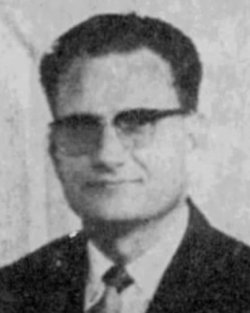
W.E. Best

#10 Faith - Major Ingredients of Saving Faith

Romans 1:1
W.E. Best July, 1 1973 Audio
0 Comments
Remastered October/November 2024

Sermon Transcript

Auto-generated transcript • May contain errors

100%
We'll continue our message tonight
on the subject of faith. The message I brought this morning
is one that if the Lord lets me live a number of years, it
will be repeated by me with additional information, of course, many
times without any apology. I'm hoping that you got the main
points of the message this morning. This is the fourth message on
the subject of faith. We have about two others we would
like to preach at this time, but I do not believe that we
will do so. I think that after the message this evening, we
will then begin our discussion of fellowship. I want to express my appreciation
once again for your concern about memorizing great sections of
the Book of Romans, many of you already beginning to do just
that. You've already been made to realize
the blessings that come from doing this very thing. It is
much easier for you to follow when the preacher preaches, when
he teaches, if you're well acquainted with that section of Scripture
from which the message is brought. Just quoting the 8th verse again
tonight. We can get going. First, I thank my God through
Jesus Christ for you all, that your faith is spoken of throughout
the whole world. Let's go a little further. For
God is my witness, whom I serve with my spirit in the gospel
of his that without ceasing I make mention of you always in my prayers,
making request that by any means now at length I might have a
prosperous journey by the will of God to come unto you. For
I long to see you, that I may impart unto you some spiritual
gift to the end ye may be established. That is, that I may be comforted
together with you by the mutual faith both of you and me. Now
I would not have you ignorant, brethren, that oftentimes I purposed
to come unto you, but was let hitherto, that I might have some
fruit among you also, even as among other Gentiles." Tonight I'm going to give some
of the major ingredients of saving faith. You who were here this
morning and followed us very closely in the development of
Hebrews 11 verses 1, 2, and 6, I'm sure are ready for these
major ingredients of saving faith. We've already seen that there
are many things said about faith that just aren't so. We have already seen that There
is a vital distinction between the exercise of one's faith and
that which forms the basis or foundation
of one's faith. So there is a difference between
subjective faith and objective faith. It is the objective faith
that gives subjective faith its foundation. When I say objective
faith, of course, I'm referring to the person and work of the
Lord Jesus Christ. I want to begin tonight by giving
a statement made by John Bunyan. John Bunyan was a man who spent
12 years in bed for jail. He had in his possession the
Word of God. And for a long period of time,
the only other book other than the Bible which he had was Foxe's
Book of Martyrs, we're told. It is somewhat amazing that a
man who spent that many years in bed for jail came out with as wonderful a
knowledge of the Word of God as he came forth from the jail
with and demonstrated what he had obtained by his diligent
reading and study of the word, with the aid of the Holy Spirit,
the things that really enriched his own life, and those who were
privileged to hear him speak for some time, as about 40 persons
met weekly, in a building not conducive to
worship from the standpoint of physical comfort because they
met in a blacksmith shop. How do you like that? But it
was a place where they met. And there Bunyan gave an exposition
of God's word to the people and he faithfully did this for a
number of years after being released from Bedford jail. Men like John
Owen, who was recognized as being one of the outstanding biblical
scholars of his day, often went to hear John Bunyan speak. He
was asked why he would go to hear that, quote, tinker, end
of quote. He said, I go because I have
as yet to hear him speak without having made preparation without
having a message fresh from the throne of God. I go because he
feeds my soul. I think that is a wonderful testimony
on the part of one who was recognized as being a great theologian and
yet he counted it a great privilege to sit at the feet of John Bunyan,
the Tinker, as he was referred to by many persons in his day. Saving faith, first of all, is
supernatural. I'm giving you the ingredients
of saving faith tonight. This is not going to be so much
preaching as it was this morning as it is teaching. And I'm hoping
that you will take some notes, get the main points as to the
ingredients of saving faith. By these points, you can test
your own faith to see if it is genuine or not. If it is saving
faith or if it's just a temporary faith, If it's a faith that has
been occasioned by blessings without any recognition or love
for the blesser, if it is just a mere historical
faith saying, I believe that Jesus Christ is the Son of God,
you can know whether your faith is genuine or not. And our faith
needs to be tested in this day to see if it is genuine. And
I believe that it's going to be tested. John Bunyan, having some very
significant things to say concerning the subject of faith, spoke about
faith being supernatural. Supernatural with relation to
its origin. There isn't any doubt in the
mind of any Christian as to the statement made by Bunyan being
scriptural. It is supernatural. Saving faith
is the gift of God, and we discussed this a little bit last Sunday
evening in the light of Ephesians 2, 8 and 9. Some of his observations, I think,
are real good. Natural faith, he said, looks
to the will of the sinner. I'm giving you in substance of
some things that he said. Natural faith looks to the will
of the sinner. Supernatural faith looks to the
will of God. There is a difference between
natural faith and supernatural faith. And saving faith is a
supernatural faith because it is God's gift to the individual.
Secondly, natural faith looks to the ability of the sinner
to come to Christ. Supernatural faith looks to the
ability of God to draw the center to Christ. There's a vast difference
between those two statements. Natural faith, and we discussed
this some last Sunday evening in giving to you, the different
ways in which faith is used, and yet many of them and the
references about those particular views are not, of course, a demonstration
of saving faith. Natural faith makes the will
of God dependent on the will of the sinner. Supernatural faith makes the
will of the sinner dependent on the will of God. What's the
difference between these statements? The difference is between salvation
and no salvation. Now here is a point that I did
not get from Bunyan. But I think it really has something
for us as we continue to think about faith being supernatural
since it is the gift of God. One of the Puritans of the past
has said that this faith which is God's gift is infallible because
it is a divine revelation. Now I'm talking about the infallibility
of this faith. It's supernatural and because
it is supernatural it's infallible. Now follow me closely here because
this will catch you if you're not really listening closely. You might not like on the surface
the way that this particular person refers to the infallibility
of saving faith. But I think that if you will
follow the statements closely, think about them in the light
of the scriptures that you will come up with the same conclusion.
And this is the observation. A fallible faith may believe
an infallible object. Now we're saying this so you
can get a clear view of the infallibility of saving faith. A fallible faith
may believe an infallible object. Now let's illustrate that. The devils have a fallible faith,
but they believe that God is God. According to James 2 verse
19, the devils believe and tremble. So there is a fallible faith
believing or giving mental assent to an infallible object. All right, the next step, an infallible faith cannot believe
a fallible object. Now that doesn't mean, here's
where I want to caution you because you need some study at this point.
Now the statement this man made in the light of its context is
a true statement. That doesn't mean that though
you as a Christian have the gift of faith, that you cannot believe
something that is not exactly right. I'm talking now about
the object of faith that we spent so much time discussing this
morning. So when the statement is made, an infallible faith
cannot believe a fallible object The person who made this statement
went on to prove the point by quoting John 10 verses 4, 5,
and 6. And the statement is absolutely
correct in the sense in which he gave
it. We're talking now about the object of faith, saving faith.
And the object is none other than Jesus Christ. Now let's
go back and review just briefly some statements in John chapter
10. When the Lord Jesus came into the world, he presented
himself in a lawful manner to the Jews. That's beginning with
verse 1 of John chapter 10. And when the Lord Jesus presented
himself to the Jews, the sheepfold, and the sheepfold refers to Judaism. The sheepfold is not the church,
the sheepfold is not heaven, but it is Judaism in the light
of the context. And you will find different interpretations,
but if you will study it in the light of the preceding verses,
that is the last verses of the ninth chapter of John, you'll
see exactly what the writer is talking about. So the Lord Jesus came and presented
himself in a lawful manner to the Jews. To him the porter opened
the door and the Lord Jesus passed through into Judaism as it were
in a lawful manner. Now he went into Judaism to save
the elect Jews and when he called them by name he let them out
of Judaism. He did not lead them in Judaism,
but he led them out of Judaism. And we're told that the sheep
recognize the voice of the shepherd and they will not follow a false
shepherd. And this is the context in which
the statement, an infallible faith cannot believe a fallible
object. So the faith which is the gift
of God, as we've already stated, will not find rest until it finds
its rest in the person and work of Jesus Christ. Faith which is the gift of God
will not be sidetracked by circumstances, by afflictions, by opinions,
But such faith will pursue and be driven on by the grace of
God until it rests in the person of Jesus Christ in a real conversion
experience. Now the third part of the statement. A person may possess an impalpable
faith and yet his person be palpable. Now that must not be forgotten
by you and me. We who possess faith which is
the gift of God have an infallible faith. It is infallible because
it is divine, it is infallible because it is supernatural. But a person may possess an infallible
faith and yet his person be fallible. In other words, there is not
a one of you who would stand up and say, I'm infallible as
a person. So an infallible faith is given
to fallible persons. Now let's run those three back
by again. This faith which is the gift
of God is infallible because it is a divine revelation. Now
in considering this, a fallible faith may believe an infallible
object. That could be the mental asset
of the mind, that could be a temporary faith, that could be historical
faith, that could be natural faith. The faith that is described in
the second chapter of John, many believe when they saw the miracles
that Jesus Christ performed, yet the Lord Jesus did not commit
himself unto them because he knew what was in them. Or the
devils believed and trembled. So a fallible faith, one that
is not the gift of God, and every faith or every exercise of faith
upon from that which is given by God
when he regenerates a person, but the power of the Holy Spirit
is a fallible faith. He will not stand the test. It's
just temporary, it's natural. So a fallible faith may believe
an infallible object. However, an infallible faith
cannot believe a fallible object, and I am referring to Jesus Christ. And then lastly, a person may
possess an infallible faith and yet his person be fallible. Infallibility belongs only to
Jehovah God. So this faith is supernatural
in contrast to natural faith. This faith is infallible in contrast
to fallible faith. This faith is divine faith in
contrast to human faith. Now let's go a step further in
the ingredients of saving faith. We had quite a bit to say this
morning about this faith being based upon knowledge. Saving
faith is based upon knowledge. It is impossible to have faith
in a person without knowing something about that person. No one can have saving faith
in Jesus Christ without knowing something about the person of
Jesus Christ. So you see, the truth of the gospel must
be proclaimed. when it is proclaimed every person who possesses this faith which
is God's gift will embrace that message and embracing the message
of course embrace the person of Jesus Christ. And that results
in a conversion experience. But you have to know something
about this Christ. Faith is not a blind thing as many people
think and teach. When you look at Hebrews 11 verse
6 once again, without faith it is impossible to please God,
but he who comes to God must believe that he is and that he
is a rewarder of them that diligently seek him. Look at that for a
moment. You hear it said today by so
many religionists, we preach Christ without a creed. You can't
even preach Christ without having a creed. You can. You hear religionists
today talk about we preach Christ but not doctrine. You can't preach
Christ without doctrine. The person who comes to the Lord
must believe that he is. There you have a creed. You'll
just stop thinking about it for a moment. And that he is a rewarder
of them that diligently seek him. So every person embraces a creed,
he embraces doctrine, of course the doctrine of Jesus Christ. Faith in a person, someone has
said, is more than acceptance of a creed, follow me now, but
the Bible is right in holding that it always involves the acceptance
of a creed or the acceptance of doctrine. Will you turn with me to John
17, the great high priestly prayer of our Lord? And you'll see what
I'm talking about. John chapter 17. Let us look at the 20th verse.
Here's believing doctrine. Here's a creed. Neither pray
I for these alone, said Jesus Christ, but for them also which
shall believe on me, here it is, through their word. Through the word, through the
testimony, through the doctrine, through the preaching of the
apostles. Now notice what it says. Through
the word of God to Christ, You have to know something about
a person to have confidence in that person. We have to know something about
the person of Jesus Christ. We have to believe that he's
the eternal son of God. Came into this world through a virgin's womb and arose, as we've already said,
from a virgin tomb. He walked among the sons of men. He was the impeccable Christ,
lived a perfect life, and became our substitute, our surety on
the cross. It is the Word of God proclaimed
that tells us about this Christ, and we learn about him through
the That's a creed. That's doctrine. So whenever
a person says, we don't believe in doctrine, we believe in Christ,
you can't have Christ without doctrine. So it's an ignorant statement.
It may sound good to a lot of people, but it is not true. This saving faith is a part of
the new creature. Follow me now. I said it is a
part of the new creature. And since it is a part of the
new creature, it cannot be the cause of the person becoming
a new creature. That's a vital point. Almost all religions today teach
that by human faith And they believe that human faith is a
contributing factor to their salvation. And what they mean
by that is to their regeneration or their new birth. Let me make a distinction. The
exercise of faith is a contributing factor to a conversion experience. But it is not a contributing
factor to the new birth. Because faith is a part of the
new creature, and since faith is a part of the new creature,
then faith is not the cause of the person becoming a new creature.
Faith is the gift of God. And the principle of faith is
given when the Lord regenerates that individual. This is a very
important point and one not believed by most religions. You say, well,
do you think you're right and everybody else is wrong? No,
I don't. But the Bible is right, and I'll stick by it. Let's analyze this for a moment
or two. Faith is not the cause of itself,
is it? Is faith the cause of itself? No, it isn't. Man is not regenerated
by faith, but as I've already stated, he is converted by faith.
It is true that faith produces acts of grace. Now here's a Puritan
statement and it's a good one. But not the principle of grace.
Let me repeat it. Faith produces acts of grace,
but not the principle of grace. Faith doesn't produce the principle
of grace. Faith produces the acts of grace. The principle of grace is given
when a person is regenerated by the sovereign spirit. Now
is your faith genuine? You see too many religions today
are making a god out of their faith. I can't state it any plainer
than that. They talk about their faith, their faith. Man is not saved for his faith. Notice the difference now in
the prepositions that I'm using. I said man is not saved for his
faith, but he is saved in his faith. Man is saved in his faith, he's
not saved for his faith. I remember years ago, I hadn't
been preaching too long until I was subjected to this particular
view. about being justified by faith.
A lot of people get the wrong impression of that. Found in
Romans 5 verse 1. Therefore being justified by
faith. We're justified through faith. We're justified through faith.
So we're not saved for our faith. We're saved in our faith. So faith is not the cause of
itself. The principle of faith is the
gift of God, for by grace do you say through faith that not
of yourself, it is the gift of God, not of works lest any man
should boast. And we gave an exposition of that last Sunday
evening and we will not repeat it tonight. I like this ingredient very much.
It has five parts. I think it simplifies it for
all of us. Saving faith. makes all of life meaningful
and draws the elect of God out of themselves. Thus the true meaning of faith
is forsaking all, I take Christ. Now I'm simplifying it. Just
write down the word faith, f-a-i-t-h. Five letters. Look at the first
one, forsaking. I said saving faith makes all
of life meaningful and draws the individual out of himself. And so first of all, forsaking
all. The person who possesses saving
faith forsakes all. I'll give you the references,
Philippians 3, 9, and 10. Paul illustrates this very point
in his letter to the Philippian church. Another outstanding reference
is Psalm 45, verse 10. Forsaking. Point number two,
all. F-A, all. Forsaking all. The person who possesses the
principle of faith that has been given him by God in regeneration,
he doesn't look to anything or any person for salvation or security, he
looks to Jesus Christ. Using Paul's terminology, I know
whom I believe and am persuaded that he is able
to keep that which I've committed unto him against that day, forsaking
all. I, I, forsaking all, I. An outstanding
verse of scripture on this particular point is Galatians 2, 20. I'm
crucified with Christ, nevertheless I live, yet not I, but Christ
liveth in me in the life which I now live. In the flesh I live
by the faith of the Son of God, by the faithfulness of the Son
of God who loved me and gave himself for me. Number four, take, take John
1 12. Taking Christ, will you turn
to John chapter 1 verse 12? Here's another passage of scripture
that is misunderstood by so many people today. Let's begin if you will please
with the 10th verse. He that is Christ was in the
world. The world was made by him and
the world knew him not. The word world is used three
different ways in one text of scripture. Why can't people see
that and understand it when it comes to John 3.16? He was in
the world, that is, he was in the world inhabited by men. The
world was made by him, this refers to the material world that was
made by the creative act of God. And lastly, the world knew him
not. This means the majority of the
men in the world. Now, there were some who knew
him, so it doesn't mean every person without exception. Verse 11, he came unto his own
and his own received him not. That is, the Jews came unto his
own people. The two words his own should
be contrasted with John Chapter 13, verse 1. Having loved his
own, he loved them unto the end of the age. You see the difference
between his own here and his own in John 13, verse 1? He came unto his own, that is
the Jews, and his own received him not. Now verse 12. But as
many as received him, to them gave he power. The word power
here is not the same Greek word that is translated power. in Romans 1 16 when Paul said
for I'm not ashamed of the gospel of Christ for it is the power
of God and the salvation to everyone that believe it to the Jew first
and also to the Greek. The word translated power in Romans 1
16 is the same word from which we get the word dynamite. Here it does not mean what it
does in Romans 1.16, here it means right, right or privilege. But as many as received him,
to them gave he power or the right or privilege. It says that
in the margin of your Bible, if you will notice, and that's
correct. To become the sons of God, even to them that believe
on his name, which were born, not of blood, nor the will of
the flesh, nor the will of man, but of God. John Calvin has given,
I think, the greatest exposition of the 12th verse that I've ever
read by any person, and I'll share it with you now. He said,
and I quote, to get free will out of this verse is like getting
fire out of water. People can understand that terminology.
And then he gives three points. He says the word power and he
gives the Greek word which is not the same as I have already
told you that is used in Romans 1 16 which means here of course
right of privilege is not potential but actual. Look at that. What
a great statement. This power is not potential but
actual. It's not potential power it's
actual power. It's actual right. And step number
two he says Privilege does not stand for any sort of halfway
faculty, which does not include the full and complete effect.
And then to finalize it, he says, the power or right is given to
those who have already believed. Then he makes a comment. The
Arminian replaces a present result with an undecided capability.
Boy, that's a great statement. What did I say? He said the Arminian
replaces a present result, the right, the privilege, with an
undecided capability. We're children by regeneration,
we're sons by adoption, is the great truth that is brought out
here. So we take Christ, see this is
a great conversion experience. And then lastly, him, faith,
F-A-I-T-H, forsaking all I take, who? Him, Jesus Christ. I embrace Christ, though I've
never seen him to use the language of Peter in 1 Peter 1 verse 8,
yet I love him and rejoice with joy unspeakable and full of glory. We hear all the talk today about
faith being a simple thing, simple thing. But I want you to know
that saving faith is a complex subject. It is not so simple as one has
said as to exclude the Holy Spirit to produce it. That's why This
faith is referred to by Paul in his second Corinthian letter,
chapter 4, verse 13, as being the spirit of faith. Now let's look at that for a
moment. This faith is not the result of arguments. I like this. This faith is not
the result of arguments. So many people today believe
that they can win people, they can be converted, well they go
beyond that, regenerated by argument. It is true that a person can
be converted by argument, but he can't be regenerated by argument.
We're talking about the Spirit of God producing this faith,
and it is not so simple as to exclude the Spirit to produce
saving faith. So this faith is not the result
of argument. It is not the result of reason
being overpowered by arguments. You know a person who knows a
subject well can go into the home of a person who hasn't had
any training whatsoever. Here's a lost person and he can
overpower that individual with arguments and get a confession
of some kind out of it. I've seen this happen many, many
times and I'm sorry to say I'm afraid that I've been instrumental
in doing that very thing. This faith does not stop with
confidence in scripture. It goes beyond scripture to the
one to whom scripture points, the Lord Jesus. beginning at
Moses and all the prophets he expounded unto them in all the
scriptures the things concerning himself. I believe this faith
is the act of the whole man, not merely the act of the understanding. I'm talking about saving faith.
You notice I said I believe it's the act of the whole man. Now
what do you mean by that? In other words, I think it includes
all of his faculties. You remember what Paul said in
writing to the Romans? With a heart man believeth unto
righteousness and with a mouth confession is made unto salvation.
It includes the heart. It includes his conscience. It
includes his will. It's not something that is the
mere asset of his mind. but includes the whole man. This
faith is not the opposite of knowledge, it is the highest
kind of knowledge, which is worth more than all other knowledge. Saving faith is a living faith
in the living God. Living faith does not look at
circumstances. but it looks to God who controls
the circumstances. Living faith does not look to
men, but living faith looks to God who controls living men. I surely am glad that my faith
is in the Lord today. I'm glad that my faith is not
in the President of the United States of America. My faith is in God who controls
even the President of the United States of America. My faith is
not in the circumstances of our time, but my faith is in God
who controls circumstances. Living faith does not stagger
at the promises of God. Abraham staggered not at the
promise of God. But he was strong in faith, giving
glory to God, believing that what he had promised he was able
also to perform. That's a living faith in the
living God. Abraham's faith was a living
faith. It was a supernatural faith.
It was an infallible faith. And he staggered not at God's
promises. Living faith drives a person
to the living Christ and someone has said such faith that does
not purify the heart is not a living faith and how true that is. Has your faith that you talk
about having in the Lord, has it purified your life? Has there
been any growth in your life? Has there been any development
in your life? Living faith is active, and living faith grows from faith
to faith is the language of Scripture. I used this last Sunday night,
but I want to repeat it once again. A Puritan preacher said, The
faith that does not purify man's heart may illumine his head till
he is giddy. I like this. It may enlighten
his understanding until he is as proud as Lucifer. It may inflame his pride as a
professor until he is as vain as the devil could wish him to
be. But if it does not purify his
heart, it is not of God. Saving faith leads to good works.
James 2 14 through 26. Faith which does not lead to
obedience is dead. You know what that means? Unreal. The very opposite of living. Saving faith is a living faith. It's a dynamic faith. It is a
faith that produces good works. Faith justifies the man, someone
has said. Good works justify the faith
that justifies the man. Good statement. Works doesn't justify the man.
It's through faith that the man is justified, but the good works
that or the result or the fruit of such faith justify the faith
of the man who has been justified through faith. Justification is by faith alone,
another has said, but faith that justifies will not remain alone. That's simple. It is easy for
us to understand. faith, the inward act of receiving,
is not to be confounded with obedience. It's fruit. It is a work which God requires and which God enables man to
perform. That's the meaning of John 6.29,
the very verse that Arminian people use to try to justify
their theory condemns them if they have the proper and biblical
understanding of faith. Look at John 6, 29. Jesus answered
and said unto them, This is the work of God. What? That ye believe on him whom he
hath sent. So faith, the inward act of receiving,
is not to be confounded with obedience, it's It is a work
which God requires and which God enables man to perform. Next, faith has the capacity
for increase. In Luke 17, verse 5, the disciples
made this statement to our Lord, increase our faith. I stated this morning there are
degrees in faith. and the degree of one's faith
is determined by the knowledge that person has of such great
truths as God's absolute sovereignty, man's depravity, the vicarious
work of Jesus Christ on the cross, his substitutionary work, his
becoming our surety, the freeness of God's grace, the power of
the divine comforter, and on and on we could go. The disciple
said increase our faith. So saving faith has the capacity
for increase. Brother Pennington brought a
lesson a week ago this last Wednesday evening from 2 Peter chapter
1 beginning with verse 5 through 11. And it was in harmony with
the very thing that we're discussing at this point. Add to your faith
virtue, virtue, knowledge, knowledge, temperance, temperance, brotherly
kindness, brotherly kindness, charity. And if these things
be in you and abound, you will not be unfruitful. But the person
who lacks these things is blind. That doesn't mean he is absolutely
blind, totally blind. The next phrase gives the true
meaning of blindness. He cannot see afar off. He cannot
see afar off. Then he goes on to say, give
diligence to make your calling and election sure, for if you
do these things you shall not fall. Life gives us an entering into
the kingdom. Let us not forget that an abundant
life will give us an abundant entrance into the kingdom. If I know my heart, I want an
abundant entrance, don't you? And that comes by an increase
of faith. So living faith has the capacity
for increase. The father to the lunatic boy
that we've been discussing now, to some extent in several services,
said, I believe, help thou mine unbelief. He had saving faith,
it was weak, but his faith was properly placed. His faith was
in Jesus Christ and his faith led him to Christ. He knew his
weakness just as you and I know our weaknesses. I believe, help
thou mine unbelief. I was reading not long ago a
man who was giving an interpretation of 1 Corinthians 12, 8 and 9
and I believe this. I believe it not because I'm
a God-called elder, but I believe it because I've
seen it demonstrated many times in my life as a minister of the
gospel. The Lord gives some greater discernment
than he does others. And I think if you study closely,
carefully, 1 Corinthians 12, especially verses 8 and 9, these
verses seem to imply that the Holy Spirit gives his servants
special faith so that they lay hold of the
promises of God and make application of them in a manner which a lot
of folk are not capable of doing. Only when we begin to believe
do we recognize our lack of faith. Will you think about that for
a moment? Only when we begin to believe,
when we begin to exercise faith, do we really realize just how
little faith we do have. And we ask, Lord, increase our
faith. Here's an illustration that is
simple for us. We've often heard it said I hope
that when time comes for me to go to be with the Lord, for me
to walk through the valley of the shadow of death, that I can
have the faith that I have seen some people manifest when that
time comes. Well, the Lord is not going to
give you or me dying faith until we need it. He'll give us living faith while
we're living and need living faith, and when the time comes,
he'll give to us dying faith. But many times we do not realize
and we do not really realize just how weak our faith is until
we begin to exercise faith. And then we cry out with the
disciples of old who said, Lord, increase our faith. So saving
faith has the capacity for increase. The last ingredient of saving
faith I want to mention tonight is found in 1 Peter 1, verses
5-9. Saving faith perseveres. Perseveres. Untried faith is
uncertain faith. I said untried faith is uncertain
faith. We never know how a person will
stand until his faith has been put to the test. I believe in subjecting every
person who says he has faith to some test if I can. Some of
you may think, well now preacher, you're kind of pushing things.
No, I believe that. I believe every individual, the
sooner he is subjected to tests, Not only is it better for him,
but it's better for all concerned. It's better for the church. So saving faith perseveres. Untried
faith is uncertain faith. Will you consider, by way of
illustration, the list of precious things that Peter mentions, not
only in his first epistle, but in his second. I'll mention five
of them for you. They are, first of all, precious
faith. 1 Peter 1, verse 7. Let's turn to 1 Peter, if you
will. We'll read some in 1 Peter and in 2 Peter. Faith that perseveres. First of all, let's read verses
3 through 7 of the 1st epistle. Blessed be the God and Father
of our Lord Jesus Christ, which according to his abundant mercy
hath begotten us again unto a lively or living hope, by the resurrection
of Jesus Christ from the dead, to an inheritance incorruptible
and undefiled, and that fadeth not away, reserved in heaven
for you. Now the fifth verse is the key verse of our discussion
of this point. Who are kept by the power of
God through faith unto salvation, ready to be revealed in the last
time. wherein ye greatly rejoice, though now for a season, if need
be, ye are in heaviness through manifold temptations." Now verse
7, that the trial of your faith, being much more precious than
a gold that perishes, precious In 2 Peter 1, verse 4, he talks
about precious promises. And precious faith has as its
substance the precious promises. But this faith perseveres. It can stand the test, whatever
the test might be. That the trial of your faith,
being much more precious than a gold that perisheth, though
it be tried with fire. might be found unto praise and
honor and glory at the appearing of Jesus Christ. Let's read through
verse 9. Whom having not seen ye love,
in whom having though now ye see him not, yet believing, ye
rejoice with joy unspeakable and full of glory, receiving
the end of your faith, even the salvation of your soul. We have precious faith, we have
precious blood, In 1 Peter 1 verse 19, we have
the precious stone, 1 Peter 2, 4 through 7, the precious promises,
2 Peter 1, 4. Now saving faith perseveres. It stands the test. Contrast
this persevering faith with temporary faith that we discussed last
Sunday evening people believe for a time and when persecution
arises by and by the individual is offended. This happened to the disciples
that followed the Lord Jesus Christ only for what they could
get out of him in John 6. Since the Lord Jesus knew their
hearts as he knows your heart and he knows mine, he put them
to the test. Do you remember what he used
to put them to the test? Three times in John 6 he talked
about his sovereignty. No man can come to me except
the Father which has sent me draw him. And the first time
he made that statement, they said this is a hard saying. He
repeated it, not in the same words, but the principle was
repeated, and they turned their backs. Finally, they turned their backs
and ceased to follow him. Then Christ turned to Peter,
the spokesman of the disciples, and raised the question, will
you also go away? No. Why? Because Peter could
say, in the language of the verse we used this morning in the 10th
chapter and the 39th verse, we are not of them that draw back
unto perdition. We are them that believe to the saving of the
soul. Peter, however, used this terminology, but the meaning is the same.
To whom shall we go? Thou hast the words of eternal
life. To whom shall we go? True faith
perseveres. Now let's just summarize as brief
as we can some of the important ingredients of saving I have used ten, there are more. This is a subject that one could
continue to study for a long period of time and not exhaust
it. Saving faith is the gift of God, therefore it's supernatural,
it's infallible.
W.E. Best
About W.E. Best
Wilbern Elias Best (1919-2007) was a preacher and writer of Gospel material. He wrote 25 books and pamphlets comprised of sermons he preached to his congregation. These books were distributed in English and Spanish around the world from 1970 to 2018 at no cost via the W.E. Best Book Missionary Trust.

Comments

0 / 2000 characters
Comments are moderated before appearing.

Be the first to comment!

Joshua

Joshua

Shall we play a game? Ask me about articles, sermons, or theology from our library. I can also help you navigate the site.