Bootstrap
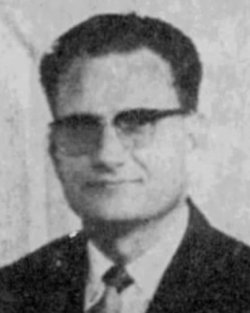
W.E. Best

#12 Fellowship Requires Daily Cleansing from Sin

Romans 1:1
W.E. Best July, 1 1973 Audio
0 Comments
Remastered October/November 2024

Sermon Transcript

Auto-generated transcript • May contain errors

100%
you open your Bibles to the 13th
chapter of the Gospel according to John. We want to read the
first 17 verses for our scripture reading. This morning we sought
to show the various fellowships, or some of them, that are discussed
in the Tonight we are confining our remarks to the fellowship
which we have with the Father and his Son, Jesus Christ, and
the fact that this fellowship can be lost. Unless we are daily cleansed
from our sins, we can lose fellowship with the Father and with his
Son. And this fellowship is regained
by being cleansed, by confession and by being cleansed. There are many interesting things
in this portion of Scripture, all related to the subject of
fellowship. Let us read, beginning with verse
1. Now, before the feast of the
Passover, When Jesus knew that his hour was come, that he should
depart out of this world unto the Father, having loved his
own which were in the world, he loved them unto the end. And supper being ended, the devil
having now put into the heart of Judas Iscariot, Simon's son,
to betray him. Jesus knowing that the Father
had given all things into his hands, and that he was come from
God and went to God. He riseth from supper, and laid
aside his garments, and took a towel, and girded himself. After that, he poureth water
into a basin, and began to wash the disciples' feet, and to wipe
them with a towel wherewith he was girded. Then cometh he to
Simon Peter, and Peter saith unto him, Lord, dost thou wash
my feet? Jesus answered and said unto
him, what I do thou knowest not now, but thou shalt know hereafter.' If there was nothing more than
the mere washing of the feet, I believe that Peter knew what
was taking place. Therefore, I am not going to
spend time this evening in showing the folly of believing in the
ordinance of foot washing. That is not even significant
enough for us to take any time to refute it. But the very fact
that our Lord told Peter that what I do thou knowest not now
proves that what Jesus Christ was doing had a symbolical lesson. And that lesson which was being
symbolized by the washing of the feet of the disciples would
not be realized by the disciples until after the death and resurrection
of Jesus Christ. If it were nothing more than
just the washing of the feet, I'm talking about the literal
washing of the feet, Peter knew what was taking place. Therefore,
more is involved than just the mere washing of the disciples'
feet. Verse 8, Peter saith unto him,
Thou shalt never wash my feet. Jesus answered him, If I wash
thee not, thou hast no part with me. Simon Peter saith unto him,
Lord, not my feet only. In other words, since you are
going to tell me that, well, just don't stop with my feet,
just give me a bath. And there are two Greek words
in verses 5 through 10. One denotes washing of the feet,
and the other speaks of a bath. We'll get into those words tonight
in the study of this portion of Scripture. We can already
see how that Peter went from one extreme to the other. This
was characteristic of him, as it is with many of us. Jesus
said to him, he that is washed, and that means bathed. The Greek
word that is translated washed here literally means bathed. In other words, you've been completely
bathed and you do not need to be bathed again. All that you
need now is to have your feet washed, in order that you might
enjoy fellowship with me. He that is washed needeth not
save to wash his feet, but is clean every whit. And ye are
clean, but not all." What is the meaning of the words,
but not all? The next verse explains the meaning
of the last phrase of verse 10, "'Ye are clean, but not all.'
For he knew who should betray him. Therefore, said he, ye are
not all clean.' Who was it that betrayed our Lord? It was Judas,
and it was Judas that our Lord was speaking about when he said,
but not all are clean. So after he had washed their
feet and had taken his garments and was set down again, he said
unto them, Know ye what I have done to you? Do you know what
I have done to you? They knew their feet had been
washed. They knew that much. But did
they know the significance of their feet having been washed
by the Lord? Ye call me Master and Lord, and
ye say, Well, for so I am. If I then, your Lord and Master,
have washed your feet, ye also ought to wash one another's feet. For I have given you an example,
that ye should do not what I have done, but as I have done to you. Verily, verily, I say unto you,
the servant is not greater than his Lord, neither he that is
sent greater than he that sent him." Please observe the last
verse of this division of John 13. If ye know these things,"
what things? The things that he has been discussing
in the first 16 verses. Happy are ye, or blessed are
ye, is a better translation, rather than happy, if ye do them. Let's read the text again. if
ye know these things, blessed are ye if ye do them." Let us now go back to the first
part of the chapter. First of all, we would like to
give a little background for our study of this first division
of John 13. The Lord Jesus spent the last
night of his earthly mission weaning his own disciples from
earthly things and introducing them to heavenly things. I do not know of a greater lesson for the children
of God than that. the Lord spending the very last
moments of his earthly mission in weaning away his own from
earthly things and pointing them to eternal
things. We need that today, and we need
it badly. In chapters 12 through 14, The
Lord Jesus reveals his death in chapter 12, his intercessory
work here in chapter 13, and finally his second advent in
chapter 14. Let's look at those three points
for a moment by way of introduction. In the 24th verse of chapter
12, Jesus Christ said, Verily, verily, I say unto you, except
a corn of wheat fall into the ground and die, it abideth alone,
but if it die, it bringeth forth much fruit." He was speaking
about his own death. It was necessary that he die.
Thus we have in the very first verse of John 13 the basis or
the foundation for Christian fellowship, as we will be observing
in just a few moments. In the 13th chapter, after having
made reference to his death, he then discusses by way of illustration,
actually he was teaching humility by precept here, by taking a basin of water, girding himself with a towel,
and washing the feet of the disciples. And when he did this, he said,
you don't understand what I'm doing at this time, but hereafter,
after my death, after my resurrection, after my ascension to the right
hand of the Father, then and not until then will you recognize
what I have been teaching you by this example, his intercessory
work. In chapter 14, which is a favorite
chapter, of all Christians, in the very beginning of the chapter,
the Lord Jesus said, Let not your heart be troubled, ye believe
in God, believe also in me. In my Father's house are many
mansions, if it were not so I would have told you. I go to prepare
a place for you, and if I go to prepare a place for you, I
will come again and receive you unto myself. that where I am,
there ye may be also." We have his death in chapter 12, his
inter-sensory work in chapter 13, and his second advent when
he comes to receive his own unto himself, chapter 14. In view of these three great biblical
themes, you will then observe in the 15th chapter the subject
of fruit-bearing is discussed. And he makes reference to the
fact that we should be vitally concerned about our fruit remaining
in the 16th verse of the 15th chapter. In view of these truths, his
vicarious death, his intercessory work, and his second advent,
believers are to be fruitful, chapter 15. In the 16th chapter,
he gives a warning to his disciples. He says, The world will hate
you even as it hated me. Be of good cheer, I have overcome. And of course, we overcome in
him. And then in the 17th chapter, he prays his high priestly prayer,
what a climax that is, to the last moments that our Lord spent
with his disciples. With those introductory statements,
let us now, to some extent, make a verse-by-verse study of at
least some of the outstanding verses of this chapter. Verse
1, Now before the feast of the Passover, when Jesus knew Knowledge is a subject that is
mentioned frequently within the context of the first seventeen
verses of this chapter. Jesus knew that his hour was
come. Herefore, in the gospel of John
and other related epistles, statements made by our Lord, he talked about
his time not being yet. Now it is the hour. It has come down to the hour.
Jesus knew that his hour was come. References made to his
death. Three things that we will observe
in verse 1 concerning the death of our Lord. First of all, the
nature of it. He was to depart out of this
world. by what means did he depart out
of this world? It was by means of the cross. When we think about the Lord
Jesus departing out of this world, I'm sure that it was not something
that he hated to leave. We think about that for a moment.
Do you think he really grieved over the fact that he was leaving
this world? the very world of wicked men
who despised the absolute sovereignty of God and men who were his enemies? Do you think that he dreaded
leaving this world? Not at all. Every step our blessed
Lord took throughout his earthly ministry was toward that very
moment when he would depart out of this world to be with the
Father. Every step he took was in anticipation
of his finished work upon the cross that would bring about the fellowship that he could
have with his own and his own could have with him. This is
the foundation, this is the basis of fellowship. The second thing about his death
has to do with the motive for his leaving this world and going
unto the father. The motive was the love which
he had for his own. having loved his own which were
in the world, he loved them unto the end. Finally, the divine
knowledge of the time of his departure out of this world is
important. He knew the very moment. You
and I do not know the time of our departure from this world,
and it's good that we do not. But our blessed Lord knew the
time of his departure. When Jesus knew that his hour
was come, that he should depart out of this world unto whom? Unto the Father. Recently I read a statement that ought to be cherished by
every one of us. It should be cherished because
of its spiritual value. When Jesus Christ left the Father
and came into this world, it has been said, as he came from
the Father, he did not leave the Father. Let that soak in for a moment. He left the Father, and yet he
didn't leave the Father. You see what I'm talking about?
Now let's turn it around. Time has come for him to leave
this world and depart unto the Father, and even though he is
going to leave the world, he doesn't leave us. Do you see the beauty of that
statement? Now let's put it all together. The Puritan said, as Christ came
from the Father but did not leave him, so he goes to the Father
but does not leave us. What a great statement, I'll
never leave you nor forsake you. Isn't that his promise to us
as Christians? Christ's love does not ignore
what the flesh is, He knows the weakness of our flesh. He does not forget our liability
to be defiled. Therefore, he said, he loves
us unto the very end. When we think about love being
without beginning or ending, and that's true when it comes
to divine love, Love never has an end in essence, but it does in achievement. That's
another statement you need to remember. Love never has an end
in essence, but it does in achievement. The Lord Jesus was just about
ready to achieve the very purpose for which he came, to die on
the cross for you and me. To become our substitute, our
surety, as he stood in our place. But his love does not ignore
what we are, even as Christians. He knows that we're built on
backsliding, and there is the possibility of defiling our feet
every day of our lives here on the earth. Thus provision is made for us
in his intercessory work, and this is what is brought before
us in the 13th chapter. God's love is everlasting in
the counsels of it, and it is everlasting in the consequences
of it. Therefore, it is unto the end,
which means unto completion or perfection. Will you observe the two words,
his own Those two words do not mean the
same in this verse as I called attention to this, I think, last
Sunday evening. If not last Sunday evening, it was Sunday or two
weeks ago today. In John 1, verse 11, when Christ
came unto his own and his own received him not, but to as many
as received him, to them gave he the power to become the sons
of God, even to them that believe on his name. The two words his
own in John 1, verse 11, is talking about his own people according
to the flesh. The Jews, if you please. Here,
the two words his own refer to his own that have been made his
own by his own substitutionary work. And of course, as far as God
is concerned, he was already an accomplished event, even though
it was to actually take place in just a short period of time.
The Lord Jesus is the Lamb that was slain from the foundation
of the world, therefore the atonement cannot be dated from the standpoint
of God's purpose. It can be dated from the standpoint
of its historical accomplishment. So we have in verse 1 the basis,
the foundation, the fellowship. This fellowship is the greatest
thing in the world, as I said this morning. It is greater than fleshly ties. Do you know why? Because it is
based upon the new life which is given us by the sovereign
God. And this new life is concerned about the mind of
Christ or the will of God, as we studied this morning in
the second chapter of Philippians. So we have the basis. His own
is a relation performed by the Lord Jesus. We're in the world, but we're
not of it. And this is stressed in the 17th
chapter when he prayed the high priestly prayer. In the world denotes our position,
our present position, if you please. We're in the world. We
could say that his own, this speaks of our relation. We're
his, and he is ours. In the world speaks of our present
position. In the world. Here we will be
tried, here is where we will meet conflict, here is where
we meet danger. Therefore he prays for us that
we might be kept. And that prayer is found in John
17. Now verse 2, supper being ended,
the devil having now put into the heart of Judas Iscariot,
Sermon's son, to betray him, once again Jesus knowing, the omniscient Christ, that the
Father had given all things into his hands and that he was come
from God, Now the Greek preposition is
important here. The Greek preposition speaks
of the point from which he departed. I said the point from which he
departed. He left the presence of the Father. It is not the Greek preposition
ek, out of, but here it's upon, the point of departure. So he
was come from God, now notice the next preposition, and with
to God, that is, towards God. The preposition here is very
important. Verse 4, he riseth from supper,
laid aside his garments, took a towel and bearded himself. He is now going to teach a very
valuable lesson by precept. Humility is expressed by this
example that our Lord has given us. Humility seeketh not its own,
but another's good. And this is what Christ is manifesting
to his disciples. He was humbling himself again in their presence by laying aside
his garments and girding himself with a towel. This made an impression
upon the Apostle Peter that he could never get over as long
as he lived. In his first epistle, he uses
this very word, girded. We're to gird up our minds, 1
Peter 1.13. He never forgot about what the
Lord Jesus did in his presence. Verse 5, he poured water into
a basin and began to wash the disciples' feet. We've come now
to the heart of our lesson tonight. and to wipe them with a towel
wherewith he was girded." There are two words, two Greek words,
translated wash, as I've already said, in verses 5 through 10. I'm pleading with you to take
some notes at this point. Don't trust your memory. Take
some notes. Make a study with me of these
verses, especially verses 5 through 10. because this is the heart
of our lesson this evening. The first Greek word that we
will give you is used in verses 5 and 6, and it is translated
wash. It is the Greek word nipto. If I were spelling it in English,
I would spell it n-i-p-t-o, and the o is a long o, it's omega,
the omicron in the And what does the word mean?
It means to wash part of the body. That's what it means, to wash
part of the body. It doesn't refer to a bath, or
to be washed all over, but a part of the body. Now you can see why this word
is used in verses 5 and 6, but it is a different word that is
used in verse 10, as we'll see in just a few minutes. Let us
now observe this word as it is used in verses 5 and 6. What
did he do? He took a basin of water. He washed the feet of the disciples
apart of the body of each disciple. What part of the body? The feet!
Why just the feet? They wore sandals in those days. They didn't have clothing and
shoes as we have today. And so a person, if he were going
to a feast or something, he would take a bath all over But on the way to the feast,
his feet would become defiled by the dust. And so his feet
would need cleansing, but he wouldn't need a bath. This is
the thought that is being expressed. We'll see how it is applied in
a few minutes. So he took each disciple and
he washed the feet of each disciple. because it was the feet that
needed washing. Walking is a symbol of our life. Walk worthy is a vocation wherewith
we are called, Ephesians 4 verses 1 and 2. So walking denotes our
manner of life. We're to walk worthy. But even
in walking worthy, It doesn't mean that we as Christians do
not become defiled. We become defiled every day. When we look at this chapter,
especially the first 17 verses, we see first of all the Lord
Jesus, who was absolutely clean. Think about that for a moment. He was absolutely clean. He was
the impeccable Christ. Secondly, we see the disciples
who had been bathed, but their feet had been defiled. So they were partially clean. And we see, thirdly, Judas, who
was absolutely unclean. You see what we're talking about?
So here are three persons. Our blessed Lord, who was absolutely
clean. Secondly, we see the disciples
who had been bathed, they had been washed in the blood of the
Lamb, so to speak. They had been cleansed by the
forgiveness of the Lord. They had been regenerated by
the Spirit of God. They had been converted by means
of the gospel. But their narrow life had brought
them in contact with sin. Thus they had become defiled. You and I become defiled every
day. You ought to know it. And you do know it, if you know
anything about grace. So we see Here is the Lord Jesus
absolutely clean. The disciples who had been washed,
they had been everlastingly forgiven. Let's go back and use that as
an illustration. They had been everlastingly forgiven.
But they needed to be forgiven of their daily contact and defilement
with sin. They were all absolutely clean. Any more than you were absolutely
clean or I'm absolutely clean. And then there is Judas, presented
in this portion of Scripture, who is absolutely unclean. So we have our Lord, we have
the disciples, the saved disciples, and we have Judas. But our Lord was speaking to
the disciples. And so he said, I must wash your
feet. I must wash your feet. Now the
word niptoe means to wash part of the body. This refers to the state of believers. I didn't say standing, I said
state. They had been washed, they had been regenerated, they
had been forgiven, and as a result of having been washed, they're
standing before the Lord could not be improved. Did you notice
what I said? They're standing. They're standing
before the Lord could not be improved anymore. And their salvation or regeneration
could be improved. So he's talking about the of
the disciples, not their standing, in verses 5 and 6. I'm assuming
that everyone present tonight knows the difference between
standing and state. Therefore, being justified by
faith, we have peace with God, Romans 5.1, that verse speaks
of our standing before the Lord. We can never be more justified
than we are right We're eternally justified, just
as we are eternally forgiven. But our state is far below our
exalted standing in Jesus Christ. Not anyone else can say that
his life is on the level with his exalted standing in Christ. If he were to say it, he'd be
a liar. That would be proof that he is a hypocrite of the worst
sort. And our Lord describes such a
person or persons in the 23rd chapter of the gospel according
to Matthew. Oh, ye hypocrites, full of dead men's bones. You
clean the outside of the platter, but the inside is full of dead
men's bones. Quite descriptive, is it not?
So verses 5 and 6, and the word wash as it is used in each of
these texts, refers to the state of the believer. I'd like you
to drop down to verse 10. We'll come back up in a moment
to verse 7. But since we're giving the difference between standing
and state, in verse 10, Jesus said to him, He that is washed
needeth not save to wash his feet. The word washed here, of
course, comes from the Greek word luo, and it means to bathe. To bathe. Here the word could
be translated having been bathed. So Jesus said to him, he that
is washed are he who has been bathed. needeth not save to wash
his feet, but is clean every whit, and here clean, but not
all." So the word translated to bathe
means to wash the body, to perform a complete ablution. This points to the believer's
standing. The standing of the believer is the same for time
and eternity, but the state of the believer changes from day
to day, from time to time. I detect that frequently in my
own life, don't you? And I'll tell you, I detect it
in the life of this church, too. It changes frequently. Frequently. Union with Christ
is so strong that nothing can break it. And this is what the
word washed signifies, our union with Christ. But as we go back up and look
at verses 5 and 6, yet communion or fellowship with
Christ is so fragile that it can be easily broken. And beloved, you know this by
experience. So union is unbreakable. Communion or fellowship is so
fragile that it can be easily broken. This is what our Lord is teaching.
Let's observe something else. as we connect verses 5 and 6
with verse 10. Blood is always godly. Blood is always godly. Water is always sacred. Do you know what I mean? Do you
know what that does? That destroys this concept of
baptismal regeneration. I said blood is always Godward
and water is always saintward. Water is what the Lord Jesus
is using here. What is the real lesson of chapter
13? It speaks of cleansing. What
kind of cleansing? It is practical cleansing, not
positional cleansing. Don't forget that. I said practical
cleansing, not positional cleansing. Christ is speaking to his disciples. They've already been washed.
They've been positionally sanctified in Jesus Christ. He's talking
about practical sanctification. So the cleansing here is practical,
not positional. Positional sanctification is
without means. Practical sanctification is by
the use of means. Our Lord is using means here
in practical sanctification. The Lord Jesus, rising from supper,
spoke of his resurrection. his resurrection from the dead.
Thus he laid aside his garment. You will notice that the feast
of the Passover was being observed. And what does the feast of Passover
tell us? It speaks of his death. Christ,
our Passover, is sacrificed for us. So in view of the feast of
the Passover, that spoke of his death. He rises from supper,
which was a symbol of his death. He laid aside his garment, girded
himself with a towel, denoting what his work now is at the right
hand of God the Father. So rising from supper, which spoke of his resurrection
from the dead, He laid aside his garment, girded himself for
priestly service in heaven. This is the lesson. Christ's priestly work is fulfilling,
now go back to verse 1, Christ's priestly work is fulfilling,
he loved his own, how long? Until the end. His priestly work
at the right hand of the Father now is fulfilling what he said
in the last part of verse 1. Disciples cannot wash their own
feet. I can't wash your feet and you
can't wash mine. I can only point you to the one
who can wash your feet And you can only point me to the one
who can wash my feet in the sense of the washing of feet in this
chapter. Do you want a real good illustration
of a person who washed his own feet, even a Christian who washed
her own feet? Psalm of Solomon chapter 5 verses
2 and 3. And she got in a mess. a very
serious mess by washing her own feet. I can't even wash my own
feet! You can't wash yours! Therefore,
I can't wash yours, and you can't wash mine! But we can point people to the
Lord Jesus and his high priestly Now look at verse 7. Jesus answered and said unto
him, speaking to Peter the spokesman of the disciples, What I do thou
knowest not now. That's the key to the understanding
and the proper interpretation of the passage. You don't know
now. You don't understand what I'm
doing. But thou shalt know hereafter. I like the way one man expressed
himself in giving an interpretation of this verse. He made it very
brief. He said we have here in verse
7 existing ignorance and approaching knowledge. Isn't that a great
statement in just a few words? We have existing ignorance and
approaching knowledge. Here was Peter, the spokesman
of the disciples, manifesting his ignorance by some of the statements he
made. And our Lord said, we don't know what I'm doing now. So we
have existing ignorance, but approaching knowledge When he
went on to say, Thou shalt know hereafter. And the word hereafter
is very important. Peter did not know at that time
the significance of foot washing. Now verse 8. This is an interesting statement. Peter saith unto him, Thou shalt
never wash my feet. Jesus answered him, if I wash
thee not thou hast no part, and that literally means you don't
have any fellowship with me, you can't have any fellowship
with me. This is what I'm interested in
at the present time in connection with what we're studying on the
subject of fellowship. Thou shalt never wash my feet, he said too
much. Now we're going to see in just
a moment He said too little. Isn't it like us? Sometimes we
say too much, and there are other times we don't say enough. That's descriptive of us. Thou shall never wash my feet,
he said too much. Jesus answered him, if I wash
thee not, If I do not cleanse your daily contact and defilement
with sin, you can't have any fellowship with me, Peter. If
you and I as Christians do not confess our sins to the Lord
Jesus, as Christians, we're out of fellowship with him. And as
I stated this morning, we're out of fellowship with those
who are in fellowship with him. And that says a whole lot for
the fellowship of the church, doesn't it? Peter went to the extreme. He
didn't need a bath, but he then, after saying too much, now he's
going to say too little. Simon Peter said unto him, Lord,
not my feet only, but my hands and my head. My hands and my
head. Just give me a bath, in other
words. He didn't need a bath. He had
already been bathed. Do you know the significance
of this? Turn to 1 Corinthians 6, verse 11. This is described by the Apostle
Paul when he said, And such were some of you, but ye are washed. In other words, you're bathed. You are sanctified, you are justified
in the name of the Lord Jesus and by the Spirit of our God.
Such were some of you. Now, what does he mean by such
were some of you? Those persons are described by
such terms as fornicators, adulterers, effeminate, abusers of themselves,
thieves, covetous, drunkards, revilers, extortioners, and so
forth. Such were some of you! But we
are washed, and that's the word you're bathed. You're positionally
sanctified. And you can never be more sanctified
in that sense, positionally speaking. You can never be more justified.
Back to this passage now in John 13.10. It was only a part of Peter that
needed washing, that needed cleansing. You see, there is a once-for-all
washing, and that is described by Paul in
1 Corinthians 6, and there is a continual washing, 1 John 1,
7 and 9. The blood of Jesus Christ, God's
Son, cleanseth us of continual cleansing by the blood of Jesus
Christ. Isn't it sad? when you come in
contact with professing believers who do not know the difference
between a once-for-all washing and a daily cleansing, the renewal which began in regeneration,
and that is described by being bathed, will continue in practical sanctification. Now there is no fellowship with
Christ without continual cleansing. I'm talking about the continual
cleansing of sanctification. And this is what our Lord brings
out in verse 8. Peter's statement was strong.
Thou shalt by no means wash my feet as long as the world stands,
is the way one person translates this. That's a little strong,
isn't it? He was beside himself. He didn't
really know what he was really saying. And our Lord replied,
Thou hast no part with me without washing, without daily cleansing,
not without a bath. He had already been bathed. And
the word for part here means nothing in common with Christ. Nothing in common with Christ.
If I do not cleanse you from your daily contactless sin, you
have nothing in common with me. What are we talking about? Fellowship!
Fellowship! You notice the Lord Jesus did
not say, Thou hast no part in me, but Thou hast no part with me. Do you see the difference? They
had been bathed, therefore they were in Christ. He didn't say
that you'll not have any part in me, but you'll not have any
part with me. I'm talking about fellowship.
No fellowship. apart from daily cleansing. The word washed in verse 10,
as I've already given you, simply means the one having been washed,
or the one having been bathed. You're clean because of the bath. You're clean because of positional
sanctification. Therefore, only your feet need
washing. Now look, if you will, please,
at the last part of the 10th verse. You're clean, but not
all. You're clean, but not all. He's
not talking about the feet now. You as disciples are clean, but
not all of you are clean. You say, well, it seems like
that he is saying, you're clean as far as being bathed, but your
feet are dirty. No. The 11th verse proves what
he's talking about. And he's talking about Judas.
You're clean because of the bath, but not all. This is strongly
put by our Lord. And this is a strong exception.
All the apostles were clean except one, Judas. Now let's think about this for
a moment. The feet of Judas were as clean as the feet of Peter. Will you think about that for
a little bit? They both had come to the feast.
And no doubt in coming to the feast they had gone through all
the ceremonial part of cleansing for that feast. His feet were as clean as Peter's
feet! But what was wrong with him?
He hadn't been bathed. He was not positionally sanctified. He was absolutely unclean. His heart was as black as a washpot. He had never come to know Jesus
Christ, whom to know is life eternal. You're clean, but not
all of you are clean. And so, but not all is a strongly
put exception. Judas had not been bathed, whereas
Peter and the other disciples had been bathed. That means they
had been regenerated. In the study of this 13th chapter,
we will see later on, we'll not get into it tonight except to
just mention it now, by way of illustration, Judas went out
and it was dark. The going out of Judas from the
presence of Christ and the other disciples was a hog returning
to its wallowing again in the mire. Judas going out from the
presence of Christ and the disciples who had been washed was simply
the dog returning to its own bonnet. Most statements I have used are
taken from 2 Peter 2, verses 20-22. He was a dog returning
to its bonnet, a hog to its turning, and wailing again in the mire.
That's Judas. He apostatized. He went away. from the teaching
which he had heard from the lips of the Savior. You remember what
Peter tells us in 2 Peter 2? It would have been better had
they never known the way of righteousness than after having known it to
turn from the holy commandment delivered unto them. So Judas was a dog returning
to its bonnet. Then our Lord says, in verse
12. So after he had washed their
feet, after he had cleansed them from daily contact and defilement
that was symbolized by foot washing, what did he do? And had taken
his garments and was set down again, he said unto them, Know
ye what I've done to you? Do you know? He then said to
the disciples, Ye call me Master and Lord, And you say, well,
for so I am. I've said this before, but it
needs to be repeated constantly. You and I as Christians are always
to refer to Jesus Christ as Jesus the Christ, Jesus Christ, or
the Lord Jesus Christ. We should never refer to him
as Jesus. Keep that in mind. That's his
human name. He is more than just a human
being. He is the anointed one of God.
He's our Lord and our Savior. Beloved, we should never use
his name loosely. I don't think there's anything
that bothers me as much as to hear persons use the name of
the Lord loosely. That's taking the Lord's name
in vain. He call me master and Lord. Notice what he says. You say,
well, for so I am. Verse 14, if I then your Lord
and master have washed your feet, ye also ought to wash one another's
feet. In other words, we have an object
lesson here in humility. So he's teaching humility. As I laid aside my garments and
girded myself with a towel and humbled myself to wash your feet,
a lesson in humility. He never thought about doing
something for himself, but doing something for others. But I'll
tell you, there are too many people today who are willing
to do things for others if they can get enough praise for it.
But when a person is really doing something for others with the
right motive, he doesn't care if he ever gets recognized or
not. Verse 15, for I've given you
an example. I've given you an example that
you should do as I have done to you.
W.E. Best
About W.E. Best
Wilbern Elias Best (1919-2007) was a preacher and writer of Gospel material. He wrote 25 books and pamphlets comprised of sermons he preached to his congregation. These books were distributed in English and Spanish around the world from 1970 to 2018 at no cost via the W.E. Best Book Missionary Trust.

Comments

0 / 2000 characters
Comments are moderated before appearing.

Be the first to comment!

Joshua

Joshua

Shall we play a game? Ask me about articles, sermons, or theology from our library. I can also help you navigate the site.