Bootstrap
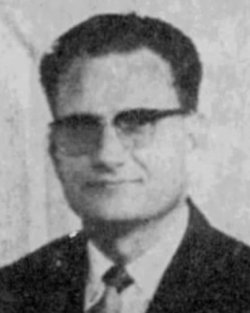
W.E. Best

#11 Fellowship - Fellowship Defined

Romans 1:11
W.E. Best July, 1 1973 Audio
0 Comments
Remastered October/November 2024

Sermon Transcript

Auto-generated transcript • May contain errors

100%
In the study of the subject of
fellowship, we could not begin a study of a subject more important
to follow the one we had been studying than this one that we
shall begin studying with you this morning. There is as much
misunderstanding about fellowship as there is about faith. You
who have heard the four previous messages on faith are better
prepared for the subject of fellowship that we will begin discussing
with you this morning. Those of you who have heard all
four of the messages are even better prepared than some of
you who have heard maybe one or two or maybe three of the
previous messages. There is a lot of talk about
faith today, but very little understanding as to the meaning
of saving faith. There is a lot of discussion
about the subject of fellowship, but very little biblical understanding
of the meaning of the subject of fellowship. You see, there
is a false fellowship as well as a true fellowship. Just as
there is a false faith as well as there is true faith. This past week I was reading
an article in the Houston Post that is written daily by a doctor. Some of you may have read or
you may read this quite often. I was attracted by the question
that was asked. Some lady had written to the
doctor asking what she could do to overcome the fear of death. She stated that she had gone
to several doctors and she had also consulted four different
psychiatrists. But she had not found anything
to help alleviate the fear of death which she had. When I saw that question, naturally
I was attracted. The doctor's reply went something
like this. He said, first of all, I don't
know if I'll be able to assist you or not. After having consulted
several doctors and four psychiatrists, I'm doubtful if I can give you
anything other than what you have already heard that would
be of help to you. He said, I do have two suggestions. Number one, that you put your
faith in some religion. The very thing that we've been
condemning for the last two weeks. What did he say? I suggest, first
of all, that you put your faith in some religion. Well, how about trying Christian
science? How would that work? Or how about trying Mormonism? Or some other ism? He didn't
say much, did he? But I'm not rude. He said, it
is not so much religion that you need to think about as to
think about your faith. your faith. Well, that is the common attitude
expressed by many today. This is the very thing that we
have condemned on the authority of God's word for the past two
weeks. We have shown what faith is And
we have shown what true saving faith really is in the light
of Holy Scripture. Do you remember the definition
we gave you of faith by Dr. Machen? Faith is not, faith is
not some belief that is contained within
the soul of an individual without any respect whatsoever as to
the reality or unreality of its object. Now, I'm preparing for
our message this morning on fellowship, and it's necessary that we review
a few things for the benefit of you who have not heard what
we have said previously on the subject of faith. Let us look
at a few things by way of introduction before we get into the subject
of fellowship. Paul said, I thank my God through
Jesus Christ. Even his prayers were through the mediation of
Jesus Christ. We're told in 1 Peter chapter
1 that it is by Christ that we believe. It's through Christ that we have
access to the Father. He speaks of the faith of the
Roman believers. He makes reference not only to
his God, but to his renewed spirit And then finally in the last
part of verse 9, references made to my prayers. Here's a tremendous
outline for a message. My God, my spirit, my prayers. Prayer is another subject that
is used much and understood very little. I appreciate what Dr. Bornhouse
said. As he was commenting on the last
part of the ninth verse of Romans chapter 1, he said, quote, prayers
are worthless unless they are within the rules, end of quote. That's a great statement. Prayers
are worthless unless they are within the rules that God has given. You can now see why that some
say that prayer is used more, abused worse, and understood
less than any other Bible subject. People today are taking references
out of their context. References like John 14, 13,
he'll give us whatsoever we ask for, if we ask believing. are
John 15, verse 7. Whatsoever ye ask in my name,
I will do it. One writer said, There are more references in
the word of God, for it specifically states that
God will not answer prayers, than there are that he will give
us all things for which we might ask. Think about that a little
bit. The same writer also stated that
even the references that are always lifted from their context,
when they're studied in the light of their context, These very
references are restricted to a very few people. He did not
use the statement, I'll go ahead and make the statement, the elect
of God. Even the references such as John
14, verses 13 and 14, and John 15, verse 7, must be studied
in the light of their context. Our Lord was speaking to his
own. He was not speaking to people
in general. So even those references are
limited. Dr. Barnhouse, in his work on
Romans, gives a classic example of how prior is used, even by
unsaved, degenerate people. people who have no regard for
the Lord and therefore no respect for his word. He tells in his book how that
before World War II he knew about this, a certain religious institution
calling itself a church in Belgium was frequented by prostitutes
who went and burned candles and prayed for their health and their
success. Does that shock you? You and I would say that's horrible,
but the Leviticus is in the same category with all of these persons
today who are using the subject of prayer without any consideration
or concern for the holiness of God and his word which he has
committed to us. I put it all in the same category.
Because that's exactly where the word of God puts it. All who use the subject of prayer
in that manner. Paul had a desire to see the
Roman believers. He had never met them face to
face. He considered the will of God
a very important matter. He said, I long to see you that
I may impart unto you some spiritual gift to the end you may be established. That is, that I may be comforted
together with you by the mutual faith, both of you and me. Paul didn't think that he would
arrive at Rome as a prisoner. But that is exactly the way he
arrived. He got there, but not in the
manner in which he thought he would get there. He arrived in
Rome as a prisoner of Jesus Christ. You'll notice verse 11, I long
to see you, that I may impart unto you some spiritual gift. To the end ye may be established.
There is a law pervading God's work by which the giver becomes
the receiver. That can be illustrated by the
man who sows grain in the spring of the year and reaps a harvest
of grain in the fall. Did you know the word gift, charisma, that is used here in
this text of scripture is never used for a thing given by one
person to another person. Follow me now. God said, I long to see you that
I may impart unto you some gift. And the word gift comes from
the Greek word and it is never used in the sense of something
one person can give to another person. This gift is always the fruit
of the grace of the sovereign God. Paul was simply the instrument
through which that blessing was to be conveyed
to the Roman believers. Paul was nothing more than a
channel for God's gift. God is the giver, man is the
receiver. When you and I realize that,
as we should, then we will not be taking credit for some things that we should
never take credit of in our lives. But most religionists are always
doing something and then taking credit for what they do. And that's always a sign of ignorance. I made the statement that there is no such thing as
instant knowledge. There are a lot of people today
who want to gain knowledge and they think that spiritual knowledge
is something that can be gained instantly. I realize that we're
living in a day when there's instant coffee, instant tea,
and instant this and instant that. But when it comes to spiritual
knowledge, there is no such thing as instant knowledge. According
to John 7, 17, there must be first the hearing
ear, and as the hearing ear hears, there is something else that
takes place before there is any additional knowledge gained.
There must be obedience to what one has learned. And until there
is obedience in the things that one has learned, there cannot
be any gaining of additional knowledge. Paul's desire was that God's
people might be strengthened. And when he saw those to whom
he ministered strengthened, he was strengthened by seeing them
strengthened. That's why it went on to say
in verse 12, that is, that I may be comforted together with you
by the mutual faith both of you and me. Mutual faith. We have now reached that part of this section of scripture
where we will be studying the subject of fellowship. This subject is as large as the
one we have been studying. I did not complete what I had
to give on the subject of faith, but I felt that I had given enough
for the time being. Later, after there has been application
on the part of all of us who have heard these things, then
we will go back and there will be greater appreciation as we
go a little deeper into the subject of faith. Now we've come to fellowship.
I want to begin our study of fellowship this morning by saying
in true fellowship, emphasis is placed on that which binds
us together rather than the people who are bound together." Did you get the significance
of that statement? I have been trying for the last
two weeks and in four services to say that faith, faith must be rightly placed in order
to be saving faith. It must be something above natural
faith. It must be supernatural faith.
And of course, if it is supernatural faith, it is infallible faith.
And since it is infallible faith, it has as its object the infallible
Christ. And the reason that the Apostle
Paul places the word faith before And you do not see this in your
King James version, but it's true in the original. Before
of you, he was stressing the faith of the Roman believers. That was the point of emphasis.
Not bragging about the Roman believers, but boasting about
and thanking God for that faith which God gives to every regenerated
person. So we should compare true fellowship
with what we have said concerning true faith. In true fellowship,
emphasis is placed on that which binds us together, rather than
the people who are thus bound. That's the point of emphasis.
Did you know that the word fellowship, which comes from the Greek word
koinonio, is used in various ways in the
scriptures. I'm going to use this morning
in this first message the book of Philippians to illustrate
how that the word is used in different ways in the scriptures.
The word is found in each of the four chapters of Paul's message
to the church at Philippi. We'll be looking at that in a
moment. But now let us define the word fellowship. The word fellowship means the
share which one has in anything. Partakers in common of the same
mind. To have something in common with
another, sharing together. John Owen has given this definition,
quote, a joint participation in anything, whatever. He's just
giving a definition of the word. Good or evil, notice now, good
or evil, beauty or enjoyment, nature or actions, gives this
denomination or these denominations to them so partaking of. the benefits. He goes on to say,
a common interest in the same nature gives all men a fellowship
or communion therein. Now you'll notice that his definition
carries much of the Puritan language, but I think you can get the point.
To have fellowship with God is the most important thing in one's
life. You and I know that the distance
between God and man must be spanned in order for man to have fellowship
with God. We'll use the language of 1 John,
chapter 1. God is light. We are darkness. Now what communion does light
have with darkness? We could go further and say,
to use another expression found in the first epistle of John,
God is love. And to use a statement by Paul
in Romans, we are enmity. What agreement can there be between
God who is love and mankind who are at enmity with God? soul. The bridge must be spanned,
the distance must be spanned, in order for man to have fellowship
with God. It cannot be denied that the
patriarchs of the Old Testament had fellowship with God. However, as long as the tabernacle
stood, they did not have the boldness and the assurance of
that fellowship that we have today, since Jesus Christ has
entered into heaven itself by a new and living way. They had fellowship, and that
cannot be denied. But their fellowship did not
have the boldness about it, did not have the assurance about
it, that our fellowship has today since the death of the testator.
according to Hebrews 9 and 10. I'm talking about Hebrews chapters
9 and 10. Fellowship with God consists
in his communion, in his communication of himself. And of course that
always results in communion with him. So fellowship with God consists
in his communication of himself unto us with our return unto
God of that which he requires and accepts by us. The first time that the Greek
word translated fellowship is found in the New Testament is
Acts 2.42. As many as gladly received this word were baptized
and they continued steadfastly in the apostles' doctrine and
fellowship. The last references to this word
in the New Testament are found in 1 John 1, verses 3 through
7. Now, there are a number of references
in between. But this word, Greek word, translated
fellowship, is also translated communion in 1 Corinthians 10,
16. 2 Corinthians 6.14, it is translated communication
in Hebrews 13.16 and Philemon verse 6. It is translated contribution,
Romans 15.26, and lastly distribution in 2 Corinthians 9 and verse
13. there are different kinds of
fellowship. Notice what I said. I read a
statement by a Plymouth Brethren preacher who said, and I quote,
statement, there is only one fellowship in Scripture into
which all believers are brought on accepting Christ as Savior
is absolute nonsense. End of quote. And this is a general attitude
of the meaning of fellowship today. He goes on to say, the
particular kind of fellowship implied in any passage where
the word fellowship occurs has to be interpreted in the light
of the context. An examination of this will reveal
that there are various fellowships spoken of in the New Testament. That is a true statement. In
a few moments we're going to turn to Paul's letter to the
Philippian saints and make a study of the word as it occurs in each
of the four chapters. But before we do that, let's
go a little further in the discussion of our fellowship with the Father
and with his Son, Jesus Christ. Will you turn to 1 John 1, the
last references where this word is used? We'll begin with verse
1 and read through verse 7. That which was from the beginning,
which we have heard, which we have seen with our eyes, which
we have looked upon, and our hands have handled, of the word
of life. The point of emphasis in verse
1 is life. There is eternal life, there
is historical life, there is personal life, and there is social
life. Did you notice the order in which
I mentioned those? There can never be any fellowship
until there is life. Thus, in verse 2, the life was
manifested, and we have seen it and bear witness and show
unto you that eternal life. which was with the Father and
was manifested unto us. That which we have seen and heard
declare we unto you, that ye also may have fellowship with
us." Now, observe something in verse 3. Why is it that the apostle
John refers to fellowship being made possible as a result of
a message conveyed to us before he makes any reference whatsoever
to our fellowship with the Father and with his Son, Jesus Christ. Let's read verse 3 again. That
which we have seen and heard declare we unto you, that he
also may have fellowship with us. John writing, and writing
to Christian people, makes reference of the fellowship, this is social
fellowship. In other words, this is life
in its social aspect. This is fellowship in the gospel.
This is fellowship in the life which has been given us by the
sovereign God. But he says that we may have
fellowship with us, and truly our fellowship is with the Father
and with his Son, Jesus Christ. Why does he refer to fellowship
with Christians before he mentions fellowship with the Father and
with his Son? Do you know the reason why? It is
through the ministry of the apostles that we learn about this fellowship
with the Father and with his Son, Jesus Christ. It's by the
message that has been given to the apostles to be given to you
and me. that we learn about this fellowship. So he mentions fellowship with
the Father and with his Son, Jesus Christ. And these things
write we unto you, that your joy may be full. This, then,
is the message which we have heard of him, and declare unto
you, that God is light, and in him is no darkness at all. If
we say that we have fellowship with him and walk in darkness,
we lie and do not the truth. But if we walk in the light as
he is in the light, we have fellowship one with another. Don't think
that the statement, fellowship one with another, is talking
about fellowship with fellow Christians. That's not what he's
talking about in verse 7. In verse 7, he's talking about
fellowship with the Father and his Son, and fellowship of the
Father and Son is being experienced by us. We're enjoying his fellowship,
and the Father and Son are enjoying our fellowship. This is what
he's talking about in verse 7. But if we walk in the light as
he has been taught to the redeemed, So the statement we have fellowship
one with another refers to the fellowship that exists between
God and his redeemed people, not between believers. In this
verse, that is referred to in verse 3, this fellowship is an
actual and literal fact. But the mode of this spiritual
intercourse we do not profess to describe. I can't describe
this fellowship with you, and to you, any more than I can describe
how, that our spirits operate upon one another. But they do. Our spirits, our human spirits,
operate upon one another. That cannot be explained, but
it is experienced. And the fellowship we have with
the Father and His Son, cannot be explained, but it is a fact,
and it is experienced by the redeemed of the Lord. And there
isn't anything in the world as important as that fellowship.
The most prominent idea of fellowship is that of mutual sympathy, reciprocal
affection. We love what God loves, and,
beloved, we hate what God hates. Do you understand that language?
Fellowship means community of thought and interest. This fellowship
does not mean that we have been taken into equality with God.
No one but a heretic would affirm that, but we have been made partakers
of a God-like nature. Therefore we enjoy fellowship
with the father, with his son. We love what he loves and we
hate what he hates. Not to the same degree, beloved,
but there is that love and there is that hatred. Love for that
which is right and honorable, hatred for that which is dishonorable
and evil. The fact of fellowship is true
in all believers. I said the fact of fellowship,
but the degree of enjoyment of that fellowship bears in believers. Fellowship with God must be considered
in this manner. First of all, there will be attachment
to the same truths and the same objects, love for the same principles
and the same beings. the same kind of joy, though not in the same degree. God rejoices in holiness, truth,
purity, justice, and mercy. The joy of the believer is of
the same kind. When we think about this fellowship
with God, We must also state that there are some things that
we are in cooperation with God, but there are some things that
we do not cooperate with him in. As for instance, we do not
cooperate with God in creation, we do not cooperate with God
in providence, we do not cooperate with God in government, We do
not cooperate with God in regeneration, but there is a cooperation with
God in conversion and service, in the same sense that the farmer
sows the seed and the physician applies the medicine. Fellowship. What a great word. Sharing in common. with our Heavenly Father and
with his Son, Jesus Christ. I want you to turn now to the
book of Philippians. The word is found in each of
the four chapters, and I want to show you the various ways
in which the word fellowship is used in the scriptures, and
I know of no better way to demonstrate this than to observe the various
ways the word is used in this little letter that Paul wrote
to the Philippian saints. I think I have time this morning
to develop these four points briefly. Let's begin with verse
1 of chapter 1. I want to read the verses where
the word is found, and then we will comment. Chapter 1, beginning
with verse 1, Paul and Timotheus, the servants of Jesus Christ,
to all the saints in Christ Jesus, which are at Philippi, with the
bishops and deacons. I want to comment a little bit
as we read. The preposition in denotes our
relationship to Christ. Relationship is vital. To all the saints in Christ Jesus,
which are at, now notice the word at. The place is incidental. It doesn't make any difference
whether it is at Philippi or at Houston. The important thing
is the relationship. The place is incidental. Now,
verse 2. Grace be unto you and peace from
God our Father and from the Lord Jesus Christ. I thank my God
upon every remembrance of you. Will you notice how closely this
is related to his terminology? in Romans 1, verses 8-13? Always in every prayer of mine
for you all, making requests with joy. Now here's the first
reference to fellowship. For your fellowship in the gospel
from the first day until now. being confident of this very
thing, that he which hath begun a good work in you will perform
it unto the day of Jesus Christ. Even as it is meet, fit, or suitable
for me to think this of you all, because I have you in my heart,
inasmuch as both in my bonds and in the defense and confirmation
of the gospel, ye all are partakers of my grace." Now look at chapter
2, verse 1. You cannot understand the word
fellowship in the first verse of the second chapter unless
you stood it in the light of its context. If there be therefore
any consolation in Christ, if any comfort of love, if any fellowship
of the Spirit, if any bowels and mercies. All right, we have
fellowship in the gospel, chapter 1, verse 5. Number two, we have
fellowship of the Spirit, or in the Spirit, chapter 2, verse
1. Turn now to chapter 3, verse
10. Paul said that I may know him and the power of his resurrection
and the fellowship of his sufferings. The third way in which the word
fellowship is used is fellowship of his sufferings. Fellowship
in the gospel Fellowship in the Spirit or of the Spirit, now
fellowship of his sufferings, finally in chapter 4, verses
14 and 15. You do not find the word fellowship,
but I assure you that the Greek word from which we get the word
fellowship is found in both verses 14 and 15. Now listen to what
Paul says. Notwithstanding he have done
well, that he did communicate, the word communicate comes from
the same Greek word, koinonia, with my affliction. Now ye Philippians know also
that in the beginning of the gospel when I departed from Macedonia,
no church communicated, the word communicated comes from the same
word, with me as concerning giving and receiving, but ye only."
Now go back to chapter 1. I want you to see how the word
is used in each of these four references in Paul's letter to
the Philippian saints. Fellowship in the gospel. We
must see this in the light of the context. Are you familiar
with the main thrust of Paul's message to the Philippian Saints? If you have read or studied to
any extent this little epistle that Paul wrote to the Philippian
Saints, you have observed that no great doctrine is really expounded
minutely by Paul in this epistle. Philippians has no particular
doctrine to expound as some of the other epistles. Christian
doctrine is here transmuted into life and experience. Notice what I said. Doctrine
is transmuted into life and experience. Now we're getting down where
we all live this morning. We've talked about faith, faith
in Christ. And faith is something that is
active. It perseveres. It is not dead. I'm talking about
saving faith. And it results in fellowship.
Fellowship with a father, fellowship with his son, and fellowship
with fellow believers. But there's no great doctrine
expounded in this epistle. Unless you were to discuss the
kenosis theory in the second chapter, I'll admit that quite
a bit is said, but you must, you must observe why he goes
into that particular truth. But what do we have? Life is
now manifested in Philippians. In Romans, for instance, we see
the way and how of salvation. In other words, the technique
of salvation. In Philippians, we see that salvation
at work. I said at work. And, beloved, this needs to be
stressed today, and it needs to be emphasized in our own church. So in Philippians we see life
at work, we see salvation at work. We see salvation put to the test
in life and action. If I were giving a title to Philippians,
and we will soon be studying Philippians in our studies of
the Acts of the Apostles. In fact, after we complete our
studies, of 1st and 2nd Timothy and Titus, then we will be going
into Philippians. If I have a title for this book,
it would be Christ in Christian Experience. There are four main
thoughts that Paul stresses, and each chapter deals with one
of those thoughts. Let me illustrate it. Life in
chapter I don't have time to go into this. I'm only mentioning
something and you can study it out for yourself. I'm having
to do this to get to the point that I want to give on fellowship. Life is stressed in chapter one.
The mind of Christ is emphasized in chapter two. Our goal in Christ,
in chapter three, and find the strength by which we live the
Christian life and anticipate its consummation in chapter 4. So we have life,
mind, goal, and strength. Those are the four words that
are stressed in these four chapters of Philippians. Now let's put
them together. Will you permit me to do it? If Christ is our life, Now let
me use that particle in another sense. Since Christ is our life, not if, in the sense of putting
a doubt, but since Christ is our life in chapter 1, then his life will express itself
in mental attitude chapter 2. Let this mind be in you, which
was also in Christ Jesus. You think as he thinks. That's
what it means. Let this mind be in you. So the
life of chapter one will be expressed in our mental activity and attitude
in chapter two. Now let's go a step further.
The mind being thus filled with Christ, let this mind be in you,
which was also in Christ Jesus. So the mind being thus filled
with Christ's life, the desires will become more and more toward
Christ as the perfect ID. The sum of objective perfection
and subjective satisfaction. And this is in chapter 3. He's
the goal. We'll never be satisfied until
we awaken his likeness, until this body of humiliation has
been fashioned like unto the glorious body of our blessed
Lord. The last verse of chapter 3. Finally, Christ is the strength. We can do all things through
Christ who strengthens us. This is the point that he emphasizes
in the fourth chapter. So finally, the Lord Jesus is
the strength by which the ideal becomes the actual. The objective
reality becomes subjectively realized by you and me. With this before us, now look
at the word fellowship in verse five. for your fellowship in
the gospel from the first day until now." Fellowship in the
gospel. What does it mean? Fellowship
here in Philippians 1.5 means your cooperation towards and
aid of the gospel. This is what Paul's talking about.
The cooperation of the Philippian saints. in the proclamation of the gospel. Thus the Philippians manifested
the reality of their partnership in the gospel by, quote, a quiet
enjoyment of it. No, not by quiet enjoyment of
it, but by keen activity and interest in Do you have an interest
in the gospel? I don't know. That's between
you and the Lord. He knows and you know. But Paul
is talking about the interest that these Philippian saints
were manifesting in the gospel and its proclamation. So the
statement in the gospel could be translated like this, in the
interest and fervorance of the gospel. And this is further developed
in his message to the Philippian Saints. I called your attention
to something when we read these verses in chapter 1, verses 1
through 7. I want you to notice in verses
3 through 5, there is a past remembrance on the part of Paul. He is manifesting the man of
God that he was. He was a real pastor, in the
sense of being desirous for the people to whom he ministered,
and their spiritual welfare as a result of his ministry to them.
So there is a past remembrance in verses three through five.
I'm just mentioning something I want you to see. This past
remembrance embraces four things. Number one, a thankfulness to
God for them. And number two, a faithfulness
in prayer for them. Number three, a joyful petitioning
on their behalf. And number four, all of this
was rooted in a continuous fellowship in the gospel. And we mean by
that in the entrance and furtherance of the gospel. Notice verse six. There is a
future expectation on the part of this great pastor that he
was. You see, he had the care of all the churches. He was an
apostle. He possessed an extraordinary
gift. So there is a future expectation,
verse 6, being confident of this very thing, that he which hath
begun a good work in you will perform it unto the day of Jesus
Christ. And finally, there is a present
devotion. a past remembrance, a future
expectation, and a present devotion. Now there's an application in
this for you and me. When we consider the present
devotion, actually verses 7 through 11, this proves that his tender
yearning was more than human. His tender yearning for the saints
of Philippi, was the fruit of the grace of God within him. Such concern was reflected in
his prayer for their spiritual progress. The word fellowship
in this text, Philippians 1 verse 5, proves there is something
concrete in the fellowship of Acts 2.42.
And as many as gladly received his word were baptized and they
continued steadfastly in the apostles doctrine and fellowship. I said there is something concrete
in this fellowship. Now don't tell me that you are
enjoying fellowship unless there is a concrete manifestation of
that fellowship in your life. You see this gets down to where
we live. So fellowship with the Lord is concretely manifested. Concretely manifested. Now turn
to chapter 2, verse 1. Fellowship in the Spirit. This means participation in the
Spirit. Now there are different ideas
given of this text and we must study it in the light of its
context again. And don't think that after you read the text
that you know what it means. What does it mean? It means participation
in the Spirit. Now I want to raise a question.
Does the particle if, this is the Greek particle if, does this
refer to the possibility of grieving the saints? That is one interpretation
of this. Now, beloved, it is possible
for you and me to grieve the Holy Spirit. But the question
is, is that what the Apostle Paul is talking about? We know
that the Holy Spirit is very sensitive and that he can easily
be grieved by you and me, according to Ephesians 4 and verse 30. Too often we grieve him in our
lives. And I can sense when he's being
grieved even in the fellowship of an assembly meeting like this.
And you can too, as a Christian. But is that what Paul is talking
about? Some interpret this in that manner, but I cannot give
it that interpretation. And I'll show you why I cannot
give it that interpretation. The particle if in this verse
of Scripture is better translated since as it is often translated
in other portions of Scripture. Now, with that idea in mind,
let's read the text again. Paul said, If there be therefore
any consolation. I must stop right there. When
you look at the word therefore, do you know what that means in
the study of the Scriptures? That means you've got to go back.
The word therefore and the word wherefore, they are connecting
words. The Apostle Paul is connecting
what he is saying in verse 1 of chapter 2 with something he has
already said in the preceding chapter. Now go back to the 27th
verse and we'll see what it is. Paul said in chapter 1 verse
27, only let your conversation or your manner of life be as
it becometh the gospel of Christ. that whether I come and see you
or else be absent, I may hear of your affairs, that ye stand
fast in one spirit with one mind, striving together for the faith
of the gospel."
W.E. Best
About W.E. Best
Wilbern Elias Best (1919-2007) was a preacher and writer of Gospel material. He wrote 25 books and pamphlets comprised of sermons he preached to his congregation. These books were distributed in English and Spanish around the world from 1970 to 2018 at no cost via the W.E. Best Book Missionary Trust.

Comments

0 / 2000 characters
Comments are moderated before appearing.

Be the first to comment!

Joshua

Joshua

Shall we play a game? Ask me about articles, sermons, or theology from our library. I can also help you navigate the site.