Bootstrap
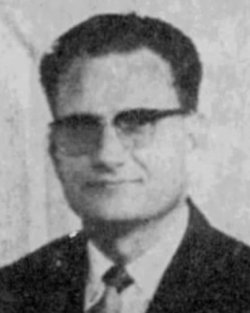
W.E. Best

#13 The 3 'I Am's of the Apostle Paul

Romans 1:16-17
W.E. Best July, 1 1973 Audio
0 Comments
time @ 28:20min. Best cites the instance of Jonathan Edwards' farewell message to his flock after 20 years of svc. His congregation could not tolerate his stand against immorality and declared the pulpit vacant ... and vacant it was! Remastered October/November 2024

Sermon Transcript

Auto-generated transcript • May contain errors

100%
Open your Bibles to Romans chapter
1. For several weeks now we have
been in the second division of Paul's foreword, verses 8 through
13. We have spoken several times
on the subject of faith. We have given two messages on
the subject of fellowship, and we're going to wait until this
evening speak on fruit. So we have faith, fellowship,
and fruit. These are the three great themes
of verses 8 through 13. This morning I want to speak
to you from the next division of the four word, verses 14 through
17. We'll be speaking this morning
from verses 14 through 16. The Lord willing, next Sunday
morning we will be speaking in the Sunday morning service from
the 17th verse. The subject will be entitled,
The Righteousness of God. And then on Sunday evening, next
Lord's Day evening, we'll be speaking from the last phrase
of the 17th verse, that just shall live by faith. Do you know
where this is taken from if you do not look in your marginal
reference? It is a statement taken from
Habakkuk 2 verse 4. Now this is a quotation that
is used three times in the New Testament. It is used here in
Romans 1 17, secondly in Galatians 3 verse 11, and lastly Hebrews
10 verse 38. Now in order to see the significance
of the statement, the just shall live by faith, you have to see
how that the writer uses this particular statement in connection
with Romans, Galatians, and Hebrews. Let me whet your appetite a little
bit even now. In Romans, the emphasis is on
the word just. In Galatians the word that is
stressed is faith and in Hebrews the word emphasized is live. Now this will give you something
to think about between now and next Lord's Day as we will be
speaking both services on the 17th verse. Many of you have
already memorized the four word and I'm thankful that you have.
I not only want you to memorize the first 17 verses of Romans
chapter 1, but I want you to be able to pick out and give
an exposition off the cuff, that is, off the top of your head,
so to speak, on all the major themes before we will have finished
our study of Paul's four words. Beginning with the 18th verse
through the 32nd, we're going to discuss many important We'll
get into the subject of condemnation because of sin, and many subjects
related to the subject of sin. So it'll be some time yet before
we will be through our study of the first chapter of Romans.
Now verses 14 through 17, stressing today the three I am's of the
Apostle Paul in verses 14 through 16, I am debtor both to the Greeks
and to the barbarians, both to the wise and to the unwise. So as much as in me is, I am
ready to preach the gospel to you that are at Rome also, for
I am not ashamed of the gospel of Christ. For it is the power
of God unto salvation to every one that believeth to the Jew
first, and also to the Greek. For therein is the righteousness
of God revealed from faith to faith, as it is written, The
just shall live by faith. In these verses we have, as I've
already stated, the three I am's of the Apostle Paul. Paul was
effective in these because he was united to the great I Am,
the Lord Jesus Christ. In the gospel, according to John,
there are seven I Ams. We'll mention just three or four
by way of illustration. The Lord Jesus said concerning
himself, I am the resurrection and the life. I am the good shepherd. I am the way, the truth, and
the life. I am the light of the world. I am the true vine. We could go on and on in discussing
the great I am's of the gospel according to John. Paul was related
to this great I am, Jesus Christ, the Savior of those whom the
Father had given him in the covenant of redemption. Without Christ,
Paul knew nothing. according to 1 Corinthians 2
verse 2 and 1 Corinthians 4 verse 4. According to the Apostle Paul's
letter to the Corinthians, without him he had nothing. So without
Jesus Christ, Paul knew nothing. Without the Lord Jesus Christ,
he could do nothing, according to his statement in the fourth
chapter of his letter to the Philippian According to his own
writing, in 2 Corinthians, apart from Jesus Christ, he was nothing. 2 Corinthians 12, verse 11. And once again, according to
Philippians, chapter 3, verses 7 through 9, apart from Jesus
Christ, he had nothing. What did Paul have that he had
not received from God? Will you turn with me to 1 Corinthians
chapter 4 verse 7 as we think about that statement for just
a moment? What did he have that he had
not received from the Lord Jesus Christ? This is what he said
in writing to the Corinthian church. For who maketh thee to
differ from another? And what hast thou that thou
didst not receive? Now if thou didst receive it,
why dost thou glory as thou hadst not received it? You and I know
that every good and perfect gift comes down from the Father of
lights, with whom there is no variableness, neither shadow
of turning." James 1 and verse 17. This is a personal question. Now even though Paul is talking
about his being in debt, his being ready, and his not being
ashamed, these great truths apply to you and me today, just as
they applied to him. Our message this morning will
be built around these three I am's of verses 14 through 16. First of all, Paul declared his
indebtedness. I am debtor, verse 14. Paul was in debt to the Greeks,
according to this verse of Scripture. He was in debt to the barbarians. To simplify that, it simply means
that he was indebted to the intellectuals of his time and he was also indebted
to those who were illiterate. He was indebted to all men as
far as the proclamation of the gospel which had been committed
to his trust. Now, there are some interesting
things about Paul's statement here to the Roman saints. When you read this, first of
all, you think about Paul being a Hebrew of the Hebrews. He was born a Jew. reared a Jew,
educated a Jew. He sat at the feet of Gamaliel.
So here we have a Hebrew writing to Roman believers and using
the Greek language as he wrote. Now does that bring anything
to your mind? Think with me for a moment. Here is a Hebrew writing
to the Roman believers and he's writing his epistle by using
the Greek language. So his epistle was written in
Greek. A Hebrew writing in Greek to
Roman believers. Let's go back for a moment and
see what we'll come to your mind as a result of calling to your
attention this reference in Luke chapter 23 verse 38. Do you remember
the superscription that was over the cross of Jesus Christ as
he was suspended between heaven and earth as he died, the just
for the unjust? That inscription read how? Jesus of Nazareth, king of the
Jews. Now, there is some variation
of this inscription as you consult the different accounts given
us by Matthew, Mark, Luke, and John. But Luke makes reference
that this superscription was in the Hebrew, in the Latin,
and in the Greek. Now, when we think about the
superscription being first of all in the Hebrew, then the Greek
and the Latin, these three included the peoples of the world, so
to speak. So Paul was simply saying, here as he wrote to the
Romans, I'm indebted to the Greeks and to the barbarians, to the
wise and to the unwise. So as much as in me is, I am
ready to preach the gospel to you that are at Rome also. A
Hebrew by birth, writing in the Greek language to Italians. So we have the Latin, we have
the Greek, and we have the Hebrew. And Paul was indebted to all
men everywhere from the standpoint of the proclamation of the message
that had been committed to his trust. The wisdom of the cultured
will not save any person. So Paul was indebted to those
who were the intellectuals of his time. The ignorance of the
illiterate would not render them inexcusable according to Romans
chapter 1 verse 19, because that which may be known of God was
revealed in them, or to them, for God hath showed it unto them. For the invisible things of him
from the creation of the world are clearly seen, being understood
with the things that are made even as eternal power and Godhead,
so that they are without excuse." The wisdom of the wise, the wisdom
of the intellectuals would not save them, and the ignorance
of the illiterate would not render them inexcusable. Think about
that for a moment, and we'll get into that more in the study
of the last part of Romans chapter 1. Paul therefore was indebted
to all men. I'd like you to turn to the first
chapter of 1 Corinthians for just a moment as we read beginning
with the 18th verse. Paul said, For the preaching
of the cross is to them that perish foolishness, but unto
us which are saved it is the power of God. For it is written,
I will destroy the wisdom of the wise, Keep in mind the word
wise for just a moment, and will bring to nothing the understanding
of the prudent. Two things we want to observe
in the 18th verse. First of all, man's wisdom cannot
stand before God. When I refer to man's wisdom,
I'm talking about worldly wisdom. There is a way that seemeth right
unto a man. from the standpoint of his worldly
wisdom, but the end thereof, we're told in Proverbs 14, 12, is the way of death. So the system
of men shall be reduced to nothing. This is what Paul is saying.
Then he makes reference to the prudent. Wisdom denotes mental
excellence in general, and prudence refers to the critical discernment
I was awakened this morning by our bedside radio. There were
three professors from Texas University on a panel, and they were being
questioned. One was a sociologist, one was
teaching psychology, and I don't know what the other was teaching,
bugology or something else, I guess. But I listened about 10 minutes,
and I said, You know, I just don't have time to listen to
such rot. The whole thing was social from
the very beginning to the last word that I listened to before
I turned the radio off. The wisdom of the wise men of
this world shall be reduced to nothing, Paul says, even though
they are prudent. even though they have critical
discernment of certain things, such critical discernment will
eventually be brought to nothing. He goes on to say in verse 20,
where is the wise? Where is the scribe? The wise
person is the thinker, the scribe is the writer, And then he goes
on to say, where is the disputer? The disputer was the debater.
Now look at this. Paul covers the field. He says,
first of all, where is the wise? Where is the wise? Where is the
thinker anyway? Where is the scribe? Where is
the writer? And lastly, where is the disputer
or the debater of this world? Hath not God made foolish the
wisdom of this world? The next verse states, and after
that in the wisdom of God, the world by wisdom, that is the
world by its wisdom, knew not God, knew not God. It pleased God by the foolishness
of preaching to save them that believed. When you look at the
word please, it refers to God's free and sovereign choice. It
pleased God by the foolishness of preaching, not foolish preaching,
but the foolishness of preaching. So Paul shows that no human wisdom
can avail before God in verse 20. Now in verse 21, it was not
in God's plan that men by their wisdom should attain to the knowledge
of deity. God pleased to reveal himself. in quite a different way. The
unexpectedness of this way is asserted by the use of the word
foolishness. Then he says, by the foolishness
of preaching. The word preaching here does
not refer to the act of preaching, follow me now, in this particular
verse, but it refers to the message that is preached. In other words,
the emphasis is on the message that is preached. He goes on
to say, to save them that believe. Then in the next two verses,
for the Jews require a sign. The Greeks seek after wisdom. In other words, the Greeks were
absorbed. They were absorbed in speculative
philosophy. So they are ever seeking after
wisdom. Now in verse 23, but we preach
Christ crucified. Christ crucified. The word preach
is the action of a herald here. It is different from that in
the verse that we just called attention to. So it is the action
of a herald. We preach or we herald Christ,
the anointed one of God. Now look at the word crucified.
Crucified. We preach Christ crucified. The word crucified is a perfect
particle in the Greek. Christ, who was once crucified,
continues in the character of the crucified one. And it means
simply this. The crucifixion is permanent.
Permanent in its efficacy. Permanent in its effect. Therefore, Paul said, but we
preach Christ crucified unto the Jews a stumbling block and
unto the Greeks foolishness. the Romans chapter 1, Paul said,
I'm a debtor. He declared his indebtedness. Several things we want to observe
on this point. First of all, Paul's indebtedness
to man grew out of his indebtedness to Jesus Christ. Your indebtedness
to man grows out of your indebtedness to Jesus Christ, and I'll explain
The apostle's earthly sojourn began with a debt so great that
he could never pay. Instead of decreasing every year,
his debt increased. To you who are outside of the
Lord Jesus Christ this morning, your debt is not decreasing,
your debt is increasing. The proof of this is found in
Romans chapter 2. Verse four, every day you live,
the wrath of God is being treasured up until the day of God's wrath,
the revelation of his righteous judgment. I'm talking now about
the debt of sin. So the debt that Paul had was
so great he could not pay it. Instead of it decreasing, it
increased every day that he lived. Every day a person lives outside
of the arc of safety, apart from the grace of God, wrath is being
treasured up under the day of wrath and the revelation of God's
righteous judgment. Now, in Paul's extremity, he
was made by the Spirit in regeneration to see that a day's had come
between him and the holy and righteous God. The daismon was
none other than Jesus Christ, the crucified one about whom
we have just spoken in the light of 1 Corinthians 1, 18 through
23. When the apostle Paul was regenerated
by the Spirit of God, when he passed from death into life,
then he could say as he did state in the eighth chapter and the
first verse of Romans, there is therefore now no condemnation,
and he made it personal, and it is personal to every individual
who has passed from death into life. There is therefore now
no condemnation, Paul would say to me, because I have passed
out of death into life by the sovereign act of God. The forgiven Saul was now clear
of the debt of sin in God's book of judgment, but he owed much
to his Redeemer. And it is this indebtedness about
which I'm speaking this morning. Paul said, I'm debtor, both to
the Greeks and to the barbarians, both to the wise and to the unwise. He was no longer in debt to God
from the standpoint of the debt of sin being paid because it
had been paid by Jesus Christ, his Savior and Lord. Now he was
indebted to his Savior. It was a debt of gratitude. Paul realized this. Do you? Do
you? You and I are made to realize
it. I said you and I are made to realize it as we search the
Holy Scripture, as we consider what has taken place in our lives. So he had a debt of gratitude. The new life purchased by Christ
and applied by the Spirit of God developed in the Apostle
Paul the sense of eternal debt. Notice what I said. The sense
of eternal death. I would explain that in two ways. First of all, a personal death.
A personal death. One never to be forgotten. You
can never forget the debt of sin that was paid by Jesus Christ
for you. You can never forget it. as a
recipient of God's grace. Secondly, an infinite debt. Not only a personal debt, one
that you can never forget, but an infinite debt which means
one that can never be fully discharged. It doesn't make any difference
what you do. It doesn't make any difference
how much you do. This debt can never be paid by
you or me. It is an infinite debt. The debt
of gratitude. What do you think the song will
be that shall be sung by the recipients of grace throughout
eternity? It will be worthy is the lamb
that was slain. That's the song. So it is an
infinite debt of gratitude, one that shall be sung throughout
the ceaseless ages of eternity by every person who is saved
by the grace of the sovereign God. There is something else that
we need to consider on this point before we go to verse 15. There was no statute of limitation
cancelling Paul's endeavor. Why do you bring out that point?
Well, I'll have to go back to the Old Testament for a moment.
Do you remember something about the year of Jubilee? A person
under the Mosaic Law could be in death, but the time came when
he would be relieved of his death. That was a time that every person
anticipated in life. But there is no statute of limitations
when it comes to this debt of gratitude. Paul's debt to Jesus Christ could
only be discharged by proclaiming God's good news to men. Responsibility arises out of
relationship. If you are related to Jesus Christ
by grace, then you are indebted to Jesus Christ, and that debt
is a debt of gratitude, a debt of gratitude. The minister's
relationship to God is that of a steward, 1 Corinthians chapter
4, who must one day give account of his stewardship. just as every
man of God shall someday give an account of his stewardship,
I'm talking now about the minister, so will every Christian stand
before the judgment seat of Jesus Christ and he will have to give
an account of his personal stewardship. That's an awesome thought. That
brings to my mind A verse of Scripture found in 2 Corinthians
chapter 1 and verse 14. This was a text that was used
by the great American preacher, Jonathan Edwards, after preaching
to the same congregation for a period of 20 years, and then because of his strong
stand against immorality within the church, believe it or not,
after 20 years of service, spending at least 12 hours a day in his
study in order to feed the people, I said 12 hours a day in his
study, in addition to his pastoral duties, the people declared the
pulpit vacant, because they couldn't take his strong stand against
immorality, because it affected too many families within the
church. On the Sunday morning, as he
stood before that congregation of people to bring his last message,
one that I read several years ago and I could not read it without
weeping, because I could visualize what he went through, he took
this as his text. Second Corinthians 1 verse 14,
As also ye, he applied this to the people to whom he ministered
and had ministered for a period of 20 years. As also ye have
acknowledged us in part, Paul writing to the Corinthians, the
Corinthians were accusing Paul of a lot of things for which
he was not guilty. Paul went on to say that we are
your rejoicing even as he also are ours." And then Jonathan
Edwards took the last statement as his subject title, in the
day of the Lord Jesus. I'm talking about the day of
account. That's what I'm talking about.
This was his text. He developed this text. in a
threefold way. I like it so much that I have
put the outline, a brief outline of his message, in the margin
of my Bible. His first point goes like this.
The meeting of that day will be different from the meetings
experienced on earth. Some of the points he made are,
quote, there shall be an eternal end to all the conceit and vain
hopes of people on that day. All controversies will be ended
on that day. Mistakes will be rectified on
that day. Unrighteous judgments will be
abolished on that day. men's capacities will be much
greater than they are now on that day. Yet they will not be
infinite. There will not be a careless
heart. There will be no sleeping on
that day. There'll be no wandering of the
mind on that day. No, there'll be no wandering
of the mind. from the great concern of the
meeting of that day. He said, as I stand before you
today and preach, Mary is on the part of many of you, the
wandering of the mind. But on the day of the great account,
there'll be no wandering of the mind, you'll be standing before
the righteous judge. He then developed the thought
from this text, for what purpose shall we meet on that day? He
said, to give an account before the judge of all judges, both
the under-shepherd and sheep must give an account before Christ.
He said, you've been judging me, I'm judging you, we judge
one another's fruit. But on that day, under-shepherd
and sheep alike will stand before the righteous judge. and then
he concluded it in this manner. Why has the Lord ordered this
judgment? Because the mutual concerns of
ministers and their people are of the greatest importance. Paul
could not hope for this meeting unless he had the testimony of
his own conscience in his favor. He said personally, I cannot
anticipate that meeting unless I have the witness of my own
conscience in my favor." That stands for you, that goes for
you, and that goes for me today. Then he concluded by saying,
at this meeting all hearts shall be turned inside out, and the secrets of them will
be made plainer than our external actions do now. What a message, a lengthy message. He must have preached for an
hour and a half. That was his final message to a congregation
of people to whom he had ministered for a period of 20 years. Paul said, I'm indebted. I'm indebted. We're all indebted. to Jesus Christ, and this debt
is a debt of gratitude. You know, I've been thinking
for the last few days, as a result of information we are receiving
concerning the energy crisis, the members of this church are
scattered all the way from Baytown, almost to Tomball, to Dickinson,
all over the city of Houston. What's going to happen? We're
going to be tested. We're really going to be tested. And I don't
think it's going to be very far away. How much do we really love
the Lord and the church of which we are members? Are we willing
to make, they're not sacrifices, but I'll use that term. Are we
willing to make certain sacrifices? Are we putting our spiritual
lives first in our thinking, in our
actions? Yes, beloved, we're going to
be tested. The tests of the future are going
to be different from those we have experienced in the past.
But tests, yes, it shall come to each one of us. Do we realize
what our debt of gratitude really consists of as we think about
it? Now let's look at the next verse,
verse 15. So as much as in me is, I'm ready
to preach the gospel to you that are at home also. There's something
unusual about the word ready in this verse of Scripture. The
word ready comes from two Greek words. You know what it means? It means to be in a heat, h-e-a-t,
as from running. My wife and I take our walk,
and then we usually end our walk every morning jogging a little
bit. I know what it is, how we get through jogging. Tongue's
kind of hanging out, perspiring freely. Heat has built up as
the result of the walking and the running, or the jogging.
That's what it means here. Ready, I'm ready. Let's go a
little further. It reveals violent breathing. as a man in a rage, or the heavy
breathing of a parent when the child is in danger. You've seen
a mother just breathing heavily if she's had to rescue the child
from some danger. This is the meaning of the word
here. Paul said, I'm ready. In other words, it expresses
Paul's passion to preach the gospel. That's what it means,
his passion. Now, God hasn't called all of
us to preach in the sense that Paul preached. But every individual
saved by God's grace has a message, and he is responsible
from making it known to persons with whom he comes in contact,
whether it be on the job, whether it be to the neighbor, or to
whomever it might be. I'm ready to preach the gospel
to you that are at Rome also. I got to thinking about the word
ready and the meaning of it, and Paul uses this same word
in some other places in his writing. Let me illustrate it. His passion
to preach? Yes. But he uses the word when
he talks about his being ready for suffering or ready to suffer
in Acts 21 verse 13. Are we ready to suffer for the
cause of Christ? This was his meaning and we discussed
it a little bit last Sunday in relationship to the message on
fellowship. Paul said, oh that I might know
him in the fellowship of his suffering. Philippians 3.10,
ready to suffer. Here it's ready for service.
I'd like to give one other. Paul was ready to be offered. 2 Timothy chapter 4 verse 6,
ready to be offered. Even at the time that he wrote
his second epistle, he was already being poured out. as a drink
offer. I'm ready to be offered. The
time of my departure is at hand. His passion for pleasing God,
whom he loved devotedly, to whom he was indebted with a debt that
could never be paid. The word ready speaks of preparation. Did you know preparation is relative?
It's a matter of degrees. We may be prepared for some things,
but not prepared for other things. Paul was ready to preach. Beloved,
the most important thing in our lives as Christians is to be
ready to give a reason for the hope that is within us. Are you
following me? should be able to give a reason
for the hope that is within him. This is what Peter said in giving
his first epistle. Are you ready to do that? Are
you capable of doing that? You can't unless you are a student
to some extent of God's Word. But when we think about Paul's
readiness, it was at the close of his life that he made the
statement I am ready to preach the gospel to you that are at
Rowan Paulson. This statement was made at the
close of his life. He never made it before then.
How different Paul's statement was and the statements made by
so many young men today who believe that God has called them to preach.
And they've gotten a little bit of training, formal training,
and they feel that they are ready. They're ready in the same sense
that the school teacher was ready when she applied at a certain
school for a position of teaching. She talked with the principal
of the school and he asked her, how much experience have you
had? And she said, 20 years. He said, no, you have not. She
said, I most certainly have. I've been teaching for 20 years.
I've had 20 years experience. He said, no, you have not. You've
had one year of experience and it's been repeated 20 times. You see what I'm talking about?
Isn't that just about like a lot of Christians today? They've
learned two or three fundamental things and they've never grown
in grace and knowledge of the law. Paul made this statement
at the close of his life, not at the beginning of his ministry.
I'm ready. I'm ready. The period of preparation
is often a long and tedious one. But the God-used man is the God-prepared
man. I didn't say the most popular
preacher in the sense of the most used one by religions, but
the God-used man is the God-prepared man. Moses spent two-thirds of
his life preparing for 40 years of ministry, 80 years of preparation
for 40 years of preaching. Think about Abraham. Think about
others. Here the apostle Paul had proclaimed
the gospel for many years and on the eve of his departure from
this life to be with Christ, he was close to that period of
time when he made this statement, I'm ready to preach the gospel
to you that are at Rome also. Paul's message was one of absoluteness. It was one of certainty and finality. He did not hesitate to say that
he had the last word, follow me now, on the subject of salvation. Proof of this is found in Galatians
1, 6 through 9. Paul said, if any person comes
and preaches anything contrary to you than that which I preach,
let him be accursed. Even if an angel from heaven
preaches anything contrary to you than that which I preach,
let him be accursed. I received my message not from men, but
by revelation." So his message was one of absoluteness. Paul did not preach in generalities
and platitudes. He preached specifics. Paul had a definite message that
was absolute in its realm and final in its revelation. His
readiness was about to meet its greatest test. Now follow me. Where would his readiness meet
its greatest test? He had been to Jerusalem, there
he had preached, where religion was embraced. He had been to
Athens, he had stood on Mars He had preached to the Athenians,
to the philosophers of his day. He had been to Corinth, and there
was nothing but immorality everywhere he looked. There he preached,
and his message was tested. He went to Ephesus, and Ephesus
was known for its commercialism. So he went to Jerusalem, he had
preached there. He preached at Ephesus. He preached
at Athens. He preached at Corinth. But now
his message was going to receive the greatest test it had ever
encountered. Where? In Rome, the seat of power. Now notice what he says in the
next verse. Verse 16, For I am not ashamed of the gospel of
Christ. For it is the power of God unto
salvation to everyone that believeth to the Jew first and also to
the Greek. Paul asserted his boldness. I am not ashamed of the gospel
of Christ. I am not going to dwell on this
very much this morning. because I will want to use it
in connection with the message of the righteousness of God next
Lord's Day morning, the Lord willing. But I want to raise
a question for you to be thinking about. Twice now, Paul has asserted
himself in a positive manner. I am better. Secondly, I am ready. Why does he, in verse 16, express
himself in a negative manner? I'm not ashamed. You know, I've read some commentaries
on verse 16, and I have been quite amused at the way some
interpret the first part of the 16th verse. The Greek word that
is translated ashamed of does not mean I am proud. I said it doesn't mean I am proud,
and this is the way that some interpret it. I like what one man said, he
was commenting on such an interpretation. He said, and I quote, verbal
inspiration demands that the translator hold to the exact
meaning of a word in the original and not offer a translation of
his own." And that's exactly what persons
do who say that what Paul really meant was, I'm not ashamed in
the sense that I am proud of the gospel. In other words, changing
it from a negative to a positive statement. But beloved, it's
negative. I don't care how you look at
it. It's negative in the original, and there's a reason for it being
a negative statement. And I'm not going to share the
reason why with you this morning. I'll discuss that in connection
with the righteousness of God next Sunday morning. But he did
assert his boldness by saying, I'm not ashamed of the gospel
of Christ. So the gospel is the message
itself and not the act of preaching it. Now let's see why Paul's
preaching was going to receive the greatest test it had ever
received throughout his life as a preacher of the gospel.
Rome was proud. I said Rome was proud of its
power. Paul was proud of God's power. Beloved, we see a lot of pride
being manifested in our nation today. Some of it's being knocked
out in the providence of God. You know, I don't like to hear
the statement superpowers. I want you to know a superpower
doesn't look so super from God's point of view. Are you following me? A superpower doesn't look very
super from the viewpoint of a Christian who knows the mind of God. Rome was proud of its power.
Paul was proud of God's power. Rome was a city of lust, but
Paul did not preach moral reform. Follow me closely. Rome was a
city filled with injustice, just as America is today, but Paul
did not dwell on momentary expedience. Rome was a city filled with slaves,
but Paul did not preach against human slavery. Rome was a city built on war's
greed, but Paul did not preach on pacifism. In other words, Paul did not
preach a social gospel. The word for power is the same
word from which we get the word dynamite. Walter, I'm not ashamed of the
gospel of Christ, for it is the dynamite of God. I don't care how powerful Rome
is, I don't care how much injustice there is, I don't care how much lust there
is, the gospel which I proclaim will
go forth and accomplish the purpose for which my God is sending. I'm not ashamed. Now, I'll just drop something
because it's fresh on my mind in connection with 2 Timothy.
Paul was disturbed about Timothy. Timothy was in Ephesus, and Timothy
as a young man was rather timid, and Paul knew much about his
timidity. Paul was not present for Timothy
to lean on, and Paul was somewhat concerned about it. So in writing
his final epistle to him, he said, Timothy, don't be ashamed. of the testimony of our Lord.
In other words, don't look at what has happened to me. I am
in prison. I'm a prisoner of Jesus Christ.
I'm a prisoner because of this very message to which you are committed. Timothy, don't be ashamed of
the testimony of our Lord Jesus Christ. And then he went on to
say, nor of me, his prisoner. Paul was not ashamed of God's
message. And we'll go into the negative
approach of this next Sunday morning. He declared his boldness. Regardless of the power, the
injustice, the lust, the immorality, all of these things that existed
in Rome Paul went under the direction of the Spirit of God, knowing
that the message he proclaimed would accomplish the purpose
for which God was sending it. So Paul was not ashamed of the
gospel, though it had a carpenter for its subject, fishermen for its advocates,
and the poor and ignorant mainly speaking for its supporters. The gospel at the time Paul preached
was a contemptible thing. Do you believe this? And beloved,
the true gospel of Jesus Christ is as contemptible today as it
was then. A contemptible thing. But that
didn't stop Paul. Its message was at variance with
the traditions of man, just as the message of God is at variance
with the traditions of man today. Its followers were looked upon
as the scum of the earth, and those who embrace the great truths
of grace are looked upon today, even by religionists, as being
the scum of the earth. No, the gospel is
not less contemptible today And it was in Paul's name when
he went to Rome. But he said, I'm not ashamed.
I'm not ashamed. Who are ashamed of the gospel? The wise are ashamed of the gospel,
and the reason is because it makes foolish all of their wisdom. Where is the wisdom of the wise
in writing to the Corinthians? are ashamed of the gospel. They
are ashamed of it because it brings all men to the same level. Doesn't make any difference whether
the person is a president or a PR. The gospel of the Lord
Jesus Christ levels every man. King or slave, queen or servant,
president or PR, The rich are ashamed of the gospel
because salvation cannot be purchased by money. The pleasure lovers
are ashamed of the gospel because they fear it will destroy all
their merit. The greatest joy in the world
is the joy which a Christian has. I've had many young people to
say to me, oh, if I became a Christian, then I couldn't do this and I
couldn't do that. And they think about what they would be giving
up. They have the wrong concept.
So the devil has blinded their eyes, lest they believe the glorious
gospel of the Lord and be saved. The person in Christ has a joy
unspeakable and full of glory. Paul did not express his feelings
about the gospel in a positive way here, but he
did express his feelings about the gospel in a negative way. I'll just have to drop this thought.
You see, he wasn't ashamed of it even though he was suffering for the testimony of the gospel.
He was not ashamed of it even though he was in prison when
he wrote to Timothy and admonished him not to be ashamed of the
testimony of our Lord Jesus Christ. He was not ashamed of it even
though on many occasions it suffered a para-defeat. Did you notice
what I said? It suffered a para-defeat. why
I've seen many people who become religious and after a while they
become irreligious and so I say see he can't do anything for
you so Paul was not disturbed by
its apparent defeat you and I beloved are not disturbed by the apparent
defeat of the gospel We're not ashamed of it because we know
that it will accomplish the purpose for which God sends it. I close
with this thought. He says, I'm not ashamed of the
gospel of Christ for it is the power of God unto salvation. I'd like you to remember those
words, unto salvation. These two words prove that the
gospel does not come to mankind in general to inform mankind
of a new objective state of affairs. But the gospel invades the elect
of God as a call to faith and obedience, on to salvation. I'm not ashamed of it. So it
doesn't come in a general way in a general way, to inform men
of a new objective state of affairs. But it invades the very hearts
of the elect of God, and it gives to them faith to embrace. Of course, this faith
being the result of God's work in regeneration, and of this
having to do with conversion. So it affects conversion in the
lives of all of those whom God has regenerated. It doesn't tell
us about a new state of affairs, but invades our very lives, bringing
forth the exercise of faith and obedience.
W.E. Best
About W.E. Best
Wilbern Elias Best (1919-2007) was a preacher and writer of Gospel material. He wrote 25 books and pamphlets comprised of sermons he preached to his congregation. These books were distributed in English and Spanish around the world from 1970 to 2018 at no cost via the W.E. Best Book Missionary Trust.

Comments

0 / 2000 characters
Comments are moderated before appearing.

Be the first to comment!

Joshua

Joshua

Shall we play a game? Ask me about articles, sermons, or theology from our library. I can also help you navigate the site.