Bootstrap
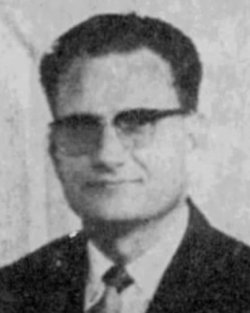
W.E. Best

#15 The Righteousness of God, Part 1

Romans 1:16-17
W.E. Best July, 1 1973 Audio
0 Comments
Remastered October/November 2024

Sermon Transcript

Auto-generated transcript • May contain errors

100%
Let's open our Bible this morning
to Romans chapter 1, Romans chapter 1. Last Sunday we began with the
16th verse. Of course, we discussed with
you in the morning service the three I am's of the Apostle Paul.
We did not elaborate too much on the last when Paul said, for
I'm not ashamed of the gospel of Christ. The first two iambs
in this portion of Scripture, verses 14 through 16, are positive. The last is negative. Now, I'm
going to spend the greater part of this service this morning
discussing Paul's negative statement concerning the gospel. I'm not
ashamed of the gospel and why he presented this in its negative
form. This morning we are discussing
with you verses 16 and 17. For I am not ashamed of the gospel
of Christ, for it is the power of God unto salvation, to every
one that believeth, to the Jew first, and also to the Greek. For therein is the righteousness
of God revealed, from faith to faith, as it is written, the
shall live by faith. I want to say a few words about
the subject for next Sunday. I am not going to speak on the
last phrase of the 17th verse this evening, that just shall
live by faith. In order for you to be better
prepared for the study of the subject that just shall live
by faith, next Lord's Day morning, will you open your Bibles now
to the book of Habakkuk? This is where the apostle quoted
from in making the statement which he made in the 17th verse
of Romans chapter 1. The book of Habakkuk. I want
to give to you this morning a few fundamental statements concerning
the book of Habakkuk. Let me give to you the simple
outline of these three chapters. The name Habakkuk means embrace,
embrace. In order to appreciate Paul's
statement that just shall live by faith, you're going to have
to have some knowledge of the entire book of the minor prophets,
the book of Habakkuk. In chapter one we have the burden,
the first two words of the first verse give us that point. In the second chapter you'll
find in the second verse the vision, the burden chapter one. the vision, chapter 3. In chapter, I mean in chapter
2. In chapter 3, a prayer, the first two words of the third
chapter. Now let's go a step further.
We have the burden in chapter 1. In this chapter, faith grappled
with a problem. That's the substance of the entire
first chapter. See, the just shall live by faith. Now, in order to appreciate the
meaning of that statement, you'll have to see how that the faith
of Habakkuk grappled with a problem, and that is the subject of chapter
one. Now, chapter two, the vision.
In this chapter, Habakkuk's faith grasped the solution to the problem. First of all, he grappled with
a problem, and you'll find out in the study of the chapter what
the problem was. In chapter 2, faith grasped the
solution to the problem. Then in chapter 3, faith, that
is the faith of Habakkuk, gloried in assurance. Now, if you'll
keep those three thoughts in mind, you ought to have them
in the margin of your Bible. You'll be in a position next
large day morning to appreciate to a greater extent the meaning
of the statement, the just shall live by faith. I have some other
things that I will give at that time. This statement is quoted
three times in the New Testament, here in Romans, Galatians 3.11 and Hebrews 10.38. And as it is quoted in these
three different epistles, emphasis is placed upon one word in that
statement. And I want you to pick out the
word that is emphasized in each one of the epistles that quotes
this text from Habakkuk, chapter 2, verse 4. Now for our subject this morning,
the righteousness of God. Paul said that he was ashamed
of the gospel because it is the power of God unto salvation.
And he said therein is the righteousness of God revealed. I have three
points this morning that I want to discuss with you. First of
all, Paul was not ashamed of the gospel. We may not get any
further than that point. Number two, The gospel is the
power of God unto salvation. And number three, the gospel
is the revelation of the righteousness of God. I want to begin this morning
by quoting a significant statement by a writer of many years ago. I believe that you will appreciate
this statement. Quote, If the righteousness that
is revealed in the gospel is that righteousness which God's
righteous character required him to require, I like that. That's easy to remember. Kind
of rhymes, doesn't it? Let me give it again. If the
righteousness that is revealed in the gospel Is that righteousness
which God's righteous character required him to require? Now,
the last part. It is also that provision which
his own pity prompted him to provide. End of quote. Oh, what
a great statement. I'll tell you what I would do
if it were me. I don't see you doing it, some of you. A statement
like that is so meaningful I'd try to get every word of it and
I'd put it right down the side and the margin of my Bible where
the subject of righteousness is discussed. What a great statement. Would you like me to give it
again? You see, I don't mind repeating myself. Anything that's
worth giving is worth repeating. It's worth people really getting
down and knowing. If the righteousness that is revealed
in the gospel is that righteousness which God's righteous character
required him to require. Now I want you to see what all
is said in that. There is a distinction made in
that statement between the righteous character of God and the righteousness
that God provided in the death of his son. See, there's a distinction between
God's righteous character and the righteousness that has been
provided for us in the death of Jesus Christ. So he said,
if the righteousness that is revealed in the gospel is that
righteousness which God's righteous character required him to require,
it is also that provision which his own pity prompted him to
provide. Now if I were changing anything
in that statement, I'd only change one word, and that's the first
word. I wouldn't use the word if. Beloved, I don't care what I
say, it can be improved upon. I don't care what you say, it
can be improved upon. Let us never forget that. What
God has said cannot be improved upon. I would say it like this,
since the righteousness, wouldn't you? Since the righteousness that
is revealed in the gospel, not if, but since the righteousness
that is revealed in the gospel is that righteousness which God's
righteous character required him to require, it is also that
provision which his own pity prompted him to provide. The
word righteousness is found 40 times in the book of Romans. The word righteous is found four
times. We've already stated that the
theme of the Book of Romans is the righteousness of God. Righteousness
communicated, righteousness vindicated, and righteousness demonstrated. What is the meaning of the word
righteousness? The word righteousness is the
translation of the Greek word which means that it is the perfect
obedience to the law of God in thought, word, and deed without
omission. Righteousness is the perfect
obedience to the law of God in thought, Word and deed without omission. Without omission. Now you can
see that except our righteousness exceed the righteousness of the
scribes and Pharisees, that we shall in no case enter into the
kingdom of God. Matthew 5 20. No human being
can perfectly obey the law of God in thought, in word and in
deed, without omission. So if a sinner
is to be saved, he must be clothed with a righteousness of God's
provision. Let's go a step further in explaining
righteousness. Now I've given to you the meaning
of the word righteousness. Now, when we read the expression,
the righteousness of God, and this is the theme of Romans,
the righteousness of God is the righteousness provided by God
which satisfies God. I'm giving you the meaning of
the word righteousness. Now, the righteousness of God,
which is the theme of Romans, is the righteousness provided
by God which satisfies God. And the only thing that satisfies
God is perfect obedience to the law in thought, word, and deed. Now, you can see it's not by
the righteousness which we have done, but it's according to God's
mercy that he has saved us. By this righteousness, the righteousness
of God, sinners are brought into a right relationship with God. I said by this righteousness
of God's provision, sinners, and I'm talking about elect sinners,
are brought into a right relationship with God. Now, there are some introductory
things that we must give. The righteousness of God is that
which justice requires. Christ has provided, the gospel
has revealed, and the Holy Spirit applies. I repeat, The righteousness of
God is that which justice requires. Christ has provided. The gospel reveals, and the Holy
Spirit applies. I do not want to give an exposition
of this this morning. But we will have to introduce
the subject. So turn with me now to the third chapter of Romans. I want you to read with me beginning
with the 20th verse and read through the 26th. I'm not going
to give an exposition of these verses because we will spend
several services in the discussion of these verses at a later date.
But let's read the verses since we're discussing the righteousness
of God that is revealed in the gospel. Therefore, by the deeds of the
law there shall no flesh be justified in its sight, for by the law
is the knowledge of sin. But now, the righteousness of
God without the law is manifested, being witnessed by the law and
the even the righteousness of God,
which is by faith of Jesus Christ unto all and upon all them that
believe, for there is no difference. For all have sinned and come
short of the glory of God, being justified freely by his grace
through the redemption that is in Christ Jesus, whom God has
set forth to be a propitiation through faith in his blood, to
declare his righteousness for the remission of sins that are
passed through the forbearance of God, to declare, I say at
this time, his righteousness, that he might be just and the
justifier of him that believeth." Now, I would like to mention
nine things. I'm just mentioning them by way
of introduction this morning. found in verses 21 through 26
of Romans chapter 3. This passage of Scripture gives
a brief but comprehensive view of God's righteousness. When
I say brief, I mean brief. When I say comprehensive, I mean
comprehensive. Notice, first of all, This righteousness
is of God. Here we have the source of righteousness. The source of righteousness which
God requires is his righteousness, and he is the source of his righteousness. It's not yours. So when you talk
to religionists who are trying to do the best they can, they
can continue to do the best they can, and they'll end up in outer
darkness. The source of righteousness is
God. It is His righteousness. Number
two, it is revealed man could never discover it. Now I'm not
giving you each of the praises. The statements that I'm giving
to you are found within the context of these verses 21 through 26.
It is revealed man could never discover it. You cannot by your
own wisdom discover the righteousness of God. I don't care how hard
one might try. Number three, it is independent
of the law. Apart from the law is the expression
used by Paul. Thus it could not be merited
by the law. Number four, it was predicted,
predicted by the prophets of the Old Testament. It is according
to the law and the prophets. Number five, it is bestowed,
it is upon all that believe. Number six, it is costly, it
is through the redemptive work of Jesus Christ. Number seven,
it is atoning, Christ shed blood is the propitiation or mercy
seed. Number eight, it is ethical and
this is of vital importance. I said it is ethical, God's forbearance
therefore with the sins of Old Testament saints, even before
the actual death of Jesus Christ, was not due to indifference But
he passed over them, as we're told. Why? Because Jesus Christ
was on the way to Calvary. That's one of the greatest expressions
that I've come across in a long time. God could pass over what? The sins of the Old Testament
saints, because even at that time, Jesus Christ was on the
way to Calvary. I'm hoping that you know what
I mean by that statement. I'm talking about predestination
now. It was predetermined that Jesus Christ would die. So the Lord Jesus was on the
way to Calvary. And number nine, it is effective and final. It is the just God who justifies
men and remains just in justifying the ungodly. It is effective
and final. Now, beloved, do I need to say
any more as to the meaning of the righteousness of God? The Jews were not ignorant of
God's righteous character. There was not an Orthodox Jew
in Paul's day who was ignorant of God's righteous character.
There is not an Orthodox Jew today who is ignorant of God's
righteous character. The Jews of Paul's day and the
Jews of our days are ignorant as to the righteousness of God
that has been provided by God in the death of the Son. So you must make the distinction
between the righteous character of God and the righteousness
provided by God in the death of the Son. It isn't enough for
a person to have some understanding of the righteous character of
God. That will not suffice. There is not an orthodox Jew
today who does not believe in the righteous character of God. But he is ignorant of the righteousness
of God provided in the death of his Christ, and this is what
Paul meant when he said, In the 10th chapter, beginning with
the first verse, my heart's desire and prayer to God for Israel
is that they might be saved. He went on to say, they're zealous,
they have a zeal of God, but not according to knowledge. They
have lived the righteousness of God. That is, the righteousness
provided by God in the death of Christ, and they've gone about
to establish their own righteousness, and thus they are not submitting
themselves unto Jesus Christ, who is the end of the law for
righteousness to every one that do. See how simple it is? How simple it is? In a coming day, The righteousness
of God will be known publicly. It is known publicly. It is not
known universally today. I'm not going to take time this
morning to go to the 98th division of the Psalms, but I gave you
that reference. And you will notice as you read
the 98th division of the Psalms, the time is going to come when
the righteousness of God will be known universally. And the
righteousness of God will not be known universally. until the
coming again of Jesus Christ our Lord and Redeemer. The righteousness of God is revealed
to you and to me in the gospel. All right, first of all, Paul was
not ashamed of the gospel. Not ashamed of the gospel. Two things I want to discuss
with you on this point. Number one, this was a negative
proof of Paul's being ready to preach the glorious gospel of
the Lord Jesus. And number two, Paul's negative
proof was not only personal, It involved the apparent insignificance
and failure of the gospel. Now I'm answering the question
as to why did the Apostle Paul express himself negatively when
he said, for I'm not ashamed of the gospel of Christ. When
he had been positive in saying, I am better and I am ready. We'll answer that now. I'll be
frank with you, I overlooked it for years. Many, many years. And this is why, beloved, that
no person can just simply casually read the Word of God and take
a lot of things for granted by just a casual reading of the
Scriptures. When he does this, he misses some of the greatest
truths of God's Word. that God would have his people
to know. First of all, this was a negative
proof of Paul's being ready to preach. Paul was conscious of
his personal suffering. I don't suppose there has ever
been a person who has suffered more in his life for the sake
of the gospel of Jesus Christ than the man named Paul. He was conscious of his personal
suffering. He was conscious of those sufferings
from the hands of individuals who despised the very message
that he proclaimed. Beloved, I'm going to illustrate
it to you this morning in a very practical manner. And I assure
you, if you witness to the Lord as you should, you will be subjected
to the same things today. And don't take for granted when
you hear somebody speak, and he might make a few good statements
at the beginning, that that is really what he believes. You
have to keep asking questions until you get down to the rock
bed of what a person really believes. I'll illustrate it in a few moments.
Paul was not ashamed of the gospel, even though most people had great
contempt for the message which he proclaimed. I want to illustrate
it now, and I'll ask you to turn to the 11th chapter of 2 Corinthians. My wife overheard someone the
other night say, he gives too many scriptures. Well, I say,
maybe some people are accustomed to just hearing a text or three
words and then they get off on a tirade. I tell you what, you
won't learn much about your Bible that way. In the 11th chapter of 2nd Corinthians,
the time came in the life of the Apostle Paul when he said,
well, I'm going to act like a foolish person for a special reason. beginning with verse 1 of chapter
11. Would the God ye could bear with me a little in my folly, and indeed bear with me. What
did he mean by that statement? He simply meant that those who
were bragging about their successes and his enemies were bragging
about their successes. He said, well, since you're bragging
about your successes, he said, I'm going to do a little bragging,
and I'm going to brag about my failures. Does that take you
by surprise? So he said, you're bragging about
the great achievements that you've accomplished, and I'm going to
tell you what I've suffered for the cause of Christ. So he said,
if you want to be foolish, he said, I'm going to be foolish
with just one motive in mind, one idea in mind, to tell you
what I've suffered for Christ. Verse 2, he said, I want you
to know I'm jealous over you, for the God of jealousy, for
I've espoused you to one husband, that I may present you as a chaste
virgin to Christ, but I fear less by any means as the serpent
begot Eve through his subtlety, so your mind should be corrupted
from the simplicity that is in Christ. For if he that cometh
preacheth another Jesus, whom we have not preached, Or if he
receive another spirit, which he had not received, or another
gospel, which he had not accepted, he might well bear with him.
Now Paul was afraid that some of them had received another
Jesus, another spirit, and another gospel. He wanted to know, even though
he was being criticized severely by Paul's teachers, he said in
verse 8, robbed other churches, taking
wages of them to do you service. Now, go back up a moment. The
verse says, But though I be rude in speech, yet not in knowledge,
but we have been throughly made manifest among you in all things. Have I committed an offense in
abasing myself, that ye might be exalted? Because I preached
to you the gospel of God freely, that is, without cost. Because
of your conduct, I even worked with my own hands. I made my
own living. I didn't even depend on you for
financial support that I might present to you the glorious gospel.
And some of you are still criticizing. He said, I even robbed other
churches, taking support from other churches in order that
I might do you service. He kind of stomped on them, didn't
he? And then coming down to the 21st verse, no, the 19th verse.
For ye suffer fools gladly. He said to these Corinthians,
ye suffer fools gladly. And beloved, there are a lot
of people today who are suffering fools gladly. And I say that without any reservation
or hesitation. If otherwise, he goes on. He
says, you suffer fools gladly, seeing you yourselves are wise.
That is in their own estimation. For you suffer if a man bring
you into bondage, if a man devour you, if a man take of you, if
a man exalt himself, if a man smite you on the face. In other
words, these false teachers can take you for a cleaning and that's
good. Beat and cuff you around and
you take it. Now Paul says, I speak as concerning reproach. In other
words, I speak by way of reproach. As though we had been weak, how
be it whereinsoever any is bold, I speak foolishly, I'm bold also. Now he says, I'm going to speak
foolishly for a little bit. Can you bear with me? These false
teachers, they have been speaking foolishly, bragging about themselves
and their accomplishments. their successes, I'm going to
speak foolishly for a few minutes and speak about my persecutions,
my apparent failures, my weakness, and so forth. So he says, are
they Jews? Verse 22, so am I. Are they Israelites? So am I. Are they the seed of
Abraham? So am I. Are they ministers of
Christ? I speak as a fool, he said. I'm
speaking as a foolish person. I am more, I am more, in labors
more abundant, in stripes above measure, in prisons more frequent,
in deaths off. Do you know of anyone that's
been treated like me? Of the Jews five times received I 40. Strive save one. Thrice was I
beaten with rods. Once was I stoned. Thrice I suffered
shipwreck. A night and a day I have been
in the deep, in journeyings often, in perils of waters, in perils
of robbers, in perils of mine own countrymen, in perils of
the heathen, in perils in the city, in perils in the wilderness,
in perils in the sea, in perils among false brethren. My, they should have been humbled
as a result of this. Then Paul said, in weariness
and painfulness, in watchings often in hunger and thirst, in
fastings often in cold and nakedness, beside those things that are
without, that which cometh upon me daily, the care of all the
churches. Who is weak, and I am not weak?
Who is offended, and I burn not? If I must need glory, I will
glory of the things which concern mine infirmity. What do you think this did to
those Corinthians that have been criticizing? I don't know. I
can imagine. I know what it did to them if
they were really saved. So Paul said, I'm speaking foolishly.
Now why was Paul not ashamed of the gospel? He was not ashamed
of the gospel because he was conscious of his own personal
sufferings from the hands of those who despised the very truth
he proclaimed. I'm not ashamed. He was not deterred by his own
humiliation as a preacher. Think about that for a moment.
That's a good lesson for me. That's a good lesson for every
Christian, but it is a real good lesson for elders. Have you ever been deterred?
by your persecutions, by your afflictions? Paul was not deterred. How many men have you known who
said they were preachers of the gospel, and when persecution
arose, they wanted to take for tall timber? Paul was not deterred by opposition. He was not deterred by the treatment
that he received from people. We've all seen in the religious
sections of the papers over a period of years now how many ministers
are leaving the ministry and the reasons usually given, they
just can't take the criticism that they're receiving. Most of the criticism is justifiable.
Beloved, when I'm criticized and it is justifiable, I'm to
take it as a lesson and profit by it. But no man of God is going to
be deterred from his duty by persecution or criticism if he
is one whom God has called and ordained to preach the gospel.
Paul said, I have learned in whatsoever state I am there with
to be content and that meant even in prison. There's some real lessons in
this for us today. Not only as preachers, but as
Christians. I want to illustrate this. I
want you to see the beauty of this. I read the sweetest illustration. I think one of the most wonderful
descriptions of this. that I've ever come across. One
man said in explaining this, I quote, Is the gardener ashamed
of the tiny seed in which God has endued hidden virtues, which
he has denied to the diamond and ruby, end of quote. Now that's
all he said, but I saw something in that, and I'll enlarge upon
it now. And he quoted again, ìIs the
gardener ashamed of the tiny seed in which God has endowed
hidden virtues, which he has denied to the diamond and ruby?î Today you and I are witnessing
false teachers by the droves. Weíre witnessing antichrists
And there's one in the city of Houston right now. There are
many, but there's one in particular. And what are people doing? Oh, they're praising these antichrists,
these false teachers. But are we going to become discouraged
or ashamed of little things or small things that have no apparent
significance in the eyes of the world, yea, even the religious
world. You know, the prophet warned
about despising the day of small things. If you want a real study
sometime, just go through the scripture and make a study of
the small things. and how God, the sovereign God,
uses small things to accomplish his plan. He could use the tears of a baby,
baby Moses. He used the little picture that
Gideon held in his hand and 300 of his comrades, a little picture
with a light, a candle inside of it. And at the at the hour
that God would have all of them to break their pictures and let
their light shine, the whole Philistine army fled in the face
of 300 puny soldiers with some little flickering lights. I could
go on and on. God can use even the jawbone
of an ass. And we're told in the New Testament
that God's people, God's people, is but a little flock. Are we going to despise small
things? So the Lord warns us about this. So is the gardener ashamed of
the tiny seed in which God has endowed hidden virtues? And God has denied these hidden
virtues, the very principle of life, from the beautiful diamond
or the beautiful ruby or sapphire or whatever precious stone it
might be. People look at the beautiful
things, the attractive things. Now, I must apply this. In 2 Corinthians chapter 4, verse
7, we have a treasure in an earthen vessel. in an earthen vessel. Your vessel is a vessel of clay,
but as a Christian in that vessel is the greatest treasure, hidden
if you please, that God can give to man, the principle of life.
We have this treasure in earthen vessels. God who commanded the
light to shine out of darkness have shined in our hearts, giving
to us the knowledge of the glory of God shining in the face of
his Son, and then he goes on to say, we have this treasure
in earthen vessels. Paul was not ashamed. He was
not ashamed of the gospel, for therein is God's righteousness
revealed. Do we despise the day of small
things? Yesterday morning, I was in my
study. I had the drapes open as I usually
do to get some natural light. In my study, the windows opened
up on the porch. And I heard some talking and
I looked and two young girls were coming to the door. And
they had armful of toys, circling, all circling about this long.
little longer than legal-sized paper. So I went to the door, one was
19 years of age, one was 17. One was already out of high school,
I think it had one year of college. The girl, 17, was in her senior
year in high school. Both very attractive girls, had
on long dresses, had a very sweet smile, both of them, I don't
know how long they had practiced in order to get it. hold it,
maintain it, but it was a very sweet smile. They introduced
themselves and told me their purpose in being there. Off in
one of the circuits, advertising they were from a Baptist church.
Well, they were Baptists from a Baptist church, a Southern Baptist, out near
us. And so, on this circular, there
was this religious rock group. and then a display of a fella,
an ex-dope addict, and so invited me to the services. So I said
to the two young girls, as graciously as I could, I said, no, I'm not
interested. You're not interested? You're not interested in what
we're trying to do? I said, no, not in what you're
trying to do. And then I introduced myself
as minister of Park Place Grace Church. one of them had heard
about the church. And so I said, I am not endorsing
either your message or your method. I cannot. I said, I cannot endorse
either your message or your method. And of course, these young people,
I tell you, they're bold as Now I hate to say it, but I believe
there inspired some of them of hell itself. I've never seen
such boldness. And so the one 17 years of age,
she said, man, that's the reason we dislike you guys so. She's
talking about preachers. Now follow me. Y'all all gotta
hang up on doctrine. Now think about that for a moment.
Boy, she was as impudent as any person could be with that smirky
smile. Man, this is why we're disapproving
you guys. Y'all have all got to hang up
on Doc. I said, she had a Bible in her
hand. I said, will you open your Bible
to 2 John and read verses 9 through 11. She thumbed through a Bible. She opened up to that passage.
She didn't want to read it. I said, read it. She kept just jabbering and
she would read. I said, please read what I have
requested that you read. She finally read it and then
she made a smart remark. But she didn't even know what
it meant. She doesn't have a illuminated mind, but the spirit of God.
Just as lost as she could be. Now they made two or three good
statements at first. Real good statements. And so
I had to go on and keep questioning in order to get to the rock bottom
of their real belief. And some of you, by the first
two or three statements they made you would have said, wow,
this sounds good, this is great. But I've learned to not just
stop with just a few statements. And so the conversation went
on, and then I quoted two verses of scripture. And after I had
quoted those two verses of scripture, the girl that was 19, had one
year in college, she said, I don't believe that junk. She didn't
know I was quoting a scripture. I just simply quoted a scripture,
see. And she said, I don't believe that junk. Well, that hurt me
then, really, to think that here, a poor girl out, representing
a Baptist church, says she's a Baptist. And I've quoted two
verses of scripture, and she said, I don't believe that junk.
And then I said, wait just a minute. I said, do you realize what you
have said? I said, now I want you to read
the scriptures that I've quoted. I said, I've quoted to you two
verses of scripture, and you said, I don't believe that junk.
And I tried to be as kind as I could. She said, oh, I apologize. I said, I think you need to apologize.
But I said, that proves one thing, that you're running around here
talking about things that you know nothing, absolutely nothing
about. And then I said, what do you
believe about? She kept saying, Jesus, Jesus. I said, that's
the way the enemy is referred to. It's Jesus, Jesus. I said,
the Lord Jesus said to the disciples, he called me a master and Lord.
And you say, well, for so I. I said, you're showing disrespect
for Jesus Christ that is revealed in the Holy Scripture, the eternal
son of God, my savior. And I don't appreciate it. And
I said, what do you believe about? You're Jesus, that's the way
I put it. You're Jesus. And she didn't even know. Oh,
she said, he's my savior. I said, well, what did he do
to accomplish salvation? She didn't know what I was talking
about. I'm telling you the truth, she
didn't even know what I was talking about. And I said, well, this
is putting words in your mouth, but I'll go ahead and do it.
What did he die for on the cross? Oh, yeah, yeah, he died for me. And then I said, well, what do
you believe about the person of Jesus Christ? He's a man. I said,
was he more than a man? Why, he was a man. He could sin.
I said, what? I'm not going to say anymore.
But I gave him a discourse on the person of Christ. And about
that time, two men, young men, crossed the street. One of them
had hair clear down to his shoulders and his real bushy like this
afro. And So he was walking across the street. And so the younger
one ran out to get him. She wanted to bring him and the
other boy over. And so I had gone in to get a book, The Impeccable
Crimes, and I asked her if she'd read it. And so when this other
bushy-headed boy, when the bushy-headed one came across the yard, I tell
you, I just wanted to punish him. He held up his hand and
said, Glory to God, praise the Lord. And you could hear him,
you know, for a block. Oh, I just wanted to, I wanted to cram.
And so she introduced him to me. And so she handed him the
book. He said, well, I know about this
book. Said, a friend of mine has it. He said, now since I met
you, I'll read it. I said, well, I hope you get
something out of it. Then the girl turned to me and closed
it. A lot of other things, beloved, I could tell you that just break
your heart. Now, if Baptist churches are
condoning this kind of stuff today, it's about time that people
begin to wake up. And she said, will you pray for
our work? I said, no, I'm not going to
be a hypocrite and tell you I'll pray for your work. I said, now, I'll tell you the
only way that I can pray without being a hypocrite, and this I
can do and will do. Pray that the Lord might illuminate
your mind, that you might see the truth concerning the person
and work of my Savior, the Lord Jesus Christ. And they just snickered
and walked away. I want you to think about that
a little bit. Now, these are some of the things
you and I encounter today, but those things are nothing to be
compared with what the Apostle Paul encountered in his day.
He said, I'm not ashamed of the gospel of Christ. So this was a negative proof
of Paul's being ready to preach. Now, second, Paul's negative
proof was not only personal. It involved the apparent insignificance
and failure of the gospel. I want to show you this. Here's
a point that would be of strength to you. In fact, I want to give
this the next time I talk to these people out in spring, if
that time presents itself. I want to give some of these
very things to them that I'll be sharing with you now. Paul's
negative was not only personal, it involved the apparent, notice
what I'm saying, the apparent insignificance and failure of
the gospel. I'll illustrate that now to begin
with. The 17-year-old girl yesterday morning, she said, do you see
just hundreds of people coming to Jesus in your service? I said,
no, I don't witness hundreds of people. Then she realized,
oh boy, she realized We see hundreds of young people coming to Jesus.
And by the way, she represents what is known as the Peacemaker
Organization. We just see hundreds of young
people coming to Jesus. And you mean you don't see them?
She said, that's what that old cold doctrine does. She said,
oh, she said, I was in a church one time and this cold doctrine,
she said, I said, Young lady, you don't even know what doctrine
is. You don't know what peace is. She said, you don't even
have to argue. I'm happy. You can tell the devil
is just kind of goosing her. She's going down there as the
devil is goosing her. She said, I'm happy. She said,
you're not even happy. You don't have any joy. And then
she said, do you know what freedom is? I said, I'll turn that one
on you first. I said, do you know what freedom
is? Do you know what spiritual freedom is? She didn't know. I said, young lady, I said, I
know what freedom is. I said, true freedom is to be
enslaved to Jesus Christ. And she thought I was nuts. Because
I used the word enslaved to Christ. You see, she lacks a doctrine.
I said, I want you to know that the doctrine and the spirit cannot
be separated. The spirit never leads a person
contrary to doctrine. And everything that you've said
to me has been in direct contradiction to doctrine and therefore it's
another spirit that's leading you and goosing you and making
you say, I'm happy, I'm free. But you see, she was bragging
about their successes. their success. So Paul's negative
proof was not only personal, it involved the apparent insignificance
and failure of the gospel. Let's elaborate on that for a
moment. He was not ashamed of the apparent
insignificance of the gospel. It didn't make any difference
to the Apostle Paul whether he was preaching in powerful Rome
or in philosophical Athens or religious Jerusalem, he was not
ashamed of the gospel. This message, which was a stumbling
block to the Jews and foolishness to the Greeks, but Paul knew
the power of the gospel because he had been delivered by it. He was not ashamed of the apparent
insignificance. Are you ashamed of its apparent
insignificance? He was not ashamed of the appearance
of failure. Now let's think about this for
a moment. I said he was not ashamed of the appearance of failure. And you'll notice I said appearance
of failure. You know as well as I do that
the Word of God never fails. These folk with whom I talked
until nearly three o'clock yesterday morning, are very disenchanted
because if they ever wanted to organize a work in that area,
there is such a stigma now on what we call Calvinism or the
doctrines of grace in that area because of the leader that they
had to lead them. Beloved, you must realize this. God's truth never fails. There
may be apparent failures, but God's truth never fails. I said
to them, forget what has happened in the providence of God. Forget
it. Thank God for the truth you now
have by the grace and help of God and get your eyes on the
Lord and get your eyes off of preachers. Let us think about the place
from which Paul wrote his letter to the Roman saints. He was in
Corinth, as I've already given you in the introduction to our
study of Romans. Remember that he was writing from Corinth,
a church with many problems. But keep this in mind, the failures
lay not in the message that was proclaimed in Corinth, but in
the weakness of the people who live in Christ. The message is not weak, it's
the people. And there may be on occasions
apparent failures, but the word of God goes forth and accomplishes
the very purpose for which God sends it in individual lives. Even though there may be apparent
failure, there is no failure. There is no failure out there.
Everyone who has been saved by the grace of God can rejoice
that the word of God has invaded them with power, delivering them. Yes, there were many problems
in the Corinthian church, divisions, immorality, though I must say
the failures lay not in the message, but in the weakness of the people. And the failure of the message,
the apparent failure of the message, even in this church, does not lie in the message,
but in the weakness of the people. I close with this thought. You
can see I only introduced the subject of righteousness and
then took the first point this morning. Paul was not ashamed
of the features of the gospel. He was not ashamed of the features
of the gospel, which were in the highest degree unwelcomed
by the world, yea, even the religious world of his day. Now what do
you mean by the features of the gospel? Beloved, today you can
mention such great biblical truths as God's coordination, God's
predestination, God's divine And these features of God's message
are despised even by most religions. And did you know it was to the
very subject of God's absolute sovereignty in salvation that
I quoted to that young lady yesterday morning when she said, I hate
that. I hate that junk. And she used
the very word junk. I said, you have just made the
statement that you hated God's infallible word, and that certainly
does classify you. Paul was not ashamed of the features
of the gospel. I was told in the wee hours of
yesterday morning that this man who claimed to believe in the
doctrines of grace, and I've known him for about 20 years,
longer than that, I've known him since he was a junior, I
was his pastor for about seven years. He told them, now don't
ever mention to people the doctrine of election. Now these people
to whom I talk have only embraced these truths for a little less
than a year. Don't ever, in other words, don't
ever mention these things. Don't bring them up. And when
people do bring them up, don't discuss them with them. I can
see now when Brother Pennington and I went down to Dickinson
a few years ago to hear a fellow that he had to visit the church.
And this young man brought a message on the divine election. At that
time he had been there about a year and a half, I think. And
so after the service, I never will forget this, and I'll never
forget the statement Brother Pennington made after we left and were coming
home. He asked the people, he said, how many have ever heard
a message on election? There were about two or three people
in the congregation that held up their hands. on the way home,
see, he hadn't been preaching it. Brother Penn said, hmm, it's
an evident fact he hadn't really been preaching it very much.
He might just hint at it, but he hadn't been preaching it. I'm not ashamed of any truth
that is in God's Word, and Paul was not ashamed of any of the
features of God's message.
W.E. Best
About W.E. Best
Wilbern Elias Best (1919-2007) was a preacher and writer of Gospel material. He wrote 25 books and pamphlets comprised of sermons he preached to his congregation. These books were distributed in English and Spanish around the world from 1970 to 2018 at no cost via the W.E. Best Book Missionary Trust.

Comments

0 / 2000 characters
Comments are moderated before appearing.

Be the first to comment!

Joshua

Joshua

Shall we play a game? Ask me about articles, sermons, or theology from our library. I can also help you navigate the site.