Bootstrap
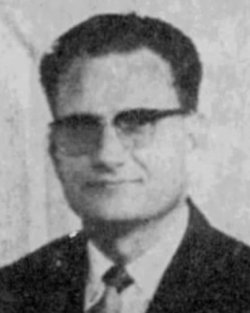
W.E. Best

#21 The Origin of Sin, Part 1

Isaiah 45:7
W.E. Best July, 1 1973 Audio
0 Comments
Remastered October/November 2024

Sermon Transcript

Auto-generated transcript • May contain errors

100%
I made the statement last Sunday
evening that in our study of Romans, we're not only going
to give a verse-by-verse exposition of the entire book over the period
of time that we will be studying this book, but we will also be
taking from the book of Romans great themes and developing them
to a great extent. I know that questions will continually
come to your minds concerning the subject that we are now studying,
but I do ask you to be patient because I do not want to get
too far ahead of myself. We will not be dealing with the
subject of the imputation of sin until we get to the fourth
and especially chapter 5, verses 12 through 21. When we get to
that portion of scripture, we will be spending several weeks
discussing the great biblical truth of imputation. We are now
simply laying before you the groundwork for some subsequent
messages on the subject of sin. Last Sunday morning in the beginning
of our study of this last section of Romans 1, we spoke on the
wrath of God, which is now revealed and have sought to show you last
Sunday as well as this morning how that the wrath of God is
being revealed at the present time. We also introduced this morning
the first in a series on the subject of sin. This morning
we discussed the fact of sin. Tonight we want to begin a study
which will not be completed this evening. The Lord willing we
will complete it probably next Lord's Day evening. The subject
has to do with the origin of sin. This is the aspect of the
subject of the doctrine of sin that we will be discussing with
you this evening. These are not easy subjects to
either teach or preach due to the nature of the subject. One
can understand that a subject like this is not as easy as when
one would preach on the great truth of grace, irresistible
grace, saving grace, preserving grace, and so forth. There are
many other great truths, but this subject is of vital importance
as the very groundwork of our study of the Epistle to the Romans. I'm still urging you to memorize
great sections of the Book of Romans. Some of you are, and
you're receiving a great benefit and blessing from having done
so. As a result of doing this, you
will be able to relate with other persons more easily, more freely,
in the discussion of some of the great biblical truths of
God's Word. I was telling one of the men
in our church this morning after the service, we need to get these
great biblical truths firmly fixed in our minds, and once
we do this, those great truths become ours. Whenever you get
any subject down to the extent that you can explain it, you
can express what you believe about that subject, that subject
becomes yours, that truth is yours. But it isn't yours. until
you are able to do that. I realize that the last part
of Romans 1 is not as pleasant to memorize as, say, the first
17 verses, but I think it is necessary for you to do just
that. There may be a section of the
second chapter we will not make that request of you. However,
in the third chapter we will make such a request, especially
beginning with the 24th verse through the last verse of that
chapter. There is a section in the 4th chapter of Romans that
I would desire very much for you to memorize, and then it
would not hurt for you to memorize the entire 5th chapter. Maybe
not so much the 6th chapter or the 7th, but I would request
that you memorize the whole 8th chapter. Now this may sound like
it's asking too much of you, but I believe that you can redeem
the time, and you can do this if you properly redeem the time.
And you know what I mean by redeeming the time. That means to buy up,
to make the most of the opportunity which you have. You can't redeem
the time that has passed. It is lost forever. You can only
redeem the time by making the most of the opportunity which
you have in the present. That is our responsibility as
Christians. Taking up where we left off this
morning, I want to make a few statements before we get into
the subject of the origin of sin. Personally, I'm not too
fond of that expression, yet we see it repeatedly. We have
questions asked about the origin of sin. I like what some men say concerning
this subject, that sin doesn't really have an origin, it just
has a beginning. Now you'll have to think that
through for a while. There is a sense in which, of
course, it does have an origin, but you'll have to study it more
carefully. than probably you have in the
past in order to appreciate that statement made by one of the
great theologians of all time when he said that sin doesn't
really have an origin as we think of origins, but it has a beginning. It had a beginning. So tonight
we will begin a study which will take at least two lessons to
cover this particular aspect of the subject. I made this statement
in closing this morning, but did not have time to elaborate
on it very much due to the different points that we were bringing
out on the fact of sin, the reality of sin. I hope that you got this. If not, do your very best to
get it tonight. I made this statement that sin
has no thesis, but an antithesis. And you'll analyze that statement,
study it very carefully. I think you will have great appreciation
for it. And then I sought to illustrate
that statement by the use of the word antichrist. We know
that that is a compound word, antichrist. Now the primary person
would be, of course, or the primary figure would be Christ, and then
the anti would be secondary. So the Antichrist is opposed
to the Christ. That's the meaning of Antichrist.
When we say that sin has no thesis, we simply mean it has no proposition
to put forward for consideration. When one considers all of the
false isms that are in existence today, they're all opposed to
the truth. And you can see why that sin
literally has no thesis but is an antithesis. Now tonight for
the beginning of the origin of sin. There are several introductory
things that I want to give this evening before we turn in our
Bibles to the 45th chapter of the prophecy of Isaiah and consider
a text that is misapplied, misinterpreted by many persons. That text is
Isaiah 45 verse 7. We will be looking at it a little
later, not at the moment. These are some introductory things
that I would have given before we open our Bibles to that portion
of Scripture. I know that you're keeping in
mind that we're still expounding on the 18th verse of Romans chapter
1. The wrath of God, for the wrath
of God is revealed from heaven against all ungodliness and unrighteousness
of men who hold or suppress the truth in unrighteousness. Someone
has said that sin's origin has a qualitatively different character
from all other origins. That's a great statement. I repeat,
sin's origin has a qualitatively different character from all
other origins. I would like you to turn with
me now to Ezekiel chapter 28. We have the only reference in
God's word as to the origin of evil. It is found in Ezekiel
chapter 28. When one studies this chapter,
he must, out of necessity, study in connection with Ezekiel 28,
Isaiah chapter 14. Both chapters deal with the subject
of Lucifer. I'd like you to notice the 15th
verse. Thou wast perfect in thy ways from the day that thou wast
created. The prophet is talking about
none other than Lucifer. That's why I made the statement
that you must, out of necessity, study in connection with this
portion of Scripture, Isaiah chapter 14. We'll be looking
at a few verses in Isaiah 14 in just a few moments. The last
part of the 15th verse of Ezekiel chapter 28 is the only verse
in the Bible which states the exact origin of sin or evil. Let us now read the entire text.
Thou wast perfect in thy ways from the day that thou wast created. There are some who interpret
this portion of Scripture by applying it to the king of Tyrus. Now it is true that the prophet
was talking about a particular king, but we must go back of
that king. and see the person who was actually
leading or directing this wicked king of Tyrus. That person was
none other than Lucifer who has become Satan as the result of
his fall in the first Eden that I've already discussed with you
in detail. You see, there are two Edens,
two gardens of Eden. One is a mineral garden of Eden,
and the second is the vegetable garden of Eden. Now, when it
comes to human sin, that is, the beginning of sin in the human
family, it began in the vegetable Eden, the vegetable garden of
Eden. But that is not the beginning
of sin. that only relates to you and
me, the beginning of sin and the human family. Sin actually
had its beginning in Lucifer, the son of the morning that Isaiah
talks about, and this took place in the mineral garden of Eden. I want you to see that as we
go back now to the 13th verse of Ezekiel chapter 28. thou hast
been in Eden, the garden of God. Every precious stone was thy
covering, the sardius, topaz, and the diamond, the beryl, the
onyx, and the jasper, the sapphire, the emerald, and the carbonyl,
and gold. The workmanship of thy tablets
and of thy pipes was prepared in thee in the day that thou
wast created." I want to prove to you at this point in connection
with the 15th verse, that these two texts, 13 and 15, disprove
the idea of this particular passage of scripture referring primarily
to the king of Tyrus. The king of Tyrus was not a created
person. He came into the world by means
of generation. So this disproves the idea that
this passage applies primarily to the king of Tyrus. Therefore,
we have to go back beyond the king of Tyrus, and there we find
Lucifer, who has become Satan. In the 14th verse, Thou art the
anointed cherub that covereth, and I have set thee so. Thou wast upon the holy mountain
of God. Thou hast walked up and down
in the midst of the stones of fire. Thou wast perfect in thy
ways from the day that thou wast created." Here now is the only
statement of the Scriptures as to the origin of the beginning
of sin. "'Til iniquity was found in thee." Every verse about sin
other than this text, which I have just read to you, only amplifies
this statement, till iniquity was found in thee. I'm not going
to spend much time this evening discussing with you Lucifer.
We're all familiar with him and how that sin began in him. He was perpetual. That is, he
was finitely perfect, not infinitely perfect, but finitely perfect. And finite perfection has the
capability of sinning. Infinite perfection does not
have that capability, because infinite perfection refers to
none other than to God himself. Now, the origin of sin. Sin's
origin has a qualitatively different character from all other origins. Someone has said that sin cannot
be analyzed in terms of God's creative powers. A great statement. I'm giving to you some things
that will be helpful to you in understanding this subject if
you will take some notes. some things that I've been studying
for years and some things that have recently come to my attention
as a result of digging a little deeper into the subject of sin
and the beginning of sin. Sin is not related to creaturely
reality. In other words, sin simply has
its beginning not with the beginning of Lucifer, not with God's creation
of Lucifer, or the angelic host, God does not have its beginning
with man or God's original creation of man. So it is proper for one
to say that sin is not related to creaturely reality, but to
creaturely reality's destruction which took place. If we're talking
about Lucifer, then we're referring, of course, to his fall. If we're
talking about man, then we are referring to the fall of Adam
in the Garden of Eden. So sin is not related to creaturely
reality, but to reality's destruction and disruption, whether it be
Lucifer in the mineral Garden of Eden, or man, Adam if you
please, in the vegetable Garden of Eden. The reality of sin can
never be assigned to the goodness of God, to the goodness of his
creation. You'll find throughout the first
chapter of Genesis, when God created something, it was pronounced
good. And since it was pronounced good,
then sin was not associated with God's original creation of anything. God is not the author of man's
sin, but rather in his infinite wisdom, what has God done and
what is God doing? He is simply turning the evil
things that we view on every hand today to his own glory and
for the good of his own people. There is a great text of scripture
you need to memorize. If you don't memorize it, put
it down. Turn with me, if you will, please, to Genesis chapter
50, the last chapter of Genesis, and the 20th verse. I do not
know of a greater text of scripture on this particular point, which
I've just made, than this verse in Genesis 50, verse 20. We'll begin reading with the
19th verse. And Joseph said unto them, Fear not, for I am in the
place of God. But as for you, and speaking
of his own brethren, ye fought evil against me, but God meant
it unto good, to bring to pass as it is this day, to save much
people alive. Ye meant evil unto me, but God
has turned it unto good. All the evil that is in existence,
Our God is able to overrule and make evil manifest his own glory
and work out for the good of his own people. Now don't become
disturbed, please, with Isaiah 45 and verse 7. We'll be looking
at that text in just a few moments. The next thing I want to give
by way of introduction, and I may not get much further than the
introduction tonight, there is a remarkable relation between
seeking for the origin of sin and an exculpation of one's own
guilt. Let me illustrate that. It is
not as innocent as it might appear to be on the surface for you
and me to spend a great deal of time in trying to find out
the origin of sin. I had a recent writer to really
shape me on this particular point, and before I got through analyzing
what he said, I was happily shaping, because I saw the truth of this
statement as a result of analyzing. And notice what I said. It is
not as innocent as it might appear to be for you and me to give
a great deal of time in seeking to find out the origin of evil. Whenever a person seeks to find
out the origin of evil, if he is not careful, he is trying
to find out how it began in order that he can blame someone else.
That kind of shakes us, doesn't it? When you and I think of sin,
we are to think of our own personal sin. Now let me go a step further
than that. There can never be a genuine
confession of sin as long as a person is seeking to find out
the origin of sin. As long as he's trying to find
out the origin of sin, He is not looking at himself as he
should and considering sin as something belonging to him. Sin
belongs to you, beloved. Sin belongs to me. And whenever
a person confesses, if his confession is genuine, he must confess,
O Lord, forgive me of my sin. He's not looking for an alibi.
He's not looking for an excuse. He is simply being brought face
to face with the heinousness of his own sin, and therefore
he cries out, forgive me, forgive me, O Lord, of my sin. When you go back to the Garden
of Eden, what happened in that vegetable garden of Eden? Lucifer in the form of a serpent. A very beautiful creature approached
Eve and through Eve tempted Adam. I want you to see the difference
in the temptation or the beginning of sin with Lucifer and the beginning
of sin with Adam. Now get hold of your seat. If Adam had sinned in the same
manner that Lucifer sinned, there would have been no hope for Adam
and there wouldn't be any hope for you and me. Can you think
about that for a moment? Lucifer's sin came solely and
wholly from within. There was no outside evil. There
was no trial from without when Lucifer sinned. Lucifer's sin
began within. He wanted to be as high as God. He just was not willing to take
a subordinate position. I will ascend. You remember the
I wills of Isaiah 14? Well, let's turn to them. I want
you to see the difference between the sin of Lucifer in the mineral
garden of Eden and the sin of Adam in the vegetable garden
of Eden. But Isaiah chapter 14, let us begin reading, if you
will, with a twelfth verse. How art thou fallen from heaven,
O Lucifer, son of the morning? How art thou cut down to the
ground, which did weaken the nations? For thou hast said in
thy heart, I will ascend into heaven. I will. The quality of
eternity, beloved, is the fact that there was but one will,
the will of God. Now let me go a step further.
The quality of time is what? The quality of time is that there
is more than one will. So what does Lucifer say? He's
not willing to be a subordinate. So he says, I will ascend, and
right here, you have the distinction between the quality of eternity
and the quality of time. Before God created Lucifer, there
was nothing but the holy will of God. After the creation of Lucifer,
Lucifer, not willing to be a subordinate, said, I will ascend. I will ascend
into heaven. Now I'm not discussing each one
of these I wills because this actually is a message within
itself. I'm only calling attention to them. Secondly, I will exalt
my throne above the stars of God. Thirdly, I will sit upon
the mount of the congregation in the sides of the north. Fourthly, I will ascend above
the heights of the clouds. And lastly, I will be like the
Most High. Did you know that when Adam was
tried in the Garden of Eden, it was really a benevolent act
on the part of God for him to be tried in that manner? Now
think about that for a little bit. I said, if he had been tried
in the same manner that Lucifer was, then his fall would have
meant his eternal destruction and there would have never been
any hope for you and me. Lucifer's sin came solely and
wholly from within, but that was not true with Adam. Lucifer
came and approached Adam through Eve. And so there was a temptation
from without, so there was external appeal. It was the result of
a weakness within Adam that was attracted to that which was offered
him externally. And the result was sin. But thank
the Lord there was hope for Adam and there is hope for you and
me. He did not sin in the same manner that Lucifer sinned. Let
us never forget that. But I stated a moment ago that
until we see sin as ours, until we see ourselves in complete
solidarity with Adam and his sin, see sin as our own personal
sin, there will never be genuine confession of sin. In the light, in this light I
should say, it is obvious why scripture makes no effort to
explain the origin of sin in terms of its component parts. The true confession which we
make is the result of the recognition of sin belonging to us. The heart is deceitful above
all things, as I said this morning, desperately wicked, who can know
it but God himself. Sin has come into the world of
mankind without a motive. Another very important point.
I said sin has come into this world without a motive. and is the motive for all men's
thinking and doing." When we think about this statement,
this motivelessness of sin cannot find its origin in God, can it? You cannot attribute the origin
of sin to God. This is the point I'm making. One of the writers of the past
made this statement, and then he clarified it. He said, and
I quote, sin has no origin but only a beginning. When he was
asked to elaborate on that statement, here is what he said. He said, to know the origin of
sin, that is to attempt to know the
origin of sin, is illegitimate. for the simple reason that a
logical explanation assigns a certain order to that which is disorderly. He went on to say sin is the
biggest contradiction tolerated by God in his creation. and is used by him in the way
of righteousness and justice as the instrument of his own
glory. Instead of tolerating sin, what
does God do? God condemns sin. And you and
I need to be ever grateful that he has made a provision for our
sins in the redemptive work of his Son. Jesus Christ, our Lord
and Savior. Sin is not original. It took
place as an event. This is another statement made
by another man which is similar to what I've just stated. If we say that God made man sinful,
we deny both the holiness of God and also his love. If we say that moral purity is
the goal of man, but not his starting point, we attribute
to God the principle that the Apostle Paul condemns when he
said, let us do evil that good may come. Sin is not the exaltation of
man, sin is his fall. Sin is not the dignity of man,
it is his disgrace. Now I want you to notice something.
When Lucifer used the serpent to attack Eve and then Eve threw
Eve to Adam, it was in a very subtle way. To show you the deceptiveness
of the devil, he didn't tell Eve about his fault. He didn't tell
Eve what his opinion was of God. He kept all of that from Eve,
but he built Eve up by leaving the impression with her that
God was withholding something good from her. Isn't that true today? The devil
uses the same technique in deceiving people today. He will leave the impression
with people that something good is being withheld from you. So
he said, if you eat of the fruit of this tree, then you'll know,
in other words, God is depriving you of something. So Eve sought something. She sought a higher knowledge.
And Adam, through her temptation, sought a higher knowledge, but
follow me now. even lost the good knowledge
he had, the knowledge and fellowship
with God. This has always been the tactic of the devil. Sin is not the exaltation of
man, no, it's his fault. Now, freedom was God's gift to
Adam, Adam's abuse of that freedom was his sin. Adam is the only
free man that ever lived. He had a freedom of will. But when Adam fell, the will
of every man has become enslaved. He doesn't have a free will,
he has an enslaved will. You say, well, doesn't he freely
choose? Yes, yes he does. But he freely
chooses evil in the same sense as I expressed the other evening
in talking to some folks. As an automobile just naturally
runs downhill if it doesn't have a motor in it. And as the Niagara
Falls can only go in one direction and that's down. God's gift to Adam in the vegetable
garden of Eden involved a duty. The path of its fulfillment led
through the gateway of freedom. Adam did not reach his goal at
that time, but he was on his way of reaching the goal, but
he didn't know it. Adam's uprightness, and I like
to refer to original As some call it righteousness, I would
rather call it uprightness. Adam's uprightness was not the
uprightness of achievement. He was not something that he
had achieved by his own ability. He was something that was given
him when God created him. But it was the uprightness of
his original position before God. Hence, he bore within him
the possibility but not the actuality of sin and death. Now I'd like you to go with me
to Isaiah chapter 45 and we'll begin with the seventh verse.
We'll make a few comments on this particular text and then
we will get into the study of the origin of sin. We'll raise
a question, is God the author of sin? We have three things
under this heading that we want to give. What is the relation
between God and man's sin? There are several things under
this that we want to discuss with you and I assure you all
of these things are of utmost importance. Let us begin with
the fifth verse of Isaiah chapter 45. I am the Lord and there is none
else. There is no God beside me. I girded thee, though thou
hast not known me, that they may know from the rising of the
sun from the west that there is none beside me. I am the Lord
and there is none else. Now the seventh verse has been
a most controversial text of scripture. I form the light and
create darkness. I make peace and create evil. I, the Lord, do all these things. Does this text confuse you? You
can see why some persons would come to an erroneous conclusion
just from a casual reading of the text without any background
for the study of this particular verse. You see, no scripture
is of private interpretation. We must compare scripture with
scripture. And the Bible is the greatest commentary on the Bible.
All of us know that who have studied the scriptures for any
length of time. We'll now investigate the text for a few minutes. God
forms the light. I form the light and create darkness. You and I know that God forms
the light of nature. He forms the light of rational
understanding. Every man who comes into the
world, John chapter 1 verse 9, has some understanding. He possesses
some light as a result of his faculties. And lastly, God forms
spiritual understanding. Now take darkness. Darkness is
God's creature. There is, first of all, natural
darkness, and natural darkness is the result of the absence
of the sun. There is deprivation of divine
light, that spiritual blindness. There is judicial darkness, and
of course there is the blackness of darkness forever. I form the light and create darkness. Now the next statement, I make
peace and create evil. What is darkness? It's the absence
of light. I make peace, he makes peace
among saints, and there is going to be in the future universal
peace when Jesus Christ comes as King of Kings and Lord of
Lords. The statement that has created
a great deal of confusion is, I create evil. What does this mean? Can you
take this particular statement and say that God is the author
of evil? I create evil, not the evil of
sin, beloved, but of punishment. This text must be understood
in the light of its context. When you go back and study the
whole context, you will find out that God is dealing with
Israel. And as we have said before, but
repeat once again, that God often uses the evil of sin or the evil
of punishment to punish his people and to punish people. This is
what he's talking about. I create evil, not the evil of
sin, but the evil of punishment in the light of the context.
Sin is not to be found among God's creatures in Genesis chapter
1. However, sin is suffered by the Lord and overruled for the
good of his people. So the evil of punishment for
sin by various punishments is of God. This cannot be denied. Now, there's a great statement
in the book of Job, Job 2 and verse 10. When you turn to the
book of Job, the time came when Job lost not only his property,
but he lost his family. He even lost his wife. He just
lost almost everything. And what was his attitude in
the face of all of this? The 10th verse of the 2nd chapter
of Job. But he said unto his wife, when
she told him, why don't you curse God and die? Thou speakest as
one of the foolish women speaketh. What, shall we receive good at
the hand of God, and shall we not receive evil? What's he talking
about? The evil of punishment. He's
not talking about the evil of sin, but the evil of punishment.
He had lost his children, he had lost his wealth, And he was
about to lose his wife. She said, well, don't you curse
God and die. And his reply was what? What? Shall we receive
good at the hand of God and shall we not receive evil? And all
this did not Job sin with his lips. What a tremendous statement. Let's analyze that for a moment.
What? Shall we receive good at the
hand of God and shall we not receive evil. Evil in this text
is used for punishment. Now, as darkness is the privation
of light, so the evil of punishment is the privation of peace. Look
at something. I make peace and create evil.
Now, if the evil here, if it were sin, or evil as one would
think of evil, then the opposite of evil would be what? Good!
But it is not good here, it's peace! So what's he talking about? I am going to remove the peace
that you have enjoyed by creating evil, the evil of punishment.
It's just that simple. Just that simple. So as darkness
does not come from God who is light, So the evil of sin does
not come from God who is holy. Now let's begin this evening
by raising a question, and we'll go as far as we can in the development
of this subject. Is God the author of evil? Where did sin begin? Not with
God's creation. not with God's original creation,
but sin began with them all, either with Lucifer or with Adam
in the Garden of Eden. So what is meant by the phrase,
the author of sin? This is the key to the proper
understanding of our subject. What is meant by the phrase,
the author of sin? Let me begin by saying there
must be a distinction between the word author and the word
purpose. You cannot deny that God purposed
sin. Because if sin had not been purposed
by God, there would be no sin. You and I know that it was a
sin when wicked hands took our blessed Lord and nailed him to
the tree. But that was according to God's
determinate counsel and foreknowledge we're told in Acts chapter 2
and verse 23. So we must make the distinction
between author and purpose. Now God's purpose to order things
so that evil should come to pass for the sake of the fulfillment
of his eternal purpose is no argument, beloved, that God does
not hate evil as evil. Now we're going to have to get
technical to some extent, so I hope you're prepared for it.
You're going to have to take some notes and you're going to
have to really think this subject through in order to be able to
give a clear exposition of the subject of the beginning of sin. I said God purposed, he so ordered
things that evil should come to pass. in order for the fulfillment
of his eternal purpose. It was in the purpose of God
that Adam fell. If it had not been in the purpose
of God, then Adam would not have fallen. It's just that simple. It was in the purpose of God
that he prepared for you and me redemption in the work of
Jesus Christ on the cross. And evil hands were associated
even with the preparation of that redemptive work. But let
us not overlook something. We often talk about how that
wicked man took our blessed Lord out and nailed him to the cross,
how he was suspended between heaven and earth as he hung on
the cross. But have we overlooked a very
important statement in the 53rd chapter of the prophecy of Isaiah?
for it plainly states that God made his soul an offering for
sin. What men did by their wicked
hands, they were only the instruments that God used in the fulfillment
of his eternal purpose. So God's purpose to order things
so that evil should come to pass, for the sake of the fulfillment
of this purpose does not mean that God does not hate evil as
evil, that God does not hate sin as sin. If by the term, quote,
author of sin, end of quote, one means the agent or the actor
of sin or the doer of a wicked thing, then, beloved, it would
be blasphemy on the part of any person. to say that God is the
author of sin. Sin had no actual existence before
it was committed. Sin had no actual existence before
it was committed by the creatures whom God called good after his
act of creation. When you go back to Genesis chapter
1, so you cannot attribute sin to God in the sense of God being
the author of sin. Let's go a little further in
this. God's poor knowledge of the reality of oncoming sin does
not make God the author of sin. You have to understand the poor
knowledge of God. We can explain that like this. Sin in anticipation
and sin in actuality are two widely different things. Sin
was in anticipation, but sin in anticipation and sin in actuality
after the fall of man, these are two entirely, widely different
things. Poor knowledge of sin does not
mean that sin is eternal. We'll get into some different
views concerning the subject of sin later. We'll not deal
with these this evening except to say there are some who believe
in what is known as dualism. They believe there has always
been an evil principle as well as a good principle. Did you
know in the early and formative years of my ministry I worked
with a Baptist preacher who believed that? I didn't know how to answer
him. It shook me. But he believed. He taught. He was a man 82 years
of age and had been preaching for 62 years, had a tremendous
general knowledge of the scriptures, but he had a few peculiar ideas
and that happened to be one of them. I never forgot. And then
of course as a result of some statements he made to me in the
formative years of my training, which has never ended, but I've
never forgotten what he said. And so there are those who even
today hold to the theory of dualism. There is an opposing theory.
But the foreknowledge of sin does not mean that sin is eternal. Any more than divine election
or the foreknowledge or God's foreordination means our actual
redemption or salvation. You see, election is not salvation.
So many people are confused at this point, and they will misunderstand
you many times. When you discuss with individuals
the subject of divine election, they think when you refer to
divine election that you mean that a person was saved in eternity. That isn't the teaching at all.
Election is not salvation. You will find in the study of
the scriptures that election is unto salvation. unto salvation. And so God's foreknowledge of
evil does not mean that evil is eternal. We'll show you the
fallacy of that theory at a later date, but not this evening, because
we're dealing with the origin and not some of the other ideas.
Take, for instance, the illustration that I used this morning in discussing
with you the point that I referred to briefly at the beginning of
our study tonight. Sin has no thesis, only an antithesis. It opposes. Now use that same
thought right here in connection with the statement I have just
made. The foreknowledge of evil on the part of God does not mean
that evil is eternal. And the reason I say that, and
we'll use this same illustration again, is because it is applicable
at this point. You see, anti is not dependent. It is not an independent word,
anti, like anti-Christ. That is not an independent word. It is dependent, you see, on
something else. So the primary is Christ, the secondary is anti. And this is true when you discuss
the subject of sin. God's original creation, so God's
foreknowledge by no means means that sin is eternal. Sin became a reality only as
God's creatures perverted the will of God. So sin has no original
substance in itself. That which comes from God's creatures
is a secondary consideration. Sin came by God's creatures and
is therefore a secondary consideration, not primary. God's foreknowledge
of sin, therefore, is not the same as his suffering or allowing
sin. Why did God create man capable
of falling? That's the great question. And
whenever people today ask the question, I wonder why God created
Adam capable of falling. You know why they're asking the
question? They're not willing to face up to the fact of their
own sinful condition, and they're looking for an excuse. That goes
back to what I said at the beginning tonight. It is not as innocent
as one might think to give consideration to the origin of sin. He's looking
for an escape. He's looking for an excuse. He's
not willing to make sin his own. Now why did God create man capable
of all? What's the simple answer? Here
it is. It was because he could not make
him upon any other condition. I like what Jonathan Edwards
has had to say on this particular point. I think he has given his
final exposition of this particular point as any one that I've read. He said that when God created
Adam, he implanted within him two kinds of principles. Two kinds of principles. Now
think of this for a moment. This is a simple way of expressing
it. You see, man was not created
a sinner. He was created upright. But when God created man, he
created him with two kinds of principles. Now let's look at
these principles. One is called by Edwards an inferior
principle, and the other is called a superior principle. The inferior
principle is related to the flesh of man, to the nature of man,
And the superior principle is related to his fellowship with
God. How about simple? Two principles,
an inferior principle and a superior principle. All right, what took
place? So the first, the inferior principle
was associated with Adam's flesh or his nature. And the second,
the superior principle, was associated with God. He had fellowship with
God by virtue of the superior principle. Now what happened
when he fell? When Adam fell, he lost the superior
principle. And the only thing that was left
was the inferior principle. And it was corrupted. He no longer could have fellowship
with God. That's why as soon as he sinned,
he fled into the wilderness, seeking to hide himself from
God. So the inferior principle became
the reigning principle in the life of Adam. And the reigning
principle within every descendant of Adam is the inferior principle. not the superior. He doesn't
have it. He can't have fellowship with God. He's alienated from
the life of God. Now, if you remember what we
said this morning about three kinds of death, you can understand
this. Physical death is a separation of the soul from the body. Spiritual
death is separation of the soul from God. So, the superior principle
which Adam enjoyed until his sin, Through that principle,
he had fellowship with God. But when he sinned, he lost that
principle. He could no longer have fellowship
with God. He was alienated from the life
of God. He became dead in trespasses
and in sins. And all of us as we come into
this world, we are dead in trespasses and in sins. So the trial of
Adam was ordained of God because probation was an essential part
of the development of self-determination. But God's
ordination of Adam's trial was not injustice, but benevolence. As I've already stated, Lucifer's
fall was without external temptation. Adam's fall was by the means
of external temptation. Therefore, as the result of his
fall, there was hope for him. And you and I had better be thankful
and grateful to God. There is hope for us, and there
is hope. There is hope. Now, can anyone truthfully say
that Jesus Christ the impeccable Savior could be tempted in the
same way that Adam was tempted? Absolutely not. There was nothing within our
blessed Lord Jesus Christ. There was no weakness within
him. There was but one principle within him, and that was the
divine principle. And regardless of the external
trials that came his way, there was no weakness in him to respond
to those external temptations as so many individuals would
have you to believe today. I wanted to make that distinction
between Adam and our Lord Jesus Christ. Temptation has no tendency
in itself to pervert the soul, only the evil will. self-determined
against God can turn temptation into an occasion of ruin. And this is what took place in
the life of Adam in the Garden of Eden. Satan was the first
actor to sin and the first tempter to sin. Satan did not tell Eve
about his own fall. He concealed his own enmity against
God. Adam's nature became corrupted
without God infusing anything into him. God's withholding those
influences without which nature would be corrupted did not make
God the author of Adam's sin. You can see now why sin cannot
be analyzed in terms of God's creative power. Thus the origin
of sin was pronounced by God as being evil. And where
did it begin? It began with Lucifer. Thou was perfect, perfect till iniquity was found
in thee. So if Adam, who possessed strength,
the strength of uprightness, fell when he was tempted, I ought
to ask you this question. What about all of mankind who
do not have a superior principle? They only have an inferior principle.
How do you think they're going to react when they are tempted?
W.E. Best
About W.E. Best
Wilbern Elias Best (1919-2007) was a preacher and writer of Gospel material. He wrote 25 books and pamphlets comprised of sermons he preached to his congregation. These books were distributed in English and Spanish around the world from 1970 to 2018 at no cost via the W.E. Best Book Missionary Trust.

Comments

0 / 2000 characters
Comments are moderated before appearing.

Be the first to comment!

Joshua

Joshua

Shall we play a game? Ask me about articles, sermons, or theology from our library. I can also help you navigate the site.