Bootstrap
W.E. Best

#22 The Origin of Sin, Part 2

Isaiah 45:7
W.E. Best July, 1 1973 Audio
0 Comments
Remastered October/November 2024

Sermon Transcript

Auto-generated transcript • May contain errors

100%
Open your Bibles this evening
once again to Isaiah 45. I want to review just a few statements of what we said last week in
order to bring us up to the point that we want to discuss with
you this evening. We are studying the subject and
title, The Origin of Sin, or if you like the title better,
The Beginning of Sin. Last Sunday night we read Isaiah
45, verse 7, a text of scripture that is misunderstood, misappropriated
by many persons. I want to read it again and give
a few additional statements in addition to what I've already
said about this text. I form the light and create darkness. I make peace and create evil. The two words create evil are
the words that have caused a great deal of controversy down through
the ages. I, the Lord, do all these things."
That is, he creates evil. Isaiah is not talking about God
creating the evil of sin, but the evil of punishment for
sin. You say, well, how can you say
that? In the light of the context, that's the only thing you can
say. I called attention last Sunday
evening to the contrast. The first contrast being between
light and darkness in the first part of the text. Now to prove
the point that creating evil does not refer to the evil of
sin, but to the evil of punishment for sin. The contrast is between
peace and what? The evil that is spoken of. Evil in this text is used for
punishment, as darkness is the privation of light, so the evil
of punishment is the privation of peace. The contrasted word
to evil is not good, but peace. The origin of moral evil is by
no means affirmed as being of God. As we go a little further
in the consideration of this text, as darkness does not come
from God who is light, so the evil of sin does not come from
God who is holy. It's just that simple. The Lord does not find men good,
wise, and understanding, and then make them foolish, wicked,
and hard. But according to many scriptures
which we've already given to you, such as Psalm 14, 2, and
3, the passages in Romans 1 and Romans 3, which
we've already discussed with you to some extent, and especially
the passage in Romans 1, 18-32, and we'll be discussing that
portion of Scripture for weeks to come. We know that God finds men as
they are in their depravity, and therefore does not infuse
any evil into them. but simply takes them as they
are in their depravity and excites them by presenting things or by subjecting
them to various things in his providential dealings with them.
That is the simplicity of this text in Isaiah 45 and verse 7. Last Sunday evening we began
discussing the subject and title, whether it be The Origin of Sin
or The Beginning of Sin, whichever title you want to use. We spent
all of our time discussing this one question with two major headings
with a number of subheadings. Is God the author of sin? I stated at the close of the
last and last Lord's Day evening that tonight, the Lord willing,
we would pursue this subject further and would discuss the
question, what is the relation between God and man's sin? There is so much involved in
this question, I'm going to try to confine my remarks tonight
to one aspect of the subject. And the Lord willing, then next
Sunday evening we will deal with a second aspect. Here's what
we want to discuss with you this evening. The question, what is
the relation of sin to the will of God? What is the relation
of sin to the will of God? That's what we will be discussing
tonight. The Lord willing, next Sunday evening, we will discuss
the second aspect of this subject, and we'll be dealing with the
question, what is the relation of sin to God's providence? What is the relation of sin to
God's providence? Now, I have wrestled with some
of the things that I'm going to share with you tonight for
many years. That does not mean that I have
believed that God is the author of sin. But in order to answer
intelligently questions that are often asked, I have not been
in a position for a long period of time to give what I would
consider an adequate answer to questions that might be asked
concerning the origin of sin. So I'm going to give this to
you tonight in ten parts. Next Sunday evening we'll deal
with a second aspect of this particular subject in seven parts. I certainly want you to take
some notes this evening, and I'm going to go slow enough for
you to do it. I said this is not really preaching material,
this is more teaching material than it is preaching. You may
cut loose and preach a little bit, but it's more teaching than
preaching. And so tonight you'll be able,
if you're not able to do so before, or haven't been able to do so
before, you can detect the difference between preaching and teaching.
Now to review just two or three statements from last Sunday evening. What is meant by the phrase,
the author of sin? The author of sin. I think we
have shown conclusively that sin came from the fall. Sin did
not come from the original creation. I think I also, and I may not
have carried it as far as I will tonight, made a distinction between
the sin of Lucifer and the sin of Adam. Now, I did give you
a difference in the sin of Lucifer and the sin of Adam, but I don't
think that I made a statement that I want to make tonight.
Now the main difference between the sin of Lucifer and the sin
of Adam is, first of all, we're going to take this in two or
three parts, Lucifer's sin originated solely
from within. In fact, he was not tempted from
without. There was no evil outside of
Lucifer to tempt him, so his sin came solely and wholly from
within himself. Now, we went into this to some
extent in Isaiah 14 and Ezekiel chapter 28, especially the 15th
verse of the 28th chapter of Ezekiel, that he was perfect.
Lucifer was perfect. And of course, the word perfect
there means finite perfection. Not infinite perfection, but
finite perfection. Then it says, till iniquity was
found in him. Now, there's the key. till iniquity
was found in him. So the sin began within Lucifer. Now, when we come to sins beginning
in the human family, in the Garden of Eden, and I've already given
to you, of course, the distinction between the mineral Garden of
Eden and the vegetable Garden of Eden. And this is clearly
seen and understood by any person who will make a close study of
Ezekiel 28 in connection with the book of Genesis, chapters
1 through 3. Now, when Adam sinned, he was not only, of course, enticed by something outside
of him, but there was a weakness within him that was attracted
by the temptation outside of him. That was not true with Lucifer. Now here's another distinction
we must make between Lucifer and Adam. When sin began in Lucifer,
there was not, and I don't think I stated this. If I did, some
of you nod your head this way, not this way, if I did make this
statement. Lucifer, in his fall, did not
involve the whole angelic host. I don't think I went into this
with you last Sunday evening. In other words, there was not
the solidarity of all the angelic hosts with Lucifer when he fell. That's why there is no redemption
for a fallen angel. To answer a question for you,
it should. The reason there is no redemption
for fallen angels is because of how Lucifer fell and there
was not the solidarity of all the angelic hosts with Lucifer
in his fall. So each one fell, you see, in
the same manner. Now, Adam did not fall in the
same manner. Had Adam sinned in the same manner
in which Lucifer had sinned, then Adam would have become a
Satan. He would have become an devil for which there would have
been no hope. There was, however, the solidarity of the whole human
family with Adam in his fall. Wherefore, by one man sin entered
into the world, and death by sin, and so death hath passed
upon all men, for in him all have sinned. Now these are important
distinctions. There was not the solidarity
of the angelic host, the heavenly host, with Lucifer in his fall,
but there was the solidarity of the whole human family with
Adam in his fall. Sin began not with Adam, sin
began with Lucifer. So when someone says that sin
began with Adam, that isn't true. Sin began with Lucifer, not with
Adam. I made the statement also last
Sunday evening that God foreknowledge of the reality of oncoming sin
does not make God the author of sin. In other words, sin in
anticipation and sin in actuality are two different things. And
I illustrated that last Thursday evening by the use of the great
biblical doctrine of divine election. When I said that election is
not salvation, but unto salvation. So God's anticipation of sin
is not the same as the actuality of sin. I think those two points
will bring us up to where we want to begin this evening. I'll
try to explain as best I can and spend some time on some of
these points, but I want you to be sure and take down some
notes, and I'll go slow enough, and if I have to repeat two or
three times, beloved, I won't mind doing it because I want
you to get these points and give them due consideration because
of the importance of the subject. As I said, I'm sharing some things
with you that I have spent years of study and trying to get in
a way that I can express myself in a clear manner in discussing
some of these important things that are related to the subject
of sin. Now, what is the relation of
sin to God's will? This is what we're discussing.
The first part of the subject, what is the relation between
God and man's sin? The first thing under this point
that we'll consider this evening is God does not have two wills. Now in order to explain this,
we're going to have to go back for a few moments and discuss
Deuteronomy 29.29. I've been guilty of making a
wrong statement about the will of God in the past. However,
for the last several years, I don't think I've made that mistake
unless it has just been a slip. And as I stated this morning,
it's very easy for us to make a slip. And after we have been
taught or schooled in one particular thing for a long period of time,
it takes a long time for us to completely erase some things
from our mind. Just as I said this morning and
showed you this morning, some of these slips that we often
make and statements that we make that are not scriptural. I said
God does not have two wills. Would you go back with me for
a few moments now to Deuteronomy 29.29? Did you know this was
the first text of scripture that, as a student minister, I was
asked to memorize when I began preparing for the ministry in
a formal way? Deuteronomy 29.29. And I am grateful
for some of the things that I was subjected to in the early formative
years of my training for the ministry. Deuteronomy 29, 29, the secret
things belong unto the Lord our God. But those things which are
revealed belong unto us and to our children forever, that we
may do all the words of this law. Are there two wills? No, beloved, there are not two
wills. How do you explain this? We should not leave any idea
with an individual that God possesses two wills. The will of God is
a sphere. I'm going to illustrate it the
best I can. I've given a lot of time and consideration to
this particular point in how that I can express myself in
a clear manner in order for people to understand what I mean by
God having one will. So the will of God can be expressed
in this manner or can be illustrated in this way. The will of God
is a sphere. Now you know what a sphere is.
And you know what a hemisphere is. All right, now let's break
it down. When you go out some night when
the moon is full, beautiful, clear night, and you look at
the moon, what do you see? You do not see the sphere. You see the hemisphere. You see
only one half of the moon. When you look at the sun in the
daytime, you do not see the sphere. You only see the hemisphere. Personally, I think the pictures
that the astronauts took while they were on the moon of the
Earth, I think they're beautiful. I think the Earth is a beautiful
planet looking at it from the moon, and you've seen the picture. Now, when the astronauts were
on the moon and took a picture of the Earth, and when they looked
at the Earth, they did not see the sphere Earth, they only saw
the hemisphere of the Earth. They saw half of it. It is absolutely impossible for
any individual by looking at a planet to see the whole sphere. It is absolutely impossible for
the individual who looks at the moon to see all the moons. Now, truth, I could say to you,
is a sphere. You don't see all the truth.
You don't know all the truth. I don't see all the truth, I
don't know all the truth. So when it comes to the will
of God, there is the revealed part, or I should say hemisphere,
is that correct terminology? Does that break it down? I see
the revealed hemisphere of God's will. the revealed hemisphere
of God's will. I do not see the revealed hemisphere
of God's will. Now, this is the best way I know
to illustrate it. I haven't found a better way.
I don't know a better way. Now, God has not seen fit to
reveal all of his will to you and me. If he did, we couldn't understand
it. We couldn't even embrace it if
he did. God, therefore, has revealed all of his will that is needed
for you and me while we're pilgrims and sojourners here on the earth.
All that he wants us to know. So there is the revealed hemisphere
of God's will, and there is the concealed hemisphere of God's
will. Just as the astronauts saw the
hemisphere of the earth, not the sphere, just as you and I
see only the hemisphere of the moon, not the sphere, We do not
see the sphere of God's truth, the whole of God's truth, we
only see the revealed hemisphere of God's truth. The secret things
belong unto the Lord, but the things which are revealed belong
unto us and to our children. I am not responsible for the
concealed hemisphere of God's will or truth. But I am responsible,
and so are you, for the revealed hemisphere of God's truth, our
will. It is this revealed will of God
that constitutes our God. It's the information that the
Lord has revealed for our benefit. Now, does that help us to better
understand the meaning of God's will? God does not have two wills. I remember years ago when I first
began reading the Puritans, I was confused for a while. And I'll
be frank with you, I don't mind admitting my confusion. You know, I don't like to talk
to anyone who assumes he knows something when he doesn't know
it. Do you, really? I don't mind being ignorant.
The only way in the world that a person can have his ignorance
changed into knowledge is just to admit his ignorance. And so when I first began reading
the Puritans and their discussion of the will of God, I was confused
for a while. Now my confusion might have been
my inability or my lack of information at that time. But personally,
I don't think that some of them did as good a job as they should
have done in defining or explaining the will of God. Some of them
seem to leave the idea that there are two wheels. But you know
that isn't true. Not at all. God has one wheel. God is of one mind. I'm giving
you the scripture now. This is what we're told in the
book of Job. God is of one mind. Who can turn
him? God has never had a fault. that he doesn't possess today,
and God can never possess a new thought, if he could, then he's
not the infinite, and he's not the omniscient God. Whatever
God thought he thinks, and whatever he thinks he will ever think,
nothing can be added to the knowledge of God. He's omniscient. And we're told in the 147th division
of the Psalms in verse 5, I think it is, that his understanding
is infinite. Infinite. The infinite understanding
of God. So God's will, God's purpose,
God's decree, if you please, is one sphere. And we can only see or understand
part of it, that which is revealed. All right, so truth is a sphere. One cannot see it all at once. Man can see only one hemisphere
at a time. Now, the third thing. If I'm
going too fast, somebody just grunt or shake your head. That
means slow down, preacher, because I'm giving some very important
things. And it's taken me years to try
to get these things together. And you know, this afternoon
I sat down with Juanita and I said, listen a minute. You know, it's
good sometimes to just go over these things with somebody else
and see if you really are expressing yourself in a manner that can
be understood. I want to be understood when
I speak. In other words, I want to be
understood by persons who have grace. I don't expect to be understood
by persons who don't have grace. You say, well now, isn't that
a ridiculous statement? No, it isn't. First Corinthians 2.14, the natural
man understandeth not the things of God. It takes the mind of the Lord,
it takes the Spirit of God to understand the things of the
Lord. So when you're dealing with spiritual matters, you cannot
expect unsaved people. And if I were to speak on spiritual
matters in such a way that unsaved people could understand them,
then, beloved, I would not be giving spiritual truth. It's
just that simple. I wouldn't be giving a thing in the world
but carnal, fleshly statements. Number three, there are many
things which God partly keeps secret and with no intention
of keeping secret forever, such as, for instance, the Godhead.
Everyone acknowledges that there are mysterious things about the
Godhead. Three persons, one God. Now, When persons today say they
do not believe in the Divine Pride Unity, that's a manifestation
they do not have the grace of God, they don't have the mind
of the Lord. It's just that simple. There are three
persons in the Godhead and yet there's just one God. I'm not
preaching on the Godhead tonight, but someday you and I will know
more about this mystery than we know tonight. When we get to glory, When we
stand in the presence of our Savior, then we're going to understand
some things about the Godhead we do not understand now. Take, for instance, the subject
of divine election, predestination, imputation, every other great
Bible doctrine. Now there are some things about,
in other words, the incarnation, the mystery of the incarnation,
and it is called just that in 1 Timothy 3.16. Without controversy,
great is the mystery of godliness. God manifests in the flesh. Even though there is the manifestation,
yet there is a mystery. I don't understand all about
the incarnation, neither do you. Enough has been revealed about
the mystery of the Incarnation for me to embrace it and rejoice
in it. But there are many things about
the mystery of the Incarnation that I don't understand. If I
understood them, then I'd have the mind of God. I don't think,
however, the Lord is going to keep us in the dark always. Throughout
eternity, we'll continue to learn about these great mysteries.
I'll tell you something that's interesting, is to just study
the mysteries of the Bible. The new birth is called a mystery.
Now even though I have been born of the Spirit of God and I have
experienced conversion, there are a lot of things about the
new birth that I don't understand. It's a mystery. It's called that
in Colossians 1, 27. Christ in you. Great mystery. Christ in you, the hope of glory. the mystery of iniquity, the mystery of godliness, the
mystery of the new birth, the mystery of God's dealings with
the nation of Israel, Romans 11.25. But when we stand in the
presence of the Lord, many of these things will be made known
to us. I want you to know that heaven will never become monotonous
to us. I often tell folks, who seem
to become a little bored with learning something here. If you
don't rejoice in learning something here, then you'll be out of place
in heaven. You'll be out of place in heaven. You know why? Because
we're told in Ephesians 2, verse 6, that throughout the ceaseless
ages of eternity, he'll make known unto us the exceeding riches
of his grace, verse 7. Heaven will never become monotonous
to you or to me because throughout eternity we'll continue to learn.
You know why? Because of the infinite mind
and the infinite God who we will be worshiping and serving throughout
eternity. We'll ever be growing and learning. So might as well get used to
it here. And I believe every person who
is saved enjoys learning something new about his Lord and his Savior. So there are many things which
God partly keeps secret and with no intention of keeping them
secret forever. Now the fourth thing, man's sin
was, in a certain sense, necessary for God's purpose in Christ. You can't deny this. You'll see
why we're gradually taking this step by step this evening. I
said man's sin was in a certain sense necessary for God's purpose
in Christ. Therefore, it cannot be denied
that God has willed or purposed sin. You cannot remove sin from the
purpose of God. God purposed sin. You say, oh
now, Preacher, if he purposed sin, then he's the author of
sin. Wait a minute, I'll answer that. I'll answer that. Can it be denied? that Jesus Christ went to the
cross of Calvary and died? For what purpose did he die?
For our sins. So sin was in the purpose of
God, but sin being in the purpose of God does not make God the
author of sin. Now we're getting right up to
the point where we'll be spending some time and we want to go very
slow and be very careful and deliberate as we progress in
the study of this section. Now it cannot be denied that
God purposed or willed sin. You cannot believe in the sovereignty
of God unless you believe that God purposed, that God willed
sin. That brings us to the next statement. This is point number five. I'm
trying to develop it by step. Here we see how difficult it
is to escape the idea of what is called causality. Causality. I'm talking about
the cause now. For here the necessity of man's
sin is forged as a necessary link in a causal system. This will put you to thinking
a little bit. If you don't have time to do it tonight, you'll
do it later as you take some notes. Let me repeat this. Here
we see how difficult it is. And it's at this very point that
many persons stumble. And I have stumbled, not that
I believe that God was the author of sin, but I stumbled because
I was not able to give an adequate answer. to a very perplexing
question. So here we see how difficult
it is to escape the idea of causality. For here the necessity of man's
sin is forged as a necessary link in a causal system. Adam fell. God willed that Adam
fall. If God had not purposed the fall
of Adam, Adam would not have fallen. And don't forget, beloved, that
Jesus Christ is the Lamb that was slain from the foundation
of the world. You say this is deep. It isn't
as deep as you might think, the more you think about it. Now
we're coming to the point I think we can clear up. some confusion. Number six, the point that must
be made in the thought of causality is that God's guilt must be denied. Let me repeat that. The point
that must be made in the thought of causality is that God's guilt
must be denied. God is not guilty of sin. He's not guilty of being the
author of sin. Now, I want to break that down.
We'll explain that if I can. Now, what is the difference between
authorship and the purposing of sin? That is from God's point
of view. What is the difference between
authorship? Now let's define authorship.
All you have to do is get Webster's Dictionary and you will find
that author means what? The maker of anything that is
creator. Now what is the difference between
authorship? That means the maker of anything,
the creator. and purposing sin. There it is in simple language. So the difference between authorship
and purposing sin is that God did not originate sin, but he did purpose that sin come
into being. Now let me repeat that. The difference
between authorship and purposing sin is that God did not originate
sin. He didn't originate sin. Sin
was not found in God's creation of Adam. Adam was created upright. Sin was not found in God's creation
of Lucifer. He was perfect until iniquity
was found in him. Now you see what I'm driving
at? So the difference between authorship and purposing sin
is that God did not originate sin, but he did purpose that
sin come into existence. And sin, here's the simplicity
of it now, sin, the coming into being of sin, was subsequent
to the original creation of Adam in the Garden of Eden. Adam was
created upright. And when God created Adam, he
pronounced him good, yes, very good. That's what we find in the last
verse of Genesis chapter 1. So sin is not associated with
God's creation of Adam. God created Adam upright. Sin had a subsequent beginning
and is after the creation of Adam. Now that brings us back
to the point that we made last Sunday evening and this will
help to amplify what I've just stated. Sin in anticipation is not the same as the actuality
of sin in time. So when God created Adam, he
created him upright, there was no sin in him, yet he had the
capability of sinning because his uprightness was finite uprightness,
not infinite uprightness. God cannot create God. Whatever
God creates has to be inferior to the Creator. And Adam was
inferior. Adam was a creature. Adam was
inferior to the Creator. But when God created Adam, he
was upright, he was not sinful. He was not sinful. Now number
seven. How does one explain the apparent
inconsistency of God decreeing, purposing, or willing, whichever
term you want to use, sin. And at the same time, he is not
the author of sin. Now let me repeat that again. Now if you think that you can
just sit and listen to these things and remember them and
be able to explain them later, beloved, let me talk to you.
Just 30 minutes after we leave tonight. Will you permit me to
ask you a few questions? Just 30 minutes after we get
through the service tonight? You have to get these things down,
you have to think through them and they have to become yours
and they do not become yours until you think through them
and you're able to express yourself and when you do that they're
yours then, they're not mine. All the things I'm giving you,
certainly I've gotten most of these things from somebody else.
But they're not theirs, they're mine now, you know why? I've
thought through them and I've tried to put these things down
in my own words. That's what you're to do. Now
the question is, how does one explain the apparent inconsistency
of God's decreeing, willing, or purposing sin, and at the
same time, he is not the author of sin? And at the same time,
he is not the author of sin. Now you can see where this would
pose a problem for a lot of people. And don't expect to be able to
explain these things to unsaved people. You're wasting your breath. All that you have to do in witnessing
to an unsaved person is just to point out the actuality of
sin. And no one but a fool would deny the existence of the actuality
of sin. And then when you point out to
that individual the actuality of sin, You can say, now since
you recognize the fact of sin, then you also recognize, I'm
sure, that you're guilty of sin. You don't live about sin. And
since you're guilty of sin, then in order for you to escape the
judgment of God, those sins of which you're guilty must be removed.
That's the way you're to prove to an unsaved person. But I'm
trying to help Christians tonight to better understand the subject.
Now what's the answer to this question? The apparent inconsistency
of God's decreeing sin and at the same time not being the author
of sin? Here's a simple answer. The answer
is God's decree, that is his will, is not the original cause
of man's sin. God's purpose or God's will or
God's decree is not the original cause of man's sin. In other words, it is not the
originating cause of God's sin. Does that help? God's purpose is not the originating
cause. Now we'll deal more with this
aspect a little later on in the relation of sin to God's providence.
All right, number eight. I think this will be of help
to you. Sin is no part, and I'm emphasizing the word
part, sin is no part of creaturely reality. What do you mean by
sin not being a part of creaturely reality? Let's go back to Adam's
creation. When God created man, he created
him in his image and after his likeness. And so sin was no part
of Adam's creaturely reality. Now let me show you. If sin were
a part, if I said sin were a part, we could only conclude that there
was a being that did not have God as its author, or that God
must be the author. You have to come to one of those
conclusions. I repeat, sin is no part of creaturely
reality. If sin were a part, and I'm emphasizing
the word part, We would only conclude that there was a being
that did not have God as its author, or that God must be its
author. I don't believe there is a person
in this auditorium tonight who names the name of Jesus Christ
who would say that God, the Holy God, is the author of sin. No,
he wouldn't. That would be blasphemy. Number nine. I want you to know
before I conclude, we'll get right down to where we all are.
in the development of this century. Sin exists, and no one can explain its origin. You can't explain it. If you
think you can, try. You can't do it. No one can explain the origin
of sin. It has come into the world without
motive. Think about that for a moment.
It has come into the world without motive. What motive really was
there? I'm talking about from the outside,
for Lucifer to do what he did. Sin came into the world without
motive. But I'll tell you what, since it's coming into the world,
it could be said that it is the motive for all thinking and actions
of men. Now, I don't know if I better know
on which to close our study tonight, and I'm not going any further
than this tonight. We'll spend a little time discussing
this tenth point. The Bible describes man's sin as personal. The Bible describes man's sin
as personal and denies its causal relation to the origin of all
things. Please get that point. And I
would expand on this one for several minutes. The Bible describes
man's sin as personal. You're the culprit. I'm the culprit.
as personal and denies the causal relation to the origin of all
things. In other words, sin is recognized
throughout the scriptures as being our very own. It is yours. It is mine. Now before I give you some scriptures
to consider, Let me say this, I read this statement recently
by a man and I really appreciated what he said. And the more I
think about it, the bigger this particular subject gets. If you
don't believe it, just think about this when you go home tonight
after you go to bed. Just let this blow your mind for a while.
Here it is. This man said Genesis 3, now
you know what the text and the content of Genesis 3 is. In that chapter we have the fall
of Adam and Eve and the Garden of Eden. Genesis 3 is, this man
said, an admonition against any neutral or objective investigation
of sin's origin. Now why don't you get this statement
down. Write this down because when
you really expand on this you'll see what I'm talking about. Genesis
3 is an admonition against any neutral or objective investigation
of sin's origin. Will you think about the word
neutral and the word objective? He closed it by saying there
can be no self-excuse I can be no self-excuse. Now let's expand on that a little
bit. Will you open your Bibles with me to Hosea 7 verse 2? I want to read some verses to
show you that the Bible describes man's sin as personal and denies
its causal relation to the origin of all things. Hosea chapter
7 verse 2, I believe it is. Hosea 7, verse 2. Let's begin with verse 1. When
I would have healed Israel, then the iniquity of Ephraim
was discovered, and the wickedness of Samaria, for they commit falsehood. And a thief cometh in, and the
troop of robbers spoileth without. Now here's the verse, and there's
a part of this verse I want you to mark. And they consider not
in their heart, that I remember all their wickedness, here it
is, now their own doings, there it is, their own doings have beset them about. They are
before my face, their own doings. You remember what we said I think
last Sunday, any individual who is always looking and talking
about the origin of sin, he'll never make a confession of sin
as long as he's trying to find out the origin of sin. And the
reason is because he's looking for an excuse. There will never
be genuine confession of sin as long as a person is trying
to find out the origin of sin. The Bible presents every individual
as being a sinful individual. It's personal. Your sin, not
somebody else's sin. Well, what are we here today?
Everybody's trying to blame somebody else. If you don't believe it,
just read the papers. Somebody's tried making a difference.
What crime he's committed. Well, it's the way I was raised. Or I was tempted and I just couldn't
resist the temptation. Always trying to blame somebody
else. And I want to tell you something. Anytime, you put this
down, anytime a person who claims to be a Christian and is always
trying to blame somebody else for his sin, he is not a Christian. And I made myself plain. He does not know the grace of
God. Let me illustrate that in this manner. I told our folks,
last Monday night. You know, when I find people
in the church of which I'm pastor, they begin to look for something.
And you always find people, you know, if they're not right with
God, they try to find something. I'll tell you something, when
I find a person like that, come to me and tell me what you're
looking for and I'll help you find it. If you're looking for something
wrong with me, come on, I'll show you. I'll point out a lot
of things. I'll show you a lot of my mistakes. And I'll tell
you what I'll do before I get through with you. I'll turn that
mirror on yourself and say, will you take a big look at yourself? Oh, I'm not talking about myself. Stinker. No help. No hope for a person like that.
Isn't that right? So whenever I find people, they're always
willing to find something. If I catch you and I know what
you're after, don't be surprised if I come around sometime and
say, say what are you looking for? If you're looking at something wrong
with me, come on in here. Let me tell you about myself. And
I'll just point out a lot of things to you. And before I get
through, I'm going to turn that mirror over to you. I'm going
to say, will you look at yourself? You see, sin is ours. Sin is
ours. Now will you turn to another
passage? Will you turn to the New Testament? Mark 7 and verse 21. Mark chapter
7, verse 21. Oh, here it is, far from within,
out of the heart of men proceed evil thoughts, adulteries, fornications,
murders, thefts, covetousness, wickedness, deceit, Sidiousness,
an evil eye, blasphemy, pride, foolishness, all these evil things
come from within! Man is a sinner! And defile the man. Now do you
see why we're emphasizing this point? The Bible describes man
as Man's sin is personal in its causal relation and denies its
causal relation to the origin of all things. This simply means
that there is no self-excuse for any person. All have sinned
and come short of God's glory. That doesn't mean that we're
to condone things in the church that bring reproach upon the
cause of Christ But it does mean this, whenever we see persons
commit terrible sins, beloved, here's our attitude as Christians.
But for the grace of the sovereign God, I could be doing that same
dastardly deed. So I put this word with God. I close with this thought. Can
it be denied that reconciliation is the act of God? According
to 2 Corinthians 5, 19, God was in Christ reconciling the world
unto himself, not imputing their trespasses unto them, and hath
committed unto us the word of reconciliation. For him who knew
no sin was made to be sin, or a sin offering, that we might
be made to righteousness of God in him. So reconciliation is
the act of God, but the reconciliation reveals the guilt of man. The guilt of man! I've been reconciled
to God, and so have you if you're saved tonight. But the very fact that you've
been reconciled to God means that you were guilty before God,
and you were guilty because of your sin. I hope this has helped us to
some extent. Now we'll take up next Sunday evening, what is
the relation of sin to God's providence? And this too is a
greatly misunderstood subject, and I hope that I'm able to give
to you some answers at that time. And in the discussion of this
aspect of sin, let me give you something to be thinking about
between now and next Sunday evening. We often hear it said that God
permits sin. That's not a good term for us
to use. That's not a good term. There's
a better term than that. So this idea of God permitting
sin, that's not a good term. Even though it's used by many,
in fact most writers, that is not a good term. That's all I'm
going to say about it tonight. Then think about this. When we
think about sin and its relation to God's providence,
we know that in Him, that is, in the Lord, we live, we move,
and we have our being. I want to give you something
to think about. God even gives life, He gives
breath, to the individual who pulls a gun and shoots down a
person in cold blood murder. Can you deny that? No. You can't
deny that because in him we live, move, and have our being. You
say, well that looks to me like God is the author. You might
have this question to come to your mind, and beloved, you have
to be realistic. The tragedy today is this, the average Christian
even, He hasn't been exposed enough of God's Word to even
be able to think correctly and rightly handle God's Word. He
just has one view and one side of things, and he wants to completely
discard everything else. But as a Christian who wants
the whole mind of God, he wants to be able to see these things
in their true perspective. Take this illustration for instance.
Why did the Lord restrain Abimelech from taking Sarah. He restrained
Abimelech. But he didn't restrain David from having an affair with Bathsheba. You might raise this question.
Why didn't God kill Ananias and Sapphira before they did what
they did instead of waiting until after they had committed their
crime and then kill them? You see what I'm talking about? I'm
talking about sin now in its relation to the providence of
God. And this is our subject next
Sunday evening. But do you see tonight, in closing,
that you're the sinner? And when the Bible presents sin,
it presents sin as your sin, your sin, my sin. Wherefore, by one man Sin came
into the world, death by sin. Death has passed upon all, for
in him, in Adam, we've all sinned. Therefore, we're all sinners.
Isn't it wonderful to know that even though we're all sinners
by nature, therefore, we're guilty before God because of our sinful
nature, our sinful condition. You see, a lot of people don't
even know the distinction between the nature of sin and sins which
are the fruit of the nature. Here's a baby, an infant, that
dies an infant's death. Why does a baby die? Not because
of actual sins being committed, but because of the nature of
sin. If it weren't for the nature of sin, the baby wouldn't die.
I'm talking about physical death now. So therefore by one man sin came
into the world and death by sin. So there is the nature of sin.
We all have the nature of sin. And our sins, our transgressions,
these things are simply the fruit of the nature which all of us
have. But isn't it wonderful when we
know that the Lord in his mercy has forgiven us of our sins,
our transgressions. They're under the blood. And
we've been reconciled to God because Jesus Christ, who was
foreordained before the foundation of the world to come and to be
the substitute of his people, the surety of his people, the
sin offering for his people, we stand in Christ's righteousness.
W.E. Best
About W.E. Best
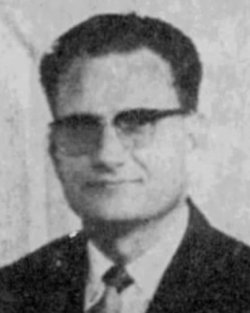
Wilbern Elias Best (1919-2007) was a preacher and writer of Gospel material. He wrote 25 books and pamphlets comprised of sermons he preached to his congregation. These books were distributed in English and Spanish around the world from 1970 to 2018 at no cost via the W.E. Best Book Missionary Trust.

Comments

0 / 2000 characters
Comments are moderated before appearing.

Be the first to comment!

Joshua

Joshua

Shall we play a game? Ask me about articles, sermons, or theology from our library. I can also help you navigate the site.