Bootstrap
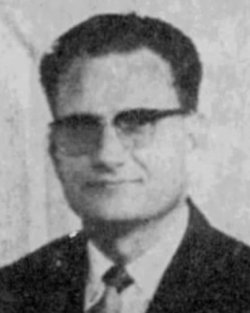
W.E. Best

#23 The Origin of Sin, Part 3

Isaiah 45:7
W.E. Best July, 1 1973 Audio
0 Comments
Remastered Oct/Nov 2024
Bro. Best's books in pdf can be downloaded from Spring Assembly of Christ website @ http://springassemblyofchrist.org/uimages/bg1.gif

Sermon Transcript

Auto-generated transcript • May contain errors

100%
Open your Bibles with me to the
17th chapter of the Acts of the Apostles. I want to read just
a few verses from Paul's message on Mars Hill, and then we will
continue our discussion of the subject of the doctrine of sin.
Tonight we are thinking about the relation of sin to the providence
of God. Let us read beginning with the
16th verse. Now while Paul waited for them
at Athens, his spirit was stirred in him when he saw the city wholly
given to idolatry, or as your margin renders the last part
of this text, the city full of idols. Therefore disputed he
in the synagogue with the Jews and with the devout persons and
in the market daily with them that met with him." Paul was
a troublemaker, always going around with a chip on his shoulder.
Just arguing with everybody, come in contact with them. It's
an attitude a lot of folk would have. Then certain philosophers of
the Epicureans and of the Stoics encountered him. And some said,
what will this babbler say? Or what will this base fellow
say? Other some, he seemeth to be
a setter forth of strange gods, because he preached unto them
Jesus and the resurrection. And they took him and brought
him unto Areopagus, saying, May we know what this new doctrine
and whereof thou speakest is? For thou bringest certain strange
things to our ears. We will know therefore what these
things mean. For all the Athenians and strangers
which were there spent their time in nothing else but either
to tell or to hear some new thing. Then Paul stood in the midst
of Mars Hill and said, Ye men of Athens, I perceive that in
all things ye are too superstitious or too religious. I'll make a distinction in a
moment between religion and Christianity. For as I pass by and beheld your
devotion, notice your marginal rendition
of this statement, God's that ye worship. I found an altar
with this inscription to the unknown God, whom therefore ye
ignorantly worship, him declare I unto you. God hath made the
world and all things therein, seeing that he is Lord of heaven
and earth, dwelleth not in temples made with hands. There is something
unique about Paul's message to which I will call attention at
this time, beginning with verse 24. His message began with the philosophers'
belief in immanence, and he directed the attention
of the philosophers from immanence to transcendence. We have the immanence of God
in verse 24. Now notice how Paul goes from stressing the imminence
of God, and he lifts them in their thinking to the transcendence
of God. Verse 25, "...neither is worship
with men's hands, as though he needed anything, seeing he giveth
to all life, and breath, and all things." and hath made of
one blood all nations of men, for to dwell on all the face
of the earth, and hath determined the times before appointed, and
the bounds of their habitation, that they should seek the Lord,
if haply they might feel after him, and find him, though he
be not far from every one of us. For in him," now he went
from imminence to transcendence, and now he comes back in verse
28 to the imminence of God again. For in him we live and move and
have our being. I'm using this text tonight in
connection with our development of the subject, The Relation
of Sin to the Providence of God. For in him we live and move and
have our being. Every person has his being, has his life. has his movement in God himself. I'm sure that some of you, in
observing some of the statements that were made over the weekend,
especially yesterday, concerning the death of Bill Ennis, fourth
pastor for Channel 2, Not a word, of course, was said
about any church affiliation. Nothing was stated concerning
his belief in the Lord. The preacher who was asked to
give the eulogy, according to Channel 2 last evening, in giving
a brief summary of some of the things that were said at the
memorial service, related that the subject was that in the game of life, Bill Ennis never lost faith. In the game of life, Bill Ennis
never lost faith. My heart was saddened. My wife
and I listened to the news 10 o'clock Thursday night, then
went to bed. Really the last person I heard
on the news before we retired was the voice of Bill Ennis before
we turned the television off. Young man, 39 years of age. One
would say in the prime of life, in the prime of his profession.
No doubt dedicated to his job, there isn't a doubt about that
according to Gowdy on the television yesterday. And then some of the statements
made by him just make you tremble. Then on the way up to be with
the Carlys and the Haynes on Friday evening, Friday afternoon
rather, I heard for the first time that there would be a memorial
service for Bill and if I said, for whom? Came as a shock, for whom? And
so in a few minutes they stated it again. die with a heart attack
while watching TV shortly after midnight with his wife. But he had his being, he had
his life in the Lord that we're talking about here. The Lord controls every move, every heartbeat. So now the apostle Paul comes
back after having lifted the thinking of the philosophers
from immanence to transcendence, now he comes back to immanence.
For in him we live and move and have our being as certain also
as your own poets have said. We are also his offspring. When you think about every unsaved
person, And every act that is committed by that unsaved person,
it is the Lord who gives that individual life. But that doesn't
make the Lord cooperating in the evil that is committed by
that person. And that is what is difficult for a lot of persons
to understand. And it is this point that we
will be discussing with you tonight. Verse 29, for as much then as
we are the offspring of God, we ought not to think that the
Godhead is like unto gold or silver or stone, graven by heart
and man's device. Now we'll notice how that he
goes back once again and discusses the transcendence of God. And the times of this ignorant
God winked at, but now commanded all men everywhere to repent.
Listen now to verse 31, "'Because he hath appointed a day in the
which he will judge the world in righteousness by that man
whom he hath ordained, whereof he hath given assurance unto
all men, in that he hath raised him from the dead.'" Christianity differs from religion
in two different points. First of all, Christianity is
a revelation and radiates light. I'm using now the word in the
plural form. Religions have so much of the
dark and the mysterious about them. Secondly, in revealed Christianity,
it is God who seeks. It is God who seeks. And I'm
emphasizing grace when I make that statement. It's God who
seeks man. I'll read you an article along
this line just as soon as we have completed this point. In
the religions of the world, it is man who is seeking, ever seeking,
a God filled with a little g. And in his own seeking, what
does he do? He wanders farther and farther
from the true and living God. Someone has said there may be
two sides to religious questions. There's only one side to truth.
Isn't that good? I may be discussing a religious
question with you. I said a religious question,
and there may be two sides. In fact, there may be more sides
than two to a religious question, but there's only one side to
truth. One side. I want you to think about the
28th verse. in the discussion of the relation of sin to the
providence of God. Since I made the statement that
in Christianity God seeks man, someone handed me this just before
the service. You can imagine, you can almost
read, I guess, the headlines. This is the question and answer article that comes out in the
paper every day. Question, I am very disturbed
about something you said in one of your telecasts. You said one
comes to Christ only when the Spirit draws him. Does that mean
that we can't make a decision for Christ until it's just God's
right time? I see no free will in that. Now think about that a moment.
Now you can imagine to whom that question is addressed. Does that
mean that we can't make a decision for Christ until it's just God's
time? I want you to know that no person
will be saved until God's time. Do you want me to prove that
to you? How many of you know the verse of Scripture? You should
know it. I preached on this. It's been, oh, probably two or
three years ago. So I'd like you to open your Bibles. I want
to answer that. We don't get too far off base here. Turn to
Ezekiel 16. Ezekiel chapter 16. Let's see what about a person
outside of Christ. Can he come anytime he wants
to? I'm not going to read now. All of these verses, most of
you are familiar with the context of Ezekiel 16, one of the greatest
portions of Scripture in all the Old Testament concerning
the subject of regeneration. I'm sure that you remember, beginning
with verse 4, the child. In other words, Ezekiel is presenting
Israel as a child that is still in its infancy, in all of its
pollution. Verse 4, and it's for thy nativity
in the day that thou was born, thy navel was not cut, neither
was thou washed in water to suffer thee, thou was not salted at
all, nor swaddled at all. None eye pitted thee to do any
of these unto thee, to have compassion upon thee, but thou was cast
out into the open field. to the loathing of thy person
in the day that thou wast born." Beginning with verse 6 through
verse 12, you ought to read and study this passage, and every
time you come to that personal pronoun, I, as it refers to none
other than the Lord himself, you ought to circle it. When
I passed by thee and saw thee polluted in thine own blood,
I said unto thee, When thou wast in thy blood, live, yea, I said
unto thee, when thou wast in thy blood, live. This is the
word of command. Not the word of the gospel, but
the word of command. Now the eighth verse is the verse
to which I am calling attention. Now when I passed by thee and
looked upon thee, behold, thy time was the time of love. Thy
time was the time of love. When this person asks the question,
does that mean that we can't make a decision for Christ until
it's just God's right time? Well, what about this statement
in Ezekiel 16, verse 8? When I passed by thee, the Lord
was passing by, and the Lord looked upon the polluted person,
and the Lord said, Thy time was a time of love. You know what
that means. And I spread my skirt over thee,
and covered thy neck in it, and I swear unto thee, and entered
into a covenant with thee, saith the Lord God, and thou becamest
mine." Now go ahead and complete the rest of the article. Here
is the answer to the question. This person saw no free will
in this. Answer. What I said was a recognition
that any human conversion is due originally and primarily
to the wooing influence of God's Spirit. It's never a thing of
our own initiative. And then the statement sees John
644. Now that part's okay. But now,
we've got to get on a merry-go-round. So here we go. Just because the
dynamic faith is of divine origin, it is nonetheless yours because
it is his. The poet put it this way, quote,
faith is a grasping of almighty power, the hand of man laid on
the hand of God, end of quote. The Lord designed us with free
will, so he certainly would not violate his creation. The marvelous biblical picture
of God is as the father seeking an errant son. It's one of constant
concern and everlasting love. 2 Peter 3 says, you know what
2 Peter 3 says? That God is not willing that
any should perish. I think that establishes the
cause and effect sequence. I like that interpretation. misunderstanding, first of all,
of 2 Peter 3.9, quoted just the part that he wanted to quote
to prove his point, taking a portion out of its context. One thing
further, however, and it's a sobering thought, that is, if we refuse
personal salvation and procrastinate in our reception of our divine
grace, God gives no guarantee that faith's door will stay open.
We dare not presume on mercy. Many Bible stories, like Genesis
19, witness to the fact that God is reluctant to punish and
anxious to forgive. I like that answer. That's just
about the kind of an answer that you read to most questions that
are asked today. So I hope that you think about
the difference between Christianity and religion. Now what is the
relation of sin to God's providence? That's the question we're dealing
with tonight. Can you give a concise definition
of providence? I want to give it to you in five
words this evening, and this will be easy for one to remember.
What is providence? Providence is purpose in execution. That's all it is. That's the
simplicity of it. What is providence? It is purpose
in execution. Now, I'll elaborate on that a
little. We went into the will of God to some extent last Sunday
evening. We have discussed the purpose
of God. God has a purpose. God has a plan. And everything
is being worked out according to God's plan. God is methodical. I can't emphasize that too much.
He is methodical. The sovereign Lord is methodical
in everything he does. There's a design. There's a goal.
There is a method. And God is methodical. When you think about Genesis
1, you see how methodical God is. When one studies the subject
of the tabernacle, beginning with the first vessel that is
mentioned, one sees how methodical God is.
When a person makes a study of the offerings of Leviticus 1
through 5, he sees immediately how methodical God is. When he makes a study of the
feast, In Leviticus 23 he sees how methodical God is. Going
to the New Testament and discussing or studying the subject of soteriology,
the science of salvation, one soon detects how methodical God
is. So what is providence? Providence
is God's purpose in execution. In other words, the Lord is simply
working out his own purpose in time, and
that is what is taking place today. This gives great comfort to the
children of God. It gives strength to the people
of God. I don't mind telling you. There
is no subject in all of God's Word that has given me any more
strength or spiritual boldness like a little understanding of
God's absolute sovereign. Knowing that all things are working
together for my good, but most of all for God's glory. So providence
is purpose in execution. Last Sunday evening we had ten
things to discuss with you. We will have seven things to
discuss with you this evening, and I do not know if we will
be able to complete or not, because there are many things by way
of practical application that I hope to share with you as we
go along and discuss some of these points. The first of the seven things
that I want to discuss with you as we study the subject entitled,
What is the Relation of Sin to the Providence of God? How can
we harmonize God's activity, what someone would say God's
cooperation, in that which is simple? Be careful when you say
cooperation. I said what some persons say
about God's cooperation. So the first thing, as we think
about the question, what is the relation of sin to the providence
of God, here is an apparent contradiction. Notice I said an apparent contradiction. Namely, that sin is very real,
as we all know, though God is sovereign in his government of
our world. Now is God sovereign in the government
of our world? Will you turn with me to the
21st chapter of Proverbs, verse 1, for one text of Scripture?
All I can do is just give to you a few examples, biblical
examples, beloved, and this is what I will do, of these points
that we're discussing tonight on the relation of sin to the
providence of God, which means the execution of His purpose.
The first verse of Proverbs 21. Solomon said the king's heart
is in the hand of the Lord. Not only is the king's heart
in the hand of the Lord, but your heart and my heart, the
heart of every man, is in the hand of the Lord. As the rivers
and waters, he turneth in whithersoever he will. Is God the governor of the universe? He surely is. Now let's look
at this text for a few moments. According to this statement by
Solomon, kings are ruled and overruled by God who is higher
than the highest. Can you please ask these five,
verse 8, the same writer? of Ecclesiastes that is given
to us, the Proverbs, talks about the highest of the highest. And
so kings are ruled and kings are overruled by God who is higher
than the highest. God's heart is not in the hands
of any king. We can break that down and make
it practical tonight. The heart of Jehovah God is not
in the hands of any mortal man. But the heart of man is in the
hands of the sovereign God. If He is not that kind of a God,
then, beloved, He is not the God of the Bible, and He is not
the God who deserves our worship and adoration. That's how strong
I am on that point. I'm simply saying God is God.
That's what I'm saying. The Lord does not change the
quality, but the current of the strength. Notice how He explains
this. The king's heart is in the hand
of the Lord as the rivers of water. So the Lord does not change
the quality, but the current of the stream. It continues to
run according to its natural tendency, yet it runs under God's guidance
and in subservience to his pleasure. This is true even now in the
light of Romans 1, and you need to understand what we're talking
about tonight to have a greater appreciation for Romans 1, 18-32,
when God gave them up. God gave them up. God gave them
up. This fact is misunderstood by
many persons today. Someone has said this is misunderstood
because in human life they see persons who are masters of their
own conduct. They act by knowledge and choice. They possess boundless liberty
and capricious disposition. They're sometimes governed by
principle. sometimes by example, sometimes
by fancy, sometimes by pride, and sometimes by mouth." This individual went on to say,
since they are not able to distinguish between the first cause and the
subordinate issues, the chief agent and the instrument the
perfection of the Creator and the weakness of the creature,
they adhere to the action without ascending to God who presides
over all. That's great. That's a great
statement. I want you to turn with me to
Revelation 17, 17 for another example that God is on the throne,
even now. And regardless of the wicked
government, the wicked kings that have already come on the
scene and shall arise, God is still on the throne. Revelation 17, 17. And you have to realize this
text in the light of its context. And when you look at verse 17
in the light of the entire chapter, you know what John is talking
about. This is descriptive of the last
days. Religious Babylon as well as commercial Babylon, for there
are two Babylons, and you know how The beast is presented as
the commercial Babylon, and the woman, the whore as she is called,
that rides the beast is none other than religious Babylon.
So religious Babylon will ride the commercial Babylon until
the religious Babylon has fulfilled her purpose, and then commercial
Babylon shall devour the religious Babylon. And things are being set for
this in your day and in mine. Now with that in mind, look at
the 17th verse. For God hath put in their hearts, in their
hearts, all of these evil kingdoms, God hath put in their hearts
to fulfill his will and to agree and give their kingdom unto the
beast unto the words of God shall be fulfilled." Now, is the Lord
on the throne? Is he on the throne? That's the
question. Now, the first part of our lesson tonight, I said
there is an apparent contradiction. Namely, that sin is very real,
though God is sovereign in his government of our world. I do not believe for one second
that the God whom I love and serve is a balcony observer as
to what is going on, as to what is taking place today as some
would have us to believe. That's a deistic concept of God,
and that is Harrison. I won't go any further than that
tonight on that particular point. I'm trying to take this step-by-step
to develop this subject this evening. Creatures are second
causes which God uses to fulfill his will. Creatures are second causes to
fulfill his will. He accomplishes his work through
men, yes, and even devils. You say, I've never heard that
before, wait till I get through. In so much that Satan and the
heathen are used to fulfill God's purpose. Now I'm going to give
you several biblical examples of this. And I want to spend
a little time on one of these examples tonight for the comfort
of all of us. But we need it today. We need
the strength that comes from this. Let me begin in giving
you some biblical examples of this point, how that God used
the Egyptians to afflict his people, the Israelites, in Exodus
chapters 2 and 3. All of you are familiar with
that story. It isn't necessary for me to go back and make a
study to some extent of chapters 2 and 3 of the book of Exodus.
You know how that the Israelites were under the taskmasters of
Egypt. And it seemed like the more they were persecuted, the
harder their taskmasters were upon them, the more the Israelites
thrived. You're familiar with that. Yet
God used the Egyptians to afflict his people and bring them to
the place that they would call out to him for deliverance. Or another example. In the 10th
chapter of the book of Isaiah, this having taken place after
the deliverance of Israel from Egyptian bondage, but due to
Israel's own disobedience, due to Israel's own sin, God raised
up the Assyrians, and don't forget this, to do what? to scourge
Israel for her shortcomings. Would you turn back to Exodus
10 for just a moment? I mean to Isaiah 10 for just
a moment. And let me read just two or three
verses, beginning with verse 24. Therefore, thus saith the
Lord God of hosts, all my people that dwellest in Zion, Be not
afraid of the Assyrian, he shall smite thee with a rod, and shall
lift up his staff against thee after the manner of Egypt. For
yet a very little while, and the indignation shall cease,
and my anger in their destruction. And the Lord of hosts shall stir
up a scourge for him according to the slaughter of Midian at
the rock of Auroch. And as his rod was upon the sea,
so shall he lift it up, after the manner of Egypt. So the Lord
God of heaven raised up the Syrians, the Assyrians, to scourge the
Israelites for their shortcomings. Now let's go to an example that
I want to spend a little time on, because it has some lessons
for us that we need now. I'd like you to open your Bibles
to the 16th chapter of 2 Samuel. Do you remember the story of
Shimei cursing King David? That's what I want to discuss
with you. Shimei cursing King David. Now I want to lead up
to this. So I'd like you to go back and
consider two verses in the 15th chapter of 2 Samuel. They are
verses 25 and 26. Let's read the verses. I will
call attention to three things that I want to discuss with you
on this point. And the king said unto Zadok, carry back the ark
of God into the city. If I shall find favor in the
eyes of the Lord, he will bring me again and show me both it
and his habitation. Now notice what David says, but
if he thus say, I have no delight in thee, behold, here am I, let
him do to me as seemeth good unto him. I want to ask you a
question tonight. Have you come to the place in
your Christian life that you can say what David said in the
last part of the 26th verse, let the Lord God of heaven do
as it seems good to him. Let him do whatever pleases to
me, whatever seems good to him. Now that is a lesson like contentment
that is only learned in the school of Christian experience. Now,
David had disobeyed the Lord. David had sinned. Let's go back
and get the background for this. I am showing how that God uses
even evil men to accomplish his purpose. just as he used Shimei to curse
me. Every one of us tonight has a
Shimei with whom we have to contend.
Each one of us has to contend with a Shimei. Do you believe
that? All right, now, are we ready
for this lesson? I hope so. I want to make it
practical as we discuss this point on the relation of sin
to the providence of God. And I'm not going to try to complete
it if I don't get that far because there are some things we need
as we go along the way. First of all, have you ever thought
about how could David, a man who sinned as he did, be a man
after God's own heart? and that he is called a man after
God's own heart in 1 Samuel chapter 13 and I think it's the 14th
verse. A man after God's own heart. I'm going to show you
tonight from the two verses in the 15th chapter and some verses
in the 16th chapter why David was called a man after God's
own heart. First of all One is to consider
David's life as a whole and not just pick out one particular
example in his life. One incident in his life. There
is not a one of us in this auditorium tonight that if a person were
mine to, he could pick out some particular point in your life
and he could ride that point, he could magnify that point,
and then he could ask the question. How in the world can this person,
in the light of this particular point, be the person that he
claims to be? Beloved, you do not isolate,
in the life of a Christian, one particular point, but you view
the man as what? The whole life is to be viewed.
Not just a few things in his life, but his whole life. Now
let's see some things about David. He had a real battle with which
to contend. His own son Absalom was in rebellion
against him at this time, and that was enough. But not only did he have his
own son in rebellion against him, you remember how Absalom
stood at the entrance of the city and said, Oh, if I were
judged, I would do thus and so. And the Bible says that Absalom
was beautiful. He was an attractive person.
Had an attractive disposition. Pleasing personality. There he
stood. Can't you see? Now if I were
judge of Israel, I would do you justice. And so he won the hearts
of many people. He was in rebellion against his
father. Now that was one thing. that
David had to contend with in his experience as a Christian,
but he also had to contend with Shimei. Now as we look at this
as a whole, the condition of David when he gave us the statement
in verses 25 and 26 of chapter 15, his condition was a very
trying experience. In such a distressed condition
as this, beloved, I'm here to say tonight that the mind of
any person would be driven with a wind and tossed unless anchored
by a divine principle. May I stop and say that doctrine
does not make a person cold-hearted. The warmest person in the world,
spiritually speaking, is a person who knows biblical doctrine and
knows it experimentally. David was guided by a principle
at this point. And because he was guided by
such a divine principle, he made the statement that we have read
in verses 25 and 26 of chapter 15, and let's break that passage
down into three points for consideration. Number one, David evaluated the
divine means. What did he say? Carry back the
ark of God into the city, He evaluated the divine means just
as you and I are to evaluate the divine means. Beloved, I'm
saying to you tonight that the Church of Jesus Christ is an
important institution. To be affiliated with the Church
of Jesus Christ is an awesome responsibility. And I think we have some who
are members of this church who don't realize that. And it's my responsibility
to acquaint them with it. And I shall do that by God's
grace, whether they understand it or not. You see, these things were out
of their proper places. And so David said, carry back
the ark of God into the city. If I shall find favor in the
eyes of the Lord, he will bring me again and show me both it
and its habitation. The ark and tabernacle meant
more to David than his throne and palace. And if I know my
heart tonight, and beloved, I'm speaking for you too, because
as a Christian, the ark of God, the assurance of God's blessings,
the tabernacle of order, the church of Jesus Christ, these
things mean more to you than your position in this world.
If they do not, then there's something wrong with your spirituality. So David was concerned about
a safe return. But his chief concern was putting
God first in his life. I'll never be satisfied until
I see every member of this church putting God first in his life. Christians should be principally
concerned with the glory of Christ, the preservation of his house,
his church, and also the holiness and preservation of his honor. Let's look at the second thing.
David not only evaluated the divine means, But secondly, he
had faith in divine property. Now you see how this is related
to our subject this evening. He had faith in divine property. David used the means at his disposal,
but he did not trust them. He knew what his duty was, and
also he knew that the events were of God in his providential dealings
with him. He therefore looked beyond the
second causes. He looked to God who worked out
all things according to his own divine purpose. It does not become God's people
ever to despair The same truth that excludes
boasting in our lives, beloved, prevents despair in our hearts. Now we need that. This is something
we are in need of at the present time in view of the things to
which we are subjected daily in our Christian lives and our
witnessing for the Lord. Now let's look at the third point.
And oh, are you ready for this? David was resigned to God's will. Now do you see why he was called
a man after God's own heart? He evaluated the divine means. He recognized his own responsibility. And he was perfectly resigned
to the will of God. Look now with me at the last
part of the 26th verse again. But if he thus say, I have no
delight in thee, behold, there am I. Let him do to me as seemeth
good unto him. Now let's carry that thought
into the 16th chapter before we develop the third point, David
being resigned to the will of God in his life. Look at the
fifth verse of chapter 16. And when King David came to Bahurim,
behold, hence came out a man of the family of the house of
Saul, whose name was Shimei, the son of Gera. He came forth
and cursed still as he came, and he cast stones at David. Cursed him and cast stones at
him. Look at verse 7. And thus said Shimei when he
cursed, Come out, come out, thou bloody man, and thou man of Belial. Look at that language, will you?
Now if a man after God's own heart was cursed, by a man by
the name of Shimei. And not only did this man curse
David, but said, come out, come out, you bloody man. Do you know
what he had in mind? Do you recall, do you think you
know what he had in mind? Why he was saying, I haven't
forgotten. I know what you had done to Uriah. You had him killed, you bloody
man. You got blood on your hands.
Even though he had been forgiven, and he had been forgiven because
he was convicted and he confessed, and after his confession, fellowship
was restored according to Psalm 32 and 51. But Shimei never forgot
the experience. And beloved, just put it down.
The devil is never going to let you forget some things that you
did in your life. He'll never let you forget them. Now are you going to despair?
Are you going to throw up your hands? There is a Shimei with
whom you have to contend. There is a Shimei with whom I
have to contend. All right, but let's read on.
Come out, thou bloody man, you man of Delia. That means man
of the devil. Now if a man after God's own
heart was called a man of the devil, Don't be surprised when
someone looks at you and says, man of the devil. Look at verse 10. And the king
said, what have I to do with you, ye sons of Zeruiah? So let him curse, because the
Lord has said unto him, curse thee. Now who said it? The Lord
said it. Does this surprise you? Does
this surprise you? What is providence? Providence
is what? God's purpose and execution.
And I'll make an application of this. The Lord hath said unto
him, Curse thee then, who shall then say, wherefore hast thou
done so? Look, if you will now, at the
last part of the 11th verse. Let him curse, for the Lord hath
bidden him. Let's read all of the 11th verse.
And David said unto Abisham and to all his servants, Behold my
son, which came forth of my bowels, seeketh my life. How much more
how many of this Benjamite do it? Let him alone, let him curse,
for the Lord hath bidden him. How and why did he say this?
Because he was resigned to the will of God. Beloved, do we know some of these
things experimentally tonight? I think we do. If you haven't,
as a Christian, you will. You will. If you live a godly
life, if you give the testimony that you should give as a Christian,
you'll encounter a Shimei in your experience. But you see,
this is in harmony with what David said in the latter part
of the 26th verse of the 15th chapter. Let him do to me as seemeth good
unto him. David was resigned to God's will. Now look at the 12th verse. It
may be that the Lord will look on mine affliction, or my tears,
and that the Lord will requite me for his cursing this day. He was resigned to the will of
God. Now let's go into this point,
for this to me is the major of the three points. You notice in David's resignation
to the will of God, there is no manifestation of vengeance against a seditious subject. like Shimei or a rebellious son
like Absalom. Did you know no person can do
anything to you for what God doesn't allow him to do. He can just go so far and that's
as far as he can go. There's a hedge built about you
and the devil can get just so far, he can do just so much and
that's all he can do. That ought to be comforting to
us. Let's go a little further. There was no bitter complaint
of instruments used. Now if you're honest and I'm
honest with you, I have complained. about some of my shemeyahs. And so have you. And you see when we complain
we're not resigned to the will of God. If we were resigned to
his will we wouldn't complain. Let's go a little further. You'll notice in the life of
David there was no complaint of the instruments. There was
no charging God foolishly. And I like what someone said,
neither was there any teaching God knowledge. Do you know what
he meant by that? You know some person say, Lord
you just don't really realize what I'm going through informing
God just like he needed any information. I get amused sometimes when,
and I'm careful about my prayer life. If you'll notice, and of
course I've noticed this because you've been pretty well educated.
in these things. You're careful about how you
pray. You can tell sometimes about how a person prays as to
how resigned he is to the will of God. And there are some people
when they pray, they start informing the Lord just like he needed
any information. God doesn't need any information
from us. He knows exactly what our condition is. He knows what
our plight is. Therefore he doesn't need any
information. You notice too that David mourned but he didn't murmur. Now these are great points applicable
to us. What helped to produce this disposition
in the heart of David? This is something like contentment.
It can only be learned in a life of experience. Now let's answer this. David
recognized two things in himself. First of all, his unworthiness. When this prevailed, he did not
murmur at his trials, but he wondered why he was exempted
so many times from trial. That's a far cry from the attitude
of most of us, isn't it? It is. You know what our attitude should
be about things like this? I appreciated this morning when
I was talking to Mark after the service. He told about a letter
that he had received from Sarah. And she misapplied a verse of
scripture. And you know what it is? He said,
well, I know that Bible. And so he couldn't rest until
he got the Bible and studied it out. Beloved, that ought to
be the attitude of every Christian. Of every Christian. Like the
other day when we were in the home of the Haines. We were discussing
the subject and we got on a point and when it hit home, the thing
that thrilled my own heart was to see the response. In other
words, a personal application was made. And beloved, unless
I apply the things I learned to my own heart and life, I haven't
gained anything. And it thrills me when I see
persons, when a truth is presented and the truth is seen, then the
person applies that truth, he makes a personal application
of it immediately. And this is exactly what David
did. Now you can see why he's a man after God's own heart,
can't you? Doesn't this help? Let's go on. We saw first of
all he recognized his unworthiness, and when this prevailed, He did
not wander at his trials, but I'm sure he was amazed why he
was exempted from any trials that he should have gone through.
Secondly, there was something else that he recognized. He recognized
his ignorance. Someone has said, while unworthiness
convinced David that he had no right to choose, ignorance persuaded
him that he had no ability to do so. Isn't that great? David
not only recognized two things about himself, first of all his
unworthiness and secondly his ignorance, but he recognized
two things about God. Number one, God's sovereignty.
Has not God a right to do what he pleases with his own? I'm
giving you a scriptural statement. David knew that God found him
as a poor shepherd boy and raised him to the throne. Therefore, David recognized that
God was righteous if he reduced him again to a humble life. He was resigned to the will of
God. And secondly, he recognized God's goodness. The authority
of God awed David, but his goodness produced the cheerfulness of
submission. I said there is a shimmy-eye which
every Christian wishes were there. He is such a trial to every Christian. He's such a torment to the believer.
However, it must not be forgotten that God has a purpose in every
shimmy-eye in your life and in mine. I don't know what you need as
a Christian. You do not know what I need.
I do not know what kind of trials you need as a Christian. You
don't know what kind of trials I need. Your trials may not be
the same that are needed as mine, and mine may not be the same
as yours. But listen to this. Someone has
said, and I quote, no Christian knows what another Christian
needs, especially not his trying, searching, shifting, and sanctifying
circumstances. And then he closed it like this,
God has set upon the believers humility, submissiveness, meekness, gentleness,
resignation, contentment, detachment, self-denial, death to sin, death
to self, unearthliness, heavenly mindedness, conformity to Christ. Therefore, every believer should
say with David, let him curse, for the Lord hath bidden him."
W.E. Best
About W.E. Best
Wilbern Elias Best (1919-2007) was a preacher and writer of Gospel material. He wrote 25 books and pamphlets comprised of sermons he preached to his congregation. These books were distributed in English and Spanish around the world from 1970 to 2018 at no cost via the W.E. Best Book Missionary Trust.

Comments

0 / 2000 characters
Comments are moderated before appearing.

Be the first to comment!

Joshua

Joshua

Shall we play a game? Ask me about articles, sermons, or theology from our library. I can also help you navigate the site.