Bootstrap
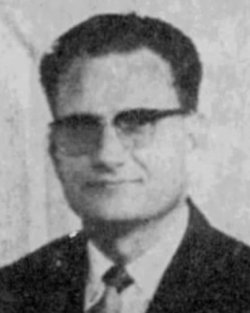
W.E. Best

#26 General Revelation

Romans 1:19-20
W.E. Best July, 1 1973 Audio
0 Comments
Remastered October/November 2024

Sermon Transcript

Auto-generated transcript • May contain errors

100%
I want to speak to you this morning
on general revelation in the light of verses 19 and 20 of
Romans chapter 1. And since you're so familiar
with those verses after having considered them a number of times,
some of you have already memorized them, I'll quote them in a few
minutes, but I'm asking you to open your Bibles now to the 19th
division of the Psalms. I'd like for us to read the first
six verses in connection with the two verses that we're going
to use in Romans chapter one. General revelation. We want to
make the distinction between God's general revelation and
his special revelation. The psalmist said the heavens
declare the glory of God and the firmament showeth his handiwork. day unto day uttereth speech,
and night unto night showeth knowledge. There is no speech
nor language where their voice is not heard. Their line is gone
out through all the earth and their words to the end of the
world. In them hath he set a tabernacle
for the sun, which is as a bridegroom coming out of his chamber, and
rejoiceth as a strong man to run a race. His going forth is
from the end of the heaven, and his circuit unto the ends of
it, and there is nothing hid from the heat thereof. I am not going to read the remaining
verses of Psalm 19 because we are not studying this particular
portion of Scripture, or we are not discussing the two revelations
that are mentioned in the last part of this psalm. I do want
to call attention to the fact that there are three divisions
of this psalm. First of all, we have natural
revelation in verses 1 through 6. Number two, we have scriptural
revelation, verses 7 through 11. And finally we have experimental
revelation verses 12 through 14. Will you notice the order
in which those revelations are given? The psalmist began with
natural revelation, the same revelation that Paul talks about
in Romans 1 verses 19 and 20 when he said, because that which may be known
of God is manifest to them, for God hath showed it unto them. For the invisible things of him
from the creation of the world are clearly seen, being understood
by the things that are made, even as eternal power and Godhead,
so that they are without excuse." I'm discussing the subject of
general revelation with you this morning. And we will make a contrast
briefly at the close of our message between general revelation and
the special revelation of God in his son, the Lord Jesus Christ,
to the heart of the believer by the regenerating Holy Spirit. General revelation does no injustice
to special revelation. This means that God's revelation
in nature does no injustice to his revelation in his son, the
Lord Jesus. Scripture does make a clear distinction
between the universality and the particularity of God's revelation. We have that even here in the
19th division of the Psalms. We have the universality of revelation
in the first six verses. Coming to the last part of the
psalm, we have the particularity of revelation, revelation in
experience. Every person who has passed from
death into life has experienced this revelation about which the
psalmist speaks in the closing verses of the 19th division of
the psalms. When we consider general revelation,
a knowledge of salvation in Jesus Christ is out of the question.
It is simply a natural knowledge which man gets through the medium
of created reality, and is therefore completely different from the
supernatural knowledge of God which is possible by means of
the regenerating Spirit of God. You remember the Apostle Paul
in writing to the Corinthian Christians in his second letter,
chapter 4, verse 6, makes the statement, God, who commanded
the light to shine out of darkness, has shined in our hearts to bring
the knowledge of the glory of God in the face of Jesus Christ. That is a supernatural revelation. That is something that only the
person in whose heart a work of grace has been wrought knows
anything about. Every person under the canopy
of heaven is inexcusable because he has the knowledge of God given
in creation. And this is why the psalmist
said, the heavens declare the glory of God. The word declare
in the first verse of Psalm 19 is not talking about a subjective
knowledge here. The heavens declare the glory
of God and the firmament showeth his handiwork. When he talks
about the speech and the voice in verse 3, this is not a contradiction. You and I know that there is
such a thing as a speech without any voice. We've heard it said,
and rightly so, that a man's actions speak much louder than
his words. So we're accustomed to this kind
of language. So when the psalmist talks about
the heaven speaking and the voice not being heard, he was simply
using poetic language, and I'm sure that you're aware of the
fact that the Psalms, along with four other books, are called
the poetic books of the Bible. So this is poetic language, and
we're familiar with such language. There are many descriptive things
that can be compared to the Lord Jesus Christ in verses 5 and
6, but we're not dealing with those things this morning for
the simple reason that we are not discussing the Psalm, the
19th division of the Psalms, by giving a verse-by-verse exposition
of it. We should consider the limits
of this general knowledge which every person has. We should always
keep in mind the limits of general revelation. We know that God
possesses certain perfections, but how God possesses those perfections
we know not by general revelation. In order to know how God possesses
these perfections, one must go to the revelation of God in Holy
Scripture. And that's why the psalmist went
on, after discussing the revelation of God in nature, to mention
the revelation of God in Holy Scripture. If you want to know
what the psalmist thought about Holy Scripture, you should consider
verses 7 through 11. You will not find any language
anywhere in all the word of God more descriptive of the word
of God than those verses 7 through 11 of Psalm 19. Now comes a very important question. What does it mean when Paul says
that the heathen people are without excuse? And this is what he says
in Romans 1 verse 20. For the invisible things of him
from the creation of the world are clearly seen, being understood
by the things that are made, even as eternal power and Godhead,
so that they are without excuse. It is argued by some that Paul's
main line of doctrine is that the heathen do not know God at
all, but that is not so, even though some argue to that extent.
To show you how some people interpret the scriptures, And I've said
before and I'll repeat again, a little knowledge is a very
dangerous thing. Some persons have read such passages
as 1 Thessalonians 4-5 when Paul in writing to the church at Thessalonica
makes mention of the fact that the Gentiles know not God. Again
he mentions in the 8th verse, I believe it is, of his second
epistle, chapter 1, when the Lord Jesus Christ shall come
in flaming fire, taking vengeance on them that know not God and
obey not the gospel of our Lord Jesus Christ. A similar expression
is made by the Apostle Paul in Galatians chapter 4, verses 8
and 9. Now, is there a contradiction
between those passages and what we have here in Romans 1? No,
there is no contradiction. I like what one person said in
commenting on what some think is a contradiction between those
statements that I've given you in Thessalonians and in Galatians,
in contrasting those statements with what Paul says in Romans
1, verses 19 and 20. Here is an outstanding statement
by a great scholar. He said the knowledge of the
heathen in Romans 1 does not sacrifice anything of the radical
antithesis between knowing and not knowing, as is taught throughout
scripture. Paul shows that there is no halfway
stop between the darkness of heathendom and the light of the
knowledge of God in Christ Jesus. End of quote. A great statement. of great favor. A man can leave
the one for the other only by means of the Holy Spirit in regeneration. And this is why I quoted 2 Corinthians
4 verse 6 a few moments ago. As there is a general knowledge
of God known by every person, every person, without one exception,
I'm talking about every person who has his natural and reasonable
faculties. Every individual is aware of
the existence of God, whether he will acknowledge it or not,
according to Romans chapter 1. Now, just as there is a general
knowledge of God, there's something else I want to point out that
we will be considering in the very first chapters of the book
of Romans. And that is, there is also what
might be called a general morality. A general morality. Now I won't
explain this because this is misunderstood by a lot of persons. I'm taking now Romans 2, 14 and
15. I think I can quote those two
verses. For the Gentiles which have not the law, that is the
written law, the written law, for the Gentiles which have not
the law, the written law, as the Jews possess the written
law. So he said, for the Gentiles
which have not the law do by nature the things contained in
the law, these having not the law, are a law unto themselves. He goes on in the 15th verse
to say, which have the work of the law manifest in them, their
conscience also bearing witness, And their thoughts the meanwhile,
excusing or accusing one another. Accusing or excusing one another. He goes on in the 16th verse
to say, in the day when God shall judge, when God shall judge the
secrets of men by Jesus Christ according to my gospel. Now,
there is a general morality. This is the point I want to make.
It is indeed remarkable that human life in manifesting an
aversion to God and his holy will still stands for right and
justice. Now notice what I said, right
and justice in a measure, follow me now, in a measure for punishing
that which is evil. You can take the most ungodly
person today He may be actively engaged in some unscrupulous
business, but I want you to know if someone touched one of the
members of his family, he would scream to the high heavens, I
want justice done. Now what I'm showing is there
is to some extent a sense of morality in the heart of every
person, even though he's unsaved. even though he's a stranger to
the grace of God. Now this is seen on every hand.
I like what one man has said in commenting on this general
knowledge of morality. This person went on to say, there
is still working in the law written in hearts which neither know
God nor serve him. In other words, there is a sense
of morality to some extent working in a working of the law, written
in hearts of men who are unsaved. This law, this man said, however,
is unto oneself. Now follow me, we're getting
to the point. And I want you to know this has application
for the day in which you and I live. Here it is. This law, however, is unto oneself. It is the projection of the human
spirit according to which human justice will be measured. It
creates its own brand of right and wrong. Isn't this what we're
faced with today? It creates its own brand, in
other words, its own standard of what is right and wrong. Outside of the Lord Jesus Christ,
man will never get any further than being a law unto himself. Now, do you know what's wrong
with our society? Here's the answer. Sure, there is an understanding
of morality to some extent. And there is talk about justice
to some extent. But you and I know that there
is no such thing as true justice, humanly speaking. We have to
look to the Lord in order to find what true justice is. We
have to look to the Word of God in order to find what true morality
is. You see, when God gave the commandments,
the commandments are the standard by which everything is to be
judged. And that's where we judge morality. But in our society, which is
an evil society, even though there is some degree of human
morality, they will not, people will not as a whole, embrace
the standards that God himself has given. They ignore the standards
of God and they go about establishing their own standards by which
things are to be measured. Thus, every noble action that
man performs by nature, he does it without respect to God. That
goes from the top politician of this country to the lowest
politician of this land in which we live. I want to repeat that. You know, there are some people
that don't know how to judge things. And the reason they don't know
how to judge things is because they don't have the mind of God. And most religionists today could
care less about what the Word of God teaches. I want to give this illustration.
My heart rejoiced yesterday when I was talking to one of the members
of the church. And when I see our people grow in grace and
knowledge of the word of God, that they can detect things like
this, I rejoice. This man was telling me that
they were witnessing to their neighbor. And this person made
the statement that he was not afraid of the judgment of Christ. He knew that would bring up a
statement from the neighbor. The neighbor's very active in
religious activity. And so the neighbor thought,
well, that's assuming a spirit of pride. I think this person
in our church knew that that would be the attitude this individual
would take as a result of the statement. And you see, beloved,
we learned how to draw things out of people. And I believe
in doing it. I want you to know if I'm skeptical
about you, if I get around you very much, I'm going to draw
something out of you. I've done that recently with some folk. And you just keep on, you draw
it out for a while, just by asking questions. Then this person went on to explain.
He was not afraid of the judgment because he was in Christ and
Christ had been judged for him. And he was accepted in Christ.
And the judgment seat of Christ would not be to determine his
destiny, but his reward, or worse to that effect. And then the
question was turned. Are you afraid? Oh, no, I'm not
afraid either then. Upon what are you basing your
lack of fear of the judgment? Oh, because I'm just as good
a Christian as anybody else. I want you to get something. This person came right back to
say, You have all the reason in the world to have fear. Now, don't you think about that for
a moment. Beloved, there is real depth in that. There is a sign
of real spiritual discernment. Now, when this person said, well,
I have no fear today because I'm just as good a Christian
as anybody else. And this person said, you have
every right under heaven to fear the judgment. Do you see the
difference? That person was judging herself
by men. The man in our church was judging
himself by what he is in Christ. Do you see the difference? There
is a vast difference. My opinion is that that poor
woman doesn't know anything really about the revelation of God in
Holy Scripture. If she knew it, she would never
have made a statement like that. Whenever scripture mentions the
light of revelation, it means the light of salvation which
arises in the special revelation. Let us not forget that the pillar
of cloud that gave light to the Israelites was darkness to the
Egyptians. the very means of light to you
and me. Beloved, spiritually speaking,
the means of darkness to unsaved people. Do you think about that? This is found in Exodus 40 verse
20. The particularity of God's light becomes darkness to God's
enemies. God revealed his wisdom exclusively
in the foolishness of the cross. 1 Corinthians 1 verse 25. Now in the discussion of general
revelation I have three headings. I think I can discuss them briefly
with you this morning. I'll not have time to go into
them to the extent that I intended to, but I think we can cover
the major points of each one of these. First of all, man is
responsible. General revelation is both objective
and subjective. Now follow me. There hasn't been any argument
thus far about the general revelation of God being an objective revelation,
but I want to say that there is a subjective revelation of
God in the unsaved person. as well as an objective revelation
of God. Now, proof. Objective revelation includes
the world around man. This is what we have in Psalm
19, 1, the heavens declare the glory of God and the firmament
showeth his handiwork. Or the 20th verse of Romans 1,
For the invisible things of God from the creation of the world
are clearly seen, being understood by the things that are made,
even as eternal power and Godhead, so that they're without excuse. Subjective revelation refers
to man's intelligence. Man's intelligence. Now look
at verse 21 of Romans 1. Because that's when they knew
God. Now they did not know him by
special revelation. They did not know him even by
the revelation of God in scripture. And they certainly had not been
regenerated by the Spirit of God. Paul was talking about heathen
people. So there is the objective revelation
in verse 19. of Romans 1, verses 19 and 20. However, in verse 21 there is
subjective revelation, because that when they knew God, now
there's a better translation of that, when they knew God,
or because knowing God, because knowing God, that applies to
every person today, every individual. under the general revelation
of God, the objective revelation of God in creation, also has
an intelligence. And so when they knew God, or
because knowing God, so what does this refer? This speaks
of the same subjective revelation that the gospel of John chapter
1 verse 9 talks about. The true light, that light is
every man that cometh into the world. It's an intellectual enlightenment. Now when we look at this statement,
we have to come to this conclusion. Primitive man knew God. And heathenism is a later condition. That one statement destroys the
theory of evolution forever. And I'm not dealing with that
subject this morning. But that one statement destroys it forever.
Primitive man, I said, knew God. And heathenism is a later condition. The present world began with
the knowledge of God. The whole population of the world,
as it were, stood around Noah's Ark. Can that be denied? Noah, his wife, and his three
sons, and their wives. From whom we have all the peoples
that inhabit the world today. Now, there are three important
things about general revelation. Number one, This is under the
heading, man is responsible. General revelation is both objective
and subjective. Now, first of all, under this
major heading, general revelation is limited. That which may be
known of God. Go back to verse 19. This means
that some things may not be known. Man is not to pry into that which
God has not been pleased to reveal. Let us never forget the verse
that we've asked you to memorize. The secret things belong unto
the Lord, but the things which are revealed belong unto us and
to our children. Deuteronomy 29.29. The rite of revelation must be
considered at this point. God has the right to hide himself
or reveal himself just as he pleases. The attributes of power and divinity,
as we find in Romans 1 and verse 20, are revealed in creation,
but the attributes of grace and mercy are retained for the elect
of God in special revelation. The unsaved person does not know
anything about the mercy of God, he doesn't know anything about
the grace of God, and can never know until God sees fit to reveal
himself by the regenerating Holy Spirit. The law of manifestation
is that there must always be hidden power adequate to produce
the manifestation. The second thing, general revelation
is sufficient to accomplish the end for which it is intended.
Man is without excuse. His knowledge of God made known
to him in creation renders him inexcusable before God. Now there
are six things the knowledge of which man stands accountable
for as a rational, intelligent being. Let's observe these. First of all, he knows there
is a God. Knowing God. Look at the statement. Knowing God. Verse 21. The word knowing denotes the
permanency of the knowledge. The individual will never come
to the place in his life when he doesn't know God. He even
recognizes, according to the last verse of Romans 1, that
God is a God of judgment, and his judgment is right and just. So nature reveals the fact of
God and calls upon the mind of man to submit. That means every
person in this auditorium this morning, whether you are a believer
or not, you are responsible before God. When you leave this auditorium
this morning, you know according to the word of God that you stand
inexcusable before God. Secondly, he knows the invisible. God is the creator and governor
of the world. Listen to this. The invisible
things of God from the creation of the world are clearly seen.
Are clearly seen. I won't illustrate that for you.
I think Dr. Barnhouse has given about the
best illustration of this that I've read in a long time. He
used the Bible as an illustration. Some of you who have Barnhouse's
works, you've read this. But this is an exceptional good
illustration. Look at me for a moment. I hold
in my hand the Word of God, the Bible. You see the paper, you
see the printing, you see the words, you see the binding. Now, these things cannot be denied. All right, let's go a little
further than that. Here's how Barnhouse states it. He said,
You see the Bible I hold in my hand. You see the cover, the
leaves, the letters, the words. But do you not see the writers,
the printers, the bookbinders, and so forth? But you do not
see, in other words, you don't see The printers, you don't even
see the writers. We have many writers who have
given us the word of God. You don't see them. You don't
see the printers. You don't see the bookbinders.
But you see the binding. You see the leaves. You see the
binding. And then he goes on to bring
this to a conclusion. He says, You do not see them,
but there is not one rational person that will deny their existence. Do you deny the existence of
a bookbinder? Do you deny the existence of
a printer? So when you look into the heavens,
the heavens declare the glory of God and the firmament showeth
its handiwork. You see the leaves, as it were, of God's book of
nature. Can you deny the one who has
given us these leaves of nature? No. No rational person can deny
any more than a rational person can deny that there was a bookbinder
or bookbinders, there were printers, there were writers in giving
us the Bible. And then someone said, will God
give man brains to see these things and man refused to exercise
those brains toward God? You can see these things. Now,
are you going to refuse to exercise your same mental faculties toward
God? I want to use another illustration
by Barnhouse, which I think is great. He told about a student
who said he just did not believe in atomic energy. This is one
of the cleverest ways of presenting this and paraphrasing this that
I've come across. Now keep in mind, I want you
to look at your Bible now, Romans 1.20. He's going to paraphrase
this. So this student kept telling
his professor he didn't believe in atomic energy. It didn't make
any difference what the professor told him about Nagasaki and Hiroshima. If I'm pronouncing those names
correctly, it doesn't make much difference. I've heard him pronounce
Hiroshima and Hiroshima, however you want to pronounce it. He
went on and told about the first nuclear blast in New Mexico. What he said, the student kept
saying, I just don't believe but I can't see it. I can't see
it. So finally it came to this. Now
you look at the verse as I read a comment. Because that which may be known
of atoms is manifest, for physical investigation has revealed it. For the invisible things of atomic
energy are clearly seen, being understood by the effects that
are manifest, so that the student is without excuse." End of quote. Now, maybe it didn't make any difference
if the student said, I don't believe that you can't blunt
me. I can blunt you. So you see how I paraphrased
it. That's great. Now, will anyone be ignorant enough, be foolish
enough to deny the existence of atomic energy? Is a person
going to be foolish enough to deny the existence of God? Thirdly, he knows that this God
is to be glorified by man. Look at verse 23 of Romans 1.
When they knew God, they glorified him not as God. Neither were
thankful, but became vain in their imaginations, and their
foolish heart was darkened, professing themselves to be wise, and became
fools, and changed the glory of the uncorruptible God into
an image made like the corruptible man and the birds and four-footed
beasts and creeping things. Though man cannot comprehend
the attributes of eternality, power, and Godhead, yet he may
comprehend that such a being deserves glory. and go back to
the attributes that are made manifest in creation in natural
revelation in verse 20. So he knows that this God is
to be glorified by man. Fourthly, he knows that this
God demands homage and gratitude according to verse 21. Neither
glorified nor gave thanks. Neither glorified nor gave thanks. Fifthly, he knows this God demands
repentance for any deviation from this homage and gratitude. Where is this found? Romans 2
verse 4. Or despises thou the riches of
his goodness forbearance and longsuffering, not knowing that
the goodness of God leadeth thee to repentance. By the very fact
that you sit here today You're not deprived of the necessities
of life. Your heart ought to go up in
gratitude to this God who is giving you the necessities of
life. And lastly, verse 32, he knows
that God is obligated to punish every sinner. Every sinner. What do we see? Man is responsible. General revelation is both objective
and subjective. Now we come to the second major
point. Man is guilty. His inexcusable irreverence and
ingratitude are manifested. When you look, beginning with
the 28th verse of Romans 1 and read through the 32nd, we're
not going to take time to do that this morning. The moral
condition of man is summarized by 21 words of devastating description
in verses 28 to 31. This description is the result,
first of all, of their guilt of perverseness, verse 18 of
Romans 1, of irreligion, verse 21 in the first part of that
verse, of pride, verse 21 and the last part of that verse and
all of verse 22, of idolatry verses 23 and 24 and of sensuality
verses 24, 26 and 27. Now there are six swift steps
of man's downward path from God given us under this point, under
this second major heading. First of all, Man glorifies God
not as God. Verse 21. Man glorifies God not
as God. To glorify God as God is not
to omit God's glory or add to it. You and I can't add anything
to God's glory, we know that. It simply means to ascribe to
God that which rightfully belongs to him. Give him the honor that
is his due. Give him the recognition that
he deserves. That's what it means. Secondly,
man is not thankful. He's unthankful. Verse 21. Man
is willing to have the privileges But he does not want the limitations
or responsibilities. We can use an illustration and
update it. We've been enjoying energy. Gasoline
has been plentiful. And we've taken a lot for granted,
haven't we? All of this has been provided for us by the Lord. Oh yes, we want the privileges. But we don't want the responsibilities.
And so we can see one step after the other as man goes away from
the knowledge which he had of the sovereign being. When we consider the ingratitude
of Lucifer, the ingratitude of the fallen angels, the ingratitude
of Adam and Eve, the ingratitude of the nation of Israel, Let
us think about the ingratitude of our own nation and then our
own individual ingratitude. Thirdly, man becomes vain in
his imaginations. Verse 21, the mind of man, the
reasoning of man is never a vacuum. If there is the absence of the
true, there is always the presence of the false. You and I today,
as we look at television, as we look at the news and listen
to the news and we look at different things, what do we see today? The mind of man has become a
vacuum, so to speak. He didn't want to retain God
in his knowledge. And I want you to know the devil has filled
his mind full. Therefore, he can't think right.
And since he can't think properly, naturally his actions are not
proper. So man's foolish heart, number
four, is dark in verse 21. The heart is deceitful above
all things, desperately wicked, who can know it? Number five,
we find in verse 22, man professes to be wise and what does he become?
He becomes a fool. One of the men was telling me,
and I hope I can get this article, it must have come out in the
Chronicle because I didn't see it in the Post, about Paul Tillich's
wife writing. Did any of you see it? I didn't
see that. Somebody clip it out for me. It must have been in
the Chronicle. He said, oh, but I haven't had any, I haven't
had any use for Paul Tillich or Karl Barth or Reinhold Eber,
Brunner, or any of the rest of those fellows. But somebody said,
you should read that article about Paul Tillich's wife. awful. So these so-called great philosophers
of our time, they're big fools. Professing themselves to be wise,
they have become fools. Fools! That's what the book says,
and I believe it. And you know it to be true. And
the more knowledge you gain of God's Word, the more assurance
you have of them being foolish individuals. And then lastly,
man changes the glory of the uncorruptible God into an image
made like to corruptible man. Today they're changing the Lord
Jesus Christ. No, they're not changing him.
They're exchanging him for a peccable Christ, for a human Savior. And we could preach for an hour
on that. Now we've come to the last point in closing. The major
point, the third, is man is punished. God gives up apostates. And what
are we reading about here in Romans 1? Apostates. They went
away from the knowledge that they had of God. They became
apostates. So God gives up apostates to
divine retribution upon their apostasy. The retribution finds
its ground in the antecedent sin and is a just punishment
for the sin committed. Retribution is never in operation
except as a judgment of God upon sin. The giving up to uncleanness
presupposes the existence of an unclean heart. Look at verse
24. He gave them up to uncleanness. I said that giving up to uncleanness
presupposes the existence of an unclean heart. And the penalty
consists in the fact that they were given over to uncleanness
which previously characterized them and is referred to as the
lusts of their hearts. The Greek word translated gave
up in verse 24 Verse 26 and verse 28 does not signify that God
impel them to evil. To give over is not to impel. The uncleanness did not take
its origin from God's abandonment. The stream which carried them
away was not without, but within. Don't forget that. It was their
corrupt nature that carried them further and further away from
the Lord, deeper and deeper into sin. God is not represented as
infusing any evil principle in man. He simply leaves man to
his unrestrained operation of the principle of evil that is
already in him by nature. Now I want to give this in closing.
The two prepositions in verse 24, through and to, are the prepositions in the Greek
in and is. Now listen to this a moment,
I want to illustrate something. So the two prepositions, through
and is in the lusts of their hearts, and two uncleanness differ
one from one another as the current which bears the boat along once
it has been loosed from the shore. You see, the preposition ice
denotes action in the Greek. Lust exists in the heart. God abandons it to its own power. to its own power. In substance,
here is what it means. You have dishonored me, says
God, I will give you up that you may dishonor your own selves. Sin, you see, is its own punishment. The divine forsaking leads to
human folly. And this is what we are witnessing
in the day in which we live. God's wrath is now being revealed
from heaven against all ungodliness and unrighteousness of men who
hold the truth in unrighteousness. We have seen the difference between
God's general revelation, and I close in emphasizing God's
special revelation in grace to those whom the Father gave to
the Son in the covenant of redemption. Every person, without one exception,
stands before God without any excuse. His excuse is inexcusable,
whatever it is. But unless the Lord sees fit
in his goodness and mercy to reveal himself in grace, you
can never know the supernatural revelation of God as it is known by those who have
been saved by God's grace. Did you know him today? Do you
know him today?
W.E. Best
About W.E. Best
Wilbern Elias Best (1919-2007) was a preacher and writer of Gospel material. He wrote 25 books and pamphlets comprised of sermons he preached to his congregation. These books were distributed in English and Spanish around the world from 1970 to 2018 at no cost via the W.E. Best Book Missionary Trust.

Comments

0 / 2000 characters
Comments are moderated before appearing.

Be the first to comment!

Joshua

Joshua

Shall we play a game? Ask me about articles, sermons, or theology from our library. I can also help you navigate the site.