Bootstrap
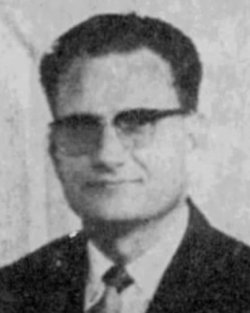
W.E. Best

#27 The Relation of Sin to the Providence of God

Romans 1
W.E. Best July, 1 1973 Audio
0 Comments
Remastered October/November 2024

Sermon Transcript

Auto-generated transcript • May contain errors

100%
All right, we'll continue to
discuss the subject of sin and its relation to the providence
of God. I've had a number of things that
I've given you concerning the providence of God in several
services recently, so I will not review those things. What
I'm going to give you tonight, and this is strictly a teaching
lesson, and I'll follow my notes rather carefully, because we're
in an area that it's somewhat difficult to get some of these
things straight in your minds, and I'm hoping that you will
take some notes on some of these points. We began this particular
point on sin and its relation to the province of God, as I
stated about three weeks ago, and we spent all of our time,
almost all of it, discussing Shimei in 2 Samuel chapter 16. So let me review the first two
points, and then we will continue, and I have seven things that
I want to share with you on this particular point concerning sin
and its relation to the providence of God. We've already stated
that providence is purpose and execution. That's the simplest
and most meaningful definition, I think, of the providence of
God. I've noticed of late that people
are using this expression. I've even heard it on the news.
I've heard it on different reports that I've listened to. People
are using the statement, the providence of God, or they talk
about providence, not so much the providence of God, but they
use the term providence. I'm kind of amazed at some of
the persons who use this particular term. But providence is God's
purpose in execution. And we have discussed already
these following points that I'll just review just briefly and
then we will continue. First of all, there is an apparent
contradiction, namely that sin is very real though God is sovereign
in his government of the world. It cannot be denied by anyone
that God is the sovereign ruler of the world. God is not a balcony
observer. He is not sitting on the sidelines
as a coach after he has trained his team and he can't get out
on the field. You cannot classify God as one
who is sitting on the sidelines. God is actively governing the
world in which we live. Now, this is a fact, a fact that
is recognized by every Christian. You see, when people believe
that God created the heavens and the earth, and then the world
that he created is run by the laws of nature that he instituted,
and that he is simply a balcony observer, in other words, this
is called the deistic concept of God's work. And you know the
real tragedy of that is, most persons who talk like that They do not recognize, of course,
the truth concerning salvation. There are individuals today,
I'm talking about religionists, who say that they believe that
God is actively ruling the world, he is governing the world, and
yet their concept of salvation, soteriology or the science of
salvation, is nothing but a pure deistic concept of salvation.
When a person says that the Lord has done all that he can do and
now it's up to you, that's the deistic concept of salvation.
Pure and simple. So even though they might embrace
the fact that God governs the world and they turn right around
and say that God has done all that he can do and now it's up
to the individual, that is the deistic concept of soteriology. So there is an apparent, notice
I said an apparent contradiction when we think about God governing
the world and yet we know that sin is a fact and sin exists
in this world. Then number two, and this is
where we spent almost all of our time three weeks ago, I think
it was tonight, or two weeks ago tonight. Creatures are second
causes which God uses to fulfill his will. creatures are second
causes which God uses to fulfill his will. He accomplishes his
works through men and even devils, insomuch that Satan and the heathen
are used to accomplish God's purpose in the world. We gave
the illustration of the Egyptians and how they afflicted the children
of Israel, Exodus chapters 2 and 3. We used another illustration
from the Old Testament, the Assyrians. in Isaiah chapter 10, how that
God used the Assyrians to chastise his backslidden people, I'm talking
about Israel, nationally speaking. And then we really spent a lot
of time on Shimei, how Shimei cursed David. And yet in the
face of it all, David said, let him curse, because he recognized
that he was simply carrying out what God ordained for him to
do. We know that Satan is used to test the faithful, as in the
case of Job in Job chapter 1. Now we'll have some other things
to say about Job in another point in the relation of sin to the
providence of God later on. Then number three, I think I
only mentioned this point, and that's as far as we got in our
last study. Satan and the heathen are not
instruments of God to such an extent that they are devoid of
power to act for themselves. You and I know that they are
repeatedly warned in order to leave no doubt that their own
plan motivates them. We've already seen this in the
study of Romans 1. and especially in what we had
to say last Sunday and then again today from Romans chapter 1,
18-32. We know that man's affections
are wretchedly misplaced. I'm talking about the affections
of a natural man. This is demonstrated by the passage
in Romans 1, 18-32. Now coming to the fourth point.
We'll spend a lot of time now tonight on points 4, 5, 6, and
7. Since God enters into every second
cause, then how are we to understand this in respect to sin? How are
we to understand this in respect to sin? God enters into every
second cause. The question is raised, does
cooperation include sin? Does cooperation include sin? The say that God gives life and
the sinner misuses the ability given him does not explain cooperation. Now we have to think about Acts
chapter 17. We're told that in him, that
is in God, every creature lives, moves, and has its being. So
we know that God does give life and God sustains life. And in
the face of this, does God cooperate with sin? You see, this is the
great question. And this has been a real puzzle
to a lot of people. And one has to really study it
and think through it for a great length of time before we can
see the truth of it. So to say that God gives life
and then the sinner misuses the ability that God gives him does
not explain the subject of cooperation. The only solution to the problem
is found in the confession of guilt and in faith. I said the only solution to the
problem is found in the confession of guilt and in faith. I'm talking about in the confession
of one's own guilt of sin and then, of course, his confession
of faith in Jesus Christ. Now we'll illustrate this. There
is not a believer who would say, quote, I did that sinful act
because God worked in me to will and to do that which is sinful,
end of quote. Now there is not a one of you
tonight who would make a statement like that. And yet we know that
God works in us to will and to do of his good pleasure. Philippians
2.12, and of course the fall is carried on and extended into
the 13th verse of that chapter. But no believer will say that
I did that sinful act which I performed because God worked in me to will
and to do that which is sinful. I've never even thought of such
an idea, and I don't believe that you have either. Now, let's
illustrate that point further. When Job heard about the news
of his loss, his financial loss, the loss of his family, and of
course the loss of the affection of his wife, as we read about
in Job 1, he recognized that God had visited him. All I'm
doing is relating this to you, and I want you to study the first
chapter of Job as you seek to understand this point even better.
So when Job heard the news of his loss, he recognized that
God had visited him, but let's not stop there. We must go on
to say that Job was also aware of the fact that it was Satan
who prepared for him his stew, as someone has said. So he recognized
that Satan was behind him. So don't forget that point. Now
Job did not excuse the devil because the affliction had come
from God. You will not find anywhere in
the first chapter of Job where he excused the devil. Job knew
there was a difference. Now when a libertine looks at
this particular point, he'll make a statement something like
this, as he likes to think about God cooperating, you see, with
sin. He'll make the devil a friend
of God. I'm talking about the libertine. He'll even go so far as to make
the works of the devil praiseworthy. Praiseworthy. under the pretense
that he only does the commands of God. Now let's think about
a very familiar verse of Scripture. All things work together for
good to them who love, God to them who is called according
to his purpose. Now, when you and I look back and review the
things that have taken place in our lives, many of those things
which took place in some act or acts of sin which we've committed,
it is true that we learned lessons. But we're thinking about the
lessons learned and not the sin involved. Arthur W. Pink, many years ago,
was confronted with a very serious question on that familiar text
of Scripture, and he wrote extensively an exposition on that particular
verse. So when you and I think about
what has happened that has taught us a good lesson, we think about
the lesson learned and not of the evil itself that's involved. And this is what Job was thinking
about. Now, how do we explain this? I'll give you the language
now of a Puritan. A Puritan said, and I quote,
as the sun sheds its rays on meat, causes corruption, but
by its own purity does not prevent the meat from becoming rotten,
So God accomplishes his works through the wicked without his
holiness justifying their action or their impurity contaminating
him in any way." End of quote. That's a good statement.
I'll repeat it again. Now get the picture. He's illustrating
this to the best of his ability, and that is about as good an
illustration as I have read. As the sun sheds its rays, on
me causes corruption, but by its own purity does not prevent
the meat from becoming rotten, so God accomplishes his works
through the wicked without his holiness justifying their action
or their impurity contaminating him in any way. So when the Lord
used Shimei to curse David, Here it is, illustrated. You cannot
say that God, that his holiness, was involved in any way or was
hindered in any way. Neither did the cursing of Shimei
contaminate the holiness of God. We come now to the fifth point
on the relation of sin to the providence of God. It has to
do with sustenance and government. Sustenance and government are
two aspects of the one almighty and omnipresent act of God. Now, I'm not going to quote all
these verses, but I will give them to you. I would like for
you to consider Romans 11, 36. We're told that all things were
created by him and for him, all things for his own purpose, In
Colossians 1, verse 17, by him all things consist or are held
together. We find in Proverbs 21, verse
1, that even the hearts of the kings are in the hands of God.
Also Proverbs 16, verse 9. And finally, Psalm 146, verse
10. These are good references to
study in connection with sustenance and government, which are two
aspects of the one almighty and omnipresent act of God. Now, how can these two aspects
of providence leave room for human responsibility? Now, here's
another problem that has come up. How can these two aspects
sustenance and government leave any room for human responsibility?"
So, you see, the question that has been raised, and I can understand
why such a question has been raised. I think we can answer
this. I like this statement which I
read recently, quote, divine revelation does not let us penetrate
the harmony between God's sovereignty and man's responsibility." End
of quote. And that's true. I don't care
where you go in the scriptures, you will find that divine revelation
does not let you penetrate the mystery. And keep in mind, the
things which are revealed belong to us and the things which are
concealed belong to God. And there isn't any place in
Holy Scripture where we are allowed to penetrate the harmony between
God's sovereignty and man's responsibility. Men like B. H. Carroll sought
to illustrate it in this manner, but I don't think he did a very
good job of illustrating it. But I remember reading him in
his English interpretation of the Bible, which I had a commentary
by him many years ago, and I gave it away a number of years ago.
But he illustrated it, I think it was B.H. Carroll who illustrated
it in this manner. He said, if you've ever gotten
out and looked down a railroad track, that if you can see several
miles down the railroad track, he said, it looks like the rails
run together way down there. But he said, they don't. They
run along side by side. They keep the same distance.
And he said, there's complete harmony. He said, even though
to us it looks like that they run together at a given point,
if you can see far enough down a railroad track. Well, personally,
I don't think that's a good illustration, but I suppose that was the best
that he could come up with. But I want to give you some other
quotations by some outstanding, and one of these men is a present-day
scholar, and I think an outstanding scholar in many respects, especially
concerning some great biblical doctrines that are dealt with.
Here we are forced, one man said, to direct our attention to the
word of God. Unless this is done, man will
assume one or the other of two erroneous principles. We're talking
about now the sovereignty of God and the responsibility of
man. They both are taught in the scriptures,
and this cannot be denied. All right, now here's the way
that he explains it. He goes on to say, He will either make
man the sovereign god of creation and providence, or he will make
providence a divine game in which human beings are pushed around
like checkers void of responsibility. What is the relation between
providence and determinism? What is the relation between
providence and determinism? And he goes on to explain it
in this manner. The alternatives, determinism or indeterminism,
are alternatives only on a horizontal, anthropological level. Now that's a great statement
if you'll think through it a moment. I'll repeat it. What is the relation
between providence and determinism? He says, the alternatives, determinism
or indeterminism, are alternatives only on a horizontal, notice
what he's saying, anthropological level. I'm talking about a horizontal
level now. Now listen to this. Here's the key. And beloved,
when I read this several years ago, I rejoiced because I said
this was the greatest thing I'd ever read on the subject. He said they pose a problem In
other words, if you think on a horizontal anthropological
level, that's getting back to the railroad tracks, the two
rails. That's why I don't think that
the illustration that B.H. Carroll gave is a good one. Here's
how he explains it. This man, he says, they pose
a problem which is resolved only in a vertical relationship between
God and man. That's it. You're wasting your
time to try to explain to a person who does not have grace how that
God is absolutely sovereign and yet man is a responsible person.
That's the point he's making. You're wasting your time. You
can't do it. And you can never say anything that will satisfy
the question that that person asks. So he said, in giving the
answer, and this is it. In fact, this is the key to the
understanding of divine election, by the way. You're wasting your time trying
to explain divine election to a person who doesn't have grace.
So he said, they pose a problem, the absolute sovereignty of God
and the responsibility of man, which is resolved only in a vertical
relationship between God and man. vertical relationship. He's talking about regeneration.
He's talking about faith in Jesus Christ. Now listen to this. In
this relationship, man has a correct understanding of freedom and
what? Responsibility. Of freedom and
responsibility. In talking about freedom, My
wife and I, yesterday is a week ago, took her mother out to visit
her sister who is in Blaylock, home for the aged in Pasadena,
not too far from where Brother Liz Cole lives. And we were there
a few minutes, and we left there and went over, took Mom over
to visit another one of her sisters, who is a retired schoolteacher,
lives in Pasadena. And she has just recently had
an operation, so we took Mom by to see her for a few minutes.
And the subject, of course, came up. We started discussing the
scriptures. And I appreciated the statement, even though I
do not agree with this ad at all, theologically. But she made
a good statement. She said, you know, the Bible
says you should know the truth and the truth shall make you
free. But she said the thing that's difficult to understand
is that it seems like everybody wants to be in jail. Well, think
about that. That's a pretty good statement. The truth will make you free,
but it seems that most American people and most people today,
they want to be in jail, they want to be in prison. They're not
interested in truth. I was telling one of the men
just before the service tonight, it seems that most religionists
today, they just want to dabble in the truth a little bit. I've
had some unusual experiences recently with several people. I'll do everything that I possibly
can to help a person or help persons. when the opportunity
arises, but I don't ever compromise. And when questions come up, I'll
do my best to answer them. If people appreciate what I'm
saying, fine. If they don't, that's between them and the Lord,
if what I'm giving is truth. But it seems that today, people
just want to dabble a little bit. Just dabble. They don't
want all the truth. In other words, they just want
to go up to a point. Now, let's not go any further
than that, because if we go any further than that, it's going to make a lot
of enemies. And we don't want to go that far. Now, beloved to me, that
is not characteristic of a Christian. That's characteristic of a religionist,
but not of a Christian. Because I have to judge everyone
by myself, and as a Christian, I want to know all that's for
me to know, and all I can know while I'm here. I think that's
the desire of every child of God. So I think this is a great answer.
Now let's go a little further. This same person went on to say,
it is remarkable that Scripture never presents providence in
its relation to sin by way of argument. Now, I want you to
get that statement. I want to repeat that. You know,
when I'm reading someone's work, there are some statements that
just jump out at me, and I just really latch on to, and that
one did. It is remarkable that Scripture
never presents providence in its relation to sin by way of
argument, but always in the historical actuality of the invincible power
of God and man's continual responsibility. Oh, that's a great statement. Great statement. The enemies
of God are portrayed as enterprising. This cannot be denied. but not
able to escape the supremacy of the sovereign God. That also
is proof. Now, where can we go to prove
such a statement? Will you turn in your Bibles
to Acts 4, 27 and 28? Acts 4, 27 and 28. We'll give
some biblical examples of some things in a moment. But listen
to these two verses. For of a truth against thy holy
child Jesus, whom thou hast anointed, both Herod and Pontius Pilate,
with the Gentiles and the people of Israel were gathered together,
for to do whatsoever thy hand," and that means thy disposing
power. Look at the 28th verse, "...for
to do whatsoever thy hand, thy disposing power, and thy counsel
determined before to be done." I want you to know when the enemies
of Jesus Christ took him out and nailed him to the cross,
they did what God's disposing power determined to be done. Determined to be done. Faith
does not flee from responsibility. Now this is the thing that is
shocking among many so-called Calvinists today. Faith does
not flee from responsibility. And it never explains guilt in
any other way other than man's, out of man's own depraved heart. Now we come to number six. The
term God permits sin. You hear a lot about the permission
of sin. I had a misunderstanding about this concept for a long,
long time. You see, I began studying the
Puritans more than 25 years ago, and almost all the Puritans,
without one exception, talk about the permission of sin, the permission
of sin. And it was not until about 10
years ago in the study of this subject, because there was something
about it that just didn't ring true to me. And I came across
a work where a man went into this particular point. And I
think he's given some things that are good for us to consider.
Personally, I think he has the truth on it. The term, quote,
God permits sin does not solve the problem of concurrence or
cooperation. You want to use a different term.
Let's take the word permission, which is used by so many people.
Permission suggests that God allows the sinner to decide in
freedom against God's command. Now that's what you have to come
up with when you consider the word permission. Let me give it again. Permission
suggests that God allows the sinner to decide in freedom that
God in freedom against God's command. Now if this be true
then God is no more than a balcony observer that I've been talking
about to some extent tonight. I said if this be true then God
is no more than a balcony observer of a contest whose outcome is never certain. Now listen to this statement,
quote, sin then lies ultimately in man's power of decision and
God's action becomes the reaction to man's action. In other words,
if you carry the thought of permission to its logical conclusion, here's
what you come up with. Listen to this now carefully.
I've given a lot of thought to this because we're, I'll admit,
we're kind of getting down deep tonight. We're thinking through
some things that are very important. And I'm sure some of these questions
have come to your mind, just as they've come to mine through
the years that I've been studying the Scripture. Now, sin, that
is, if the doctrine of permission be allowed, lies ultimately in
man's power of decision and God's action becomes what? The reaction
to man's action. Now you know that isn't true.
So the idea of permission only pushes the problem, as this person
states, one step further back without giving any real explanation
or definition. Now think about that for a moment.
Let's run that back by a game. We're dealing with a very important
question here. I have stated that permission
suggests that God allows the sinner to decide in freedom against
God's command. Now if that be true, then God
is no more than a balcony observer of a contest whose outcome is
never certain. Sin then lies ultimately in man's
power of decision and God's action becomes the reaction to man's
action. Thus the idea of permission just
pushes the problem one step further back without giving any explanation. Now listen to this. The question
then arises, why did God permit sin? as some would say, why did
God or why does God permit sin? Non-intervention and non-interference
must, in relation to God, be something positive. Not helpless
or frustrated in action. I'll run that one by again. Non-intervention
and non-interference must, in relation to God, be something
positive, not helpless or frustrated in action. Now listen to this,
however, positive providence does not make God the author
of sin. We've already proved that in
the discussion of point number four. It cannot be denied that
God supports men in their being while they are sinning. Now think
about that a moment. It cannot be denied that God
supports men while they are sinning. Now go back to Acts 17. In God every creature moves,
lives, and has his being. So even while the murderer is
pulling the trigger to the gun, God is sustaining that person's
life. You can't deny that. Every act of sin that is performed
is performed by a lie that God is sustaining. You can't deny
that. That's a fact. Now let's go a step further.
I think you can see why a lot of people are afraid to tackle
something like this. But I'm not afraid to tackle anything.
I may not do justice to the subject, but I'm not afraid to tackle
it. I will know to the best of my
ability what the scriptures teach on a subject like this. Now let's
take Ananias and Sapphira as an illustration. Could not God
have killed them before they lied to the Holy Spirit as easily
as after they lied? But he didn't do it. Ananias and Sapphira had their
life, their existence in God. Now let's just go through the
scriptures and think about some other examples. God Periscus
restrained Abimelech from sinning. Genesis 20 and verse 6. He restrained
Abimelech. In other words, he did not let
Abimelech do what he wanted to do to Sarah. But where God restrained Abimelech
from sinning, he did not restrain David. You can't deny that. We're dealing
with facts tonight. We're looking at facts. He did
not restrain Adam. He did not restrain Judas. We
could give you many other examples. God even restrained Laban from
harming Jacob in Genesis 31, verse 7. He hindered Balaam,
that is, he kept Balaam from cursing Israel, Numbers chapter
23. Now you know the word that I
like to use rather than the word permission, I like to use the
word suffer. God suffers sin to be done. According to Acts 14 verse 16. But this suffering is not a connivance
with sin. Neither is it an approbation
of sin, nor is it a mere permission of sin. When we look at all of
these examples that I've given to you, God not only suffers
men to walk in their own ways, but he gives them up, he gives
them over, not only to a reprobate mind, but to a strong delusion,
as we're told in 2 Thessalonians chapter 2. God gave the evil spirit a commission
to go forth and do what he purposed. What he proposed to be done.
To be a lying spirit. 2 Samuel 16 verse 10. I want
you to know as a young Christian when I read some of these things
in the Old Testament, boy I just had to stop. What in the world?
Do you remember such days? Certainly you do. How do you
explain that? You were dumbfounded. Now we come to point number seven.
In Providence it is proper to distinguish between an act and
the irregularity of that act. God may put in the way of persons
things that are good in themselves. For instance, the law, the gospel. but they become the occasion
of drawing out the corruptions of man's heart. For instance,
Paul said, I would not have known sin, Romans 7, except the law
said thou shalt not covet. The law is holy, good, nothing
wrong with the law, but it became the occasion of drawing out the
corruption of his heart. The same thing is true with the
gospel. The gospel becomes the savor of life and the life of
them who believe and the savor of death and the death of them
who reject it. And that's a fact that cannot
be denied. 2 Corinthians 2, verses 14 through 16. God as governor of the world
sometimes punishes one sin with another sin. You know what Plato,
the philosopher, said? I quote, A license to sin is
the greatest punishment of sin." Even Plato recognized that. And
really the greatest punishment, as we have shown from Romans
1, 18-32, the greatest punishment of sin is sin itself. Wallowing
in sin. Wallowing in the filth and mire
of sin. The greatest punishment. the
dog returning to its vomit, and the hog to the wallowing in the
mire. It would have been better had
they never known the way of righteousness than after having known it to
turn from the holy commandment delivered unto them. Now sometimes God overrules sin
for good. This is a fact. Let me give some
examples. I'll mention three. First of
all, he overruled the son of Adam for his perfection in grace. You going to argue with that?
Not me. I'm not going to argue with it. Number two, and this
is a great text of scripture, Genesis 50 verse 20, Joseph was
sold by his brethren into Egypt and they thought they were doing
him evil. But God overruled for the saving
of many persons alive, we're told in Genesis 50 verse 20.
God overruled. Finally, and this ought to be
enough, the death of Jesus Christ, which was accomplished, humanly
speaking, by wicked hands, was overruled by the sovereign God
because the Father made his soul an offering for sin in that act.
He overruled the wicked act of men for the good of the Elah. Now, can we conclude this point
by saying, quoting Psalm 145, verse 17,
the Lord is righteous in all his ways and holy in all his
works. That's my testimony. Then I close with this, another
Puritan illustration. Quote, the sun is the cause,
talking about the sun. The sun, S-U-N, is the cause
of the foul odor coming from the dunghill. But it is not the cause of the
dunghill. The sun is only the occasion
of the scent being drawn forth." End of quote. That's it. You and I know what it is to
pass by a garbage dump. Boy, I want to hold my nose,
don't you? When the weather is real warm, the sun is shining,
we know the stench that comes from it. So the Puritan was right
when he said the sun is the cause of the foul odor coming from
the dunghill, but it is not the cause of the dunghill. The Lord is the cause of Pharaoh manifesting the hardness
of his heart by forcing him to an issue. And the record says
that God hardened his heart, but don't forget it also says
that he hardened his own heart. But God is not the author of
his hardness. He only left him to his own unrestrained,
depraved nature. So the sun is the cause of the
foul odor coming from the dunghill. But it's not the cause of the
dunghill. The sun is only the occasion of the scent being drawn
forth. You know that's exactly what
happens when you uphold the truth of God's word in the presence
of people who don't want it? It becomes the occasion of them
manifesting what they really are. And that's going to always cause
opposition. Now will you study carefully?
And this is a good place to close. Study carefully the first five
verses of 2 Timothy 4.
W.E. Best
About W.E. Best
Wilbern Elias Best (1919-2007) was a preacher and writer of Gospel material. He wrote 25 books and pamphlets comprised of sermons he preached to his congregation. These books were distributed in English and Spanish around the world from 1970 to 2018 at no cost via the W.E. Best Book Missionary Trust.

Comments

0 / 2000 characters
Comments are moderated before appearing.

Be the first to comment!

Joshua

Joshua

Shall we play a game? Ask me about articles, sermons, or theology from our library. I can also help you navigate the site.