Bootstrap
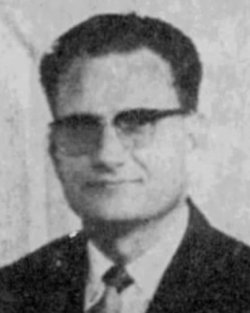
W.E. Best

#28 The Existence of God

Romans 1:19-21
W.E. Best July, 1 1973 Audio
0 Comments
Remastered October/November 2024

Sermon Transcript

Auto-generated transcript • May contain errors

100%
But once again to Romans chapter
1, we will resume what we began back before the holiday weekend,
Christmas holiday weekend and the New Year's weekend, and that
is the existence of God. I realize that this subject is
one not so easy for a Christian to follow unless he has a good
background. but it's a subject that needs
to be discussed and I'll show you why. We're not only going
to discuss this particular subject this morning as we continue the
existence of God, but the Lord willing next Sunday morning we
want to go into the subject of existentialism a little bit.
Now these are words that you hear and many persons do not
know the real meaning of these terms such as neo-orthodoxy,
existentialism. I'm not going to spend a great
amount of time, but I do want you to know basically what these
views are in order that when you come in contact with statements
that uphold these views, you'll be able to detect them and therefore
be in a position to counteract those false views by a good understanding
of some of the basic principles of God's Word. So we'll read
once again. This sounds like being repetitious,
but that's all right. We want to read beginning with
verse 18, Romans 1, and read through the 21st verse. We're thinking primarily this
morning about verses 19 through 21. as we continue to discuss
the subject entitled The Existence of God. We're answering the objection
by neo-orthodoxy and the objection is that it isn't necessary for
us to prove, in fact, we cannot prove the existence of God. I
deny that objection. For therein Verse 17, we'll begin
with verse 17, is the righteousness of God revealed from faith to
faith as it is written, the just shall live by faith for the wrath
of God is revealed from heaven against all ungodliness and unrighteousness
of man who hold the truth in unrighteousness. The next three
verses now are the verses that we are using in connection with
our subject. Because that which may be known
of God, You see, there are some things
that may be known of God. No one can deny this who believes
the scripture. No one can deny this who has
a rational mind. Because that which may be known
of God is manifest in them or to them, for God has showed it
unto them. For the invisible things of him
from the creation of the world are clearly seen, being understood
by the things that are made, even as eternal power and Godhead,
so that they are without excuse. Because that when they knew God,
or a better translation, knowing God, they glorified him not as
God, neither were thankful, but became vain in their imaginations,
and their foolish heart was darkened. I want to review just two or
three statements that we've already given by way of introduction
and then make two or three statements that we've already given to you
on the first argument. You know, we're observing four
different arguments on the existence of God. The first is known as
the cosmological argument. That sounds like a big word,
but it isn't as large as you might think. We will define each
argument. We will show how that the argument
has some good points, and also how each argument has some weak
points. So we will define the argument,
show at least one, maybe two, weaknesses of each argument and
then the advantages of the argument. So there'll be three parts to
each one of these arguments. The first is the cosmological
argument, that we've already discussed with you. The second
is known as the teleological argument. The third is the anthropological
argument. The fourth and final is the ontological
argument. You see, I don't think it's necessary
for Christians to become so involved in the study of the scriptures
that they have to get into terms like these. I disagree with you
very much. Now for some statements we've
already given to you concerning The subject entitled the existence
of God are the evidences for God's existence. I quoted to
you several weeks ago when we began this study that the neo-orthodox
position is that it is impossible to prove the existence of God. Let me repeat that statement
now which I've already given to you. neo-orthodoxy sees no
need to prove the existence of God. It is assumed throughout
the system that it's unnecessary to try to prove God's existence. According to this system, that
is, neo-orthodoxy, no man can prove the existence of God. Thus the system states, and I
quote, no man can say that he is, end of quote. No man can say that he is or
that God exists, end of quote. To prove, that is to their way
of thinking, the point, they make this statement, quote, when
we try to prove God exists, then we're guilty of making God the
object. When he says he exists, then
God is the subject, and God is wholly the subject and not the
object." One of the best statements that
I have come across in counteracting that view is this, and I'm hoping
that you get this statement. The Apostle Paul, from the statement
that we have read in Romans 1, 19-21, stated that there is a
subjective knowledge of God, and that subjective knowledge
exists in every person, without one exception. The 21st verse
of Romans 1 proves it, knowing God. knowing God. That's a subjective
knowledge. Now, we're not talking about
knowing the Lord as Redeemer, knowing the Lord as Savior of
our souls, but knowing the existence of God. You see, the reason that I'm
doing this is because the religious world today has been infiltrated
by both neo-orthodoxy and existentialism. And most religionists are so
unfamiliar with these terms, and may I go so far as to say
unfamiliar with the scriptures, that they do not detect some
heretical statements when they are made by persons who embrace
these views of neo-orthodoxy and existentialism. Now, carrying
that statement further, since the subjective knowledge of the
existence of God is an objective fact, you can't deny this from the
passage of Scripture that we have read from Romans 1. I said since the subjective knowledge
of the existence of God is an objective fact, go back now to
verse 19, because that in verse 90, which may be known
of God is manifest to them, for God has showed it unto them. For the invisible things of him
from the creation of the world are clearly seen, that's objective
knowledge, being understood by the things that are made, even
as eternal power in Godhead. Since the subjective knowledge
of the existence of God is an objective fact, going back from
verse 21 to verse 19, it must be revealed and established by
evidence. We gave to you a number of outstanding
quotations from the outstanding work entitled The Attributes
of God by Stephen Charnock, the standard work on The Attributes of God. I'll not
repeat those this morning. But I want to give you a statement
by Augustine. Augustine said, God is more truly
thought than he is described and exists more than he is thought. End of quote. I want us to analyze
that statement for a moment. God is more truly thought than
he is described and exists more truly than he is thought. End
of quote. Let us explain that. The subjective
idea of God, which I have, which you have, is less real than the objective
fact of God. You see, the understanding which
you have of God is a finite understanding, it's not infinite. And so how can the finite mind
of man embrace the infinite God? And that's what Augustine was
saying. Regardless of how much you and I grow in grace and knowledge
of God, the knowledge which we have of God is still finite knowledge. It isn't infinite. And so the subjective idea of
God is less real than the objective fact. That's easy for us to understand. This means that God has more
of existence than the thought of him has existence. One has explained Augustine's
statement in this manner. It is the same as saying, quote,
the thing has more existence than the thought of it has existence,
end of quote. There are a lot of other things
that I could give. In fact, I have a great list of tremendous statements,
but if I were to give all of these things to you this morning,
I'd spend all of my time on the introduction again. So I am not
going to do that. I've tried to share with you
just two or three basic things that we've already discussed
to some extent, and then we will continue the discussion of the
four arguments that prove the existence of God. Now the one
major thought of the cosmological argument that I have already
shared with you is this. It proves that every effect has
a cause. Now that's the basic thought
of the cosmological argument. I've already defined it for you,
but I'll define it for you again. The word cosmos, from which we
get the cosmological argument, is the Greek word which means
world, it's translated world in the scriptures, and it means
orderly arrangement. So when one thinks about the
cosmological argument, he thinks about orderly arrangement. In
thinking about orderly arrangement, He knows that every effect has
a cause. Now that's the principle thought.
I made this statement when we discussed this particular argument
a few weeks ago, that the one weak point of this argument is
this. And here it is. The one main
weak point of the cosmological argument is this. The principle
of causality should be stated differently than it is ordinarily
given. It is proper for you and me to
say that existence itself does not demand a cause. Existence
itself does not demand a cause. Now follow me closely. You see, if we were to say that
existence itself demands a cause, that would mean that God demands
a cause. Do you see the weakness of that
argument? For you to say that existence demands a cause, then
the existence of God demands a cause for his existence. Now,
I'm not going into an argument that I have encountered in the
past I could spend a lot of time discussing this with you. It
is known as atheism. I'll spell it for you. I'm not
going to go any further in it. I think it's A-S-E-I-P-Y. I think that's the way it's spelled,
if my memory is serving me correctly. But I'm not going into that particular
theory. I don't want to take the time
to do it this morning. It isn't necessary. But some time back
I received a phone call And this man wanted to discuss this very
subject with me. This was when I was on the radio
and I had a lot of calls in those days, not a lot, but unusual
calls I would say. Because usually persons who would
call would be individuals who had plenty of time to just sit
around and listen to the radio. And a lot of them had their own
ideas about things. And this particular person wanted
to discuss with me the existence of God and he pulled this particular
theory on me. that I've just told you about.
So we're not discussing that with you this morning. But I
want you to know there is such a theory. Now I stated that it
is proper to say that existence itself does not demand a cause. But a coming into being of that
which did not previously have a being does demand a cause. That's how simple it is. So the
world that we view with our eyes, I'm talking about the world system
as we see it, it demands a cause for the simple reason there was
a time when this planet Earth did not exist. When we go back
to Genesis chapter 1 verse 1, in the beginning God created
the heavens and the earth. That means God spoke and things
that did not exist came into being. So that which did not
have, or does not, did not have an existence, when that comes
into existence, it demands a cause. But existence itself does not
demand a cause. Now that's the one weak point
of the cosmological argument. Now, this argument does have
value. And I shared, I think, these
things with you three weeks ago. Every finite object implies original
non-existence. I said every finite object implies
what? Non, original non-existence. Secondly, creative power is demanded
to cause a non-entity to become an entity. Consequently, the
quality of the cause is superior and older than the effect. Now you see, once again, the
main point of the cosmological argument, and the main point
is that every fact has a cause. I'm talking about everything
that has come into existence has a cause. that which did not
have existence and has come into existence has a cause. And finally,
the scriptures justify the cosmological argument. For instance, John
1, 1 and 2, in the beginning, was the Word and the Word was
with God and the Word was God. All things were made by him and
without him was not anything made that was made. This proves, does it not, the
value of the cosmological argument. All things were made by God and
for God, we're told in Romans 11 and verse 36. We come now to the teleological
argument. I'll try to go through these
four major arguments with you and show you the meaning of each And each argument has its weakness as well as its strong point. The teleological argument emphasizes
that the eternal being is intelligent. Where the first argument, the
cosmological argument, the main point being every effect has
a cause, that's the main point. Now the next argument, the teleological
argument, emphasizes that the eternal being, the infinite being,
is an intelligent being. Now the reason it is called the
teleological argument is because it comes from the Greek word
telos, spelled T-E-L-O-S, and what does it mean? It means end
or design. Isn't this simple? You see, it
isn't real difficult. So the intelligent being had
a purpose in mind, did he not? You know that. We talk about
the purpose of God. We talk about the decree of God.
We talk about all things working together for the good of God's
people, to them who are called according to his purpose, his
design, his intent. And so in order for there to
be a design or purpose or intent, the creator must be an intelligent
being. And this is the main point of
the teleological argument, taken from the Greek word telos, meaning
end or design. Now this argument treats the
subject of cause as an intelligent being. Thus intelligence in the
effect proves intelligence in the cause. By the very fact that
you are an intelligent person, God has given to you certain
faculties by which you can understand and comprehend things, proves
that your Creator is an intelligent being. It's just that simple.
So this is the main point of emphasis. I'm going to illustrate
this to you in just a moment. Now the purpose of the argument
is to show that there is design in every part of the universe. Now this may be difficult for
some people to understand. However, it isn't difficult for
many unsaved people to understand this today. There's a lot of
talk today about ecology. I'm using something that is relative,
something about which we're familiar. And the balance of nature is
something else that is being discussed to a great extent by
a lot of persons today who don't even profess to be children of
God. There is one program on TV that
I always enjoy looking at, and it's Wild Kingdom. You may not
enjoy it, I do. It is one of the few that if
I have time and I don't forget it, I look at that particular
program. And you know how the man is always
working in the things of nature with his advertisement of Omaha
Insurance Company. He does a superb job of working
in those things with his with his statements about his insurance
company that he represents and the company that is supporting
the program. So we hear a lot, we read a lot today about the
environment and about ecology, about the balance of nature.
There is a reason for everything This reminds me of a book I read
by Harry Rimmer many years ago. In fact, I have, I think, all
of Harry Rimmer's works. Some 40 books, not large books,
but I have all of them. I've had them for many years.
I enjoy reading him. He's interesting to read. Most
of you know that he spent the greater portion of his life debating
with atheists and agnostics and what have you on college campuses
throughout the United States. well-versed man in his particular
field. And he, I believe, was a Christian. He was lecturing at one particular
university, and he made the statement that there is reason for everything. And some real smart student said,
well, I have a question. Of what use is a rack He said, ask the cat. That was his reply. That was
reply enough. He said, a rat to a cat is what an ice cream
cone is to a young boy. And he went on. He was showing
the balance of nature. He was right. Now, I have an
illustration that's even better than that. A certain biology professor was
discussing his view of biology, not only human life, but animal
life, life in general. And so they began to discuss
insect life, creature life. And so the question was asked,
the professor, what about the wisdom that are the instinct,
whatever you want to call it, that animals have, that insects
have. They have been discussing how
that the ants work. You know, the Bible has a lot
to say about the diligent ant in the book of Proverbs and how
he works, storing up for the winter months. And have you ever
watched as a boy how deliberate the ants are in their working?
And so this student wanted to know about the instinct or the
intelligence. The professor's logic was this.
He said, the answer to all of this is very simple. He said,
I call it instinct. When we talk about animal life
or insect life, I call it instinct. And he said, instinct is inherited
memory. I want to ask you a question,
is that logical? I think we've been for a moment. Is that logical?
The professor said that instinct is inherited memory. You know, there's always someone
in the class that's pretty smart. Maybe just a student sometimes,
but he's intelligent. And he thinks. And it might have
been that that particular student was a Christian. He said, well,
just trace that back. to the first insect, for instance.
He said, how did the first insect get his information? If instinct is inherited memory,
just trace all of that back to the first instinct. That is,
to the first insect. And we'll just take the spider,
for instance. We know that the spider is a very wise person. Very wise insect. He spins his
web and went on to describe the spider. But he said, let's just
go right back now to the first spider. He said, how could instinct
be inherited memory with the first spider? That would mean
that the first spider had to sit down and just hatch it all
up himself. See, that's not logical. You
know what the simple answer to that is? The professor was wrong. I don't care if he was a biology
professor. The answer is very simple to
the Christian. Instinct is imparted wisdom. That's what it is. I said instinct
is imparted wisdom. I saw a program not long ago.
I had read about the grunion fish. How many of you have ever
heard about the grunion fish in Southern California? Now this
is one of the most interesting things that I've seen in a long
time and I want to use this as an illustration. People know
when the grunion fish are going to come to shore. On a certain
day, of a certain month, when the tide comes in, the people
will flock out because they know this is the time. And this was
on TV not too long ago, I saw the entire program. But I won't
spend a lot of time discussing it even though it is really something
of great interest to the Christian. When the tide comes in on that
particular night, the people will be out in hundreds and thousands
to watch them. And so they're left by the high
tide on the sand of the seashore. And the female grunion, this
was shown on TV. Showed actual pictures. They
start wiggling their tails and they dig a hole in the sand close
to the water's edge. They lay their eggs and the male
grunion come and it's a milk-like, in other words, they fertilize
the eggs in that hole. And they're all ready to go back
out when the next tide comes in. Exactly just about how long
they have. Now what is that? That is imparted
wisdom. Who gave the grunion fish that
wisdom? Almighty God himself. It's not inherited memory. It's
imparted wisdom. Wisdom that God gave the grunion
fish. Now that's only one illustration.
There are many others. Now we have seen that the teleological
argument emphasizes in our purpose, our design. God has a purpose
in everything. There is not one creature on
the face of the earth but what God did not plan to be here.
And there is a purpose for its being here. You and I may not
know, but God knows. God knows. Now, secondly, the
teleological argument is not without its defects. The argument does not prove a
personal God. Notice what I'm saying. The argument
must be supplemented by another argument which we will discuss
next, the anthropological argument. This argument more properly concerns
the relation of the intelligent being to the world than it does
to his existence. So the placing of the intelligence
is not the question of this particular argument. I said the placing
of the intelligence is not the purpose of the teleological argument.
It only shows desire and a purpose. Now thirdly, the teleological
argument has value when it is properly applied. This argument must extend to
the intellectual world in which we live. The proper application
of this argument may be illustrated in the following manner. Some
time back I read where an atheistic professor related to a Christian
his recent visit to Hoover Dam. Now some of us have seen Hoover
Dam, and it's something to behold. The atheistic professor, in relating
this incident to a Christian, went on to give the following
story. He said, as we looked at the rock formation that surrounded
the Hoover Dam, he said, my wife made the statement, oh, how great is the handy work
of God. The atheistic professor didn't
like that statement because, you see, she was recognizing
the Lord. He said, I enjoyed very much the answer which my
10-year-old boy gave to his mother. And he said, the answer which
my 10-year-old son gave to his mother was, quote, well, mom,
the rocks had to fall someplace, didn't they? End of quote. He thought that was a great answer
by his 10-year-old son to his wife who professed to be a Christian.
Well, Mom, the rocks had to fall someplace, didn't they? The Christian
then said to the atheistic professor, did you view the dam? Yes. Did you go down and look at the
giant turbines? Yes. What did you say after you viewed
the whole dam with all of its turbines? Did you say, well,
they had to fall someplace, didn't they? Turn around and walk off. You see what we're talking about?
We're talking about design. Now listen to this. The scriptures
justify the teleological argument. Because the psalmist said, he
that teacheth man knowledge shall not he know? Psalm 94 verse 10. Listen to it. He that teacheth
man knowledge. Who is it that has taught you
knowledge? God. Shall he not know? And then, I must close this particular
argument by another reference found in the 147th division of
the Psalms, verse 5. The understanding of God is infinite. Infinite. Now we come to the third argument,
known as the anthropological argument. This argument stresses
that the intelligent being the sovereign god of the universe,
possesses attributes. Possesses attributes. This argument
comes from the Greek word anthropos, meaning man. Meaning man. This argument goes
from the mental and moral nature of man to the existence of the
author, lawgiver, and judge of the universe. Man differs from the animals
by what anthropologists call culture. You see, man's behavior is learned
not instinct born. Learned, not instinct born. The intellectual, emotional,
and moral nature of man requires what? An intellectual and moral
being for its author. And that intellectual and moral
being is none other than God himself. Man's mind cannot evolve from
matter, nor his spirit from flesh. Most of the programs that I see, even by National Geographic,
I abhor, that is, many of the statements that are made in them.
Do you know why? Because they emphasize the theory
of evolution, and that is contrary to the scriptures. And I'm going
to go this far. No born again person believes
in the human theory of evolution. I don't care how religious an
individual is. I said no born again person embraces
the theory of evolution. Now that's how dogmatic I am.
That's how strong I am on this particular point. You know finite things can never
satisfy man. That's why there is no such thing
as human satisfaction. It takes the infinite to satisfy
the finite. And the only person who is satisfied
is the person who embraces the infinite God. The person who
has been saved by the infinite Savior. The person who is preserved by
infinite grace. Now the anthropological argument
has its weak points. This argument cannot prove the
existence of the infinite God because it argues from the finite. Now think about that for a moment.
This is not difficult to understand. What did I say? I'm showing you
the defects of the anthropological argument. I said this argument
cannot prove the existence of the infinite because it argues
from the finite. All of your arguments are finite
arguments. All of mine are finite arguments.
Secondly, this argument does point to a being of supreme and
holy qualities, but it does not compel belief
in a God of infinite perfections. Now this takes us back to something
we've already discussed in General Revelation. If you can make the
connection and if you remember some of the main points that
we discussed in that particular message. And thirdly, the idea
of good and bad, right and wrong, does exist in human culture. But apart from the revelation
of God in Scripture, this idea is without a complete objective
standard. Now that's a point I do not want
you to forget. Therefore I'm going to repeat
it again. The idea of good and bad. You know we've already discussed
this in General Revelation a couple of weeks ago. So I'm just hoping
that you remember some of these major points so we won't have
to repeat them again. You can see how that one message
just adds to what we've already stated. So the idea of good and bad,
right and wrong, even the unsaved person has some understanding
of right and wrong. He has some understanding of
good and bad. We prove that from Romans 2,
14 and 15. This is evidenced today even by the so-called laws
that are brought into being by men who are not even Christians.
They have some concept of right and wrong. They have some concept of good
and bad, but I said apart from the revelation of God in scripture,
this idea is without a complete objective standard. Now, you
see, we must have a complete objective standard of right and
wrong, and that is given us in the scriptures. Therefore, we
must not ignore the scriptures. And this is what is done by existentialists
today, as I'm going to show the Lord willing next Sunday morning
at this time, which will follow up what I'm discussing with you
this morning. Now, thirdly, the anthropological
argument has great value when it is properly applied. I want
to repeat what I said at the beginning this morning, a statement
by Augustine. God is more truly thought than
he is described and exists more truly than he is thought. The subjective idea of God is
less real than the objective fact. This means that God has
more of existence than the thought of him has. Finally, in the discussion of
this argument, man's conscience indicates self-knowledge. For the Gentiles which have not
the law, that is the written law as the Jews had, are a law
unto themselves. Romans 2.14. Are a law unto themselves. So man's
conscience indicates self-knowledge. Finally, we're looking at the
ontological argument. This argument leads to an ideal
conclusion of God's existence. You see why this is the last
in the series of arguments. Beloved, I'm giving you something
that is taught all students of theology, and I believe whatever
is good for the ministry is good for God's people. And if you'll
get the major points of these arguments, you'll be in a position,
when you hear statements made by those who embrace the theory
of neo-orthodoxy, or individuals who embrace the more recent theory
of existentialism, You may not know anything about
these views, but I'll share some basic things with you so you'll
be able to detect individuals when they do embrace those views
that I've already mentioned. Now, I said the ontological argument
leads to an ideal conclusion of God's existence. First of all in the discussion
of this argument, We'll define it. The word ontological is based
on the Greek particle of the verb to be. On, spell O-N in the Greek. Now, let's define this a little
more in detail. Ontology is the branch of metaphysics. that studies the nature of existence. The nature of existence. All right, we've tried to define
it for you. This argument reasons from God as the first cause of
all things to the things he has called. You see there isn't anything
wrong with human reason as long as it is properly directed. We
all use our faculty of reason. And it's right that we do. It
refers to the inherent idea that God exists. Now notice what I
said, the inherent idea that God exists. One may logically conceive, it
has been said, of the non-existence of the finite. Here it is. Here's
the key. But he cannot logically form
a thought of the non-existence of the infinite. There it is. There's the key. There's the
main point. Don't forget. You see, there was a time when
I did not exist. I'm finite. And I can logically
think about that as you do about yourself. But you cannot logically
think about the non-existence of the infinite. That wouldn't
even be logical. That would be against all human
reason. Do you see the importance of this?
Now let me give it again because this is an important statement. So this argument, the ontological,
reasons from God as the first cause of all things to the things
he has caused. It refers to the inherent idea
of God. The inherent idea that God exists. One may logically conceive of
the non-existence of the finite, but he cannot logically conceive
or form the thought of the non-existence of the infinite. Absolute non-entity, one has
said, is unreasonable. Therefore, the ontological argument
has the approval of scripture. Now, would you know what scripture
that I would use at this point? There is no greater text than
that found in Exodus 3.14, I am that I am. And when you know
the meaning of that, then you can see why and how this particular
argument is effective. I am that I am. There's never
been a time when I didn't exist. There will never be a time when
I do not exist. Why? Because I'm the infinite
God. I am that I am. He's the eternal
God. So I am that I am. denotes necessity
of existence. Thus the objective existence
of God is more real than your subjective ideal of God's existence. That's the point I'm emphasizing. Secondly, the ontological argument
is not without its defects. You see, these are all human
arguments. Just like human systems all have
their defects. We've tried to show you this
from time to time, even in the discussion of supralapsarianism,
infralapsarianism, sublapsarianism. They're all human systems. And
so these arguments that I'm giving to you, they are human arguments.
Therefore they have defects. but they also have some valuable
points. Now the ontological argument
is not without defects, first of all. Some have taught that
the concept of an absolutely perfect being includes the idea
of existence. You know what this argument does?
Listen now. This argument confounds ideal existence with real existence. I said this argument confounds
ideal existence with real existence. Now let me put a capstone on
that. Man's notion is not the measure of external reality. Man's notion is not the measure
of external reality. In other words, your concept
of God is not what the measure of the existence of the infinite
God. God's existence is not measured
by your thought or your reason. God is not an idea. You see what
I'm saying? God is not an idea. Therefore, knowledge of God cannot
be derived from thoughts. This would be combining the infinite
with the finite. Now we've seen the defect of
the argument. And lastly, the ontological argument
has value when it is properly applied. I said properly applied. Three things I'll discuss under
this with you. First of all, under this heading, every idea
in culture has some cause. Every idea in culture has some
cause. I like the way one person illustrated
it. The man who made this statement,
of course, did not live in the day of television. He did not live in the day of
airplanes. He did not live in the day of the automobile. He was a missionary who served
in the darkest jungles of Africa. He would try to convey the idea
of a giant train in England to the heathen who had never seen
or heard of a train. Well, that would be just like
you if you were in the dark jungles of Africa and you were talking
to some heathen people They had never heard of a television,
they'd never seen one, and you tried to convey the thought of
television to them. So the idea of television to
a tribe of heathen would have to come from a source outside
of their particular domain. You see the point I'm making? I want to show you the logical
conclusion of the teleological, I mean the ontological argument.
The logical argument for the existence of God is Romans 1,
19 and 20 again. Look at those two verses. We're
using now these two verses to prove the ontological argument.
And I said it does have value when it is properly applied. For the invisible things of God,
clearly seen, being understood by the things that are made,
coming from a different region, even is eternal power in Godhead.
Because that knowing God, they glorified Him not as God. And
lastly, God is more than a human idea. No person could have an
idea of God unless someone created a creature capable of having
an idea of God. You see my point? Sure I have
an idea of God. In order to have the idea of
God, someone created me who is so great that that thought has
been conveyed to me from a region beyond myself. Now the reason I spent the time
I have discussing these arguments with you is in order that you
may be acquainted with the basic things concerning the existence
of God. Keep in mind that religionists
today are, many of them are infiltrated, their minds have been invaded
by the theory of neo-orthodoxy. Which states, as I said at the
beginning and I'll close with it, that there is no need of
proving the existence of God. In fact, the existence of God
cannot be proved according to neo-orthodoxy. But don't forget,
please, that Paul stated there is a subjective knowledge of
God. Verse 21 of Romans 1. And this
subjective knowledge of God is based on the objective fact of
God's existence. And this is proved by evidence
according to verses 19 to 21. You can't deny this if you accept
the scriptures. And you'll see how this will
apply when we get into another area in the study of existentialism. And that, as far as I'm concerned,
is deadly heresy. Men like Reinhold Niebuhr, Karl
Barth, Emil Brunner, and others have been great promoters of
the theory of existentialism. I'll discuss that with you next
Sunday morning. You say, well, these are deep
subjects. Now, relax if you can for a while, and the next subject
will not be as deep.
W.E. Best
About W.E. Best
Wilbern Elias Best (1919-2007) was a preacher and writer of Gospel material. He wrote 25 books and pamphlets comprised of sermons he preached to his congregation. These books were distributed in English and Spanish around the world from 1970 to 2018 at no cost via the W.E. Best Book Missionary Trust.

Comments

0 / 2000 characters
Comments are moderated before appearing.

Be the first to comment!

Joshua

Joshua

Shall we play a game? Ask me about articles, sermons, or theology from our library. I can also help you navigate the site.