Bootstrap
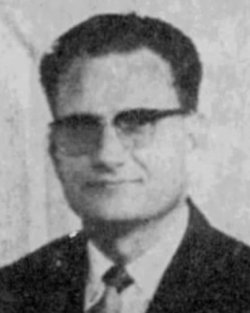
W.E. Best

#55 Justification - The Assurance

Romans 5:1-5
W.E. Best July, 1 1973 Audio
0 Comments
Remastered Oct/Nov 2024
Bro. Best's books in pdf can be downloaded from Spring Assembly of Christ website @ http://springassemblyofchrist.org/uimages/bg1.gif

Sermon Transcript

Auto-generated transcript • May contain errors

100%
Romans chapter 5. We're going
to continue our study of Romans 5 tonight rather than going back
to Romans 4. We'll be dealing with the subject
of imputation in our continuation of Romans 4, so I believe I'll
just hold those messages until we are dealing not only with
the latter part of Romans 4, but also with the subject of
imputation. Since there is such a long period
of time between Sunday and Sunday, we'll just continue where we
left off this morning. We'll be dealing with the third
point that we gave in the outline this morning, but we did not
have time to get into the study of the third point of our study of verses 1 through
5. Let us read once again verses 1 through 5, and I will emphasize
as we're reading these verses what we sought to emphasize this
morning, and then you'll notice I'm not going to read either
verse 1 as it is in your King James Version, neither will I
read verse 5 as it is in your King James Version. Therefore being justified by
faith are better still. Having therefore been justified
by faith, We have peace with God through our Lord Jesus Christ,
by whom also we have access by faith into this grace wherein
we stand and rejoice in the hope of the glory of God. Having been
justified, we are, or we have as a result of having been justified,
the status of peace. That's in the perfect tense.
We have, as the result of having been justified, access into the
realm of grace. Finally, we have, as the result
of having been justified, a perfect standing before God. Now, verse 3. And not only so,
but we glory in tribulations, knowing that tribulation worketh
patience. And patience experience, and
experience hope. And hope maketh not ashamed. because the love of God is shed
abroad in our hearts by the Holy Spirit who was given unto us. That is the correct way of reading
the latter part of verse 5, the Holy Spirit who was given unto
us. This morning we dealt with the
first two points of the outline. As to the past, faith rests in
the justifying act of God. Number two, as to the present,
faith has access into the realm of grace wherein we have a perfect
standing before God. Now tonight we will deal with
the third point in the outline. As to the future, the believer
projects himself into the future by hope. Assurance is something
that all of us as Christians are vitally concerned about in
our study of the scriptures and in our own personal experience.
We want assurance. No person can read and study
Romans 5 and Romans 8 without having some assurance. If a person has had an experience
of grace, there is some assurance. Now, there is a difference between
faith and assurance. We'll have something to say about
that to some extent tonight, but there must be a distinction
made between faith and assurance. They are not the same. Assurance
is native to the character of salvation. It is the foundation
of Christian joy, and it is the essence of our hope in God. In our study of I Corinthians
13, We closed out our study of that chapter last Wednesday evening
by giving several things that I would like to give as an introduction
to our study of this last point tonight. Will you turn with me
briefly to 1 Corinthians chapter 13? I'm not going to give all
the things that I gave last Wednesday evening, but there are several
things and you will see the vital connection between those statements
that I shared with the folk in our closing lesson from 1 Corinthians
chapter 13. The Apostle Paul makes the statement
in the last verse of the chapter, And now bodith faith, hope, charity,
which is love, these three, but the greatest of these is charity. You have already seen in our
study thus far of Romans 5, 1 through 5, that faith Hope and love are
all found within the context of the first five verses of Romans
5. Paul makes the statement, Now
bodieth faith, hope, charity, these three, but the greatest
of these is charity, or the greatest of these is love. In bringing
our lesson to a close last Wednesday evening, and I went through this
rapidly for the simple reason that we had already gone for
almost an hour and a half, Now I want to show you the vital
connection between these three great truths, faith, hope, and
love. These are some things that I
have gathered over a long period of time from many different sources. They have been outstanding statements
as far as I am personally concerned. Recently I just put them all
together in my Bible in the order in which I am now going to give
them to you. When we think about faith, justified
by faith, when we think about hope, when we think about love,
now let's put it all together in this framework. It has been
said, quote, faith holds on to what is. I like that very much. Faith holds on to what is. Hope
leaps out to what shall be. We're now dealing with the third
point in our lesson from Romans chapter five. We're spending
most of our time now discussing faith and hope. Faith sees, hope
foresees. Faith realizes, hope idolizes. Faith inspects, hope expects. Faith is quiet in possession,
hope trembles in expectation of what? In expectation, of course,
of the coming again of the Lord Jesus Christ. Faith is the believer's
logic, hope is the believer's rhetoric. Faith's object is the
divine logos, the infallible promise of God. Hope's object is the person promised. Faith looks to the word of the
promiser. Hope looks to the promiser of
the word. Faith is in reaching. Hope is
out looking. By faith I stand. By hope I soar. Those, beloved, are tremendous
statements that we have sought to correlate and put in the margin
of our Bible. And you can see the vital connection.
that those statements have with our study of Romans 5, 1 through
5. We are, however, dealing with
hope tonight. We are dealing with now the future
of the believer's expectation. A person can have salvation.
without having full assurance, notice how I stated that, without
having full assurance. But if he does not possess full
assurance of faith or the full assurance of hope, and these
are biblical expressions, he misses the joy of hope in the
present. I said he misses the joy of hope
in the present. Distinction, however, must be
made between faith and assurance. Some time back, I brought a message
on the subject of faith and assurance. I would like to give a few statements
from that outline at this particular point in our study tonight. When we speak of faith giving
assurance, one has said, we're not saying that this assurance
is never affected by doubt. When we speak of faith that gives
certainty of relationship, we're not talking about a security
in which anxiety never sails. That's a great statement. Believers
have a perpetual struggle with their own distrust, and that's
why we find the disciples often talking about their lack of faith,
the perfection of their faith, the maturity of their faith. No person can be assured of his
own salvation, this is another statement, by simply believing
what is objectively contained in the scriptures. Now let's
pause long enough for that to soak in. We have been talking
about objective faith. We have been talking about subjective
faith. This morning we made the statement
at the closing of our message that justifying faith, it does
begin with understanding it receives And it keeps justifying faith,
beginning with understanding, passes into conviction, and conviction
passes into assurance. And all of these things are true,
and yet we must not overlook this. This faith is not believing
or having faith in one's faith. This faith is not having faith
even in objective truth, but it is having faith in Jesus Christ,
the object of objective truth. the object of objective truth. So the person was correct when
he said no person can be assured of his salvation by simply believing
what is objectively contained in the scriptures. And then he
made this observation, there must be a subjective experience
of objective truth. What a tremendous statement.
a subjective knowledge of I believe apart from the Holy Spirit to
mediate the objective and subjective elements to the conscience will
not give one assurance." That is a tremendous statement. Now
in order to distinguish between faith and assurance, faith and
assurance are not the same thing. One has said faith is the root,
assurance is the fruit. Again, faith is the poor woman
touching the hem of the garment of Jesus Christ, Mark 5.25. Assurance
is Peter and John saying, we cannot but speak the things which
we have seen and heard. Faith is the penitent thief crying,
Lord, remember me. Luke 23, 42. Assurance is Job
sitting in the dust saying, I know that my Redeemer liveth. Faith
is Peter's drowning cry, Lord, save me or I perish. Assurance
is that same Peter speaking boldly for Christ on the day of Pentecost. Faith is anxious, trembling. The anxious, trembling voice
says, Lord, I believe. Help thou mine unbelief. Assurance
is Paul's confident challenge in the last part of Romans chapter
8. That's making the proper distinction
between faith and assurance. We grow in assurance and even
our faith is increased as we grow in faith and in the knowledge
of God's infallible word. I stated this morning and I want
to emphasize it again, faith rests in no more than it receives
from the word of God. So we're talking about assurance,
and Paul was concerned about assurance. Having been justified
by faith, we have peace with God, and we have access by faith
into this realm of grace wherein we stand, have a perfect standing
before God. Now the Christian hope is threefold. Paul's talking about hope, and
this is the third point in our outline. But there is a threefold
hope. Let's look at this threefold
hope for a moment. There is, first of all, the future hope
of the kingdom. The future hope of the kingdom.
Look with me again now at verses 3 through 5. Not only so, he
had already spoken about in the hope of the glory of God in the
last part of verse 2. And then he states, and not only
so, but with glory and tribulations also, Knowing that tribulation
worketh patience, and patience experience, and experience hope,
and this hope does not make one ashamed. Why? Because the love
of God has been shed abroad in his heart by the Holy Spirit
who has been given to him. So there is the future hope of
the kingdom. The word glory in the latter
part of verse 2 sometimes denotes the splendor with which God clothes
himself. That's why we find throughout
the Old Testament, and especially in the prophecy of Ezekiel, the
statement about the glory of God. Sometimes the word glory
refers to the sublime display of the attributes of God, and
sometimes we have the combined display of the perfections of
the Godhead as in our text. So the display of this glory
is reserved for the future, reserved for the time when Jesus Christ
shall come in power and great glory, when he shall establish
his kingdom, and when the glory of God shall cover the earth
as the waters cover the sea. So there is the future hope of
the kingdom. Secondly, there is the intermediate
hope Now what do you mean by intermediate hope? The intermediate
hope of our position in Jesus Christ between the time of death
and the coming of Jesus Christ when we shall be raised and our
bodies will be fashioned like unto the glorified body of our
blessed Savior, the Lord Jesus. So this is the intermediate hope.
You and I have this hope. We have this hope. We know what's
going to take place. We know that though the outward
man perishes, and it is going to really perish someday, it
is going to go back to the dust of the earth. But though we depart
from this body, yet we shall ever be present with the Lord
Jesus Christ. That's called the intermediate
hope, the intermediate hope. Then finally there is the present
hope. the present hope. There is our
present hope concerning the things that may befall us, notice what
I said, that may befall us while we are here in this world. So the present hope concerns
the things which we encounter during the time that we are either
waiting for death or waiting for the coming of Jesus Christ
to receive us unto himself. Now this hope, Paul says, does
not make the recipient of grace ashamed. ashamed. I'm going to
discuss that more later. I'm not going to take as much
time with that praise tonight as I would like because we should
spend one entire message on the hope that make it not ashamed. Such present hope enables us
to rejoice in our tribulations. Regardless of what our tribulations
are, we rejoice. Habakkuk was able to do that,
even though there was no grain in the barn, there was no fruit
in the orchard, there was no grain in the fields. There was
no meat in the stalls. And this is what you will find
in the third chapter of Habakkuk and coming to the last verses
of that chapter. Yet Habakkuk could rejoice in God. Why? Because he had a hope that
was based, notice what I'm saying, that was based on what? Justifying faith. Now hope is
not the wish for something blindly. There are individuals who talk
about hope, but they don't have any basis for their hope. That's
just like an individual talking about his faith, but there is
no basis or foundation for his faith. So hope is not to wish
or blindly expect something. It is the perseverance of faith. That's the best definition I
can give of hope in just a few words. What is it? It is the
perseverance of faith. So we have hope and this hope
does not make us ashamed. The effect of justification is
assurance. When we look at these first five
verses of Romans 5, the subject of assurance jumps out at us,
and it ought to. So the effect of justification
is assurance, first of all, as to the past. It is assurance,
secondly, as to the present. It is assurance as to the future. Now let's review those three
things for a moment. You know, I said this morning,
When we think about access into the realm of grace, we have the
introducer, we have the introduced, and we have the introduction.
Those are three important statements. Now we're looking at the assurance
of justifying faith, and the assurance of justifying faith
has to do not only with the past, but the present as well as the
future. As to the past, what? We are
perfectly satisfied with the finished work of Jesus Christ.
We know according to the testimony of God that the Father is satisfied
with the work of His Son. And since the Father is satisfied
with the work of His Son, we are receiving the testimony of
God. and he has become a subjective
experience with us. We have believed the record that
God has given of his son, 1 John 5, verses 11 through 13. I'd
like you to turn to that portion. 1 John chapter 5, and let's begin
really with the 10th verse of that chapter and read through
the 13th. After all, the first epistle
of John was written to give assurance to the children of God. Someone
has said, and rightly so, that the gospel of John was written
for the purpose of showing the way of salvation The epistle
of John has been given to us in order that we might know that
we have passed from death into everlasting life. Now beginning
with verse 10 of the fifth chapter. He that believeth on the Son
of God hath a witness in himself. That's a present possession.
He that believeth not, God hath made him a liar. Why? Because he believeth not the
record that God gave of his Son. And this is the record. What
is it? Number one, that God hath given
to us what? Eternal life. And this life is
in whom? In his Son. He that hath the
Son hath life, and he that hath not the Son of God hath not life. These things have I written unto
you that believe on the name of the Son of God that you may
know that you have eternal life and that you may believe on the
name of the Son of God. I'm talking about assurance as
to the past. We have assurance. It comes to
us through the testimony of God. And it has become a subjective
experience with every person who is saved by God's grace.
Now there is assurance as to the present. All of us have encountered problems.
All of us have been tested at some time or other. Therefore,
we have already experienced in our Christian lives what Paul means when he says,
that tribulation worketh patience, and patience experience, and
experience hope, and hope does not make one ashamed. Why? Because the love of God has been
shed abroad in his heart by the Holy Spirit who was given to
him. The trials which we have encountered
have not turned us from the Lord. They have made us turn to the
Lord. Any time a trial turns a person
from the Lord, it is because he does not possess justifying
faith. Thus, all you have to do is go
back and study those four Saul's once again that we made reference
to briefly last Sunday. The first, the wayside here,
does not represent one who has or possesses justifying faith. The stony ground here does not
represent one who possesses justifying faith. The thorny ground here
does not represent one who possesses justifying faith. The seed did
not fall into prepared soil. And the prepared soil was done
not by the word of God. Now let's think about that for
a moment. We're told today by many that a person is regenerated
not only by the Spirit of God but also by the Word that is
the sword of the Spirit. Now wait just a minute. That
will not stand the test of Scripture. I maintain that regeneration
is the preparation of the heart by the Sovereign Spirit and that
apart from the Word of God. Our Lord interprets his own parable
in Matthew 13 when he talks about going forth and sowing the seed.
The seed does represent the word of God, but let me raise a question.
All of us who are familiar with gardening or farming to some
extent, all of us know that the seed does not prepare the soil. It would be very foolish for
the farmer to go out in the springtime and he says to himself, well,
I'm going to plant ten acres of corn today. Without any preparation
of soil, he just takes his plant and he goes out there and the
seed is dropped on the hard, unprepared soil. I assure you
that the birds will have a feast. They will have a feast, won't
they? And that's exactly what takes place when the Word of
God falls upon an unprepared heart. The Lord interprets it. So the seed does not prepare
the soul. The seed does not prepare the
soul for the reception. The preparation of the soul is
done and it is done before the sowing of the seed. And so the
preparation of one's heart is done by the Spirit of God before
the sowing of the seed. Would it be simple or would it?
We have to be careful about that word simple. But you know it's a lot safer
to believe the record, isn't it? And not try to read into
or put something into the scriptures that just things that aren't
there. So we're talking about present
assurance. Present assurance. And every
person who has passed from death into life has present assurance. There is a subjective experience.
The Spirit of God is bearing witness with His Spirit. The Word of God is bearing witness
with the understanding of the individual. And so the objective truth has
become a subjective experience. So there is present assurance.
Now, there is not full assurance at the beginning. Beloved, I
have more assurance tonight than I had a month ago. I have more
assurance today than I had 10 years ago. I have much more assurance
now than I had 25 years ago. So you see, faith only rests in
what it receives from the Word. The more we know, the greater
our assurance. The more we know, the stronger
is our faith. This is what I keep emphasizing.
And I know it by experience and so do you. I just bubble over sometimes
in my study. I made the statement to my wife
last week, I wished it were possible. Will you follow me now? I wished
it were possible for me to have the same feeling sometimes when
I stand before you that I have when I really get into the study
of God's Word in private. All of you know what I'm talking
about. As you read the scriptures, sometimes you become just so
involved as you read and as you study, and your heart just bubbles
over. Don't you wish you could have
that same feeling? What a contribution. You know,
if all of us could have the feeling that we oftentimes have when
we're studying the scriptures, if we could all have that same
feeling when we come to the worship service, We would really be caught
up into the third heaven, wouldn't we? You know what I'm talking
about? So assurance grows. That's why
the Bible speaks of full assurance. Full assurance of faith, full
assurance of faith. But there is a present aspect
of assurance. The testimony of God is bearing
witness with my testimony. I'm able to understand because
of the Holy Spirit within me. Now, there is also assurance
as to the future. I like to use Abraham as an illustration
here. Abraham believed God and it was
counted a reckon unto him for righteousness. What was reckoned
unto him for righteousness? Not his faith, but the seed. And the seed refers to none other
than Jesus Christ. Galatians 3 verse 16. Now to
Abraham, the promise was future. Jesus Christ had not come. Jesus
Christ had not died. Abraham saw the day of Christ
and rejoiced. It was all by faith. But he didn't
stagger at the promise of God through unbelief. He was strong
in faith, giving glory to God, believing that what God had promised
he was capable of performing. Now that was Abraham's faith. We all have the same faith. Maybe not to the same degree
because Abraham was the father of the faithful. But we all have
this faith, which is the gift of God. So as Abraham looked
forward, it was future to him. You and I look back. We look
back to what took place 2,000 years ago. God fulfilled his
promise in sending the seed. Will you turn with me for a moment
for an illustration of something that I want to get into more
with you later? Will you go to the 52nd chapter of the prophecy
according to Isaiah? I want to just mention something
that I got into recently. I've been in it before, but I
see some things in it now that I have not seen in the past.
You know, really the 53rd chapter of Isaiah should not begin with
the first verse of the 53rd chapter. Isaiah 53 ought to begin with
the 13th verse of the 52nd chapter. That's where the subject ought
to start. I'll show you why. Let's begin with verse 13 of
chapter 52, and I want to point out a few things of great interest.
Behold my servant. Behold my servant. Now this is
a prophecy, a prophecy given to Isaiah of the coming of Jesus
Christ. Did you know that we have in
verses 13 through 15, not only the first advent of Jesus Christ,
but his second advent set forth in these verses? All right, listen.
Behold, my servant. In order to understand the statement,
my servant, one would have to go into the hypostatic union.
This involves the hypostatic union, the two natures, divine
and human, united in the one person, Jesus Christ. Behold,
my servant shall deal prudently. He shall be, now three things
are given here, number one, exalted, number two, extolled, and number
three, very high. Do you know what we have here?
We have not only the resurrection of Jesus Christ in the word exalted,
we have the ascension of Jesus Christ in being extolled and
we have him sitting at the right hand of the Father making intercession
for us in the statement very high. Now this is all the result of
the first advent of Jesus Christ. Now verse 14, as many were astonished
And that means shocked. The Hebrew word that has been
translated by those who have given us the King James Version,
astounded, it literally means shocked. Now notice the description
that is given in all of this before we get to the 53rd chapter
of Isaiah. As many were astounded at thee,
his visage, and that means his face. The face of whom? The face of the servant. Behold,
my servant, the face of Jesus Christ was so marred, more than
any man. What is the Lord saying through
the prophet Isaiah, even before the beginning of the 53rd chapter,
that describes so vividly the sufferings of Jesus Christ? His face was so marred, more
than any man, and his form, or his body, more than the sons
of men. Now, when were people so shocked? They were shocked when they looked
upon Jesus Christ as he was mistreated by men when he came the first
time. Think about the thorn, the crown
of thorns. People spat upon him. They beat
him. He was whipped. His sufferings are displayed
here. And this has reference to what? His first advent. So the word astonished or shocked. Now look at verse 15. So shall
he spring up. Now, beloved, the word sprinkle
doesn't refer to people sprinkling babies. The word sprinkle here
literally means stardom. Now, when are people going to
be stardom? They're not going to be stardom
when Jesus Christ comes the second time by his face being marred
more than that of any man. his body that reflects the bruises
that have been inflicted upon him by evil men. That's not what
he's talking about. So he says in verse 15, so shall
he startle many nations. And the word nations literally
refers to the Gentiles. So the nations of the world,
the Gentiles if you please, those who are not Jews, will be startled
by what they see. They'll not be startled by the
suffering Savior. They'll not be startled by His
visage being so marred by men or His body being mutilated by
the lashes of men. But the world, if you please,
will be startled when they look upon Jesus Christ in all of His
glory. Oh, He's already And you see,
we have the assurance of that. I'm talking about present assurance.
He's already come. He has already died. He has already
come forth from the grave. He has already ascended. And
where is he today? He is sitting at the right hand
of the Father. Thus, we have in this exaltation, in his being
extolled and his very high, all of this is the fruit of his first
advent. And what shall take place In
verse 15 is what will take place when he comes in all of his glory
and the nations of the world will be startled by his what? By his beauty, by his splendor. King of kings and Lord of lords. I'm looking forward to that time.
So there is assurance, there is assurance presently for every
believer. We know that he's come. We know
that he has suffered. And when he comes a second time,
he will not come as the suffering Savior. He will not come as the
suffering servant. He will come as the reigning
king, at which time the nations of the world will be startled
by his beauty and by his majesty. That's my hope. That's my hope. That's the hope of every Christian.
So the effect of justification is assurance as to the past,
as to the present, and as to the future. Now let's look at
verses 3 through 5. There are visible aspects of
rejoicing of the justified. I said there are visible aspects. of the rejoicing of the justified. Verses three through five. First
of all, justification by faith gives peace, but it does not
give patience. It does not give patience. Did
you notice what I said? Patience comes only in the experience
of life. That's the only way that patience
comes to you and it comes through the experience of life. So the
Lord not only gives us peace, but he also gives us tribulation
for the reason that tribulations work patience and patience experience. Now let's look at each one of
these because there are some tremendous things set forth in
verses three through five. Under the title, visible aspects
of the rejoicing of the justified. The justified, first of all,
glory in tribulations. One has said, quote, in the economy
of God, tribulations as well as justification is included
for his people. Will you take down these references?
We do not have time tonight. to look at them, but there are
a number of references I want you to look up later. Romans
8.35-39. 1 Corinthians 4.9-13. 2 Corinthians
1.4-10. Now let me go back, but I want to give these slowly.
Romans 8.35-39. 1 Corinthians 4, 9-13, 2 Corinthians
1, 4-10, the 11th chapter of 2 Corinthians, verses 23-30,
the 12th chapter of 2 Corinthians, verses 7-10, then 2 Timothy 3,
verse 11, verses 11 and 12. Finally, 2 Timothy 4, verses
14 through 16, those passages will be a blessing to you in
connection with the statement, in the economy of God, tribulations
as well as justification. Tribulations are included for
God's people. In the study of this particular
statement, tribulation worketh patience, I came across something
very interesting. The Latin word for tribulation
means or it refers to the threshing instrument for the separation
of grain from the husks. That's why the Lord gives us
tribulation. It's necessary that our faith
be tried. And when faith has been tried,
what happens? It comes forth purer than before
the experience through which it has gone in being tested. So the Latin word for tribulation
literally refers to the threshing instrument for the separation
of grain from the husk. There is not a Christian who
does not have a lot of husk from which he should be separated.
And the more we are tried by these experiences, the more the
husks are removed. Then we notice, number two, tribulations
produce a threefold effect. Now what is the threefold effect? Let's look at the threefold effect.
First of all, tribulations produce, number one, patience. Patience. Patience is more than gentle
meekness. I said it's more than gentle
meekness. Tribulations give the believer
endurance. Tribulations give the believer
endurance. The more things you experience,
the greater your endurance becomes. That's easily understood. And then we find that patience
produces experience. Actually, the word experience
could be translated proof. And I like this. I really like
this. Tribulations work patience, and
then what? Patience produces experience
or proof. Proof. In other words, experience
denotes strength that has proven itself. Strength must prove itself. That's why, beloved, that we
believe that Christians ought to prove themselves. Nothing
wrong with that. People are to prove themselves.
This is the teaching of scripture. So experience the note strength
that has proven itself. This is demonstrated in what? In the ripeness of character. In the ripeness of character. You know, I looked upon elderly
people, elderly Christians when I was young, different from the
way many elderly people are looked upon today. I was telling some
of the people this last Wednesday evening that while Juanita and
I were in school, it was my privilege to work with a man who had been
preaching at that time almost 60 years. He was nearly 80 years
of age. In fact, he turned 80 while I
was working with him. He was still pastoring a little
church. out in the outskirts of Fort Worth. He and his wife
would come by every Sunday morning because we didn't have a car.
We'd ride out with him and his wife, and always some family
in the church because we didn't go back to Fort Worth. We stayed
out there for the day, and the people wanted us to. It was a
small church. They ran about, oh, 50 or 60 or 70 somewhere
in attendance. The name of it was Lake Worth
Baptist Church, a little independent Baptist church. And this man
was a great help to me. He was very strict and he put
me on the spot. He embarrassed me repeatedly,
but that was good for me. I thought enough of him with
all of the embarrassment that he had caused me because almost
every time I got through preaching on the way back he picked it
to pieces. He said, I'm not doing this just to get you angry. And he said, I don't think it'll
make you angry. He said, I'm doing this to help you. And he'd point
out something. He said, now, really, had you
really thought through that particular point that you made? And sure
enough, I hadn't. You know, it sounded real good
on the surface. And many times I'd make statements.
He'd say, now, you think that through more. I thought enough
of him. I thought enough of his ailing.
I had enough confidence in him that before he passed away I
had him to come and spend three days and three nights and he
was very, very feeble. At that time I think he was about
83 or 84. And I spent three days and three
nights with very little sleep asking him questions. And he
gave me a lot of help. For years I had the notebook
and I kept it until I finally got all those good things that
he gave me. translated, you know, and transferred
from those notes into my Bible someplace. But I wrote just as
hard as I could for about 14, 15, or 16 hours a day. I'd ask him questions, and finally
he came to the point, he said, I think I need to ask you a few.
And I knew that was going to be embarrassing, and sure enough
it was. He started asking me questions.
He said, now what would you do if you were asked this question?
I told him, I said, I want you to share with me all the problems
that you can think of and all the difficult things that you
can think of that you encountered all your ministry. I said, I
know I'm asking a lot, but I want you to share it with me. He did. He asked me a question. I wouldn't
know what in the world to do with it. Then he'd laugh, you
know, he'd smile. He said, well, let's look at it like this. Oh,
I was taking down notes. as fast as I could. But you see,
that was good. That was good for me. Now, I looked upon him as possessing
what? Rightness of character. That's
the point I'm making. rightness of character. I said
to myself, if there ever was a person who ought to demonstrate
the rightness of character, a man who has been preaching for, and
he still preached once in a while, even in 83 and 84, he ought to demonstrate the rightness
of character. That's what it means. Patience
produces experience. and experience the no strength
that has proven itself, and this is demonstrated by the ripeness
of character. Isn't this what we want to manifest
as we grow older? Don't we want to manifest the
ripeness of character? I do, but I'll tell you what,
When I look into the Word of God and then I see myself in
the mirror of God's Word, I do not see reflected the ripeness
of character that I desire. And I think that you say the
same. Now let's go a step further. So we
have, first of all, tribulations produce patience, and patience
produces experience or proof. Now the third, an experience
which is a provedness, gives hope, gives hope. Now this is the rightness of
hope. Marian is the consciousness of
a proven test. Tribulations do not defeat the
believer. It doesn't make any difference
what the tribulations are. They do not defeat the believer. I want to emphasize that. Let's
look at that in the light of this passage. This will be helpful. Assurance transcends trouble. Oh, I like that. When one really
has assurance, his assurance transcends his trouble, regardless
of what the trouble might be. Let's go a step further. Therefore,
as one has said, the assurance of eternity transcends the storms
of time. A great statement. There are
plenty of storms today, and the clouds are hanging very low.
But the assurance of eternity transcends the storms of time. You know, there was a song that
I haven't heard in years, but I can remember the man under
whose ministry my wife and I made professions of faith. He was
not only a pretty good speaker, but he was an excellent singer.
In fact, he was a better singer than he was a preacher. And one
of his favorite songs was, and I've heard him sing it a number
of times. In fact, he liked to, you know, be preaching, and then
when things weren't going just right, he'd have his wife, his
wife was a pianist, and she was always sitting right close, and
right at the end of the sermon, maybe things were not going just
as he would like them to go, and he said to himself, well,
I'll get the people, if I can't get them with the preaching the
word, I'll get them with this song. And so he'd start singing. But the song is entitled, Stand
By Me. Some of you have heard it. How many of you have ever
heard that song, Stand By Me? It's a great song. When the storms
of life are raging, stand by me. When I'm growing old and feeble,
stand by me. When people misunderstand me,
stand by me. Some great statements in the
song. So, tribulations. Do not defeat the believer. Assurance
transcends trouble. The assurance of eternity transcends
the storms of time. God has a purpose in human suffering. You and I know that sufferings
vary in the lives of God's people. Some are corrected, Some are
constructive and some are exemplary. They're not all because of personal
sin, but all sufferings are caused by original sin. Now, it's very important to make that
distinction. I said they're not all caused by personal sin, But
all sufferings are caused by original sin. Now notice when we come to the
fifth verse. The gift of the Holy Spirit, according to Paul,
is the reason why hope is secure. The assurance of salvation will
never shame the believer. The love of God that is referred
to in this particular verse does not refer to our love to God,
but his love to us. That love which has been shed
abroad in our hearts by the Holy Spirit who has been given. Notice it is something that is
a completed transaction. God's love is not naturally revealed
to man. It has been said that since God
is love, the beams of love always shine, although the clouds of
sin obscure its rays. Now, there are three things in
closing. The source of this love is God. Hope is the inevitable result
of this love. The Holy Spirit is the means
of God's love coming and abiding in the heart of man. Therefore, as we look at the
last part of the fifth verse, the love of God has been shed
abroad. in our hearts by the Holy Spirit
who has been given to us. The source is God, the result
is love, and the means, the Holy Spirit of God. And this hope
maketh us not ashamed. If a person talks about hope
without any basis for hope, I assure you that he will be brought to
shame. The religionist who oversimplifies
certain aspects of truth to the neglect of other aspects equally
important. And as all Harris's thrive on
fragments, And a person builds his hope, for instance, on his
faith, I assure you that he's going to be brought to shame. The person who thinks that his
faith is the ground of his righteousness will ultimately be brought to
shame. But the person who has been justified
by faith faith that looks outside of oneself and embraces and rests
in Jesus Christ, the righteousness of God, I assure you that such
hope will never be brought to shame. What you and I possess now will be perfected in glory. Can't you see why the person
stressed these points? Faith holds on to what is, hope
leaps out to what should be. Faith sees, hope foresees. Faith realizes, hope idolizes. But I've left out one thing,
and I've kept it for this point, love. You talk about faith and
hope, what about love? Love is the greatest, Paul said
in 1 Corinthians 13. Why? Because the time is going
to come when there will be no need for faith. When you and
I stand in the presence of Jesus Christ, there will be no need
for faith. We will not hope then because
hope will already be brought to fruition. But love will abide forever. Thus faith is important, it's
one of the gifts. Hope is also important, it too
is the gift of God. But love is the greatest by reason,
first of all, of its dignity, by reason of its age, by reason
of its strength. And then I close with this remark.
Faith is in reaching, hope is out looking, love is in being. By faith I stand, by hope I soar,
but by faith, what? No, by love I am. Faith assures
me, hope inspires me, and love is me at my best. And now abiding, faith, hope,
and charity, these three, but the greatest of these is charity
or love. What have we seen in these first
five verses? And there are some things that we're going to discuss
within the context of these verses later. Assurance as to the past,
assurance as to the present, assurance as to the future. Paul
has discussed the foundation of justifying faith. He's given
an illustration of justifying faith. And now he concludes his
discourse on justifying faith. by showing what takes place experientially
in the heart of the person who has embraced and who rests in
Jesus Christ.
W.E. Best
About W.E. Best
Wilbern Elias Best (1919-2007) was a preacher and writer of Gospel material. He wrote 25 books and pamphlets comprised of sermons he preached to his congregation. These books were distributed in English and Spanish around the world from 1970 to 2018 at no cost via the W.E. Best Book Missionary Trust.

Comments

0 / 2000 characters
Comments are moderated before appearing.

Be the first to comment!

Joshua

Joshua

Shall we play a game? Ask me about articles, sermons, or theology from our library. I can also help you navigate the site.