Bootstrap
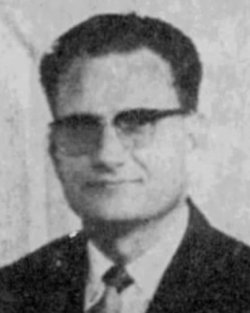
W.E. Best

#59 Imputation - Adam's Sin to All of Adam's Posterity

Romans 5:12-21
W.E. Best July, 1 1973 Audio
0 Comments
Remastered Oct/Nov 2024

Sermon Transcript

Auto-generated transcript • May contain errors

100%
Once again, as our scripture
reading, let me go through the part of the outline that I've
already given to you because many of you are taking down some
notes and you have expressed your appreciation for the outline
which we're giving, which makes it easier for you to follow in
the study of this, what I would call a very deep but important
subject. You remember when we began studying
imputation a few weeks ago that I gave first of all the definition
of imputation. We spent one entire message discussing
or defining imputation. And then in the next message
we began outlining the subject of imputation. Since we're going
to deal with the three major imputations Number one, the imputation
of original sin to all of Adam's posterity. That's number one. Number two, the imputation of
our sins to the Lord Jesus Christ. And finally, the imputation of
Christ's righteousness to us. Those are the three major imputations. Now, under the first major heading,
Roman numeral one, we began discussing The first major point, the Adamic
sin is imputed to the human race. That's point number one. The
Adamic sin is imputed to the human race. Now, under that we
have only dealt with capital A, with several subheadings. I'm not going to give you a lot
of the subheadings. I'm only going to give to you
the outstanding subheadings. Let me review them by just mentioning
them in order that you can look at your notes and see where we
are tonight. Capital A, original sin, is immediately, immediately
imputed to Adam's posterity. Now under this, we have already
discussed several points, and we will number them 1, 2, 3,
4, and 5. Number 1 under Capital A, immediate imputation takes place
immediately and is not mediated by hereditary corruption. Immediate imputation takes place
immediately and is not mediated by hereditary corruption. That's
number one. Now you remember the things that
we said under that. Number two, the first sin of
every man must have been committed either in Adam, in the womb,
or in infancy. Number three, our involvement
in Adam's sin must not be construed as actual voluntary participation
or the transfer of moral character. And then number four, Under number
four, in our last message, well next to the last message, because
in the last message we gave a brief summary of the entire passage
of Romans 5, 12 through 21. I felt that we needed to become
better acquainted with those verses before we began our outline. But point number four, we dealt
with four major oppositions to immediate imputation. In other
words, we dealt with the Arminian view and other views of persons
who are opposed to immediate imputation. That brought us to
Capital B. Now, when I mentioned this point,
I said it is time for us now to just pause long enough to
drive down a peg before we continue our outline and go back and kind
of give a running interpretation of Romans 5, 12 through 21. We
must become better acquainted with that section of Scripture
before we continue with our outline of those verses. So, capital
B, we will be dealing minutely. with Romans 5, 12-21. So capital
B, Romans 5, 12-21 is the great passage on immediate imputation. It is the great passage on immediate
imputation. Now that's where we'll continue
tonight. Now let's go back, if you will
please, and read once again Romans 5, 12-21. You can never become
too familiar with this section of Scripture. About the time
you think that you have learned something about this passage
of Scripture, you will find out that you do not know what you
ought to know about this great doctrinal section of the Book
of Romans. Wherefore, as by one man sin
entered into the world, and death by sin, and so death passed upon
all men, for that all have sin. For until the law, sin was in
the world, but sin is not imputed when there is no law. Nevertheless,
death reigned from Adam to Moses, even over them that had not sinned
after the similitude of Adam's transgression, who is the figure
of him that was to come. But not as the offense, so also
is the free gift. For if through the offense of
one many be dead, much more the grace of God and the gift by
grace which is by one man, Jesus Christ, hath abounded unto many. And not as it was by one that
sin, so is the gift. For if the judgment was by one
to condemnation, but the free gift is of many offenses unto
justification. For if by one man's offense death
reigned by one, much more they which receive abundance of grace
and of the gift of righteousness shall reign in life by one, Jesus
Christ. Therefore, as by the offense
of one judgment came upon all men to condemnation, even so
by the righteousness of one the free gift came upon all men unto
justification of life. For as by one man's disobedience
many were made sinners, so by the obedience of one shall many
be made righteous. Moreover, the law entered that
the offense might abound, but where sin abounded, grace did
much more abound, that as sin hath reigned unto death, even
so my grace reign through righteousness unto eternal life by Jesus Christ
our Lord. Many have said that this section
of scripture is as deep in doctrinal content as any section in the
entire word of God. I am in agreement with that statement.
Now for our outline, capital B, Romans 5, 12 through 21. is the great passage on the subject
of immediate imputation. Those of you who are visiting
with us and have not entered into our previous discussions,
you will not be without an explanation before we get through tonight
of not only immediate but immediate, as well as real and judicial
imputation. I would say that the first point
under B should consist of some of the outstanding things that
are brought out within the context of the entire passage beginning
with verse 12 and going through verse 21. Let me mention some
of these things for your notes. Preceding Romans 5.12. we have the subject of justification
by faith. It is, as you know, the subject
of justification which we have been studying now for several
months, and it will be brought to a completion immediately after
we have finished our study of imputation. So, preceding this
passage, Romans 5, 12 through 21, we have the subject of justification
by faith. Following this passage, beginning
with Romans 6 verse 1 through the last verse of chapter 8,
we have the subject of sanctification. So this section of scripture
which we are studying at the present time, and as I've already
stated, the subject of immediate imputation is dealt with in these
verses. It is preceded by justification
and is followed by sanctification. That is important. You can see
now the setting of this passage of Scripture. Because of the
setting, we see the importance of having an understanding of
this section of Scripture. I do not believe that one can
understand justification as he ought without some understanding
of these verses, which we are now studying. I do not believe
that he is prepared for the study of sanctification. without some
understanding of these verses, 12 through 21. The word wherefore
in Romans 5 verse 12 is the connecting word between the subject of sanctification
and the beginning of Paul's exposition of imputation. Wherefore is the
connecting word, wherefore as by one man. Notice the second
word of Romans 5.12. Wherefore, as the case of justification
is by one man, Jesus Christ, and this is emphasized in this
section which we are now studying, so the case of ruin is by one
man, Adam, and of course by our complicity with Adam in his sin. So wherefore as, here we have
as and so, as and so, as the case of justification is by one
person, Jesus Christ, so the case of man's ruin is by one
man and our complicity with him and that person is Adam. The
first as denotes sin's entrance into the world. Wherefore, as
by one man sin entered into the world. Sin had already had its
manifestation in other spheres. As, for instance, we have the
fall of Lucifer. We know that this took place
even before the fall of man. It was because of the fall of
Lucifer and the sin which came into existence through Lucifer
that resulted, of course, in the fall of man. It preceded
the fall of man. The 14th chapter of Isaiah and
the 28th chapter of Ezekiel both deal with that particular subject. The first as denotes sin's entrance
into the world. Now, secondly, the second as
indicates the first in a series of contrasts. When you drop down
to verse 15, you come to the second as. The first as dealing
with sin's entrance into the world. And the second as, beginning
with verse 15, indicates the first in a series of contrasts. Ruin through Adam over against
justification through Jesus Christ. Now as we look at verses 15 through
21 for just a moment, we're not going to read them again, just
to call attention to some of the highlights of those verses.
What do we see? in just a few words. First of
all, we see two men. We see Adam and the Lord Jesus
Christ. Secondly, we see two works. Disobedience on the part of Adam,
obedience on the part of Jesus Christ. Number three, two results. Death as a result of the sin
of Adam. life as a result of the obedience
of Jesus Christ. Finally, two divisions of all
mankind, lost and saved. All in Adam are lost, those in
Jesus Christ are saved. This gives to us now a brief
summary of what we find in these verses 12 through 21 of Romans
chapter 5. So number one, under capital
B, we should observe the setting and content of the passage. I've given to you the setting
and the content. Now number two, the one initial
sin of Adam is properly styled the original sin as far as humanity
is concerned. The one initial sin, Adam's disobedience
in the Garden of Eden, is properly styled for the original sin as
far as humanity is concerned. There are two principal views
of imputation. It is necessary for us at this
point to observe these two principle views of imputation. Now, number
one, the transmitted sin nature is received immediately by generation. This view is held by a great
number of people today. When I say this view is held
by a great number of people, I must add it is held by all
Arminians. I do not hold to that view. I
do not believe that it is scriptural to hold to that particular view.
So first of all, the transmitted sin nature is received immediately
by generation. Immediate imputation, therefore,
is the theory that the inherent hereditary corruption of nature
derived from Adam is the ground or the reason why all men die. It means that all become corrupt
by generation. Do you remember the illustration
I gave a couple of weeks ago? As I used an illustration that
had been called to my attention I think it was John Murray, if
my memory is serving me correctly. Since I mentioned John Murray's
name, may I suggest something to you? I have a great number
of books on the Book of Romans in my library, apart from several
commentaries on the Bible. I have a long list of single
volumes written by different Bible students. If I had to part
with all of those volumes except one, and I'm going to surprise
some of you, if I had to part with all of those single volumes
except one, I would part with every one except the one by John
Murray. I said that may surprise some
of you. It is, I believe, the best exposition of Romans, follow
me now, apart from eschatology, that one can read on Paul's epistle
to the Romans. This man has dealt with some
things that most men have not gone into at all. I have received,
and I say it without reservation, the greatest blessing, especially
on imputation, on justification, and some of the great doctrines
I have received the greatest blessing, and it may be that
I have received the greatest blessing because of, of course,
being prepared even by the study of other men. But this man has
dealt with justification and imputation in a manner more extensively
than any person I have ever read, and that's why I really appreciate
the work, and I highly recommend John Murray's work on the Book
of Romans. He had just one volume, but it
is an outstanding work. And you'll be surprised at some
of the things that he will give, especially on the subject of
imputation. Now, I stated that there are many today who hold
to the view that the sin nature, or original is transmitted to
all mankind by generation. That is called immediate imputation. I do not believe that is scriptural.
And before we even get through tonight in our study of Romans
5, 12 to 21, you'll see why I do not believe it to be scriptural.
Now, secondly, immediate imputation. Immediate imputation takes place
immediately and is not mediated by hereditary corruption. This is the view to which I hold. I believe it is scripture with
all of my heart and I came to a settled position on this about
seven or eight years ago and it was not until that time that
I really come to a settled position on the subject of imputation.
So immediate imputation takes place immediately and is not
mediated by hereditary corruption. This is the only view that will
harmonize with verses 12 through 21 of Romans as well as all the
scriptures. Now, distinction must be made
between real and judicial imputation. After I give this once again,
and I've already referred to this in the beginning of our
study of imputation. In fact, in defining imputation,
we dealt with real and judicial. But once again, I want to make
the distinction between real and judicial. After I have done
this, then I want to show you which I believe to be the correct
way of stating the doctrine of imputation. Now, first of all,
we will deal with judicial imputation. Judicial imputation is the reckoning
to one that which is not antecedently his. Now that ties in, you see,
with immediate imputation. I do not believe this is the
correct view of imputation. Therefore, I do not believe that
the Bible teaches judicial imputation from the standpoint of the imputation
of original sin to all of Adam's posterity. Now, real imputation,
real imputation is the reckoning to one that which is antecedently
his. With that statement in mind,
let us once again quote Romans 5.12. Wherefore, as by one man
sin entered into the world, and death by sin, and so death hath
passed upon all men, for in him," it literally means, we have all
sin. You see, there is a solidarity,
solidarity. with Adam in original sin. And
because of our solidarity with Adam in original sin, the correct
way of stating the doctrine of imputation is, I believe in real,
immediate imputation. I believe in real and immediate
imputation. It is real because of my complicity
with Adam in his act of sin. We're talking about solidarity
with Adam. It is immediate because it is
immediately transmitted to all of Adam's posterity because of
their complicity or solidarity with Adam in original sin. Therefore, it should be stated,
I believe in real and immediate imputation of original sin. I do not believe in judicial,
immediate imputation. Now, for the illustration I gave
the other night, and it needs to be called to our attention
once again, because it gives us a very important distinction,
we know that Canaan, for instance, the descendant of Ham, suffered
because of the sin of Ham. Even though he suffered because
of the sin of Ham, he was not condemned because of Ham's sin. Individuals today often suffer
because of the sins not only of their parents, but their grandparents,
their great-grandparents, or their forefathers. But they're
not condemned because of the sins of parents or grandparents. They're condemned because of
their solidarity with Adam in his act of sin. That's a very
important distinction. And, beloved, it will solve a
lot of problems if people are able to make that distinction.
I'm not going to take the time tonight to call the names of
some men that you might be surprised if I were to call their names.
I'm always fearful in doing this because people will think, well,
who do you think you are to call such names of great expositors
of Scripture? I am actually quoting John Murray. Murray shows wherein some of
the great men of the past have erred concerning the doctrine
of imputation. And he calls attention to this
in his exposition of the subject of imputation. He makes the statement,
any interpretation of Romans 5.12 which is not harmoniously
unfolded in verses 13 through 21 is proved by so much evidence
to be wrong. That's a good statement. Those
of you who might have his work will observe that he spends a
lot of time on this particular subject because it is of a controversial
nature. Now, let's look at the word sin.
We've come now to point three under capital B. Number one,
we observed the setting of the passage. Number two, and we have
been discussing that, the one initial sin of Adam is properly
styled the original sin so far as humanity is concerned. And
now number three, the word sin in Romans 5.12. So keep your
Bibles open to Romans 5.12. is in the arius tense, and this
is important. I checked John Murray out and
he's right. I checked several Greek lexicons
and they concur that the word sin is in the arius tense, and
I gave to you this morning the meaning of that tense in the
Greek language, a once-for-all act. In fact, the word sin according
to A.T. Robertson, John Murray, and others,
is in the ariest, active, indicative tense. Now, you may not be too
familiar with that, and you may not be too concerned about the
tense, but it is important, and I'm going to show its importance
now. Murray calls attention to this fact. He says, there is
gathered up in the tense of this one word, sin, the history of
the human race. That's a great statement. And
those of you who love to study, you'll see the significance of
that. Notice what he says, there is gathered up in the tense of
this one word, sin, the history of the whole human race. Now, he breaks that down by calling
attention to several important themes. Number one, all men sin
when Adam sinned. Number two, the penalty of death
was brought upon men by their sinning in Adam. Thus, they cannot
blame anyone else. Here we have the history of the
whole human race in this one word, sin, and the tense of the
word. You see, it's in the arius tense.
That means a once for all act. Once for all act. So here we
have the history of a whole human race. You cannot blame your sin
on someone else. You cannot blame your condemnation
on someone else. We're confronted with this every
day in today's society. Someone is wanting to blame someone
else for his crime or his nature. He blames it on his environment
or he blames it on this or he blames it on that, the training
I got or this thing or that thing. But it cannot be blamed on someone
else. Now you can see the importance
of this verb and the tense of the birth. Both one sin and all sin refer
to the same sin. I've already called attention
to this as we gave to you two weeks ago tonight a brief survey
of verses 12 through 21. We called attention to verse
12, the sin of one, And also verses 15 through 17, the sin
of one, the sin of Adam, and then reference that is made to
the sin of all. So whether you're using the statement
the sin of one or the sin of all, both statements refer to
the same act of sin, that act of sin which was committed in
the garden of Eden. So both, one sin We're taking
now this in the light of the context, and all sin referred
to the same sin. Now let's break that down. Paul
does not deal with two different facts when he makes the sin of
all the cause of the death of all. Now let's think about that for
a moment. What did I say? I'm enlarging upon the point. The statement one sin and the
statement all sin refer to the same sin. Now, in amplifying
that, I stated Paul does not deal with two different facts
when he makes the sin of all the cause of the death of all,
in Romans 5, 12. The sin of one, death, has come
upon all. Has come upon all. Now let's
go a step further. Romans 5, 12 through 19 must
be studied as a unit. Do not isolate any one verse
any more than you would isolate 1 Corinthians 12 from 1 Corinthians
chapters 12, 13 and 14. All three chapters, as we have
emphasized recently, must be studied as a unit. Therefore,
these verses, 12 through 19 of Romans 5, must be studied as
a unit. Thus, there must be solidarity
between the one and the all with the result that the sin considered
refers to the same fact. Now, number four, I didn't see
this, until I studied the work of John Murray. He called attention
to it and it's a great exposition. It cannot be refuted. The immediate conjunction, now
we're using that word immediate, the immediate conjunction used
in Romans 5, 12 through 21 proves the theory of immediate imputation. You say, well now you're going
to have to enlarge upon this. That we will do in the discussion
of point number four, under capital B. Let me give it to you again. The immediate conjunction, you
might ask the question, well what is it? We'll see in a moment.
Used in Romans 5, 12 through 21. proves the theory of immediate
imputation. Now, the immediate conjunction
is used in connection between the sin of Adam and the death
of all in verses 12, 15, and 17. And so, here it is, and so, well,
let's look at those verses 12, 15, and 17. It is rightly called the immediate
conjunction. All right, verse 12. Wherefore,
as by one man sin entered into the world, and death by sin. Here it is. And so there is the
immediate conjunction. Death passed upon all men, for
that all have sinned. Now verse 15. But not as the
offense, so also is the free gift. For if through the offense
of one many be dead, much more the grace of God, and the gift
by grace, which is by one man Jesus Christ hath abounded unto
many. Verse 17. For if by one man's
offense doth reign by one, much more they which receive abundance
of grace, and of the gift of righteousness, shall reign in
life by one Jesus Christ. Now what is the immediate conjunction?
And so, in verse 12. And the same thought is carried
on, you see, in verses 15 and 17, and that's why we made the
statement. It doesn't make any difference
whether you use the statement Adam sinned, the sin of one,
or the sin of all. Both statements refer to the
same act. And so is the immediate conjunction. Now let's enlarge upon that for
a moment. Attention is called and rightly so. The force of
and so of Romans 5.12, in the middle of the verse, is very
important. It is both coordinated and continuated,
as John Murray says. In the first two clauses of verse
12, reference is made to the sin of Adam and to the death
which is the consequence of the sin. Thus, Adam sinned and he
died. In the case of Adam, we may reject
any medium between his sin and the death which came upon him
as the consequence of his sin. the force of the immediate conjunction
and so. And so, in the last two clauses
of verse 12, establishes a parallel between the last part of the
verse with the first part of the verse. Do you see now how
one can sit down with his Bible if he's interested in studying
and spend an entire day making a word-for-word study of this
text of Scripture? Beloved, I believe this verse
merits such a study. It is a very important text of
Scripture. Why? Because in this text of
Scripture, we have the entire history of the human race. Therefore, it's important. So
the force of the immediate conjunction and so, in the last two clauses
of verse 12, establishes a parallel between the last part of the
verse with the first part of the text. As Adam sinned and
he died, so all sinned and all died. There is the same immediate
conjunction in both cases. I said there is the same immediate
conjunction in both cases. it would be just as arbitrary
to interject the thought of mediating depravity in the latter case
as it would in the case of Adam. Now do we see the importance?
Inherited depravity, therefore, is not the medium through which
death is to be contemplated as penetrating to Adam's posterity. verses 15 and 17 further establish
the point which we have made. Now, the immediate conjunction
is used between the sin of Adam and the condemnation of all mankind. This cannot be denied. And so,
that is an immediate conjunction. Close study of these verses will
show that it is the one trespass of Adam rather than the one man,
Adam. So the condemnation of all is
the trespass of all. One has said, and I quote, to
intrude the medium of inherited depravity would introduce another
factor which would violate the emphasis that it was from the
one trespass that the judgment of condemnation came upon all
mankind." End of quote. The immediate conjunction is
used between the sin of Adam and the sin of all. Thus far
we've been talking about the death of Adam and the death of
all mankind. Now let's look at it again in
another light. Here it is in the context, the same immediate
conjunction is used between the sin of Adam and the sin of all
mankind. Now connect, if you will please,
verse 19 with verse 12 and you'll see what we're talking about.
Let us now enlarge upon that point. The twofold aspect from
which the sin of Adam may be viewed is the solidarity between
Adam and his posterity. The sin of one are the sin of
all. Hereditary depravity emanates
from solidarity. Follow me now. It is a process
subsequent to the solidarity. Now I'll run that by again. You
say, well, now, preacher, Doesn't David make the statement in the
51st division of the Psalms that he was conceived in iniquity?
He was born in sin, yes. And he was right in saying that.
But now after considering that statement, let me once again
give to you this statement. I stated that hereditary depravity
emanates from solidarity. It is a process subsequent to
solidarity. In other words, we are born in
sin because of our solidarity with Adam in his sin. Do you
see the difference? Our being born in sin is the
consequence of our solidarity with Adam in his sin. This does away with this idea
that is almost universally taught, and it is universally taught
among Arminians, that the depraved nature is inherited. You see,
that will not stand the test. That will not stand the close
scrutiny of this text of scripture, which we are now investigating,
Romans 5 verse 12. immediate imputation asserts
that what is basically and logically first in constituting men sinners
is hereditary depravity and not the disobedience of the one man. Beloved, that's false. There
is a denial of our solidarity with Adam in original sin. You see, we're on some very important foundational
truths. Some people may say, well, it's
not that important. Oh, yes, it is. No individual
can have the right concept of depravity unless he understands
the very thing about which we're speaking tonight. My wife and I, as we were having
lunch this afternoon, overheard a man, he was making a statement.
He said, when man gets, first of all, a view of himself, then
he can have the proper view of God. That's putting it backwards,
beloved. May I emphasize, that's putting it backwards. I do not
believe that any individual can have a proper view or concept
of himself until he has a proper concept of God. Let's put things in the proper
order. That's exactly what we're doing here in the study of depravity. We're putting things in their
proper order. The analogy which Paul makes
in Romans 5, 12 through 19 supports the theory of immediate imputation. Let's enlarge upon that thought
for a moment. One has said, and I quote, as condemnation passes
upon all by virtue of our union with Adam, so righteousness comes
to the elect through our union with Christ. I said there is
race unity in depravity, but there is no such thing as race
unity in redemption. That's a distinction one must
ever make. Now, when you listen to most
men today over the radio or on TV, they talk about Jesus Christ
dying for the sins of all mankind, thus making it possible for all
mankind to have the privilege of either receiving or rejecting
the sacrifice of Jesus Christ. I deny that Jesus Christ tasted
death for all sins of all mankind. You say, well now, what are you
going to do about Hebrews 2.9? I'm not discussing that tonight,
but I assure you there's nothing in Hebrews 2.9 to disprove what
I've said when it is studied in the light of its context.
You see, the tragedy is people lift the verse of Scripture out
of its setting, out of its context. that always results in error,
and sometimes in something more serious than error. It results oftentimes in heresy. As it is not by immediate imputation
that we become condemned in God's sight, So it is not by immediate
imputation that believers come into possession of the righteousness
of God in justification." What a great statement. Now we have spent a lot of time
in the last few months discussing imputation as well as justification,
and justification as well as imputation. We have referred
to imputation oftentimes in the discussion of justification.
Now listen to these two again. I stated first of all that the
analogy which Paul makes in Romans 5, 12 through 19 supports the
theory of immediate imputation. And then to amplify that, as
condemnation passes upon all men by virtue of our union with
Adam, so righteousness comes to the elect through our union
with Christ. And then when we look at it from
another point of view, as it is not by immediate imputation
that we become condemned in God's sight, that is, it is not by
hereditary corruption that we become condemned in God's sight,
but it's by virtue of what? Our solidarity with Adam that
we become condemned in God's sight. You see the difference?
That's quite a difference. That's quite a difference. So
as it is not by immediate imputation that we become condemned in God's
sight, so it is not by immediate imputation that believers come
into possession of the righteousness of God in justification. And
finally, as we are not condemned by inherited depravity, so we
are not justified by imparted righteousness. the whole of Scripture
is the history of two persons, Adam and Jesus Christ. We stated that the moment Adam
sinned, God's satisfaction in him came to an end. The first
fruit of that first sin committed by Adam did not come out in Adam
personally. It will take man's complete history
to develop and exhibit it. Therefore, if blessing is brought
in from God, it must be through and in another person, Jesus
Christ. Thus, Adam must be set aside
and Jesus Christ brought in prophetically. All men are sinners in a threefold
sense. This concludes my message tonight.
They are centers, number one, by imputation, number two, by
impartation, and number three, by participation. That covers a lot of territory,
doesn't it? All men are centers in a threefold sense. Number
one, by imputation, which is real and immediate, which we've
already discussed. All men are sinners by impartation and all men are sinners by participation. All have sinned and come short
of the glory of God. Do you believe in the imputation
of original sin? Yes. It's real, not judicial. It's immediate. and not inherited. We've all sinned in that.
W.E. Best
About W.E. Best
Wilbern Elias Best (1919-2007) was a preacher and writer of Gospel material. He wrote 25 books and pamphlets comprised of sermons he preached to his congregation. These books were distributed in English and Spanish around the world from 1970 to 2018 at no cost via the W.E. Best Book Missionary Trust.

Comments

0 / 2000 characters
Comments are moderated before appearing.

Be the first to comment!

Joshua

Joshua

Shall we play a game? Ask me about articles, sermons, or theology from our library. I can also help you navigate the site.