Bootstrap
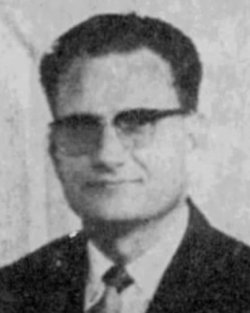
W.E. Best

#60 Imputation - The Elect's Sins to Jesus Christ

Romans 5:12-21
W.E. Best July, 1 1973 Audio
0 Comments
Remastered Oct/Nov 2024

Sermon Transcript

Auto-generated transcript • May contain errors

100%
I bow once again to the fifth
chapter of the book of Romans, Romans chapter 5. We're entering into a different
aspect of imputation this evening. For several weeks now we have
been studying the first aspect of imputation, the imputation
of original sin to all of Adam's posterity. We have spent some
three or four weeks in the discussion of this aspect of imputation. We have not spent too much time,
I assure you. Before we read the last verses
of chapter 5 once again, I want to say how thrilling it is to
me to find some of the youngest members of our church family
digging into a subject as deep as imputation and coming up with
a real clear understanding of the subject. In fact, when I
say some of the newer members of our church, I'm talking about
new Christians as well as new members of this church family.
And they have it down that the imputation of original sin is
real and immediate. To a lot of people it may seem
useless. It may seem like a lot of time
is spent in technicalities for which there is no justification.
I assure you, beloved, there is justification in getting into
the technicalities, if you want to use that term, of the subject
of imputation. No one can properly understand
the subject of how that sin is imputed from Adam to all of his
posterity unless one does spend some time getting into what is
known as the technicalities of the doctrine of imputation. Tonight as we begin the study
of the second aspect of justification, imputation, we will have to review
briefly some of the things we've already given in order to put
us in a position to understand this second aspect of imputation. We've already stated that one
cannot study justification without studying imputation in connection
with it. There is a vital connection between
the doctrines of justification and imputation. just as there
is a vital connection between justification and righteousness.
So righteousness, imputation, justification are inseparable. You cannot study one without
studying all three. Let us read beginning with the
15th verse through the 21st once again. This will be the last
time that we will be referring to this portion of Scripture,
Romans chapter 5 in connection with our subject of imputation,
that is, as far as giving a verse-by-verse or detailed study of this portion
of Scripture. But not as the offense, so also
is the free gift. For if through the offense of
one many be dead, much more the grace of God and the gift by
grace which is by one man Jesus Christ hath abounded unto many.
and not as it was by one that sinned, so is the gift. For the
judgment was by one to condemnation, but the free gift is of many
offenses unto justification. For if by one man's offense doth
reign by one, much more they which receive abundance of grace
and of the gift of righteousness shall reign in life by one, Jesus
Christ. Therefore, as by the offense
of one judgment came upon all men the condemnation, even so
by the righteousness of one the free gift came upon all men unto
justification of life. For as by one man's disobedience
many were made sinners, so by the obedience of one shall many
be made righteous. Moreover, the law entered that
the offense might abound. But where sin abounded, grace
did much more abound. That as sin hath reigned unto
death, even so my grace reign through righteousness unto eternal
life by Jesus Christ our Lord. I would like to summarize, to
begin with tonight, this portion of Scripture from Romans 5, 12
through 21. We read the verses 15 through
21, but our summary will take in verses 12 through 21. There
are seven things that I want to call to your attention, things
we have already discussed, but in giving these seven things
we will sum up the basic points of this great doctrinal section
of Scripture. I think this portion of Scripture
can be summarized in the following manner. First of all, there are
two persons, Adam and Jesus Christ. Under that statement, let us
consider, number one, the first man is of the earth earthy. We
talked about that to some extent this morning. The second man
is the Lord from heaven. 1 Corinthians 15, verse 47. Number two, in Adam all die. In Christ shall all be made alive,
1 Corinthians 15 and verse 22. Number three, all in Adam gain
what comes from union with him. All in Jesus Christ gain what
comes from him. That is from union in Christ.
So there are two persons, Adam and the Lord Jesus Christ. The
first Adam and the second Adam. Number two, there are two powers. Not only two persons, but two
powers are discussed within the context of the verses. They are
sin and righteousness. Sin hath reigned unto death.
Righteousness reigns unto eternal life through Jesus Christ our
Lord. Number three, there are two positions,
condemnation and justification. Two positions, condemnation and
justification. We're all condemned in Adam. We're justified in Christ. Number
four, there are two products, death and life. We receive what came from Adam,
death. We receive what comes from Jesus
Christ, eternal life. Thus there are two products,
death and life. Number five, there are two practices,
disobedience and obedience. Adam, the first man of the earth
earthing, was disobedient. Jesus Christ, the Lord from heaven,
was obedient to the will of the Father, thus obtaining for you
and me justification unto life. Number six, there are two principles
in this section of scripture, law and grace. Two principles, law and grace. Finally, there are two reigns,
two reigns, the reign of sin unto death and the reign of grace
through righteousness unto eternal life. I think that really summarizes
the best I know how to summarize this portion of scripture. Two
persons, Adam and Christ. Two powers, sin and righteousness. Two positions, condemnation and
justification. Two products, death and life. Two practices, disobedience and
obedience. Two principles, law and grace. And finally, two reigns, the
reign of sin unto death and the reign of grace through righteousness
unto eternal life by Jesus Christ. Let me give to you at the very
outset tonight a statement, a rhetorical statement, that is only half
truth. In the early days of my Christian
life, I was subjected to this man's works. And he has a lot
of truth. If I were to give his name to
you, you would recognize, some of you would recognize his name,
some of you would not. He is a man who embraces the
doctrines of grace. Therefore, he has a lot of truth.
On the subject of imputation, however, the man faltered. And as far as I am personally
concerned, he faltered greatly in the proper understanding and
exposition of the subject of imputation. Here is his statement. I want to quote it. I embraced
it in the early part of my Christian life because I did not know any
different. It sounded good. I could not answer it at the
time because I had not studied what I've already termed tonight
as being the technical things concerning the subject of imputation.
However, after years of study, I see there is a serious error
connected with this statement. Here it is, quote, as we were
condemned for what one man did without having a hand in it,
so are we justified by what another man has done without having a
hand in that either." End of quote. Now you can see how that
a young Christian, one who has not studied the subject of imputation
to any extent, would read that statement, and since the statement
came from the pen of a man who embraced the doctrines of grace,
One would say that sounds good. Let me read it again and see
if you can pick out what part is false and what part is true. As we were condemned for what
one man did without having a hand in it, so are we justified by what another
man has done without having a hand in that either. End of quote.
The last part of that statement is true. The first part of the
statement is not true. Now look at the first part of
the statement. One would not recognize this unless he had
studied the subject of imputation to the extent that he knew the
difference between real and judicial, immediate and mediant. When he comes to know the difference
between real and judicial, immediate and mediant, then he can see
that the first part of this statement, even though it came from a man
who embraced throughout his, the greater part of his ministerial
life, the doctrines of grace, the first part is not true. In
reality, he embraced the theory of inherited depravity. We have already proved to you
that there is something that goes back beyond what we inherit,
and that is our solidarity with Adam in original sin. We all had a part in it. So the
first part of the statement, as we were condemned for what
one man did without having a hand in it, that is not true. This
man did not believe in real, immediate imputation. He believed
he embraced inherited depravity, which will not stand the test
of scripture. according to Romans 5, 12, which
we have already studied to a great extent. Wherefore, by one man
sin entered into the world, and death by sin, and so death hath
passed upon all men. For in him, in Adam, we have
all sin. That means that imputation of
original sin is real because of our solidarity with Adam in
original sin or in his act of disobedience. Secondly, it is
immediate rather than median. In other words, it is not mediated
through generation, but it is imputed immediately because of
our solidarity with Adam in original sin. Now that's very important. And one cannot spend too much
time in studying that particular aspect of imputation because
unless he understands that, he's going to make some serious errors
when he gets a little further in the study of the subject of
imputation. Tonight we come to the second
aspect, the second great imputation, the imputation of our sins to
Jesus Christ. So Roman numeral two, if you're
using an outline form, and many of you are, and we have tried
to stay with an outline in order to make it easier for you in
taking notes. The sins of the elect, notice
what I said, the sins of the elect were imputed to Jesus Christ. You will notice I did not say
the sins of all mankind were imputed to Jesus Christ. I did not say that because the
sins of all mankind were not imputed to Jesus Christ. If all
the sins of all mankind were imputed to Jesus Christ and he
paid for them, then there isn't any need of us spending any time
here tonight. There isn't any need of us spending any time
discussing the glorious gospel of the blessed Son of God. For
if Jesus Christ paid for the sins of all mankind, then all
mankind will be saved. It is just that simple. But Jesus
Christ did not die. He did not become the substitute
for all mankind. Thus it is correct for us to
say that the sins of the elect were imputed to Jesus Christ.
And when Jesus Christ died on the cross 2,000 years ago, he
paid for those sins. He became the ransom. He became
the substitute. He became the surety. of all
those whose sins have been imputed to him. And he bore those sins
in his own body on the tree, as we're told in 1 Peter chapter
2 and verse 24. Now to follow the outline, Roman
numeral 2, the sins of the elect were imputed to Jesus Christ.
Capital a under that we're going to spend all of our time tonight
discussing this one point There would be many many subheadings
to this point capital a the imputation of our sins to Jesus Christ Does
not mean that Jesus Christ was corrupted by the infusion of
of our corrupt nature into his holy nature. Now you can see
what an important point this is. Let me repeat it again. The imputation of our sins to
Jesus Christ does not mean that Christ was corrupted by the infusion
of our corrupt nature into his holy nature. Once again, we will
see the importance of making the distinction between real
imputation and judicial imputation, between immediate imputation
and mediant imputation. I told you at the beginning of
our study of imputation that there cannot be a parallel between
the three different imputations, the imputation of original sin
to all of Adam's posterity, and the imputation of our sins to
Jesus Christ, and finally, the imputation of Christ's righteousness
to us. I said there cannot, there is
not a parallel as we're going to see at the very beginning
of the study of this major point. of our sins being imputed to
Jesus Christ. So the imputation of our sins
to Jesus Christ does not mean that the corrupt nature of man
was infused into the holy nature of our blessed Lord, the eternal
Son of God, our Savior and our Master. This is proved, first
of all, by the fact that when Jesus Christ's righteousness
is imputed to us, it does not make us as holy as
Jesus Christ is holy. Beloved, unless you are capable
of making the distinction, and we've already discussed it to
some extent in the subject of justification, The distinction
between imputed righteousness and imparted righteousness, you're
going to get yourself into serious trouble. We are justified not
by imparted righteousness, which is imperfect, but we are justified
by the imputed righteousness, which is perfect. Which is perfect. It is by the imputed, perfect
righteousness of Jesus Christ that we are justified, not by
the imparted righteousness. Now, we haven't gotten into the
imparted righteousness. That will be the third subject
which we will be discussing subsequently to what we are now discussing.
So, first of all, I said this is proof of the fact that when
Christ's righteousness is imputed to the elect. It does not make
the elect as holy as Jesus Christ is himself. Did you know there
are many individuals who even embrace the doctrines of grace
who do not have the proper understanding of 2 Peter chapter 1 verse 4?
I want you to turn with me, Will, if you will please, to 2 Peter
chapter 1. Let's look at something for a
moment. There is much misunderstanding
about this verse of Scripture. You have to see it in the light
of its entire context. Let's read beginning with verse
1. Simon Peter, a servant and an apostle of Jesus Christ, to
them that have obtained like precious faith, with us through
the righteousness of God and our Savior, Jesus Christ. Let
us settle at the very beginning of our consideration of the first
four verses of this chapter, that Peter is addressing Christian
people, those who have obtained like precious faith. You will
notice the word is obtained, not attained. obtained. You see this light precious faith
is the gift of God. Now verse 2, grace and peace
be multiplied unto you through the knowledge of God and of Jesus
our Lord. According as his divine power
hath given unto us all things. You notice now it is the divine
power of God that has given unto us who are Christians, all things
that pertain unto life and godliness. This being through the knowledge
of him that hath called us to glory and virtue. The one who
calls enables. I said the one who calls enables. That's easily understood by us
who know Jesus Christ, whom to know is life eternal. It is only
by divine power that we share the divine likeness. We are called
by Christ's glory and excellence. The promises are given through
Christ's glory and virtue are through his glory and excellence. Now we come to verse 4 and this
is the verse about which there is much misunderstanding. It'll
be interesting to you sometimes to listen to individuals on the
radio when they quote this verse and observe the application they
make of it. Wherefore or whereby are given
unto us. Now let's connect that statement
with the phrase found in verse 1. To them that have obtained
like precious faith. You need to connect that phrase
in verse one to them that have obtained like precious faith
with the statement whereby are given unto us exceeding great
and precious promises that by these ye might be partakers,
here it is now, of the divine nature. having escaped the corruption
that is in the world through lust. Let us look for a moment
or two at the word partakers. Here is the word about which
there is much controversy today. The word partakers comes from
the Greek word meaning what? Shares of a god-like nature. Do you notice what I said? shares
of a God-like nature. But we don't share the very nature
of deity. We're not little gods. Do you see the importance of
this? So the word partakers coming from the Greek word meaning shares
of a God-like nature, not a God nature. God became like us. Now this is easy for us to understand. In order that we might become
like him, like him, divine nature refers
to those divine qualities called in other places, the image of
God, the life of God. This is not the communication
of the divine essence to us, but those divine qualities which
do express and resemble the perfections of God. It is wrong, beloved,
when you hear someone say after quoting this verse of scripture,
we become partakers of the divine nature and unless there is some
explanation, one can get the wrong opinion. and he can get
it quickly. It literally means sharers of
a God-like nature, not a God nature. So the promises are given
to those who have obtained life-precious faith. Verse 1. Now, what is
the subject that is emphasized in this portion of scripture?
It is sanctification. Keep that in mind, please. Sanctification
is the truth emphasized in the first part of this chapter. Now,
you see, while I made the statement I did, I said, we can prove by the very fact that when Jesus
Christ's righteousness is imputed to us, it does not make us as
holy as Jesus Christ is holy. There is a God-likeness. A God-likeness. So on account of Adam's disobedience
and our solidarity with Adam in that act of disobedience,
we have what Adam earned. What? death. The wages of sin is death. Thus
on account of Christ's obedience, the elect have what Jesus Christ
earned, a righteousness qualifying all of the elect of God for heaven. I said we have a righteousness
which first of all is imputed and then secondly imparted and
we're not getting into the impartation of it as yet. Now by imputation
we have the judicial ground for the infliction of penalty or
for the bestowal of grace. So by imputation I said we have
the judicial ground and I'll explain the meaning of judicial
ground in a moment. For either the infliction of
penalty or for the bestowal of grace. What do we mean by judicial
ground? The word judicial means the legal
way to decide or to determine a certain matter. To impute sin
to Jesus Christ is not the same as the imputation of Adam's sin
to all of his posterity. You see, the imputation of our
sins to Jesus Christ is judicial, not real. Now look at the difference
here. This is important now for us
to spend a little time. Very important. The imputation
of Adam's sin to us must be classified as being real because of our
solidarity with Adam in original sin. We sinned in him. Therefore, it's real. But when
it comes to the imputation of our sins to Jesus Christ, beloved,
you cannot say that Jesus Christ became involved with our depraved
nature because he never became involved with our depraved nature.
Do you see that important distinction? So one is real, the other is
judicial. When it comes to the imputation
of original sin to all of Adam's posterity, that's real. And real
means the imputation of that which was antecedently ours. Judicial means the imputation
of that which is not antecedently that persons. So the imputation
of our sins to Jesus Christ must be seen in the light of being
judicial rather than real because he never became involved in any
way with our depravity. We all know that during this
season of the year there is much talk about the virgin birth and
there cannot be too much conversation about the virgin birth. It's
an important doctrine. It's the foundational doctrine
of the Christian faith. But there are many who talk about
the virgin birth of Jesus Christ who go on and talk about Jesus
Christ having the capacity to sin. I say to you, beloved, that
is just as heretical as a denial of the virgin birth of Jesus
Christ. He never became involved in any way with man's depravity. Therefore, the imputation of
our sins to Jesus Christ, that imputation is judicial. The imputation
of our sins in which Jesus Christ never became involved in any
sense. Well, there are many scriptures
to prove that. There are three great texts of scripture. Let
me give them to you. We find, first of all, he did
no sin. 1 Peter 2 and 22, we find also
in him was no sin. In 1 John 3, 5, we find another
great statement in 2 Corinthians 5, 21, who knew no sin. Mother,
when you take those three statements and put them together, in him
was no sin. He did no sin. Who knew no sin? That means that Jesus Christ
never, never became involved, never became contaminated with
the depravity of mankind. If he had ever become contaminated,
he could not have stood in the place as the surety of those
who had become corrupted by original sin. But when Jesus Christ stood in
our place, he stood there as the perfect Lamb of God, as the
vicarious substitute. as our surety won because he
never became involved in the depravity of man. So judicial
means a legal way to decide or to determine a matter. So to
impute sin to Christ is not the same as the imputation of Adam's
sin to his posterity. In the case of our sins to Christ,
the imputation was judicial, whereas the imputation of original
sin to us was real. The sins of the elect were not
antecedently Christ's by his solidarity with mankind. It is true he became like us, He was tempted in all points
as we are with the exception of sin. With the exception of
sin. The sins of the elect became
Christ's imputatively. Imputatively. And the imputation
was judicial, not real. It would be nothing short of
heresy to say that the imputation of our sins
to Jesus Christ was a real imputation. That would mean that he became
involved. He became contaminated with our
sinful nature. Now let us think about what Christ
suffered as our representative. He suffered, notice this, as
a sinner. We're going to look at another
text of scripture tonight about which there is a lot of controversy.
I said Jesus Christ suffered as a sinner. Even though he was
absolutely perfect, he suffered as a sinner. He was treated as
a sinner. Not a sinner, but he was treated
as one. He suffered as the representative
of His people. And when I refer to His people,
I am talking about those whom the Father gave to Him in the
covenant of redemption. Even though He was a particular
person, He suffered as our representative. Now let's think about that for
a moment. When Jesus Christ went to the cross, all the sins of
the elect were imputed to Him, judicially. He was treated as
a sinner. During the time that he was hanging
on the cross, he was suffering. And when I think about the three
hours of darkness when the Lord Jesus cried out, My God, my God,
why hast thou forsaken me? God is so holy that he cannot
even look upon sin. And during the time that Jesus
Christ was being treated as a sinner and suffering as a sinner, even
God the Father did not look upon his only begotten son. Explain
that. I can't. You can't either. But
it happened. It happened. So as our representative,
there he suffered, suspended between heaven and earth, tasting
death for us, dying in our stead, suffering in our stead, a particular person, but dying
as our representative. suffering as our representative. The Father made Jesus Christ
to be sin for us. And we're going to look at that
in 2 Corinthians 5.21 in a few moments. But the Father made
Jesus Christ to be sin for us by what? Imputation. And this is judicial, not real. Don't ever make the mistake in
saying it was real, because that's heresy. Judicial. He bare our sins in his own body
on the tree, 1 Peter 2, 24. The Father made his soul an offering
for sin, Isaiah 53, verse 10. Now those sins which Jesus Christ
bore on the cross were not Christ's, follow me now, were not his by
perpetration but by imputation. There's one statement and that's
all you need. The sins for which he suffered were not his by perpetration. They were his by imputation. Jesus Christ died as a sinner,
even though he did no sin, in him was no sin, and who knew
no sin. He was able to suffer and die
representatively because he took on him the seed of Abraham, Hebrews
2 and verse 16. Now turn with me, if you will,
please, to 2 Corinthians 5.21. Let us look at a text of Scripture
about which there is much controversy. A few years ago, I was attending
a Bible conference. And it was, quote, a so-called
grace Bible conference. And one of the men spoke, and
when he got through speaking, in fact, before he got through
speaking, I was horrified. When he described Christ's death
on the cross, and he took this verse of Scripture that I'm going
to read to you. He told what all Jesus Christ
was made. He was made a murderer. He was
made a drunkard. He was made an adulterer. And
he went on and on. And I was horrified. I wanted
to take a bath before I got out of there. He just kept on. And I couldn't
keep my mouth shut. When a man got through speaking,
I went up to him and I said, I'd like to ask you a question.
Do you really believe that Jesus Christ was made all of those
things that you described? Yes. I said, I don't believe
it for a moment. I don't believe it for a second. Now let's look at that for a
moment. I want to illustrate it by the use of another statement
that we often hear. The Pentecostal people, for instance,
who believe in the dual atonement theory, who say that Jesus Christ
not only died for our sins, but he died for our sicknesses as
well. You know how they describe it?
They say, and I have the man's book in my library, they say
that when Jesus Christ died on the cross, not only for our sins,
but for our sicknesses, that while he was there, he became
cancerous, full of tumors, tuberculosis and they go on and on and on
and describe all of that stuff. Now I want to ask a question.
What is the difference now in the person who believes in the
dual atonement who say, the people who say that when Jesus Christ
died, he died not only for our sins but for our sicknesses as
well. He was made cancerous He was
filled with tumors. What is the difference in that?
And for a person to say when he died for our sins, he was
made a drunkard, he was made an adulterer. In all of those
things, there is no difference. Now let's look at it. Let's read
beginning with the 19th verse and read through the 21st. We'll
be considering this section of Scripture many times before we
will have finished the subject of imputation. You will notice
as we read these verses, not only do we have the imputation
of our sins to Jesus Christ, but references made to the imputation
of righteousness to us. And that'll be the last part
of the subject of imputation which we will discuss. To wit,
that God was in Christ reconciling the world unto himself, not imputing,
here it is, not imputing, their trespasses unto them, and hath
committed unto us the word of reconciliation. Now then, we
are ambassadors for Christ. As though God did beseech you
by us, we pray you in Christ's stead, be ye reconciled to God. Now here it is. For he, that
is the Father, hath made him, that is the Son, to be sin, to be sin for us. Who knew no sin? He didn't even
know sin. Now the word knew here is very
important. You know when you study the scriptures
and when you find Adam knew Eve, you know what that means? That
means that he knew her sexually. And when it says that a man did
not know a woman, that means the man did not know her sexually.
I'm illustrating something. Now when it says who knew no
sin, that means Jesus Christ never became involved in any
way with sin. He was free from sin. He was
sinless. Who knew no sin that we might
be made the righteousness of God in him. Controversy over the statement
made sin. Some say it does not mean sin
offering. They go on to say if Paul had
meant sin offering, he could have very easily said so. They maintain the ideas conveyed
by sin and sin offering are exceedingly different. They advocate that if Jesus Christ
had been man in every other respect, except in some way conversant
with sin, then his sympathetic love could not reach man's worst
extremities. I'm giving you some of their
own statements. Those who believe that God is altogether such in
one as themselves, and that's exactly how I classify them,
say that Christ became guilty of lying, stealing, adultery,
etc., etc., etc. But I can't tolerate that. I have nothing to do with that.
The Scriptures teach that Jesus Christ, the sinless Savior, became
the sinner's representative for the curse of sin on the cross. I'm giving you the plain truth. Some scholars affirm the Greek
word for sin and the corresponding word in the Hebrew denote both
sin and sin offering. I'll give you an illustration
of it. Hence, we find in Hosea 4 verse 8, They eat up the sin
of my people, which means they eat up the sin offering of my
people. There it is. There are other verses that one
could study in connection with this. Ezekiel 43, 22 and 25. Exodus 29 and verse 14. The virtues of Jesus Christ were
absolute. They were not comparative. Christ's
holiness did not arise from the absence of temptation. It is
positive virtue. I say to you tonight, with all
that is within me, it is nothing short of blasphemy to say that
Christ was guilty. Guilt is personal. and is incapable
of being transferred to Jesus Christ. No one is truly guilty
who is not personally a transgressor. If Christ Jesus was in any sense
guilty, then he deserved to die. And his death could have had
no merit whatsoever. Christ was not guilty. and could not be made guilty,
but he was treated as if he were guilty because he willed to stand
in the place of the guilty, and that's all it means. He paid
the penalty for us who were guilty. The statement made sin cannot
mean either sin as such or a sinner. Notice what I said. Made sin
cannot mean either sin as such or a sinner. Christ was not made
sin in the abstract. Sin is a personal act which affects
not only oneself but others as well. Christ was not made a sinner.
The Bible says, he who knew no sin, and who was no sin, who
did no sin, could never, beloved, be made, quote, a sinner, end
of quote. The just one, the holy one, was
treated as if he were a sinner. because he stood in the sinner's
place and suffered the sinner's penalty. The just one, according
to 1 Peter 3.18, suffered for the unjust. That's plain. I can understand that. The just
one suffered for me, the unjust one. The just one suffered for
you, the unjust one. He who has made sin knew no sin. The word knew is not for knowledge. It is used in the sense, as I've
already stated, of Adam knowing his wife, and she conceived and
bear a son, King. Or as Joseph knew not Mary. Now we hear a lot about the virgin
birth. and rightfully so during this season of the year. Joseph knew not Mary, that means
he knew her not sexually, yet she conceived and the conception
was of the Holy Spirit of God. So he knew her not. Now Jesus Christ did not know
sin. He did not become involved with
sin in any fashion or form. He did not become corrupted with
sin because he knew not sin in the same sense that Joseph had
absolutely nothing to do with the conception of the Lord Jesus
in the womb of the Virgin Mary. We can understand that language. It was impossible that our sins
as such could ever have been transferred from us to Jesus
Christ in such a sense as to make Jesus Christ a sinner, to
make him a liar, to make him a murderer, to make him a thief,
to make him an adulterer. That infuriates me. I don't know
how you feel. It infuriates me. And I'll not be silent. When
I hear someone say something like that, I'll say something
quickly. I won't hold my tongue. I'll say, you don't know what
you're talking about. That's blasphemy. Don't talk about my
savior like that. It is natural for man to acknowledge
the existence of God, but it is supernatural to embrace the
impeccable Christ as Savior and Lord. Yes, I believe it takes divine
faith, faith which is the gift of God to embrace the impeccable
Savior as Savior and Lord. As there was no sin of commission So was there about Christ no
fault of omission. It was absolutely necessary that
anyone who should be able to suffer in our stead should himself
be spotless. And beloved, I assure you, he
was spotless. The sinless Christ was made a
sin offering. by the righteous father, he stood
in our place. He suffered for you and for me,
the just for the unjust ones. Do you see now how important
the subject of imputation is? The imputation of our sins to
Jesus Christ must be stated as being judicial, not real. our sins were not antecedently
his. But when it comes to the imputation
of Adam's sin to us, that's real because that sin was antecedently ours. We sinned in Adam. I think that's
as far as we're going tonight. There are so many things to be
discussed under the heading of this Subject of the imputation of
our sins to Jesus Christ. We do not want to go too far
in one message We want what is said to be according to the Word
of God and to give honor and glory to him who is our Savior
and our Lord We're living in a time when there
isn't much Study being made to the scriptures
the average religionist today doesn't care Too much about what
the scripture has to say He attends church to get his emotional nature
shaken up a little bit. He wants to feel good when he
leaves, but after having left the service, he hasn't learned
anything. Therefore, he is not in a position
to earnestly contend for the faith when he meets opposition,
which he will meet day by day as he seeks to witness and live
for the honor and glory of Jesus Christ. He's the spotless Savior. When I think about the 23rd chapter
of Leviticus, the wave offering that was taken out of the field
as it was and waved before the Lord, Christ the firstfruits.
Don't ever forget, even in that one typical illustration, you
have the very truth that we're seeking to portray tonight. It was taken from the field as
it was. Didn't have to go through any
process whatsoever. Jesus Christ was taken from among the sons
of men as he was. And he became our offering. He stood in our place. He could
do so because in him was no sin, He knew no sin. He did no sin. He's the holy one, the just one,
standing in the place as he hung on the cross for the unjust,
for the ungodly. He's our substitute. He's our surety. He's our representative,
the holy Christ.
W.E. Best
About W.E. Best
Wilbern Elias Best (1919-2007) was a preacher and writer of Gospel material. He wrote 25 books and pamphlets comprised of sermons he preached to his congregation. These books were distributed in English and Spanish around the world from 1970 to 2018 at no cost via the W.E. Best Book Missionary Trust.

Comments

0 / 2000 characters
Comments are moderated before appearing.

Be the first to comment!

Joshua

Joshua

Shall we play a game? Ask me about articles, sermons, or theology from our library. I can also help you navigate the site.