Bootstrap
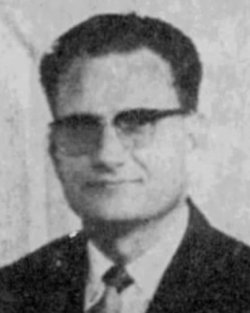
W.E. Best

#32 God's Sovereignty & Man's Responsibility

Romans 2:12-15
W.E. Best July, 1 1973 Audio
0 Comments
Remastered October/November 2024

Sermon Transcript

Auto-generated transcript • May contain errors

100%
God's sovereignty and man's responsibility. God's sovereignty and man's responsibility. There is a lot of misunderstanding
about the subject of God's sovereignty and man's responsibility. Some think that if God is sovereign,
that the sovereignty of God eliminates man's responsibility. Such is
not the case. We have been studying from Romans
1 how man is responsible, especially verses 19 and 20 of that chapter. We have seen thus far in the
study of chapter 2 that God's judgment is sure It is according
to truth, it is inclusive, and according to deed. Last week we used as our text
the eleventh verse, for there is no respect of persons with
God. I did not complete our study
of that subject, but I am not going to continue it this morning. Let us now read beginning with
verse 12 and read through the 15th verse. For as many as have sinned without
law shall also perish without law, and as many as have sinned
in the law shall be judged by the law. The two statements that are of
utmost importance in verse 12 are, first of all, without law,
and secondly, in the law. Without law refers to the Gentiles. The Gentiles were without a written
law. They did not have the written
law as the Jews possessed. The statement in the law applies,
of course, to the Jews. Even though the Gentiles were
without a written law, yet they were not without some form of
law, even though it was not in a written form. The proof of
that is found, of course, when we come to the last part of our
Scripture lesson, which we're reading this morning. I stated
last Sunday that verse 11 not only looks back to what Paul
had already stated, but it also applies to some things that he
is going to give that follow verse 11. The very first word
of verses 12, 13, and 14 prove what I have said. For as many
as have sinned without law shall also perish without law. and
as many as have sinned in the law shall be judged by the law."
Lest someone might get the wrong opinion, Paul is not discussing
the subject of justification by faith in this portion of Scripture.
In fact, the subject of justification is not Paul's thesis at this
point. He is simply showing that man is going to be judged, every
man, whether he be a Jew or a Gentile, and his judgment will be according
to some form of law, whether it be in a written form or in
some other form. The subject is judgment, not
justification. Verse 13. For not the hearers
of the law are just before God, but the doers of the law shall
be justified. For when the Gentiles which have
not the law do by nature the things contained in the law,
these having not the law, that is in its written form, are a
law unto themselves. The last words of verse 14 are
very important. a law unto themselves. The Gentile could not say when
he stands before the judgment of God, God's judgment which
is righteous, that I did not possess a written standard by
which to follow and by which my actions were to be made. That
would not justify the heathen, so to speak. He had a law, not
in its written form, but a law inscribed on his very mind and
heart. Look now at verse 15. We will
be studying for some two or three Sundays, two I'm sure, on this
15th verse. Every person has three accusers. We're talking now about the Gentile
in particular, who was without a written form of law. He goes on to say, which show
the work of the law, the unwritten law, written in their heart, their conscience also bearing
witness and their thoughts the meanwhile accusing or else excusing
one another." The word heart is used in another
sense in the scriptures. It refers also to the mind. It
is not so much that the unwritten law was inscribed on their heart
and the heart is used in scripture symbolizing the seat of one's
affection, it is not used in that sense here. It is used in
the sense of the unwritten law written on the minds of the Gentiles. That is, it was written on their
intellect. I'm not discussing this this
morning. I'm simply showing you that the Gentile has three accusers. First of all, the unwritten law
on his mind or his heart, then his conscience also bearing witness. I want to spend at least one
Sunday, if not two, on the subject of conscience. I studied this subject quite
a bit during my ministry. But there are a lot of things
about the conscience that I want to know, which I have not as
yet found out. Therefore, I am spending a great
deal of time these days studying the subject of the human conscience.
Many of those things I want to share with you in subsequent
lessons. So the conscience bears witness,
finally, their thoughts the meanwhile accusing or excusing one another. In the light of these verses,
12 through 15, I want to discuss with you the subject of God's
sovereignty and man's responsibility. Man is a responsible creature. I cannot emphasize that too much. Divine sovereignty and human
responsibility has been called one of the antinomies of Scripture. I'm going to go slow enough,
especially at the beginning this morning, to define some things
that need definition. There are some persons who do
not like the word antinomy. Personally, I find nothing wrong
with it. Theologians of the past used
this expression, and it was used in reference to a great number
of subjects. The term antinomy is applied
in theology to what are, in effect, conflicting doctrines concerning
the same subject, or what appear to the conflicting doctrines
concerning the same subject. It is said that the limitations
of the human mind sometimes render it impossible for us to approach
nearer to true than the statement of the two apparently opposing
sets of ideas. the truth of both of which is
capable of equal demonstration. First of all, I want to define
an antinomy a little better. I'd like you to take a few notes
at this point. This is an important subject,
one you very seldom ever hear, especially from the pulpit. But
I am of the opinion that God's people need to be acquainted
with such subjects as I am now discussing with you. What is
an antinomy? The dictionary says, quote, it
is a contradiction between two equal logical conclusions, end
of quote. I want to state that again. Personally,
I do not believe that the dictionary has stated it properly, and I'll
share that with you in a moment. The dictionary says, in giving
a definition of the word antinomy, a-n-t-i-n-o-m-y, is the way you
spell the word, it is a contradiction between two equal logical conclusions. Personally, I believe it should
read in this manner. It is the appearance of contradiction. Please observe what I said. The
appearance of contradiction. I want to insert the word appearance. An antinomy is not a paradox.
There is a distinction between an antinomy and a paradox. A paradox is comprehensible. whereas an antinomy is not comprehensible
by you and me. God does not profess to answer
all the questions that mankind might raise. You see, it is our responsibility
to exercise faith in the Lord. Therefore, God does not profess
to answer all questions that we, in our boundless curiosity,
would like to ask. He does this to teach us the
humble trust in his veracity. That's an important point. I
hope we'll not lose sight of it. How can one define or illustrate
an antinomy. I have read various illustrations
and definitions, but the best illustration that I have ever
come across in illustrating an antinomy is one given by a man
many years ago. I will now share his illustration
with you. This is the best example of an
antinomy that I have come across. He uses
two words, words which we are familiar with to some extent
today. The first word is the word centripetal, and the second
word is centripetal. These are two powers. Take first
of all the centripetal power. The centripetal power is the
power that directs away from the center, whereas the centripetal
power directs the power toward the center. Now you see, these
appear to be contradictory things. But beloved, it is this very
thing about which I'm speaking, the supposed contradiction between power and centripetal power that
keeps the planets of the universe in their proper orbits. And this
is the beauty. This man, in explaining this,
went on to say, it is by means of the apparently opposing forces
that the heavenly bodies are kept in their places, or courses. The forces are complementary
and contribute to the harmonious operation of the universe. Just remember," he said, that
the Creator is not restricted to what we term limitation. So when you think about these
two powers, they work together, and in working together they
keep the various planets in their proper places or in their proper
courses. That's the best illustration
that I've ever come across in describing or illustrating the
meaning of an antinomy. What are some of the antinomies
of Holy Scripture? I want to mention a few by way
of introduction. I've already stated that we're
going to be discussing one this morning, and it is God's absolute
sovereignty and man's responsibility. Some of the antinomies are, for
instance, the human and the divine in both the living and written
word. That's an antinomy. How that
you can have both the human and the divine, not only in Jesus
Christ, the incarnate word, but also you have both in connection
with the written word of God. We have fallible men, if you
please, giving to us infallible scripture. This cannot be denied. Every Christian embraces this.
There is another. We have the employment of fallible
men, as I've already stated, in writing an infallible book,
which is, of course, the Word of God. We have, thirdly, the
irregular functioning of natural laws, what we call the laws of
nature, and the occasional occurrence in nature's ordered system of
miraculous events. Miraculous events. This has happened
many times. When you go through the scriptures,
you will find how that the water stood up and let the children
of Israel walk through dry shock. We find once again where the
sun did not move. for a certain period of time.
So we have, in the general course of nature, an occasional occurrence
of some miraculous event. Number four, we have temporal
sin resulting in eternal punishment. This is one that has given a
lot of controversy to many persons, but yet when a person understands
sin and the individual against whom all sin is committed, then
it is not difficult for us to arrive at the truth. But they
talk about temporal sin resulting in eternal punishment. Here is
one that we're familiar with, one about which there is much
controversy even today. It is divine election and the
exercise of individual faith. Divine election or predestination
and the exercise of individual faith. I cannot discuss all these
with you this morning, but I will mention some of the things that
might be related to some of these in connection with our message
entitled God's sovereignty and man's responsibility. When we
think about the antinomies of Scripture, this should cause
us to be on guard against being disturbed by our inability to
reconcile with one another all the doctrines of Holy Scripture.
I like what Charles Haddon Spurgeon said in connection with this.
A man approached him one time and asked him what he thought
about these antennas. This was the general course of
the conversation. How can you reconcile, the questioner
asked Mr. Spurgeon, for instance, predestination
with individual faith? How can you reconcile divine
sovereignty with man's responsibility? If God is controlling everything,
Then where does human freedom come in? Where does human responsibility
come in? Mr. Spurgeon's reply to that
man was, you don't reconcile friends. Did you get the point? You don't
reconcile friends. He said, these great truths,
even though they are antinomous, we cannot explain all the things
that are related to them. You don't reconcile friends,
friends who don't need reconciliation. He gave the correct answer to
that man. The Creator, you see, is not
restricted by the creature's limitations. You and I are restricted. The sovereign God of the universe
is not restricted. The creature must wait the time,
someone has said, of the solution of many of the mysteries in Scripture
and providence. There are many things which take
place in the providence of God, in the government of God, that
I cannot explain. Many questions, no doubt, came
to the mind of Job, just as questions have come to your mind and to
mine. But we do not question God. We
are willing to wait until the time when God sees this to reveal
to you and to me things which are mysterious to us now. There are mysterious things about
regeneration. There are mysterious things about
the providence of God. There are mysterious things about
the grace of God, things which you and I cannot explain, but
we accept because the Lord has given to you and me, who have
been born again by the Spirit of God, faith to apprehend or
embrace the things which we cannot comprehend or understand. I'd like to discuss this subject
this morning under several headings. as we think about God's absolute
sovereignty and man's responsibility. In discussing this subject, I
hope that we learn enough from this message this morning that
we will avoid the temptation of constructing some philosophic
system in order to try to explain to the satisfaction of carnal
minds some of the great things of God's Word. First of all, we have God's eternal
purpose, and that is the first point that I want to emphasize
in the discussion of God's sovereignty and man's responsibility. God's
plan for the ages is something that you and I ought to be vitally
interested in as Christians. I've been saying for several
weeks, in fact I've been saying for several months and several
years as a result of the study of the subject of the Kingdom,
that it behooves every one of us who names the name of Jesus
Christ to want to know all that we can possibly know all that
has been revealed in God's holy word concerning the subject of
the kingdom and the place where we will spend eternity with our
blessed Lord. When we think about God's plan
for the ages, there is one goal, one goal toward which God is
causing all things to move. Do we believe this? And he so
governs the actions of men that they subserve his purpose in
that goad. Nothing takes God by surprise. You see, he is the sovereign
God. Now you want to raise the question, if that be true, then
where does the responsibility of man come in? With God's purpose in view, adversity
and prosperity—I hope this will be of help to you—adversity as
well as prosperity, though contrary to each other, are what appears
to you and to me as being contrary one to the other, exist side
by side. Can anyone here this morning
deny that adversity as well as prosperity exist side by side
with every one of us? You may be prosperous today,
but you may be in some adverse condition or circumstance tomorrow. They exist side by side. With that thought in mind, listen
to what Solomon said. in Ecclesiastes, chapter 7, verse
14. In the day of prosperity, be
joyful. In the day of prosperity, be
joyful. Listen to this. But in the day
of adversity, consider. I want to stop there a moment.
What a lesson there is in that. In the day of prosperity, be
joyful. In the day of adversity, stop
and consider why this adverse condition has come your way or
this adverse circumstance is something in which you are confronted with in your experience
as a Christian. Consider it. Why has God brought
it your way? There is a purpose in everything. It doesn't make any difference
whether it be your prosperity or your adversity. And Solomon
said, they dwell together. Now Solomon was speaking by the
inspiration of the Spirit of God. Listen to it. In the day
of prosperity be joyful, but in the day of adversity consider. Stop, think, meditate, consider
why this has come your way. There's a purpose in it, because
there's a purpose in everything which takes place in the life
of God's child. All things work together for
good to them who are called according
to God's purpose. Then the last part of the text.
God also hath set the one over against the other. You look at
that, that's the last part of Ecclesiastes 7.14. God also hath
set the one over against the other, to the end that man should
find nothing after him. You and I rejoice in our prosperity,
we are to consider things in our adversity. These God has
set the one over against the other to the end that man should
find nothing after him. It is true that man sins, but
God overrules his sin for God's own glory. You and I have difficulty
in understanding that, but it's true. If you will read, when
you have time, the 50th chapter of Genesis, verses 20 and 21,
you will see how that God overrode in that instance for his own
glory. Turn with me, if you will. Don't
expect persons who do not have spiritual minds to understand
these things. We can't explain them fully. I've already stated we embrace
what we do not understand because of the faith which God has given
to us. I'd like for us to begin reading
with the 19th verse of the 50th chapter of Genesis. And Joseph
said unto them, Fear not, for am I in the place of God? You know what happened to Joseph.
He had been sold by his brethren. Now, what does Joseph say about
it? Joseph, after having been sold
by his brethren, here's what he says. But as for you, ye thought
evil against me. You had an evil motive, an evil
design, and an evil end. That is what he says. But God
meant it unto good. What you meant for my evil, God
overruled and has overruled in this case. And God meant it unto
good to bring to pass as it is this day to save much people
alive. Now therefore fear ye not, I
will nourish you and your little ones. And he comforted them and
spake kindly unto them. When you look at the 20th verse,
is there something else that stands out vividly in your mind? Let's read the text again, and
I'm asking you to think now for a moment. Can you think of something
that has taken place in the providence of God that was meant for evil,
but yet God overruled? And even though it was performed
by the hands of wicked men, It has turned out unto our spiritual
good. Now you know what I'm talking
about. All right, look at the 20th verse again. But as for
you, ye thought evil against me, but God did it unto good,
to bring to pass as it is this day, to save much people alive,
the wicked hands of the men who crucified our blessed Lord. And may I hasten to say, that
they were held responsible for their evil deeds. But God overrode their evil motive
and intent. And what has happened as a result
of the death of Jesus Christ, his precious blood having been
shed, you and I are rejoicing today because We have been redeemed,
not with corruptible things such as silver and gold, but by the
precious blood of Jesus Christ, the Lamb slain from the foundation
of the earth. God overrules even the wickedness
of man. He overrules their wicked deeds.
So man's wrongdoing is not allowed to frustrate God's purpose. Proof of this is Romans 8, verse
35, along with many other great texts of Scripture. Let us now
think for a moment about the providence of God. God's temporary
dispensations, and there are many such temporary dispensations
recorded in Holy Scripture, are sometimes altered. according
to Jonah 4 and verse 3, and his promised blessing or punishment
is withheld. The people of Nineveh repented,
and God restrained his punishment. So the Lord's temporary dispensations
are sometimes altered. And you'll notice I said temporary
dispensations, but this does not mean that they affect, in
the least, God's eternal purpose from being fulfilled according
to his eternal plan. God alone has the right to determine
individuals. God alone has the right to determine
nations. according to Acts 17 and verse
26. How does one explain this? The
details of God's actions are explained in the language of
Ezekiel in Ezekiel chapter 1. I wished I had the time this
morning to go to that chapter and spend about 20 minutes now
discussing some very important things connected with this particular
point. You remember the wheels that Ezekiel saw within the wheel? The wheels within the wheel,
the wheel, God's eternal purpose. The wheels represent God's dispensational,
temporary dispensational dealings with man, or mankind. And also
we see the providential government of God brought out in the wheels
that Ezekiel saw within the wheel. The twelfth verse of Ezekiel
chapter one is very significant. This wheel went straight forward. Now you see why? I wish I had
time to go back to Ezekiel for a few minutes. Even though Ezekiel
saw the wheels within the wheel, the wheel was going straight
forward. With all the things that take
place today in Providence, the eternal purpose of God compared
to the wheel that goes straight forward is being fulfilled according
to God's eternal plan. Beloved, this should give to
you and me great comfort and encouragement in the day in which
we live. God's right to impose law upon
mankind arises out of his absolute sovereignty. May I hasten to
say man's duty to observe the law that God has given flows
from his responsibility to the sovereign God as a created creature. Any person should be able to
understand that. God is the sovereign God of the
universe. You and I are creatures having
been created of God. Therefore, we owe to God allegiance,
we owe to God the honor that he is to receive. Let us look
secondly at the subject of prophecy. We have been investigating God's
plan for the ages, and the wheel of God's eternal purpose is moving
straight forward, even though there are a lot of side issues,
so to speak. lot of providential dealings
and the alteration of providence to some extent that we've already
seen in the verses that we gave to you from the book of Jonah.
But his eternal purpose is going in one straight direction. Now
we come to the subject of prophecy. God's purpose is disclosed in
the prophetic scripture. The interesting thing about prophecy
is this, the Lord often speaks of future things as being in
the past tense. I don't have time this morning
to go back and give to you a great number of scriptures, prophetical
statements, but oftentimes you will find where Jehovah God speaks
of future things in the past tense. He can do that. You and
I cannot do it, but God can. because God knows what the end
is going to be. You see, his eternal purpose
is not going to be frustrated by mankind. So knowing what the
end will be, once again we look at that text of scripture in
Ezekiel 1.12, God's purpose goes straight forward. And all that
is in his path becomes as nothing before his eternal purpose. Man is responsible, however,
for all of his actions, just as the wicked hands that crucified
our blessed Lord were responsible for the crucifixion of Christ.
The wicked hands of Joseph's brethren were responsible for
the evil deed which they committed, but yet God overrode and saved
the lives of many people. save the lives of many people.
The fact of prophecy, someone has said, presupposes sovereignty. That's a significant statement.
The fact of prophecy presupposes sovereignty. The prophetic word
is directed to man because of his responsibility. Why has the
Lord given to you and me the Holy Scriptures? Because it is
our responsibility to listen, to heed, and to apply what we
hear. That is man's responsibility.
Let's look at the third thing in connection with God's sovereignty
and man's responsibility. I'm doing this to arrive at a
very significant point. A very important point. Old Testament
history demonstrates God's sovereignty and man's responsibility. I want
to cite just one example of this, because of the lack of time to
discuss this subject this morning. Take, for instance, in the first
chapters of the book of Exodus. We have the story of Pharaoh. Pharaoh who held the children
of Israel in Egyptian bondage. Pharaoh whose heart was hardened. Now when you read, beginning
with about the 7th chapter through the 14th chapter, you will find
a great number of references where it is said that Pharaoh
hardened his own heart. You also find a large number
of references where it specifically states that God hardened his
heart. Now don't become confused. God
did harden Pharaoh's heart. How did God harden his heart?
God did not harden his heart by infusing something into his
wicked and depraved heart. But he hardened his heart by
subjecting him to the truth of holy risk and demanding that
he do certain things. By his subjection to the commands
of God, Pharaoh hardened his own heart. So there is a sense
in which God hardened his heart, not because God infused something
into the wicked heart of Pharaoh, but because he was subjected
to the commands of God. Now it can well be said today
that God hardens the hearts of people. I hope that it cannot
be said, it will not be said of anyone who is in this auditorium
this morning, but I must hasten to say As you're subjected to
the Word of God today, it is God, in His providence, who is
subjecting you to the Word of God. You are responsible, therefore,
to hear, to listen, and to apply. If you fail to do it, you harden
your own heart. God hasn't infused something
into your heart. He has simply just left you to
the unrestrained nature of your own depraved heart. But by being
subjected to truth and not applying truth, you harden yourself. So
we see God's sovereignty and man's responsibility in the case
of Pharaoh in the first chapters of the book of Exodus. Let us
now come to the subject of the introduction of sin into the
human race. Once again we see the sovereignty
of God and the responsibility of man. The introduction of Sian reveals
the fact of God's sovereignty, but not only does it reveal the
fact of God's sovereignty, but it reveals the fact of man's
responsibility. It should not be necessary for
me to say to you this morning that God is not the author of
Sian. We spent a great amount of time
just a few months ago discussing that very aspect of the subject
that I am now sharing with you. God is not the author of sin,
yet, beloved, we must not fail to see this important point.
It is impossible to imagine sin as out of all relation to God. You see, the sovereign God could
have kept it from ever appearing had that been his purpose, but
it was not his purpose to do so. Now we see the entrance of
sin into the human family, and by the very fact that sin has
had an introduction into the human family, we see the sovereignty
of God and at the same time the responsibility of Adam. Adam was responsible. He was
a free person. He had a free will and the only
person who ever lived that had a free will. I'm talking about
a human being who had a free will. He made the wrong choice. He fell and all of his posterity
fell in him. The question might come to your
mind, how could all of mankind fall in Adam? We did not live
then. That can be explained in this
manner. in the sin of Adam was the sin
of the human race according to Romans 5 verse 12. You cannot
read that text without embracing that fact. Just as Levi, and
this is the best explanation you can find from the scriptures
to explain this particular point, just as Levi, who was not born
but in the loins of Abraham, is reckoned to have done what
Abraham did according to Hebrews 7 verses 5 forward, so the human
is reckoned to have sinned when Adam sinned, though none was
yet born. We sinned in Adam. And this is
what Romans 5, 12 teaches. Therefore by one man sin entered
into the world, and death by sin, and so death hath passed
upon all men, for in him we all have sinned. By the fall, man
acquired the knowledge of good and evil. Paul deals with the
subject of man's responsibility in Romans 1, 19 and 20, and the
passage which we have read this morning, Romans 2, 12 through
15. Even the heathen, who is without a written law, is responsible
to God because he knows right from wrong. Now we come to an
important question. What is responsibility? Can you
define it? In just a few brief words, can
you define the question? Can you explain the question?
What is responsibility? Let me give it to you. Then we're
going to see what inability is. This will be helpful for all
of us in explaining some very important things to people in
this day in which we live. First of all, what is responsibility? It is that state which is created
by clear discovery of law to one who is a free moral agent. Now notice how I stated that,
a free moral agent. I'm not talking about the freedom
of the human will. I made the statement a free moral
agent. I'll repeat it again. What is
responsibility? It is that state which is created
by clear discovery of law to one who is a free moral agent. Now since every individual is
under some kind of a law, whether it be written or unwritten, then
he is a free moral agent and is a responsible person to that
law. That's why the judgment of God
is righteous, whether it be his judgment of the Jews who have
the written law or the Gentiles who are without a written law.
Now, secondly, what is inability? What is inability? I want to
go slow here because of the importance of this point. Can you really
describe what inability is? Arthur W. Pink, in one of his
works, has made a good statement, but I want to go a little further
than that this morning because there are some things related
to the subject that need to be discussed. He says there is a distinction
between man's natural ability and his spiritual inability. And between his natural ability
and his spiritual inability rests his responsibility. Now some
of you may remember having read that. At this statement. I want
to go back through it a moment. I want to show you how important
that is. And it is important. He said between man's natural
ability, and man does possess natural ability. You're here
this morning by your natural ability. You're listening this
morning by your natural ability. You have the ability to listen
to what I'm saying, whether it is the testimony of a preacher
or the testimony of a politician. So you're here by natural ability. Now between one's natural ability
and his spiritual inability. Now let's stop a moment. What
did he mean by spiritual inability? A person who possesses natural
ability but who has not been born of the Spirit of God is
a depraved person, therefore he is spiritually unable to understand
spiritual things. So between man's natural ability
and his spiritual inability rests his responsibility. That's a
good statement. Now, I want to go a little further.
What is inability? What is inability? A man chained,
for instance, to his prison is physically unable to walk. If a man is chained to a prison
cell, he is physically unable to walk. Now you would not attribute
his physical inability to himself, but to someone else. Are you
following me? Here is a man who is chained
to his prison cell. He is unable to walk. Now his
inability to walk cannot be ascribed, you see, to himself, but to someone
else, to the person who chained him to the wall. Let's go a little
further. Even though a person might be
chained physically to a prison wall and he is unable to walk,
his mind, his will, could not be said to be chained. Just because a person is unable
to do something physically doesn't mean that he is unable to do
something mentally. Chain a man to the wall physically,
but you can't chain his will to the wall. Now let's carry that a step further,
and we're getting into something now very important. I hope you
follow this step by step. Man is incapable, spiritually speaking, of believing
on the Lord Jesus Christ. He does not have the ability
to do it. He does not have the will to do it. His will is depraved. Now, when we think about his
will being depraved, someone has said, man does not obey the
gospel naturally. He is corrupt. He is depraved.
and acts according to his corrupt nature. He acts according to his corrupt
nature. He goes on to say, he acts under
no foreign influence. Look, that's important. The man
is not acting under some foreign influence. He is acting from
the influence that comes from within his own depraved heart. You see, he's acting according
to his own depraved nature, which loves depraved things. Loves depraved things. Now we
come to the important point that I want to share with you. Some
folks say, how can one believe in divine election and faith by the individual person? These things, they say, are contradictory. Election and faith appear incompatible. Let's discuss this. for a few
moments, and I can point you to a very significant thing that
I hope we will not leave this building without remembering. I have never taught that election
is salvation. You will never hear me teach
that the subject of election or predestination, either one
is salvation. Election is not salvation. Predestination
is not salvation. Election is unto salvation. Predestination
is unto salvation. You can use those two terms synonymously
if you please. We are applying them now. So
election and faith may appear incompatible, but to maintain
such ideas is to put reason above revelation. And this is what
most religionists are doing today. They're putting reason above
revelation. You see, believing is man's act. I want to show you something. Election
is one great truth. Believing is another great truth. Now, election is not salvation. Election is unto salvation. A person's believing is the fruit
of divine election. But wait a minute. God doesn't believe for the individual. God enables the depraved person
to believe. My beloved, I'm showing you the
responsibility of believing. I have a right as a preacher
of the gospel to command people to repent. I have the right as
I preach the gospel to command them to believe on the Lord Jesus
Christ. So believing is man's act, not
God's act. God isn't going to believe for
you. He enables you to believe. Let's
carry that further. No one can believe in man's pleasure. It is God who calls. I want you
to see the simplicity of this now. It is God who calls. But it is not God who answers
the call. Are you following me? It is God
who calls. But it is not God who answers
the call. So it should be stated like this.
The call is answered by the person to whom the call is addressed. So election is unto salvation. Not salvation, but unto salvation. This must never be interpreted. to mean that man is a party with
God in his salvation. And this is what is being done
by most religionists today. Man is not a party with God in
his salvation. Now, election is one part, and
believing is another part, but that doesn't mean that man becomes
a party with God in his salvation. Are you following me? It is God who enables the Now, I must hasten to this point
and spend a little time on it. The great controversy today is
between free will and free grace. I've said that so many times,
but I'm going to drive it home a little further today, a little
deeper today than I've ever driven it before. You see, the subject
becomes more precious the more you study Holy Scripture. Free
will, as it is believed by most religionists today, will drive
people to methods. Free will will drive religionists
to methods. You see, if a person has a free
will, and God can't do anything until man's free will is exercised,
toward God, and after it is exercised toward God, then God is willing
after man first is willing, then that drives religionists to all
kinds of methods. This is why, beloved, there are
so many kinds of methods today. I'm shocked today when I hear
people who give lip service to the great truths of grace, and
then when you listen to testimonies oftentimes, the general course
of conversation is such that it is an evident fact that they
don't even understand what they give lip service to. This is
what is the story. Beloved, today things are being
done, things are being formulated, services are being held in order
to reach the emotional part of mankind. And they'll try this
method and that method and some other method. So free will will
drive religionists to try one method if it doesn't work, try
another method if it doesn't work, try another method why?
Because it is all dependent on the free will of the individual. Beloved, I can't accept that. Thus sinners are driven to methods. Now follow me. Free grace. drives men to the sovereign God. Free grace drives men to the
feet of the sovereign God. You know, many times when you
hear people talk, they'll use some good statements now and
then, but you have to listen to the general course of the
conversation. to see just how much the individual
or those individuals really know about the grace of God. Some
people who say they believe in the absolute sovereignty of God,
they can become so excited sometimes with a service or with something
if it moves people emotionally. And some method has been employed
in order to move persons emotionally. I've stated before that a person's
mind, his intellect, must be engaged, first of all. And when
his mind, his intellect, has been engaged, the emotional nature
of man is involved, secondly, and not personally. And finally,
his will, that is the divine order. Don't ever forget that.
The mind, the emotion, and thirdly, the will. That's the order. It can never be reversed if there
is a genuine conversion experience. It's the mind, the emotion, and
finally, the will. It doesn't begin with the will
or the emotion. It begins with the mind. The
mind. Today so many people can go to
church and they feel like they haven't been to church if there
has not been an emotional service and people have not been aroused
emotionally and they leave shedding tears and no sooner do they turn
the corner than the tears are gone and they have forgotten
everything that has been said. Once again, I want to give a
statement about the WP. He says when a person attends
a worship service, he is to leave the service if it has been one
that has worshipped the Lord in spirit and in truth. He leaves
the service not with an emotional or with a nervous headache or
just emotionally disturbed, but he leaves the service with a
holy calm, a holy reverence for the things of God. For the next few Sundays, we're
going to be dealing with the most innermost being of man,
the heart, the mind, in one service, the conscience, and then even
the thoughts of mankind that either accuse or excuse. And I trust that when we come,
we'll listen to the Word of God, and then when we leave, we'll
leave with a holy calm. with a reverential spirit for
the things of God as we seek to apply those things to our
own hearts. Beloved, we're living in the
last days and if there ever was a time we need to deal with realities
and not fantasies, that time is now. That time is now. So free will drives men to methods
in order to get results. free grace drives men to the
feet of the sovereign God and His beloved Son who shed His
blood that we might be saved. What a difference! I want my
preaching to drive you to the feet of the sovereign God and
not to be looking for another method of reaching the will of
man. So election and faith may appear
on the surface to be incompatible, but to maintain such ideas is
to put reason above revelation. Election is unto salvation, not
salvation but unto. You see, man cannot be a party
with God in his salvation. God is always the overflowing
fountain. Man is always dependent and the
needy person who must wait and who must drink from that fountain. The same Bible that shows that
man must believe to be saved also states that man, because
of his sinful nature, is totally unable to believe. Therefore,
the sinner has neither the ability nor the desire to have the ability. He must be driven to the end
of himself by God's providential dealings with him. to the feet
of the sovereign God. Regeneration is the fruit of
divine election, and faith is the fruit of regeneration. Faith is not the cause of regeneration,
it is the fruit of regeneration. I close with this. Prayer is also another great biblical
example of God's sovereignty and man's responsibility. If
a person truly prays, he recognizes that God alone can answer his prayers. Thus,
he is dependent upon the sovereign God for answer to his prayers. And when he prays, he finds himself
at the feet of the sovereign God, totally dependent on the
sovereign God for the answer to his prayers.
W.E. Best
About W.E. Best
Wilbern Elias Best (1919-2007) was a preacher and writer of Gospel material. He wrote 25 books and pamphlets comprised of sermons he preached to his congregation. These books were distributed in English and Spanish around the world from 1970 to 2018 at no cost via the W.E. Best Book Missionary Trust.

Comments

0 / 2000 characters
Comments are moderated before appearing.

Be the first to comment!

Joshua

Joshua

Shall we play a game? Ask me about articles, sermons, or theology from our library. I can also help you navigate the site.