Bootstrap
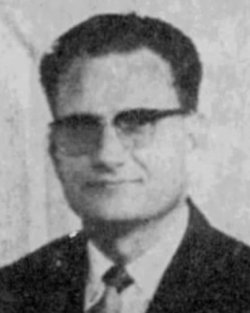
W.E. Best

#35 The Human Heart - Heart of Man a Cesspool of Iniquity

Romans 3:1-18
W.E. Best July, 1 1973 Audio
0 Comments
Remastered October/November 2024

Sermon Transcript

Auto-generated transcript • May contain errors

100%
the human heart. The first passage
is found in Proverbs 23, verse 7, where it says, For as he,
that is, as man, thinketh in his heart, so is he. Another text, Mark 7, verse 21,
and I'm only reading a part of this text at the present because
we will be studying the greater portion of Mark 7 in this first
message. For from within, out of the heart,
proceed evil thoughts. Jeremiah tells us that the heart
is deceitful above all things, desperately wicked, who can know
it? Jeremiah 17, verse 9. Isaiah in his prophecy, chapter
1, verse 5, makes reference to the heart being faint, that is
sick. The whole heart of the unsaved
person is sick. The whole heart is depraved. First of all, I think before
we read from Mark 7 and Matthew chapter 25, we should define
the meaning of the word heart. The Greek word is kardia, spelled
in English k-a-r-d-i-a. We know that the heart is in
the very center, as it is said, of the human body. It is regarded
as the seat of physical life, for the life of the flesh is
in the blood. However, it is not this part
of flesh I'm thinking about this morning. The word heart, as it
is used in a great number of places in Holy Scripture, has
come to mean the hidden man. the inner man, the real man,
if you please. Man's heart is the center of
his inward life. This is true whether a person
be saved or lost. If a person is unsaved, his heart
is the very center, the very source, the very fountain of
his life. We have already read that. in
Mark 7 verse 21. If the individual is a Christian,
his heart is the very seat or fountain of his Christian life. Thayer, an outstanding Greek
scholar, has given this definition of the heart. I quote, The heart
is the fountain and seat of the thoughts, passions, desires,
affections, and purposes of man. Man is wicked, naturally speaking. Why? Because he has a depraved
heart. Turn with me now, if you will,
please, to Mark chapter 7. We'll be using not only Mark's
account, but also that given to us by Matthew, in Matthew
chapter 15, concerning the heart, and I'm entitling this message
this morning, the heart of man, unsaved man, yes, even religious
man, is a cesspool of iniquity. The heart of an unsaved person
is a very cesspool of iniquity. Yes, the heart of a religious
person, and I'm using the word religious, not Christian, is
a cesspool of iniquity. The Lord proves that in his discourse
with the Pharisees and the scribes in Mark 7 and Matthew chapter
15. Let us read beginning with Mark
chapter 7 verse 1. I would like to give a kind of
a running interpretation on some things by way of introduction
as we read. Then came together unto him the
Pharisees and certain of the scribes which came from Jerusalem. Notice the very first word, then. When God blesses Then opposition
comes from the devil. Yes, even religious devils, as
in the case of the Pharisees and the scribes. When we look
at the first verse of Mark chapter 7, we find that the Pharisees
and certain of the scribes came from Jerusalem as a fact-finding
committee, we might say, to investigate the works of our blessed Lord
Jesus. Now isn't that a heinous thought
to begin with? Here we find the Pharisees and
scribes working together as a so-called
fact-finding committee coming to the place where the Lord Jesus
had been performing miracles, had been doing great works, and
they came to find something against what he was doing. Therefore, this has been called
a fact-finding committee of theologians from Jerusalem. Yes, and the commission was sent
to investigate the works of our blessed Lord. You'll notice that
they came to Jesus Christ. They came in the flesh. that
has as much meaning as many persons today who walk the aisles after
a preacher has given a discourse asking for hundreds and thousands
of people to come forward, they go forward. And many of them
are no better at heart than these Pharisees and scribes who came
to Jesus Christ. You'll notice they came unto
him. They came physically unto Jesus
Christ. It isn't enough for you to be
here physically this morning. You may be here physically and
your hearts be far away. That also is condemned in this
portion of Scripture. I sometimes wonder just how many
members of this congregation are really a part of this assembly. One of our men expressed it in
this manner recently. He said there are some who are
attached and there are some who belong. I hope that not any person
who is a member of this assembly is just an attached person. Now
you know whether you are or not, and I'm probing your heart this
morning, which I intend to do, throughout the series of messages
on the human heart. It isn't enough to be here in
person. It isn't enough to be here physically. You must be here in heart. And
when I say in heart, I mean with the whole heart. because God
never accepts a divided heart. We're going to find in the study
of the subject of the heart, in Jeremiah chapter 32, that
when the Lord gives a new heart, he gives a heart that is considered
to be one heart, and there is just one way. One heart, one
way. The Lord's whole heart is for
his people, according to Jeremiah 32, and since his whole heart
is for you and me, beloved, he demands of you and me our whole
heart. It's just that simple. It's just
that plain. Now notice verse 2. And when
they saw some of the disciples eat bread with defiled, that
is to say, with unwashing hands, they found fault. You see, the
Jews were more concerned about the externals than they were
the real condition, internal condition of the heart. This is amazing. But beloved,
it is true even today. I recently read this story and
I want to share it with you at this point. I read the story
told by a man of God who knew this to be a factual story. He said two men robbed a bank and in Robbing the bank, they
killed the president of the institution. They got away safely. Time came
for lunch, and they stopped in and ate lunch at a little cafe. One of them, not thinking about
the day of the week, he ordered meat. And while he was eating
meat, he said, oh, he pushed it back. He said, I can't eat
this. This is private. I can't eat meat on Friday. Do you see what I'm talking about?
He was so concerned about the external of eating meat on Friday,
but his conscience had not been print about the death of the
president of the bank. Now let me give you one from
the Bible. In the seventh chapter of the book of Proverbs, the
strange woman is presented, and the strange woman of Proverbs
is none other than a whore. This whore, who would stand out
on the street corners in order to entice men to herself, made
a statement, I have paid my vow. She had taken an oath. She was
religious. Do you know what I heard on the
news recently? And then I read a detailed account
of it in the, is it the National Observer, the paper you gave
to me the other night? Where in San Francisco, California,
The prostitutes had a convention, and it was held in the United
Methodist Church Auditorium of San Francisco, California. Some
of you saw that, not only on the news, but you might have
read the account of it in the paper. What do you say? I am saying that persons can
live horrible lives. They're concerned about certain
external. These things, of course, cause
all of us who know the Lord Jesus, whom to know is life eternal,
to be horrified. For yet, beloved, things just
this dastardly are going on every day, every Lord's day, by many
persons in places called religious institutions. I'm getting down where we live.
I want to show you that the heart of man, yes, even the religious
heart of the unsaved person, is a cesspool of iniquity. Notice now verse 3. For the Pharisees
and all the Jews, except they wash their hands off, eat not,
holding the tradition of the elders. The Jews paid rigid attention
to the externals, but they paid no attention to the real condition
of the human heart. Verse 4, And when they come from
the market, except they wash, they eat not. And many of the
things there be, which they have received to hold as the washing
of cups and pots, brazen vessels and of tables. Then the Pharisees
and scribes asked him, Why walk not thy disciples according to
the tradition of the elders? Why are your disciples not observing
the tradition of the elders? But eat with unwashing hands. I'm going to have to read Matthew's
account in a moment because Matthew gives us some light that Mark
doesn't give to us. That's why when you're making
a study of Matthew, Mark, and Luke, you ought to study all
three accounts as called the harmony of the Gospels. Verse
6, He answered and said unto them, Well hath Esaias prophesied
of you hypocrites, as it is written, This people honoureth me with
their lips, but their heart is far from me. Where is your heart
this morning? Is it here? Is it full of the
things of the Lord? Or is your heart somewhere else?
You see, that's a decision that you have to make. I'm not going
to ask each one of you to stand and then ask you a personal question,
where is your heart? Is it here or is it somewhere
else? Is it on your job? Is it on something you want to
do as soon as this service is over? Where is your heart? Are
you anxious to get away so you can do something else? I'm not
going to ask you to commit yourself, but you see, you're committing
yourself. You're searching your heart right at this very moment. And that's what each one of us
should do. Verse 7, How be it in vain do they worship me? If
you're here physically but your heart is somewhere else, you're
not worshipping the Lord. You're not worshipping the Lord.
And you're deceiving yourself. That's how simple it is. How
be it in vain do they worship me, teaching for doctrines the
commandments of men. For laying aside the commandment
of God, ye hold the tradition of men, as the washing of pots
and cups, and many such like things ye do. And he said unto
them, Full well ye reject the commandment of God, that ye may
keep your own tradition. For Moses said, Honor thy father
and thy mother. Now our Lord cites one incident
to prove his point. We'll comment on this later.
Whoso curseth father or mother, let him die the death. But ye
say, if a man shall say to his father or mother, It is Corban,
that is to say, a gift, by whatsoever thou mightest be profited by
me, he shall be free. and you suffer him no more to
do all for his father or his mother. Making the word of God
of none effect through your tradition which ye have delivered and many
such like things do ye. Now let me give a brief exposition
of this. For the simple reason there are things that I want
to cover that are more important than this particular point. That
is in this message this morning. You see, our Lord cites one example
from the Jewish law, and he is showing these Pharisees, these
hypocrites, what they're doing by their tradition, and by doing
this they're making void the word of God. The law taught that
a man is to honor his father and his mother. Now the time has come when father
and mother need the help of the son or the daughter. The son,
so to speak, does not want to help his parents. So he says,
Corban, that is a gift. That is a gift. In other words,
by saying Corban, I can excuse myself of my obligation to my
parent, and I can dedicate this money to the Lord, and it will
not only bring advantage to me for the recognition I'll get
for having done it, but the religious leaders will also profit. So by saying, In other words,
leaving the impression before the religious world that this
money is being given to the Lord. It's being dedicated to the Lord.
Now, it was money that should have been used for the health
of the parents. We're not talking about the Jewish
tithe or tithes, plural. We're talking about a help that
the children were to give to the parents. But they would simply
stand and say, carb, that is a gift. By doing this, the religious
world would say, oh, they're dedicating this money to the
Lord. And by doing this they were receiving
praise to themselves and their blind religious leaders were
also profiting by this gift that was to be used for the parents
rather than being given to the Lord. So he cites that one incident.
And what does it say in verse 13? You have made the word of
God of none effect through your tradition. Now let's notice,
beginning with verse 14, here is a break. When he had called
all the people unto him, he said unto them, Hearken unto me, every
one of you, and understand, there is nothing from without a man. Now here is the passage I want
you to observe very closely, and this is an explanation of
what he has just given. There is nothing from without
a man that entereth into him, that entering into him can defile
him. But the things which come out
of him, those are they that defile the man. In other words, eating
food, physical food, put into a physical body, there's nothing
moral or immoral there. So it isn't physical food going
into the body that defiles a man, it is the thoughts that come
from the cesspool of iniquity, which is the depraved heart that
is sick. Sick. Now notice what he says
in verse 16. If any man have ears to hear,
let him hear. And when he was entering into
the house from the people, his disciples asked him concerning
the parent. He was somewhat shocked by the
question of the disciples. And he said unto them, Are ye
so without understanding also? Beloved, that's for you and me.
I said, that's for you and me. Do ye not perceive that whatsoever
thing from without entereth into the man, it cannot defile him? Because it entereth not into
his heart, but into the belly, and goeth out into the draft,
purging all meat, and is said, That which cometh out of the
man, that defileth the man. Now observe closely, for from
within, out of the heart of man proceed, first of all, evil thoughts.
And you will notice the evil thoughts head the list of the
awful things that are mentioned in this catalog. evil thoughts, adulteries, fornications,
murders, thefts, covetousness, wickedness, deceit, lasciviousness,
an evil eye, blasphemy, pride, foolishness, all these things
come from within and defile the man. Now that's as far as I'm
going to read at the present time. Turn with me to the Gospel
of Matthew chapter 15 for just two or three verses. For two or three verses. You'll notice in verse 7, ye
hypocrites, well did Esaias prophesy of you saying. This
people draweth not unto me with their mouth, and honoreth me with their lips, but their
heart is far from me. Again he says, But in vain do
they worship me, teaching for doctrines the commandments of
me. Notice now how our Lord Jesus
stood on the rock of divine election in verse 13. Every plant which
my heavenly Father hath not planted shall be rooted up. Now I want
you to notice in verse 14 there is a word of caution about obeying. The first three words, let them
alone. Reprobation does not force the
unsaved into sin against their will. He just leads them to their
own natural desires, the desires of their depraved heart. Now,
I can illustrate that in this manner. The cause of a rock's
own falling is its own weight. You see, my holding a rock, beloved,
is the immediate cause, I might say, of it not falling. But if
I let it go, it is carried down by its own weight. And so here
we have what? The immediate cause of its descent. So let them all, he said, let
them all. You'll notice now verse 15, Then
answered Peter and said unto him, Declare unto us this parable. And Jesus said, Are ye also yet
without understanding? Do not ye yet understand that
whatsoever entereth in of the mouth goeth into the belly, and
is cast out into the draft? But those things which proceed
out of the mouth come forth from the heart, and they defile the
man. For out of the heart proceed
evil thoughts, murders, adulteries, fornications, thefts, false witness,
blasphemies. These are the things which defile
a man, but to eat with unwashing hands defileth not a man." That's
as far in this portion of Scripture that I'll read at the present
time. The deceitfulness of the human heart appears nowhere. perhaps so striking as in the
case of persons who sit under the faithful proclamation of
the word of the eternal God. Beloved, that's where we sit
this morning. I trust under the faithful preaching of God's precious
and infallible word. Now I'd like you to go back to
the seventh chapter of Mark. We'll spend most of our time
this morning in this chapter with a few references to Matthew
chapter 15. I want this to be as practical
as possible. We will arrive at the conclusion
of our message at verses 21 through 23, and discussion of the human
heart, the depraved heart, the heart which is a cesspool of
iniquity. When you look at this portion
of Scripture in Mark 7, 1 through 13, we find that multitudes of
the Pharisees and scribes were shackled by an undue reverence
for human authority. As that was true then, beloved,
it is true today. There are many religions today.
You encounter them every week as you witness for the law. They
are shackled by an undue reverence for human tradition. Let me illustrate
it in a very practical manner. There are many people who think
that unless information comes out of Nashville, it just cannot
be true. Am I speaking truth? There are
many persons who think that if information doesn't come out
of the Vatican, it just cannot be true. Thus, persons have an
undue reverence for human authority. We will do everything that we
possibly can this morning to destroy such a view as we give
an exposition of the first 13 verses of this chapter. And this
will prepare our hearts, I hope, for a discussion of verses 21
through 23. Yes, many persons today are relying
on human tradition. rather than divine truth. Doctrine
is divine truth, not human truth. I am vitally concerned about
doctrine. I do not believe that any person
can grow, I do not believe that he can develop apart from a knowledge
of biblical doctrine. Many today are downgrading God
as they seek to lift up human tradition. As a Christian who
has been informed to some extent, you cannot go along with any
such idea. Confessions are good. I'm not
opposed to confession. I'm not opposed to creeds, but
let me emphasize this. Confessions and creeds are given
for the purpose of expressing our belief, beloved, not for
the purpose of forming our belief. There are many religionists today
who form their beliefs not by biblical doctrine, but by mere
human tradition. And you know what I'm saying
is true, if you'll be honest. And I believe you are. But let's
bring it down and make it personal. Haven't all of us at some time
or other been guilty of relying on tradition instead of really
searching the Holy Spirit. There are some folk who will
say, well, we're Baptists because our parents were Baptists. Others
will say, we're Methodists because our parents were Methodists.
We're Catholic because our parents were Catholic. And on and on
we could go. Beloved, confessions are all
right up to a point. They are given for the purpose
of expressing our belief by the use of a formula, but there never
to be the means of forming our belief. The formation of our
belief must be the study and the searching of Holy Scripture.
Turn with me, if you will, please, to John 5, verse 39. I want you
to turn to this verse. Let's read it together. I can
quote it, but I want us to read John 5, verse 39, what did our
Lord say to the Jews? Search the confession. Now how
many of us are guilty, we want to know something, the first
place we run is to what some man has written on the subject,
rather than running to the Word of God. Now I'm not opposed to
the reading of the works of men. But where should we go first
of all to really find out something? You'll notice our Lord did not
say, search the Confessions. He did not say, search the Creed. He said, search the Scriptures,
for in them ye think ye have eternal life, and they are they
which testify of me. I'd like you to go to another
passage. All of us now who know the Lord as Savior, listen to
this. In 1 Peter, chapter 2, let's
begin with verse 1. Wherefore, laying aside all malice,
and all guile, and hypocrisies, and induce, and all evil speaking,
as newborn babes, desire the confession As newborn babes desire human
creed, that isn't what it says, is it? Do you see how simple
the book is? As newborn babes desire the sincere
milk of the Word, the Word of the Eternal God, that ye may
grow thereby. We're not to search confession
in order to form our belief. And as one who is saved, we do
not desire confession in order to grow in grace and knowledge
of the Lord. We desire the sincere milk of
God's Word. Now here is a caution. confessional
exclusiveness is the most intolerant and, at the same time, the most
destructive to true spiritual problems. Now, look at what I'm saying
is in harmony with what our Lord taught in the first thirteen
verses of Mark chapter seven. I said confessional exclusivity
is the most intolerant, and at the same time, the most destructive
to true spiritual power. You see, confessions and creeds
as a whole—please observe what I'm saying. They close the Bible
to advancement in true spiritual life. They become the self-constituted
approvers of truth. Have you ever heard someone say,
ìWell, now my confession doesnít state that, but a Head Cuber
made an excellent statement to me before the service this morning.
We're talking about when you grow older, you begin to think
more seriously. And he said, yes, you're concerned
about facts, not opinions. You see, it isn't opinions that
really hold you. Facts are what we're concerned
about. I'm very delighted I've reached
that place, I think, in my life, when I'm more concerned about
facts than I am opinion. Now, beloved, the things that
I've been giving you from Revelation, I'm not asking any one of you
to embrace them. Because this is what I believe
to be the truth, is like when we get into the study of the subject
tonight, will people live in the flesh forever? What is your opinion? I use that
as an illustration. See, I've noticed this. I'm setting
the stage for something now. I'm always amused when someone
comes around and he begins, maybe he didn't come to me personally,
but he will offer his objections to something that I have said
to someone else. There are two people, there are
two Christians in this auditorium this morning who would agree
perfectly on everything. But those of you who have grown
in grace and knowledge of the Lord, even though you might not
agree with me on some particular point, it might be because you
haven't studied the subject, it might be because you have
studied the subject, but you still can't see what I preach. You don't come around or you
don't make an issue of it. You don't say, well, I disagree
with the preacher. You know what? Now, there are
some folks who are sincere. They won't know the truth. And
when they find the truth, they're ready to be angry. See, there's
a difference. Now, confessionals are all right
to a point. Creed should not be despised. Follow me now. Confessionals
are not to be abhorred, but neither should they be unduly forced
by Christians. If you want to know the truth
about it, we don't have a creed. We don't call. We don't have anything
in print that we call our creed. We have some things in print,
but we don't call them our creed. We don't call these things our
confession. Now, if you ask me what I believe
about a particular subject, I'll try to state in as few words
as I possibly can what I believe. And so that is a creed. In other
words, I'm formulating in a few words what I believe about a
big subject, a subject that is inexhaustible. Now, what about the light of
private lecture? The right of private judgment
is to be interpreted how? Not, beloved, as a license to
say anything that one wants to say. You see, private judgment
is to be controlled by the contents of Scripture grammatically interpreted
according to 2 Peter 1, 19-21. Let me state that again. Private judgment is to be controlled
by the content of Scripture grammatically interpreted. Doctrine is unchangeably the
same. What was our Lord really condemning
in the first thirteen verses? Men making void the Word of God
through their human tradition. We all have to be careful about
that, because we're all guilty of it
to some extent if we're not careful. Let's observe something else. Now we come to the heart. The
Lord is going to show his disciples that the very religious persons,
the Pharisees and the scribes, even though they talk loud and
long about the externals of religion, about the washing of pots, the
washing of the hands, Yet they were omitting the weightier matter
of the law, the inner man, the condition of the heart. There are a lot of religionists
today who will talk about church membership, church ordinances,
but you cannot get them to talk about the condition of the human
heart. You see what I'm talking about?
The devil is satisfied, he's as happy as he can be, just as
long as his devotees, though religious they may be, talk about
church membership, talk about church work, talk about church
ordinances, and omit the condition of the heart. See, beloved, it's
the condition of the heart that I'm concerned about. First of
all, it's the condition of my own heart. And the condition of your heart.
Because someday we're going to stand before the Lord and the
true condition of the heart will be exposed. I want to know all I can know
about my heart now. So it won't be so embarrassing
to me then, yet I know that God alone is the searcher of heart. There isn't a one of us here
this morning who really knows his heart. Not a one of us. But let us see
if we can find out some things about it that will help all of
us in our Christian lives. Well, we're beginning at the
beginning of the subject, the depravity of the human heart. You notice verse 21, true holiness
works from the inside out. Religionists believe that it
works from the outside in. Now I'm going to shake some of
you with some of the things I'm going to do. Man's heart determines his life. The heart steers the life as
the rudder steers the ship. The heart is the workshop where
all sin is wrought. When the fountain is impure,
the water that springs from it is likewise impure. Yes, the
heart is its own laboratory. You know, we're hearing a lot
today about the doctrine of environment. We're hearing a lot about our
school system, and I want you to know it's not what we would
desire it to be. Some of us are so afraid of what
our children are going to be subjected to in the classroom. Let me tell you something. Whatever the child hears in the
classroom will not compare with a wickedness that resides in
the heart of that child. How do you like that? Does that
shock you a little bit? All you have to do is just
leave the child alone. The child doesn't have to be
taught evil. He just knows evil naturally. Why? Because the heart is depraved! The heart is sinful! The heart
is sick! The heart is deceitful! The heart
is desperately wicked! You know, in the study of this
subject, I had to go back when I was a boy, during my school
days, and I admit that I did not hear things that many youngsters
are subjected to today. But I want you to know, your
evil was there in my heart. Today, the attitude is, if we
can just keep our children away from these things, they'll be
all right. You're as wet as water. In fact,
you're just about ready to drown, if that's your concept at all. I'm talking about the deceitfulness
of the human heart, the depraved heart, the heart that is filled
with iniquity. Somebody says, you mean to tell
me this lovely little child of mine, my little child has a deceitful,
sinful, wicked heart? Beloved, a religionist might
deny. But the person who knows grace and the individual who
is honest with himself knows that that old heart is as wicked,
is as vile, and just leave it alone. It'll learn enough wickedness. It'll display enough wickedness
without any help from the outside. Is that true or false? You know, I read something recently
in reference to what we hear today about the doctrine of environment. I want to share this with you. I'm quoting now. Circumstances,
we're told, make the man. Life is a modification of matter. The brain secretes thought as
the liver secretes bile. The difference between a good
man and a bad man is mainly a difference in molecular organization. The affections are of an imminently
glandular nature. Character is the aggregate of
surroundings, the sum total of parents, place, terms as life,
food, etc." Now, beloved, do you see why that Christians are
often accused, falsely accused, of being seditionists? This is the teaching of our government.
This is the teaching of socialism. This is the teaching of religion.
It is the environment. All right, listen, beloved, this
is the very thing that our Lord condemned in Mark chapter 7,
if you'll be honest. What does the Bible say? As a
man thinketh in his heart, so is he. You notice it doesn't say, as
a man's circumstance is, so is he. It doesn't say, as a man eateth,
so is he. But as a man thinketh in his
heart, so is he. Let me ask you this question.
Did Adam's circumstance keep him from falling? Could one ask for a better circumstance
than Adam enjoyed in the Garden of Eden? Why don't people think through
these things? Could there have been a better
circumstance? No. But the circumstance did
not keep him from falling. Beloved, the circumstance will
not keep the wickedness that resides in a depraved heart from
being made manifest in time, even though the circumstance
might be what one would call a good circumstance. Evil thoughts head the list. Well, we've seen something about
the depraved heart. I want to give a little gospel
on the study of this subject, so would you read a little further
with me now, in Mark 7? It is not that which goes into
a man, it's that which comes out of a man that defiles. Beginning with verse 24. and
from tents he arose and went into the borders of Tyre and
Sidon, and entered into a house, and would have no man knoweth,
but he could not be hid. For a certain woman, whose young
daughter had an unclean spirit, heard of him, and came and fell
at his feet. The woman was a Greek, a pharaoh
Phoenician by nation. and she besaw him that he would
cast forth the devil out of her daughter." Now, if you wondered
about the meaning of this text, look at it please. But Jesus
said unto her, let the children first be filled. Do you know
who the persons are to whom the word children refers? For it
is not need to take the children's bread and to cast it unto the
dogs. Do you know who the word dog
refers to? Look at verse 28. And she answered
and said unto him, Yea, Lord, yet the dogs under the table
eat of the children's crumbs. I'll interpret this in a moment.
And he said unto her, For this saying, Go thy way. The devil
is gone out of thy daughter. And when she was come to her
house, she found the devil gone out, and her daughter laid upon
the bed. And again, departing from the coast, he went into
another place. Now turn to the Gospel of Matthew. Matthew tells
us something about this that Mark will miss. In verse 22, a woman of Canaan. You see, the Phoenicians were
descendants of the Canaanites. And we know that the Canaanites
had been dispossessed by Joshua. They were the accursed people.
The Lord had denounced the religionists, the Pharisees, and the scribes.
Now this Gentile woman comes to him, and this shows how the
Lord Jesus Christ turned from the religious Jew to the Gentile. Now here's a great dispensational
lesson, and the kingdom is involved in the study of this, but I can't
get into that aspect of the subject at this point. But look at verse
22, Matthew 15. A woman of Canaan came out of
the same coast and cried unto him, saying, Have mercy on me,
O LORD, thou Son of David. As the Son of David, he was sent
to the Lord sheep of the house of Israel. But Jesus Christ as
Savior came not only to save the law sheep from among the
Israelites, but also the elect from among the Gentiles. I want
you to see the beauty of this. This woman said, O Lord, thou
son of David, my daughter is grievously vexed with the devil.
Notice what the disciples thought about this. The disciples thought
that the Lord Jesus should send her away since she was a Canaanite
or a descendant of the Canaanites. Verse 24, And he answered and
said, I am not sent but unto the lost sheep of the house of
Israel. You see, Matthew includes something that Mark omits. Verse
25, Then came she and worshipped him, saying, Lord, help me. But he answered and said, It
is not meet to take the children's bread and to cast it to dogs.
The word children refers to the Jews. The word dogs refers to
the Gentiles. Now I want you to see something
really beautiful here. The Syrophoenician woman was
a Gentile. She was of the unchosen race,
the Jews. The Lord Jesus said, the children
must first be filled. Children refers to the Jews.
The sovereignty of Jesus Christ was recognized by this Gentile
woman. She was willing, you see, to
eat the crumbs that fell from the Jews' table. Oh, beloved, look at that. Look
at that. No pretension whatsoever was
made to her, quote, rights, end of quote. Are you following me? She was simply willing to take
the crumbs that fell from the table of the Jew. No pretension
was made as to her right. She was depending solely and
wholly upon the grace of the Sovereign God. The great lesson here is the
apostasy of Israel and the Lord setting Israel aside and turning
to the Gentiles for a practical lesson. If your heart is the praise,
if your heart is cold, call by Ezekiel a heart of stone, and
that means cold, insensitive to spiritual things. The only hope for you is for
the sovereign God to remove that stony heart and give to you a
heart of flesh, as it is called in Ezekiel 36, or a new heart. A new disposition. This woman
had a new heart. Her disposition was, Lord have
mercy on me. I'm willing to accept whatever
falls from the Jews' table. I'm not jealous of the Jews.
I'm just grateful there is hope for me in the calm that falls
from their table." Now look at verse 28 of Matthew 15, "...then Jesus
answered and said unto her, O woman, great is thy faith. Be it unto thee even as thou
wilt." And her daughter was made whole from that very hour. Look at the two words, thy faith. What is the meaning of thy faith?
This is not human faith. Thy faith has the same meaning
as, quote, our salvation, end of quote, Ephesians 1 verse 13. Thy faith is not the power of
choice, though it leads to it. It is not conscience, though
the conscience is quickened by it. It is not mere knowledge
of divine truth. I'm talking about human knowledge
of divine truth, though it receives divine truth. It is that act,
someone has said, by which the will, conscience, and mind are all brought into humble submission
before the Infinite and Sovereign God. The woman never for one moment
questioned the words of Jesus Christ. You notice that? Therefore,
faith, which is the gift of God, says, I will take what you give. Faith, which is the gift of God,
says, I will follow where you lead. Faith, which is the gift
of God, says, I'll do what you tell me to do. Faith, which is the gift of God,
says, I'll remain where you place me, and I will keep low in thy
divine presence. Do you know the law? Has He given
to you such a disposition of heart as was given to the Syrophoenician
woman? I wanted to just elaborate on
one thing this morning. The heart, the depraved heart
of man, though religious, is a cesspool of iniquity. out of it proceeds. And then the terrible catalog
of things that is given, of the things that proceed from the
wicked, depraved heart. It takes more than circumstances,
it takes more than education, it takes more than a full stomach,
a good diet. It takes the grace of God to
remove a cold, wicked, and depraved heart and give a new heart that
becomes a whole heart for the Lord. That's the first message in a
length of series on the heart. Do you know him today? Do you know Christ? Are you clean to Him? Do you
notice what the Lord Jesus said to the Syro-Phoenician woman?
Did not discourage her one bit. She held on tenaciously. You
know why? Because she had faith which had
been given to her by grace.
W.E. Best
About W.E. Best
Wilbern Elias Best (1919-2007) was a preacher and writer of Gospel material. He wrote 25 books and pamphlets comprised of sermons he preached to his congregation. These books were distributed in English and Spanish around the world from 1970 to 2018 at no cost via the W.E. Best Book Missionary Trust.

Comments

0 / 2000 characters
Comments are moderated before appearing.

Be the first to comment!

Joshua

Joshua

Shall we play a game? Ask me about articles, sermons, or theology from our library. I can also help you navigate the site.