Bootstrap
W.E. Best

#64 Sanctification - Defined & Explained, Part 2

Romans 6:1-2
W.E. Best July, 1 1973 Audio
0 Comments
Remastered Oct/Nov 2024
Bro. Best's books in pdf can be downloaded from Spring Assembly of Christ website @ http://springassemblyofchrist.org/uimages/bg1.gif

Sermon Transcript

Auto-generated transcript • May contain errors

100%
I'm not going to review because
I feel that those of you who are here tonight, you were here
this morning, with two or three exceptions, and there will be
someone who will fill you in on the things that we discussed
by way of introduction this morning. What shall we say then? Shall
we continue in saying that grace may abound? God forbid. How shall we that are dead to
sin live any longer therein? We are showing that the same
principles which are given us in the New Testament concerning the subject of sanctification
are also set forth in the Old Testament scripture. Once again,
I want to call your attention to verses 7 and 8 of Leviticus,
chapter 20, along with verses 25 and 26. I'd like us to read
these verses once again in connection with Romans 6, verses 1 and 2. Sanctify yourselves, therefore,
and be ye holy, for I am the Lord your God. and ye shall keep
my statutes and do them, I am the Lord which sanctifies you."
We have both positional and progressive sanctification in those two verses. We have the positional and progressive
sanctification taught in the New Testament. Every Christian,
by virtue of his relationship to the Lord Jesus Christ, has
been positionally set apart by the finished work of Jesus Christ
as that work has been applied to his heart by the sovereign
spirit in regeneration. After regeneration, the Holy
Spirit continues his work in the heart of the believer in
sanctification. It is the responsibility of the
believer to cooperate with the indwelling Holy Spirit in progressive
sanctification. We will discuss that more in
detail tonight. Now let us read verses 25 and
26 of Leviticus, chapter 20. Ye shall therefore put difference
between clean beasts and unclean, and between unclean fowls and
clean. And ye shall not make your souls
abominable by beasts, or by fowls, or by any manner of living thing
that creepeth on the ground, which I have separated from you
as unclean. and ye shall be holy unto me,
for I the Lord am holy, and have severed you from other people,
that ye should be mine." In the introduction this morning,
I did not have time to develop the Greek noun, the Greek verb,
and the Greek adjectives as I gave them to you concerning the subject
of sanctification. I would like to mention those
once again. and even the adjectives tonight,
which I did not take time to discuss with you this morning,
and we will do this before we resume our teaching of the outline
which I gave to you this morning, three major points in our outline
on sanctification prophets. We stated, first of all, that
the Greek noun agiosmos, agiosmos, which is sanctification, is used
in the sense of separation, separation from that which is impure, and
it speaks of man's relationship with God. Therefore, he has been
set apart unto God. I gave you ten references this
morning, and I'll not repeat those again tonight. Now, the
Greek verb, which is hagiazo, And the verb is, of course, sanctify. I stated that it is a derivative
of the Greek word hagios, and expresses also the idea of separation. Now, the main points that I gave
to you this morning in the study of the Greek verb hagiazo are,
number one, showing you the different ways in which the Greek verb
is used. It is used, first of all, in
a middle sense, by the Apostle Peter, in 1 Peter 3, verse 15,
when he said, Sanctify the Lord God in your heart. Number two,
it is used in the sense of setting apart for a certain office. John 10, 36, God the Father sanctified
the Son, which means that he was set apart for a particular
office. We as ministers of the gospel
are admonished to purge ourselves and be sanctified, and if we
are sanctified in that sense, of which Paul talks about in
2 Timothy chapter 2 and verse 21, we become suitable, fit,
for the service of the Lord Jesus Christ or the Master's use. Number
three, it is the Holy Spirit and that does his sanctifying
work or regenerating work, so we can say it is used in the
sense of the subjective work of imparting, of course, the
principle of life in the heart of the elect person, 1 Corinthians
1-2 and 6-11. Now there are many other references,
but these will suffice. Number four, the verb is used
in the sense of an unsaved mate being sanctified by a saved mate. to be used in the sense, of course,
as salvation or in a consecrated manner. Simply means that the
unsaved person is set apart by the influence of the Christian
due to the fact that one of the persons in the home or in the
union is a Christian. Number five, it is used in the
sense of the finished work of the Lord Jesus Christ on the
cross, Hebrews 10.10. Number six, it is used in the
sense of the believer's separation from the world, John 17. We're
in the world, but we're not of the world as Christians. And
finally, it is used in the sense of food being set apart or sanctified
by the word of God and prayer, 1 Timothy chapter 4, verses 4
and 5. Now coming to the Greek adjectives,
and I will mention four adjectives. First of all, I haven't been
spelling these for you in English. I don't feel that it's necessary.
I can do it if you want me to, but it isn't necessary, I don't
think. But I will mention these four Greek adjectives. The first
one that I will mention is hero. Eros is the Greek adjective and
it is used in 1 Corinthians 9.13 and 2 Timothy 3.15. You remember
in 1 Corinthians 9, the Apostle Paul is talking about the preacher of the gospel, and
that he should live of the gospel, or live of the holy things. The word holy in that verse is
the translation of the Greek word heros, and is used again
in reference to the place set apart for worship in 2 Timothy
chapter 3 and verse 15. So it is in reference to things
rather than persons. Now, the next word is Hoseus,
and Hoseus refers, of course, not only to things, but also
to persons. I'll give you the references,
which I did not give this morning, where this word is used, Hoseus. And Hoseus is found in Acts 2.27,
chapter 13, verses 34 and 35. 1 Timothy 2, verse 8, and in 2 Timothy 1, 8, Hebrews
7, verse 26, Revelation chapter 15, verse 4, and chapter 16,
and verse 5. And then the third adjective
that is used is hognose, or hognose. The accent is on the last syllable,
and it means to be free from defilement in an ethical sense. Free from defilement in an ethical
sense. These are the references, 2 Corinthians
7, 11, and chapter 11, verse 2, chapter 16, 1 Timothy 5 and
verse 22, and 1 John 3 and verse 3. And then we have the one that
is used, I suppose, more than any other word, any Greek adjective
in the New Testament, and it is hagios. And this one, you'll
see it spelled in the English h-a-g-i-o-s. What does it mean? It means separation in consecration. and devotion to the service of
God. Separation in consecration and
devotion to the service of God. Now even this word hagyos is
used and translated by the English word saint. So when you find
Paul addressing like the saints of God at the room of the saints
of God at Philippi, it is this word that is employed by the
apostles. Thus we know that the saints
of God have a holy standing before the Lord. 1 Corinthians 1 and
verse 30. The holy standing which Christians
have before the Lord makes them responsible to live a holy life
for God. And this is the meaning that
Peter bears out in 1 Peter 1, verses 15 and 16. Now we come to the outline which
we gave this morning. The first point in the outline,
sanctification is defined. The second point, the agent of
sanctification is God. And finally, sanctification includes
the whole man, body, soul, and spirit, or spirit, soul, and
body. Now for the development of the
first point. Sanctification is divine. We have already stated
that after regeneration, which is the sovereign work of the
Holy Spirit in the heart of the elect person, the Holy Spirit
continues in the heart of that person and he continues his work
of sanctification in the life of the believer. Thus, sanctification
logically, as we stated this morning, follows regeneration,
just like faith logically follows ordination. And our good works
follow our faith, which is God's gift to all whom he has regenerated
by the Spirit of God. Now, when the Lord regenerates
a person, We must say that the holy disposition, notice how
I'm phrasing this, the holy disposition in the believer is maintained
and strengthened by sanctification, or the work of the Holy Spirit
in sanctification. Now such scriptures as Ephesians
4 and verse 23, Colossians 3 and verse 10, Romans 12 and verse 2, I know
that is a familiar passage to all of you. We're not to be conformed
to this world, but we're to be transformed by the renewing of
the mind in order that we might prove the perfect and acceptable
will of God. So the work of Jesus Christ is
twofold. The work of our Savior is twofold. The work of Jesus Christ on the
cross effected regeneration. Regeneration is the fruit of
the finished work of the Lord Jesus Christ on the cross. This
was a work for us. You remember this morning, we
made some important distinctions. For us, That's the work of Jesus
Christ on the cross. And that denotes our judicial
condition, as we stated this morning. Just as being in sin,
or dead in sin, denotes one's natural condition. Every person
is dead in trespasses and in sin. And being dead to sin certainly
explains what our position is as sanctified individuals in
the Lord Jesus Christ. So Christ's work in us by the
Holy Spirit effects sanctification, just as the work of Christ for
us effected regeneration, so the work, the continued work
of the Holy Spirit in us effects sanctification, and now I am
talking about progressive sanctification, not positional sanctification. I like the way one man stated
it. It's a very short statement, but it is meaningful. I'll give
this quotation. By Christ's work for us, a right
relation with God is established. By Christ's work for us, a right
relation with God is established. established for everyone for
whom Christ died. By God's work in us, a right
attitude toward God is effected. Now let's let that soak in. You
see, you can tell what a person has by his attitude toward God. It is just that simple. When
you talk to a lot of religionists today and listen to their testimonies,
what they have to say, you can tell by what they say just how
much they really know, and you can tell whether they are really
regenerated or not. Whenever a person has had the
finished work of Jesus Christ applied to his heart with a sovereign
spirit, not only is there a relationship with God effected by that work,
But in the heart of that same person, the attitude of that
individual is certainly going to be changed toward the Lord. He has a different attitude toward
the Lord than he's ever had. He has a different attitude toward
the Lord Jesus Christ than he has ever had. So it is right
for the person to say, by the work of Jesus Christ for us,
relation with God is established, and by the work of the Holy Spirit
in us, a right attitude toward God is effective. So regeneration, as I stated
this morning, begins with a crisis, and sanctification grows with
a confidence. As a person grows in grace, more
assurance he has as he grows in grace and knowledge of the
Lord Jesus Christ. Now we come to a very important
point, one about which there is much controversy. We will
spend some time on this particular point as we are defining sanctification. Sanctification does not mean
present perfection. If you were to ask me if I believe
in holiness, my answer is in the affirmative. Yes, I believe
in holiness. I do not believe in sinless perfection,
but I do believe in Christian perfection. I do believe in Christian
holiness, because the Bible teaches it. But there is a vast difference
between sinless perfection and Christian perfection. Now, we'll
study that for a little bit. I like this statement. What does
sanctification mean? It does not mean sinless perfection. It does not mean present perfection. But it does mean progress in
the principle of life toward perfection. What did I say? I said it means progress in the
principle of life toward perfection. Ultimate perfection awaits us
in the future. It is not something that the
believer experiences in this life. The only perfection that
he knows anything about in this life is judicial perfection. Just like our death to sin is
judicial, it is not experiential. Now since we're talking about
perfection, sanctification is not deliverance from the penalty
of sin. I'm talking about progressive
sanctification. It is the development of the
Christian life to conquer sin. Now let's get that straight before
we go any further. I said sanctification is not
the deliverance from the penalty of sin. It is the development
of the Christian life to conquer sin. So by sanctification, the
Christian is enabled more and more to mortify sin. Let's illustrate that in this
manner. I think that most of us are familiar with prunes. I'm sure that homeowners present
have shrubbery that they have pruned. Now there are times for
the pruning. There is a logical time. There
is a proper time for pruning. And there is an improper time
for pruning. Now if a person is going to prune,
for instance, his fruit tree, the first thing he wants to do
is to cut off all the dead wood. Now it isn't important to just
overlook it. The dead wood should be removed.
So it is of vital importance, I said of vital importance, that
the person first of all cut off all the dead wood, but the pruning
doesn't stop there. Just as the dead wood is to be
removed, the living wood is to be cut back. My wife and I used
to live out close to Jameson's Fig Farm between Pearland and
Frenswood. And some of you are familiar
with it, I'm sure. Every year they prune those trees
back, and if you were to go by at a certain time of the year,
you would think that those trees are ruined. Well, he cuts them
back so close, you wonder, is there going to be enough new
growth in order to produce any figs? We were by not long ago
and I noticed that this fall and winter they have been pruned
back and they look like little old stubs with just a few little
limbs. But I assure you that that is necessary for the production
of a good crop of figs. Not only is the dead wood cut
off, but the new wood is cut back. And this is necessary for
new growth and a good crop of figs. The same thing applies
to all fruit trees. Well, let's take the Christians.
What do you think we are taught in the 15th chapter of the gospel
according to John? It is this very subject, the
subject of pruning. We have the husbandman, we have
the vine dresser, We have the vine, of course the Lord Jesus
is the true vine, and we're the branches. We are connected to
the Lord Jesus. But all the dead wood must be
removed, and the living wood must be pruned back, or cut back,
so to speak. To use a very simple term. And
we're told three things in that portion of Scripture, beginning
with verse 1 through the 8th verse. There is to be fruit,
more fruit and much fruit. Now the fruit-bearing tree is
pruned in order that it might bring forth more fruit. It is
pruned in order that there might be much fruit. So this is exactly
what sanctification does in the life of the believer. So the
regenerated person receives the principle of life. from the sovereign
spirit and this principle of life governs the soul of the
believer. In John 13 and verse 10 we have
a statement to which I call attention. You remember the Lord Jesus who
came to the disciples, laid aside his robe, girded himself with
a towel, took a basin of water and began washing the feet of
the disciples. Peter said, not me Lord, you're
not going to wash my feet. Now the statement is made in
the 10th verse. You're clean every foot. Do you know what
that means? That means you are clean wholly,
or you are wholly clean. From the standpoint of the believer's
position, he is wholly clean. From the standpoint of his condition
of life, he is not wholly clean. And that is why the Lord Jesus
took the basin of water and washed the disciples' feet. showing
them that even though they didn't understand at that time what
he was doing, he stated that afterward they would understand
what he was doing. What he was doing, he was symbolizing
by that method what he would perform at the right hand of
the Father. He would continue to cleanse
the believer from his daily contact and defilement with sin. That's
why we're told in Romans 6 and verse 12 that we're not to let
sin reign in our mortal body. Now sin dwells in the believer.
Paul says this several times in the seventh chapter. Sin dwells
in the believer. Do you know the difference in
sin being in the believer and sin being in the unbeliever?
Sin not only dwells, but sin reigns in the unbeliever. Whether
the unbeliever is willing to admit it or not, sin reigns in
the unbeliever. Sin dwells in the believer, but
sin by grace does not reign in the believer. That's quite a
difference, isn't it? Quite a difference. Now what
about this so-called perfection theory? I said that sanctification
does not make the believer absolutely perfect in this life. So there
is progressive sanctification. There is progress toward ultimate
perfection in the future. I'd like us to consider some
things about the theory of perfectionism. John Wesley, for one, had a lot
to do with the present-day perfectionist view. Following him, Charles
Finney came along and followed along the same line. Now, first
of all, let me give a quotation by Wesley. This is what he has
said in his work. in title Christian Perfectionism. He talks about the being that
is the individual being so renewed in his image as to be perfect,
I'm quoting now, as our Father in heaven is perfect. Now listen
to Charles Charles Finney comes along with this statement. I
have a book by Charles Finney. It's entitled Sanctification
by Charles Finney. Listen to this. Quote, Regeneration
is an instantaneous change from entire sinfulness to entire holiness,
end of quote. I can see why some of you have
become disturbed in the reading of some works where the word
entire is used in reference to sanctification. It was used by
Charles Finney repeatedly. Entire, listen to it again. What
does he say? Regeneration is an instantaneous
change from entire sinfulness to entire holiness. End of quote. He uses the word
entire. Now when these perfectionists,
and that word should be in quotation marks, when they are pushed concerning
their view on perfectionism, they will usually modify their
view or their position from, quote, freedom from all sin to,
quote, freedom from all known sin, end of quote. In other words,
they leave off that word all sin and then they insert the
word all and insert the word known sin. known sin. Now let me carry that just a
little bit further. Since they will modify their
position, I need to give you now a statement by John Wesley
when he was pushed concerning his view on perfectionism. Here's
what he said, quote, I believe a person filled with the love
of God is still liable to involuntary transgressions. such transgressions
you call sins, if you please, I do not." End of quote. I want
to give that one again. I want to show you what his interpretation
was when he was pushed on this very subject of perfectionism.
What does he say? He said, I believe a person filled
with the love of God is still liable to involuntary transgressions. Such transgressions you may call
sins. If you please, I do not. Now, the fundamental errors of
perfectionism are, I think, twofold. Number one, The first serious
error of perfectionism is its low view of God's law. Its low view of God's law. And that is expressed by John
Wesley in the statement which I have just given to you. A low
view of God's law. If you talk to a modern-day Pentecostal
who believes in perfection, sinless perfection, if you ask him about
the mistakes that he makes, well, they're just mistakes, they're
not sin. Do you see what he's doing? He
has a very low view of the law of God. So that is the first
serious error of perfectionism, is to have a very low view of
God. I read it illustrated like this.
Now you see, beloved, if a person were capable of changing God's
word to make it read like he would lie for it to read, then
you see one could believe in perfectionism. And this is exactly
what they do. They take plain statements of
scripture, and after they have been shown them, they will twist
them, they will arrest them to their own destruction, and they
will make them believe what they want them to believe. What they
want them to say. And this is a good way of illustrating
it. One man said, you know, he said, I could jump over a church
steeple. if I made it low enough. That
illustrates the point, doesn't it? I could jump over a church
steeple if I just made it low enough. Now, what are people
doing with the Word of God today? They're trying to change it.
They're twisting it. They're perverting it. They're trying
to make it say what they want it to say, not what it actually
says. Now, I want to make a statement that may shock you. God's law
cannot be obeyed by any sinner. Why do you say that? Because
the very law of God is the expression of the very character of God.
So God's law is simply the manifestation of his holy character. God hasn't
given a law that a sinner can obey. The sinner can't obey any law
that God has given. The Christian, beloved, cannot
perfectly obey the commandments of God. There is not a Christian,
I don't care how sanctified he is, what degree of sanctification
he might hold, who can perfectly obey every precept of God. And we need to think about that.
Someone said, well, I believe that when the old man was crucified
with Jesus Christ, that self is dead. Now, self is judicially dead,
but self is not actually dead. Anytime that you think self is
actually dead, you just tell him that, and I'll tell you what'll
happen. Before you get around the corner, he'll laugh at you.
Self is not actually dead. Self is judicially dead. But
the old self is very much alive. and he has to be continually
crucified by you and me in our progressive sanctification. So
we can never come to the place in this life where we can say
self is dead. Self is absolutely dead because
self is not absolutely dead. You know some believers may seem
on the surface to be free from sin until you shake them a little
bit. You remember what I said this
morning? I said regeneration begins with a crisis, the crisis
of depravity. And then what did I say after
that? Now we'll continue on and develop the next point. Sanctification
is the convalescing of the person who has been regenerated by the
Sovereign Spirit. Convalescing, I say. Now everyone
has a sore spot. You see, all of us as Christians
are convalescing, and there is not a one of us who does not
have a sore spot somewhere. I've never seen a Christian yet
who didn't have a sore spot. If you keep preaching, if you
keep probing, if you keep discussing things, sooner or later, you're
going to hit the sore spot of that Christian, I don't care
how devoted he is, and when you touch the sore spot, he's going
to holler, ouch! You see, what is the sore spot
in the life of one Christian does not necessarily mean that
it's the sore spot in the life of another Christian. What is
my sore spot in my convalescing may not be your sore spot in
your convalescing. I could spend an hour illustrating
that. You see some Christians, and I believe they're saved.
They seem to be free. from sin until you reach a certain
point or in the discussion of one particular thing and whenever you reach that place
when you touch that sore spot that person is going to let you
know that the old flesh is smart now we all have sore spots because
we're all convalescing. You see, as long as we are here
in the flesh, we're convalescing. That's why that some have lack
of sanctification to good spiritual health. and the greater degree
a person has reached in his sanctification before God is indicated, of course,
by his growth and development in Christian grace. Now the question is raised, what
about the higher life? Now we need to talk about that
for a moment because there is like the Keswick view of the
higher life. I do not accept their view of
the higher life. While I do not accept their view
of the higher life and the higher life movement, beloved, I do believe in the
higher life of the Christians. The song that we sing often,
I'm pressing on to higher ground, not a thing wrong with a thought
that is promoted in that particular song. Every Christian, as he
grows, as he develops, as he progresses, is reaching a higher
form of Christian life in his progressive sanctification. Now,
I do not believe, I say, and I'm not going any further than
I am in discussion of the higher life movement promoted by the
Cassic Convention, except to say I do not believe that their
view of the higher life is a scriptural view, but yet I do believe in
a higher life for the Christian. If your life as a Christian in
progressive sanctification is not on a higher level today than
it was a year ago, two years ago, then there's something wrong.
So in the development, in the training, in the growth of the
Christian, there are degrees of spiritual height. Now no one is going to run around
and tell you where he is because he doesn't find that it is something
to brag about. I'll illustrate that in this
manner. A sculptor was once asked, the person who asked the question
said, I'd like to raise this question for you to answer. Of
all of the works that you have done, Which one do you consider
to be the best that you have done? Do you know what his answer
was? Can you imagine what it was?
His answer was, the one that I haven't started yet. Do you
get the point? If you were to ask me, preacher
out of all the sermons that you've preached for more than 35 years,
which one do you think to be the best sermon? I wouldn't waste
any time in telling you the best sermon is the one that I haven't
even prepared yet. I haven't preached yet. No one
is going to go around, you see, and brag about what he's done
or his accomplishments. He just doesn't do it. That's
contrary to sanctification and the understanding of sanctification. The sculptor was right when he
said, My best work is yet to be performed. The preacher's
best sermon is yet to be preached. The Christian's best witness
is yet to be given. We don't want to look back. We
want to look forward. What do you think Paul meant
when he said, forgetting the things which are
behind and pressing on to the prize of the high calling of
God in Christ Jesus. Yes, there is a higher life. Now we come to the second point.
I think we have defined sanctification. We know what it is as well as
what it is not. Now the agent of sanctification
is the eternally sanctified God. You notice I said that? The eternally sanctified God. So the eternally sanctified God
sanctifies believers. Sanctification just naturally
follows justification. I stated this morning that it
is said in the scriptures that the Father sanctifies, the Son
sanctifies, and the Holy Spirit sanctifies. The references are,
first of all, in 1 Thessalonians 5.23, and we'll discuss this
more in the third point tonight. But this has reference to God
the Father. The very God of peace sanctify
you holy. The Son sanctifies, Ephesians
5.26, that he, that is Christ, might sanctify and cleanse the
church with a washing of the water of the Word. The Holy Spirit
sanctifies, in Romans 15 and verse 16, being sanctified by
the Holy Ghost. It is true that we are sanctified
by the eternally sanctified God, yet the work of progressive sanctification
is in a particular manner designated to the third person of the Godhead,
the Holy Spirit, who indwells our hearts. You see, the Lord
Jesus Christ is in us. How? How could the Lord Jesus
Christ be at the right hand of the Father, and that's where
he is, and in our hearts? He dwells in our hearts by faith.
He dwells in our hearts in the person of the third person of
the Godhead, the Holy Spirit. So the Holy Spirit is the one
who has been designated by the eternally sanctified God to give
to us the ability to sanctify ourselves, which is our Christian
duty. And I can't emphasize that too
much. Now the Holy Spirit uses means in progressive sanctification. This is an important point. I
must spend a little time on this one. We're talking about means
now in progressive sanctification. Means are internal as well as
external. The means the Holy Spirit uses
are internal as well as external. Do you know what the internal
means are? Do you know something about the
external means employed by the Holy Spirit in progressive sanctification? Let's begin, first of all, with
the internal means used by the Holy Spirit in our sanctification. Number one, faith. Faith, of
course, is the gift of God. Faith is the fruit of divine
election. Faith is the fruit of regeneration. We're told in Galatians 5 and
verse 6 that faith works by love. So faith, first of all, is an
inward means used in our progressive sanctification. We go from faith
to faith. We go from strength to strength.
We go from glory to glory. This is progressive sanctification. Number two, hope is another means
employed by the indwelling Holy Spirit in our progressive sanctification. Paul tells us in Romans 5 and
verse 5 that we have a hope that does not make us ashamed. in whose heart there has been
a work of grace has a hope. I will never be ashamed of my
Savior. I will never be ashamed of the
glorious gospel by which I've been saved. I didn't say regenerated.
I said saved. There's a difference, you see,
between regeneration and salvation, and there are a lot of people
who do not know that. I'll never be ashamed of the
glorious gospel that has been committed to my trust. Thus my
hope is sure. My hope is steadfast. It enters
into the veil, Hebrews chapter 6 and verse 18. The third internal
means is joy. Joy, not mere happiness, but
joy. Joy that comes to the heart of
the believer. because of his relationship to
God the Father through the redemptive work of God the Son. And we're
told in 1 Peter chapter 1 and verse 8 that the believer in
Jesus Christ rejoices with a joy that is unspeakable and full
of glory. Jonathan Edwards has a book entitled
Religious Affections. That book, of course, that part,
that particular subject is included in one of the volumes which I've
had for a great number of years, the works of Jonathan Edwards.
But I remember as a lad in school, I didn't know it at the time,
but I'm sure that old Dr. D.B. Clapp was a grace man. He was always talking about the
works of the Puritans. I don't believe that a man could
talk about the works of the Puritans without being a graced man. And
he thought that Jonathan Edwards was one of the greatest preachers
that God ever called to preach. He had his works and he recommended
them highly. I remember one day he made this
statement. I have a book, he said. It is entitled Religious
Affections. I am willing to loan this book
to any student if he'll take care of it and read it and give
it back to me." It was just one volume that had been taken from
his words and put into one particular volume. Religious Affections.
Do you know what the entire book is based on? The entire book
entitled Religious Affections by Jonathan Edwards is based
on that one text of Scripture in 1 Peter 1, verse 8. Rejoicing with a joy that is
unspeakable and full of glory. Joy. What is the last of which
I shall refer tonight as an inward means by which we are progressively
sanctified? It is peace. Peace. not only the peace that comes
as the fruit of justification, peace with God, but the peace
of God. You see, there's a twofold peace. There is a peace which is the
result of justification, and then there is the peace of progressive
sanctification, and that is what Paul talks about in Philippians
4 and verse 7 when it talks about the peace of God. So when we think about internal
means, they are faith, joy, hope, love of course, we could go on,
peace. Now what about the external means? The external means, I will reduce
them to three. The first to which I shall call
your attention, the scriptures themselves. The written word
of God. What did the Lord Jesus say in
his high priestly prayer in John 17? 17. Sanctify them, he said,
through thy word, thy word is truth. Now, I've already referred to
the internal means, but the internal means really do not operate apart
from the Word of God. What would you and I know about
peace, the peace of God? What would we know about the
peace that he leaves with us? After having finished the work
on the cross, he said to the disciples, in view of that finished
work, my peace I give you, not as the world will give it. And
then he spoke of a peace that he would leave with them. You
see a twofold peace. What would we know about this
peace that he leaves with us apart from the word of God? What
would we know about all of these things apart from the Holy Scriptures?
So there is no such thing as progressive sanctification apart
from being exposed to and appropriating the word of God as it is given.
Hearing, believing, appropriating. Then we have number two, prayer. You say this is an external means,
yes it is. the privilege of prayer. I don't
think that any one of us understands as much about prayer as he ought
to. I don't. I've thought about prayer. I've
studied the subject of prayer. But I still don't understand
a lot of things about prayer. But I am grateful for its privilege. To me, the most important thing
about prayer is conversing with my Heavenly Father. conversing with my heavenly father. And prayer is not just going
to him, asking for things. I think the main feature of biblical
prayer is communion, conversing with a heavenly father. And then,
finally, as we are thinking about the external means, providential
discipline. providential discipline. Romans
5, 3, and 4 talks about providential discipline. It is not referred
to as such. Therefore, being justified by
faith, we have peace with God, and we have access by faith into
this grace wherein we stand and rejoice in the hope of the glory
of God. And then he goes on to talk about tribulation working
patience, and patience experience, and experience hope, and hope
never makes one ashamed. Why? Because the love of God
has been shed abroad in his heart. Tribulation working patience,
and patience hope. So here we have providential
discipline. In the 12th chapter of Hebrews,
there is no greater portion of Scripture on providential discipline
than that portion of Scripture. Every son whom the father receives
is disciplined, he's chastened. If he is not chastened, it's
an evident fact that he's not a Christian. He's not his child. He's a bastard. He's never been
born of the Spirit of God. We're all chastened. These are
external means. Implementation of the Word of
God, the privilege of prayer, and providential discipline.
Now, the believer's cooperation in this. Let us not overlook
this. The believer cooperates with
God, the Holy Spirit, in the use of means. Here's where I
think many persons make a mistake. Sanctification, as I stated this
morning, as I was summarizing the entire subject which we will
be discussing today, is both a grace and a duty. I said sanctification is both
a grace and a duty. Regeneration is a grace but not
a duty. We have no part in our regeneration. Positional sanctification is
a grace but not a duty. Progressive sanctification is
both a grace and a duty. Why do you think the Lord said
through Moses to the Israelites, sanctify yourselves if it was
not a duty for them to do so? Be ye holy. That's a duty. He said, for I am the Lord your
God. Ye shall keep my statutes. That's
a duty. Thou shalt do them. That's a
duty. Well, let's run to the New Testament
real quick and consider a statement in James 2. It isn't enough to
hear the Word of God. The person who hears but is not
a doer is one who is transgressing what he hears. We are to be brewers
of the word as well as hearers of the word. You see, it's a
duty. So we're talking about sanctification
being a grace, but also a duty. Cooperation does not mean that
the believer is an independent agent in this work. Such cooperation follows from
the warnings that are given. Let us think about the warnings.
Let us think about the exhortations. The New Testament, and especially
the church epistles, as well as the general epistles, are
full of exhortation, leaving the first principles of the doctrine
of Christ, let us go on to perfection. Now what does he mean? The word
perfection there means what? Means maturity. Now we'll get
into that word perfection, but that'll be a study all of its
own. And the Greek word translated perfection is an interesting
word. And we'll spend some time discussing it. But think about
the warnings. We're not to be conformed to
this world, but we're to be transformed by the renewing of our minds.
That's our responsibility. So the person who says he's a
Christian, and he manifests no desire to hear the word of God,
he manifests no desire to grow. There's something wrong. Turn
with me if you will, as we illustrate that point. to 1 Peter, chapter
1, and we'll read two verses in the first chapter of 1 Peter,
and one verse in the second chapter of the same epistle. 1 Peter,
chapter 1. Let us read verses 22 and 23. In order to get the connection,
we would have to go back to verse 18, but I don't think it's necessary
to do that. However, in verse 21, by him who by him do believe. Don't forget that it is by the
Lord that we believe. By him do believe in God. And
he's talking about the Lord Jesus Christ. That raise him up from
the dead and give him glory that your faith and hope might be
in God. Now beginning with verse 22. ye have purified your souls."
What do you think that means? This certainly has no reference
to regeneration. We cannot purify ourselves in
that sense. That is not a duty on the part
of the individual. And the individual does not cooperate
with God in regeneration or in the new birth. But here he says,
seeing ye have purified your souls, how? In obeying the truth. You see, it is the duty of the
regenerated person to obey the truth. Now notice the prepositions,
and I've been referring to the prepositions. Look at them here
in this text. There are three, and you ought
to put a circle around them. seeing ye have," now connect
the phrase, ye have purified your souls, with the first part
of verse 21, who by him do believe. Who by him, that is Christ, do
believe, and then you see in verse 22, seeing ye have purified
your souls in obeying the truth. your souls, first of all, the
preposition in. In obeying. In obeying what? The truth. Now notice the next.
Through the Spirit. It is through the Spirit. I'm
talking about cooperation, beloved. I'm talking about cooperation.
through the Spirit. Now notice what it's unto. Now
notice the next. Unto unfeigned love of the brethren,
see that you love one another with a pure heart fervently. You'll notice the sentence doesn't
stop there. Going right on through verse 23, being born again, not
of corruptible seed, but of what? Incorruptible, here we have prepositions
again, of and by. Ech, the source, diar, the instrument. And we're talking about the use
of means? And we're also talking about cooperation. The regenerated
person cooperates with the indwelling spirit by obeying the truth through
the spirit unto unfeigned love of the brethren. Now in verse
23, being born again. not of corruptible seed, but
of incorruptible, by the word of God, which liveth and abideth
forever. Now drop down to the second verse
of the second chapter. As newborn babes desire the sincere
milk of the word, that ye may grow thereby. I'm talking about
cooperation. So cooperation does not mean
that the believer is an independent agent in the work. Such cooperation
comes from the warnings and the exhortations and we cooperate
with the indwelling Holy Spirit in progressive sanctification. Now we come. to the third point. Sanctification includes the whole
man. Look at the text that we're using
for this, 1 Thessalonians 5 verse 23, and then we'll have several
comments to give on this text. The very God of peace sanctify
you wholly. And I pray God, your whole spirit
and soul and body be preserved blameless, blameless unto the
coming of our Lord Jesus Christ. That, you see, is a duty for
us to perform. Now, for the whole man, yes. All right, let's look at the
three parts of man. I don't know whether all of you are dichotomous
or trichotomous. There are a lot of different
opinions among grace men. Some grace men are trichotomous. Some are dichotomous. I'll tell
you, I have nothing to hold. I'm a trichotomous without any
hesitation whatsoever. Now it is true that when you
look at many passages of scripture and you think about the material
part of man consisting of the body, the immaterial part of
man consisting of the spirit and the soul, When you refer
to man as being immaterial and material, from that point of
view, then I would say that he's a dichotomous. But when you get
technical, listen now, when you get technical, and beloved, this
is a technical text of scripture. Paul divides man up into three
parts. It is true that the soul and
spirit are distinguishable, but inseparable. Whereas, follow
me, the soul and the body are not
only distinguishable, but they are separable. The soul and spirit
are distinguishable, but inseparable, whereas the soul and the body
are not only distinguishable, but separable. Now, he divides man up into three
parts. Three parts, body, soul, and
spirit. I do the same. I don't have time
to develop this any further because it is necessary in view of what
we're giving tonight. Now let's look how that progressive
sanctification affects every part of man. And that is why
Paul talks about being wholly sanctified. Or some use the term
being entirely sanctified. Let's begin, first of all, with
sanctification affecting the higher rational and spiritual
part of man's nature. What part is it? It is his spirit.
It is his spirit. The word is pneuma, and it means
spirit. Now this was the first part of
man that was corrupted in the ball. Since it is the first part
of man that was corrupted in the fall, it is the first part
of man that is renewed in salvation. Now let's look at the second.
Sanctification not only affects the higher rational and spiritual
part of man's nature, But sanctification affects the inferior intelligence,
or the seat of the affections, the soul of man. And here the
word is suce, suce, because why? This was corrupted secondly after
the corruption of the higher part of man in his fall, in the
Garden of Eden. So suce, The soul of man is also,
what, affected in regeneration. The seed of affections. He now
loves the things of the Lord. He sets his affection on things
above, not upon the things of the earth. Why? Because he knows
that he is dead. And his life is hid with Christ
in God. And when Christ, who is the very
source of his life, should appear, then he will appear with him
in glory. Now, let's look at the third. Sanctification not
only affects the higher part and the inferior part of man's
intelligence, but sanctification affects the body. Why? Because corruption affected the
body of man. All one has to do today is to
look around and he sees how that sin is manifested through the
human body. Now we'll really get into this
in the development, in the exposition of the sixth verse of Romans
chapter 6. The old man has been, remember
we talked about that last Sunday night in reading and talking
about the arius tense of the verb as it is used throughout
the first part of the sixth chapter. So having been crucified with
Christ, that's past, the old man has been crucified that the
body of sin might be destroyed. Now there are a lot of different
opinions about that. Albert Barnes, for instance,
believes there is no distinction whatsoever between the old man
and the body of sin. I believe there is a difference.
I won't go any further. But there are some who say there
is no difference. There are some who say there
is a difference. Well, what do you think the Bible
really teaches? We'll get into it. But that's in another message.
except to say that the body of sin, the word body in that text,
is the Greek word soma, and it is the same word used in the
twelfth verse when the apostle Paul said in his exhortation
to those who were dead to sin that they should not let sin
therefore reign in their mortal bodies. So the body is the vehicle
through which sin manifests itself. How in the world is the old nature
manifested itself through a man's body? I can tell what kind of a nature
a person has after I've been around him for a while by what
he says and by what he does. But the nature is manifested
through the body. If it's the old depraved nature,
it is revealed through the body. If it is the new nature, it is
manifested through the body. And then he goes on in the last
part of Romans 6, 6 to say that henceforth we should not serve
or be the bond slaves to sin. Three great parts to that text. Perfect outline. in that text
of Scripture. So sanctification affects the
higher rational part of man's nature. It affects also the inferior
part of man's nature. And then it affects the body
of man's nature. I like this statement by Dr.
Strong. He said, and I quote, if spiritual
perception be dim, the bodily appetite is strong. There it is. Here's a believer,
if his spiritual appetite is dim, then you can rest assured
you're going to see manifested in that person, what? A strong bodily appetite. He's going to desire to do those
things that please him. Dr. Strong was right. If spiritual
perception be dim, the bodily appetite is strong. He goes on
to say, weak faith justifies. Now I would have to amplify this
a little bit and discuss it, but I'm giving a quotation now.
But the degree of sanctification is measured by the strength of
one's faith. I would word it in this manner.
There are no degrees in justification, but there are degrees of sanctification. And the degree of sanctification
is measured by the strength of one's faith. The believer is
always saying, Lord, increase my faith. Wasn't that the request
of the disciples? It surely was. It surely was. And I don't think that you and
I will ever come to the place in this life when we will not
say, when we will not make the same request that the disciples
made, Lord, increase our faith. From faith to faith, strength
to strength, glory to glory. So absolute perfection is reached.
When? When? Absolute perfection as
to the soul or the immaterial part of man is reached when he
faces the Lord face-to-face. And if he dies, the body goes
back to the dust of the earth, but he goes to be with the Lord,
to be absolute. The body is to be present with
the Lord, and to be present with the Lord, we find in Hebrews
12, 23, the spirits of just men made perfect. So the spirits
of all who have departed to be with Christ, they're made perfect
when they see Christ face to face. But ultimate perfection
will not be until the resurrection and glorification of the body. Now I want to close with these
remarks. I made this statement this morning
that sin is first spiritual, then mental, and finally physical. Think about that a little. I
want you to see the importance of sanctification including the
whole man, spirit, soul, and body. I said the sin is first
spiritual, then mental, and finally physical. Romans 1 proves that. You remember what Paul says in
Romans 1? Go back with me for a moment. We spent a long time
in this chapter about two years ago. Let's go back and read beginning
with verse 24 of chapter 1. Wherefore God also gave them
up to uncleanness, to the lust of their own hearts, to dishonor
their own bodies between themselves. who change the truth, or exchange
the truth of God for a lie, and worship and serve the creature
more than the Creator, who is blessed forever. Amen. For this cause God gave them
up in the vile affections Or even their women didn't change
the natural use of that which is against nature. And likewise
also the men leaving the natural use of the woman burned in their
lust one to another, men with men working that which is unseemly,
and receiving in themselves that recompense of their error which
was meat. And even as they did not like
to retain God in their knowledge, God gave him over to a reprobate
mind. When you study this entire passage,
what do you see? Sin is first spiritual, it is
then mental, and finally physical. Now, let's turn it around. Sin's conquest is first spiritual,
then it is mental, and finally physical.
W.E. Best
About W.E. Best
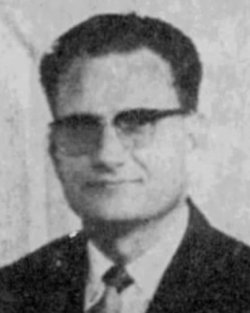
Wilbern Elias Best (1919-2007) was a preacher and writer of Gospel material. He wrote 25 books and pamphlets comprised of sermons he preached to his congregation. These books were distributed in English and Spanish around the world from 1970 to 2018 at no cost via the W.E. Best Book Missionary Trust.

Comments

0 / 2000 characters
Comments are moderated before appearing.

Be the first to comment!

Joshua

Joshua

Shall we play a game? Ask me about articles, sermons, or theology from our library. I can also help you navigate the site.