Bootstrap
W.E. Best

#65 Sanctification - The Believer is Identified with Christ in His Crucifixion

Romans 6:1-4
W.E. Best July, 1 1973 Audio
0 Comments
Remastered Oct/Nov 2024

Sermon Transcript

Auto-generated transcript • May contain errors

100%
Let us read the first 11 verses
of Romans chapter 6. Last Sunday we studied the first
two verses. We spent most of our time discussing
the second verse. In the discussion of the first
two verses, we might summarize what we went over by saying that
sin is first spiritual, then mental, and finally physical. Its conquest is first spiritual,
its recognition is mental, and its denial is physical. Let us now read. What shall we
say then? Shall we continue in sin that
grace may abound? God forbid, how shall we that
are dead to sin live any longer therein? Know ye not that so
many of us as were baptized into Jesus Christ were baptized into
His death? Please notice the first three
words of verse three. know ye not." Then notice the
first two words of verse 6, knowing this. The first three words of verse
9, knowing that Christ. Verse 16, the first phrase, know
ye not. And the first phrase of chapter
7, verse 1, know ye not." We'll continue to read with verse 4. Chapter 6, Therefore we are buried
with him by baptism into death, that like as Christ was raised
up from the dead by the glory of the Father, even so we also
should walk in newness of life. The word walk means the habitual
conduct of one who has been made alive in Christ Jesus. For if we have been planted together
in the likeness of his death, we shall be also in the likeness
of his resurrection. Verse 6 is the verse that we
will be studying together this morning. We'll spend all of our
time this morning and maybe a great portion of the service this evening
in the study of this text, knowing this, that our old man
is crucified or has been crucified with him, that is, with Christ,
that the body of sin might be destroyed, that henceforth we
should not serve sin. For he that is dead is freed
from sin. Now, if we be dead with Christ,
we believe that we shall also live with him. Knowing that Christ,
being raised from the dead, dieth no more, death hath no more dominion
over him. For in that he died, he died
unto sin once. but in that he liveth, he liveth
unto God. Likewise reckon ye also yourselves
to be dead indeed unto sin, but alive unto God through Jesus
Christ our Lord. Two or three other words by way
of introduction into the study this morning. In chapter 5, the principal word
is the little preposition in, that is, in Jesus Christ. You remember that in the study
of verses 12 through 21, that all men are either in Christ
or in Adam. In Adam all die, so in Christ
shall all be made alive. I Corinthians 15.22. The little preposition in denotes
the location of those who are justified before God. Coming
now to chapter 6, the principal word is not the preposition in. It is the preposition with. Just as the little preposition
in denotes location, the preposition with denotes
identification. So we have location in chapter
5. Now we're studying identification. We're not going to study together
this morning verses three through five. We will be doing that in
a subsequent lesson. This morning we're taking the
sixth verse, following our thought which we sought to develop last
Sunday from the second verse, how shall we that are dead to
sin live any longer therein? Let us now read the text once
again, which is verse 6, and in connection with this verse
I want to read two other passages of Scripture, one found in Ephesians
4 and the other in Colossians 3. Knowing this, point number one, that our old
man is crucified or has been crucified with him, that is,
with Christ. That the body of sin, this is
number two, that the body of sin might be destroyed. And number three, that henceforth
we should not serve sin. There is a perfect outline in
those statements found in verse 6. Turn with me now, please,
to Ephesians chapter 4. Let us begin reading with verse
20. We're not going to study these
passages in Ephesians and Colossians today. That'll be taken up in
another lesson. But I want you to see the connection
between verse 6 of Romans 6 and the passages which we are now
going to read from Ephesians and Colossians. But ye have not so learned Christ,
if so be that ye have heard him, and have been taught by him,
as the truth is in Jesus. Paul now writing to the Ephesian
saints, listen to the next two verses, the three verses really,
22, 23, and 24, that ye put off concerning the former conversation
the old man, mark the statement old man, which is corrupt according
to the deceitful lusts. and be renewed in the spirit
of your mind, and that ye put on the new man, which after God
is created in righteousness and true holiness. Wherefore, putting
away lying, speak every man truth with his neighbor, for we are
members one of another." Now turn to Colossians. Let us read beginning with verse
9. Well, let's go back to verse 8. Verse 8, Colossians 3. But now ye also put off all these,
anger, wrath, malice, blasphemy, filthy communication out of your
mouth. lie not one to another, seeing
that ye have put off the old man with his deeds, and have
put on the new man, which is renewed in knowledge after the
image of him that created him. Please observe the tense, ye
have put off the old man. Now turn back to Romans chapter
6. Two weeks ago I stated to you
that the sixth verse is one of the most controversial verses
in this portion of Scripture. You're going to detect that in
our study of this text this morning, and I'm sure that we'll not be
able to complete our study of this verse And if not, we will
continue our study of it in the service tonight. Those of you
who have been studying the material which you have available in your
homes, I'm sure you have already observed that there are differences
of opinion among sound men, basically speaking, concerning the great
truths of God's Word. I do not to know it all by any means,
but whenever I come to a verse of Scripture about which there
is a lot of controversy, a verse about which there is
a great amount of misunderstanding, I take my time. By God's grace,
I want to know what the truth of the text really is. You may
not be satisfied with some of my interpretations, especially of this verse. Thus,
it will behoove you to pursue the study even further and come
to a conclusion as to what the Scriptures really teach on this
particular passage of Scripture. I've already stated that there
are three major divisions of the text. After our introduction this morning,
we will give to you the three major divisions, after which
we will then begin our exposition of each division. In the study of Romans chapter
6, the subject is judicial death. judicial death. When we come
to the seventh chapter, we will deal with another aspect of death. It will not be death to sin,
but death to the law in chapter seven. After we leave the seventh chapter
and get into the study of the eighth chapter, the last chapter
that has been set aside for the study of sanctification. We will
deal with the third aspect of death. It will not be death to
sin, it will not be death to the law, but it will be death
to the flesh. The first two deaths are judicial. But the one in the 8th chapter
of the book of Romans is not judicial death. I'm not going
to say any more about that this morning because I want you to
begin to think about that. If you come to any conclusion
before we get that far, then it will be easier for you to
follow us when we study the 8th chapter of Romans, death to the
flesh. We begin this morning by saying
that there must be a distinction between judicial and experiential
death. There must be a distinction between
legal and experimental death. We've already stated there is
a distinction between positional and progressive sanctification. You find in Romans chapter 3,
beginning with verse 21, and this takes one through the 11th
verse of the 5th chapter, God's answer to the subject of sins. Notice now, I said sins, not
sin. I'm using the plural form. God's
answer to sins is given us in Romans beginning with chapter
3 verse 21 through the 5th chapter and the 11th verse. In the study of this answer,
there are two divisions. First of all, we have the judicial
aspect of the answer given us in Romans beginning with chapter
3 verse 21 through the last verse of chapter 4. I said the judicial
aspect or the legal aspect of the answer is given us in Romans
3 21 through chapter 4 verse 25. In thinking about the judicial
aspect, of course we have to take up the subject of justification
briefly once again. It should not be necessary for
us to have to say much about justification at this point.
Justification is recognized by you and me through the instrumentality
of faith. Romans 5 verse 1, therefore being
justified by faith we have peace with God through our Lord Jesus
Christ. This judicial aspect of God's
answer to the subject of sins is illustrated by two Old Testament
characters in the fourth chapter of Romans, Abraham number one
and David number two. All of this, of course, is continuing
under the title of justification. So the judicial aspect of the
answer that God has given us to sins, not sin, but sins, plural, is found in that section beginning
with Romans 321 through 425. Now the experiential aspect of
the answer is given us in Romans 5, 1 through 11. Notice I said the experiential
aspect. We have just made the statement
about the judicial aspect of the answer, but now the experiential
answer. The experiential answer is given
us in the first verses of the fifth chapter of Romans. For
instance, in verse one, therefore being justified by faith, this
phrase, we have peace with God. That's experience. All of us
here this morning who know Jesus Christ as Lord and Savior know
what it is to have a peace that passeth all understanding. We
not only have peace with God, but I trust that all of us are
experiencing the peace of God that Paul talks about in Philippians
4. So this is the experiential aspect
of God's answer to the subject of sin. We must not leave the
first verses of the fifth chapter of Romans without observing the
fifth verse. Here we are told that the love
of God is shed abroad in our hearts by the Holy Spirit. Now, we have been justified by
faith. This is something we have experienced.
Not only have we been justified by faith, and we have access
by faith into this grace wherein we stand, but we also have had
the love of God shed abroad in our hearts, and this too is something
that we experience. Not have experienced, but we
do experience this love, and we will continue to experience
this love. So we have God's answer to sins
in Romans 3, 25 through 5, 11. And in that section of scripture
we have not only the judicial aspect of God's answer, but also
the experiential aspect. Now beginning with the twelfth
verse of the fifth chapter, we have God's answer not to sins,
plural, but to sin singular. God's answer to sin is presented
beginning with the twelfth verse of the fifth chapter of Romans,
and this takes us through the last verse of the eighth chapter. Now let's divide this into two
divisions, just as we did in the study of God's answer to
the subject of sins plural. I'm sure that all of us by this
time know the difference between sins and sin. When the word sin
is used, we're talking about the sin nature, the sin nature. When the plural word is used,
sins, we're talking about the acts that proceed from the sinful
nature. God has not only provided for
our sins, but he is also provided for the sin nature of his people. I'm sure that there are many
Christians who do not understand that as well as they ought to
understand it. I can illustrate it in this manner.
The Lord Jesus Christ not only died for our sins, but he died
for our sin nature. I'll not say any more at this
time about that. In observing now God's answer
to sin, singular, not sins, plural, we have the answer beginning
with the twelfth verse of Romans 5 and it carries through to the
last verse of the eighth chapter. Let us look first of all at the
judicial aspect of God's answer to the subject of sin. We have
first the judicial answer, or the judicial aspect of God's
answer. This begins with verse 12 of
chapter 5 and actually goes through the sixth verse of the seventh
chapter. You'll see why this is true in the course of our
study. Deliverance comes to you and me. through the headship
of Jesus Christ, or through our representative, the Lord Jesus
Christ. Deliverance from sin comes through
identification with Christ in his once for all death, and that's
what we're discussing with you this morning from the sixth chapter
of Romans and verse six. When it comes to the experiential
aspect, of God's answer to the subject of sin, not sins, this
begins with the sixth verse of the seventh chapter and goes
through the last verse of chapter eight. We know that sin dwells
in the believer. What do I mean by that? I'm talking
about the sin nature dwells in the believer. This is presented
by Paul in the seventh chapter of Romans, verses 17, 20, and
23. Now, the sin which dwells in
us as Christians is counteracted by the law of the Spirit of life
in Christ Jesus, Romans 8, verses 2 through 4. Make that note. So the indwelling Holy Spirit
gives victory to the children of God over indwelling sin. Now, sin dwells in every believer,
but sin does not reign in every believer. Sin does not reign
in any believer. Sin reigns in the unbeliever,
even though sin dwells in the believer. Now we have come to
our text. Three great divisions of this
text. I am emphasizing this morning,
no you're not. Paul begins with verse three,
no you're not. In other words, we could put
it in a question form. Are ye ignorant? Are ye ignorant? Let us ask ourselves some questions
this morning. Are we ignorant of some of the
basic facts of what we have in Jesus Christ? That's what Paul was asking.
Are we ignorant of some of the basic facts of what we possess
in Christ Jesus? So he says, no you're not. that
so many of us as were baptized into Jesus Christ were baptized
into his death. I said I am not studying with
you this morning verses 3 through 5. That will be in another lesson.
But connect in the first phrase of verse 3 with the first phrase
of verse 6, knowing this, knowing this. Now there are differences
of opinion. concerning the opening words
of this verse of Scripture, knowing this. What do you think it means? What do you think it really means,
this statement? Knowing this was Paul's way of
introducing another element of divine truth. Proof of that is
found in verse 9. I said it was another way that
Paul introduced another element of divine truth. Some think it
is an appeal to the confirmation derived from experience, and
others think that it is an appeal to one's faith. So you see, there
are differences of opinion, even as to the opening statement of
verse knowing this. Personally, I think it was Paul's
way of introducing another great element of divine truth. Now, let's divide the text into
three major divisions. The first consists of the old
man having been crucified with Christ. You say, it doesn't say
that in the King James Version. No, it doesn't. And I'm sorry
it doesn't. You might say, well, who are
you to change it? Well, I beg of you to search
lexicons, and you'll find that this is in the ariest tense,
as I've already called attention to this in our reading of this
portion of Scripture two weeks ago tonight. This is something
that has already taken place, the old man having been crucified
with Christ. That's point number one. Point
number two, the object of the old man having been crucified
with Christ is in order that the body of sin might be destroyed. Now we're getting to the place
where there's a lot of controversy. Every person in this auditorium
this morning ought to want to know what this means. I hope that I can instill into
your minds enough desire to want to know what it really means. I said the object of the old
man having been crucified with Christ is that the body of sin
might be destroyed. What is the meaning of the word
destroyed? That's really where the controversy originates, the
main controversy. And then the third division of
this text, the purpose of crucifixion is that henceforth We, that is,
we who are saved, we who have been identified with Jesus Christ
in his death, the old body of sin having been destroyed, that
we should not henceforth, or that we, that henceforth we should
not serve sin. That is, from this day forward,
we should no longer be the servants of sin. but the servants of our
Master, the Lord Jesus Christ. You see, it's very simple. Nothing
difficult about it at all as far as the outline is concerned.
Now let's look at the text as a whole before we begin to break
it down. There are conflicting views concerning
the believer's death to sin in Romans chapter 6. I've already stated that debt
here is legal, not experimental, as the eradicationists advocate. Others say that Romans 6.6 teaches
counteraction, and they carry that too far. This was an alternate to the
theory of eradicationism propagated by the perfectionist. Counteraction
does not fit this text. Counteraction is taught within
the context, but not in this text. Counteraction is taught
in Romans 8, 2 through 4, but Romans 6, 6 does not teach counteraction. Now we come to the text itself. First of all, he makes reference
to the old man. Do you see now why we read Ephesians
4 and Colossians 3, a portion of those two chapters, where
Paul makes reference to the old man and the new man? Paul makes
no reference to the new man per se in Romans 6. But he does talk about the old
man. He does make reference to the
new man in both Ephesians and Colossians. Now who is the old man? Do you
know who he is? The old man is the Adamic nature. The old man is the unregenerate
man in contrast to the regenerate man. That's the meaning of old man. In other words, if you have been
identified with Jesus Christ and his death on the cross, you are a new man. And please observe in both Ephesians
and Colossians, the tense denotes something already having taken
place. The old man having been crucified. He's not being crucified. He has been crucified. Keep in mind the death is legal. The death is judicial. Thus we see what our position
in Jesus Christ is. So the old man is the Adamic
nature. It is the unregenerate man in
contrast to the new man or the regenerate man. The believer
is not two men. That's why I want you to be very
careful in the study of Ephesians and Colossians. Don't make the
mistake of referring to the two natures of the believer as two
men. The believer is one man with
two natures. He is not two men. He is not
Jekyll and Hyde rolled up in one. He is one man with two natures. Let's go back and illustrate
it with the Lord Jesus Christ for a moment. We know that Jesus
Christ is one person. He is one person with two natures,
the divine nature and the human nature, but only one person. Now, all of us agree to that.
Thus, the believer in Jesus Christ is not two men. He is one man
with two natures. Now let me carry that a step
further. You see there are some today who are making this mistake. They say when the Christian sins,
well it's not the new man that sins, it's the old man that sins. That's wrong. It is the Christian
who sins. I said it is the Christian who
sins. So don't make the mistake of
referring to the Christian as two men because that isn't true.
You might say, well now preacher, explain this to us, that passage in Ephesians and
the passage in Colossians. No, I'm not this morning. I'm
going to leave you hanging now. That'll be in another message.
We're going to take this step by step. We're in Romans now,
but I wanted to read those two passages to show you that Paul
doesn't make any reference to the new man in Romans 6, whereas
he does in both Ephesians and Colossians. He does make reference
to the old man, and the old man has been crucified with Jesus
Christ. The old man has been identified
with Christ in his once for all death on the cross of Calvary. So the old man is old, notice
this, old, why? Because he is connected with
the eldest of men. Do you know what I mean by that?
He's connected with Adam. So he is referred to as being
an old man because of his natural relationship to Adam, the head
of all mankind. That's why I said that we're
either in Adam or we're in Christ. All in Adam are dead in trespasses
and in sin. All who are in Jesus Christ have
been positionally set apart by the death of Jesus Christ. And
they are alive in Jesus Christ. The old man is dead legally,
judicially. So the old man is old by virtue
of the fact that he is connected with Adam. So the old nature
is first in every one of us. We're born with that nature.
And so he refers to this nature being old for the simple reason
it is the very nature that we come into this world with as
creatures of God, as human beings. It belongs to the past. You say
it belongs to the past? Yes. It belongs to the past rather
than the present in the believer. The old man has been crucified
with Christ. So the old man, our natural self,
is not as God made it. I said our old man. Our natural
self is not as God made it, but it is as Satan, self, and sin
have marred it. Does that make sense? The old man, I said, is not how
God made it. But the old man is how sin, Satan,
and self have marred it. Now let's look at the next statement.
The old man has been what? Crucified. Crucified. And here it says crucified with
Christ. So let's look at the expression
crucified with Christ. What does this statement mean?
It means that the believer has died unto sin. I'm emphasizing unto sin. In Romans chapters 1 through
5, we have what the Lord Jesus Christ has done for us. Now in Romans 6 verses 1 through
11, we are told that we died with Christ. with Christ. Christ died both for sin and
unto it. We could not die for it. You
could not die for sin. Jesus Christ died for sin. But you and I in Jesus Christ
have died unto sin. Christ died for our sins. That takes in, of course, the
vicarious atonement of Jesus Christ, his substitutionary work
on the cross. Only Christ could die for us.
You can't die for yourself. You can't die for anyone else
in the sense that Jesus Christ died for his own. The Lord Jesus
died for us, or he died for sin and he died unto sin. You and
I couldn't die for sin, but in Jesus Christ we have died unto
sin. Now, no you're not. Are we ignorant
of this great fact? You see, if a person understands
this, he will not have the idea that just because one believes
in salvation by grace, that he can go out here and live as he
pleases. The person who has been saved
by the grace of God doesn't live, quote, as he pleases, end of
quote, but he lives, quote, as God pleases, end of quote. Does that make sense? So crucified with Christ, the
Lord Jesus is our representative. our representative. So this crucifixion
was legal. This crucifixion was judicial. Thus we have what? Our position
in Jesus Christ. There are some say that the word
crucifixion is used here rather than the word death. And they
explain it like this. The word crucifixion denotes
a gradual or slow death. That's true. I agree with that.
And they say that the word crucifixion is used here rather than the
word death itself, because death denotes something taking place
instantly. And the death, they say, is something
that is gradual. And what they mean by that is
the death of the believer is something gradual. Now, it is
true that there is a gradual death, but that is not relative
to this passage of Scripture in Romans 6, verse 6. I said
that is not relative to this particular passage of Scripture.
Therefore, I challenge that view that is given by many. Now we
come to the second division of the text. The old man has been
crucified with Christ. That's legal. That's judicial. Now the object of the old man
being crucified with Christ. It is in order that the body
of sin, notice please the three words, body of sin, might be
destroyed. Now here's where we'll have to
spend quite a bit of time, so get set forth. Here is where
all the controversy is, the main part of the controversy. First of all, let me say that
there are some who believe that old man in the first part of
the text and body of sin in the middle part of the text refer
to the same thing. I do not believe that. I'm not
going to take time this morning, but I could give to you a great
number of men who believe that, and some might on the surface
Say, well now preacher, who are you to oppose such great men
whose names that you could mention? And there are many Puritans who
believe this, but I must tell you I don't believe that. That
doesn't mean they're heretics now, but I think they're wrong
on this particular point. I said some believe that old
man and body of sin refer to the same thing. Now there are
others who say that the body of sin is not the physical body, for that body has never been
destroyed. There are those who believe that
word body that is used here by Paul in Romans 6. refers to the
whole mass of sins, and they would refer to all the sins as
a Bible. I don't believe that either.
I don't believe that. It is true that the body is neutral. The body doesn't sin. Your body
doesn't sin. Sin goes deeper than a person's
body. If the hand takes something that
doesn't belong to it, don't accuse the hand of stealing. You know,
there are some countries when a person is caught stealing,
they'll just cut his hand off. This was practiced in India for
a long time. Just cut the hand off. Well now,
stealing goes much deeper than the hand, doesn't it? Certainly
it does. You and I who understand man's
sinful nature, the very seed of his affections, we know that
sin goes to the very heart. Out of the heart of man proceed
all of these things. So, if a person, if he starts
looking in a direction, and he looks upon a woman with a lustful
eye, well, it is true that the Lord Jesus said, if your eye
offends you, pluck it out, but he didn't mean to get something
and gouge it out of its socket. He didn't mean if your right
hand offends you to take an axe and cut it off. Sin goes deeper
than that. It is true that the body is neutral.
That's why I made this statement. That sin is first what? Spiritual. It is then mental. And finally
it is physical. That is taught in Romans chapter
1. Let me show it to you. Turn back to Romans 1 for a moment.
Romans chapter 1, beginning with verse 21, when
they knew God, or when they knew about God, they glorified Him
not as God. Neither were thankful, but became
vain in their imaginations, and their foolish heart was darkened.
professing themselves to be wise, they became fools and changed
the glory of the uncorruptible God into an image made like to
corruptible man. And the birds and four-footed
beasts and creeping things, wherefore God also gave them up, now follow
this closely, to uncleanness through the lust of their own
hearts, the seed of their affections, to disorder their own bodies
between themselves. So sin begins with the mind,
the higher part of man or the spirit of man. It reaches his
heart or the seat of his affections and finally goes out to the body. And God's remedy for sin begins,
first of all, it is spiritual. in the conquest of sin. It is
recognized mentally, and it reaches out to the very members of one's
body. So you see, you have here in
verse 24, we have wrong thinking, beginning with verse 21, wrong
loving in verse 24, and what? living. So wrong living is the
result of wrong thinking and wrong loving. That ought to teach us something
in this age when people are putting so much emphasis on the social
gospel. If a person is thinking wrongly,
well he's certainly going to love the things that he ought
not to love. And then he'll be found doing the things that he
ought not to do. So the actual doing of something
comes last, does it not? But there are those who believe
that the body of sin is not the physical body. They say it's
not the physical body. Now there's another view. There
are others who say that the body of sin refers to the body as
controlled by sin. I want to stop here long enough
to say that's what I believe. So there are those who say that
the old man and the body of sin refer to the same thing. There
are those who say that the body of sin does not refer to the
human or the physical body, but it refers, in other words, it
is used to represent the whole body of the sinful nature of
a person. And it's used figuratively. I
don't believe that either. But I do believe that the body
of sin refers to the body as controlled by sin. Thus the statement
might be destroyed. If you notice the last part of
the second division of the text, or you could interpret it brought
to naught, is in harmony with the thought of the entire passage. Not only this passage, but the
whole context. The body of the believer is no
longer a body that is controlled by sin. The body of the believer
is now controlled by a ruling principle, and the ruling principle
is the principle of life given in regeneration. Doesn't that
make sense? It does to me. So the body of
the believer is controlled by what has become a ruling principle
in his life, the principle of life. So the text speaks of the
old man and the body of sin. Notice that. And the body of
sin. I do not believe they're the
same. The first refers to the old spiritual nature, while the
second refers to the physical body. The first is the source
of sinfulness, and the second is the place where sin operates. Where does sin really operate?
Sin operates in the body. Well, let's see if that will
hold up. Look at the 12th verse, if you will. Paul said, Let not
sin therefore reign in your mortal body. The word body is the same
Greek word here that is used in verse 6. It is the word soma, that you should obey it in the
lust thereof. He goes on in verse 13 to say,
neither yield ye your members as instruments of unrighteousness
unto God, but yield yourselves unto God. That is, he says in the first
part, neither yield ye your members as instruments of unrighteousness
unto sin, but yield yourselves unto God. Then look at verse
16. No you're not. Know ye not that to whom ye yield
yourselves servants to obey, his servants ye are, to whom
ye obey, whether of sin unto death, or of obedience unto righteousness. So the first is the source of
sinfulness, and the second is the place where sin operates.
Sin operates in the body. Sin originates in our Adamic
nature. and operates in our physical
bodies. So it is first psychic and secondly
it is physical. That is proved by Romans 1, 24
through 28. It employs our intellect, our
feelings, our physical members in its service. So the body is
used in the sense of a physical body not only in verse 6 but
also in verse 12. Now let's look at the last word,
that the body of sin might be what? Destroyed. The word destroyed
has been a battleground for many interpreters. Some use it to
teach eradication. John Wesley started this many
years ago. Charles Finney came along here
in America and followed his same line of teaching. The Bible does
not teach eradication. Now while others say it refers
to counteraction, actually it does refer to counteraction in
this particular text. Counteraction is taught in the
context but not in this particular text. It is true that the Bible
teaches counteraction. The Bible does not teach eradication
of sin. The Bible does not teach suppression
of sin. The Bible does teach the counteraction
of sin. It is by virtue of the law of
the Spirit of life in Christ Jesus. that you and I are able
to overcome sin that dwells in us. And that's what Paul says
in Romans 8, verses 2 through 4. So it doesn't teach eradication. It doesn't teach counteraction
in this particular text. I like what Bishop Mole has said
in his discussion of the word destroyed. In fact, he interprets
it as cancel. He says that the body of sin
might be canceled. And then he makes this statement.
He says, cancel does not mean that grace lifts us out of the
body. Now listen to that. He says the word cancel, as he
interprets it, does not mean that grace lifts us out of the
body. He goes on to say that we are
no longer to keep under the body. In other words, it doesn't say
that we are not to keep under the body, as Paul says in 1 Corinthians
9 and verse 27. I keep under my body and I keep
it under subjection, he said, lest when I have preached to
others I myself should be a castaway. That is, to stand disapproved
before God. It doesn't mean that we are not
to keep close tab on the body. But he goes on to say, but we
are to always bring it in subjection by the power of the indwelling
Holy Spirit. This is the way that he interprets
the word destroyed. Now the Greek word that is translated
destroyed in your King James Version has various shades of
meaning. Now actually it would take a
long time to develop this as it ought to be developed, but
I think I can prove my point. I said the Greek word translated
destroyed has different shades of meaning. I'll give you a few. It doesn't mean to eradicate,
to annihilate as some teach. Will you look with me for a moment
at Romans 3 and verse 3? Let's stay within the context
of the book of Romans to illustrate that this word is used and it
has different shades of meaning. Paul said, For what if some did
not believe? Shall their unbelief make the
faith of God without effect? Shall their unbelief make the
faith of God without effect. Did you know the same Greek word
that is used in Romans 6.6 is used here? Now just because a
person does believe the record that God gave of his son, does
that make the system of truth that God has given to us, does
that make it without effect? Absolutely not. So the word does
not mean to eradicate, to destroy in the sense to annihilate, does
it? In that sense. Well, let me give
you another place word is found here in Romans. Look at the 31st
verse of the same chapter. The same Greek word is employed
by Paul in this text. Do we then make void the law
through faith? Do we destroy the law? The same
Greek word is used. Do we destroy the law? No, we
do not destroy the law. Look at what he says in the last
part of verse 31. God forbid, yea, we establish
the law. We do not destroy the law by
our unbelief. We simply establish the law. I'm showing you that the word
translated destroy has various shades of meaning. Now I'll give
you two other references in Romans. and will not take time to look
at them, but I'll give them to you. Romans 4.14, the same Greek
word is used. And again in Romans 7 and verse
6, the same word is used. The word is also used in Hebrews
2 and verse 14, and I am going to request that you turn to that
passage for a moment and look at that verse with me. You see,
I don't think it's necessary to go into all this. I'll tell
you what, if men like John Wesley and Charles Finney and others
had done it, they would not have given the heretical teaching
that they gave. All right, Hebrews 2. I'd like for
us to begin with the 11th verse. For both he that sanctifieth
and they who are sanctified are all of one, for which cause he
is not ashamed to call them brethren. saying, I will declare thy name
unto my brethren in the midst of the church, will I sing praise
unto thee. And again, I will put my trust
in him. And again, behold, I am the children
which God hath given me. For as much then as the children
are partakers of flesh and blood, follow me now, he also himself
likewise took part of the same. talking about the finished work
of Jesus Christ on the cross, listen closely now, that through
death, that through death, that is the death of Jesus Christ,
he might destroy, now let's stop a moment, destroy, the same word
is used here, that is used in Romans 6 and verse 8, that he
might destroy what? Him that hath the power of death,
that is the devil. I want to ask you a question.
Is the devil dead? Would you answer that? Is the
devil dead? The devil is not dead. And a
person would have to be an idiot to say that the devil is dead.
Thus the word destroyed that is used here does not mean that
the devil is dead. But I'll tell you what. He's
legally dead. He's judicially dead. He's judicially
defeated. And he knows it. He knows it
even better than we do. That's why he is working so hard.
He knows that his time is short. I don't have time to develop
that any further. But the devil knows that he is defeated. He
knows that he is judicially dead. He knows that His end is just
about at hand. Read the 12th chapter of Revelation
if you don't believe it, when you have time. But I'm showing
you that the word translated destroyed does not mean what
many people say that it means. All right, let's go a little
further, and we'll have to bring this lesson to a close, actually
before we're ready to do so. So Hebrews 2.14, were the same
Greek word. You know what the word is? I'll
spell it for you. It is spelled in the English K-A-T-A-R-G-E-O,
and the O is omega, the long O, in the Greek alphabet. Carter A-O. Carter A-O. That's the word. Translated destroyed. What does it mean? So the Lord
Jesus Christ has provided for you and me means whereby Satan
can be overcome. In the power of the new nature,
the believer can stand up against what? The old nature. So it is not the question of
mastery. but it's the question of the
master. Are you following me? It is not the question of sanctification,
it's the question of a sanctifier. It's not the question of victory,
but it's the question of a victor. It is not the question of our
new experience, but a new existence, we're in Jesus Christ. So the
totality of sin lies in the old man. If we knew the old man has
been crucified with Christ, it leads to the annulling of the
whole body of lawlessness. Yes, it is annulled, that we
should no longer serve sin. And I want to close, and we'll
complete our study of this tonight in discussing the purpose of
this crucifixion, that henceforth we should not serve sin. But I want to make this statement
in closing. What's the purpose of our crucifixion
with Christ? What's the purpose of the old
man being destroyed? That we should henceforth serve
the Lord and no longer serve Satan. We are the slaves of Jesus
Christ. We're not the slaves of Satan. You see, this brings up the subject
of mortification. I think this is a good way to
close the message without bringing it to a close so abruptly. Five
persons were once studying the subject of mortification. And so they were trying to arrive
at the best way for an individual to mortify the deeds of the body. Five men making a study of the
subject came to five different conclusions. I'm going to give
all five, but only one is scripture. Let's see if you can pick it
out. Really, I'm so accustomed to giving the correct one last.
Maybe I ought to give it first. No, I won't give it first. Maybe
I'll give it in the middle. Well, I don't know. You won't
know where I'm going to give it. So I'll just say, well, five
different men studying the subject of mortification came to five
different conclusions, but only one was right. One fellow said,
I think the best way for an individual to mortify the deeds of the body
is to meditate on the subject of death. I believe if he had just meditated
on the subject of death that he couldn't help but want to
crucify, mortify the deeds of the body. Just meditate on death. I'm going to die one of these
days. Death for me may be imminent. I may die tomorrow. Boast not
thyself of tomorrow, because a man does not know what the
days shall bring forth. That's true. Meditate on death. Another fellow spoke up and said,
I think a person ought to meditate on the horrors of hell. That's the best way I know for
a person to crucify, mortify the deeds of the Bible. Just
think about the horrors of hell. Beloved, when you think about
the horrors of hell, they're horrible, aren't they? Read the 16th chapter of the
Gospel according to Luke. Remember the familiar story,
the rich man Lazarus. When Lazarus died, even though
he died a pauper, he was carried by angels into the bosom of his
father Abraham. What a carriage, what a carriage. When the rich man died, what
an elaborate funeral he had, but in hell he lifted up his
eyes being in porn. Hades is the Greek word used
there. Meditate on hell and the horrors
of hell. He even said, I would that someone
would go and warn my five brethren lest they come to this horrible
place. Meditate on the horrors of hell.
That will enable a person to crucify or mortify the deeds
of the body. That was his view. Another one
said, just meditate on the subject of judgment. Just think, every
person someday is going to stand before God and be judged. Think
about the judgment. By the very fact that we're going
to be judged by the sovereign God, that ought to make a person
want to crucify the deeds of the Bible. Another one said, I think we
ought to think about the joys of heaven. Just meditate on the
joys of heaven. Surely when a person thinks about
heaven, and all the joys that we will have throughout the ceaseless
ages of eternity, that ought to make him want to crucify the
flesh with all of its affections and lusts." The other man said, the better
way for a person to mortify the deeds of the Bible is to meditate
on the person work of Jesus Christ. I gave it away, didn't I? Is that right? Consider Him. Consider Him. It isn't enough
to meditate on the subject of hell and its horrors. It isn't enough to meditate on
the joys of heaven. It isn't enough to meditate on
judgment. It isn't enough to meditate on
the subject of death. But when one considers Jesus
Christ, his blessed person, and the work which he has performed,
that's enough. Such meditation makes him want
to crucify the flesh with all of its affections and lusts.
W.E. Best
About W.E. Best
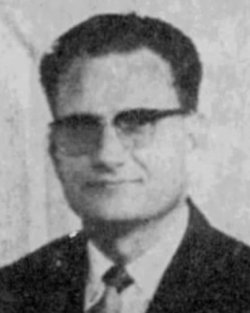
Wilbern Elias Best (1919-2007) was a preacher and writer of Gospel material. He wrote 25 books and pamphlets comprised of sermons he preached to his congregation. These books were distributed in English and Spanish around the world from 1970 to 2018 at no cost via the W.E. Best Book Missionary Trust.

Comments

0 / 2000 characters
Comments are moderated before appearing.

Be the first to comment!

Joshua

Joshua

Shall we play a game? Ask me about articles, sermons, or theology from our library. I can also help you navigate the site.