Bootstrap
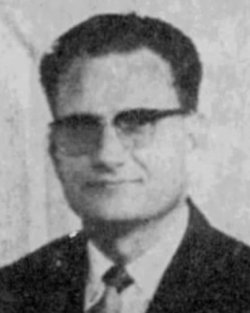
W.E. Best

#66 Sanctification - Baptism, Outward Sign of an Inward Identification with Christ

Romans 6:3-5
W.E. Best July, 1 1973 Audio
0 Comments
Remastered Oct/Nov 2024

Sermon Transcript

Auto-generated transcript • May contain errors

100%
from your Bibles to the sixth
chapter of the Book of Romans. For several services we have
been discussing verses one, two, and six, and the passages related
to the subject discussed by Paul in those verses. After spending the entire Lord's
Day, both Sunday morning and Sunday evening services, discussing
Colossians chapter 3. We're returning this morning
to the sixth chapter of Romans, and we'll be studying this morning,
and probably the service this evening, verses 3 through 5 of
this chapter. Some of you may think we're spending
an awful long time very long period of time discussing
Romans 6. We're not through with it yet
by any means. Let us read beginning with verse
1 and read through verse 5. We'll be studying together this
morning verses 3 through 5. What shall we say then? Shall
we continue in sin that grace may abound? God forbid How shall
we that are dead to sin live any longer therein? Being dead to sin, in verse 2,
and in connection with verse 6, knowing this, that our old
man is or was crucified with Christ, we've come now to an explanation
that Paul is going to give of being dead to Christ. We might
begin by saying the apodictic statement that the believer died
to sin must be explained, and it is explained by the Apostle
Paul in verses three through five. The fact of union with
Jesus Christ is incontestable. It has been fully demonstrated. And now Paul is going to explain
what it really means, by way of example, to be dead with Christ. Now, with that thought in mind,
let us read verses three through five very carefully. that so many of us, as were baptized
into Jesus Christ, were baptized into his death. That has been a controversial
text of Scripture. Those who believe in baptismal
regeneration refer to this passage. Individuals who believe that
Regeneration is synonymous with baptized into the body of Jesus
Christ, for the Holy Spirit used this verse of Scripture. There are those who do not believe
that the subject or the ordinance of baptism is referred to at
all within the context of verses three through five. Now, it is not because of my
background training that I have to disagree with that view. Personally,
I believe that the ordinance of baptism is referred to in
this portion of Scripture. I do not believe there is any
reference whatsoever to baptismal regeneration, because that is
contrary to all Scripture. Furthermore, I cannot accept
the view that this verse refers to planting into the body of
Jesus Christ by the Holy Spirit, or synonymous with regeneration. Paul has already made reference
to the fact that we are dead to sin. Being dead to sin simply means
that we have been identified with Jesus Christ and his death.
We have been regenerated by the Spirit of the living God. This
is incontestable. It cannot be refuted. Now Paul
is going to explain the apodictic statement that
is made in verse 2. Know ye not that so many of us,
as were baptized into Jesus Christ, it is the preposition into that
has caused so much controversy. It continues to cause a great
deal of debate. We're baptized into his death. The Greek preposition eis, spell
e-i-s, is used twice in verse 3, into Jesus Christ, into his
death. Now verse 4, therefore we are
buried with him by baptism into death. Once again, we have the
same Greek preposition. that like as Christ was raised
up from the dead by the glory of the Father, even so we also
should walk in newness of life. For if we have been planted together
in the likeness of his death, we shall be also in the likeness
of his resurrection. And we'll read verse 6 to complete
the thought, knowing this, that our old man is crucified or was
crucified with him, that the body of sin might be destroyed,
that henceforth we should not serve sin. I want to give to
you a translation of verse 3 by an individual who believes that
this verse refers not, or makes no mention whatsoever, of the
ordinance of baptism, but it speaks of one being baptized
into the body of Jesus Christ. As I read his translation to
you, I am going to request that you read along with me the third
verse. I think you will have to say,
after I have given his translation, that there is no justification
whatsoever for any such translation. Here it is. know you not that
so many of us, as were identified into Christ by the baptism of
the Holy Spirit, were thereby identified into his death among
other things." Now, that's his translation of the verse. I'll
give it to you again. Know ye not that so many of us,
as were identified into Christ by the baptism of the Holy Spirit,
were thereby identified into his death among other things?"
First of all, we want to more or less summarize these verses,
and then we will start digging into each phrase of this passage
of Scripture. The fact of union with Christ
was incontestable. It had been fully demonstrated. Paul had demonstrated that fact
in his own life. The Roman believers had fully
demonstrated the fact that they had passed from death into life. Paul was addressing Christians
in this epistle, the ordinance of baptism, which is important
in its place. I can't stress that too much.
I said the ordinance of baptism, which is important in its place,
signifies something that we are to consider in the light of verses
3 through 5. The ordinance of baptism signifies
union with Jesus Christ, first of all, in his death, number
two, in his burial, and number three, in his resurrection. Now, Paul is explaining the statement,
the incontestable statement, of being dead to Being dead to sin means that
one is alive to God. The appeal to baptism shows the
place and importance of the ordinance in the Christian profession.
It is true that the preposition eis is used. And it means with
reference to, in this particular case, notice verse 3 once again,
know ye not, that so many of us as were baptized with reference
to Jesus Christ, were baptized with reference to his death. I don't see anything difficult
about that. Personally, unless a person has
a prejudiced mind, I see no reason whatsoever for a person to say
that this text of Scripture emphasizes that one must be baptized in
order to be saved or to get into Jesus Christ. That view is held
by a great number of religionists in our time, as it has been held
by religionists since the day of our blessed Lord. So it must
be refuted. And it is to be refuted, of course,
by Holy Scripture. It's deadly heresy. to say that
a person must be baptized by water in order to get into the
Lord Jesus Christ. So, the appeals of baptism here,
as Paul explains what it means to be dead, to sin, and alive
to God, he uses the ordinance of baptism, something that was
familiar to the Roman believers. and the preposition ais is used
four times within the context of these verses. Let me mention
some other references where the same Greek preposition is used. For instance, you'll find in
1 Corinthians 10 and verse 2 that the Israelites were baptized
into Moses. Now you do not see that in your
King James Version, but the same Greek preposition is used. 1
Corinthians 10-2, look at it. The Israelites were baptized
into Moses. Now what does it mean? It simply
means that they were baptized with reference to Moses, their
leader. And there's another passage in
1 Corinthians 1 and verse 13. The Corinthians were baptized
with reference to the name of Paul, baptized with reference,
1 Corinthians 1 and verse 13. I'll give another reference.
It is found in Matthew 28, verse 19. In the commission, the Lord
Jesus Christ said, go into all the world, preach the gospel
to every creature. making disciples, and baptizing
the disciples in the name of the Father, and of the Son, and
of the Holy Spirit. So, we have in that passage,
into the name, or with reference to the name of the Father, the
name of the Son, and the name of the Holy Spirit. Baptism,
therefore, is an outward sign of an inward identification with
Jesus Christ. I can't stress that too much.
It is an outward sign of an inward identification with Jesus Christ. Baptism, therefore, is an interpretation
of the believer's experience of grace. The relation of death
to a funeral is the relation of salvation to the subject of
baptism. When that is understood, there
will be no misunderstanding, there will be no misrepresentation
of the ordinance of baptism. Believers died with Jesus Christ
in his death, and not in his burial. Notice what I said. believers
died with Jesus Christ in his death and not in his burial. As we died in Christ's death,
so we live in Christ's resurrection. That is the subject that Paul
is discussing throughout the first 11 verses of Romans chapter
6. In other words, we have the great
principle of holiness In the first 11 verses, beginning with
verse 12 through the 23rd verse of the chapter, we have the practice
of holiness, or putting into practice the principle of holiness
explained in the first 11 verses. But let's look at some other
things within the context of these verses. The idea of purity. is associated with the word newness
in our text. Let's look at the passage again,
especially verse four. Therefore we are buried with
him by baptism with reference to his death, that like as Christ
was raised up from the dead by the glory of the Father, even
so we also should walk in newness of life. For if, or since, we
have been planted together in the likeness of his death, we
shall be also in the likeness of his resurrection." What is
Paul discussing? He is discussing the purity of
the believer. The idea of purity is associated
with the word newness in verse 3. Thus we have what? First of
all, a new heart. A new heart is given in regeneration. The person who has been given
a new heart is a new creature. A new creature. He is a new man. He's no longer an old man. He
is now a new man. The time will come when he will
be given a new name, and he's going to inhabit a new heaven,
or new heavens and a new earth. If you want something that is
interesting, beloved, is study the word N-E-W throughout the
scriptures. You will be fascinated by such
a study. So newness of life that he's
talking about here. is a life that is new compared
with that which is natural. It is a holy life springing from
a holy source, and the source of the new life is Jesus Christ. The Christian life is emphatically
new. I said it is emphatically new.
First of all, in this present life, our souls are grown up
to ascend, to ascending desires, as we saw last Sunday. Since
you be arisen, or since you're risen with Christ, seek those
things which are above. Set your affection on things
above. Why? Because you're dead to sin and
your life is hid with Christ in God. So, in this present life,
our souls are drawn up to ascending desire. Now afterwards, let us
think about afterwards, at the resurrection, notice I said at
the resurrection, by the same power that enables us now to
ascend to new desires, that same power shall raise our bodies
and they will be fashioned like unto the glorious body of the
Lord Jesus Christ. This new life is one never before
professed. Therefore, it is new in principles,
it is new in emotions, it is new in motives, it It is new
in object, it is new in hope, and it is new in possession.
It's a new life. The new life begins with a new
birth, quickened by new power, inspired by new principles, and
shall be perfected in a new body. Now that ought to captivate our
attention for a while. The new life begins with a new
birth, quickened by a new power. Not the power of the flesh, but
the power of the indwelling Holy Spirit, inspired by a new principle. and shall be perfected in a new
body when we stand in the presence of him who loved us and gave
himself for us. But we come to a walk. We are
raised to walk in newness of life. But do we understand this? Do we really understand this?
The walk of the new life is in the well-beaten path, I might
say, of everyday life. I said the walk of the new life
is in the well-beaten path of everyday life. When one becomes
a new creature in Christ Jesus, He is not expected to change
his course of life unless the course of life brings reproach
upon the cause of Jesus Christ, unless the course of life is
contrary to the principles of God's Word. Now, if a man is
in a particular type of business, that brings reproach upon the
cause of Jesus Christ, then he should get out of that business.
If a man is going a certain way and his business is such that
brings reproach upon the cause of Jesus Christ, let me tell
you, beloved, if that man has been given a new heart, I want
to make it very plain this morning. I said if he has been given a
new heart, He has a new disposition, he has new motives, he has new
desires, and new motives and new desires will never go contrary
to that which the Scriptures uphold. He shouldn't have even been asked
to give up such a bid. He should have automatically
done it when he became a new creature in Christ Jesus. He
should have changed his profession immediately. But let's look at this. We are
raised to walk in newness of life. Newness of life. So, the word
walk here, simply means that we continue to go the course
of the well-beaten path of life. Now, you're not to give up your
job. You're to continue to work. You're
to be a better employer when you become a new creature in
Christ Jesus. I mean a Employee, you may be
an employer. If you're an employer, you're
to be a better employer. If you're an employee, you're
to become a better employee. But the very fact that the grace
of God has come into one's life, he should want to be a better
employee if he is such, or he should want to be a better employer
if he is such. He doesn't have to change his
livelihood. to do a better job where he is
as a Christian. So it is the old path, trodden
every day with new principle, with new affection, in a new
power, and for a new purpose, the glory of God. Does that make
sense? Sometimes you find people when
they become Christians, they think, well, I'm not to continue
in this particular job. If your job is not bringing reproach
upon the cause of Jesus Christ, that's nonsense. Just because
you're a new creature, that doesn't mean that you've got to change
your job. Continue in the same job. But
as you continue therein, you do it because you are a new creature,
motivated by the Holy or a new power, and you have new desires,
and you have a new purpose, you ought to do all that is done
for the glory of God. Whether you're understood by
your employer or employee or not, God understands. It is before God we shall all
stand. It is before God that we as Christians
shall be judged. So this newness is better than
creation. I said this newness is better
than creation. How can I explain that? As the
newness of the heavens and the earth exceed the glories of Eden,
so the newness of the regenerate man exceeds the glories of Adam
before the fall. Do we realize that? Let's let
that soak in a little bit. It is true that Adam experienced
uprightness, but his uprightness had the ability to what? Fall. But in regeneration, Beloved,
we are kept, we are preserved, we shall never fall. So as the
new heavens and the new earth exceed Eden, so the new man in
Jesus Christ exceeds Adam even before the fall. Now that ought
to give great encouragement to us. Every once in a while you'll
come in contact with someone who doesn't understand regeneration
and he says, if Adam had not fallen, think how wonderful it
would be today if Adam had not sinned. I want you to know it was in
the purpose of God for Adam to sin. It was in the eternal purpose
of God for Jesus Christ to come and redeem us from sin, and our
new position in Christ exceeds that of Adam even before the
fall. Now, that should be enough to
make us want to live to the honor and glory of him who died for
us. The idea of newness of life cannot
be stressed too much. It is not our old life that we
live in a new man. It is Christ's life lived through
us. Christ is the source of our life. I'm convinced, beloved, that
a great number of people today who call themselves Christians
don't even understand the foundational truths of Christianity. I am more convinced of it every
day I live, and the more I deal with people. Someone has said, and I quote,
because Christ's life was vicarious, Our life in Christ is to be victorious. Now, I'm not talking about the
higher life movement. I'm talking about victory over
sin. I'm talking about victory over
the old nature. Christ's death, one said, was
any bit of fat. an event of fact, so were his
burial and resurrection facts. The believer's death in Christ
was a fact applied in regeneration and embraced by faith. So, are our burial and resurrection
in Christ facts? understood by faith and manifested
by the improvement of the old nature's deeds and walking in
the newness of life." I like to give that a game. That's punishing. Because Christ's life was vicarious,
our life is to be victorious. Christ's death was an event of
fact, so were his burial and resurrection facts. The believer's
death in Christ was a fact applied in regeneration and embraced
by faith. So are our burial and resurrection
in Christ's facts, understood by faith, and manifested by the
entombment of the All-Nature's deed and walking in the newness
of life. If salvation doesn't make a better
person out of us, there is something wrong. If salvation doesn't give
us a new perspective, then there's something wrong. If there is
anything wrong with salvation, there is something wrong with
a person who professes to have salvation, and there is no manifestation
of a new desire, or a new person, a purpose. That's the simplicity
of it. I'm talking about walking in
newness of life. There is not a regenerated person
in this auditorium this morning who does not know exactly what
I'm talking about. You're not walking in the course
that you once walked. You're not walking as Gentiles
walked, Paul said in Colossians 3. You're now walking as born-again
persons. Possessed with a new heart, energized
by the Holy Spirit, and walking, therefore, in newness of life. Not perfect, but newness of life. So new that persons with whom
you come in contact can know that you're no longer walking
as you once walked. life manifests itself. Now, he's
going to explain this by the use of the Ordinance of Baptism. Thus, we see the importance of
the Ordinance of Baptism. Let us think about three things—death,
burial, and resurrection. All three are mentioned, in verses
3 through 5. Christ died, He was buried, and
He rose again out from among the dead on the third day. Death, burial, and resurrection. What is the cross to you and
me? What is the death to you and me? The death of Jesus Christ means
that we have died in him. Having died in him, we are thus
dead to sin. What does the tomb mean? What does the burial really represent? We might say that the cross is
the place of safety for the believer. The sepulcher is the entombment
of the old man and the deeds of the old nature now. And the resurrection represents
what? are walking in newness of life. It's all pictured in the ordinance
of baptism. Baptism symbolizes death, baptism
symbolizes burial, and baptism symbolizes resurrection. Let's look at them. All three are given. Baptism
expresses symbolically a series of acts corresponding to the
redeeming acts of our blessed Lord. We'll begin with number
one, as it is set forth in verse three. Baptism symbolizes death. Baptism is a figure of death. It is not the believer's death
that is set forth in baptism, but Christ's death, which alone
is the means of the believer's salvation. I'm afraid that sometimes we
really lose sight of what baptism is a picture of, as it is obeyed
by the believer. I said it is not a picture of
the believer's death. It is a picture of Christ's death. Christ's death. His death, which
is the means of our salvation. That is what is pictured in baptism.
When a person is buried, he is simply symbolizing in a pictorial
manner, the death of Jesus Christ. The death, I said, of Jesus Christ. It is Christ's death, not his
death. Christ's death is his security,
and he's identified with Christ in his death. So don't read verse
3 as one being baptized into Christ. And the only way he can
get into Christ is by the watery grave? That's not what Paul is
talking about. When he says baptized into his
death, he's not talking about getting into his death by means
of a watery grave. It is simply a picture of the
death of Jesus Christ. And one is baptized with reference
to that death, recognizing it is that death, the death of Jesus
Christ, that has saved him from sin. Several things I want to
discuss under baptism symbolizing death. I said, first of all,
it is a picture or a figure of death. It is not the believer's
death, it is the death of Christ. So baptism is a means of the
believer's identification with Christ's death through confession. I believe in confession. I believe in confession in the
same manner I believe in walking in newness of life. Now follow
me, I want to be helpful. Whenever a person has experienced
a new life, In other words, it is an experience,
not something he has experienced, but something he experiences.
The new life is within. He experiences it every day. In this experience, what does
he do? He wants to confess that Jesus
Christ is his Lord. Jesus Christ is his Savior. Jesus
Christ is his advocate. Jesus Christ is his intercessor.
Jesus Christ is his high priest. Jesus Christ is his all in all. He is altogether loveless. He's
the rose of Sharon. He's the lily of the valley.
He's the bright and morning star. He's the bread of life. He's
the resurrection and the life. We could go on, beloved. for
thirty minutes, giving many adjectives to describe the blessed person
of Jesus Christ and what he means to the believer. He's willing
to confess this. What do you think Paul means
when he says in Romans 10, turn to the passage please, Romans
10, reading verses 9 and 10, that if thou will confess with
thy mouth, O Lord Jesus Christ, of the Lord Jesus, and shall
believe in thine heart that God hath raised him from the dead,
thou shalt be saved." Now, he's not talking about being regenerated. I'm assuming that you know the
difference between regeneration and salvation. Salvation is the
fruit of regeneration. Regeneration is not the fruit
of salvation. The order is first regeneration
and then salvation. Salvation is experienced by you
and me. Regeneration is not experienced
by us. Verse 10, for with the heart. Now the person who has been given
a new heart, the new heart believes. with reference or unto salvation,
or with reference to righteousness. And with the mouth confession
is made, here's that preposition again, the same Greek preposition
eyes, with reference to salvation. So where there is salvation,
there will be what? Confession with reference to
the salvation. Now let me illustrate the simplicity
of this Greek preposition, eyes, that has caused so much controversy.
I'd like to go back a moment to Matthew 3 and verse 11. Would
you go back with me to that passage? Let's take one of the first places
the Greek preposition is used in the New Testament Scriptures.
Matthew 3, verse 11. John the Baptist was preaching.
He was preaching repentance. In the 11th verse, I am to baptize
you with water unto, there's the preposition again, the same
Greek preposition, ais, unto repentance. Now I want to stop
right there for a moment. I want to clear up all the controversy
with the context of this passage. I indeed baptize you with water
unto repentance, or with reference to your repentance." Now, did
John baptize them before they repented, or did he baptize them
after they manifested their repentance? Does the context answer? It surely
does. Go back to verse 7, and let's
read beginning with verse 7. We'll clear up all of the controversy. But when he saw many of the Pharisees
and Sadducees come to his baptism, he said unto them, O generation
of vipers, who hath warned you to flee from the wrath to come?
Now, verse 8, bring forth therefore fruits, meat, for repentance. Look at your marginal Answerable
to amendment of life. Meet for repentance. Answerable
to amendment of life. In other words, you're going
to have to prove to me by your lies that you have repented before
I will ever baptize you. Look at the context. So you're to bring forth truths
answerable to what? Amendment of life, for repentance,
and think not to say within yourselves, We have Abraham to our father,
for I say unto you that God is able of these stones to raise
up children unto Abraham. And there also the axe is laid
unto the root of the trees. Therefore every tree which bringeth
not forth fruit is hewn down and cast into the fire. Now I
indeed baptize you with water unto repentance with reference
to your repentance. When did he baptize us? not until
they had shown by amendment of life that they had repented before
he would even administer baptism. He was right. His baptism was
not in order for them to repent anymore than I would baptize
an individual in order for him to get into Jesus Christ. So
the same Greek preposition is used here It's used in Matthew
28, 19. It's used in 1 Corinthians 10,
2. It's used in 1 Corinthians 1, 13. And it's used in 1 Corinthians
10, 9, and 10. With the mouth, confession is
made with reference to what? Salvation. Where there is salvation,
there's going to be confession. That's the point I'm making. So we're talking about baptism
being a picture. A picture. So baptism is a means
of the believer's identification with Christ's death through confession. Let's stop a moment. Through
confession. Can a baby make such confession? I'll tell you what
do. No, I don't want you to either.
Start saying, you can go to a Methodist church or Lutheran church, someplace
where they sprinkle, some Sunday when they're doing that, and
see how many babies, when they're sprinkling babies, how many make
the confession, I've received Jesus Christ as my Lord and Savior. You're not going to hear an infant
say that. Infants can't say that. You say, well now don't be too
hard. There is absolutely no scripture for sprinkling a baby
and call it Baptist. Confession is made with reference
to salvation. And confession is the fruit of
salvation. Let's steer that thought further.
I said baptism symbolizes death. Confession, we know, is the fruit
of regeneration. The relation of death to the
burial is the relation of salvation to baptism. You don't bury a
person until he's dead. And you don't bury a person in
baptism until he is dead to sin and alive with God. To get the
cart before the horse, you see, destroys the meaning of Holy
Scripture. Now, baptized into Christ does
not mean to be baptized into the faith of Christ. There are
some who believe that. Baptized into Christ, they say,
means to be baptized into the faith of Christ. There is no
Scripture for that. Baptism is only a field of our
faith. That's all it is. It's a picture. Believers died with Jesus Christ
in His death and not in this burial. So believers are baptized
with reference to Jesus Christ. Just as the Israelites were baptized
with reference to Moses in 1 Corinthians 10 and verse 2, so believers
are baptized with reference to Jesus Christ. The Israelites
recognized Moses as their leader. Believers in Jesus Christ recognized
Jesus Christ as being the captain of their salvation. Baptism is valid only when the
candidate is properly identified with the death of Jesus Christ. Now let's stop there a moment.
It has been my experience on a number of occasions since I've
been preaching to re-baptize people, and there isn't anything
wrong with using that terminology, re-baptize. I was baptized as
a lad 14 years of age, but I wasn't saved, I wasn't rightly related
to Jesus Christ. After I was rightly related to
Jesus Christ in his death, then I followed the Lord Jesus Christ
in baptism. So baptism is valid only when
the candidate is properly identified with the death of Jesus Christ.
The candidate must be dead to sin before he is buried with
Christ by baptism into his death. So union, you see, with Jesus
Christ precedes baptism. How many people today are going
through life, and many of them have become Christians later
in life, but they were either sprinkled, poured, or immersed
three times with face forward or what have you, no person is
to follow the Lord in baptism until he is rightly related to
Jesus Christ. Union precedes baptism. So the truth of the emblem is
affected Not by baptism, but by faith, by the faith of the
operation of God, Colossians 2 and verse 12. Then let's look
at the second thing. The second thing has to do with
the burial. Baptism is a picture of burial,
or it symbolizes burial. Burial always follows death. Observe the meaning of the word
therefore in verse 4. Therefore we are buried with
him by baptism with reference to death, with reference to death. So the burial of Christ was not
his death, it was simply the exhibition of his death. It is
by baptism and not by faith that we are buried. Therefore, the burial must be
a figurative burial. So death is different from burial. Death is one thing, burial is
another. Death is different. Though burial
includes death, they are different. Christ's burial was as distinct
from his death as his resurrection was distinct from his burial.
So burial signifies a continuance under what? Death for a time. Now I want us to look at this.
Came across this thought recently and I thought it was a great,
great thought to develop. Burial signifies a continuance
under death for a time. How long was the Lord Jesus Christ
in the tomb? How long was he dead? His body
I'm talking about. days and three nights in the
heart of the earth. Now, when we think about that,
here's the application that one has made. As burial signifies
a continuance under death for a time, so the reality of Christ's
death was proved by his three days in the tomb. interment of Christ, evidence
that the world was through with Jesus Christ and His redemptive
work was finished. Let's think about that. Great
application to be made of that in our own personal lives. The
Lord Jesus spent three days and three nights in the heart of
the earth. What did that signify? It signified that the earth was
through with Him. The world was through with Him.
We've gotten rid of it. When you and I, beloved, are
buried with Christ in baptism, we are to signify to the world
and to all, for that matter, that the world is through with
us. And it is. It's through with us. The world's
through with you. Were you willing to acknowledge
or not? The world's through with you. You're in the world, but
you're not of it. So you're through with the world.
The world is through with you. Do you reckon that? Do you acknowledge
that? We're through with the world.
The world is through with us. In it but not out of it. Walking
through it, but that's all. Just walking through pilgrims
and strangers here. So you see what a wonderful thought.
the interment, which lasted, you see, and then the entombment
for three days and three nights are the continuance of this death. But even though we have died
and the old man has been put off, there is a continual death
which you and I as believers experience now while we're here
in this life. has symbolized in the burial. It isn't symbolized in the death.
Notice what I said. Three days and three nights that
our blessed Lord spent in the tomb symbolizes something the
world was through with him. A continuance of death of the
body, even though we have died with Christ, There is a continuance
of death. We die daily as believers. You see, that takes in mortification. That takes in crucifixion and
all the deeds of the old man. So there is a continual dying. In other words, there is a lingering
death for you and me while we're in this life. That's to be understood spiritually.
Do we understand that? we do if we understand the meaning
of our position in Jesus Christ. And all of this, you see, before
we get to the newness of life. Let's go a little further. Another
has said, the burial of the believer symbolizes the entombment of
the corruption and fruits of his sinfulness. the burial of
a believer. In other words, when a believer
is baptized, he's buried. What does it symbolize? It symbolizes
what? The entombment of the corruption
and the fruits of his sinfulness. But that isn't all. As burial
is continuing under death, So mortification is a continual
dying to sin. Brethren, I think I have touched
on some things this morning that we have overlooked in our understanding
of baptism and what it really pictures. Now let's come to the third,
the third point. Baptism symbolizes resurrection. Look at the fifth verse, the
last of verse four and all of verse five. He says, like as Christ was raised
up from the dead by the glory of the Father, even so we also
should walk, and the word walk is always used in the sense of
habitual conduct. Habitual conduct. walk in newness
of life. Yes, I believe there will be
a habitual conduct which will manifest the newness of life. So, resurrection, or being raised,
is a symbol of the resurrection of Jesus Christ and our having
been raised with him to walk in newness of life. In none of
these Is there any mention of the physical resurrection of
the believer? Would you notice that? The physical
resurrection of the believer is not discussed in this portion
of Scripture. You're going to have to go out
of this context to find any reference to physical resurrection. Paul
is not talking about the resurrection of the Bible. want to drop something at this
point, will you turn to Romans 8.11 for a moment? Romans 8.11 has been used by
me and by many others out of context. Let's read verse 11. But if the
Spirit of him that raised up Jesus from the dead dwell in
you, He that raised up Christ from
the dead shall also quicken your mortal bodies, not dead bodies.
Will you look at that? Paul is not talking about the
resurrection of dead bodies here, and yet it is almost always used
in that context. Notice what he said, quicken
your mortal bodies. A mortal body is a living body,
beloved, not a dead body. Won't you look at that a little
bit? I want you to see how scripture
can be used out of context so easily. Shall also quicken your
mortal bodies by his spirit that dwelleth in you. What is Paul
teaching in this passage? The same thing that he's teaching
over here. In Romans chapter 6 you see it
all goes together, it all ties together because it is involved
in the subject of sanctification. Now go back to verses 4 and 5
a moment as I expand on this. Like as Christ was raised up
from the dead by the glory of the Father, even so we also should
walk in newness of life. For since we have been planted
together in the likeness of his death, we shall be also in the
likeness of his resurrection. He's not discussing the resurrection
of the body. He's talking about a resurrected
life lived by believers now. That's why he says in the 11th
verse of chapter 8, and we'll go back up to verse 9 to get
the connection, and you can't miss it when you read verses
9 through 13. But ye are not in the flesh,
but in the Spirit. The believer's in the Spirit,
the Spirit's in him. If so be that the Spirit of God
dwell in you. Now if any man have not the Spirit
of Christ, he is none of his. A person either has the Holy
Spirit or he does not have. If he has the Holy Spirit, he's
a Christian. If he doesn't have the Holy Spirit,
he's lost. He doesn't stop. And since Christ be in you, the
body is dead because of sin. The body is dead because of sin.
Now he's not saying that this body in which we live is dead
physically yet, but it's accounted as dead and we'll get into that
when we get to Romans 8. That's not the point I want to discuss
with you at this time. But the Spirit is alive because
of righteousness. In other words, the Spirit imparts
sufficient grace for the believer to live the new life. Now verse 11. But since the Spirit of him that
raised up Jesus Christ from the dead dwell in you, he's dwelling
in you, he that raised up Christ from the dead shall also quicken,
and the Spirit quickens the mortal body, not the dead body. If Paul
were talking about the resurrection of the dead bodies, he would
not have used the word mortal. In the 15th chapter of 1 Corinthians, the dead body is a body that
is corrupted, and the corrupted body will put on incorruption.
But here it's a mortal, living body. He says the mortal some
day shall put on immortality. That is those who are living
at the time that Jesus Christ come, they'll put on immortality. He's talking about living persons.
Not talking about dead bodies, living bodies. So the Holy Spirit
who indwells the Christian, enables the Christian, quickens the old
body, enabling him to do what? Notice verse 12 now. Therefore
brethren, we are debtors. We're debtors not to the flesh,
to live after the flesh. For if ye live after the flesh,
ye shall die. But if ye through the Spirit
do mortify the deeds of the body, ye shall live. What's Paul talking
about? He's talking about the Holy Spirit
within the believer, enabling the believer to live the new
life in this life. That's what he's talking about. So resurrection is symbolized
by baptism. So here the believer's spiritual
life is viewed in relation to the matter of sin. Now there
is a newness of life. It is a new era in human life. A new era began in my human life
at the age of twenty. A new era began. I know what
it is to experience the newness of life, and so does everyone
who has passed from death into life. As we died in the death
of Jesus Christ, so we live in his resurrection. It is by the
power of the resurrected Christ that we live. Now in closing, let's look at
the three verses. sum it all up and see the beauty
of the content. What is the apostle doing? He
is explaining, explaining the fact, the incontestable fact
of the believer being dead to sin. and alive with Christ in
God. And the life which he lives now
in the flesh, he lives by the power of the indwelling Christ. That's what he's saying, newness
of life. I do not believe for a second,
beloved, that you have to look with a microscope to find some
evidence of life in a believer. I do not believe that you're
going to have to search and look and find and suppose and maybe
and perhaps. Where there is life, there's
a manifestation of life. That's what Paul is saying. I'll tell you what. Religionists have taught this
easy-believism, this business of embracing Christ as Savior
and not embracing Him as Lord, and living a defeated life, and
all of these things is easy-believism. and churches today are literally
filled with people who have never come to know the Lord, whom they
know as live people. Where there's life, there's a
manifestation of life. When a baby is born into this
world, it isn't long until you know there's a baby. Where there is physical birth,
there is a manifestation of physical life. The baby becomes hungry. Hungry for what? Physical food.
The baby will let you know that he's hungry. The baby will let
you know when there's something hurting. Whenever a person has been born
of the Spirit of God, When he's been born spiritually, there
is life, there's a manifestation of life. He will become hungry
spiritually, and he will cry for spiritual food. He'll let you know when something
hurts him. He will manifest joy that is unspeakable and full
of glory. So Paul says, don't you know?
Don't you know? Look at the first three words.
That so many of us were baptized with reference. That Jesus Christ
was baptized with reference to his death. Therefore we are buried with
him by baptism with reference to death. that like as Christ
was raised up from the dead by the glory of the Father, even
so we also should walk in newness of life. And since we have been
planted together in the likeness of his death, we shall be also
in the likeness of his resurrection. He is not talking about resurrection
of the body, he's talking about the resurrected life, the newness
of life. Do you have this life? Is there
a manifestation of this life? New birth, new heart, new life,
new creature, new motive, new desire, new purpose, walking
in newness of life.
W.E. Best
About W.E. Best
Wilbern Elias Best (1919-2007) was a preacher and writer of Gospel material. He wrote 25 books and pamphlets comprised of sermons he preached to his congregation. These books were distributed in English and Spanish around the world from 1970 to 2018 at no cost via the W.E. Best Book Missionary Trust.

Comments

0 / 2000 characters
Comments are moderated before appearing.

Be the first to comment!

Joshua

Joshua

Shall we play a game? Ask me about articles, sermons, or theology from our library. I can also help you navigate the site.