Bootstrap
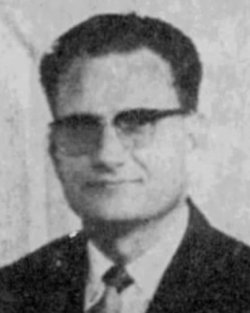
W.E. Best

#68 Sanctification - The Believer is Judicially Dead to the Law

Romans 7:1-6
W.E. Best July, 1 1973 Audio
0 Comments
Remastered Oct/Nov 2024

Sermon Transcript

Auto-generated transcript • May contain errors

100%
verses 1 through 6, Romans chapter
7. Know ye not, brethren, for I
speak to them that know the law, how that the law hath dominion
over a man as long as he liveth. For the woman which hath an husband
is bound by the law to her husband so long as he liveth. But if the husband be dead, she
is loose from the law of her husband. So then if, while her
husband liveth, she be married to another man, she shall be
called an adulteress. But if her husband be dead, she
is free from that law, so that she is no adulteress, though
she be married to another man. That's the illustration. Now
for the application. Wherefore, my brethren, ye also
are become dead to the law by the body of Christ, that ye should
be married to another, even to him who is raised from the dead,
that we should bring forth fruit unto God. For when we were in
the flesh, the motions of sins which were by the law did work
in our members to bring forth fruit unto death. But now we
are delivered from the law that being dead wherein we were held,
that we should serve in newness of spirit and not in the oldness
of the letter. First of all, let me say that
there are three major divisions of Romans chapter 7. We're speaking
tonight from the first division. We will continue to speak from
this division next Lord's Day morning, even though we will
be speaking from another portion of Scripture. And then we will
take up the second division, probably next Lord's Day evening,
followed by the last message, the Lord willing, the following
Sunday morning, on the last of the three major divisions of
the chapter. Let's divide the chapter first of all. In the
first division, what do we have? We have death to the law. Death to the law. Now we know
there are three major divisions. When we look at the second division,
We know that the Apostle Paul has something to say about the
irritating influence of the law. You see, the law does not justify. The law alone does not sanctify. We are free from the law, that
is, we're free from its condemning power. and we are free from its
irritating influence. That is, we are free in Christ
from its condemning power and its irritating influence. We have seen in chapter 6, death
to sin. Now we're looking at the second
of three deaths, and this death is what? Not death to sin, but
dead to the law. So as we look at the three major
divisions now of chapter 7 they are, the believer, number 1,
is dead to the law, verses 1 through 6. The second division, the law
only exposes and denounces sin, verses 7 through 13. The law
only exposes and denounces sin. It doesn't justify, it doesn't
deliver from sin. It only exposes and denounces
sin. Finally, the third division,
beginning with verse 14 through 25, the believer struggles with
indwelling sin. These are the three major divisions.
Number one, the believer is dead to sin. Number two, the believer
experiences the exposing and denouncing power of the law. And finally, the believer struggles
with indwelling sin. The subject of sanctification
continues in chapter seven. It began in chapter six. It continues in this chapter. We're not dealing with justification.
We're dealing with sanctification. I'm sure that you have learned
by this time that it is doctrine that divides. It is doctrine
that divides in a local church. It is doctrine that divides religions. And you don't hear much about
doctrine today. Most preachers stay away from
doctrine, especially on the radio and television. If you'll observe,
they stay away from doctrine, because doctrine divides, and
they will be the first to tell you that doctrine does divide. It also divides in the local
church, just as well as it divides outside of the local church. Now we're dealing with the subject
of sanctification. Romans 7 proves that the law
alone does not justify. Notice, I mean sanctify. It does
not sanctify. Sanctification deals with the
redeemed and not with the lost. Thus Paul is writing to redeem
people. He is discussing the subject
of sanctification, and sanctification deals with persons who have been
set apart once for all in Jesus Christ. I want you to see the
difference between verse 1, I'm having to give you this to bring
us up to the 7th chapter, because I did not discuss to any extent
verses 15 through 23 of the sixth chapter. I don't think it's necessary
to do that now in view of what we are studying. Do you know
the difference between verse 1 of Romans 6 and verse 15 of
Romans 6? Let's see if we know the difference.
Let's look at the two verses. My question is, do we know the
difference between Romans 6.1 and Romans 6.15? We'll read both
of them. What shall we say then? Shall
we continue in sin that grace may abound? Now look at the 15th
verse. What then? Shall we sin because
we're not under the law but under grace? What we are studying in
the first six verses of Romans chapter 7 is a continuation and
an explanation of Romans 6 verse 14. Notice what I said. What did I say? Like the colored
fellow this afternoon, he kept telling the people, You're not
getting it. He kept telling him, you're not
getting it. Well, I don't know whether they
were or not. I don't know whether you are or not. I hope you are.
Now, do you know the difference between verse 1 and verse 15? Let me give it to you. In verse
1, the subject has to do with the standing of the believer,
whereas in verse 15, the subject is not standing, but state. Now let's look at the two verses,
and by just taking the phrase that deals with standing and
state. Shall we continue in sin? No, because of our standing in
Jesus Christ. Because we have been saved by
the grace of God, we've been justified. We are not to continue
in sin. Now notice the preposition I'm
using, in. Now to paraphrase the 15th verse, which has to
do with the state of the Christian and not his standing, his condition
of life and not his position in Christ, what does he say? Shall we continue to sin? Shall we continue in sin is related
to standing. Shall we continue to sin is related
to the state of the believer. Now, in verses 15 through 23,
the Apostle Paul expounds upon that thought, the thought that
is related to not standing but state. So coming now to the first
six verses of chapter seven, he's going to go further into
the subject which was introduced in the 14th verse of the sixth
chapter. We're not under law, but we're
under grace. And because of this fact, sin
shall not have dominion over us. So between 6.14 and 7.1,
Paul gave an answer to a false inference that might be drawn
from the 14th verse, just as he gave an exposition in verses
2 through 13 to do away with any false inference that might
be drawn from the first verse. Look, that's so important. And
I don't know how I could state it any clearer. I just don't
know how I could state it any clearer. So verses 2 through
13, Paul is dealing with the subject of standing. The position
of the believer. Lest anyone draw a false inference
from standing, he expounds on that subject. Now beginning with
verse 15, Another question is raised, shall we continue to
sin, to sin? So he, beginning with the 16th
verse through the 23rd verse expounds on that in order that
men might not draw a false inference from what he has said in the
15th verse. Paul, in the very beginning of
chapter 7, with verse 1, and we're going to try to take the
important things. I cannot give an exposition on every phrase or
every word. I'd like to, but I can't do it. Time just does not permit us
to do it. Therefore, I will try to touch on the most important
things. Paul addressed the brethren,
if you will notice, who knew the law. Look at what he says.
Know ye not brethren, for I speak to them that know the law, how
that the law hath dominion over a man as long as he liveth. Now there are differences of
opinion as to Paul's use of the word brethren. I'm not going
to take time, I could do it. I've read probably more than
50 different works on Romans, seven, one through six, and that
of course over a long period of time, but even recently I've
read a great number over again. Let's see now what Paul is really
talking about. When he uses the word brethren,
Is he addressing only the Jewish brethren, as some affirm? Or is he addressing both Jewish
and Gentile Christians within the church at Rome? I must agree
with one man whose work that I consider to be an excellent
work, and I've received good from all of them. I've received
some help from all of them, but some are just outstanding as
far as I'm concerned. That's just like some preachers
when they give an exposition. Some are just outstanding because
they seek to really write and abide the word of truth, and
they try their best to expound the scriptures. Some just pass
over, ignore, jump, skip, hop, so forth. I don't think that
we can learn too much by that method of teaching or preaching.
So, some say that the mode of address here used by Paul applies
to all believers. I believe that. I do not believe
that the Apostle Paul was singling out only the Jewish brethren
and addressing this especially to them. I think it was addressing
all the brethren. It is true that there were a
great number of Jewish converts in the church at Rome, but there
were also a great number of Gentiles who had been saved by the grace
of God that were members of the church. Therefore, instead of
saying that Paul was limiting this only to the Jewish brethren,
and they based that on the phrase, them that know the law. Now,
beloved, I believe that the brethren in the church at Rome had been
taught the Old Testament Scriptures. Jews are Gentiles. Oh, it is
true that the Jewish believers no doubt knew more about the
Old Testament than the Gentiles. But I believe with all of my
heart that Paul did not make such a distinction. I think that
is contrary to Paul's method of writing when he wrote to the
different churches. When he said brethren, he meant
brethren. As standing before you and I
say brethren, that doesn't mean that I'm singing out a few of
you brethren from the other brethren, but by the use of the term brethren,
I'm addressing all of you. And then let us not forget this,
there was not only Jewish law, but there was Gentile law as
well as Jewish law. I said Gentile law as well as
Jewish law. So Paul assumed that all his
readers were fully cognizant of the privilege which they experienced
in Christ and the principle that the law did not have dominion
over them any longer. I think they all understood that,
whether they were Jewish believers or Gentile believers. Doesn't
that make sense? They could not be ignorant of
the fact, they could not be ignorant of the principle that the law
no longer had dominion over them. Thus one man said, the law may
be Mosaic or Gentile. I like that. And that isn't contrary
to the book of Romans either, according to Romans 2 and verse
14. So he said the law may be Mosaic
or Gentile according to some, but according to others, Paul
used the word law as the written law of the Old Testament. Both
Jews and Gentiles could be credited with the knowledge of the Old
Testament. The church at Rome had been well versed in Old Testament
scripture. Now let me insert this. In view
of what we're studying tonight, the believer being free from
the law, the believer being dead to the law, Some contemporary writers, some contemporary theologians,
are saying, as the article I read to you this morning, they are even going so far, and
I read this this past week, and the man who said it, I have
a lot of respect for. I've heard him preach, I have
his works, and I have received a lot of help from his works.
So I am not saying this in a manner to condemn him, but I'm saying
this in a manner to show that I do not agree with his statement.
I'm not using his name. That isn't necessary. In fact,
I'm not going to use any names tonight. I could, but I'm not.
If you want to know, I'll tell you in private, and I'll refer
you to the works. But here is a statement, quote,
the reformers, and this is accusing the reformers, the reformers
have taken away one set of bindings, but binding believers with another. Beloved, we are coming to a place
that we're going to discuss some things of utmost importance today. I feel they're important. And
I'm afraid that we have some in our church family that are
a little loose on some of these things. You could slide very
easily into antinomianism. And all I can go by is what I
hear. And I want to be of help. I'm not just taking a whack at
anyone personally, but I want to be of help to the congregation
as a whole. I said, I'm afraid that there
are some within this church family that could slide so easily into
antinomianism. Now listen to this, and this
man is an outstanding, he was an outstanding teacher, but he
makes an accusation about the reformers. He's talking about
men like John Owen, John Calvin, Charnock, and others. And he says, the reformers have
taken away one set of bindings, but in taking away one set, they're
binding believers with another. Thus they say, the church came
out of the Middle Ages like Lazarus from the tomb, alive but bound
with grave clothes. That's a quotation by him. I
don't agree with that. even though this person has made
the statement. And I do not say that he's a heretic for having
made it, but I cannot agree with that statement. And the further
we pursue this study in this particular line, you'll see why
I do not. Are you too cool? I'm getting
a lot of wind up here now. I just want to be sure that you're
comfortable. Now let's look at something else
in the first verse. Know ye not, brethren, for I speak to them
that know the law, how that the law hath dominion over a man
as long as he liveth. Now, commentators are doubtful
whether the last clause of verse 1 means as long as he liveth
or as long as it liveth. The law may be said to live,
this is what one man said, and I've had his words for a long
time, the law may be said to live when it is in full force,
and to be dead when it is enough. Now this same person believes
that the law to you and me has been enough, has been abrogated,
Now that's a very dangerous statement, I think, personally, so let's
pursue a little further. Will this stand the test of scripture?
That's my point. Now we're looking at verses one
through six as a whole. We're getting down now to that
point that I asked you this morning to do some thinking about during
the afternoon. I hope that you did. I hope that
you even outlined it. There's much discussion over
the illustration given in the first three verses and the application
of the illustration in verses four through six. I'll be the
first to confess, I've made a lot of confessions along this line,
that for a great number of years I was confused about this, just
as confused as I could be. You might ask, well are you confused
now? No, but that doesn't mean that I have the last word. That
doesn't mean that I have arrived. And I hope no one out in the
congregation thinks that he has, even though you might think that
as a result of your study this afternoon, you've come to the
only conclusion that can be taken from this passage of Scripture.
If you think that, before we get through, I may burst your
bubble. I may. I hope not. But I may. And then, of course, if I do,
I'm going to be wrong. But that's all right. I've been
wrong before. And I'll be wrong many times in the future. Some
have pointed out that parts of the sentence which are compared
with each other do not altogether correspond. Did you notice that
this afternoon as you were putting down three major points and then
the other three major points in the application of the illustration?
Does Paul reverse the illustration in the application? Some have
said that Paul reverses the illustration in its application. Does he do
that? Some think that the apostle Paul
bungled his metaphor. I don't believe that Paul bungled
his metaphor, beloved. Since I believe that all scripture
is given by inspiration of God, I certainly do not believe for
one second that Paul bungled his metaphor here. Does the illustration harmonize
with the application? Did you have any problems trying
to harmonize the application with the illustration? Let me
raise some questions to show you what I'm talking about if
you have not already seen. what appears, what seems to be something different in the application
than from the illustration. For instance, does the woman
in the illustration correspond with the believer in the application? Now, we're studying tonight,
beloved. I am not preaching. Now, we're studying. We're getting
right down to something that is very important. We're getting
down to the very core. Now, my question was, does the
woman in the illustration correspond with the believer in the application? You say, well, I don't think
it's necessary. Well, of course, if that's your attitude, well,
then You've already lost it. So that's all right. Bye-bye.
But those of you that are holding on, we'll just keep treading
a little further. And I tell you what, if you hold
on, whether you agree or not, we'll all be helped by the very
fact that we've done a little investigating. Let's look at
the verses. Now, verse 2, the illustration.
For the woman which hath a husband is bound by the law to her husband
so long as he liveth. But if the husband be dead, She
is loose from the law of her husband. Now, Paul is not discussing
the subject of marriage and remarriage. He's simply using this as an
illustration. Now Dr. Barnhouse took the opportunity
in his work, if you have read it, he gives a tremendous, a
long discourse on marriage. Nothing wrong with that. Not
a thing wrong with it. But I want to hasten to say that
Paul is not really discussing the subject of marriage and remarriage
here. He's simply using it as an illustration.
But what he gives as an illustration is in harmony with all the scriptures
on the subject of marriage and remarriage. He certainly would
not bungle the illustration. So what he says is in harmony
with all the scriptures on the subject, even though he's not
teaching that specifically at this point. Now, in the illustration, what
about the woman? Does the woman in the illustration
harmonize with the woman in the application? That's my question.
Now, in the illustration, the man dies, the woman is alive,
and since the husband is dead and the woman is alive, she is
at liberty to remarry. Whereas in the application to
the believer, the believer dies. Now have you noticed that? Look
at it now. Don't take my word for it. Look
at it. This is what makes the study of the Scripture so interesting.
That's why, beloved, when I study during the week, I'm so filled
sometimes and really thrilled by things that I see. And when
I come and you look at me like a calf looking at a new gate,
it's kind of discouraging sometimes. So what do we see in verse 2?
It is the woman who's alive, it is the husband who has died,
and it is the living woman who remarries. Whereas in the application,
it is the believer who dies. You see the difference? You say,
well that doesn't harmonize. Well I'm not through yet. Let's
go a little further. Let me ask another question.
Does the husband in the illustration correspond with the law in the
application? Does the husband in the illustration
harmonize with the law in the application? Now it is the husband
who dies in the illustration. Now I want to raise a question.
Does the law die? I'm asking you a question now.
Does the law die? The law does not die. The believer becomes dead to
the law. The law doesn't die. The law
is very much alive. I'm not just making up something.
We're seeking to interpret this passage of Scripture. Therefore
we have to investigate it. So when you look at the illustration
and then the application, naturally the questions are raised. Number
one, does the woman in the illustration correspond with the believer
in the application? Number two, does the husband
in the illustration correspond with the Lord in the application?
You say, I don't see any parallel. You say, that's confusing. And
beloved, it was confusing to me. It was confusing to me for
years. It seemed that if the parallel
were carried through, Paul would have said that the law had died,
thus releasing the woman. However, this is not what Paul
said. Paul said, we have become dead
to the law by the body of Christ, verse 6. Look at that. In the application, nothing is
said about the death of the husband. In the application, nothing is
said about the death of the husband, but only the woman. It is the woman that dies in
the application. It is the husband who dies in
the illustration. You say it's getting more confusing
all the time. Is it interesting to you? You
like to study like this? Now some have resolved the difficulty,
get this, by saying we are not to expect in the application
something that corresponds exactly with the illustration. I don't
like that. And that statement is made by
outstanding expositors of the Scriptures. Maybe I'm dumb, but I don't like that. That doesn't
satisfy me. Not at all. Not for a second. Listen to it. I said some have sought to resolve
what appears to be a difficulty by saying we are not to expect
in the application something that corresponds exactly with
the illustration. This is not, as far as I am concerned,
a satisfactory answer. Now let's look at something else.
This ought to be of great interest to you by this time. In both
the illustration and the application, there are three details, and these respectively answer
to one another. As one has said, listen now,
the details relate, first of all, to marriage, number two,
the dissolving of the bond of marriage, and number three, the
second marriage. Now that's the way one person
has sought to solve what appears to be a difficulty. He said,
both in the illustration and the application, and that appealed
to me for a long period of time, because I thought that was the
best that I had heard on the subject. Thus he said, there
are three details, and these respectively answer to one another.
Number one, the details relate to the marriage bond. Two, the
dissolving of the bond. And three, the second marriage. The illustration does not contradict
the sixth chapter. Now we know this to be a fact.
This person said it, I agree with you. This does not contradict
what we have studied in the sixth chapter. Now when I give to you
something in a few minutes and I'm keeping it for the last,
I'm keeping the best for the last. When I came across this a few
years ago, and this is only been just a few years ago, I'd say
five or six years ago, when I came across this, I rejoiced how I
rejoiced. And then I couldn't help but
say how foolish I've been. Why didn't I see that? Why didn't I see that? Now we
know that what is given in the first six verses of chapter seven
does not contradict what Paul is given in chapter six. Now
do you remember what we have been studying for weeks in chapter
six? The old man having been crucified
with Christ? that the body of sin might be
destroyed, that henceforth we should not serve sin. Remember
all these things we've been studying? Now we're going to have an opportunity
to see those great principles illustrated here. Now here's
what another man says. I'll give his name, but I'm going
to give a direct quotation from him. The illustration, this man,
is admired by a lot of people. I admire him. He's still alive.
I know him personally. I've been with him. I've discussed
the scriptures with him. Quote, the illustration changes
from nature to make a true example of the spiritual union with Christ. In nature, it is the living part
of it that is united to another But with a Christian, it is the
dying party that is united with Christ. Now there's truth in
this. He's not stating anything contrary
to truth. But the question is, does it
harmonize with what Paul is giving here? Then he goes on to say,
being free from the law, the believer is at perfect liberty
and freedom to enter into another union, end of quote. Now, would you like me to tell
you the person's work that has meant so much to me on this,
and I'm picturing to give you what I believe to be this very
simple answer, and you're going to just kick yourself, really,
if you've come to any other conclusion. By the time I get through, you're
going to say, how stupid. Well, don't feel too badly. It
took that man many, many years before he saw it. You see, sometimes
we've been taught something We've been subjected to a certain teaching,
and that kind of wears a groove in our brains. And so we forget
about the context. Almost always we forget about
the context. We forget about what goes before.
And we just start looking at a passage of scripture and say,
well, what does it mean? And we forget all together about
what the writer's been talking about previously. Well, I'll give you this man's
name. I know of only one person in our church who has this particular
work. D.E., you have this little book. Little bitty book. Kind of an outline book on the
book of Romans by Graham Scrogin. Have you read it? You remember
what he said? Here it is. Simple as it can be. Took him a long
time. This was confusing to him, just
as it is to many, even today. He's given the clearest explanation
of this passage, of any person, of all the people that I've ever
read. Here it is. Who does the wife
represent? That's number one question. The
second question, who does the husband represent? What does the death of the husband
represent? Those are the three questions. Who does the wife represent?
The wife represents our personality, giving his answer. The wife represents
our ego which is permanent. Now we're discussing the wife.
The wife represents what? Our personality. Our ego. That which is permanent. Number two. The husband represents
the old man. the unregenerate state. Now that's why the husband dies. That harmonizes, doesn't it,
with the sixth verse of Romans 6. Know you not that we have
been, the old man has been crucified with Christ. that the body of
sin might be destroyed, that henceforth we should not serve
sin. The wife represents the ego,
that which is permanent. The husband represents the old
man. It is the old man that dies. The law doesn't die. The old
man dies. So the old man represents the
unregenerate nature, the unregenerate man. Now look, the death of the
husband is the once for all crucifixion of the old man. But please write these three
things down and put beside them Scrooge. S-C-R-O-G-G-I-E, Graham Scrooge,
an Englishman. He has a few books, not many,
but he has some excellent things in some of his works. Now, let's
look at the new relationship. So, by this crucifixion, our
personality or our ego, that is, we ourselves become dead
to our unregenerate state. Therefore, the new marriage tells
of the union upon which the regenerated man enters with the risen Lord. Now that is in contradiction
to what a great number of men have written on this passage.
And some of you have already read some of the statements by
different individuals whose names that I will not even give. But I did want to say who it
is that said this. This is not something I hatched
up. But I'll tell you what, when
I read it, I saw the wisdom of it. I saw the truth of it just
as Mr. Scrooge did when he came across
it. Where he got it, I don't know. But it harmonizes with everything
that we have studied in the sixth chapter. The wife represents
the ego, the personality, which is permanent. The husband
represents the all-nature, the unregenerate man. He's crucified
and the wants for all crucifixion in order that the personality
of the individual might be united forever to Jesus Christ. That's it. That harmonizes with
everything that we have been saying for weeks, not only from
Romans but from Colossians 3, Ephesians 4, and other related
passages. Death is the only way for the
elect to be free from the condemning law. Now let's go a little further
into it. This is far enough for us tonight. We've gone for nearly
an hour. The believer's death to the law
does not leave him unattached or lawless. He is now attached to the Lord
Jesus Christ. I was reading recently a Plymouth
Brethren man who has written a little work on Romans, and
I like one thing he said. If you're familiar with the book
of Ruth, you'll appreciate this. He said, Ruth with Naomi illustrates
Romans 6. Now, you have to be familiar
with the story and the doctrinal content of the four chapters
of the book of Ruth in order to appreciate this, and I don't
have time to go back to the book of Ruth tonight and discuss this.
I'm giving it for the benefit of those of you who are well
acquainted with that, and you'll see this immediately. He said,
Ruth with Naomi illustrates Roman 6, and Ruth with Boaz illustrates
Roman 7. I thought that was a beautiful
analogy. And I do like some of these Plymouth
Brethren men and their practical application, which they often
make of great spiritual truths. It is at this point in the epistle,
listen to this, Coming now and considering these first six verses
of Romans 7, it is at this point in the epistle that we come to
the thought of the love of Jesus Christ. One is said, we have
had the blessing of the mercy seat in Romans 3, 24 through
26, and the one through whom the love of God has come to us,
Romans 5. That was on the divine side.
That was on the divine side. Oh, this is a great statement.
Now the thought of the husband is made known to us. Christ is
brought to our side and we learn experimentally the practical
love of Jesus Christ. Beloved, that's beautiful. If
you don't see that, you're blind as a bat. For the first time, and that's
true, even though the love of God has been shed abroad in our
hearts, Romans 5, 5, and the love of God is spoken
of, this is the first time that the believer in his being brought
along in his development in the exposition of doctrine. This
is the first time that he's brought face to face with love in this
manner. Herefore, it's been on the divine
side what the Lord has done for us in his love. Now, it's on
our side, this relationship Husband and wife relationship. We're
married to Jesus Christ. I like the way Barnhouse describes
this, really. And some others follow along
the same line. They just simply review, one
man in particular just reviewed the marriage oath that is taken. When two people get married.
And he just reviews the marriage oath, I now take thee. And see,
there is a conversion experience. There is a laying hold of Jesus
Christ and a conversion experience. There is, as we review once again
and put together what we have been studying with this, that
once for all yielding our committing of oneself, I now take thee. So you see, here is the other
side. Here the form of love has been
on the other side, the divine side, now it's on our side. And
this relationship presented as husband and wife, married, married
to Christ. The believer learns experimentally.
Another has said that he is no longer in the flesh. He learns
experimentally. Do we know what this is all about?
All of us, beloved, who know Jesus Christ, whom to know as
Lord and Savior, we know what it is experimentally to not be
in the flesh. Notice the language that Paul
uses. We'll develop this more even later. But as we look at
verses 4 through 6 in the application, wherefore my brethren, not just
the Jewish brethren, oh no, not just the Jewish brethren, but
all the brethren at Rome. Ye also are become dead to the
law by the body of Christ, that ye should be married to another,
even to him who is raised from the dead, that we should bring
forth fruit unto God. And it is fruit unto God that
demonstrates that one is married to Jesus Christ. For when we
were in the flesh, he's going back now, in the flesh. You and
I as Christians are no longer in the flesh, even though flesh
is in us. When we were in the flesh, the
motions of sins which were by the law, aggravated, agitated
by the law, that being dead were and we were
held, that we should serve, did work in our members to bring
forth freedom to God, but now we are delivered from the law
that being dead were and we were held, that we should serve in
newness of spirit and not in the oldness of the latter. In our holy bond service, Paul
has brought the believer from old slavery to new obedience. I want you to know there is no
compromise at this point. Unless there is obedience in
a person who professes to be a Christian, he's never been
brought from bondage. So in our holy bond service,
Paul has brought the believer now from the old slavery to new
obedience. Hence, worshipping bride, as
one says, in the holy call to keep herself only unto the bridegroom
who has died for her and gives to her a perpetual surprise of
love and joy every morning as the Spirit shows her the heart
and riches of her Savior. I'll give a statement by John
Calvin in closing, and then we'll carry on about what does it mean
to be dead to the law. Now this statement by John Calvin, we must never imagine, he's commenting
on this very passage of Scripture. We must never imagine that the
law is in any way abrogated in regard to the Ten Commandments
of the moral law, in which God has taught us what is right and
has ordered our life because the will of God must stand forever. What is abrogated, he's actually
answering the question, what does it mean to be dead to the
law? What is abrogated, therefore, is not the rule of good living
which the law prescribes, but that quality which is opposed
to the liberty which we have obtained through Christ, namely,
the demand for absolute perfection." I hope you're not bordering on
antinomianism. Most of professing Christendom,
even great numbers of individuals who say they believe in the doctrines
of grace, are not only bordering, some
of them, on antinomianism, but they have swallowed it hook,
line, and sinker. Some of the things I've given
tonight and some things that I shall give the Lord willing
next Sunday morning, if some person were to hear me today
would say, that's legalistic. But I have news for you. I don't
care what they say. I can read the word of God that
has been committed to my trust and I'm going to stand before
the Lord someday. But you know, people are so foolish,
generally speaking, they'll read one passage like being dead to
the law. Not under the law, but under
grace. And then they don't consider such passages as the law is good
if a man use it lawfully. And that was written to Christians.
They don't consider a statement made by John in 1 John 3, that
sin is the transgression of the law. They don't consider many of the
passages. So you can see, beloved, why
we have to be so careful. One religious group, you go through
the scriptures, you pick out this and you pick out that and
you pick out this and pick out that. This satisfies me. Beloved,
I want it all. And what appears to be contradictory,
I know is not contradictory. I know in my heart that God is
not the author of contradiction. So when I find a statement that
I'm free from the law, I'm dead to the law, I'm not under the
law, and yet the law is good if it is used lawfully, well
how am I going to reconcile these? Certainly there's reconciliation. Jesus Christ said, I came not
to destroy the law. You're going to be surprised
at the meaning of the word destroy. but to fulfill, and you're going
to have a greater surprise when you learn the true meaning of
the word fulfill. And you'll notice the Lord Jesus said, I
am come not to destroy the law, he didn't
say and the prophets, he said the law are the prophets. There's a difference between
law and prophets, and law are prophets, but to fulfill. I read a great Puritan this past
week on that passage of scripture, and he had some great things
to say, but he missed the point altogether. John Brown is who
I'm talking about. missed the point all together.
And you know when I got my Greek lexicon down and started studying
the word fulfilled, the Greek word, with all the different
ways and the shades of meaning and how it's used, did you know
in Thayer's Greek lexicon, there is one whole page. Now how many people are going
to take time to do that? Not many. One whole page. given to the little word fulfill
and the different ways in which it is used. But I'll let you
in on a little secret. Fair, at the very last, gives
the meaning as the particular word is used in Matthew 5.17. That is what Martin Lloyd Jones
saw. that resulted in one of the finest
expositions of that particular passage I've ever read. Better
even than what Arthur W. Pink is saying. Arthur W. Pink
merely quoted the Puritan, and he has many good things, but
he failed to study it close enough and carefully enough. That's
what Martin Lloyd Jones did, and you'll see the truth of it
as soon as it's brought out. just as I hope that you have
seen the simple answer to what has appeared to be such a difficulty
with most commentators on the illustration and the application. Now I have a question. Have you been freed from the
law? Are you dead to the law? Are you married to Jesus? Do you know him whom to know
is life eternal? Do you think that studies like
this are unnecessary? Do you think that we spend too
much time getting into things that are really of no value? That's the general attitude today.
I hope it doesn't exist in this church family. But I tell you
what, I'm going to continue to study. I want to know what the
truth is. I have to satisfy my own heart
and conscience. And when I feel that I have arrived
at the truth, then I'll tell you about it.
W.E. Best
About W.E. Best
Wilbern Elias Best (1919-2007) was a preacher and writer of Gospel material. He wrote 25 books and pamphlets comprised of sermons he preached to his congregation. These books were distributed in English and Spanish around the world from 1970 to 2018 at no cost via the W.E. Best Book Missionary Trust.

Comments

0 / 2000 characters
Comments are moderated before appearing.

Be the first to comment!

Joshua

Joshua

Shall we play a game? Ask me about articles, sermons, or theology from our library. I can also help you navigate the site.