Bootstrap
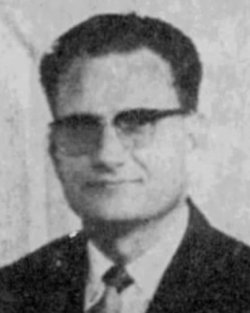
W.E. Best

#69 Sanctification - The Law Exposes or Denounces Sin

Romans 7:7-13
W.E. Best July, 1 1973 Audio
0 Comments
Remastered Oct/Nov 2024

Sermon Transcript

Auto-generated transcript • May contain errors

100%
Romans 7, 7 through 13. What shall we say then? Is the law sin? God forbid. Nay, I had not known sin, but
by the law. For I had not known lust, except
the law had said, Thou shalt not covet. But sin, taking occasion
by the commandment, wrought in me all manner of concupiscence,
for without the law sin was dead. For I was alive without the law
once, but when the commandment came, sin revived and I died,
and the commandment which was ordained to life I found to be
unto death. For sin, taking occasion by the
commandment, deceived me, and by it slew me. Wherefore, the
law is holy, and the commandment holy, and just, and good. Was
then that which is good made death unto me? God forbid. But sin, that it might appear
sin, working death in me by that which is good, that sin by the
commandment might become exceeding sinful. In the study of this passage,
I came across two different source materials that quoted the same
author that gave the outline that he had given in his work
on Romans on this particular passage of Scripture. Both of
those persons gave credit to this man who has given the outline. The more I've looked at the outline,
the better I like it. I'll share it with you. The person
who gave this outline is not one whose work I have in my library. In fact, I've never thought that
his work, knowing his background, knowing basically what he believed,
I could not classify him as one who is well versed in the doctrines
of grace, therefore I've never purchased his work. But you will
find many individuals, maybe with whom you disagree on certain
points, that sometimes they give a real good outline, and this
man has done that very thing on these verses. The two persons
who quoted him were only referring to the outline he gave and not
his exposition of the passage. I'd like to also stress that
point. I'll give you the outline. There
are six points in it. In fact, I would add one by saying
there are seven, but he gave six. Not that I want to just
differ from him, but I'll show you why. I've divided the last
one he gives into two rather than making the two one. As we
look at verse seven, we have the fact of sin. What shall we
say, then, is the law of sin? God forbid. I had not known sin,
but by the law. We have the fact of sin. I had not known sin. In verse
8, we have the occasion of sin. But sin, taking occasion by the
commandment, wrought in me all manner of concupiscence. In verse 9, sin is revived. Actually, all you would have
to do really is just look carefully at the verses themselves and
you would come to the same conclusion as to the authenticity of the
outline. Sin revived in verse 9. In verse 10, the effect of sin. He found that which was ordained
to life to be unto death, the effect of sin. In verse 11, we
have the deception of sin. For sin, taking occasion by the
commandment, deceived me, and by it slew me. The deception
of sin. And then in verse 13, he put
verses 12 and 13 together under the point, the exceeding sinfulness
of sin. But let us look at verse 13 carefully. Was then that which is good made
death unto me? God forbid. God forbid. You see, the goodness
of the law only makes the character of sin more hateful. God forbid, but sin that it might
appear sin. Instead of just using the one
point in the outline that this person gave, and by the way,
his name is Griffith Thomas, he just used the exceeding sinfulness
of sin. But I would say that in the first
part of verse 13, we have the appearance of sin based on the
statement, but sin that it might appear sin. The appearance of
sin And then in the last part of the text, that sin by the
commandment might become exceeding sinful. You see, that gives you
the perfect outline with seven points. Not that I'm trying to
stretch it to make seven, but actually I think we have seven. So we have the fact of sin, the
occasion of sin, revival of sin, the effect of sin, the deception
of sin, the appearance of sin, and the exceeding sinfulness
of sin. The passage actually outlines
itself. Now last Sunday night I gave
to you the three divisions of the seventh chapter. Let me mention
them again. We've already discussed the first
section, our division. the believer is dead to the law.
That is judicial death. Please don't forget that. When
it comes to the last death that we will be studying in the eighth
chapter, being dead to the flesh, that is not judicial. The first
two, one being dead to sin and being dead to the law, those
both are judicial, are legal. But when it comes to the last
being dead to the flesh, that is not judicial, as we will see
in the study of the eighth chapter. Tonight we're looking at the
division entitled, The Law Exposes and Denounces Sin. The law exposes
and denounces sin. And then the final division,
verses 14 through 25, which we will be studying not only next Sunday, but maybe
two or three Sundays, because we will be discussing more concerning
the subject of the law. We'll be able to complete our
study that we began this morning on the fifth chapter of Matthew,
verses 17 through 20, and we will also be speaking on one
particular point in the last division, the spirituality of
the law, based on the 14th verse. And then I want to bring one
message on the subject of sanctification and the law. Those of you who
have been doing any reading of late, and I know that some of
you have Dr. Macbeth's little outline work
on the book of Romans. He has many helpful things in
that book. I've had it for a number of years.
In fact, I got it from him when he was with us personally about
18 years ago when we were at Belfort Park Baptist Church.
And he does have some helpful things on Romans 8 in his little
outline work on the book. But I am sure that you have already
noticed that He made some statements concerning the law that really
are contradictory, even from some of the other things that
he has said on the subject of the law. I'll call attention
to those tonight. I'm doing this to be helpful,
that's the only reason I'm doing it. If it's understood differently,
well that'll just be your problem, it'll not be mine. When it comes to the subject
of the law, You remember I said last week as we were introducing
the first division of Romans 7, and one of the first points
I made was that chapter 7 proves that the law alone, and I sought
to stress the word alone, can not sanctify. The law alone was never meant
to be a sanctifier. Now when it comes to the point
of saying that the law does not sanctify the Christian, or it
is not a means used by the Spirit of God in the sanctification
of a believer, I cannot accept that. Last week I read an entire
chapter by Burkauer from his book on faith and sanctification,
And I think if my memory served me correctly, the last chapter
of the book is entitled The Law and Sanctification. The Law and
Sanctification. He made the statement that the
law and sanctification are inseparable in the life of the Christian,
to which I agree. And therefore, I'm going to speak
on that particular subject later on. I've already seen in the
study of this subject what I would consider to be a very important
work. I don't suppose I'll ever attempt
to get it together. But just take, for instance,
a great number of titles such as the Law and Liberty, the Law
and Legality, the Law and the Christian, the Law and Sanctification. I could go on for a while. And
it would be a tremendous study within itself just looking at
the subject of the law in the light of those different things
that I have already mentioned. Now tonight we come to the second
division of the chapter. The law exposes and denounces
sin. I stated this morning, and I
want to repeat once again, that Romans 7, 7 through 25, has been discussed a great deal
as to whether this section of scripture describes a regenerate
or an unregenerate person. If you've done any reading at
all on this chapter, you have already come across differences
of opinion, even among men who embrace the doctrines of grace
concerning this particular section of Romans chapter 7. I stated
this morning, and I repeat again tonight, that the controversy
about which we're speaking goes back to Origen, O-R-I-G-E-N,
the Alexandrian theologian who was born somewhere around 185
A.D. and died somewhere in the neighborhood
of 254 A.D. All Arminians today can be traced
back with their view of Romans chapter 7 to that which was held
by Origen, who lived in the latter part of the second century and
middle way through the third century. That's going way back,
isn't it? Now, the controversy not only began with him, And
he held to the view that this chapter, the entire seventh chapter,
describes an unregenerate person. But a little later, a Catholic
monk by the name of Augustine, to which, this may surprise many
people, to which we owe a great deal when it comes to real biblical
theology. Does that surprise you? I don't
mind saying at all. Calvin, the Puritans all recognized
the ability of Augustine. He had the truth on divine election,
he had the truth on predestination, he had the truth on many subjects.
Augustine was born in 354 AD and died in 430. he held the view that the seventh
chapter of Romans describes a regenerate person. Almost all Calvinists
hold to that view. All Arminians, without one exception,
hold to the former view. I remember hearing Dr. Conley
when I was associated with him back in 61 and 62, when he was
here the first time, associated with a school in the Central
Baptist Church in Pasadena. And Dr. Conley was an outstanding
student. He had read a lot. He had been
subjected to a lot of the works of the Puritans. He knew what
they believed. And I remember one man that he
was always quoting as a rank Arminian. He referred to him
as Professor Beef, spelled B-E-E-F. This last week I came across
a work by Professor Beef, and I'm going to give to you the
basic arguments by Professor Beef concerning the seventh chapter
of the Book of Romans. I'll give to you his basic argument. As an Arminian, he believed,
as did Origen, that the chapter describes not a regenerated man,
but an unregenerate person. Here are his basic arguments.
Professor Beat, evidently he was an English theologian. Number one, This passage, he's
talking about Romans 7, contradicts all that Paul says about himself
and the Christian life. Now, I'm just giving you his
basic arguments. I cannot go into detail because
it was a lengthy article that I read by him on this particular
portion of scripture. But it did bring to my mind the
quotations that I heard Dr. Conley give on various occasions
as he would quote Professor Beef, and he is referred to as Professor
Beef. Now, one who is not versed in the scriptures, and I'm talking
about Christians, beloved. Having been a Baptist pastor
for a great number of years, I know what I'm talking about
here. His arguments without a real knowledge of the scripture would
be applauded by a great number of even born-again persons. You
see, to have a wrong opinion on some things contained in this
chapter doesn't mean that a person is a heretic. So, Professor Beat,
he would take passages of scripture from other portions of the Bible,
and then he came to the conclusion by saying this passage, Romans
7, contradicts all that Paul says about himself and the Christian
life. Number two, similar language
is found on the lips of pagans. Now let me give to you what he
was describing on this particular point. similar language. In other words, he was referring
to what Paul said beginning with the 15th verse of the 25th, that
which I would do I do not. The thing that I would not do
that I do, which you and I believe that was the conflict which Paul
had, or the conflict that went on between the flesh and the
spirit that is described by Paul in Romans 7, but also in the
fifth chapter of Galatians. The warfare between the new man
and indwelling sin that remains in him. or conflict between the
two natures, as some would say. Now, Professor Beatt gave a tremendous
argument on this. I'm only going to quote two philosophers
that he referred to, but he did show that even pagans used the
same terminology that Paul used. And then his conclusion was And
I can understand how that a person not well versed in the scriptures
could listen to an argument like he gave and then say, that sounds
logical. That's why I said this morning
that the true interpretation of scripture or truth is not
determined by the sound of scripture, but by the sense of scripture. And that's a statement we must
never forget. For the average person to whom
you witness today goes by the sound of Scripture. He doesn't
go by the sense of Scripture. And I sometimes wonder how many
of us in this church family really go by the sound of Scripture
rather than by the sense or the interpretation of Scripture.
Now listen to some of the philosophers that he quoted. One that I'm
sure you've come across this name in the study of philosophy
while in school, Seneca. Here's what Seneca said, what
is it that draws us in one direction while striving to go another? End of quote. He said, now look
at that. Here was the pagan philosopher
who said, what is it that draws us in one direction while we
really have a desire to go in another? He said, isn't that
the same language that Paul uses in the seventh chapter? And based
upon that statement by the philosopher, he said, you see, you can't prove
by Paul's terminology, that this is the language of one regenerated. Now this is Professor Beef. Then he quotes another man, whose
name I'm not familiar with, but some of you who have recently
been in school, you may remember this name. The philosopher's
name is Ovid, O-V-I-D. He said, and I quote, I desire
one thing, the mind persuades another. I desire one thing,
the mind persuades another." He went on and quoted a great
number of these philosophers, but I didn't feel that it was
necessary in my notes to have so many statements by philosophers.
But you can see how that a man like Professor Beeth, and many
today who can take statements like this, and they sound good. and say, now you see, you can't
come to any logical conclusion by just simply quoting Paul's
statements, that these statements made from verse 15 through 25
would imply that he was a born-again believer. That's argument number
two, now listen to number three. What Paul says elsewhere about
his religious state before justification confirms the description of himself
here. Listen to that. Now, I don't
have time to go back and take, but he took the scriptures. Of course, he took them out of
contact. He misapplied them. But the thing that scares me,
beloved, it literally scares me to death. And I can't help but just wonder
sometimes if we realize the importance of handling the truth correctly. So he said, what Paul says elsewhere
about his religious state before justification confirms the description
of himself here. Professor Beat said, Christians
acknowledge this passage describes their past, but they do not acknowledge
that it describes their present, because through Christ, believers
are more than conquerors. Oh, how eloquent did he wax on
that point. Why he rushed to first John?
He took scriptures that you and I cherish, scriptures which we
believe with all of our hearts. He took verses from Romans 8,
the latter part of the 8th chapter of Romans. And he said, you see,
we're more than conquerors. Paul is presenting himself as
a defeated person, but we are more than conquerors. You see
how that people can be persuaded by the sound of truth, rather
than the sense of the interpretation of truth? Listen to the last argument that
I took from his work. He had more, but these are the
basic ones I took. Why did Paul puzzle plain people
Listen to this one now, by using the present tense instead of
the past. It cannot be denied by any person
who can even read that Paul was using the present tense in Romans
7. So Professor Beat said, why did
the apostle puzzle plain people by using the present tense instead
of the past tense? listen to his explanation, when
you read a person who is straining in order to try to bolster up
his view, sooner or later things will just burst wide open, and
you'll see the folly of the man from beginning to end. Here it
is. The language of the past section
made it easy to do this. He was talking about verses 1
through 6 that we studied last week. The language of the past action
made it easy to do this. His description of murder by
sin was so real that he forgot the life which followed. Now listen to that. I couldn't
help but laugh when I read that. Now his first argument sounded
good. Notice I said sounded good. I
didn't say they were true according to the sense of Scripture, but
they sounded good. But when he made this statement,
he split his bridges. What did he say? The language
of the past section made it easy to do this. His description of
murder by sin was so real that he forgot the life which followed. In other words, he was saying,
I was so overcome that even though now I'm a Christian, I just couldn't
forget what happened then. Now, the last statement. Hence,
when he came to speak of the state in which the murder placed
him, it was easy for him to use the present tense. Isn't that
amazing? Now that's Professor Beach's
point of view. That's the Arminian view of Roman
7. Now let's look at the other side. The basic arguments You see,
I wouldn't have to do this. If I weren't concerned about
you becoming students of the scriptures, I wouldn't take time
to do what I do. I'd just get up here and read
the chapter and give a bunch of illustrations and then just
tell you, see how simple it is, and go on home. You go on home.
And you'd go home, most of you, a blank as to the real exegesis
of this passage. And this is what happens in too
many places today. Now, the basic arguments of those
who believe the passage describes a regenerated person are, number
one, Romans 7 describes sanctification, not justification. We have already left the section
of scripture devoted to the subject of justification. Paul is now
presenting the subject of sanctification. Sanctification cannot be separated
from justification, but sanctification is not justification. Only a
justified person can be sanctified. The subject that we are now studying
in Romans, not only six, but seven, is sanctification, not
justification. And sanctification applies to
a regenerated person. You can tell by the way I said
it, that's what I believe. Number two, the theme of this
chapter is deliverance not from the penalty of sin, that was
discussed in the subject of justification. Here the theme is deliverance
from the power of sin, not the penalty. That's already been
settled. That's argument number two. You
see, we're looking at the passage now in the light of its context.
The immediate context, and then the general context. Number three,
justification does not remove all carnality from the believer. Even though there are some, quote,
Calvinists, end of quote, who have today what is known as,
quote, no carnality theory, end of quote. And I won't go into that any
further. Just to point you with it, I
said justification does not remove all carnality from the believer. First Corinthians 3 proves it.
Paul's first statement in the very next second proves it. What
does he say? For we know that the law is spiritual,
but I am carnal, sold under sin. You may say, oh, that phrase,
sold under sin, staggers me. We'll look at it later, not tonight.
That's a future message. As we will be discussing the
fourteenth verse, not in one service, but probably in two
and maybe three. The next argument. Remember now I said number three,
justification does not remove all carnality, it is the work
of sanctification to remove carnality. It'll not all be removed, but
that is the work of sanctification, to remove carnality, even though
all of it is never removed. Number four, the unsanctified
believer finds himself being attacked by the deceitfulness
of sin through the occasion of the law and the carnal nature. This is described by Paul in
the section which we're studying tonight. Let me repeat the fourth
argument, because this is the argument that we're studying
now. The unsanctified believer finds himself being attacked
by the deceitfulness of sin through the occasion of the law and the
carnal nature. Number five, believers alone
delight in the law of God after the inward man. I'm quoting now
from the latter part of Roman 7. The spirit rides the law of
God on the heart in regeneration, according to Jeremiah 31, 33.
Thus, the believer has no fear of the law, that is, its condemning
power or its irritating power as recognized and experienced
in conversion. The believer loves the law. He
desires it, he loves it. Finally, Paul's cry at the end
of Romans 7, is not who shall justify me. Now let's pause for
a moment. If Professor B is correct, if
the Arminians are correct, in their interpretation of Romans
7, then Paul's cry in verse 25 would be a cry of deliverance,
not in the realm of sanctification, but in the area of justification. But that's already settled. That's
already settled. So Paul's cry was not, who shall
deliver me? from the condemnation of sin,
but who is going to deliver me from the power of this indwelling
sin? Is that what he's talking about?
I challenge you to study the passage. You know, in the last two weeks
I've had some time to do some taping, music, so forth, and
I've been listening to some of the songs a little closer than
usual, some that I have recorded, and then when I go through editing
and trying to take out one that has some good words, this present-day
music just makes me so sick I can hardly stand it. You know what it does? the theology
of the present day. And the theology of the present
day is the sound and not the sense of truth. I wish I had time to illustrate
what I'm giving you, but I don't have that time. I wish I had
time to just give you some of the songs that some of the young
people and some of the older people really are bringing into
being in this time in which we live. They reflect the modern day theological
trend, and I'll tell you there's nothing to it. There's absolutely
nothing to it. Oh yes, it'll touch the emotional
nature of man, but there isn't anything whatsoever in almost
all of it, I would venture to say 999% of it. You say 999% out of a thousand? Yes. It's as foreign to scripture
as day is from being night. Should say night being day, to
get the correct term there. So Paul cried. His cry was because
of indwelling sin. He was justified, he knew he
was justified. He had peace with God, but he
wanted the peace of God. Now we've looked at two things
by way of introduction to the study of this passage. Let's
go even a little further. This may be as far as we get,
we may not have time to really give an exposition of the passage
tonight, but I think this is necessary. We're actually doing
it without just looking into each phrase of the passage. Now we're going to look at the
controversy that exists among Calvin's. as to whether verses 7 through
13 apply to the unregenerate are regenerate. Now notice, just
the verses which we're studying tonight, I do not know of any
Calvinist, any man who embraces the doctrines of grace, who does
not accept verses 14 through 25 as describing a Christian. But there are differences of
opinion, there are different views, even among Calvinists,
concerning verses 7 through 13. You say, Preacher, it seems that
you just confuse us more than you help us. Well, if I can just
get you confused enough to do some study of your own, well,
then I've accomplished something. All right, we're going to look
at three things under this heading. The controversy which exists
among grace men, I'll put it like that, as to whether verses
7 through 13 apply to the regenerate or the unregenerate person. Now
I've reduced all the things I've read to three arguments. The
last one I'm going to give is that one which I embrace. I begin
by giving number one. Some say the distinction between
verses 7 through 13, and they believe that verses 7 through
13 describe Paul's experience before he was born again. Remember just what I said. Now, I could give you their arguments
after having read these verses. And I'm not too sure, but what
if you had not had some good instruction beforehand, you would
not say, that sure does sound reasonable. Some say the distinction between
verses 7 through 13, which they believe describes the unregenerate
state of Paul. and verses 14 through 25, which
describe the regenerate state of Paul, is hardly real. Now what is the view? They say the distinction between
verses 7 through 13, the unregenerate state, and verses 14 through
25, the regenerate state, That distinction is hardly real.
Listen now. The distinction in its absolute
form belongs to doctrine not to experience. Let's let that soak in a little
bit. The distinction in its absolute
form belongs to doctrine not to experience. Then they go on to say, no one
could have written the passage but a Christian. See, it is recognized
even by these folk that the person who wrote the passage was a Christian
at the time he wrote it. Therefore, it is the experience
of what the unregenerate, look at this now, listen closely,
but seen through regenerate eyes. Now, I'd like to have time to
give you some of the arguments on that. Because I'll tell you,
some of them were cleverly presented. I said cleverly presented. In
fact, I can remember the day when I held that view. And I
embraced the doctrines of grace when I held that view. Now I'm talking about grace men
who hold this view. So in short, they say that here
is Paul, a Christian, describing first of all his position when
he was in an unregenerate state, but he is now viewing that through
the eyes of a regenerate man. See, that sounds good. If I had time to develop that,
we could go back and begin reading with verse 7 through 13 again.
I could give you some arguments and the sound would be applauded,
but the sense would be lacking. All right, let's listen to the
next. Here's another view. Even some
contemporary writers hold to this view. I'm quoting now. This is a direct quotation that
I'm giving. it is quite clear that it is
not Paul's experience as an unregenerate man in a state of self-complacency
and spiritual torpor. I want to give that a game, because
this is a man that I have a lot of respect for. This man's work
has meant a great deal to me. I've quoted him extensively in
the past, not only on his interpretation of Romans, but I think he has
the outstanding, outstanding exposition of the doctrine of
imputation. In fact, he has the better work
of all the works that I've ever read on imputation. It is quite clear that it is
not Paul's experience, and I inserted the word Paul's as mine, because
he uses the pronoun of course, I'm taking this out of a paragraph,
it is quite clear that it is not Paul's experience as an unregenerate
man in a state of self-complacency and spiritual torpor. He's convicted
of sin. Then he quoted verse 7. He is
no longer alive in the sense of verse 9. But is he regenerate? But is he regenerate? Now let's
look at that for a moment. Let's look at this because this
man's work is outstanding in almost every respect. Let's read
beginning with verse 7 again. What shall we say then? Is the
law sin? God forbid. Nay, I had not known
sin but by the law, for I had not known lust, except the law
had said thou shall not covet. But sin taking occasion by the
commandment wrought in me all manner of concupiscence, without
the law, sin was dead. For I was alive without the law
once, but when the commandment came, sin revived and I died. Now this man is a little weak
on the subject of regeneration, and I can understand why that
he said what he did at this point. You'll find a great number of
quote, grace men, end of quote, who believe in what we call gospel
regeneration. Now I do not believe in gospel
regeneration. I believe in gospel conversion,
but not gospel regeneration. Anyone who believes in gospel
regeneration would naturally come to this conclusion. Last
week I was reading a work of a man and he made a statement. I like his approach very much.
He said, if the gospel produces life, then every time a person
would hear the gospel, he would have more life. That's true. I like his approach. That's very easy to understand. If the gospel produced life,
then every time a person heard the gospel, he would have more
life. He went on to show that the gospel
doesn't produce life, it's the Holy Spirit of God that produces
the principle of life, enabling the person to understand the
gospel message and have a conversion experience. And then another
man explained it like this. He said, the baby that cries,
the baby doesn't cry in order to be born, The baby cries because it has
been born. Now it doesn't take an intelligent
person to understand that. As soon as a baby comes into
the world, when the doctor gives it that, there's a whimper. That's
what the doctor wants. So the cry is not in order to
be born. The cry is the result of having
been born. So Paul is crying out, and this
is a sign of conviction, and conviction is the fruit of regeneration. I could preach for 30 minutes
on that point, but I'll do it later. The other morning we were
taking our walk. You know, sometimes it's good
to take a walk. What I was doing while I was taking a walk, it
made the walk, it made that time pass faster. I was mulling over
in my mind the subject of the law. and trying to fit some things
together and of course I couldn't help but think about the effect
of the law on Paul as a Pharisee of the Pharisees. Will you think
about that for a moment? I see some of you are smiling
and I know you're following me. You know, it's really good. You know,
it's a little discouraging sometimes when I'm standing up here and
I'm full of it and I want to give to you, you look at me like
can't look at a new gate, well what's he saying? But when I
see your smile, I think that you're kind of following along,
you're with me in other words. And I'm just about like that
big fat nigger man, I'd like you to be with me. I don't want
you to be way out yonder somewhere. Whether you agree or not, I'd
like you to be with me. So when you think about the third
chapter of the epistle that Paul wrote to the Philippian church,
when he spoke of himself as a Pharisee of the Pharisee, and the righteousness
which he had, which was of the law, and he gloried in that righteousness. And don't forget the 23rd chapter
of the Acts of the Apostles, and it's verses 1 through 3,
when Paul lived according to his conscience. In other words,
he did nothing contrary to his conscience. He lived up to the
light he had. What I'm saying is, the objective
law, the Ten Commandments, the moral law, if you please, does
not have the same effect on an unregenerate person that it does
have on a person in whose heart there's been a work of grace. Now be honest with Think about your own experience
in life. Think about the time before you
were regenerated with the Spirit of God. Somebody could talk about
the commandments, or sometimes your conscience would be pricked
a little bit, but it didn't mean too much,
you could just pass it off. So Paul gloried in his righteousness,
that which he had attained, A-T-T-A-I-N-E-D. By his observance of this law
and that law, he had the same opinion of the moral law that
the Pharisees had, to whom Christ spoke in Matthew 5 when he said,
except, as he was talking to the disciples, except your righteousness
exceed the righteousness of the scribes and Pharisees, ye shall
in no wise enter into the kingdom of God. But I'll tell you something,
when Paul was regenerated by the Spirit of God on the road
to Damascus, there was real conviction, and that conviction was driven
home to his heart by the Holy Spirit taking the same objective
law and writing it on his heart and convincing him of the awfulness
of sin. You didn't know what sin really
was until you were regenerated. Why you did everything in the
world to excuse yourself. And I'll tell you something else,
Pharisees will do it after they become religious. The worst people in the world
to try to convince of anything, you can't convince them. is to try to talk to an individual
who is a religionist, he has a little general knowledge, just
a little general knowledge, and he thinks he knows it all. He's prejudiced, his mind's closed. Why? He'll be like the Pharisee.
I have not committed an overt act of adultery. Don't look at
me like that. He doesn't see the heinousness
of sin. He doesn't see the awfulness of sin. He doesn't see the blackness
of sin. But let the Spirit of God enter
his heart, giving him the principle of life. And then he sees that
adultery is more than the actual act. It is even included in the
look. You see what I'm talking about? That's what Paul's talking about.
Now, this person says, it is quite clear that it is not Paul's
experience as an unregenerate man in a state of self-complacency
and spiritual torpor. He is convicted of sin, but he
believes this conviction of sin preceded his regeneration, and,
beloved, I believe it is the fruit of regeneration. He says he is no longer alive
in the sense of verse 9, when Paul said, I was alive without
the Lord, but when the commandment came, sin revived and I died. Oh, if we could have a revival
of sin in that sense. I'll tell you what, I'm anxious
to see a revival in our church. But we'll never have it until
there is a revival of sin in the sense of which I'm talking
now. And when there is a real revival
of sin in the sense of which I'm talking now, there will be
some real confession and there will not be a generalization
as Brother Pennington so well stated last week in his saying,
Lord forgive us of our sins. There will be real confession.
And there'll never be a revival until there's a real confession. Now this man goes on to say,
but is Paul regenerated? Now listen to this, there is
no indication in this passage, verses 7 through 13, that the
experience is that of one who had become dead by the body of
Christ. and he's going back to that which
is found in the first division. He calls this passage Paul's
transitional experience. Is that what you believe about
it? Maybe. It's all right if you believe it. I hope you don't
continue to believe it, but if you continue to believe it, don't
call me a heretic and don't try to straighten me out because
I don't believe that. Now, what do you believe? All
right, let's see. It looks like this is as far
as we'll get tonight, and I'll give an exposition of these verses
next Sunday. That be all right? Give you the
introduction to it tonight. It took an hour to do so. Others
believe, and I want to place myself in this category, and
I want you to know here is where I stand. Others believe verses
7 through 13 record Paul's conversion experience. I'm going to give
a few statements by other men and then I'm going to include
a few of my own in what I'm giving you in closing. Paul's conversion
experience is described in these verses. I do not believe it is
a transitional experience, but it's Paul's description of his
conversion experience. It is believed that Paul was
relating what happened to him immediately following his being
struck down on the road to Damascus. I embrace that wholeheartedly.
Not a question in my mind about that. There was conviction, but conviction is produced by
regeneration. Therefore, he was regenerated
before this which he describes as having taken place. Now let's see if that's biblical. We're told that the law was ordained
by God to bring his people. Are you following me? His people.
That means the elect and the regenerated to himself. Can you deny that? No. Galatians
3, 19-24. This view which describes Paul's conversion
experience. He couldn't describe his regeneration
because that is indescribable. This view is consistent with
all Scripture. Being brought to God is conversion. Now in the study of this, I couldn't
help but think about many things that I have studied in the past,
many things. Will you go with me to illustrate
this to John chapter 6? I'd like to read verse 37 with a few comments. All that
the Father, this is Christ speaking, All that the Father giveth me
shall come to me, and him that cometh to me I will in no wise
cast out. For I came down from heaven not
to do mine own will, but the will of him that sent me. And
this is the Father's will which has sent me, that of all which
he hath given me I should lose nothing, but should raise it
up again at the last day. And this is the will of him that
sent me, that every one which seeth the Son, and believeth
on him, may have everlasting life. And I will raise him up
at the last day. Drop down to verse 44. No man
can come to me except the Father which hath sent me draw him,
and I will raise him up at the last day. It is written in the
prophets, and they shall be all taught of God. I'll tell you,
Paul was taught something, and he's describing what he was taught.
He was taught something by the law of God being driven to his
heart in the power of the regenerating spirit. It is written in the prophets,
and they shall be all taught of God, every man, therefore,
that hath heard and hath learned of the Father cometh unto me."
There must be a distinction between regeneration and salvation or
regeneration and conversion. Coming finds its cause in being
given and being drawn in verses 37 and 44 of John chapter And that which Paul is describing
in this section of scripture proves what? That he was a regenerated man,
but now describing his conversion that which is written in regeneration,
or written on the heart in regeneration, is used by the Spirit of God
in conversion. This is what Paul describes in
these verses. Now, I'm not going to go any
further. I've given the truth of the passage, but I wanted
to give you different opinions that are drawn from this passage
of Scripture. And if you do any witnessing,
you need to know what people believe about it. But most of
all, you need to know what you believe. Do you really know what
you believe about the passage? Let me raise some questions.
I didn't have time to give an exposition of the passage. We'll
do that, the Lord willing, next Sunday. But I want to raise a
few questions in the light of this passage. Verse 10 has been, and seems
to be, even in our time, a very difficult verse of Scripture
for many, many people. Paul said, the commandment which
was ordained to life. What in the world did he mean
by that statement? How could the law, how could
the commandment of God be ordained to life? If it was ordained to
life, does that mean that the commandment was ordained to give
life? No, that's a further thing from
the mind of the Apostle Paul. That is a direct contradiction
to all Scripture. No man is justified by the law.
No man is saved by the law. The law was not given for that
purpose. Well, what does it teach? We'll see, and it's very simple.
And it has a real application for us today. But I'll tell you
what, I'm beginning to see what this
series of messages on sanctification is doing. It's not having the effect on
this church that I was hoping that it would have. And there
is a reason why that this series is not having the effect. And
I'll tell you what the reason is later. I won't do it tonight.
There's a reason for it. Well, what are you going to do,
preacher? Are you going to quit preaching? Oh, no. Oh, no. I'm going to
just keep driving away, driving away this subject of sanctification. Just keep driving. Because I'll
tell you, some things are being reflected, which I felt existed. Now they're beginning to surface.
and they have to surface before there'll be any confession, before
there'll be any revival, before the church as a whole will be
blessed. I am deeply grateful for those
in our church family who study, and not only do you study, but
there is some effort made to apply. what you hear. But I'll tell
you what, we have others. In the first place, I don't believe
that some hear. And then to make it worse, I
think some get a little inkling of what it's all about, but they
don't want to apply it. And I'll tell you, that spirit
crush. It can really kill the spiritual
life of the church. Like Brother Penn said last Wednesday
night discussing the subject of confession. You know, it's
usually the people who just forgive me, forgive me, forgive me, you
know. Like a person doing something to an individual and I'm sorry. Just going around saying I'm
sorry without any real meaning. This general confession idea,
I'll tell you it's for the birds. Blackbirds, too. It's for the
cormorants, the cuckoos, the buzzards, all the others. I'll tell you what, when the
truth hits home, and it has to hit home, it has to hit home. When it hits
home, it's home. Look out. One of two things will
happen. You talk about a message from
verse 10, You talk about its present-day application, not
only its Old Testament principle, but the New Testament application,
it's here. The commandment which was ordained to life, I found
beyond the death.
W.E. Best
About W.E. Best
Wilbern Elias Best (1919-2007) was a preacher and writer of Gospel material. He wrote 25 books and pamphlets comprised of sermons he preached to his congregation. These books were distributed in English and Spanish around the world from 1970 to 2018 at no cost via the W.E. Best Book Missionary Trust.

Comments

0 / 2000 characters
Comments are moderated before appearing.

Be the first to comment!

Joshua

Joshua

Shall we play a game? Ask me about articles, sermons, or theology from our library. I can also help you navigate the site.