Bootstrap
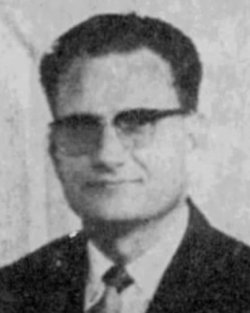
W.E. Best

#67 Sanctification - Practice of Holiness

Romans 6:12-23
W.E. Best July, 1 1973 Audio
0 Comments
Remastered Oct/Nov 2024

Sermon Transcript

Auto-generated transcript • May contain errors

100%
We have been dealing with the
principle of holiness in the first eleven verses of Romans
6. Now we turn to the last part
of the chapter, and in the study of verses 12 through 23, we will
be studying the practice of holiness. I'd like us to read, beginning
with verse 12 through verse 23. Let not sin therefore reign in
your mortal body, that ye should obey it in the lust thereof. Neither yield ye your members
as instruments of unrighteousness unto sin, but yield yourselves
unto God as those that are alive from the dead, and your members
as instruments of righteousness unto God. for sin shall not have
dominion over you, for ye are not under the law, but under
grace. What then? Shall we sin, because
we are not under the law, but under grace? God forbid. Know ye not that to whom ye yield
yourselves servants to obey, His servants ye are to whom ye
obey, whether of sin unto death, or of obedience unto righteousness. Beginning with verse 16 through
verse 22, we have five great truths set forth. This morning
we sought to emphasize the newness of life, walking in newness of life. Tonight here are five things
related to the newness of life. Number one is found in verse
16, a new obedience, obedience unto righteousness. Verse 17, but God be thanked
that ye were the servants of sin, but ye have obeyed from
the heart that form of doctrine which was delivered you. In verse
17, using the phrase, ye have obeyed from the heart, we have
a new influence. Verse 18, being then made free
from sin, ye became the servants of righteousness. In verse 18,
we have a new freedom. I speak after the manner of men
because of the infirmity of your flesh. For as ye have yielded
your members servants to uncleanness, and to iniquity unto iniquity,
even so now yield your members servants to righteousness unto
holiness." Here we have a new servant. For when ye were the servants
of sin, ye were free from righteousness. What fruit had ye then in those
things whereof ye are now ashamed? For the end of those things is
death. But now being made free from
sin and become servants to God, here is number five, ye have
your fruit on the holiness and the end everlasting life, a new
incentive. For the wages of sin is death,
but the gift of God is eternal life through Jesus Christ our
Lord. The practice of holiness. I want
us to look at three verses of scripture tonight. We're not
going to study the whole remaining verses or the last section of
the chapter. We do not have time to do that. I want us to look at verse 6
once again, verse 12, and Romans 8 and verse 10. Our subject is entitled, These
Bodies of Ours. These Bodies of Ours. First of all, verse 6, knowing
this, that our old man is crucified or was crucified with Christ,
that the body of sin, this is the first point which we will
discuss tonight, the body of sin, might be destroyed are enough
that henceforth we should not serve sin. The next verse is
verse 12. Let not sin therefore reign in
your mortal body. The body of sin, verse 6, the
mortal body, verse 12, that ye should obey it in the lust thereof. And now turn to the eighth chapter
of Romans And let's look at verse 10. We will study verse 10 in
the light of its context, but we're only taking the text now
for our scripture reading. And if Christ be in you, the
body is dead because of sin, but the spirit is life because
of righteousness. Let us not pass this verse by
too quickly. If Christ be in you, the body
is dead. What is the meaning of the body
being dead? You will notice the little word
is, is italicized, not only in connection with the body being
dead, but also in connection with the spirit being life in
the latter part of the text. The contrast, therefore, is between
the human body and the spirit of life that has been imparted
to the individual. So we have three verses to which
we will be calling your attention tonight. the body of sin, the
mortal body, and the body is dead because of sin. Even though
the body is dead because of sin, the spirit is alive, very much
alive, because of imparted righteousness. Now this is imparted righteousness. For an introduction to our study,
turn with me please to Hebrews Chapter 12, and verse 14, Hebrews
12, verse 14. The admonition of the apostle
to the Hebrew Christians was, follow peace with all, that is,
strive for peace. Follow peace with all and holiness,
and holiness. without which no man shall see
the Lord. That's plain, isn't it? There are two great eras. Today, one is Arminianism, the
other is Antinomianism. One is as serious as the other. I have no more time for one than
I do for the other. When you look at the 14th verse
and consider it in the light of its context, the apostle is showing that man
cannot love God who does not love holiness. This is proved
by many passages of scripture, but there is one in particular,
Proverbs 9.10. Man does not love God who does
not love holiness. Man does not love God's Word
unless he loves to obey its precepts. He does not love holiness unless
he loves God's Word according to the 119th division of the
Psalms. Until the beauty of holiness,
and that's what it's called in the scriptures, is seen, the
odiousness of sin cannot be seen. The danger of sin may be seen,
but not its heinousness with a biblical view of holiness. The apostle says, follow peace,
strive for peace, peace is to be followed, but not in such
a way as to violate holiness. Follow peace with all and holiness. Strive for peace, but never at
the expense of holiness. That's simple, isn't it? And
then he says, and holiness, the addition. should attract our
attention for a moment because it is in connection with what
we are studying tonight. Holiness in this text is not
imputed holiness. It is not the same that we read
just a moment ago in Romans 8.10. The body is dead because of sin. Paul is talking about the believer
here. But the Spirit, and by the way,
I need to insert this at this particular point, you get the
wrong idea by reading this text of Scripture if you are observant
of the capital S. You automatically would think
about this being the Holy Spirit, but the apostle is not talking
about the Holy Spirit here. So the translator made another
mistake. Now I can prove that from the context. It is not the
Holy Spirit, but it is the spirit of life, or what? The soul of man. The soul is
alive. The contrast is between the body,
the outward part of man, and the inward part of man. So the
body of man is dead. Now what is the meaning of the
body being dead? I don't want to comment on that
yet, because we'll get to that in our study tonight. I hope
that you understand the meaning of it, even before we get to
it. But you see, in the last part,
it is the human spirit, not the Holy Spirit, that Paul is talking
about here, and this is in contrast to the body in the first part
of the text. the spirit of life because of
righteousness. Righteousness here is imputed
righteousness, not only imputed but, of course, imparted righteousness. And then imputed, which justifies
us before God, and imparted righteousness, which enables us to live the
Christian life. Now he says, follow peace with
all and holiness. Holiness here is not the imputed
or the imparted righteousness or holiness of God, but it is
something that we are to follow after. We do not follow after
imputed or imparted righteousness. The individual who has been born
of the Spirit of God is in possession of imparted righteousness. This
holiness is something which the believer is to pursue, which
he is to follow. It is something he is to manifest
in his life. So holiness is better than morality. It includes morality, but it
goes beyond morality. There are moral people who are
not Christians. A moral man refuses to perform
a certain evil deed. But the person who is in possession
of the righteousness of Jesus Christ hates even the thought
of an evil deed. Do you see the difference? So
Paul says, follow peace with all and holiness, and then he
says, without which no man shall see the Lord. In other words,
there is a manifestation of holiness in the life of everyone born
of the Spirit of God. to go along with that text. Ephesians
1 and verse 4. I heard a man last night on the
radio, and he read the first 14 verses of Ephesians, and I
said to myself, I hope that he really gets into this, but he
didn't. He didn't, and especially verse 4. According as he hath
chosen us in him before the foundation of the world that we should be
holy and without blame before him in love. Tonight we are dealing
with these bodies of ours. This is a great subject, one
that I've been looking forward to preaching or teaching. I would
say that this is a subject that needs to be taught more than
preached. I'm sure there'll be a little
preaching along with the teaching. These bodies of ours, the body
of sin, the mortal body, and the body is dead because of sin. These are the three statements
that we're taking together tonight in our study entitled, These
Bodies of Ours. We'll begin, first of all, by
saying that our bodies are very precious and important. They're precious to us, very
important to us, they are a very vital part of our being. Proof of this, of course, is
given us in the 139th division of the Psalms, where the psalmist
describes the intricate parts of the human body, ascribing
all the glory of such creation, of course, to the sovereign God. The body of man represents the
painstaking work of God, according to Genesis 2 and verse 7. God
formed the body out of the dust of the earth, breathed into it
and man became a living soul. Sin has marred God's masterpiece. I said sin has marred God's masterpiece. The human body is not now what
it was before the fall. It has been affected by the fall. Therefore, in this body, man
groans waiting for the adoption to wit, the redemption of the
body, as we're told in Romans 8 and verse 23. The body in which the soul lives
is a body of humiliation. There's a bad translation found
in Philippians 3 and verse 21, called a biobody. That's not
a good translation. Anyone who has done any studying
at all knows that that is not a good translation. It should
be the body of humiliation. It is not a biobody, it is a
body of humiliation, and it has been humiliated by the sin of
man. The body of the believer Even
though it is dead, and we'll see the meaning of that in a
few moments, it is mortal, yet it is the temple of the Holy
Spirit who resides within. Paul ever kept the body under
subjection lest when he had preached to others he should become disapproved
before God. All that we are to do in the
body, it is to be done for the honor and glory of the Lord Jesus
Christ. We've already studied to some
extent verse 6, therefore we'll not spend much time on this part,
but I wanted to put them all together because they should
be studied as a unit. The body of sin is the physical
self. as it is under the power and
reign of the principle of sin. However, the old man having already
died, the old man having been crucified, the old man having
been put off, we know that this body is still the vehicle through
which not the old man per se works, but through which the
fallen nature, or the nature of sin works, or the flesh manifests
itself through this human body. I stated when we began a study
of verse 6 a couple of weeks ago, that most of the Reformers,
a great number of the Puritans, have an unusual view of the old
man. And I'll not go into that again.
So it isn't necessary to comment any further except to say the
body of sin is the physical self. But when Paul says that the body
of sin might be destroyed, he means that the body of sin might
be a null. Now we come to the second, and
we'll spend a great deal of time on the second and third references.
First of all, Romans 6 and verse 12, and Romans 8 and verse 10. Our bodies, which are mortal,
are not to be crucified. We do not crucify our bodies. We crucify the deeds of the body,
as we're told in Romans 8 and verse 13. We're called upon by
the Apostle Paul to yield our bodies, yield our bodies. in Romans 12 and verse 1. We
are to offer our bodies as living sacrifices, holy, acceptable
unto God, which is our reasonable service. Now the body of the
believer is no longer a body conditioned and controlled by
sin. We've already seen in the reading
of the last part of Romans chapter 6 that there is first of all
a new principle of life, there's a new obedience, and there's
a new influence. And the new things that we have
mentioned, five of them in the latter part, let us think tonight
at the very beginning of our study of the mortal body in which
the Holy Spirit lives being under new management. Now let me illustrate
that. Have you ever seen a building
or a place of business, one man has gone out of business, and
several days might pass or several weeks might pass before a new
owner takes over? Usually you'll see a sign in
the window, maybe a few days before the opening of the doors
of the new business, under new management. Have you ever seen
that sign? All of us have seen that sign
many, many times. In other words, the old business,
or what was considered to be an old business by the public
in general, they must realize that now this business is under
new management. Well, beloved, we are still in
these old bodies, these old mortal bodies, but the old mortal bodies
are now under new management. The old bodies are no longer
governed, controlled, dominated by the principle of sin, by the
old man, by the Adamic nature. The body is now under the dominion,
under the control of the Holy So we're talking about a new
residence, and we'll get into this in the study of the 10th
verse of Romans chapter 8. So you can see there is a new
obedience. We're now the servants of Jesus
Christ. So there's a new obedience, there's
a new influence, there's a new liberty, there is a new incentive. And I must call attention to
the new incentive. This may take you by surprise,
but will you look at the new incentive in the 22nd verse? The new incentive here presents
eternal life not as something that we're already in possession
of as believers, but here it is presented as a goal. You say, well, now that's a contradiction.
Oh, no, it isn't. You have to consider it in the
light of its context. Eternal life is presented here
as a goal, G-O-A-L, goal. Look at it again. But now being
made free from sin and become servants to God, ye have your
fruit unto holiness, that's practical holiness, and the end, what? Everlasting life. Does that surprise you? So the
new incentive is everlasting life, and everlasting life is
presented as a goal. You say, how in the world can
we be in possession of everlasting life, and yet this everlasting
life also be presented as a goal? Well, both are scriptural. But it is the latter that Paul
is talking about here. And we'll see the beauty of this
in some of our closing remarks tonight. But we must consider,
first of all, that our bodies are under new management. Do we realize that? Do we understand
it? Do we feel it? Do we know it?
Do we have assurance of it? These bodies are under new management. After the service this morning,
one of the newer members of the church came to me and said, I
have something I want to say to you. I said, fine, say it. He said, I have something that
is literally eating me up. I said, what's eating you up?
He said, I've been trying to quit smoking. And he said, it
just seemed like I can't quit smoking. I said, I hope it just
keeps eating you up. He said, I know it's wrong. I
know it's harmful to my body. And I've been trying to quit
lately because I've been convicted of it. But it seems that I haven't
been able to give it up yet. I said, well, it'll just keep
eating on me. And I'm glad it is eating you
up. Now, beloved, that's one thing, but there are a lot of
things in our lives. And the more we study, the more
we grow in grace, there are a lot of things as we come into the
knowledge of them that will literally eat us up until we do something
about the things which we have heard. That's just one thing that I
mentioned. There are many things. Now while that may be one thing
that is really troubling that individual, I believe, beloved,
there is something troubling each one of us. That might not
be it, but there is something else. But we must remember these bodies
are under new management. And being under new management,
there is new obedience. A new influence, a new liberty
is being experienced, and certainly out before us there is a new
incentive, everlasting life. Oh, but the Arminian will come
along and some will come along and say, but I have everlasting
life. And then the Antinomian will come along and he says,
well I have life, it doesn't make any difference how I live,
I've got it, I can't ever lose it. So one is just as deadly
as the other. What we're showing from the scriptures,
there is perfect harmony between position and condition. And as we said last Sunday, the
desire of the believer is to bring his condition into proximity
with his position. And this is what we're looking
at. Now let's look at some of these things. that Paul mentions
here in verses 12 through 23. There are several commands given,
several commands. I'd like you to observe the imperatives
of Romans 6, 12 through 23. In other words, Paul is saying,
comes the responsibility. Now comes a time to put into
practice these principles that you have learned. Know you not? Know you not? You know these
things now. Reckon them to be so, and now put them into practice. So we have the imperatives or
the commands that are given in verses 12 through 23. It is not
to be supposed that sin is conceived of as reigning in the believer
and now he is commanded to terminate that reign. Notice what I said. Let me say that again for fear
you didn't get it. I said it is not to be supposed
by you and me that sin is reigning in the believer,
and the believer is now to terminate that reign, sin never has reigned
in the heart of a born-again person. From the very moment
that he passed from death into life, sin has never reigned in
his life. So we're not to suppose that
sin is reigning. by observing the imperatives
given here of the commands, and we are to terminate this reigning
of sin? That's not what he's talking
about. Let's go a little further. Look at the 12th verse closely,
for this is the beginning of the practical part of this chapter. So, let not sin reign is the imperative. It's God's
command, but it flows from the indicative, get this, putting
out that it is only because, or pointing out rather, that
it is only because sin does not reign that it can be said, let
not sin therefore reign in your mortal body. So we have the imperatives, we
have the commands, but these commands flow from the indicative. The indicative. Now let me illustrate
that. I like an illustration that John
Murray has given on this particular point. I think he's done an excellent
job in illustrating it. I'm using his illustration. He
said, and I quote, to say to a slave, that has not been emancipated,
do not behave as a slave, would be to mock his enslavement. Now let's pause a moment. If
you were to go into a prison and visit a prisoner, and you
were to say to him, why, be not enslaved, you would
be mocking his enslavement. Now, Murray goes on to say, however,
to say to the same to a slave that has been set free is the
necessary appeal to put into effect the privileges and rights
of his liberation. In other words, here's a person
who has been liberated, he's been emancipated, to say to the
emancipated person, do not act like a slave. So you see the
command would flow from what? The indicative. Now you don't
go into a prison or you don't talk to a person who is in prison,
don't act like a slave, that would be mocking your slavery.
But to one who has been emancipated, it is right to say, do not act
like a slave. So to us who are saved, who have
been liberated, who have been emancipated by the grace of God,
the command, the imperative flows from the indicative. Do not act
like slaves. Why? Because you have been liberated. You have been emancipated. To
me, beloved, that is as clear as it can be. And why? Why? Because we are emancipated. We are under, these bodies of
ours are under new management. And that's why the Apostle Paul,
in the latter part of the sixth chapter of Romans, talks about
a new obedience. Verse 16, a new influence, serving
the Lord from the heart. a new freedom being set free
or liberated, a new service where servants of righteousness, and
a new incentive, what is it? Everlasting life. Now I want
to comment on the last one because I'm afraid there might be some
misunderstanding. When you look at the 22nd verse,
and look at it with me now for a few moments, Paul in Romans
6.22 presents eternal life as a goal. You can't get away from
it. I suppose when I first began
studying this was the result of a discussion
I had with a Church of Christ man in the early part of my ministry. And when this particular verse
was presented, I did not know how to answer it. You see, Many
individuals today who are religionists believe that salvation is really
something that is future for us. And so he called my attention
to the fact that here in this verse of Scripture, it is presented, everlasting life
is, as a goal. As a goal. And then of course
he would come back with a question. Now you say, and at that time
he would say, as a Baptist, you say, you're already in possession
of everlasting life. Well, beloved, I couldn't help
but think about all the scripture, he that believed it is not condemned,
but he that believed it not is condemned already. And we have
everlasting life, it's in the present tense. What about all
those scriptures? So there is no contradiction
between already having everlasting life and everlasting life being
presented as a goal. But what does it mean? Now let
me give you some comments on this, and this is important.
Sooner or later, you'll be confronted with it as you seek to witness
for the Lord Jesus Christ. This everlasting life, if you
will notice, stands in contrast to death in verse 21. I said it stands in contrast
to death in verse 21. One is just as long in duration
as the other. Paul is saying that those who
are obedient will be cursed Or those who are disobedient
will be cursed with death forever. And then he says in contrast
to that, those who are obedient shall be blessed with life forever. So we have death set in contrast
to life. Death in verse 21, everlasting
life in verse 22. And in verse 22 it is presented
as a goal. Now what is he really saying?
Here it is in one sentence. I'm quoting. Obedience is not
a requirement to obtain life. We all know this. Obedience is
not a requirement to obtain life, but perseverance in obedience
is a manifestation of life. End of quote. There's a simplicity
of it. Now the question has been raised, what about the statement
in John 3, 36, half, present tense, everlasting life? Here's a comment by an extraordinary
person who has given, I think, a good comment on this particular
verse. I quote, Piety on earth is the same that it will be in
the eternal state. Piety on the earth is the same
as it will be in the eternal state. Now get this. Except that it will be expanded,
matured, purified, and made more glorious. You can't object to
that. Piety is the same now on earth,
that it will be in glory, with this exception. It'll be expanded
there, it'll be purified there, it'll be perfected there. That's
the difference. Going on he says, the Christian
here has a foretaste of a world of glory. Do you believe that?
I do. I already have a foretaste. Proof
of that is found in Ephesians 1, 13 and 14 and many other passages. A foretaste. So he says, the
Christian here, that is on the earth, has a foretaste of the
world of glory and enjoys the same kind of felicity, though
not the same degree that he will in the kingdom of glory. There it is, just as simple as
it can be. So Paul is simply presenting
here the great incentive, we're already enjoying piety, but not
in its perfection, not in its expansion form. It will be expanded,
it will be perfected, so there is a goal. I'm enjoying it now. And you're enjoying personal
holiness, personal righteousness now. But all of this will be
expanded in the kingdom which is to come. So it is presented
as what? As a goal. So that's a great
incentive. Now something else that I think
we need to consider. Three great truths are presented
in Romans 6, and they are, number one, comprehension. Comprehension. We've already
discussed this, but not under that title. Comprehension in
verses 3, 6, 9, and 16. Know you're not. Know you're
not. Know you're not. And don't you
know? Comprehension. Number two, calculation. Calculation is in verse 11. We
are to reckon ourselves to be dead indeed unto sin, but alive
unto God through Jesus Christ our Lord. Calculation. That means
to count or rely on the knowledge or the comprehension. Now in verses 13 and 16, we have
regimentation. So we have comprehension calculation
and now regimentation. Regimentation. So the members
of the body are denied their natural desires. Let not sin
therefore reign in your mortal bodies. They're mortal. So here's regimentation. So the
members of the body are treated without regard for natural appetites. As Christians, we are to determine
what place our bodies have in the great drama of Christian
living. Do you agree? Now we come to the third, and
this will explain all that we have said thus far. Turn now
to chapter 8 and verse 10. Our bodies are dead. Our bodies
are dead. Let's look at it. And we'll look
at it in the light of its context, verses 9 through 13. But first
of all, verse 10, what are we told? We're told that the body
is dead because of sin. Now let's put things in their
proper order. and if or since Christ be in
you. Christ is in you as a believer. Do you believe that Christ is
in you? All right, number two, every person in whom the Holy
Spirit dwells or Christ in the person of the Holy Spirit dwells,
the body is dead. You say, well, my body is not
dead. No, it isn't actually dead. This is a figurative statement.
How are we to understand this figurative statement? It is very
simple. What is the meaning of the statement,
the body is dead? It is dead because of sin. Now, can you think of a verse
of scripture that will interpret that for you? It is dead because
of sin. What about Romans 5.12? Would
that give any help? Well, let's see if it will. Turn
back and we'll read Romans 5.12, one that I'm sure you know from
memory, but let's read it. Wherefore, as by one man sin
entered into the world, and death by sin. And so death passed upon
all men, for in him, that is, in Adam, all have sin. Now, when it says the body is
dead, this is a figurative statement, and what does it mean? It is
not the same as Romans 6.2. Notice what I said. It's not
the same as Romans 6.2. What does Romans 6.2 say? Look
back once again at the 2nd verse of the 6th chapter. God forbid,
how shall we that are dead to sin? That's not what Paul is
talking about in the 8th chapter of the 10th verse. We've already
discussed that. What does he mean here then?
The body is dead. The mortal body is dead because
of sin. Because of the principle of sin. What is he saying? The principle
of death is in every human body. Here. Now let's let that soak
in for a moment. Do you believe the principle
of death is in every human body? It surely is. Though the outward
man is perishing, the inward man is being renewed day by day. So this is a figurative expression. The body is dead. Why is the
body dead? Because the principle of death
is in every human body. It's in mine, it's in yours. Now in contrast to the principle
of death residing in every human body, we have one. The spirit
of man, not the Holy Spirit, the spirit of man, the soul of
man, is very much alive because of righteousness. See what he's
saying? And then he goes on in verse
11. But since the spirit of him that raised up Jesus from the
dead dwell in you, he that raised up Christ from the dead shall
also quicken your mortal bodies by his spirit that dwelleth in
you. Now let's study, beginning with
the 10th verse. And we'll go through the 13th
in our exposition of verse 10. Our bodies are dead. The principle
of death is in every human body. The body is perishing. The principle
of death is there. It cannot be denied. In other
words, we came into this world dying. That's what it means. Because of the principle of death
in each one of us. So our bodies are dead because
of sin. Now this statement must not be
lifted from its context. This statement is ordinarily
interpreted And I quote, Christ's presence does not change the
chemistry of the body. It does not cancel the primeval
sentence of death. The body of the Christian is
subject to death. It is a mortal body. It is perishing. It is perishing, 2 Corinthians
4, 16 through 18. Now, what is Paul saying? Paul is saying, since Jesus Christ
is in you, the indwelling Holy Spirit is the host in the believer
and not a guest. I want to stop a moment. The Holy Spirit is not a guest
in you, he's the host. Do we understand the difference
between a host and a guest? I may be a guest in your home,
and you may be a guest in my home, but you will be the host. The Holy Spirit of God, the third
person of the Godhead, is the host, not a guest. Not a guest. So the body is dead
as a source of impulse, get this, to moral action. There is now
a new source of life. The Holy Spirit resides. And we're going to talk about
resident life in a moment, beginning with verse 9 through verse 13. So the Holy Spirit is the believer's
host. Thus, Romans 8.10 expresses not
a doubt, but a presupposition which provides the foundation
for the following statement. Therefore, brethren, we are debtors
not to the flesh to live after the flesh. Oh, let's see that
in its proper connection. What did I say? I said Romans
18 expresses not a doubt, but a presupposition, which provides
the foundation for the following statement in verse 12. Therefore,
brethren, because the Holy Spirit is the host in your life, because
of resident life, therefore, brethren, we are debtors not
to the flesh. to live after the flesh. The body of the believer is called
a body of sin, but not a sinful body. Notice what I said. Your body is referred to as a
body of sin, but not a sinful body. There's a difference, and
a big difference. It is dead because of But Romans
8, 11, look at it, assures us that the indwelling Spirit of
God, the host, makes that body alive for God, a mortal body that can live for
the glory of God on earth. Do we believe that? This mortal
body is to be kept in good order. How? By mortifying not the body,
not the members of the body, but the deeds of the body. And that we find in verse 13.
It is just as clear as it can be. Now there are several things
I want to mention in connection with verses 9 through 13 of Romans
chapter 8. We'll study this more in the
eighth chapter, but I said that this is very important to connect
this with the other two references that I've given concerning the
body, the body of sin, the mortal body, and the body is dead. All
right, number one, in verses nine and 10, we have resident
life, resident life, the Holy Spirit. I want to call attention
to something else. Did you know that the whole Trinity
is mentioned in these verses? The whole Godhead is referred
to? Let's see if that's true. Begin
with verse 9. But we're not in the flesh, but
in the Spirit. In the Spirit. Here's the Holy
Spirit, the third person of the Godhead. If so be that the Spirit
of God, the Spirit of the Father, there's the first person of the
Godhead, dwell in you. He is the Holy Spirit, the third
person of the Godhead. He's dwelling in every believer. He is also referred to as the
Spirit of God, that is the Spirit of the Father. And he said, if
so be that the Spirit of God dwell in you. Now if any man
have not the Spirit of Christ, he is none of his. Now in verse
10, and if Christ be in you, Christ is in us. The Spirit of
Christ is in us. Christ dwells in our hearts by
faith. He dwells in us in the person
of the Holy Spirit because the Holy Spirit is the Spirit of
Christ. He is the Spirit of the Father.
He is the third person of the Godhead, but he is the Spirit
of the Father and of the Son. Therefore, we have the Father,
the Son, and the Holy Spirit all referred to in this portion
of Scripture. Now he says, and if the spirit
of him that raised up Jesus from the dead dwell in you, what are
we talking about in verses 9 and 10? We're talking about resident
life. There is no higher life than
the spirit of life. No higher life. There is no true
Christian life lower than this life, the spirit of life. No higher life, no lower life. General de Gaulle, while he was
living, made a statement that I want to use in connection with
something at this point. This does not mean now that I'm
bringing up General de Gaulle as exalting him. But he made
a significant statement. His statement is this. One day
he was asked, where do you stand, General? Do you stand to the
right or do you stand to the left? And of course the subject
of communism had come up and some other isms. Here's a statement
in the light of the question that had been asked him. He said,
and I quote, I am not on the right or the left. are in the middle, I am above."
End of quote. Now I like the statement, but
I'm going to use it in a different context. I assure you. What did he say? He said he was,
you know, a question as to his political stand. Where do you
stand, to the right or to the left? And his statement was, I am not on the right, or on the left, or in the middle,
I'm above. Well, what do you say as a Christian?
I am not on the left, I am not on the right, I am above. Is
that scriptural? Yes, because we've been raised
up and made to sit together in the heaven as in Christ Jesus.
So resident life, verses 9 and 10, there is no higher life than
the spirit of life. Now, when we come to verse 11,
resident life gives new energy. I told you this morning, I have
mentioned it before, but I will refer to it again. I'm going
to give you some quotations tonight. I want you to know that verse
11 has been a very controversial verse. I remember years ago,
in fact, it's been about 25 years ago I would say, Mr. Curry, the Plymouth Brethren
man with whom I was acquainted, died I think in 1957, about 20
years ago, 19 or 20 years ago. I think it was either 56 or 57.
Sometime before his death, he and I were discussing the scriptures
one day when I was in the store. And he brought this text of scripture
up and he asked me, he said, what do you think that that refers
to? And of course, my answer was immediately what I'd been
taught, you know, that this verse refers to the resurrection of
the body by the power of the Holy Spirit. And he said, do you think that's
really what it teaches? Yeah, I think that's what it
teaches. He said, I don't think that's what it teaches. And he gave
me what he thought it taught, and he said, you think on it
for a time. And I said, I assure you that I will. And I did, and
I started searching and digging and searching and reading. Now
I want to share some different opinions on that. John Gill, for one, and I don't
agree with John Gill on this verse, even though he was a great
expositor of the scriptures. He makes this statement. He says
the word quicken that is used in this verse can never refer
to sanctification in this life. That's what he said. It doesn't refer to sanctification. He said the word quicken is always
used in reference to regeneration and not sanctification. That's
Gill's interpretation. Now let me give you John Calvin's
interpretation. John Calvin gives a tremendous
statement on this very passage of Scripture. He takes a different
view, and I think his view is perfectly correct. He says that
it does refer, it refers to sanctification and not regeneration. You're going to have to consider
the context, beloved. Albert Barnes is another who
gives a tremendous interpretation of it. In fact, Albert Barnes
calls attention to something that maybe you haven't thought
of. Now, it might sound good to some when he reads John Gill,
who says, now he uses the Greek word, translated quicken, he
says the word is never used in reference to sanctification,
but it's always used in reference to regeneration. Well, the word has this meaning. The Greek word translated quicken
means to make a live, it means cause to live, it means to increase
life, it means to restore life. Now here's what Calvin said.
I like this and I'll read you what Barnes said in a moment.
Calvin said, quote, I'm not giving all of it because he has something
quite limpy. Paul is not speaking of what? He is not speaking of the
last resurrection. I believe that. I don't believe
that Paul is speaking of the last resurrection. He goes on
to say, but of the continual operation of the Spirit by which
he gradually mortifies the remains of the flesh and renews in us
the heavenly life. Now we have seen in verses 9
and 10 resident life. All right, what do we have in
verse 11? Resident life gives new energy,
new energy. And that's what Paul is saying
in the 11th verse. But if the spirit of him that
raised up Jesus from the dead dwell in you, resident life,
He that raised up Christ from the dead shall also quicken your
mortal body by his Spirit that dwelleth in you. I like what one person said, and
his statement was that the Holy Spirit resident life in the believer
This passage is not expressing a doubt, but a presupposition,
which provides the foundation for the following statement.
Therefore, in view of what? Resident life, and not only resident
life, but the resident life which gives new energy. Therefore,
what? He says in verse 12, we are debtors. To what? The flesh? No! Not to
live after the flesh. We are debtors to live for God. Therefore we are to mortify the
deeds of the body. So we have resident life in verses
9 and 10. We have resident life giving
new energy in verse 11. Now we'll come to verse 12 in
just a moment. Albert Barnes makes this statement. He says,
verse 11 does not refer to the resurrection of the dead. I like this. Why doesn't it refer
to the resurrection of the dead? He points out that the resurrection
of the dead is at a moment. Whereas this new energy is for
a lifetime in the believer on earth. I like that. Oh, that's
good. Resurrection of the dead is in
a moment, in the twinkling of an eye. But this new energy enables
the believer to live a life that will glorify God while he is
in the body. A body, even though it is dead,
because of sin, that is, the principle of death resides in
the body, the body is perishing. Yet, the spirit of man is very
much alive because of righteousness. Because of righteousness. I like
what Barnhouse said. In fact, Barnhouse, in his interpretation
of this verse, Quotes verbatim John Calvin. I have the works
of Calvin. I checked it out. And then he
makes a very good comment. So you see in the reading of
the works of men, there is a divided view concerning the meaning of
this text. Some believe it refers to the
resurrection of the body. I held to that view for a long
time, but I no longer hold to that view and have not for a
great number of years. So resident life gives new energy. When we learn the meaning of
resident life, and we learn it from the word dwell in Romans
7, 17, 18, and 20, now it is the Holy Spirit dwelling. Paul
speaks of our physical resurrection later. That is the subject of
other verses, not these verses. So it is not dead bodies, but
mortal bodies. Now we come to the third thing
in verse 12. Resident life makes believers
debtors. We're debtors, beloved. We're
not debtors to the flesh. You're not a debtor to the flesh.
So Christians are not to live down. I said, Christians ought to live
down. We're debtors of the body because it is God's creatures,
Acts 17, 34. But we're not debtors to the
flesh, which is Satan's production. Now listen to this statement.
I came across this recently, and this is in the light of Romans
13, 14, a tremendous interpretation of verse 12. We are debtors to
the body to supply its needs. You are a debtor to your human
body to provide its needs. If a man doesn't work, he shouldn't
eat. He is a debtor to his body. He is a debtor to his body to
feed it and clothe it, to protect it, to take care of it. That's
not all of it. Listen to this. So this person
said, we are debtors to the body to supply its needs, but not
to the flesh to satisfy its lusts. There is the answer. There it
is wrapped up in one sentence. We're debtors to the body to
supply its needs, but not to the flesh to satisfy its lusts. Romans 13, 14. Turn with me to
Romans 13, 14. Paul is still talking about sanctification. In the 13th chapter, he makes
another reference and here's what he says. But put ye on the
Lord Jesus Christ and make not provision for the flesh to fulfill
the lusts thereof. Now the fourth thing as we come
to verse 13. resident life becomes a debtor
to mortify the deeds of the body in order that we might live.
If we live to the flesh, then we're going to die. But if we,
through the Spirit, notice this, through the Spirit, the indwelling
host, not the guest, mortify, crucify the deeds of the body
we shall live. So we have resonant life, we
have resonant life giving new energy in verse 11, we have resonant
life which makes the recipients debtors, and we have resonant
life which becomes a debtor to mortify the deeds of the body. There are three primary attitudes
toward the human body, and I say this in closing. Pagans worship the body because
of its beauty and strength. The Greeks exalt the body in
art and sculpture. They believe in developing the
body to its maximum strength. Now we have referred to the pagans
and to the Greeks. Christians keep the bodies under
subjection, 1 Corinthians 9, 25-27. Paul did not worship the
body, nor was he concerned in its development to the maximum
strength. Now I want to pause a moment. I've seen individuals who just
really believe in developing the body to its maximum strength. And I'll tell you, I've seen
proud peacocks. Proud peacocks. Paul said a little
exercise does problem. And it does. I know the value
of exercise. But you see, the Christian does
not believe in developing the human body to its maximum strength. The Greeks follow that line of
thinking. And yet Paul did believe in exercise. He said exercise
does profit. And all who get some exercise
know that it is profitable. I know in my own life when I'm
not able to take my walk, if it's raining or pouring down
rain, Personally, I can't go into my study early in the morning
with a mind as sharp as I can after I've taken a three-mile
walk as fast as I can walk. Now, just something about it,
when you take that walk and that old blood begins to pump and
you breathe deeply and you get rid of all that old stale air
deep down in your lungs and the blood circulating good, pumping
to your brain, you can think better. I know you can. I know
it by experience. I don't think enough of it to
try to develop where I look like Tarzan or Atlas. I don't believe I could anyway.
I'm not concerned about looking like Atlas. So the Christian, he doesn't
worship his body. He doesn't believe in developing
the body to the maximum strength. Paul did advocate exercise. Someone has said sin is not subdued
by reducing the body to the invalid. Sin is not in the flesh, but
in the nature, the inner self. The invalid may hate, the invalid
may covet, and so forth. The body may be tortured to the
very point of death, But the sin follows in the soul to an
endless hell. Now listen to this in closing
as we look at verse 13. The body is to be purged by the
spiritual rather than punished by the physical. There's the
answer. What is the meaning of mortification?
We're not to punish the human body. So the body is to be purged
by the spiritual rather than punished by the physical. Notice I said purged by the spiritual,
not punished by the physical. Nature is deeper than the flesh
of the body. The body is not to be abused,
but the sin of the flesh is to be denied. Are we living or are
we just existing as Christians?
W.E. Best
About W.E. Best
Wilbern Elias Best (1919-2007) was a preacher and writer of Gospel material. He wrote 25 books and pamphlets comprised of sermons he preached to his congregation. These books were distributed in English and Spanish around the world from 1970 to 2018 at no cost via the W.E. Best Book Missionary Trust.

Comments

0 / 2000 characters
Comments are moderated before appearing.

Be the first to comment!

Joshua

Joshua

Shall we play a game? Ask me about articles, sermons, or theology from our library. I can also help you navigate the site.