Bootstrap
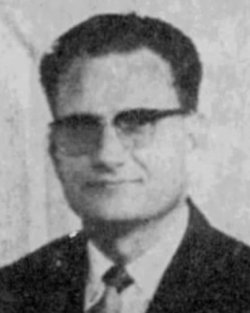
W.E. Best

#72 Sanctification - Position & Condition of the Believer, Part 2

Romans 8:1-13
W.E. Best July, 1 1973 Audio
0 Comments
Remastered Oct/Nov 2024

Sermon Transcript

Auto-generated transcript • May contain errors

100%
Instead of reading the first
13 verses as we did this morning, let us read just the first four
verses tonight and we will get as far as the third verse. I hope to be able to complete
our study tonight of verse 3. We will not get into a study
of verse 4. The Lord willing, next Sunday
we will study verse 4 and then study the last division of our
present study of this portion of scripture, verses 5 through
13. I want to review just briefly in a few moments what we studied
this morning in verse 1. I'll not be able to even hit
the highlights of this great text, but I will summarize it
in a little different way than what I gave this morning, which
ought to be fresh to us. There is therefore now no condemnation
to them which are in Christ Jesus, who walk not after the flesh,
but after the Spirit. For the law of the Spirit of
life in Christ Jesus hath made me free from the law of sin and
death. For what the law could not do,
in that it was weak through the flesh, God sending his own Son
in the likeness of sinful flesh and for sin, condemned sin in
the flesh, that the righteousness or the ordinance of the law might
be fulfilled in us who walk not after the flesh but after the
Spirit. This morning we spent all of
our time after outlining the first 13 verses for you And then
we went back to verse 1 and spent about 45 minutes in the discussion
of verse 1, a great passage of scripture. Tonight I'd like to
summarize what we gave this morning, but do it in a little different
manner than what I gave to you in the exposition of the text.
I believe that Romans 8 verse 1 presents First of all, the
believer standing in the expression found in Christ. The apostle
then talks about the privilege of the believer. The privilege
of the Christian is seen in the statement, no condemnation. And then he goes on to express
the character of God's people by saying, who walk not after
the flesh, but after the spirit. Thus, we have the standing in
Christ, privilege, no condemnation, and character, who walk not after
the flesh, but after the spirit. Well, let's look at it even from
a different point of view. I stated this morning that verse
1 tells us how bold Paul was in his speech in verse 1. With that thought in mind, let's
look at it from this point of view. Paul's speech, first of
all, was bold. He said, we're in Christ. That's
a bold statement. Then, not only was his speech
bold, but it was broad. no condemnation. You remember
I stated this morning that in the statement, no condemnation,
it is a general rather than a specific statement. It is the specific
statement, however, which heads the list and makes all the others
possible. And we gave to you the many different
ways in which no condemnation is to be considered in its general
understanding as it is presented in this passage of scripture.
So his speech was bold in Christ, broad, no condemnation, and abiding
now. There is therefore now no condemnation,
not just for time, but for eternity. Now we come to verse 2. We stated
this morning in giving to you the outline of the first four
verses that we have, first of all, the boldness of Paul's speech
in verse one, and then in verse two, the apostle explains why
he has been so bold. He explains why his speech was
so assuring in verse 2. Let's read the verse because
we will be studying this text for several minutes before we
go on to the next in verse 3. For the law of the Spirit of
life in Christ Jesus hath made me free from the law of sin and
death. We stated this morning in the
exposition of verse 1 that the law of Jesus Christ satisfied
the law of justice, thus freeing us from the law of sin. No greater statement could be
made by any man of God than that which has been made in relation
to verses 1 and 2. Now the assurance that he has.
Look first of all at the opening word of verse 2. The Greek particle
is used. It is the Greek particle ha.
It is omicron with the English apostrophe turned backwards,
which gives the H sound in the Greek, pronounced ha. So here
we have the very first word which explains what Paul has been saying
and the reason that he has said what he did in verse one. Therefore, the two verses, one
and two, are bound together by the Greek particle for, translated
for, in our King James Version. We also have the repetition of
in Christ, and that also shows the connection between the two
verses. The liberation of the believer
is once for all. Notice I said the liberation
of the believer is once for all. If you have been liberated It
is once for all. The outstanding thing about verse
2 is the arius tense. That means we have been liberated
once for all. Once a person has been liberated,
he can never lose that liberation and be liberated again. He is liberated once for all
by the death of Jesus Christ on the cross. Therefore, the
law of the spirit of life in Christ Jesus has made us free
from the law of sin and death. This is what we have referred
to in the past as counteraction. You remember when we began our
study in chapter 6, we talked about counteraction? This is
where one goes to find the great principle of counteraction. Not suppression, but counteraction,
and the Spirit of God within the believer. So here we have
the principle of counteraction. The new nature is implanted in
the believer, but the old nature remains. You and I know that
for a fact. Paul knew it and expressed it
in his experience described in the seventh chapter, which we
have already studied. But let me give to you an additional
text in relation to this very subject found not in the seventh
chapter of the book of Romans, but in Galatians 2 and verse
20. Paul said, I've been crucified
with Christ. Nevertheless, I live, yet not
I, but Christ liveth in me, and the life which I now live that
is in the flesh I live by the faith of the Son of God, who
loved me and gave himself for me." So there has been a new
nature planted within the believer. Even though there has been a
new nature planted within the believer, the old nature remains,
and Paul describes it vividly in the seventh chapter. And that's
why he went on to say, not I, not the old nature, but Jesus
Christ who lives in me. There you have counteraction.
Verse 2 is to be understood in the sense of a power that is
operating in the believer now. In other words, it is a present
power within the believer that is delivering the believer not
from the guilt of sin, notice what I'm saying, but from the
power of indwelling sin. Now that needs to be understood.
You see, we're not only dealing with freedom from the guilt of
sin, but being delivered from the power of sin. What the Apostle
is talking about now in the eighth chapter is the indwelling power,
power within the believer that is delivering him, and he's not
talking about being delivered from the guilt of sin. He has
already confirmed that fact. but being delivered now from
the power of indwelling sin. This is the subject, and this
is the subject of sanctification. So the law of sin and death is
to be understood, and we're talking about the law of sin and death
in verse 2, in the same sense as chapter 7, verses 23 and 24. But let us not forget, the old
law of sin and death is still in us, even though the Lord has
implanted a new nature within us. But by virtue of the indwelling
Holy Spirit, we are enabled to overcome what? The power of sin. That brings us now to verse 3,
and we'll spend all the rest of the time tonight in the study
of verse 3. First of all, there's a lot of
misunderstanding, I think, about this text. For a great number
of years, as a result of what I was taught, I had a misunderstanding
of this verse of Scripture. We must understand what this
verse teaches in order to understand actually what is given us in
verses 5 through 13. When it comes to the fourth verse,
which we'll be studying next Sunday, the Lord willing, We'll
certainly have to understand the first part of that text in
the light of its context in order to give the proper and right
interpretation of verses 5 through 13. Now let's look at verse 3. After looking at the basic thought
of verse 2, he goes on and here is that particle again. 4, 4. what the law could not do, in
that it was weak through the flesh, God sending his own Son
in the likeness of sinful flesh, and for sin condemned sin in
the flesh. I have divided this text into
three divisions. I have built all three divisions
around one word that is used three different times within
the text. I think we're going to have to do this in order to
really see the simplicity of the message that the Apostle
Paul is conveying to you and me as Christians. And this, of
course, coming to us through Paul by the Holy Spirit. Let's read the text again, and
I want to emphasize the word now, around which we're going
to give three divisions of the text. For what the law could
not do in that it was weak through the flesh. through the flesh. Now in the first place, how is
the word flesh, as it occurs in the first part of the text,
how is it to be understood? For what the law could not do
in that it was weak through the flesh, is the word flesh to be
understood as the flesh that is on the bones of an individual? Is that the sense in which the
word flesh is to be understood? No, it isn't. Well, how is it
to be understood? We'll see as we progress in our
study. Now let's look at the next phrase. God sending his own son in the
likeness of sinful flesh. How is the word flesh there to
be understood? How is it to be interpreted?
Here we have the flesh of Jesus Christ. Does the word flesh in
the second part of this text referred to the flesh, the literal
flesh on the bones of our blessed Lord as he walked among the sons
of men for thirty-three and a half years? No, it does not refer
to the flesh, the flesh that covers the bones. Well, what
does it mean? We will see in our study of the
text. Then finally, look at the last part. goes on to say, and
for sin, in other words, the father sent the son, the father
sent the son for a purpose, for a purpose. We said this morning,
you remember that Paul spoke boldly in verse 1, He states
the reason why he spoke boldly in verse 2. Now we have in verse
3 the power made possible by which he was able to speak boldly. And then in verse 4, the purpose
for such speaking. as the perfect outline. Now you
don't have to go off and wonder about it. It's all set forth. You don't even have to study
the original Greek to see it. It can be seen and understood
by any child of God as he reads and believes what is recorded
even here in the King James Version of the Scriptures. Now there are several things
I want to say by way of introduction to verse 3. And then we'll get
into the divisions which I have given you of the text. The provision
for the power by which Paul and by which you and I are able to
overcome sin or speak boldly is accomplished in the incarnation
and sacrifice of Jesus Christ. We must see, first of all, that
the incarnation of Christ is referred to in this passage of
Scripture. In fact, there is no greater text, really, to which
one could go to discuss the subject of the incarnation than this
verse of Scripture. This has been one of my favorites
on the incarnation for many, many years. And then we have
something else within the context of the text. What is it? Not
only the incarnation in the likeness of sinful flesh, but for sin,
for sin, and notice your marginal reference, for a sin offering,
there you have the death of Jesus Christ. Thus we have not only
the incarnation, but the sacrificial work accomplished by Jesus Christ
on the cross. Now there's no doubt about this
within this passage of Scripture. Now let's look at this for a
moment, and I want to give to you several statements by way
of introduction. In fact, I want to raise some
questions. We know that sin has been legally or judicially condemned
at the cross. We've already studied this. We
made a detailed study of it in the sixth chapter of Romans.
But my question is this, is that the only meaning of this passage? I'm referring now primarily to
the word condemned. In order to understand the word
condemned in verse 3, you're going to have to go back and
consider what we gave this morning as we discussed no condemnation. No condemnation. Now my statement
is that this passage does refer to the great biblical fact of
judicial condemnation. But after having made that statement,
my question is, does it teach anything more than just legal
condemnation of our sin? Does it mean more than that?
Is that all it means? Now let me raise some questions.
Question number one. I've already given one, but here
are my real questions. Does the word condemned in verse
3 have any relevance, any relevance to the present work of sanctification? Does the word condemned have
any reference or any relevance to the present work of sanctification? Now it's very important that
we see this. Question number two. Did Christ's
work on the cross do something decisively in reference to the
power of sin which can be interpreted as God's condemning sin in the
flesh? Do you see where I'm going now? Unless you followed me this morning,
you don't know where I'm going now. Unless you got the message
this morning, then what I have said already in these two questions
will not be of much help to you. Let me state the questions again.
I think even though you might feel that we're spending time
unnecessary, but I must assure you that we're not spending time
unnecessary. We must know what verses 5 through
13, what that passage teaches. And I'm afraid that we don't
all really know what it really teaches. We have mixed ideas
about it. I've had them, and I'm not going
to stand before you tonight and tell you that I have arrived
at all truth on the passage, because I haven't. But I do understand
it better today than I've ever understood it before. Now, the
first question. Did Christ work? Really, this
is the second question that I gave. Did Christ work on the cross? Do something decisively in reference
to the power of sin? We're talking about the power
of sin there, not the guilt of sin. We're not talking about
the believer's position right now, we're talking about his
condition, and Paul is preparing for that as he will be discussing
it in verses 5 through 13, which is an expansion, as we said this
morning, of the last phrase of verse 4. Now, did Christ work
on the cross, do something decisively? in reference to the power of
sin which can be interpreted as God's condemning sin in the
flesh. Really that was the second question.
Now we look at the first one again. Does the word condemned
in verse 3 have any relevance to the present work of sanctification
that is going on by the power of the Holy Spirit within the
heart of the believer. You see, we're in the area of
biblical truth that describes not justification, but sanctification. Now after raising those two questions,
let me give to you a summary of a lengthy work which I have
recently studied on this passage. This is just a summary of it,
and I think I have summarized it about as well as I can. As freedom from condemnation,
verse one, embraces more than freedom from the judgment of
sin's guilt, so does condemnation of sin in the flesh, verse 3,
embody more than legal judgment of sin in the flesh. Now let's let that soak in a
little bit. We'll do this and try to set the stage for our
development of verse 3, for our preaching on this task. And I
assure you, there is some real preaching material in this verse
of Scripture. It never becomes old to the Christian. Let me give you that statement
again in case you're taking notes. As freedom from condemnation
in verse 1, embraces more than freedom from the judgment of
sin's guilt. Remember how we developed that
this morning. No condemnation is general. It involves more
than just the judicial condemnation of sin. It involves, what did
we say? In following that specific condemnation
of sin, judgment of sin by the Lord on the cross, you and I
can say we are not to judge ourselves because we've already been judged.
We cannot bring any condemnation or judgment against ourselves
because it's past. It is not future for us. No other
person, as much as he would like to condemn us, cannot condemn
us according to the context of Romans 8. No other source can
condemn us because we have been judicially set apart or sin has
been judicially judged as to its guilt in the person of Jesus
Christ and positionally we're in him. Even the gospel itself
cannot condemn us because we have obeyed it in a conversion
experience. Now, as freedom from condemnation
in verse one embraces more than freedom from the judgment of
sin's guilt, So does condemnation of sin in the flesh involve more
than the legal or judicial condemnation of sin in the flesh of Jesus
Christ. It involves more. Are you following
me? Well, let's see. Now listen to
this. What greater comfort can come
to the believer who is engaged in the conflict between the spirit
and the flesh than to know that the power of sin as well as the
penalty of sin, has been once for all judged, and the ruling
power in the believer is the law of the spirit of life in
Christ Jesus. Now that ought to make you shout
for joy. Do you see what I'm talking about?
Let me go over it again, because this is basic, beloved. This
is fundamental. We don't want to pass by this
too quickly. I said, what greater comfort can come to you and to
me? What greater comfort can come
to the heart of a Christian who is in the conflict, the conflict
that is going on between the flesh and the spirit, than to
know than to know, get what I'm saying, to be able to speak boldly
in the language of verse one. And I can speak as boldly as
Paul did because I have the same message he had. I have the same
Holy Spirit he possessed. I have the same word of truth
in my possession that he had given to him by the Holy Spirit
of God. But what greater comfort can
come to my heart as I am involved in this conflict between the
flesh and the spirit, and every child of God understands it,
than to know that the power of sin power of sin now as well
as the guilt of sin has been once for all judged and now I
have within me the Holy Spirit of God that enables me to overcome
indwelling sin. Now if I didn't say any more than
that, that would be enough tonight. I'll tell you something and I'm
not being facetious. If I said no more than that,
I'd be more than you'll hear in many of the things that you
listen to on the radio or television as far as content. Now, following
these statements, let us examine the text, verse 3. I hope we
have time to develop it as we would like. In fact, we just
may take it. May take it. I said as we read
the text, We're dividing it into three divisions. All three divisions
are hinged on the word flesh. I think that's the simplest way
to portray the truth of this text. At least that stands out
as the simplest way to me. Now you can study it and you
may come up with a different way or a different approach to
the interpretation of the text. And it's all right as long as
the truth of the text is conveyed. We look first of all at number
one. The law was weeped through the flesh. The law was weeped through the
flesh. Now the law of God, as we have already seen, is good,
holy, just, and even spiritual. Now we saw that in chapter seven.
The law is good, just, holy, and spiritual. Nothing wrong
with the law. And yet the apostle says the
law was weak through what? The flesh. Now he didn't mean
that flesh that's on your bones. But he meant that the law is
weak through human nature. The word flesh is used in the
sense of human nature. Human nature. So the weakness
of the law is not from itself. Not from itself. The weakness
is in sinful man. Man is sinful because of his
nature, not because of the flesh that covers his bones. So we
see how the word flesh is used. Man's helpless condition is described. The holy law can condemn, but
it cannot save. The law could not overcome the
power of sin because of the weakness of man's nature, which is sinful,
sinful by nature. Thus, flesh in this context refers
to what? The sinful human nature of man. Therefore the sinner in himself,
in himself, cannot come to God. So this brings us to the next
part of the text. Now look at something. Look at
something. The law was weak to the flesh. I listened to a man this afternoon.
on the television. Just before we came, we always
take our Sunday afternoon siesta so I can be a little more refreshed
for the Sunday evening service. And when I get up, if it isn't
too late, I turn on this particular religious program. If it's good,
I listen to all of it. If it isn't, sooner or later
I turn it off. Well, I listened to the man contradict
himself a few times and so I just flipped the switch and I said,
I'll spend my time by just reading and reviewing what I want to
give tonight. I believe it will be more advantageous
to the people to whom I minister. I like to hear a man preach the
Word of God, and I rejoice in the truth when I hear it, regardless
of the individual or what he might believe, basically. I always
rejoice in the truth. But when you hear a man just
continue to contradict himself, that gets a little old. Now,
notice what I said at the very close of our statements concerning
the first part of the text. The sinner in himself cannot
come to God. He cannot come to God. Isn't that the truth of Scripture
throughout? Did Adam, after he fell in the
Garden of Eden, did he go to God? No, he ran from God. God
went to him. When the Lord Jesus Christ came
into the world, he came to seek and to save that which was lost.
What did he do? He went to the well. He knew
there was going to be a certain person there, and he knew that
she was one whom the Father had given to him in the covenant
of redemption. So he was sitting there waiting for her. He went
to her. He went to the very tree where Zacchaeus was and said,
come down out of the tree. So wherever you go in the Scriptures,
the Lord always goes to the sinner. He takes the initiative. The
sinner never, never in himself. Notice what I said, in himself. So beloved, if you are going
in the direction of God or you come into the Lord, you can rest
assured of something. And that is something has happened
to him. Because no individual within himself is going to ever
come to the Lord. The Lord goes to him. And that
brings us to the second part of the text. Notice now, God
sending his son. God, and this refers to God the
Father. What did he do? God sending his
own son. in the likeness of sinful flesh." Condemn sin and for sin. We'll go into that in a moment,
but let's just take the phrase. God sending his own Son in the
likeness of sinful flesh. Does not this statement prove
that God took the initiative, that God always takes the initiative. It ought to, and that's the truth
of Scripture wherever you go. He came to sinful man who could
not and would not because it could not come to him. So the father sent the son. And
the Son came. Now get the beauty of this. The
Son came as close as He could to sinful humanity. Now notice
how I express that, and I'll show you why I express it in
that manner in just a moment. He came as close as He could. He came in a human nature, but
not a sinful human nature. nor a sinful human nature. Now
let's look at something. So the father sent the son, and
he came as close as he could to sinful man. Now let's look
at the statements. It does not say that he came
in the likeness of flesh. It doesn't say that. You know,
after some so-called grace men read my book, The Impeccable
Christ, one fellow made the statement, it borders on docetism. Beloved, anybody, I don't care
who he is, that'll read that book and say that that's bordering
on docetism, is as blind and as prejudiced as any individual
can be. Do you know what docetism is?
Docetism was condemned. I forget now what century, the
fourth or fifth century. David will probably remember
better. I do. He just finished the course not too long ago in
church history. But it was condemned because
this individual had the idea that Jesus Christ did not come
in literal flesh, but he was a fathom, so to speak. That's
Docetism. Now notice what it says. The
text does not say that he came in the likeness of flesh. It
doesn't say that. It doesn't say the likeness of
flesh. It says the likeness of sinful flesh. Look at it. Now let's go a step further. So he was not flesh in appearance
only. It was real flesh. real flesh. Then notice something else. He
was not sent in sinful flesh as most religionists embrace. They don't even have the correct
understanding of the virgin birth, or they wouldn't believe what
they do. He was not sent in sinful flesh But look at the text again,
he was sent in the likeness of sinful flesh. Now, let's look
at the word likeness for a moment. The word likeness, as Charles
Hodge said, I think it was Charles Hodge, if my memory is serving
me correctly, or one of the individuals whose work I have in a way, he
said the word likeness is to be connected not with the word
flesh, but with the word sinful. Now
look at that for a moment and think about it. And you'll see the truth of it.
Jesus Christ came into the world in the likeness of sinful flesh. It does not say that he came
in the likeness of flesh, that is, in appearance only. That's
heresy. That's heresy. Neither does it
say that he came in sinful flesh, but he came in the likeness of
sinful flesh. Therefore, the word likeness
is to be associated with the word sinful rather than the word
flesh. Now you see what he's talking
about? Makes it very simple. All right, let's go a little
further. This proves the reality of the incarnation. So the word
flesh, in this context, must not be restricted to a part of
Christ's body, as John Gill so well said, along with a number
of others. It must not be restricted to
a part of Christ's body, like the flesh that covered the bones.
He went on to say, are the whole body only. but for the whole
human nature, whole human nature, body and soul. That's the way
Gill stated it. I would add something to it because
I'm a tripartite. I would say body, soul, and spirit. I would add the word spirit to
it. So he's correct. in what he said, but I would
go one step further, and many others have done the same, and
I believe that you would if you understood the tripartite nature
of man. So Gill is right when he says
that the word flesh, in this context, must not be restricted
to a part of Christ's body, or the whole body only, but for
the whole human nature, body, soul, and spirit. The Lord Jesus
had a human body, he had a human soul, and he had a human spirit,
and we prove that in the book. Prove that in the book. We went
into it, one whole chapter. Believe me, that doesn't sound
like docetism, does it? Now let's go to the prayer. Another
man said, the likeness of sinful flesh does not refer to human
nature before the fall. of Adam, but after the fall of
man. Now you have to think about Adam's
nature before the fall, and then his nature after. So when Jesus
Christ came into the world, he did not come, you see, in the
likeness of Adam's nature before the fall, but in the likeness
of Adam's nature after the fall. And that's important. All right,
let's go a little further. There is a lot in this text,
isn't there? Just as there is a lot in verse 1. Now, listen
to this. Though Christ had no corruption
in his human nature, and he didn't, he didn't. Holy, harmless, undefiled,
separate from sinners. If a person doesn't believe that,
then he doesn't have a Savior. Though Christ had no corruption
in his human nature, yet he had all the sinless infirmities of
our human nature. And notice how it is expressed,
the sinless infirmities. He hungered, he slept, he became
thirsty, those are sinless infirmities. He possessed them, but they're
sinless. Therefore he says, The likeness
of it denotes the outward appearance. The word likeness only denotes
the outward appearance of it. He was born of a simple woman. Now listen to this, please. He was born of a simple woman. Even though he was born of a
simple woman, yet the Holy Spirit of God separated her womb. And the human nature of Jesus
Christ became that holy thing. That's a great mystery. And I
talked about mysteries this morning. So the likeness of it denotes
the outward appearance. He was born of a sinful woman.
Did not Mary say? of Jesus Christ, the Lord my
Savior, that denotes that she too was a sinful person. So that does away with the Catholic
doctrine of the immaculate conception, which I do not have time to go
into now. Born of a sinful woman, this is this, possessed the sinless
infirmities of human nature. reckoned among transgressors,
and he was reckoned among transgressors, accused of being a transgressor,
and treated by a holy father as a transgressor. He wasn't
a transgressor, but treated as one when he became the substitute
for our sins. Now let me give that again, because
a lot is wrapped up in these few words. He was born of a sinful woman,
possessed the sinless infirmities of human nature, reckoned among
transgressors, accused of being a transgressor by men, and treated
as one by the justice of God. Remember what we said this morning? The law of Christ satisfied the
law of justice thus freeing us from the law of sin and death. Now let's go even a step further.
It gets better the further we go. Now there was a difference,
listen now, there was a difference between the sinless human nature
of Jesus Christ and the sinful human nature of mankind. That
was a difference. Now that difference can be seen
in many, many ways. I'll tell you about one chapter
if you haven't read it. You have the works of Barnhouse.
Barnhouse on this particular point makes some great statements
that you will appreciate. some great statements on this
very thing. I've gone into it before. I refer
to it in the book, The Impeccable Christ. I love to preach on this
because there was a difference between the sinless human nature
of Jesus Christ and the sinful human nature of men. Now let's
look at two or three things about it which would be helpful. First
of all, Barthold said the difference is so great that he could be
the Lamb without blemish and without spot. The difference
is so great that he could be the Lamb of God without blemish
and without spot, 1 Peter 1.19. That's great. Now Christ's body
did differ from the bodies of men. Yes, his body differed from
the bodies of men. And this is proved not only in
his death, but in his resurrection. Let's take first of all his death.
When Jesus Christ died, he did not die from weakness. He did not die from weakness. I don't have time to go back
and review this in the 26th and 27th chapters of the gospel according
to Matthew, but you're familiar enough with it to recall what
I'm getting. When our blessed Lord died, he
did not die from weakness. Now when the two malefactors
died, they died from weakness. But Jesus Christ did not die
from weakness. And there's no indication that
he died from weakness. He died in the very strength
and vigor of his nature. He cried, the
Bible says, with a loud voice. Father, into thy hands I commend
my spirit. He cried with a loud voice. I'll
tell you something. You go into any hospital or rest
home and you see an elderly person who is just gradually, gradually
passing away. The person gets weaker and weaker
and weaker. And finally the individual dies
from weakness of human nature. I'll never forget Macbeth when
he illustrated this so vividly in a message at Belfer Park Baptist
Church a number of years ago. He preached this one morning
in one of the morning services. You've heard me give it. But
he was telling about a time he was visiting in a hospital. And
he said he's walking down the hall and he heard a man just
screaming out, I'm dying, I'm dying, I'm dying. I'm not going
to try to be like some preachers now and really lift my voice,
but you know what I'm talking about. I'm not trying to put
on a show. He just kept screaming out, I'm dying, I'm dying. And
he said he had just come out of a room, visiting a person
whom he knew, a Christian who was dying. strength just gradually
going. He said when he heard that person
just scream out and there was a doctor, the nurses ran out
and called for the doctor. So-and-so, Holly, he's dying. The doctor
said, he's not dying. I think Dr. Ting would agree with it.
He's not dying. Not if he can scream like that. So his illustration was that
Jesus Christ did not die from weakness and he didn't. So you
see his human nature was not the same as your human nature
in mind. There was a difference. And let me illustrate it further.
Not only in his die, but think about his resurrection. Think
about his resurrection. When you go to Acts chapter 2
to illustrate this point, the second chapter of the Acts of
the Apostle. Listen to the Apostle Peter as he is quoting one of
the Psalms, one of the Messianic Psalms, in that great message
which he preached on the day of Pentecost, here is what he
had to say. We'll begin with verse 31 and
read through verse 34. He seeing this before spake of
the resurrection of Christ, that his soul was not left in Hades,
hell, Hades, That's not Gehenna now, that's Hades. Neither his
flesh did see corruption. They've been there three days.
I assure you of one thing. If you and I, we die and we're
not embalmed in three days, corruption will set in before three days
have passed. You can rest assured of that.
But listen to this. Three days. had passed. And what do we have here? He's
speaking of his resurrection. Neither his flesh, his soul,
was not left in Hades, not Gehenna, but Hades. And then he goes on
to say, neither his flesh did seek corruption. Let's read a
little further. This Jesus hath God raised up,
whereof we are all witnesses. Therefore, being by the right
hand of God exalted, and having received the promise of the Holy
Ghost, he hath shed forth this which ye now see and hear. For
David is not ascended into the heavens, but he saith unto himself,
the Lord said unto my Lord, sit thou on my right hand, until
I make thy foes thy footstool. We are told in another place,
when you go back to verse 22, look at verse 22 of the same
chapter. He-man of Israel, hear these words. Jesus of Nazareth,
a man approved of God among you by miracles and wonders and signs,
which God did by him in the midst of you, as ye yourselves also
know. Him being delivered by the determinate counsel and foreknowledge
of God, he hath taken, and by wicked hands hath crucified and
slain, whom God hath raised up, having loose the pains of death,
because it was not possible that he should beholden of it." There
was a difference in death, and oh thank God there was a difference
in the resurrection. difference in the resurrection.
So Christ's body differed from man's. This is seen not only
in his death, I have power to lay it down, and I have power
to take it again. That's what the Lord Jesus said. And also in his resurrection,
it was not possible that his body should be holden of death. His body did not see corruption. The Lord Jesus did not die from
weakness, he cried with a loud voice, and his body did not see
corruption. This final statement before we
look at the third part of the text. Christ Jesus was brought
into the closest relation possible to sinful man without himself
being sinful. in the likeness of sinful flesh. Not the likeness of flesh, that's
Harrison. Not sinful flesh, that too is
Harrison. But in the likeness of sinful
flesh and the word sinful and likeness are to be connected.
Not likeness and flesh are to be connected. Now look at the
third division of the text. and for sin, for sin, that is,
as a sacrifice for sin, condemn sin in the flesh. Now we're coming
to the part where we will answer those questions we raised at
the beginning of our study of this verse. So the flesh of Jesus
Christ referred to as human nature. and that consisted of body, soul,
and spirit. Not only did his body suffer,
but the Father made his soul an offering for sin, as we're
told in Isaiah 53 in verse 10. There is salvation for the soul,
there is salvation for the immaterial part of man, and thank God there
is salvation provided for the material part of man. These people
that don't emphasize the importance of the resurrection don't know
what they're talking about, do they? Now, the third part, for
sin, sacrifice for sin, condemn sin in the flesh. To be a sin
offering was the purpose of Christ coming into the world. The Father
is the subject of this clause. Some have built entire sermons
on the last phrase by saying, Christ's sinless life condemned
sin. Christ's sinless life condemned
sin. Now, I'm not going to deny that
the holy life, the sinless life of Jesus Christ did not condemn
sin. It did. But that's not what the
apostle is talking about here. Look at that for a moment. I
heard a man contradict himself this afternoon. He made some
great statements. He made a few great statements.
He was talking about the Lord Jesus. His text was Luke chapter
19 and verse 10. The Son of Man has come to seek
and to save that which is lost. He went on to say that sometimes
we have the wrong attitude about sin and sinful people. He said
sometimes we're too severe in our denunciation of sin and sinful
people. And he illustrated that by the
use of John chapter 8, when the Pharisees and the scribes were
so vicious they thought they had the Lord Jesus Christ trapped.
And they said, now, the law says that a person who is guilty of
adultery is to be stoned to death. What do you say? What do you
say? They thought they had him. And then the Lord Jesus, and
he stated this correctly, the Lord Jesus wrote on the ground
Then what did he do? He lifted the holy moral law
of God to a higher standard than it had ever been seen before. I like this. This part was great.
He said there's more to adultery than the act. Even the look at
a woman is adultery already committed in one's heart. Murder is more
than actually killing an individual. Just have murder in your heart.
So you see he was lifting up the holy law of God to a level
to which the Pharisees and the scribes had never seen before.
So he said they were too severe. And so he said you that are without
a stone cast the first stone. And so you know what happened.
You know the story. They all went away. Then he said
we can be too lenient. We've seen we can be too lenient
with people who are guilty. And then he used Eli as an illustration
and his sons. He was too lenient with his sons.
He didn't restrain his sons. And so he was condemned by the
Lord for not restraining his sons. So a person can be too
lenient. I thought, well, now where is he going from here?
And he said, now the Lord showed us how that we should deal with
sin for people and sin. He said, you know, a wicked person
never wants to be in the presence of a good person. There's just
something about the presence of a good man that makes a wicked
evil man miserable. And he went into that and spent
a long time expounding on that. But he said with Christ it was
different. People just, they just came from everywhere. And then he started in on that
old Gucci, sloppy, saccharine stuff and missed the
point entirely. And I just got so disgusted I
turned off. I turned off. You see, the Bible is very clear,
beloved, that when the Lord Jesus Christ began to show what sin
really was, what did they do? Why, they departed from Him.
What did they do? They wanted to take Him out and
cast Him off the hill and kill Him. What did they want to do?
They finally crucified Him. He didn't go into that. Convicted
Himself before He got through. But listen. The Lord Jesus Christ came as
close as he could in dealing with lost mankind. So it is true
that the holy life of any individual condemns the unholy life of another
individual. That's true, but that's not the
truth of this passage. God condemns sin in the nature
which Jesus Christ assumed, according to Hebrews 2 verses 14 through
18. That's exactly what we are taught in John 1 and verse 14. The Word was made flesh and dwelt
among us, and we beheld His glory, the glories of the only begotten
of the Father, full of grace and truth. Then turn to Hebrews
chapter 2. Listen to this. It is explained
by the apostle, beginning with verse 14. For as much then as
the children are partakers of flesh and blood, he also himself,
the Lord Jesus, took part. Now put a circle around the word
part. Will you do that please? Part. Part. Part. That's important. What did he
do? He took part of the same. Not
all the same. not all the same. I said there's
a difference between the human nature of Jesus Christ and the
human nature of men. He took part of the same, and
that through death he might destroy him that had the power of death,
that is the devil, and deliver them who through fear of death
were all their lifetime subject to bondage. For verily he took
not on him the nature of angels, What did he do? He took on him
the seed of Abraham. Wherefore, in all things he behooved
him to be made like, like unto his brethren, that he might be
a merciful and faithful high priest in things pertaining to
God, to make reconciliation for the sins of the people. Oh, the
Bible is so plain and clear when it is handled correctly. So the statement for sin reveals
the purpose of the Father sending the Son into the world. The condemnation of sin in the
flesh, now here it is, must be viewed in the context of Christ's
redemptive work. Hence, the action must be regarded
as the judicial judgment executed upon sin, but it goes beyond
that and reaches the subject of sanctification, which involves
power, which enables us to overcome the power of sin, knowing that
we're not under the judgment of sin. Boy, if that's not it,
tell me what it is. Tell me what it is. So the statement,
in the flesh, makes man's earthly conditions the scene of sin's
defeat. This is for our encouragement
in our life in the flesh. And then the word condemnation,
as we said at the beginning of our study of this text, does
not mean to destroy but condemn. So sin in your flesh, sin in
your nature, sin in my nature is condemned. It's condemned. It's not destroyed. It isn't
destroyed. If it were destroyed, it wouldn't
be there now. But oh, thank God, it has been
judicially condemned and we have the power of the indwelling And it is this living person
within us who enables us to overcome, to overcome. I close with this. Sin is not destroyed in the believer,
but it is condemned in the believer. even though sin is not destroyed
in the believer. He is made to overcome the indwelling
sin by the power of the indwelling Holy Spirit. And this is the
point that is stressed throughout this portion of scripture which
we are now studying. The condemnation of sin in the
person of Jesus Christ expresses its expiation by his blood and
not the destruction of its power in us. The work of the Holy Spirit
within us is carrying on that work now in sanctification. Therefore, we must look at the
work of Christ objectively. and judicial condemnation as
something objective and then look at the work of the Holy
Spirit within us as something subjectively taking place now
in sanctification. See the difference? The objective
work of Christ and the judicial condemnation not only of sin's
penalty, but sin's power in the flesh. But the Holy Spirit is
in us subjectively and is carrying on the work of overcoming sin
that dwells in us. Beloved, if that isn't clear,
I don't know how to make it clear. I don't know how to make it.
So the objective work of Christ was for our justification, and
the subjective work of the Holy Spirit is for our sanctification,
and that is what we are now studying. Now that brings us to verse 4. There's a lot of controversy
over verse 4. I must warn you, if you have a lot of Puritan
works, almost all of the Puritans interpret verse 4 as the objective
or justifying work. But beloved, I cannot embrace
that, and I'm not asking you to accept what I believe, but
I am asking you to study it. And don't forget the context.
Paul is not dealing with the subject of justification. He's
dealing with the subject of sanctification. We'll get into that now in the
first part of verse four. That the ordinance of the law,
the purpose now of the power having been provided in the sacrifice
of Christ and that power having been imparted to us in regeneration
by the Holy Spirit and now the Lord is what? the power of the
indwelling Holy Spirit, the ordinance of God is being fulfilled in
us. That destroys antinomianism. That's the death knell to antinomianism. You can't be fatalistic and believe
that. that the ordinance of God might
be fulfilled in us. In us. I want to give one entire
message on that first phrase. That the ordinance of God might
be fulfilled in us. Now what do we have as we just
sum it up? Verse 1, the bold language of Paul. I'm in Christ. And because I'm in Christ positionally,
there is therefore now no condemnation. And that is general rather than
specific. It includes the specific, and
the specific makes the others great and wonderful. No condemnation. Bold speech. Verse 2 gives the
reason why his speech is so bold. For the law, the spirit of life
in Christ Jesus has made me free from the law of sin. That's the
reason. And then in verse 3, The power was provided in the
death, burial, and resurrection of Jesus Christ by which we are
able to overcome indwelling sin within us. And then in verse
4, the purpose that the ordinance of God might be fulfilled in
us. Isn't that simple? Why did I
struggle with that passage for so many years? You know why?
Because of wrong teaching. wrong teaching you know if you're not careful
you get something in your mind after having been taught something
and then every time you look at that passage of scripture
all you think about is looking at that passage of scripture
through the knowledge that has already been given instead of
just forgetting everything and looking at the passage that's
what we have to fight against Now what I'm giving, even if
it is not in harmony with what you believe, and if you are well
versed in the Puritan works, I'm not a heretic. And you're
not a heretic if you believe something different from what
I'm giving. I don't think that the Puritans were heretics. They
were looking at justification. They just could not get justification
off of their mind. And they were still in the area
of justification and couldn't realize that Paul had left that
subject and was now dealing with sanctification, which always
follows justification. That the ordinance of God might
be fulfilled in us, not by us, not by us, but in us, not by
us, but by the Holy Spirit in and through us. See how simple
it is? You're helpless within yourself. You can't do anything. Without Christ, you're nothing.
Without Christ, you can do nothing. Without Christ, you are nothing.
But now in Christ and in the power of the indwelling Holy
Spirit, the ordinance of God is fulfilled in us. In us.
W.E. Best
About W.E. Best
Wilbern Elias Best (1919-2007) was a preacher and writer of Gospel material. He wrote 25 books and pamphlets comprised of sermons he preached to his congregation. These books were distributed in English and Spanish around the world from 1970 to 2018 at no cost via the W.E. Best Book Missionary Trust.

Comments

0 / 2000 characters
Comments are moderated before appearing.

Be the first to comment!

Joshua

Joshua

Shall we play a game? Ask me about articles, sermons, or theology from our library. I can also help you navigate the site.