Bootstrap
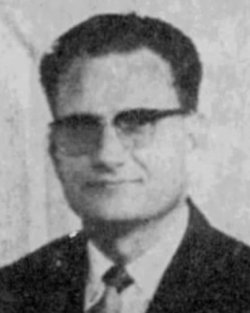
W.E. Best

#76 Adoption is Subsequent to Regeneration

Romans 8:14-19
W.E. Best July, 1 1973 Audio
0 Comments
Remastered Oct/Nov 2024

Sermon Transcript

Auto-generated transcript • May contain errors

100%
to introduce our subject this
morning. As we studied last Sunday, and I'll have to review just
briefly, what we see in verse 14, we see that as many as are
led by the Spirit of God, they are the sons of God. Paul does
not use the Greek word for children in verse 14, but rather the word
for sons. He is showing that those who
mortify the deeds of the body, of verse 13, are individuals
who are led by the Spirit of God, and such persons are sons
of God. There is some maturity, and this
is what he is emphasizing. Going on then in verse 15, because
the very first word of verse 15, just as the first word of
verse 14, shows that he is expanding on what he has said in verse
13, especially the latter part. Now he says in verse 15, for
ye have not received the spirit of bondage again to fear, but
ye have received the spirit of adoption whereby ye cry Abba
Father. So the spirit of sonship is given. And then in verse 16, he is talking
about relationship. Now the reason you're able to
do all of these things is because of your relationship to the Lord. And so in verse 16, he uses the
word children rather than the word sons, thus he is talking
about relationship. He goes on then in verse 17,
and we see the advancement in the thought developed here by
the Apostle Paul, heirs, heirs of God and joint heirs with Jesus
Christ. And then concludes, of course,
in verse 19, with a manifestation of the sons of God, which would
be the manifestation of our perfection, which does not exist now. but
will exist when we stand, of course, as heirs of God and joint
heirs with Jesus Christ in the kingdom. Now, last Sunday evening
I introduced our study in verse 15, and this is a controversial
text of Scripture among individuals who are basically sound in the
doctrines of grace. For instance, and I'll share
this with you and to be of help to those of you who are present
with us this morning who were not here last Lord's Day evening,
there are several different views held by men concerning the 15th
verse. Now look at it closely as I introduce
it. Paul says, for ye have not received the spirit of bondage. There are many who say that the
word spirit as it occurs the first time in this text, refers
not to the Holy Spirit or the third person of the Godhead,
but to the what? The disposition of the individual. It is true now that the word
spirit is used in that sense in the scriptures. I could take
time this morning and give to you many references. For instance,
we have the spirit of meekness, and that manifests what? Not
the Holy Spirit, but it is a manifestation of the disposition of one's mind. I could give other references,
but that will suffice to show you that the word spirit is used
in the sense of disposition. of one's mind. The question is,
however, is that what the word spirit means here? No, I do not
believe it is, even though there are some who hold that view.
Secondly, There are those who say that the word spirit, as
it is connected with adoption, that it is also the disposition
of one's mind as the result of the work of the Holy Spirit in
his heart, and does not refer primarily to the Holy Spirit
himself. Now there are those who say the
word spirit in both instances refers to the disposition of
one's mind. There are others who say that
the word spirit, in both cases, refers to the Holy Spirit of
God. Now, it is that which I hold
to as I stand before you and preach to you this morning. I
embrace that view without any question whatsoever. But there
is still another view. There are those who believe that
the first time the word spirit occurs, it refers to the disposition
of one's mind, but in the second time it refers to the Holy Spirit
of God, and they say proof of it is Galatians 4 verse 5, and
I affirm that is proof. But I also believe that the word
spirit, when it is used in connection with the spirit of bondage again
to fear, I believe it refers to the Holy Spirit of God. So
you see there are three views. You might say, well, I haven't
arrived at any decision as to what I believe. But, beloved,
if you're honest with yourself, you're going to have to consider
the evidence that is given, and then you're going to have to
study the scriptures and come to some conclusion if you're
going to be honest with yourself. After reading all the different
views held by men, I came across this statement this last week.
since I preached last Sunday night on this 15th verse. A statement made by Thomas Matten,
a Puritan, and I think he summed it up very well, and listen to
his statement, a very brief statement, but yet meaningful. He says that
the spirit of adoption sends us to Jesus Christ as mediator,
and Jesus Christ as mediator, by the spirit of adoption, sends
us back to God as Father." End of quote. I want to repeat that
again because there is a lot of wealth in that statement.
What did he say? He said the spirit of bondage
sends us to Jesus Christ as mediator. And then Jesus Christ as mediator,
by the Holy Spirit, or the spirit of adoption, sends us back to
God as father. As father. So the spirit of bondage
again appears. sends us to Jesus Christ, and
then Jesus Christ sends us back to God as Father. I'll have more to say about that
later. But now, what do we believe about
the spirit of bondage again to fear and the spirit of adoption
whereby we cry, have a father? I'd like to introduce this study
this morning as we continue to think along this line that we
started last Sunday evening. Man lost two things in the fall. What did man lose in the fall?
He lost, number one, relationship with God. And secondly, he lost
his name. His name. Now, will you turn
with me, please, to the third chapter of the gospel according
to Luke? I want to point out something
to you in your King James version. You know, we have two genealogies
of our Lord in the gospels. one in Matthew, and the second
in the Gospel according to Luke. And this one in Luke, of course,
begins with Christ and goes back to Adam. Now, all I want to do
is to point out to you in this genealogy, in Luke chapter 3,
that every time you find the words the Son, it is italicized. all the way through, it is italicized. Now coming down to the 38th verse. Which was the son of Enos? Which
was the son of Seth? Which was the son of Adam? Which
was the son of God? Now you notice the son is italicized. In other words, we have words
that have been supplied by the translator. What did Adam lose
in the fall? Number one, relationship. And
number two, name. Name. In regeneration, relationship
is restored. That's subjective. Follow me
now, that is subjective. And then, when the spirit of
adoption is given, what do we have? Whereby we cry, Abba, Father. The name is restored. You and
I, as recipients of God's grace, are sons of God. Sons of God. But the manifestation of the
Sonship universally has not been revealed as yet and will not
be until the kingdom, until the kingdom. So relationship has
been restored by regeneration and the name has been restored
by adoption. Now keep those things in mind
as we progress in our study. Now number one, notice the order.
The spirit of bondage again to fear. What is this? What is this? This is experienced
by every individual who has been saved by the grace of God. You
say, well now, I don't recall having had such an experience
of fear like that. You see, we're told in Romans
3 verse 18, one of the indictments against every unsaved person,
and the concluding one of 14 mentioned by Paul is, there is
no fear of God before their eye. The unsaved person has no fear
of God. The person who has fear, fear
is the beginning of wisdom, we're told. I said fear is the beginning
of wisdom, and this is magnified throughout the Psalms and throughout
the book of Proverbs. So the first thing that takes
place when the Spirit of God works a work of grace in the
heart of an individual is to give to him what? The spirit
of bondage, of bondage. Now what is it that the Spirit
uses in producing this fear? I'm saying now within the context
of Romans 8 and verse 15. When you go back to the seventh
chapter of Romans, and we will be studying this in detail in
days and weeks to come, Paul made the statement, and you see
I believe that the seventh chapter of the book of Romans is a testimony
of an individual who has already been regenerated. I do not believe
that it describes an unregenerate person as most religionists. In fact, all Armenians believe
that, and there are some others who are confused on it. But Paul
said, I was alive without the law once, but when the commandment
came, sin revived and I died. Sin revived and I died. Now what
did the Holy Spirit of God use to bring such conviction and
such fear to the heart of the Apostle Paul after the grace
of God had wrought a work in his heart? He was pointed to
the law of God. The Apostle Paul felt that he
knew the law, he understood the law, even the righteousness which
he had been able to attain, a-t-t-a-i-n, He had attained that righteousness
by his own works, and he talks about that in the third chapter
of Philippians, what he had been able to attain as a Pharisee
of the Pharisees. But there was no fear. He thought
he understood the law, but he never did understand the spiritual
significance of the law until the Spirit of God took the law
of God and showed him the spiritual significance of the law. That's
why the Jews, in our Lord in Matthew chapters 5, 6, and 7,
has a lot to say along this line. The Jew had the idea as long
as he did not commit some overt act of sin, he was all right. In fact, he could look upon a
woman with lust in his heart as far as he was concerned, but
as long as he did not commit the act, he was not guilty of
disobeying the law. But Jesus Christ said, if a person
even looks upon a woman with the intent in his heart, he has
already committed adultery in his heart. Now Paul didn't understand
that. And no person apart from the
grace of God can understand that. But when the Holy Spirit of God
uses the holy law of God, and I must emphasize, the law of
God is to be proclaimed. You say, well now, wait a minute,
preacher. We're not under the law, but under grace. I agree
with you. 100%. 100%. But religionists
as a whole today do not understand what must precede. Now, I'm going
to demonstrate to you. Will you turn with me, please,
to the 19th chapter of the gospel according to Matthew? I'm going
to show you what Jesus Christ himself did when the rich young
ruler came to him and raised the question, what good thing
must I do in order that I may have eternal life? Now, in order
to really understand this, I don't have time to read the account
given in Matthew, the one given in Mark, and the one given in
the gospel according to Luke. But for you to study this, you
need to read all three accounts of this. Let's look first of
all at Matthew 19 beginning with verse 16. And behold, one came
and said unto him, Good master, what good thing shall I do that
I may have eternal life? And he said unto him, Why callest
thou me good? There is none good but one, that
is God. But if thou will enter into life,
keep the commandments. He said unto him, Which? Jesus
said, Thou shalt do no murder, thou shalt not commit adultery,
thou shalt not steal, thou shalt not bear false witness, honor
thy father and thy mother, thou shalt love thy neighbor as thyself,
and so forth. Now notice what the young man
has to say in verse 20. The young man saith unto him,
All these things have I kept from my youth up, what lack I
yet? What lack I yet? In the first
place, he didn't know himself. He just thought he had kept these
things. Just like Paul, who did not understand the law. Now hold
this place in Matthew for a moment, and then go with me please to
Romans chapter 3. Romans chapter 3. I want to show
you how the law is used. And the law is to be used in
the same sense today. In the same sense today. And
because of the lack of this, we have too many people today
who have their names on church rolls who have never been brought
to a place of real conviction of sin. Why? I'll show you. Notice, if you will, please,
verse 19. After those 14 horrible indictments against every person
outside of Jesus Christ, notice now beginning with verse 19,
now we know that whatsoever things the law saith, it saith to them
who are under the law, that every mouth may be stopped, and all
the world may become guilty before God. Verse 20, Therefore by the
deeds of the law there shall no flesh be justified in its
sight, for by the law is the knowledge of sin. Now we're told
the purpose of the law. No person can be justified by
the law. No individual can be saved by
the law. The law was not given for that
purpose. For what purpose was the law given then? to show forth
the exceeding sinfulness of sin. And please observe, if you will,
the last part of the twentieth verse. By the law is the knowledge
of sin. Isn't that what we have? In the
seventh chapter of Romans in verse 9, Paul said, I was alive
without the law. At least he thought he was alive,
and sin was lying dormant. But when the commandment came,
sin revived and I died. And the commandment that convinced
him of his own sinful condition was what? Thou shalt not cut
it. Thou shalt not cut it. Now, every
individual must be subjected to the law in this sense, and
to this extent, that when the holy law is presented, he knows,
if the grace of God has wrought a work in his heart, that he
has come short of the divine standard of God. someone might
say, well now that might be all right for a person who has lived
in the gutter of sin. But what about a person who's
brought up in a Christian home, in Christian atmosphere? It doesn't
make any difference whether the person is eight years of age,
ten years of age, fifteen years of age, twenty years of age. Every individual knows one thing,
when the grace of God comes into his heart and life, when there
is subjective life and he is presented the law, he knows that
he's been covetous. He knows that he's been a sinner.
There is not a child that does not know that he has not coveted
what his playmates had. You see what I'm talking about?
It doesn't mean that a person has to wallop in sin in order
to know that he's a sinner. Every individual, when subjected
to the holy law of God, knows he's a sinner. There is not a
child that has not coveted what his friend has. There's not a child that has
not taken something that he should not have taken. Therefore, the
child has been guilty of stealing. He's been guilty of coveting
something and so the holy law of God proves to him and is made
spiritual in that he knows the spirituality of the law and what
God requires and therefore he sees himself as a sinner. This last Thursday I went to
the barber shop and I noticed my barber was quite upset. When I sat down in his chair,
he said, did you see the news last night? I said, no, I didn't
see it. I said, I was at church and I
didn't stay up until 10 o'clock to see the 10 o'clock news. He
said, well, I'll have to tell you about this. Did you see where
the hairdresser and the barber and the hairdresser was apprehended
for criminally assaulting a 13 year old boy? in an East End
church, the boy affiliated with a Boy Scout troop in an East
End church, and that church happens to be Broadway Baptist Church. You see, I happen to know this
barber, and he's a big worker, criminally assaulted. And so
he said, I got up early this morning and came down and took
the sign off. When he does get out of jail,
if he gets out, I don't want him back in this barbershop.
I'm hurt enough as it is. Well, I appreciate his standing.
While I was there, his father came in, who is a retired barber,
and when he came in, he works a couple of days a week to make
all that he can make to supplement his Social Security. He also
is a big worker in Broadway Baptist Church. Well, I said that to
say this. Now here's a person under the
cover of religion, and I never did have any confidence in that
young fellow, none whatsoever. He has been the state champion
in hairdressing for a couple of years, and so he has quite
a clientele. And of course it is going to
hurt this barber who's been cutting my hair for many years. And this
man is not a Christian, but he does have some moral understanding
and convictions. Now, here's a person wallowing,
as it is, in the very gutter of sin. And, of course, he doesn't
see anything wrong with it. As the gays today, they don't
see anything wrong with what they're doing. They haven't read,
and if they were to read Romans 1, they wouldn't believe it.
They wouldn't believe it. But what I'm saying is this,
every person I don't care if it is a child that has been protected
in a Christian atmosphere or a person who is wallowing in
the very depths of sin, whenever there has been a work of grace
in that heart, that individual, whomever he might be, is going
to be convinced of one thing. He's a sinner. He's depraved. Now, what did the Lord Jesus
do? Let's look at this, and we're going to see the fallacy of religion
today. I didn't say Christianity, I
said religion. I'd like you to turn to Mark's account, because
I'd like to read one verse in Mark's account. It's chapter
10 and verse 17. When he was gone forth into the
wave, there came one running and kneel to him and ask him,
good master, what shall I do that I may inherit eternal life? You know, this story made a deep impression upon the
disciples of Jesus Christ. It is from Matthew that we learn
that he was a youth. And it is from Luke's account
that we learn that he was a ruler. This thrice-repeated story is
a biblical reputation of modern evangelicalism, beloved, man-made
programs for enlisting people. And I'm going to prove that.
What did Jesus Christ do? He pointed him to the law of
God. That's the first thing he did.
The very first thing he did. Now, you might raise the question,
well, was Jesus Christ a proclaimer of the glorious gospel? He surely
was. He surely was. He proclaimed
the gospel of grace. But what did he do? He pointed
this fellow who came and he came running, he was courteous, he
called him good master, he was zealous because he came running,
he even showed some consideration for the person to whom he spoke,
he kneeled before him. Good master, what must I do that
I may inherit eternal life? What do we learn from this? We
learn God's method, not man's method of dealing with individuals. Man's method today is to use
any technique that can be devised by man in order to get man under
the influence of a gospel because they believe that by their persuasion
they can convince him to believe and embrace the truth. I want
to give you a statement by one of the rankest Arminians of all
time, Charles Finney. I have absolutely no respect
for his theology. In fact, I detest it with all
the passion of my being. Listen to Charles Finney. Here's
what he taught, quote, Grace has made the salvation of every
person or every human being secure. who can be persuaded by all the
influences that can wisely bring to bear upon him to accept the
offers of salvation. Listen to this, man's will implies
the power of originating and deciding his own choices and
of exercising his own sovereignty in every instance of choice upon
moral question. For God to command is equivalent
to an oath that we can do it. He has no right to command unless
we have the power to obey. The sinner has all the faculties
and natural attributes requisite to render perfect obedience to
God. All he needs is to be induced."
End of quote. That's the philosophy of our
time. I said, that's the philosophy of our time. That's why churches
are building their gymnasiums and having everything else you
can think about, and doing everything under the sun to get people,
what they say, under the influence of the gospel. Now, what did
Jesus Christ do? Notice he used no scheme whatsoever. He simply pointed at this person
who came because he knew his heart. He knew his heart, and he knew
there was no fear of bondage in his heart. Are you following
me? He knew there was no fear of bondage in his heart, but
yet the young man came. He came with zeal in his heart. Yes, he even rushed down the
aisle, as it were. And he asked the question, what
must I do that I may inherit eternal life? So our Lord just
simply turned him and pointed him to the holy law of God. I'm going to look at some other
things in a moment about this young man, but let's draw a conclusion
before I look at those things. He said, all these things I have
done since my youth. He didn't know the spirituality He had the same concept of the
law that Paul had before the grace of God came into his heart. All these I have observed since
my youth. The Lord knew he was lying because
he knew his heart. So then he said, go sell all
that you have. That was the note that really
struck home in that young man's heart. He was fearful of what? Of God? No. He was fearful of losing
his fortune. You see, he wanted his fortune
and an insurance policy against hell. But Jesus Christ knew that there
was covetousness in his heart. And so the record states he went
away sorrowful. He would never have gone away
sorrowful had the Spirit of God preceded by working a work of
grace in his heart. He would have been convicted.
He would have been convinced. And he would have done what Jesus
Christ told him to do. But he didn't grind. because
there was no fear of God, and the only fear that he had was
the fear of losing his fortune. And so he went away sorrowful,
sorrowful. Now what about all the programs
today instituted by men to get people under the influence of
what they call the gospel, and yet what they preach is not the
pure gospel? It is not the pure gospel. It's
easy believism. No conviction of sin is wrong.
Now let's see the importance of the law. I say that every
person who has been saved by the grace of God, and you need
to search your own heart this morning, did you experience this
fear, this spirit of fear of bondage before? the spirit of
adoption, and notice, please, the order, the order. And what
is it that the Holy Spirit uses to bring about this fear of bondage? It is the holy law of God. Let's observe some things now
about this young man, will you? What was the character of the
young man? The man appeared to be interested
in spiritual things. I said he appeared to be interested
in spiritual things. You see, I don't just accept
what a man says. I'm going to have to see some
evidence in his life. Any person can say, I'm interested
in spiritual things. Here this young man rushed down,
ran, kneeled, and said, good master. I want you to know in the average
church, he would have been received and would have been a member
in good standing. For the very idea, he came running, he came
rushing, he came down the aisle, and he said, good master. Why
can't you just hear some evangelist or some preacher say, why? Who's
going to object that this young man be a member of our congregation? But the Lord didn't say that.
He pointed him to the law. He was going to put him to the
task. And beloved, I believe in doing that. Every man of God
believes in doing that. And every person must be put
to the task. Just to say something doesn't
mean a thing. There must be evidence. And evidence
will come over a period of time. So he was zealous, he came running. He was courteous, he addressed
Jesus Christ as good master. Notice his social standing. He
was held in high esteem. He was young and clean cut. That
brings up another illustration. My phone rang Thursday night.
A relative of mine called and said, I must tell you about a
recent experience that I've had. I said, let's hear it. He said,
I've been out to Amarillo. I had to fly out to Amarillo.
He said, a person working under me in my division, he said he
got away with nearly $100,000 of the company's money. He said, back in the month of
June, he said, I saw the report. And I said to our auditor, go
out to Amarillo and audit that man's books. He said the auditor
left, flew out to Amarillo, started auditing his books, and called
me one night and said, now there's not a thing in the world wrong
with this fellow. This fellow is one of the cleanest, upright
men I've ever known. Why go through all of this? He
said he's an Why, when he walks down the street, everyone in
Amarillo knows him. Big church worker, great citizen,
well-respected. So he came on back to Houston.
He said the next month he noticed something that didn't look right
in the report. He said he called the auditor in and said, get
back to Amarillo and audit that man's books, period, regardless
of what you have seen, regardless of what you have heard. He said
he went back out to Amarillo. He told the man what he had to
do and the man got scared. And before it was over with,
he admitted it. He admitted it. He said, now here's a man, Will,
he said, well respected. He said, I went out. He said,
of course, I didn't file any charges against him because we
must try to get our money back. And he said he owns a big ranch
and farm out of Amarillo. And before I left, He said, I've
got everything he's got tied up. I've got his farm, his ranch,
his home, his automobile, everything. But he said, you know what? I've
never met a more personable man. And he said, sure enough, I walked
down the street with him. Hi there. Everybody respected
him. He said, why, he even took me
to the airport, bought me a meal. But he said, I've got him tied
up. So it doesn't mean anything.
You see what I'm saying? Listen. Here this young fella,
socially well respected. Successful. He had great possessions. I don't know if all of them belong
to him legally or not. But anyway, he had great possessions.
And what else? He was a ruler. He was a nobleman
of authority and influence. Why can't you hear some of these
evangelists today and some of these progress? We've got to
have him to give his testimony. He's a ruler. Why, his testimony
will be more than Tom Landry of the Cowboys, or Stolbeck,
the quarterback. He's wealthy. He's a man of influence. You see what I'm talking about?
Now what about the character of Christ's message? Will you
look at this? Next. Christ pointed this young man
to the law of God. Now why did he point him to the
law of God? Are you listening? The holy character
of God must be proclaimed. And the best way to proclaim
the holy character of God is to proclaim the law of God. The law of God. In fact, the
law represents God's character. You cannot separate the law of
God from the character of God. He's holy. What's wrong with
the average message today? The holiness of God is not preached. I said the holiness of God is
not preached. Secondly, the gospel message
requires an exposition of God's attributes. And how can one know
about God's attributes apart from the holy law of God? Thirdly,
what a knowledge of God's character means to a person. Yes, he must
know about God's character. And the sinner cannot know whom
it is he has offended unless he knows the character of God
and the holiness of God. You'll notice that the Lord Jesus
did not assume that this young man knew who God was. We know also that the knowledge
of sin comes through the holy law of God. So the character
of God is known by the holy law of God. And sin is known by the
holy law of God. The attributes of God are known
by the holy law of God. So what did Jesus Christ do?
He pointed them to the law. To the law. We know also that
the cross doesn't mean anything apart from the holy law of God. Why do I say that? Because it
was at the cross that Jesus Christ paid the penalty that the law
required in order that justice might be satisfied. Brother Pennington spoke this
last week from the fourth chapter of the Gospel of John. Do you remember what it was that
brought conviction to the heart of the woman of Samaria, don't
forget. Once again, the Lord Jesus Christ
used the law. He said, where is your husband? He knew exactly what to say.
Now you see, the Spirit of God had already prepared her heart,
and when the Lord Jesus raised the question about her husband,
she said, I have no And the Lord Jesus went on to say, you've
had five, and the one with whom you're living now is not your
husband. And she was convicted. There was fear. So the spirit
of bondage again to fear was wrought in her heart. Now will you go please to our
text? Romans 8 and verse 15. Let's
look at the simplicity of it. Paul says, For ye have not received
the spirit of bondage again to fear, but ye have received the
spirit of adoption whereby we cry, Abba, Father. So the Holy Spirit uses the holy
law of God to bring what? a conviction of sin. Divine conviction
is the fruit of regeneration and does not precede regeneration. This fear of bondage is wrought
in the heart after regeneration and not before, because fear
is the beginning of wisdom. Put in the heart after regeneration
and not before. because fear is the beginning
of wisdom. Now notice the progress. Paul
says, now you have received not the spirit of bondage again to
fear, but you have received the spirit of adoption or placing
as signs, whereby you cry, Abba, Father. You're not going to be
brought once again into that condition of fear. You have now
progressed. You're never going to be brought
again to that place, to that place, or you may backslide. But when you backslide, you'll
not cry out, and that will not be the fear that this is talking
about. You may cry out as Job did in
the 23rd chapter of Job, oh that I knew where I might find him,
but you'll never cry as Paul did. And it's described in the 7th
chapter. So you will be brought to that
experience again. Why? Because you have now received
the spirit of adoption. whereby you cry, have a father. You have greater assurance now
than you had at the beginning. Now I can remember in my own
experience, and this is such a blessing to my own heart because
it harmonizes with my experience, and beloved, if my experience
did not harmonize with truth, I'd forget my experience and
accept the truth. But you see, When your experience
harmonizes with the Word and the Word harmonizes with your
experience, that's an indication that the Spirit of God is bearing
witness with your spirit. We'll have more to say about
that tonight in verse 16. Whereby you cry Abba Father. Now we must make the distinction
between the spirit of regeneration and the spirit of adoption. They're
not the same. Adoption is subsequent to regeneration. I said adoption
is subsequent to regeneration. I'd like to give you another
statement made by John Trapp, and he saw the truth of this. He had a similar view to that
of Thomas Matten, when Matten said, by the spirit of bondage,
One is sent to Jesus Christ the Mediator, and Jesus Christ the Mediator,
by the spirit of adoption, whereby we cry out the Father, is sent
back to God again as Father. Thus we have a greater assurance
of relationship. And oh, what an experience it
was in my own heart and life. It was a conversion experience. I didn't experience regeneration,
neither did you. That's non-experiential. But
I did experience conversion. And there was a spirit of bondage,
of fear. But when the gospel was proclaimed
and I was introduced to the glorious gospel message, and I embraced
Jesus Christ as Savior and was able to go to the Father through
Jesus Christ, there was a greater sense of assurance. And I haven't
had that fear that I had that preceded. Notice the order. There
is first the spirit of bondage again to fear produced by the
spirit of God as the spirit of God uses the holy law of God
in bringing conviction of sin to the heart of the person that
has been renewed by God's grace. And then, the progress. Then comes the spirit of adoption,
whereby we cry, Abba, Father. You're not going to hear this
preacher tell people, now all you've got to do is just get
down here on your knees and say, now Father, will you save me? If a sinner addressed someone
as Father, he'd be addressing the devil. You or your father,
the devil, in the works of your father, he will do. How foolish.
How foolish! No person can address God as
Father until he has been regenerated by the Spirit of God. And when
he has been regenerated, the spirit of adoption comes in,
and the spirit of adoption is subsequent to the spirit of regeneration,
enabling him to cry Abba Father. Listen to a statement made by
Thomas Goodwin. You'll like this. I thought this
was a great statement, another Puritan statement. You don't
find too many of these things in contemporary writings. You
know why? They've gotten away from the
basic fundamental truths of God's Word. Let me illustrate that.
One of our men here a few days ago went down to Galveston to
a used bookstore, and he found, I think it was 1913, wasn't it,
Hank? What was the name of the book?
What Baptists Believed, printed in 1913. He thought, well, just
for a quarter I'll see what they believed in 1913. So he bought
it, and they were right down the line on the dockings of greats.
He saw another one printed in, what was it, 1919? 1920. And this was after the B.Y.P.U.,
the W.M.U., and all the other U's and all the different organizations. And they'd already departed.
Already departed. In a period of seven years, there
was already a departure. He said this was interesting
to him as he observed this. As he observed, in a period of
seven years. You see, the more programs and the more gimmicks
and the more things that people bring in, the further they get
away from the truth. The further they get away from
the truth. You ask me, Richard, do you believe in separation?
I surely do. And separation includes a lot
of things. And first and foremost, a separation
from heresy. a separation from Harrison. But
notice this now by Thomas Goodwin. Thomas Goodwin said, Adoption
is added assurance. Now this is Thomas Goodwin. Adoption
is added assurance. Like a father taking the child
in his arms and loving him in addition to leading the child
by the hand. Let me amplify that a moment,
because I think that's a great statement. When you go back to
verse 14, as many as are led by the Spirit of God, they are
the sons of God. How do we know we're led by the
Spirit of God? When we're led according to the
Word of God. You may come to me and say, the
Spirit of God led me to do thus and so. I'm going to then see
if what you have done is in harmony with truth. If it is in harmony
with truth, I'm going to have to say to you, the Spirit of
God didn't lead you. And there's only one other spirit
to consider, and it has to be the spirit of the devil. Because the Spirit of God does
not lead a recipient of grace to do something contrary to what
the Holy Spirit inspired holy men to write in his sacred book. Just that simple. But as many as are led by the
Spirit of God, they are the sons of God. Now, Goodwin had this
in mind when he made this statement. But then he went on to say, adoption
is greater assurance. Greater assurance. Like a father
taking the child in his arms and loving him in addition to
leading the child by the hand. By the hand. Listen to what a
recent writer has said. I know Dr. Macbeth. Personally,
years ago we had him in our church, and he had the truth from the
doctrines of grace. Listen to this. We have a son
consciousness that knows the father. We have a son consciousness that
knows the father. Ye have received the spirit of
adoption, and adoption is a compound word. which means placing as
sons, placing as son, subsequent to being the children of God,
subsequent to regeneration, placing as sons. And then he said, we
have a son consciousness that knows the Father. by nature. The Spirit of God bears witness
in company with our spirit that we are his children. This is
the father consciousness in affectionate response to the son consciousness
of believers. Isn't that beautifully stated?
The spirit of adoption whereby we cry of a father is the father
consciousness as he says, in what? In affectionate response
to the sun consciousness of believers, a greater assurance, a greater
assurance. Tonight, we'll continue our study
with a development of the 16th verse. The Spirit himself beareth
witness with our spirit. that we are the children of God. Now have you had this experience? Was there first a spirit of bondage
or fear? And did that precede as a result
of recognizing your depravity, your sinful condition, divine
conviction that is wrought by the Spirit of God after a person
is regenerated? And then, progressing, you have
received the spirit of adoption whereby you cry, Abba, Father. son consciousness, you cry of
a father, and then the father consciousness in response to
the son consciousness of the believer.
W.E. Best
About W.E. Best
Wilbern Elias Best (1919-2007) was a preacher and writer of Gospel material. He wrote 25 books and pamphlets comprised of sermons he preached to his congregation. These books were distributed in English and Spanish around the world from 1970 to 2018 at no cost via the W.E. Best Book Missionary Trust.

Comments

0 / 2000 characters
Comments are moderated before appearing.

Be the first to comment!

Joshua

Joshua

Shall we play a game? Ask me about articles, sermons, or theology from our library. I can also help you navigate the site.