Bootstrap
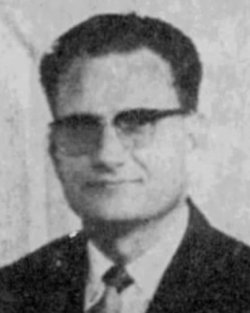
W.E. Best

#80 Distinguishing Between Genuine & Counterfeit Experiences, Part 2

Romans 8:17
W.E. Best July, 1 1973 Audio
0 Comments
Remastered Oct/Nov 2024

Sermon Transcript

Auto-generated transcript • May contain errors

100%
I'm going to continue where I
left off this morning. In fact, I'd like to approach
verse 17 of Romans chapter 8 from a little different viewpoint
tonight than I did this morning. I had prepared to give this as
one of the major points in our development of that text this
morning, but did not have time to complete what I wanted to
give. And so I have changed my mind during the afternoon, and
we'll review just briefly, and then continue the development
of verse 17 of Romans chapter 8. We saw this morning that in
order to do justice to the 17th verse, that we would have to
study verses 18 through 25 in connection with that particular
portion of Scripture. Let us review now briefly what
we gave this morning with some additional things on how that
we can distinguish between that which is genuine and that which
is counterfeit. And then we will go from there
into the study of verse 17 once again. Looking at this passage
as a whole, We have already seen, first of all, our union with
Christ, verse 14, and then following that we have seen conviction
of sin brought about by the spirit of bondage again to fear. This
is followed in the latter part of verse 15 by the spirit of
adoption whereby we cry, And then in verse 16, which we studied
last Sunday evening, the witness of the Holy Spirit with the spirit
of the believer giving to him additional assurance of his relationship
to the Lord. This morning, in our development
of verse 17, we saw that we are heirs of God and joint heirs
with Jesus Christ. We looked at three words this
morning, and around those three words we developed an outline.
First of all, we are heirs, our fellow heirs, our joint heirs,
our co-heirs, however you want to state it, with Jesus Christ. And then following that, we're
also fellow sufferers with Christ. And we stated this morning that
the way to distinguish between cost and cultism and the true
message of God is found in the fact that we are sufferers with
Christ now. We're not reigning with him.
This is the age of suffering, not reigning. And the cost all
promise a reign now. and there'll be no wont now in
the life of the individual, and there will not be any need for
sickness because he is healed, and so all of that you see is
involved in the cult of today. Yet we have seen in the study
of this passage that this is the age of suffering. Why? Because
we are in these mortal bodies, and we're going to suffer for
the cause of Christ. and we're going to suffer even
physically. And then that is explained, of
course, in verses 18 through 25. I'd like to go a little further
tonight to show something else. There are three things we must
understand at this point in our study of Romans 8, verses 14
through 25. They are, number one, we are
not promised Kingdom conditions now. We are not promised Kingdom conditions
now. Secondly, we are saved in hope. And this takes in, of course,
verses 24 and 25 of Romans 8. Now we're going to go a little
further in the development of this subject tonight. And that
would include what? Verses 26 and 27, and these are
the verses that conclude, we might say, the first major division
of Romans chapter 8. Why do I say that? Because beginning
with verse 28, we have another division which deals with the
great doctrines of the chapter. As we look at verses 26 and 27,
we have to come to this conclusion. And what is it? The Holy Spirit
helped us in our infirmities, which we suffer in this dispensation
are in the present time. Now think of these three things
for a moment, because this is a message within itself. Number
one, we are not promised kingdom conditions now. Number two, we
find that we are saved in hope, not by hope, but in hope. And
thirdly, the Holy Spirit helps us in our infirmities during
the time, of course, of our suffering. And this, of course, precedes
glorification with Jesus Christ. This morning, in the development
of verse 17, we looked at three words. The word heir. We are heirs of God and joint
heirs with Christ. And secondly, this is a time
of our suffering. We must suffer with him before,
and then the third point, before we shall be glorified with him. I also this morning gave to you
some points, and I would like to enlarge upon those tonight. I think it is necessary, I think
it is vital that we do so. Points that we can distinguish
between that which is genuine and that which is nothing but
a counterfeit. And I'm not going to review once
again those six things, five or six things I gave to you this
morning, but I am going to add to them. We need to be able to
know the difference between professors and possessors of salvation. Now, in the development of this,
before we get into the study of two major points tonight,
In the 17th verse of Romans 8, and they are, our present inheritance,
our present inheritance are the things that we're experiencing
now and the future inheritance which we shall have when we're
glorified with Jesus Christ. So tonight we'll make a distinction
between the things that we enjoy now and the things that we shall
enjoy or experience in the future. Those are the two points that
we will develop. Before we do, turn with me please
to Matthew's Gospel, chapter 7, as we give to you an additional
list of things whereby we might be able to distinguish between
that which is genuine from that which is nothing but a counterfeit. I'd like for us to begin with
verse 15. We're going to look at the false
prophets before we look at the false message and professors.
We have in verse 15 the false prophets, and the world is full
of them today. The apostle Paul warned about
this very thing on the eve of his departure as he called for
the elders of Ephesus together in the 20th chapter of the Acts
according to the apostles. Beware of false prophets which
come to you in sheep's clothing, but inwardly they are ravening
wolves. Ye shall know them by their fruit."
Now, that's plain enough for me. And, beloved, I am a fruit
inspector. And every child of God is a fruit
inspector. You will notice that this statement
is made within the context of verse 1 of chapter 7, which religionists
are always using. And I told you about the moony
that I met this past week. who said to me after I told him
that I would not give a dime to the support of his heretical
doctrine, the doctrine which he proclaimed that originated
in the bottomless pits of hell. When I said that, he said with
his grin on his face, you're judging. I told him I surely
am. Now look, if you will, at verse
one of chapter seven. Judge not that ye be not judged. I've often said that is the Fifth
Amendment of professing Christendom. I said the Fifth Amendment of
professing Christendom. And you know what I mean by that.
Now let's see what it's talking about. There is a lawful judgment,
and there is an unlawful judgment. What is the Lord exposing here
in this passage? It is not a lawful judgment,
but it is an unlawful judgment. Verse 2, for with what judgment
ye judge, ye shall be judged, and with what measure ye meet,
it shall be measured to you again. And why beholdest thou the moth
that is in thy brother's eye, but considerest not the beam
that is in thine own eye? Or how wilt thou say to thy brother,
Let me pull out the moth out of thine eye, and behold, a beam
is in thine own eye? First cast out the beam out of
thine own eye, and then shalt thou seek clearly to cast out
the mold out of thy brother's eye." The Lord was condemning
unlawful judgment. There is an unlawful judgment.
I'll explain that in a very brief and simple manner. Here is a
person who is living in sin, in known sin. And living in this
known sin, he judges someone else who is sinning, but the
sin of that person is not as great as his own sin. A person who does that is judging
unlawfully. Before he judges anyone else,
he had better get things straight in his own life. On the other
hand, there is a lawful judgment. I want you to know I am a fruit
inspector. I'm going to inspect your fruit.
And you have a responsibility to inspect my fruit. If I don't
see any fruit in your life, then I'm judging you. And that is
a lawful judgment. I'll give a scripture for it
in a moment. I expect to see in the life of one who professes
the love of the Lord to put the Lord first. Let me illustrate
that. There are many religionists today who want to be saved from
the consequences of sin, but they do not want to be saved
from sin itself. Any person who simply wants a
ticket for heaven and does not desire to be saved from sin,
I assure you that by such a life as that I am judging what the
truth, and he is not a Christian. His motive is wrong. Let me illustrate
it in another way. Here's a person who says, I love
the Lord. I love the things of the Lord. And yet he wants to put everything
ahead of that which is conducive to a spiritual life and grow
in that spiritual life. He's interested only in the things
that tickle the flesh. What am I judging? I am judging
his fruit, and I have a right to judge his fruit. Here's a
person who says, I'm going to church. Well, for what purpose
are you going to church? Now, beloved, I believe the primary
purpose, the primary motive for anyone to go to church is not
for chauvinship, It is for the purpose of worshipping the Lord
in spirit and in truth. And the Lord cannot be worshipped
in spirit and in truth unless the truth is declared. I'd like
you to turn for a moment to John 8, 46. John 8, 46. Here is a good test. I may not
have time to get very far from this point. I think we'll have
time to get to the other. But in John 8 and 46, the Lord
Jesus had this to say, which of you convinces me of sin? And if I say the truth, why do
you not believe me? Now the 47th verse, he that is
of God, hear God's word. When the man of God stands and
proclaims the word of God in his purity, those in whose heart
there has been a work of grace have ears in tune with that which
is spiritual, and they desire that which is spiritual, therefore
they hear that which God says to them. He that is of God hears
God's words. Now listen to the last part.
Ye therefore, Christ said to these religious heresies, ye
therefore hear them not. Now this is a good test for everyone. If you're closing your mind right
now to the word of God, then you classified yourself. And
I am judging your proof. Here's what it says, ye therefore
hear them not. Why? Because ye are not of God. What is the primary motive for
going to church? It is to hear the word of God. That's the primary motive. And
if anything precedes that primary motive, then that person is not
of God. And he's only professing but
does not possess salvation. Does not possess salvation. Now
let's look at a little further in this chapter. So I say we
have a right to judge. Well, let me give a quotation
from the fifth chapter of 1 Corinthians. Verses 11, 12, and 13. The Apostle
Paul told the church at Corinth to judge them that were within. It was the responsibility of
the Corinthian believers to judge the members of the church at
Corinth. So the people at Corinth were
told to judge them that are within. Now he also said you don't have
any jurisdiction over those without, that is, outside the church at
Carmel, as far as church membership is concerned, or as far as discipline
is concerned. But the people of God within
a local assembly all are what? Fruit inspectors. It's just that
simple. Fruit inspectors. Now notice
verse 15 again. Be well, for prophets which come
to you in sheep's clothing, but inwardly they are ravening wolves.
Ye shall know them by their fruits. Do men gather grapes of thorns,
or figs of thistles? Even so, every good tree bringeth
forth good fruit, but a corrupt tree bringeth forth evil fruit. A good tree cannot bring forth
evil fruit, neither can a corrupt tree bring forth good fruit.
Every tree that bringeth not forth good fruit is hewn down
and cast into the fire. Wherefore, by their fruit ye
shall know them." Now I'm going to show you the
test of salvation. from a little different point
of view than what I gave this morning. The test of salvation,
number one, is not outward appearance. Look at verse 15, if you will.
I'm giving to you the word of God which you cannot deny. Beware
of false prophets which come to you in sheep's clothing. Now what does that mean? It means
in the appearance of good and gracious men in sheep's clothing. But our
Lord tells us here that the test of salvation is not outward appearance,
verse 15. Number two, it is not lip service Verse 21, not lip service. Now look at verse 21. Not everyone
that saith unto me, Lord, Lord, shall enter into the kingdom
of heaven. Let's stop with that. It is not
mere lip service. All of these people today who
are talking about Jesus this and Jesus that, and that always
makes me cringe. Do you know how we are referred
to the Lord Jesus Christ? Just as I be to you. The Lord Jesus said to the disciples
in John 13, Ye call me Master and Lord, and ye say, Well, for
so I am. He is our Lord. He is our Master. We did not refer to him merely
as Jesus, Dr. B. H. Carroll, many years ago. And I think it's in his English
interpretation of the Bible, which I gave away a great number
of years ago. But I think he did an outstanding
job on that particular verse. He said, what would you think
of a person who would refer, for instance, to the President
of the United States like George Washington, a man who is held
in high esteem and so forth. George? He said the person who has been
saved by the grace of God should ever give the honor and the dignity
that should be given to the second person of the Godhead. He is
the Lord Jesus Christ. Personally, I don't like a lot
of the songs that we sing. that just have the word Jesus
in them. And I know they do it in order
to rhyme, but you see these songs that have been written by men,
they're not good theology. I said, they're not good theology.
It is the Lord Jesus Christ. He is our Lord and he is our
savior. He is our master. He is our owner. Not ever one that saith unto
me, Lord, Lord, shall enter into the kingdom of heaven. So the
test of salvation is not outward appearance, clothed as ministers
of righteousness. It isn't lip service. Thirdly,
it is not visible success. How do I know that? Well, look
at verse 22. Many will say to me in that day,
Lord, Lord, have we not prophesied in thy name, and in thy name
have cast out devils, and in thy name done many wonderful
works? The test of salvation is not
outward appearance, it is not mere lip service, it is not visible
success, but what is the real test of salvation? Here it is. Go back to verse 21. We'll read the entire verse,
but the last part of the text. is what I want to emphasize in
this last point. Not everyone that saith unto
me, Lord, Lord, shall enter into the kingdom of heaven, but he
that doeth the will of my Father which is in heaven. There's a
test. I don't care how much you might
say, I don't care what your appearance might be, I don't care what success
there might have been, there might be, unless the individual
is doing the will of God which is revealed in Holy Scripture
in his life, I have no right to believe. It's simple, just
as simple as it can be. I'd like to mention several things
before I leave this point. You see, we're actually just
reviewing some things that we have been studying and adding
more to what we have already investigated. Four professors
are, number one, in error as to understanding. I said they are in error as to
understanding. They are ignorant of true glories. They have only a natural understanding
of supernatural things. I'm saying to you it is possible
for a person to have natural understanding of supernatural
things. And that's all it is. That's
as far as it goes. before the Lord came into my heart and life,
in saving grace, I had a natural understanding of several things
concerning God, His Son, and the Holy Spirit. I believed mentally and gained
mental assent. to the fact that God is supreme,
that God knows all things, that he rules all things. I gave mental
assent to the fact that Jesus Christ is his son and that the
Father sent him into the world to die on the cross. I have what? A natural understanding
of supernatural things. But that isn't any evidence of
being sane. So professors are in error, first
of all, as to understanding. And such knowledge always falls
short are the true effect which accompanies those who have been
spiritually enlightened by God. I don't have to talk to an individual
too long to know whether he has been spiritually enlightened
or not. Religionists or non-religionists,
it doesn't make any difference. You can tell the difference real
soon. And you can soon detect that
even though he is a religionist, in reality, he is not saved. He may not profess anything,
and yet it doesn't take long to find it out. That what you
hear come from their lips, even though they give mental assent
to some biblical statement, it's only a natural understanding
of supernatural things. Now I could enlarge upon this
for an hour or so, but I want to give these for you to be thinking
about, and we will enlarge upon them later. Number two. The false
professor is in error as to true repentance. True repentance. Now this is a very subtle thing.
Here is where the devil enters in, and he can impersonate this
to a point. And you know, the devil tries
to impersonate everything that God has presented in his Word.
That's why we're to try the spirits to see if they be of God, 1 John
4, 1 through 3. I said he is an error as to true
repentance. The individual will judge some
light sorrow for sin to be true repentance. And he hopes he shall
eventually be saved. But do you know what Paul has
to say about that in 2 Corinthians 7, verse 10? Such a repentance
is a repentance that needs to be repented of. It isn't genuine. It has not been motivated by
the indwelling Holy Spirit. So here's an individual who has
committed a sin, he knows he's sinned, and so there is a little
sorrow felt for his sin, but what he's really disturbed about
is the consequence thereof, but he doesn't want to really be
saved from it because he enjoys it too much. Number three, the professor is
in error as to the striving of the flesh against the spirit.
In other words, he comes and he hears the preacher talk about
the conflict between the two natures of the believer. And
when he hears the preacher talk about the two natures of the
believers, he can't help but be reminded of some sin that
he has committed, and there is some sorrow felt in his heart
about it. He doesn't want to be caught.
Maybe he doesn't want his relatives or his sweetheart or somebody
to find out about it. So there's a little conflict.
But it falls way short. of that conflict, that warfare,
that exists in the life of one who has been saved by God's grace. But he doesn't know the difference. But you see how subtle the devil
is. Number four, the professor is an error as to true love. And oh, here is an outstanding
one. an outstanding one. I heard McGee
last Friday evening give an introduction to the Song of Solomon, and I
liked it very much. Now don't get me wrong, when
it comes to some of the vital doctrines, I cannot agree with
Vernon McGee at all. But on many issues, on many things,
he says some great things. The last Friday evening, we had
retired. We'd go to bed pretty early at
night. And his program was on, and he was giving an introduction
to the Song of Solomon, the catacombs, in one of my favorite books.
I've quoted a number of times, and every time I hear someone
refer to it, I'd like to teach it again. Here was his introduction. I'll give it to you. It was great.
He said, I want to warn you who are lost and listening to me.
He said, it might be well that you just turn off the radio right
now. I was kind of amused at it. He
said, because I'm going to say some things you won't understand.
There's no way in the world you can understand. And he was right.
He said, the Song of Solomon, one of the great poetic books
of the Old Testament, He presents the greatest love story in all
the Bible, and he said there are three lessons to be learned
from this book, and he's right, number one, wedded love. To love it out, go about wedded love. And he
really condemned all of the free love and all the promiscuity
that is going on today in the name of L-O-V-E, love. And he
was right when he said it is not love, it is lust! But he said, when some person
gets a hold, if he's lost, and he starts reading the Song of
Solomon, he says to himself, why, this book is filled with
pornography. But he said, I want you to know
the child of God, the one redeemed by the grace of God, when he
reads the book, what does he see? He sees the greatest story
in the Bible on wedded love. That's it. Wedded love, two,
he said. The second lesson for us to get
from this book has to do with what? God's relationship with
Israel. That's true. And then finally,
and of course if you do not have this book, I want to say the
greatest book written by man on Song of Solomon is John Gill,
and he has one entire book on it. He said the third lesson is the
relationship and the love that exists between Christ and his
own. That's right, I agree. But I sure did enjoy what he
said on the first point. In poetic language, our blessed
Lord has described most vividly The meaning of wedded love. I like that. I like that. So, what do we have today? The
professor is in error as to the real meaning of love. Real meaning
of love. Professors cannot make the distinction
between the honorable affection, one said, for a good deed and
love motivated by the Holy Spirit of God. Now I'll illustrate that
a little bit. I believe this is true today.
I believe there are so many religions, they're not able to make a distinction
between their love of so-called servants. Our so-called service, where
does service begin? Not when you enter the door into
an auditorium. That's not where service begins.
But religionists have been brainwashed through the years to believe
that my service, if I'm going to serve God, I've got to teach
sons to pray. If I'm going to serve God, I've
got to sing a solo. If I'm going to serve God, I've
got to do this, I've got to do that. Beloved, in the house of
the Lord, one comes, if he comes with the right motive, only for
the purpose of studying to show himself approved unto God. He comes for spiritual strength. His service does not begin when
he comes into the church house, but his service begins the very
second he leaves the church house and continues until he comes
again into the house of the Lord. That's true. And service is not one particular
day at one particular time, but service is to be found in the
life of the believer from the time he leaves the worship service
until he returns for worship again. That's service. And when
you're here, you're here for what purpose? For the Word of
God. to listen to the word of God
taught by the men of God. And I'll show you in a moment
what our present inheritance is and what our future inheritance
is. But let me give these other points.
I'll hurry through them. Another one, the professor is
an error concerning God's glory. Let me quote you one of the great
statements of all time by one of the Puritans on this point.
This man said, an unsaved man may make God's glory in some
particular thing his goal. Yet he never makes it his practice. That's it. He never makes it
his practice. And then he went on to say, a
subtle heart may forsake the world, but what is his chief
goal in forsaking the world? One may seek the honor of Christ
in a general way without seeking Christ's honor only. Thus, one may be grieved over
his losses rather than his losses for God's honor. Oh, beloved,
I could go on for an hour on these things, but I want to get
to my point. I wanted to give a few additional things to kind
of get us thinking along this line. All right, what have we
seen thus far? Go back now, if you will, please,
to Romans chapter 8. Romans chapter 8. Relationship, verse 14. Verse
15, we have two things. Conviction of sin because of
the spirit of bondage. Again, that is, of the spirit
of bondage. Number three, the spirit of adoption
where we cry upon. Number four, the witness of the
Holy Spirit with our spirit, giving to us additional assurance
of our relationship to God. Now, he said, I want you Roman
Christians to realize that this is not the time for you to reign.
This is a time for suffering. This is a time for suffering.
And I want you to know you cannot reign in the very place where
Jesus Christ was rejected and dishonored. Doesn't that make
sense? How in the world can you and
I reign in the very sphere in which our Savior was dishonored
and rejected? No way. No way. I want you to know, however,
that we are going to reign in the very sphere where he was
dishonored and where he was rejected, but when we reign, he will be
on the throne and we'll be sitting there with him. Heirs of the glory to come. Heirs
of the glory to come. Now there is a statement found
in the 15th chapter of the gospel according to Luke that I wonder
if we have forgotten about, and it has to do with airship. All of us are familiar with that
story of the prodigal son, and there are many different
interpretations about the prodigal son. But one that I want to emphasize
at this point is that when he returned, when he came to himself,
and I like that, when he came to himself, and no one will ever
come to himself until there's been a work of grace. When he
came to himself, he arose and he went to the father. And when the father met him,
what did the father do? Well, he said, let's put the
ring on his finger, and a vest robe on him, and shoes on his
feet, and let's kill the fatted calf, let's make a feast for
him. But that religious Pharisee,
that older brother, didn't like that. He said, now I want you
to know, I was here all the time that he was wandering around. I didn't leave. So there's your
Pharisee. Look what I've done. I've been
here all the time. So here are great the Pharisee,
the religious Pharisee. But the father said, and here
it is. Will you look please at verse
31, what a statement. Son, all that I have is thine. Oh, what a statement. Hear the Father say to the Son,
all that I have is Thine. Isn't that what we have here
in the 17th verse of Romans chapter 8? Heirs of God and joint heirs
with Jesus Christ. You know, the imagination is
staggered before such a statement. All I have is mine. The father owns everything. Christ
his son is the appointed heir. in his mediatorial capacity,
as I've already referred to, not as God absolutely considers.
Can we really take in this statement? Son, all I have is thine. He is saying that to you and
me. Son, all that I have is thine. Doesn't this follow? Sonship? Of the 15th verse? Son, all that
I have is thine. Our inheritance includes all
the blessings of grace now and the glory in all the glory of
the future. Now I'll divide our message tonight
into two parts. One is our present procession. our inheritance that we're enjoying
even now? And secondly, what is our future
inheritance? What is our present inheritance,
and what is our future inheritance? In the discussion of our present
inheritance, I know of no greater passages pictured than 1 Corinthians
chapter 3. Will you turn please to that
chapter and read with me, beginning with verse 21. Verse 21, Paul said to the Corinthians,
therefore let no man glory in men. What a tragedy when people glory
in men. I'll give this as an illustration.
One thing I always appreciated about Mr. Boyd, I do believe that he had grace.
He was very limited, as you know, because of his former training. He could hardly read nor write.
Some of you may not know that. And therefore, he was very embarrassed
about it. but he gave evidence of having
grace. He said, after he'd come to this church two different
times, one day he's talking to him,
he said, you know, preacher, the first time I saw you, I didn't
like you a little bit. I just didn't like you. And he
said, then the second time I listened to you, he said, I forgot about
you and I listened to the message. Well, it's Paul's era moment.
You know, that's why I suppose that the Lord used the Apostle
Paul in the manner which he did, not that the Lord's going to
use me in the same manner. But you know, Paul was not someone
that really would capture the eye of the average person. And
this is very plainly stated in several places in the New Testament
in Paul's own writing. He was a very small individual. And he had an impediment in his
speech, he could not even speak very plainly. And some didn't like him because
of his, and they called his speech contemptible. But you see, when a person has
grace, He soon forgets the individual and he thinks about the message
that he's heard. Personally, beloved, I don't want you to
become so attracted to me, and I'm not going to let you, even
if you want to be. I can just be really aloof. I've learned
that through the years. is something about being a preacher.
You know, a lot of people think it's a glamour to be a preacher. You don't need a half of it.
Nothing glamorous about being a preacher, if he's a preacher
of truth. And the individual who flaunts
himself, of course he's attracting people, he's trying to build
people around himself. But the man of God is trying
to build people around the Word of God. So I told Mr. Boyd, I said, now you haven't
heard my feelings a bit. Not one bit. He said, it took
me two or three times listening to you to get where I even like
to hear you. He said, you spoke so dogmatically. Listen to this, here are our
present possessions. This is our present inheritance.
Whether Paul or Apollos or Cephas, whether Paul the teacher, and
that's what it means, or Apollos the orator, or Cephas the exhorter. So here he says, servants, my
servants are yours. My servants are yours. God's
men are yours now. That is part of your present
possession. God-called, God-ordained men
are the present possession and inheritance that the people of
God are enjoying and experiencing now. It doesn't make a difference
whether he be a great oracle, or a great teacher, or a great
exhorter. God uses all these men for the
edification of his people. And no two preachers are alike.
I've never tried to impersonate another preacher. I've just tried
to be myself. When I was in school, we used
to laugh at some young fellows, you know. You'd go out and hear
them speak and try to impersonate some particular professor. Well,
that never attracted me. That was always disgusting to
me. All that God is asking one whom he has called to be is just
be himself. God called you as you are. Don't
try to impersonate someone else. And then you hear many, they
develop, you know, what I call this first church preacher voice,
you know. You know what I'm talking about?
They don't even have the same voice out of the pulpit that
they have in the pulpit. A different voice entirely. What is that? It's showmanship,
not genuine. So whether Paul, Cephas, Peter,
Paul, it doesn't make any difference. All are yours. He'll say in a
moment. Now notice the next thing. Let's
read the verses and then we'll expand on each one of them. He
says, are the world, are life, are death, are things present? Now you see, we're going to have
to stop with that statement because the next statement has to do
with our future inheritance. Are things to come? All are yours,
now notice this, and ye are Christ, And Christ is God. Now all these things are ours
now through Christ. And Christ is God. We'll develop
these things. So let's do this first of all.
God's servants are ours for spiritual profit. They are ours for spiritual profit
because they have care for the souls of God's people. Will you tarry with me please
to Hebrews chapter 13? I will always appreciate some
very strong statements. An elderly preacher with whom
I worked, in the opening, in the very early days of my ministry,
a man who was in his 80s at that time, and what a blessing it
was to my heart. And I listened attentively to
what that 80-year-old gray-headed man had to say. I'd like us to
begin reading with verse 7 of chapter 13. Paul said, Remember
them which have the rule over you. who have spoken unto you
the word of God, whose faith follow, considering the end of
their conversation." And beloved, the word conversation here does
not mean their conversation with other people and so forth. It
means manner of life. Now let's look at it again. Remember
them which have the rule over you, who have spoken unto you
the word of God, whose faith follow, considering the end of
their manner of life. And the word end in this verse
is a metaphor for death. Let's read on now, let's drop
down if you will please to the twelfth verse and read through
the seventeenth. Wherefore Jesus also that he
might sanctify the people with his own blood suffered without
the gate. Let us go therefore unto him
without the count bearing whose reproach. Why? Because this is a time of suffering.
But I want you to know in this time of suffering, verses 26
and 27 of Romans chapter 8 assures us that the Holy Spirit of God,
the third person of the Godhead who indwells our hearts, he helps
us in our infirmities, he strengthens us. as we gaze and look far with
great intent to the coming of Jesus Christ in power and great
glory. Verse 14, for here have we no
continuing city, no continuing city here, but we seek one to
come. Verse 15, by him therefore let
us offer the sacrifice of praise to God continually. And beloved,
that sacrifice of praise is not praise the Lord, praise the Lord,
praise the Lord, praise the Lord, which is vain repetition that
we hear so much about today. To God continually, that is,
the fruit of our lips giving thanks to his name. Verse 16, but to do good and
to communicate forget not, for with such sacrifices God is well
pleased. God is well pleased with our
sacrifice of praise and thanksgiving. Now verse 17, You say, I'll not do that any
such thing, and you've classified yourself. Obey them that have
the rule over you, and submit yourselves, for they
watch for your soul. Now, beloved, when it says that
God's men are watching out for the souls of God's people, that
means, beloved, they're not concerned about their physical condition
primarily, but their spiritual condition. But you know, we reverse
things today. That's why we have the gymnasium,
that's why we have ball teams, that's why we have all these
things. And the average preacher, and I learned this the hard way
years ago, you know what is expected of the average preacher today?
Not a teacher of the word, not a preacher of the word. Most
people could care less about the time the man of God spends
in the study, studying the scriptures. And the average church member
today could care less about what he preaches on Sunday just so
he would take care of my boys and my girls and become a chaperone
for them during the week and all their activities. That's it, isn't it? Am I giving
you the truth? See, I'm like that nigga preaching
on the radio. I know I am. I know I am," he says. He'll
make a statement, he says, I know I'm right. Every time he makes
a statement he'll say, I know I'm right. Well, I know I'm right
here. Obey them that have the rule
over you and submit yourselves, for they watch for your souls
as they that must give account. You see, I'm going to have to
give an account of my ministry someday before the Lord. And
I know that. I'll tell you something else,
you're going to have to give an account as to how you listen when the
man of God preaches to you too. In other words, we're all going
to have to give an account before the Beamer of Christ someday. The preacher is going to have
to give an account of what he's done as a man of God, as a representative
of the Lord. And the people are going to have
to give an account of themselves as to how they have reacted,
how they have received the message that has been given. I wished
you could read that message, and I wished I could bring a
volume out of my library by Jonathan Edwards, the message he preached
to the congregation before whom he had pastored for 21 years,
and he was evicted from the pulpit after 21 years, a man who averaged
12 hours per day studying the Scriptures, expounding the word
of God to those people, but because he would not listen to some of
the members who wanted him to let down and not be too strong
in his denunciation of some things he was announcing that the young
people were doing, they said, you must go. Oh, beloved, what
a message. I shall never forget the first
time I read it. I'll be frank with you, I wept
through the entire message. And you know what his text was?
Turn to 2 Corinthians 1.14. Jonathan Edwards was concerned
about the souls of the people to whom he ministered, but the
member said, we don't want that. We want you to be more concerned
about the activities of our young people. So here was his message
on the day that he preached his farewell sermon. In fact, it
is entitled the Farewell Sermon of Jonathan Edwards to the church
that he passed it for 21 years. 2 Corinthians 1 verse 14. Here is this text. As also ye
have acknowledged us in part. Paul writing to the Corinthians
now, that ye, that we are your rejoicers, even as ye also are
ours in the day of the Lord Jesus. What a message, I wish I had
time to review it. Because it would be very timely
to do it, but I don't have the time to do that because it would
take about 15-20 minutes to review the major points of that great
message. But this is part of your inheritance, the men of
God. Let's go to the next thing. Then
he says the world is yours. Now what does he mean by the
world being ours? The word world here means the
world arrangement. Now I'll give you this in just
a few words. What does Paul mean by this statement,
the world being ours? It is ours in the sense it is
our lodging place. We're here. It is ours in the
sense it is our library in which we are studying. It is ours in
the sense it is our schoolroom, our classroom. It is ours in
the sense it is our battlefield. Here's where we're learning some
things. We're being tested, we're being tried. It is ours in the
sense that it is for our spiritual adornment in preparation for
the inheritance which is to come. The world is ours in that sense.
He didn't stop there. He goes on to say next, life
is yours. Now you're going to have to study
the word life in the third chapter of 1 Corinthians in the light
of its context, and in order to do this you'll have to go
back to the first part of the chapter and make a distinction
between the carnally minded Corinthians and those who were spiritual.
are more spiritual, I should say, than others. And so when
he says life, life is to be viewed in this text in its highest degree
of spiritual achievement. So life is ours. Now notice the
next one, death. I can remember the first time
I came across that and I said, that's an unusual inheritance
That's an unusual procession for us now. Death is ours. Death is ours. Death is an unusual
procession. We are not death's victims. We, beloved, are its victors,
as Paul tells us in the 15th chapter of 1 Corinthians. And
then he says, things present. The plural word used here, things,
things. The word things includes unpleasant
things as well as pleasant things. Not all of life, beloved, the
life of the Christian is a bed of roses. The life of the Christian
is not one continuous honeymoon. It has to be lived. And there
are daily battles that have to be fought. So things, both pleasant and
unpleasant, but they're all ours. The pleasant things are ours
to enjoy. And beloved, there are many pleasant
things I enjoy. But I can't stop that. The unpleasant
things are mine too. And the unpleasant things are
just as beneficial for the development of my spiritual life as the pleasant
things are. So all things, he doesn't say
just some things, all things, all things whether they are pleasant
or unpleasant are ours. They are our present possession. They're all for our good. And that's why Paul could say,
we know that all things work together for good to them who
love God, so they are moved according to it. Pleasant things, unpleasant
things alike, they're ours. They're our present possession. Are we going to moan and groan
under the unpleasant things? and walk around smiling when
the pleasant things are experienced? Or are we going to rejoice even
when unpleasant things come our way, because we know they come
our way for the development of Christian path? Now we've come to the last. Did
you know an hour was already gone? But as David Anderson said this
morning at the service, he said, I looked down at my watch and
I was already gone. I couldn't believe it. You know
what I'm going to do? I'm just going to mention the
future inheritance and give you two or three illustrations, and
then we'll bring an entire message on that. What do you say? I think
that's a better way to handle that. So now what is our future inheritance? We know, first of all, that the
Holy Spirit is the earnest of our future inheritance. Earnest. We're heirs before we are possessors
of the inheritance. We enjoy the blessings and assurance
of the earnest now. But the earnest is only the foretaste
of what is yet to come. Did you know that Pentecost was
only a foretaste of the coming Kingdom, when the Holy Spirit
would be poured out upon all flesh in answer to Joel chapters
2 and 3? Did you know that the Mount of
Transfiguration scene was just a foretaste of the Kingdom that
is yet to come? I want to mention just two or
three things, and we'll bring this lesson to a close. Turn
with me, if you will, please, to Matthew chapter 2. 16, we'll
read the last verse of the 16th chapter and a few verses in the
17th. The Mount of Transfiguration
scene. This was a foretaste experience
by Peter, James, and John of that which is to come. And I'll
bring an entire message on this, the Lord willing, next Sunday
night. And we'll speak, the Lord willing,
next Sunday morning on adoption. Let's read beginning with verse
28. Verily I say unto you, there be some standing here which shall
not taste of death till they see, till they see. The word till here has confused
a lot of commentators, but the word till refers not to the length
of life, but to the privilege The experience are enjoyed by
Peter, James, and John. Here it is. Verily I say unto
you, there be some standing here which shall not taste of death
till they see the Son of Man coming in his kingdom. Did you know they saw it? the
Mount of Transfiguration scene was what? It was a foretaste
of the coming kingdom. I'm not going to interpret this
because, beloved, this is great. This is great. But I want to
read a few verses and let you be thinking about it. So let's
continue now reading with verse 1 of chapter 17. And after six
days, Jesus taketh Peter, James, and John, his brethren, and bringeth
them up into a high mountain apart, and was transfigured before
them, and his face did shine as the sun, and his raiment was
white as the light. What they saw there on that mountain
was simply what? a foretaste of what the world
will see when Jesus Christ comes in power and great glory. Let's
read on. Verse 3, And behold, there appeared
unto them Moses and Elias talking with them. Why these two? Why these two? Oh, beloved, I
tell you, there's something great here. You see, one of them was
translated and didn't see death. The other died. Now, can you
put this together? Do you know what's going to take
place in the future? I said one of them was translated
and didn't see death, the other died. So there's going to be a resurrection
of the dead, believers, and there's going to be a translation of
those who are living when Jesus Christ comes. A foretaste of
that which is to come. Verse 4, Then answered Peter,
and said unto Jesus, Lord, it is good for us to be here. If
thou wilt, let us make your free tabernacle one for thee, and
one for Moses, and one for Lot. He didn't know what he was saying
there, did he? While he had spake, behold, a bright cloud overshadowed
them, and behold, a voice out of the clouds which said, This
is my beloved Son, in whom I am well pleased, hear ye him. And
when the disciples heard it, they fell on their faces, and
were sore afraid. And Jesus came and touched them,
and said, Arise, and be not afraid. And when they had lifted up their
eyes, they saw no man save Jesus only. That's one of them. Say, Jesus only. And you can talk about looking
at your friends, and you can listen to these preachers telling
you, well, when I get to glory, I'm going to look up Paul, and
I'm going to do this, and I'll see all my loved ones. I'll tell
you what's going to be my chief concern. Jesus only. Jesus only. Verse 9, And as they
came down from the mountain, Jesus charged them, saying, Tell
the vision to no man, unto the Son of Man be risen again from
the dead." Tell no man! This is a foretaste of what?
That which is to come. You know, isn't it strange those
fellows who say that the Kingdom and the Church are synonymous
terms? Now according to them, the Kingdom's
already here. How did you go out and tell anybody about it?
Kind of silly, isn't it? What if they thought about that?
That's kind of stupid, isn't it? That won't hold water, will
it? Now why did he say, tell no man? I'm not going to answer
that tonight, but we'll do that when we teach the passage. Verse 10, And his disciples asked
him, saying, Why then say the scribe that he last must first
come? And Jesus answered and said unto
them, Elias truly shall first come and restore all things. Is Elijah John the Baptist, or
did he just come in the power, spirit and power of Elijah? There
was a lot of controversy about that. Well, we'll answer that
when we study this. Verse 12, but I say unto you
that Elias hath come already, and they knew him not. but have done unto him whatsoever
they listed, likewise shall also the son of man suffer of them.
Then the disciples understood that he spake unto them of John
the Baptist. What are you saying? I'm saying
that the transfiguration scene was simply what? of foretaste
of the inheritance which is to come. As a present inheritance,
we have the earnest and we enjoy the earnest now. And the earnest
is the guarantee of what we're going to have. So look at this
again in 1 Corinthians chapter 3 in closing. We have our present
possessions. Whether Apollo, or Cephas, or
the world, or life, or death, or things present, these are
W.E. Best
About W.E. Best
Wilbern Elias Best (1919-2007) was a preacher and writer of Gospel material. He wrote 25 books and pamphlets comprised of sermons he preached to his congregation. These books were distributed in English and Spanish around the world from 1970 to 2018 at no cost via the W.E. Best Book Missionary Trust.

Comments

0 / 2000 characters
Comments are moderated before appearing.

Be the first to comment!

Joshua

Joshua

Shall we play a game? Ask me about articles, sermons, or theology from our library. I can also help you navigate the site.