Bootstrap
W.E. Best

#81 God's Foreknowledge

Romans 8:28
W.E. Best July, 1 1973 Audio
0 Comments
Remastered Oct/Nov 2024

Sermon Transcript

Auto-generated transcript • May contain errors

100%
verses 28 through 30 of Romans
chapter 8. I want to say at the very beginning
that we're not going to give an exposition of verses 28 through
30. I will not have time to do that.
We're only speaking on the subject of God's foreknowledge in the
light of this passage, as well as related passages. As a result
of a radio broadcast that I heard recently, and then a couple of
television programs, I feel that it is necessary to speak on God's
foreknowledge. What does it mean? Does foreknowledge
simply refer to God's omniscience or his intelligence, or does
it mean more than that? Let us read verses 28 through
30 of Romans chapter 8. This is one of the great doctrinal
portions of Scripture, and we know that all things work together
for good to them that love God, to them who are the call according
to his purpose. Verse 29, if you will notice
the very first word, is an explanation of God's purpose. For whom he
did foreknow, he also did predestinate to be conformed to the image
of his Son, that he might be the firstborn among many brethren. Moreover, whom he did predestinate,
then he also called and whom he called them he also justified,
and whom he justified them he also glorified." In looking at
these three verses of Scripture, I would call attention first
of all to we know in verse 28. Secondly, God causing all things
to work together for the good of those who love him, and then
those who are the call according to his purpose. Then in verse 29, for whom he
did foreknow, or for whom he foreknew, if you're looking at
your American translation, he also did predestinate. So the word foreknowledge, the
word predestinate The word called, in verse 30, the word justified,
and the word glorified, all should be connected. In other words,
the word purpose, foreknowledge, predestination, calling, justification,
and glorification are all connected. I would like to give a warning
at the beginning of our study tonight. I have a great number
of Greek works, commentaries in my library, for which I'm
thankful to have. I have received a lot of help
from these works. I stated this morning that I
do not accept face value what anyone says. I'm not to do that. No other Christian is to do that.
You remember in the seventeenth chapter of the Acts of the Apostles,
the Bereans were more noble than those in Thessalonica. In that,
they listened to what Paul had to say, and then after listening
to what he had to say, they compared what they heard with the word
of God to see if those things were true. That is the responsibility
of every person who names the name of Jesus Christ. The warning
that I want to give is Greek works. Now, even Greek students
are not always right. I suppose the thing that made
fair an outstanding Greek student was because he did not seek to
give an interpretation he only gave the translation. There is
a difference in translating a word and interpreting a word. I said
that before I read you a statement from Vine's word studies. I have
recommended this work to you, and I'll recommend other works
to you. when I recommend the work, I
do not mean by that that everything in it is true any more than everything
that I write is true. I stated this morning that every
time human hands touches anything that is sacred, it is always
marred to some extent. And I'm sure that those of you
who have done any study at all know that to be true. After I
got to the church house this evening, I had a little time.
Of course, I came a little early to check the water and see if
it was ready for the baptism of service tonight. And I had
not even looked at Vine's word studies. In fact, I don't study
it as much as I did years ago. I have it, I check it out once
in a while, and it is a great help to the person who is studying
the scriptures. But you have to be careful because
Vine is not, or was not, a grace man. Now some of you may not
know that, so I will acquaint you with that fact. W.E. Vine had a Plymouth Brethren
background. I've known this for a great number
of years. In fact, I was told this by Plymouth
Brethren people, especially those with whom I have been in close
contact in years past. men that I come to know and love
because of their great knowledge of the scriptures, Brothers Curry
and Dedmon. And you've heard me speak of
these two men before. They're both now with the Lord.
So when I got to the church house, I thought I'd just go into the
library and get one of those volumes out and see what he had
to say since I had already studied and prepared the outline for
our lesson tonight on the subject of God's foreknowledge. I did,
and I found out that he doesn't give a translation, he gives
an interpretation. Let me give to you now what he
has to say on the word for knowledge. We have, of course, the word
used seven times, as I will give you all the references tonight.
Five times we have the verb form of the word, and twice we have
the noun form. Here's what Vine has to say,
quote, God's foreknowledge involves his electing grace, but this
does not preclude human will. See, he is not, he's not translating,
he's interpreting, and I'm sure that most of you know the difference.
Then he adds this statement, he foreknows the exercise of
faith which brings salvation. end of quote. I thought I'd just
give that so when you look at his work, and many of you have
purchased it, you'll need to look at it like you look at the
work of any other man, with eyes that really have a discerning
spirit in them. First of all tonight, I would
like to give to you the seven references where the word for
knowledge is used. Now, twice the word is used in
relation to man, and five times the word is used in respect to
God. I will give to you all the references. I'd like for us to begin, first
of all, with a noun form. The noun form is prognosis, the
Greek word prognosis. The noun form is used in Acts
2 and verse 23, and 1 Peter chapter 1 and verse 2. Those are the
two references where the noun form is used. Now, the verb form
is used in the following references, Acts 26 and verse 5. In that chapter, or in that text,
it is used in reference to man, that is, man's previous knowledge
of something. We are not going to make a study
of these two references tonight where they refer to man and his
previous knowledge of something. The next reference is in the
passage which we have read, Romans 8 and verse 29. The next reference
is Romans 11 and verse 2. The following reference is in
1 Peter chapter 1 and verse 20. The final reference is used in
2 Peter chapter 3 and verse 17. You will see that the verb form
is used twice in reference to man's previous knowledge of something,
and three times as it is used in connection with God. I'd like for us to read all these
references with the exception now of Acts 26 and verse 5, and
2 Peter chapter 3 and verse 17. So turn now, if you will, next
to Romans chapter 11. Romans 11, we'll read verses
1 and 2. I say then, have God cast away
his people? God forbid, for I also am an
Israelite of the seed of Abraham of the tribe of Benjamin. God hath not cast away his people
which he forenew. There it is. What, ye not, what
the scripture saith of Elias? How he maketh intercession to
God against Israel, saying, Lord, they have killed thy prophets,
and digged down thine altars, and I am left alone, and they
seek my life. Verse 2 is the reference to which
I call attention. Now turn once again, if you will
please, to 1 Peter Chapter 1 and verse 2, 1 Peter 1-2. We read this one this morning,
we'll read it again tonight, because there is another reference
in 1 Peter chapter 1 where this word is used. Elect according
to the foreknowledge of God. Foreknowledge of God, there it
is. of God the Father through sanctification
of the Spirit, unto obedience and sprinkling of the blood of
Jesus Christ, grace unto you, and peace be multiplied." Let
us read now verses 18 through 20 of the same chapter. Forasmuch as ye know that ye
were not redeemed with corruptible things, as silver and gold, from
your vain conversation received by tradition from your fathers,
but with the precious blood of Christ, as of a lamb without
blemish and without spot, who verily was foreordained," now
it's the same word that we've been talking about. who verily
was foreordained," translated foreordained here in your King
James Version, in the American Standard Version, the word foreknowledge
is used, who verily was foreordained before the foundation of the
world, but was manifest in these last times for you. Let's read
the next verse, who by him do believe in God. So you see, it's
by the Lord that one believes in the Lord, that raised him
up from the dead and gave him glory, that your faith and hope
might be in God. Now, the last reference is in
Acts 2 and verse 23. We want to become acquainted
with all of these references. Acts 2 and verse 23. I'd like for us to begin reading
with verse 22. Ye men of Israel, hear these words. Jesus of Nazareth, a man approved
of God among you by miracles and wonders and signs, which
God did by him in the midst of you, as ye yourselves also know. him being delivered by the determinate
counsel and foreknowledge of God. He hath taken, and by wicked
hands hath crucified and slain." What is our subject tonight?
The foreknowledge of God. Now, foreknowledge, what does
it mean? poor knowledge is ignorantly
and willfully misapplied by religionists today." That's a strong statement. I'm going to back it up. In fact,
I'm going to prove it. What did I say? I said the subject
of poor knowledge is ignorantly and willfully misapplied by religionists
today. I heard that last Sunday evening,
and that's why I have gone into the subject as much as I have
this week in preparation for the lesson tonight. They say
it refers only to God's intelligence. It refers merely to God's omniscience. It is true that the word is used
in the sense of to know something beforehand. and is used in that
sense in Acts 26, 5 and 2 Peter 3, 7 as it relates to man. I'll
let you read those verses later. Thus their conclusion is this,
since God knows beforehand what will happen, then he knows as
a result of having known what will happen, he chooses or he
elects to do thus and so upon the basis of what he foreknows. The question is, is that foreknowledge? Is that the real meaning of foreknowledge
as it is used in respect to God? In other words, God elects or
God predestinates those whom he foreknew would believe." This
is the interpretation, and all Arminians, all religionists,
believe. Before I go any further, I want
to give to you a rather lengthy quotation not just exactly word
for word as it is given because it's too long, but I've taken
the important parts out of it by Donald Gray Barnhouse, and
I think this is classic. Barnhouse said, some compare
God's foreknowledge to the advanced knowledge one might have of the
appointment by the president of a certain person to the supreme
court. He's illustrating this subject
in the eyes and the way that the average person looks at the
subject of foreknowledge. Listen to this again now. Some
compare God's foreknowledge to the advanced knowledge one might
have of the appointment of the president of a certain person
to the Supreme Court. In his advanced knowledge, he
might make certain decisions, knowing what the choice was going
to be. On closer examination, such a
thought is seen to be evil. I don't have to soak in because
I'm in agreement with this 100 percent. On closer examination,
such a thought is seen to be evil. The final decision is supposed
to be made by the human will. God has a certain knowledge of
what that will may be, and is supposed to in order to order
his plans by. Now listen to it again. God has a certain knowledge of
what that will may be, and is supposed to order his plans by
it. Here is a fatalism pushed to
its utmost offensive limits. It could not be stated better
than Donald Gray Barnhouse stated it. Listen to it again. Here is a fatalism pushed to
its most offensive limits, for it is a fatalism based on choices
that originate in the heart of evil Adamic man. It can't be
stated better than that. Now that's the average person's
concept of foreknowledge, God's foreknowledge. I say it's evil. I'm in agreement with the Barnhouse.
It's evil. It's harassing. It's damnable. I can't use enough adjectives
to describe the heinousness of that deed. It puts God lower
than man. That's why I hate it. That's
why I have no time for it. You know, the average Armenian
today is so inflated with his own personal self-importance
and ego that he thinks that the sovereign God of the universe,
and he knows nothing about sovereignty, is subject to his own will, to
his beck and call. I do not believe that is characteristic
of any sane person. That doesn't make sense. There's
no humility in it. That's putting man above God,
and that is heresy of the deepest dive. I stated this morning that, according
to the report last week, one-third of the American population gives mental assent to a born-again
experience, which is, according to them, by faith of the individual. Beloved, that puts you and me
in the minority, but I would have you to know that the Bible
teaches that God's people are very few in number. They're referred to as being
a little flock, and since we are such a little flock, I believe
is of no significance whatever to the great religious movement
in the world today. Armenians argue that all there
is to foreknowledge is God's previous knowledge, prior knowledge,
of what is going to take place. and God determines what he will
do upon the basis of what he foreknew would take place. Beloved,
that is heresy of the deepest dye. All right, take your Bible
now, let's see what the scriptures have to say. The Christian is
ready and desirous to know what the word is and how it is used in the
Scripture. He isn't going to avoid any reference. He isn't afraid of the Word of
God. Now, these people are afraid, and I'll tell you what they'll
do. You can give them a good book,
they won't read it. I guarantee you they won't even
read it. They'll start in, and if it is something that contradicts
their own personal view, they'll put it down. They won't read
it. They won't even investigate In fact, they won't even be honest
enough to investigate the Scripture. The word prognosis is used in
Acts 2 23 and 1 Peter chapter 1. The word prognóstico, which
is the noun form, I mean the verb form of the word, is used
in the passage that we're looking at now, Romans chapter 8 and
verse 29. It is used in the 11th chapter,
verse 2. It is used in 1 Peter chapter
1 and verse 20. Now, we're going to study these
five references where the word is used. How is the word used
in respect to God? That's the question. Let's begin
with Acts 2 23 and we'll go through now the scriptures. Acts 2 and
verse 23, Peter was preaching on the day of Pentecost. He was
preaching in the power of the Spirit of God. He told the Jews
how they had taken the Lord Jesus Christ and by their own wicked
hands had put him to death. But he wanted to know that what
they had done was according to the determinate counsel and foreordination
of Almighty God. So he explains it in verse 23.
It is verse 23 that we're going to investigate. Him being delivered
by the determinate counsel and foreknowledge of God. Let me read to you the American
Standard Version translation of this phrase. This man delivered
up by the determined plan and foreknowledge of God. Now for
a question, is Peter saying nothing more than God knew from eternity
that Jesus Christ would be crucified? I want you to answer that question
for yourself before we go any further. What is the question? Is Peter saying nothing more
than God knew from eternity that Jesus Christ was going to be
crucified? Is there anything more than just
that in the statement? Beloved, Peter is saying much
more than that. much more than that. Well now,
how do you know he's saying much more than that? I'll prove it
with the context. That's the only way to study
the Scriptures, is it not? It was the predetermined plan
and foreknowledge that caused the crucifixion of Jesus Christ. anyone with any understanding
of the word omniscience knows that God knows all things. So
Peter was saying much more than that God knows all things. He's using the word for knowledge
in reference to the determined will and purpose of God for Jesus
Christ to be crucified in time. Therefore, foreknowledge means
foreordination. I challenge you to do this. Read
the Greek works of outstanding Greek students, and you will
find that they will that the word foreknowledge, which comes
from the Greek word prognosto, means more than previous knowledge,
or his intelligence, or his omniscience. It also means foreordination. But I tell you, you're not going
to get a religionist to tell you that. Because if he tells
you that, that will condemn his heresy. I said foreknowledge means foreordination. Now turn to 1 Peter 1 and verse
2. Elect according to the foreknowledge of God the Father. Why? Because he was foreknown
before the foundation of the world. As we find in 1 Peter 1 and verse
20, that is Jesus Christ was born on before the foundation
of the world. But let's now not only look at
them together, let's look at them separately. Elect according
to the foreknowledge of God the Father. Foreknowledge in this
verse of scripture is associated with God's purpose to save those
whom he elected to salvation that you can't get away from.
elect are chosen according to the foreknowledge of God the
Father. You cannot separate, therefore,
foreknowledge from God's purpose or his having chosen certain
individuals to salvation. You can't separate them. They're
used in connection with one another. Those whom God chose were subsequently
picked out from among mankind. Therefore, the purpose of God
was fulfilled and made sure by the foreordination of God the
Father. Now what am I saying? Elect according
to the foreknowledge, or elect according to the foreordination
of God. I don't have time to go into
this very deeply tonight, except to just state something. I said
last Wednesday evening when I presented this, that the word election
is used first of all in the sense of God's eternal decree. that
is God's purpose. Secondly, the word elect is used
in the sense of picking out from among mankind in time. And I'll give you the verse,
John 15 and verse 19. It is not God's decree that is
really being emphasized here in 1 Peter chapter 1 verse The
decree of God is taken into account. Here it is the picking out in
time which is the result of God's eternal decree, and this is made
sure by God's foreknowledge or foreordination. It's just that
simple. Just that simple. Now turn to
verse 20 of the same chapter. The same word is used now. However,
it is used here in the verb form rather than the noun form. Who
barely was foreordained before the foundation of the world.
Now, who was foreordained before the foundation of the world?
Jesus Christ. You'll notice the word foreordain
in your King James Version, and that's all right. There's not
a thing in the world wrong with it could be translated either
foreknown or foreordained. Now in your American Standard
Version, they were just being consistent and used the word
foreknown rather than foreordained. But who verily was foreordained
before the foundation of the world, he was foreordained. are the American Standard Version
reads like this, for he was foreknown before the foundation of the
world. Now does this passage mean more than the father knew
before the foundation of the world that his son Jesus Christ
would be crucified in time? I'm asking you a question and
you're going to have to answer it. Is that all it means? Technically speaking, beloved,
there is no more after-knowledge than there is fore-knowledge
with God. Are you following me now? I will
explain that. I said, technically speaking,
there's no more after-knowledge than there is fore-knowledge.
Let us not forget about the eternality of God. There's no time with
God. There is no past, present, and
future with God as there is with you and me. So God just knows
everything. If I had time tonight, we could
go to the 147th division of the Psalms in verse 5, where this
statement is made by the psalmist, the knowledge of God is infinite. The infinite knowledge of God. which means the intelligence
of God. God knows everything. Knows everything. Thus you can see that technically
speaking there is no more after-knowledge than there is fore-knowledge
with God because he always knew everything, he knows everything,
he will ever know everything. No new thing can ever come to
the mind of God. That's simple. But language is
being used that we can understand. So really it means coordination. So Peter was not saying that
God simply knew from the foundation of the world, he had intelligence
of the fact that his son was going to be crucified. He is
going to become a lamb in time. What was Peter saying? He was
saying this, The Father foreordained, foreordained his Son to become
the Lamb of God and that from the foundation of the world.
Does that make sense? It's as simple as it can be.
Look at the verse again. Who verily was foreordained before
the foundation of the world. And that means more than God
just simply knowing from the foundation of the world that
his son would become the Lamb of God. It means that God the
Father foreordained his son to become the Lamb. The Father knew
Jesus Christ in the sense that he set him apart for the work
of becoming a sacrifice for sin. Now I'd like you to turn with
me to Romans 11 and verse 2 before we go back to Romans 8 and verse
29. Let's look at the passage in
Romans 11 verse 2. Has God cast away his people
whom he foreknew? Has he? Now does this mean, has
God cast away his people whom he foreknew? Does that refer
to his general knowledge, his intelligence, his omniscience?
Is that what it means? All right, look at it. Are you
familiar with the context of Romans 11? I hope so, without
me having to go into the context of the chapter. The argument
of the entire eleventh chapter of Romans is that God will not
cast away his chosen people, the Israelites. Isn't that the
context? It surely is. His people whom
he That is the argument of the entire
chapter, and I challenge anyone to study the chapter and come
to any other conclusion, if he's honest with himself. So the word
foreknowledge, as it is used in Romans 11 verse 2, simply
means that God is not going to cast away his people Israel whom
he foreordained to be saved. Is that the sense in which it
is used? It surely is. Now we're going to go to Romans
8 29, and we're going to study this
text in the light of its context, the immediate context. And in
order to do this, we'll have to see something in verse 28.
and we'll have to investigate to some extent some things found
in the 30th verse. But we're looking now at verse
29. For whom he did foreknow. Or if you're looking at your
American Standard Version, for whom he foreknew. What is the object of the verb
that is used here? I'm going to ask you a question.
Let's just reflect on the English language for a little bit. I
believe it'll be helpful. And you'll see in a moment how
helpful it will be. What is the object of the verb
that is used here? Have you picked it out? Come
on now and look at the object of the verb. What is it? This will tell you something.
The object of the verb is whom? Is whom? Now we're going to have
to go back to verse 28. You're not going to get Bassanio
to do this. You're not going to get any religionist to do
this. You'll only get the person who is concerned about truth
to do what I'm doing. All right, look at it. I said
whom is the object of the verb. I also said there is no qualifying
addition. Now what do you mean, preacher,
by saying there's no qualifying addition? For whom he did foreknow,
the foreknowledge is restricted to the whom. Would you look at
that? The foreknowledge here does not
refer, therefore, to his intelligence of all things. Paul's not talking
about that subject. He was not talking about the
infinite knowledge of God yet. That was assumed. But what is he talking about?
He's talking about a knowledge in a peculiar sense. He's talking about knowledge
in a restricted sense, and it is restricted to the whom, without
any qualification. as election is the act of God,
so it must be understood that it is not done without forethought
and design on the part of the sovereign God. Now let's go back
a moment. We know that all things, or God
is causing all things to work together for the good of those
who love God. and to those who are called according
to his purpose." What purpose? His eternal purpose, his decree. Now I stated, what? That Paul
is not talking about a mere foresight that recognizes faith, as Arminians
believe, but a foreordination that determines faith." I said
a mouthful there. So, whom refers to those whom
God knew in a special sense? Now, I want to prove my point. We know that God knows everything.
God knows every individual He knew from before the foundation
of the world every individual that would be born, because God's knowledge is infinite.
He even knows the thought that every person will ever have throughout
his lifetime. He knows what you will think
tomorrow. He knows what you will think
next year. He knows what you will be thinking
ten years from now if you're living. And that's a quotation
of Scripture. He knows our thoughts afar off.
God knows everything. But there is a knowledge of God,
of his people, in a special sense. In other words, he knows Psalm
in a special sense. I'd like to give you a few verses
of Scripture. Will you turn with me first of all to Amos? This
is in reference to Israel. Now will you look at Amos chapter
3 verse 2. I'd like us to begin with verse
1 so we'll not miss anything. Hear this word that the Lord
has spoken against you, O children of Israel, against the whole
family which I brought up from the land of Egypt, saying, You
only have I known of all the families of the earth." Now will
you underscore the word known there? Let's read it again. You only have I known of all
the families of the earth. Now let's stop a moment. Was
Amos saying that God didn't know anything about any of the other
families of the earth? Of course not. What was he saying
then? He was saying that God knew Israel
in a special sense. Just like he knows you and he
knows me, as I'm going to show from the New Testament in a moment,
in a special sense. You only have I known of all
the families of the earth, therefore I will punish you all for your
iniquities. Now God knows his people today
in a special sense, and because of that knowledge, if you and
I become disobedient to him, he is going to deal with us,
he's going to chasten us, just as he chastised the nation of
Israel. Now I'd like you to turn with
me, if you will please, and we'll look at some other passages in
the New Testament. Would you turn with me now to
2 Timothy chapter 2, verse 19. I can quote it, but I want us
to turn to this passage and read it. 2 Timothy chapter 2, verse
19. I don't want you to accuse me
of lifting it out of context. I don't think you will, but in
a way I'm not going to take anything for granted. In the second chapter,
let us begin, if you will please, with the 15th verse. Study to
show thyself approved unto God, a workman that eateth not to
be ashamed, rather dividing the word of truth, shun profane and
vain babblings. You know what that means? That
means shun godless chatterboxes. So when you hear some religious
chatterbox chatter, shun it, like you would a snake. For they will increase unto more
ungodliness, and their word will eat as duck ate canker. era is exceedingly infectious. And then he illustrates it by
saying, of whom is Hananias and Thalitas, who concerning the
truth have erred, they've missed the mark. Beloved, there are
many today missing the mark, saying that the resurrection
is past already and overthrew the faith of some. Nevertheless,
here's the verse, nevertheless The foundation of God's stand
is sure having this seal. Now let's stop there a moment.
In spite of the times in which these Christians live, in spite
of what was happening in the realm of professing Christendom,
in spite of all the false doctrine, in spite of the apostasy, And
they were living in an apostate condition then, just as you and
I are living in an apostate condition now. Nevertheless, the foundation
of God's stand is sure having this seal. Beloved, this seal
has two sides to it. Two sides to it. Side number
one, the Lord knoweth them that are His. He knoweth them that
are His. He knows us in a special sense. He knows everybody. He knows
the ungodly as well as he knows the godly from the standpoint
of his intelligence. But here, he knows the redeemed
in a special sense. He knows the elect in a special
sense. That's side number one, the Lord
knoweth them that are his. Now here's side number two. and
let everyone that nameth the name of Jesus Christ depart from
iniquity. In other words, everyone who
is truly known in the special sense will depart from iniquity. He's given grace to depart from
iniquity. He's known by the Lord in a special
sense. He's given grace. And by the
grace of God that is given to him, what does he do? He departs
from iniquity. Do you see that today among these
religionists? If you had seen the three segments
of the National Broadcasting Company last week, they showed
one fellow, B.J. Thomas or something from Fort
Worth, who was a rock singer and he made millions and he became
a dope addict that it took almost two thousand dollars a day to
serve his addiction. He became bankrupt and now he's
found Jesus. And he's now singing in the hot
spots in Las Vegas. They showed him singing in one
of them and giving his testimony. I've got about as much confidence
in that testimony as I have a rattlesnake making noise with his rattlers. So even sports today, the thing
that really nauseates me, the religionists in America today,
where do they go to get persons to really project their thoughts? ex-movie stars, ex-dope addicts,
ex-athletes, and ex-this and ex-that. What do they know about separation?
In fact, what do they know about the grace of God? Side number
one, the Lord knoweth them that are his. Side number two, let
every one that nameth the name of Jesus Christ depart from iniquity. Let's go and read a little further.
I want to show you the time in which we're living now. But in
a great house there are not only vessels of gold, and of silver,
and also of wood, and of earth, and some to honor and some to
dishonor. And this points back to verses 17 and 18. If a man
therefore purge himself from these, there's the test, but
of it here's the test. Listen to it. If a man therefore
purge himself from thee, he shall be a vessel under honor, sanctified
in meat for the master's use, and prepared for every good work. Flee also youthful lust. but follow righteousness, faith,
charity, peace, with them that call on the Lord out of a pure
heart. But foolish and unlearned questions avoid, knowing that
they do gender strives, and the servant of the Lord must not
strive, but be gentle unto all, apt to teach patience, in meekness
instructing those that oppose themselves, if God peradventure
will give them repentance to the acknowledging of the truth."
Knowing in a special sense. I'd like you to turn to 1 John
3 verse 1 for another one. 1 John 3 verse 1. Beloved, what manner of love
the Father hath bestowed upon us, that we should be called,
in your King James version, it is sons of God, actually ought
to be children of God. The word is not we are, and I'll
give you these things later, I can't do it tonight. Therefore,
the world knoweth us not, because it knew him not. What manner
of love the Father hath bestowed upon us, that we should be called
the children of God? Therefore, the world knoweth
us not, because it knew him not. But, beloved, now are we the
children of God. Once again, it's children rather
than sons. and doth not yet appear what we shall be, but we know
that when he shall appear we shall be like him, for we shall
see him as he is. And every man that hath this
hope in him purifies himself even as he is pure." Look at
the word whom, for whom he did foreknow. Whom restricts the
foreknowledge or the foreknown to those who are the called according
to the purpose of verse 28. Will you look at that? Is that
what it means? That's exactly what it means.
I'm interpreting now. What did I say? I said whom restricts
the foreknown to those who are called according to God's purpose
of verse 28. If foreknown means God's intelligence
or his cognition of all men, then all men would be predestinated
to be conformed to the image of his son. Have you thought
about that? Look at it for a moment. Look
at it. What did I say? I said if the
word foreknowed means God's cognition, if it means his intelligence,
then all men would be predestinated to be conformed to the image
of his son. The foreknown are, for some cause
unknown to you and me, certain and fixed in God's eternal purpose. You can't get away from it. And
this certainty is connected with God's coordination. It points
to the purpose of God in glory. Do you know what religionists
are doing today? Here's what they're doing. I
want to put it just as it is. They're seeking to make God like
unto themselves. Psalm 50 verse 21. They define
foreknowledge as being no more than knowledge in advance. They forget that God is eternal,
divine knowledge is infinite, Psalm 147 verse 5. And that's
why I stated a few months, a few moments ago, that technically
speaking, there is no more after-knowledge than there is full knowledge
with God. Now do you see why Bornhaus said
what it is? Warthouse has the truth on this,
and he was not afraid to state it, and it's in one of his volumes
on the Book of Romans. It is evil, said he, to explain
poor knowledge as the religionist is doing today, nothing more
than God's intelligence. The scriptures teach that poor
knowledge is an advanced determination to carry out God's eternal purpose. I'd like to state that again.
I said the scriptures teach that foreknowledge is what? Is the
advanced determination on the part of God to carry out his
eternal purpose. So, all things work together
for good to them who love God, to them who are called according
to his purpose, for whom he did foredain to become conformed
to the image of his son, whom he determined to become conformed
to the image of his son. God's will is not going to be
frustrated by man. I like for you some time when
you're talking to a religionist who says that God's election,
and you'll find that religionists hate the word election. They
hate the word predestination. Some will sanctimoniously say,
well, I don't hate it, but I don't understand it like you do. In fact, it's just a matter of
interpretation. You interpret it one way, I interpret
it a different way. And I interpreted it that God
elects on the basis of what he foresaw man would do. Now, whenever
he says that to you, I have a question that I want you to ask him. And
I'd like for us to learn, beloved, to be as tactful as we can and
to be as gracious as we can. When we come face to face with
a heretic, just ask him a question. Ask him to explain what he means.
I think that's a good approach. Don't start telling him what
you believe. Just ask him, now how would you define that? And how would you be able to
define that and come to believe that in view of this? Just keep
asking him questions. Just keep him on the defense,
buddy. Don't you get on the offense
and just start just bouncing all over him. Just keep asking
questions. But then ask him. I'd like to
ask you this question, since you say that God elects an individual
on the basis of what God foresaw that person would do, that is
on the basis of foreseen faith, then ask him, who gives him the
faith? You see what I'm talking about?
You had him right there. Say now, since you say that God
elects a person on the basis of foreseeing faith, who gives
that person the faith? And then get him started on that
level. And then you have to assure him
that faith is a gift of God. So that'll bring him right back,
and if he has any experience with the sermon at all, he'll
soon see that he has no answer. And he'll have to embrace the
truth. If he has grace, if he doesn't have grace, he'll never
embrace it. He'll never embrace it. Now I'd like to give you
two or three things in concluding. You'll notice that following
foreknowledge or foreordination is the word predestination. So
foreknowledge here comes between God's purpose and his predestination. Notice this? Look at it. So predestination
now is the next link in the heavenly chain. Predestination is the
eternal determination or purpose of the divine will. Let me give
you three things at this point, and the order that I'm giving
them will be very important to you. Predestination, and I'm
explaining it now, I'm defining it. Predestination is the eternal
determination or purpose of the divine will. Number two, prophecy
is the revelation of the divine will. And three, providence is
the execution of the divine will. Now that's a message within itself,
and I want to prepare a message on those three things someday,
but I'm just giving them to you now. Let me give them to you
again. Predestination is the eternal determination, or purpose,
of the divine will. prophecy is the revelation of
the divine will, and providence is the execution of the divine
will. God having set his heart upon
certain ones, now predestinates them. Now let's look at these verses
like this. purpose, foreknowledge, and predestination
occupy the affections of God's heart. Will you look at this
a moment, please? God's purpose, God's foreknowledge
or foreordination, and God's predestination, all three of
these occupy the heart, or the affections of God's heart. Now look at the next three. calling,
justification, and glorification engage the activities of God's
hand. Oh, what a message! What a message! In fact, I see a message to be
developed on the three things that I gave you just a moment
ago. Predestination is the eternal determination of God's will.
Prophecy, the revelation of his will. providence, the execution
of his will. But now, when I look at purpose,
foreknowledge, predestination, these are the affections of God's
heart. Then when I look at calling,
justification, and glorification, these are the activities of his
hand, so to speak. Do you believe in foreknowledge?
I do. Do you believe it's nothing more
than cognition, intelligence, omniscience? I do. You can't
separate God's foreknowledge from his foreordination. And I close with this. Will you
turn with me, please, to Matthew chapter 7. Matthew chapter 7. I'd like for
us to begin reading with verse 21. I said, God knows his own
in a special sense. Not everyone that saith unto
me, Lord, Lord, shall enter into the kingdom of heaven. I don't
get excited today with all of these religious statements. How
many of you saw in yesterday's Houston Chronicle, I don't take
the Chronicle, but it was handed me this morning. Catholics holding
pep rally for Jesus on the broad walk, or the bull walk. How many of you read that yesterday?
I don't know, it'll take time to read it, but you need to read
it. It was in yesterday's Chronicle. Yesterday's Chronicle. You need
to read it. So this kind of a thing doesn't
excite me in the least. Doesn't excite me in the least.
Even though they're hollering Lord, Jesus, and all of this
to their rock music, Not ever one that saith unto me, Lord,
Lord, shall enter into the kingdom of heaven, but he that doeth
the will of my Father which is in heaven. Many will say to me
in that day, Lord, Lord, have we not prophesied in thy name? And in thy name have cast out
devils? And in thy name done many wonderful
works? And then will I profess unto
them, I never knew you. Now wait a minute. Did he know
them from the standpoint of his intelligence? Well certainly.
He didn't know them in a special sense. He didn't know them as
his own. He didn't foreordain them. I
never knew you. Depart from me, ye that work
iniquity.
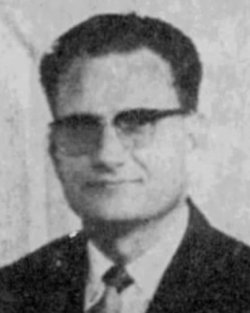
W.E. Best
About W.E. Best
Wilbern Elias Best (1919-2007) was a preacher and writer of Gospel material. He wrote 25 books and pamphlets comprised of sermons he preached to his congregation. These books were distributed in English and Spanish around the world from 1970 to 2018 at no cost via the W.E. Best Book Missionary Trust.

Comments

0 / 2000 characters
Comments are moderated before appearing.

Be the first to comment!

Joshua

Joshua

Shall we play a game? Ask me about articles, sermons, or theology from our library. I can also help you navigate the site.