Bootstrap
W.E. Best

#82 Error versus Heresy

Romans 8:23
W.E. Best July, 1 1973 Audio
0 Comments
Remastered Oct/Nov 2024

Sermon Transcript

Auto-generated transcript • May contain errors

100%
Sunday evening, we studied a
portion of Ephesians chapter 6, showing from that passage
of scripture that the fallen angels are well organized, and
we have to face not only the devil himself, but his army of
followers. Tonight, what is the main approach
of Satan in his seeking to disturb the children of God. The devil
knows that he cannot cause one of Christ's own to lose his relationship
or his standing in Jesus Christ. But the devil is brilliant enough,
he's smart enough, to know that he can disturb the Christian,
and as a result of such disturbance, that Christian's condition of
life or state can be hindered and altered. What is his method
of attack? What is his chief method of attack? I'd like you to read with me,
beginning with the 16th verse of Romans chapter 16. Salute one another with an holy
kiss. The churches of Christ salute
you. Now beseech you, brethren, mark
them which cause divisions and offenses contrary to the doctrine
which ye have learned, and avoid them. For they that are such
serve not our Lord Jesus Christ, but their own belly. and by good
words and fair speeches deceive the hearts of the simple. Our subject tonight is deception.
Deception is Satan's greatest method of attack against God's
people. Notice verse 19, for your obedience
is come abroad unto all men. I am glad, therefore, on your
behalf, but yet I would have you wise unto that which is good
and simple, or harmless, concerning evil. And the God of peace shall
bruise, or tread, Satan under your feet shortly. The grace
of our Lord Jesus Christ be with you. Amen. The word simple in
verse 18 means innocent. Such a person is the unsuspecting
and thus easily ensnared by appearance. He does not suspect a snake,
as it were, under every beautiful flower. Beloved, it isn't that I have
become hardened in my years of the study and preaching of God's
Word. I have just come to the place
where I do not believe everything I hear. And it is wrong for the
child of God to just accept everything he hears at face value. We are
to prove all things, the Bible says, and hold fast to that which
is good. That was Paul's admonition to
the Christians at Thessalonica. It seems in this religious age
in which we're living, that the average religionist today thinks
that everything is good, there's something good in everything.
I have been showing in our Wednesday evening studies the fallacy of
any such thought, and we develop it even further in our message
this morning from the eighth chapter of the gospel according
to John. The devil's greatest attack against you and me is
by employing the method of deception. Look at the eighteenth verse
again. For they that are such serve not our Lord Jesus Christ."
That is, persons who would cause divisions by their own doctrines,
which have not, of course, come from the Word of God. Paul says,
avoid them. Avoid them like you would a snake. For they that are such serve
not. our Lord Jesus Christ, but their
own belly, their own interests, and by good words and fair speeches,
deceive the hearts of the simple. Faith is to be spiritually intelligent. We know that the word faith is
used several ways in the Scripture. It is used, of course, of the
faith by which we lay hold of Jesus Christ, as presented in
the glorious gospel. Therefore, being justified by
faith, we are at peace with God through our Lord Jesus Christ.
Faith is also used in the sense of the system of truth that has
come to you and to me. Paul admonishes the Philippian
saints to strive and to earnestly contend, as we have in the book
of Jude, verse 3. Striving together for the faith
of the gospel and earnestly contending for the gospel are terms that
mean the same thing. You and I are to strive for the
faith of the gospel. We are to earnestly contend for
the faith once delivered unto the saints. Thus the word faith
is used in the sense of the system of truth that has come to you
and me by holy men of God as they were born along by the Holy
Spirit of God. So faith is to be spiritually
intelligent. We are to grow in grace and knowledge
of the Lord Jesus Christ. Now in the discussion of deception
tonight, We want to look at the difference between error and
heresy, because there is a vital distinction between error and
heresy. One has said, and I quote, truth
courts the understanding first of all. I believe that. If a person is concerned about
presenting the truth to a person, he isn't going to try to slip
up as it were on his blind side. He believes in stating the truth
as it is. He doesn't believe in camouflaging
the truth. I remember when I first embraced
the doctrines of grace, and I saw the truth of all of these great
and precious truths. And I was always willing to and
ready to share those things with others, whether they wanted to
hear them or not. I wanted to talk about the great truths of
grace. I can remember having attended
some conferences, and after having heard some of the preachers on
the subject of the doctrines of grace. Some of them had the
idea that you shouldn't go into a place and preach on divine
election by calling it divine election. But I didn't like that,
and I don't like it today. I am not afraid of a biblical
term. It doesn't make any difference
where I am or before whom I might be speaking. I said I'm not afraid
of a biblical term. I remember reading one time of
an Episcopalian preacher who had attended a Baptist workers'
conference, and he had accepted their teaching on the subject
of baptism. And that, of course, led to some
other things that he embraced. Finally, he said, I'm going to
have to break with the Episcopalian church. I can no longer embrace
the doctrine of the Episcopalians. And so he became a Baptist. And
so he was so enthused, so thrilled, so enamored with the precious
things that he had learned, that when he became pastor of a Baptist
church, he just started preaching the things that he had learned.
And he thought that the people to whom he was speaking would
embrace everything he had to say. It wasn't long until he
got into hot water. He attended a workers' conference,
and he was sharing with some of the ministers who were present.
He said, you know, I thought that when I left the Episcopalian
church and became a Baptist minister, that the Baptist people would
embrace all the things that I learned. And I found out that I'm having
great difficulty in getting the Baptist people to embrace the
things that I've learned. One Baptist preacher at the Workers'
Conference said, now, you don't want to go too fast. He said,
well, I'd like to ask a question. What do you mean go too fast?
He said, you have to take it step by step. You have to take
it easy if you're going to a new church. He said, well, I thought
that when you see something that is true, it is your responsibility
to give it. And he couldn't understand. He
said, now I heard that when I was an Episcopalian. Am I going to
hear the same thing now since I've become a Baptist? Pretty
good lesson for us, isn't it? Beloved, the truth is to be given,
and it is to be given by the name that the Bible gives it.
So I'm not afraid of the word predestination. I'm not ashamed
of poor ordination. I'm not ashamed of election. I'm not ashamed of any biblical
thing. So are we to tread softly? Is that what we're to do? Truth
courts the understanding. Now let's look at the other side
of this picture. Era, the same person said, labors to win the
affection, and by this approach, he says, the judgment is corrupted. How true! Let us let that seep in deeply
into our minds and hearts. In other words, if a person is
propagating error, what is he going to do? he is going to do
something to reach the affections of that person. And if he has
reached the affections of an individual, or many persons,
then as a result of having reached their affections, Their mind
has been corrupted and then he is in a position to present to
them the heresy which he has sought to present from the very
beginning, but he approaches it differently. So he would call
it being tactful, when in reality he is being deceitful. Beloved,
the Christian is not ashamed of anything that he believes
that comes from the word of God. and he doesn't have to try to
slip up on a person in order to give that individual the truth. All he has to do is simply proclaim
it, call it by its rightful name. So this is a good introduction
to our study, I think. I appreciated this statement
as I read it. Truth courts the understanding
first. That's always truth. Truth courts
the understanding. But he said, Aaron labors to
win the affection, and by this approach the judgment is corrupted. How true that is. I've seen it in operation many
times in my years of proclaiming the glorious gospel of the Lord
Jesus Christ. I would like to divide the message
tonight into three parts. The meaning, first of all, of
error and heresy. The meaning of error and heresy. Secondly, the manner of error
and heresy. And finally, the extent of error
and heresy. Let's look at them one at a time.
We read from the passage in Romans that those who are preaching
heresy are apt to preach it in such a manner that they will
deceive people. Did you know that you can be
deceived? I have been deceived, and beloved, I'm here to tell
you I've been deceived since I've been saved. Christians can
be deceived, not to their utter destruction, but they can be
deceived. If you want something that will
amaze you, read the Pauline epistles, read the church epistles, read
the general epistles, and you will find many, many references
to the deception of God's people. Yes, God's people can be deceived. I'd like to read just two or
three passages to show you what we're talking about. Turn with
me next to Ephesians chapter 4. Ephesians chapter 4. Here is one of the most spiritual
books of the entire Bible, and yet we find in the fourth chapter,
the Apostle Paul making this statement. We know that he has
given, that is the Lord Jesus has given to the church apostles,
prophets, evangelists, pastors, and teachers, for the perfecting
of the saints, for the work of the ministry, for the edifying
of the body of Christ, till we all come into the unity of the
faith, verse 13, unto a perfect man, that means a mature man. And then notice verse 14, that
we henceforth, that is when we become mature, that we henceforth
be no more children tossed to and fro and carried about with
every wind of doctrine by the slight of men and cunning craftiness
whereby they lie in wait to do what? Deceive Deception was the
first method employed by Satan in the Garden of Eden. Eve was
deceived. Now look at verse 15. But speaking
the truth in love may grow up into him in all things, which
is the head, even Christ, from whom the whole body fitly joined
together, and compacted by that which every joint supply, according
to the effectual working in the measure of every part, maketh
increase of the body unto the edifying of itself in love. What is Paul doing? He is warning
the saints of God, those spiritually minded people, against deception. You and I need the same warning,
that is, warning against deception, so we can be deceived. I said
not to our destruction, but we can be deceived. I like what
one man said and I'd like to give a quotation. This person
said, and I quote, the thought that God will protect a believer
from being deceived if he is faithful to what he knows without
striving to gain more knowledge is in itself a deception. How
do you like that? I want to repeat that again.
Beloved, you and I cannot sit on our laurels. I can never come
to the place in my Christian life, and I'm not talking about
the Christian ministry now, I'm talking about the Christian life,
that I can sit down and I can rest in the things that I have
learned and be persuaded that if I'm faithful in the things
that I have learned, that the Lord will keep me from being
deceived. Now listen to this person, and
this is a great man of God who said this, the thought that God
will protect a believer from being deceived if he is faithful
in what he knows or what he has learned without striving to gain
more knowledge is in itself a deception. End of quote. What a great statement
and yet There are many, many Christians today who think that
when they grow older there isn't any need for me to continue to
study and have such a desire. I will just now rest in the things
that I have learned. And God will not permit me to
be deceived. You're already deceived. You're
already deceived by even having such a thought. The Christian
can never come to the place because he goes from strength to strength,
he goes from glory to glory, he goes from faith to faith,
and so the Christian life is something that continues to grow
and develop as long as he is here in this world. The meaning of era and heresy. Let's take the word era, first
of all. We'll not go into the Greek of
the word, we'll just simply give it to you, and the scriptures
where the word would be found. What does the word era mean?
We have all heard, every one of us. There isn't a one of us who hasn't
heard from the truth. Era means a wandering, a forsaking
of the right path, whether in doctrine or in morals. James 5.20 is an outstanding
text. Turn to that text, if you will.
James 5, verse 20. All of us fit into this category. to some degree, to some extent. James 5 verse 20. There are many
verses, we'll not have time to look at all of them, but we want
to look at one or two that is very important concerning this
subject. Let's begin with verse 19. Brethren,
James is the writer, writing to the brethren, if any of you
do err from the if any of you do err from the
truth and one convert him." Now let's pause a moment. You
and I are never converted to the extent that we do not need
additional conversion experiences. I'm not talking about regeneration,
I'm talking about conversion, and there's a vast difference
between the two. Peter was regenerated, but the Lord told him when he
was converted to go strengthen the brethren. He said, The devil
hath desired to have you that he may sift you as wheat, but
when thou art converted, strengthen the brethren. James says, Brethren,
if any of you do err from the truth, and one convert him, Now
verse 20, let him know that he which converted the sinner from
the error of his way shall save a soul from death and shall hide
a multitude of sins. Please do not apply this verse,
as so many people do, to an unsaved person, because it does not apply
to an unsaved person. James is writing to brethren.
And when a brother in Christ has heard from the truth, it
is the responsibility for those who are more spiritual to go
and try to restore that person or convert him, turn him again
into the path of truth. And when he has done that, he
saves him from death. Now, the word death is used several
ways in the scriptures. I'll give you one way in Ephesians
5 14. Awake thou that sleepest, and
arise from the dead, and Christ will give thee not life, but
l-i-g-h-t, light. As a believer in Jesus Christ,
we can become asleep, as it were. We can become complacent. and we become complacent. As far as our influence is concerned,
it is dead. Awake thou that sleepest, and
arise from the dead, and Christ will give thee light, not life. They already had life. The word
death is used in another sense in 1 John 5 and verse 16. If
you see a brother who has sinned, a sin which is unto death, and
the word death there is physical death. Yes, a believer may so
sin as to result in his physical death. John said, I do not say that
you should pray for him. There is a sin, he said, unto
death. But here, let him know that he
which converteth a sinner from the error of his way shall save
a soul from death, and shall hide a multitude of sins." Doctrine
and morals are not divided by a sharp line in the Scripture. If a person is doctrinally sound,
he's morally sound. If he is not morally sound, he
is not doctrinally sound. It's just that simple. So I can expect a person like
Miss Lillian, who is not doctrinally sound, and she proved that by
her statement that I read to you this morning, I can well
understand her not being right morally speaking. So why would
she have the right concept of morals when she does not have
the right concept of doctrine? Error in the life of a Christian
does not alter the standing of the believer, but it does change
the state or the condition of the Christian. If a professing
believer comes to such conclusion, his era has developed into heresy. Now let's look at the word heresy
for a moment. Heresy denotes a choosing, a choosing. I should say that a professing
believer, if his era becomes part of his belief and he just
willingly accepts it and embraces it and goes on and on and on,
then it becomes heresy and that proves what he is. But now the
word Harrison. Harrison denotes a choosing.
It denotes a choice. Listen to this. Our self-will
opinion. That describes Harrison, doesn't
it? Every heretic is only manifesting
his self-will opinion. That's why when you talk to him
and you quote scripture to him, he will not pay any attention
to anything you say. Why? because of his self-willed
opinion. We find this in 2 Peter 2, and
we made a study of this portion of Scripture a few Sunday evenings
ago. You find it also in Acts 24 and
verse 14. You find it in Romans 1 and verse
25. This is leprosy in the head. One of my favorite messages of
the Old Testament is taken from the thirteenth chapter of the
book of Leviticus. The many descriptions of leprosy
and the leprosy in the head resulted in the person being pronounced
utterly unclean. Remember that? And the worst
form of leprosy is leprosy in the head. according to that passage
of Scripture. And that means what? Heretical
ideas. Heretical ideas. So we see the
distinction between Aaron and Harrison. Now the believer often
errs from the truth, but the true believer in Jesus Christ
is not guilty of heresy. He's not a heretic. because when
he is shown by the word of God, wherein he has heard, he will
accept the testimony of scripture because he hears the word of
God. John 8 and verse 47. And if he
doesn't hear the word of God, it is because he's a heretic.
Like the Pharisees of Christ, they were heretics. Now let's
look, secondly, at the manner of Aaron and Harrison. We've
seen the distinction between the two, now the manner of each. The Christian, as I've already
stated, is guilty of errors. I've made many mistakes, and
I'll make many more mistakes. There never has been a perfect
Christian There never will be an absolutely perfect Christian
in this life. But we're going to be perfected,
and we long and look forward to that time of absolute perfection. But we do not experience it now.
Yes, the Christian may be led astray. I've been led astray.
You've been led astray. Why, I've even led some of you
astray. to some extent in times past. I've been the pastor of some
of you for 25 years, and some of you more than that. Some by
27 or 8 years, and one in particular almost 30 years. So whenever
I have urged from the truth and I taught error, then I led those
who listened, that is if you followed, into error. You say,
well, I'd like to have a preacher who doesn't do that. You won't
find him. He doesn't live. He doesn't exist. So you can
just keep searching. You can keep looking. A man is
a man, and he's man at his best. So the Christian is guilty of
errors. Yes, he may be led astray, but
not totally or finally. not totally or finally. You see,
there's a difference in backsliding and apostatizing. Vast difference
between a person who is in a backslidden condition and a person who apostatizes. And I don't have time to go into
that tonight. One said, and I quote, human weakness is the cause of
errors. How true. Human You know, sometimes
I wonder just how strong I am. Have you wondered just how strong
you are? Well, I've been tested and tried
many, many times in different ways, but there are some ways
in which I have not been tested yet, but I'm sure I will be. But have you ever wondered just
how strong, just how much strength you really do have? So human
weakness is the cause of errors, this person said. The spirit
is willing, but the flesh is weak. That's a quotation of the
book. The spirit is willing, but the
flesh is weak. How many of us have said in good
faith, now I want to do this, I want to do that, but we find
that the flesh is weak and we do not do that, which we really
and sincerely said that we want to do. Yes, the believer will
err, but he wants to know wherein he has erred. There's the difference. Now, when a heretic just keeps
going in his direction, he doesn't want to be shown. He doesn't
want his heresy brought before him. He will not acknowledge
it as being heresy. Why? Because of his self-will. Another man said, I've done a
lot of research on this particular subject, truth falls into contempt
among the ignorant. I like that statement. Too often,
truth falls into contempt and it falls into contempt among
the ignorant. So when the truth of some great
biblical subject is given to people who are ignorant of the
word of God, and then when that truth is presented, they do not
think that it is scriptural, truth falls upon deaf ears, so
to speak, or as this person says, into contempt among the ignorant. Many love truth, he said, but
they cannot defend it. Now this is another way to look
at it. Many love truth, but they're not in a position to defend it.
Let me ask you a question tonight. Are you in a position to defend
the great things that you embrace? Are you able to stand anywhere,
anytime, and defend the great biblical doctrines, such as depravity,
irresistible grace, perseverance of the saints, and on and on
we could go. Then this person said, Christians
are not to make the Bible say what they think it says. I like that. You and I are not
to try to make the Bible say what we think or we would like
for it to say. Let's just take it at face value
and not try to make it say what we think it ought to say. And then he said, an unreasonable
eagerness to believe something that promises ease to an anxious
conscience leads to error. I think that's it. Listen to
that again. An unreasonable eagerness to believe something that promises
ease to an anxious conscience leads to error. Reason's proper
place is at the feet of saving faith and revealed truth. That's well said, isn't it? None
of God's words are unreasonable. But some are above our reason. Some are above our reason. Faith
comes in as a stranger to nature and as an intruder into reason's
province. I like that. Those are great
statements. When people begin to think it
dull to sit under God's appointed teachers, And we have a lot of
folk like that today. Thinking themselves to be wiser,
they manifest their spiritual ignorance. I like an illustration
that one gave to illustrate that point. You remember this morning
I stated that Miss Lillian said that her daughter is her own
church? We have a lot of folk like that
today. Each person is his own church. And so they feel like
that they can sit in their own living rooms, or in their own
places of abode, and they can read the scripture, and they
can interpret the scripture, and they don't need God-appointed
men to teach the Word of God. So this man said, when people
begin to think it dull to sit under God's appointed teachers,
Thinking themselves to be wiser, they manifest their spiritual
ignorance. Here's the way he illustrates
it. He said, A lawyer at the bar may be as skillful as the
judge on the bench, but without commission he dare not sit there. I like that. Beloved, you may be wiser than
the man whom God has appointed. But you dare not stand where
he stands if you haven't been appointed to stand there. That's
what it means. I tell you, we're losing something
in these last days. We're losing something. I can
see the apathy. I can see the dullness. It's
being manifested, and I hate to say it, even among God's people. Beloved, I can't give in. to the present-day morality.
I can't give in, I can't accept the general teaching of Christendom
today. I can't embrace the rotten religious
music that is palmed off on people today as being sacred music. I can't embrace these things. I never will be able to. by the
grace of God, and yet it seems that there are
so many today, they're just floating along. They're accepting this,
they're becoming dull to that, insensitive to this, passive
about this. Beloved, you and I cannot be
passive about these things. We must be active, as we showed
last Sunday evening from the sixth chapter of Ephesians. We're
wrestling, and that denotes activity. It does not denote passivity.
But there's too much passivity today, even among God's people. And I can even sense it in our
congregation. And I'm not happy about it. And
I never will be happy about it. Now let's look at Harrison. The
heretic is fixed in his heresy. He's fixed. He's fixed in his
heresy by devilish pride. Now, the Christian errs, but
he is not fixed in his error, because he doesn't possess such
a pride. He has been made humble by the grace of God. And when
he has been shown where he is wrong, he accepts it and he says,
I want to be right. I want to be right. But that
isn't true with a heretic. Can you imagine someone like Joseph Smith admitting
his heresy? Can you imagine someone like
Russell or Rutherford admitting their heresies? Can you imagine
Herbert W. Armstrong or Garner Ted Armstrong
admitting their heresies? Why, even here two or three years
ago, hadn't been too long ago, when Ted Garner got mixed up
and had some moral problems and his father cast him out and he
spent some time, well, I guess that was his form of therapy.
in the mountains of Dakota or someplace, and after a while
he went back and took up where he left off. Immoral. Immorality goes with
Harrison. So the heretic is fixed in his
Harrison. After the first and second admonition,
what does the Word of God state? In Titus 3.10, after the first
and second admonition, the heretic is to be rejected. So, heresy
must be rejected. One is said of mine under the
power of Aaron is wrestling and impatient to propagate it. How
true. Do you see the zeal now that
is manifested in the Mormon missionaries or the Jehovah's Witnesses as
they come to your doors repeatedly? Listen to this statement, a man
under the power of heresy is restless and impatient to propagate
it. Beloved, I wish we, oh, I wish
that we who embrace the truth were as impatient as the heretics
to propagate what we believe. The arrogancy of reason is the
reigning sin of the heretic. This man said, blind zeal is
a sword in a mad man's hand. What a statement. And then he
illustrates it in this manner, and these are biblical examples.
The Pharisees held heretical opinions about the law, Matthew
chapter 5. The Sadducees hail heretical
opinions about the resurrection. Modernists today hold heretical
opinions concerning the person and work of Jesus Christ, our
blessed Lord and Savior. Whole heretical opinions concerning
the will of man. They make a god out of the will. Loose principles run into loose
practices, from heresy to immorality. Now let's look at the extent
of error and heresy. Error does not destroy the credibility
of Christianity. Aren't you grateful for that?
I said error does not destroy the credibility of Christianity. Proof of it is found in 1 Corinthians
11 19 and Matthew 18 verse 7. Error is error whether in the
life of the Christian or in the unbeliever. But the end result
is not the same. Thank God for that. The end result
is not the same. Thomas Matten said, I quote,
With sin as sin, God has nothing to do. But with sin as a punishment
of sin, God has to do. When men defy the law of health
and cleanliness, pestilence breaks out and contagious diseases spread. That's a good statement, a good
statement. how true it is in the lives of
Christians. And he was applying it correctly
when he said, when men defy the law of health and cleanliness,
he's illustrating it, pestilence breaks out and contagious diseases
spread. And when errors are put up with,
they're condoned and they're not exposed. We do not seek to
set things right, then there are going to be contagious things
take place within the church that will destroy the testimony
of the church, or the testimony of the Christian himself. Finally, the extent of heresy. Oh, what a difference. Are you
ready for this? Heresy is a strong delusion. 2 Thessalonians chapter 2, verse
11. A strong delusion which God himself
shall sin. Personally, I think we're living in the very closing days of this
dispensation, and we're already beginning to witness precursors
to this very thing in our lifetime. Strong delusions. Why? Because men will not embrace
the truth, God will send them strong delusions that they might
believe a lie. Why do we have the moonies running
around? And the moonies are growing. Another illustration of the very
thing about which I'm speaking. Because people will not embrace
the glorious truth of the gospel. God is already beginning to sin,
strong delusion, and people are believing these strong delusions
because they will not believe the truth of God's Word. False
doctrines are suitable plagues for false hearts. Heretics are
first deluded, this is their sin. God sends them strong delusion,
this is God's punishment for their sin. Turn with me, if you
will, please, to 2 Thessalonians 2. There are some folk today
that if this were read and expounded in the average religious meeting,
why, people would think that it was heresy. But here's what
the word of God has to say. The Apostle Paul, once again,
is warning the Thessalonian Saints. Let's begin with verse 1. We
beseech you, brethren, by the coming of our Lord Jesus Christ,
and by our gathering together unto him. This morning we sought
to make a distinction, do you remember? Between Christ's day,
which Abraham saw by faith, and that day, which is what? The day of his Sabbath Advent.
And here it is, that ye be not soon shaken in mind, or be troubled,
neither by spirit, nor by word, nor by letters from us, as that
the day of Christ is at hand. Let no man deceive you. Here
it is again. Paul warned the Thessalonian
believers about being deceived. Let no man deceive you by any
means, for that day, that day shall not come. except there
come a falling away first, and that man of sin be revealed the
son of perdition, who opposeth and exalteth himself above all
that is called God, or that is worshipped, so that he as God
sitteth in the temple of God, showing himself that he is God.
Remember ye not that when I was yet with you, I told you these
things? And now ye know what withholdeth,
or hindereth, that he might be revealed in this time. For the
mystery of iniquity or the mystery of lawlessness doth already work,
only he who now letteth or hindereth will hinder, until he be taken
out of the way. And then shall that wicked be
revealed, whom the Lord shall consume with the spirit of his
mouth, and shall destroy with the brightness of his coming,
even him whose coming is after the working of Satan, with all
power and signs and lying wonders, and with all deceivableness of
unrighteousness in them that perish, because they receive
not the love of the truth, that they might be saved." Here it
is. and for this cause God shall sin." Now, the word sin is a
very strong word, shall sin. God shall sin, them strong delusion
that they should believe a lie or the liar, that they all might
be damned who believe not the truth but had pleasure in unrighteousness. I said the end result is not
the same as error. The end result of heresy is not
the same as the end result of error. Thank God for that. Thank God that you're not a heretic
as a Christian. I'm not a heretic. But God shall
send a strong delusion. The strong delusion is more than
a mere permission. what God permits he decreed to
permit. Have we forgotten that? He decreed
the circumstances attending the incident and the end to which
he would dispose it. Those who were deceived into
such error or such heresy were given up by God to that heresy. Don't let it surprise you, beloved,
but there are a lot of people today who have embraced these
heretical ideas and God has given them up to their heretical ideas. You say, that's wrong. That's
what the Bible says. You can't deny it. I believe
it. You and I are already beginning
to witness, as I've already stated, precursors of the very thing
about which we're speaking. Now, in closing, it is not Satan
alone that does this, but notice God sins. God sins and he used
the instruments of Satan to propagate that heresy, which will be embraced
and God has given them up. You say, does God give people
up? He surely You can't read Romans 1, 24 through 28 without
finding that statement found three times. Certainly, it is
something about which we do not like to think too much, but it's
truth. It's truth. It is God, not Satan, that sends
the operation of error. Thus the delusion is ascribed
to God and not Satan here. So as God is one who makes the
wrath of man to praise him, Psalm 76 verse 10, his purpose is being
worked out even, listen to this, even in what evil men are doing. Now let's look, in closing, at
the term strong delusion. It means an operation of heresy. It denotes power in action. This is not a passive acquiescence
in wrongdoing. The true reading is sins, not
shall sin. Look at that. Since the time
of action is clearly future in this prophetical statement, this
must be taken as what? As prophetic present. As prophetic
present. God sends. God sends. Yes, you and I often err from
the truth. But when we have been shown wherein
we have erred, we want to embrace the truth and to get back in
the path of truth. But the heretic is so proud in
his self-conceit, in his self-willed opinion, that he will not admit
his heresy. And in many cases, and we're
witnessing it today, God is already beginning to send a strong delusion
to those who will not embrace the truth that they might be
damned. You see, preacher, that's art.
That's what the book says, and I believe it, and I'm witnessing
it, and so are you. so are you. We must not become
passive with all the immorality and with all the heretical ideas
that are being propagated today. We must search and know the mind
of God and stand up in defense of the truth which has been committed
to our trust.
W.E. Best
About W.E. Best
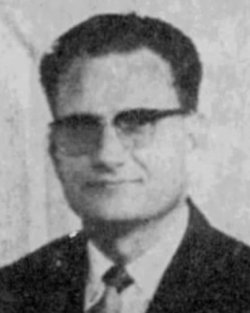
Wilbern Elias Best (1919-2007) was a preacher and writer of Gospel material. He wrote 25 books and pamphlets comprised of sermons he preached to his congregation. These books were distributed in English and Spanish around the world from 1970 to 2018 at no cost via the W.E. Best Book Missionary Trust.

Comments

0 / 2000 characters
Comments are moderated before appearing.

Be the first to comment!

Joshua

Joshua

Shall we play a game? Ask me about articles, sermons, or theology from our library. I can also help you navigate the site.