Bootstrap
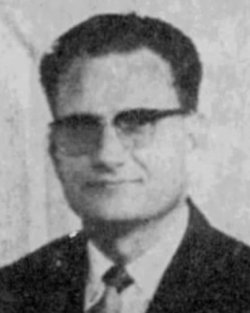
W.E. Best

#84 Predestination, Part 1

Romans 8:28-30
W.E. Best July, 1 1973 Audio
0 Comments
Remastered Oct/Nov 2024

Sermon Transcript

Auto-generated transcript • May contain errors

100%
Romans chapter 8. Last Sunday we investigated the
verses where the word predestination is used in Ephesians chapter
1, and tonight we will be reading the passage in Romans 8 where
the word predestination is used. There are only two chapters in
God's Word where the English word predestination or its equivalent
is used, and the chapters are Romans 8 and Ephesians chapter
1. We're not going to teach all
the great truths that are found in the passage which I am going
to read. We're only going to investigate
the word foreknow and the word predestination. Let us read verses
28 through 30. And we know that all things work
together for good to them that love God, to them who are the
called according to his purpose. For whom he did foreknow, he
also did predestinate to be conformed to the image of his son, that
he might be the firstborn among many brethren. Moreover, whom
he did predestinate, them he also called, and whom he called,
them he also justified, and whom he justified, them he also glorified." It is strange to me why people
who claim they have been saved by the grace of God detest the
word predestination. But most religionists, not only
in the past, but in the present as well, hate the biblical doctrine
of predestination. By way of introduction tonight,
I want to give you some statements that I think are very good, some
quotations by some men who have written some very wonderful things
in reference to the subject of predestination. I like what John
Trapp has said about the subject. You can paraphrase it, you can
put it in your own words, but what he said, I believe to be
true. Before I read this quotation,
I would like to call attention to our subject this morning. The one this morning was not only for the Christian,
but for the unsaved person as well. The subject of predestination,
however, is not for the unsaved person. don't expect an unsaved person
to understand its biblical implications. He cannot. He doesn't have the
capacity to understand the real scriptural truth of predestination. John Trapp made this statement.
He said, and I quote, If you feel not faith, then know that predestination
is too high a matter for you to be disputers of until you
have been scholars in the schoolhouse of repentance and justification,
which is the grammar school wherein we must be conversant before
we go to the university of God's most holy predestination and
providence." That's a great statement. You could put it in this framework.
No person is in a position to understand this great biblical
doctrine. until he has gone through, we would say today, the grammar
school of justification and the high school of sanctification,
thus entering into the university of predestination and providence. I've already stated that you cannot separate predestination
from providence. I have shown you in previous
studies that to believe one necessitates belief in the other. I said belief
in one necessitates belief in the other. By way of introduction
tonight into the study of Romans 8, 29, and 30, wherein the word predestination
is used, let us consider five basic things concerning this
great truth found in God's Word. We have, first of all, the foundation
of predestination, and the foundation is Jesus Christ. by whom, as we have previously
studied, we have received the adoption of sons, Ephesians 1
5. There we have the foundation
of predestination. You see how this harmonizes with
what John Trapp said? He made the statement that unless
a person feels faith, unless he knows that He has been saved
by the grace of God. Unless he has been a scholar
in the grammar school of justification, he cannot understand what is
taught in the university of predestination. So the Lord Jesus is the foundation
of predestination. Secondly, the object of predestination
was man. Not man invested with qualities
which moved God to ordain him to everlasting life, but man
as a guilty and fallen creature. It was not the merits, notice
now, it was not the merits of Christ, but the love of the sovereign that moved his love for some
among fallen mankind. Thirdly, the blessings to which
God ordained or predestinated those whom he foreknew, redemptively
speaking, were salvation and eternal glory. 1 Thessalonians 5 and verse 9. to consider, first of all, the
foundation of the truth, secondly, the object of predestination,
and then the blessings of predestination. Now, fourthly, the means of these
blessings are the redemptive work of Jesus Christ. Regeneration by the Spirit calling
by the gospel and practical sanctification. Christian predestinarians are
for keeping together what God has united. Christians do not believe in
separating what our blessed Lord has seen fit to unite. The final end of predestination
is the everlasting kingdom to which we are predestined by God
to enter and to enjoy throughout the ceaseless ages of eternity. Thus, we have the foundation
of predestination, Jesus Christ, the object of predestination,
some from among mankind. The blessings to which God has
ordained those whom he foreknew, redemptively speaking, and they
are salvation and eternal glory. When I refer to salvation, of
course, I am including all the themes that are related to the
subject of salvation. And the means of these blessings
or the redemptive work of our blessed Lord Jesus Christ, regeneration
by the Spirit, calling by the glorious gospel and practical
sanctification, and the final end of our predestination, the
everlasting kingdom of our Lord and Savior Jesus Christ. I said
to you last Sunday evening that the word predestination is used
in more than one sense. I would like to tonight, and
I am sure that we will have time to get no further, probably,
than our introduction. We may not get into the three
divisions of this subject that I want to discuss with you in
the service tonight. There is too much involved in
it, and I do not want to go too fast. The word predestination
is not always used in the same sense. I'm going to give to you
tonight three different senses in which the word is used in
the scriptures. Number one, it is used as a synonym
for God's decree. Now, you have in your possession
the work entitled the decrees of God. And it'd be well to keep
this in mind as you study the decrees of God. Secondly, it
serves to designate the purpose of God respecting all moral creatures. I said secondly, it serves to
designate the purpose of God respecting all moral creatures. And finally, It includes the
sovereign election of some and the righteous reprobation of
evil men for their sin. You will notice what I included
in the latter part. Now for an explanation of that.
God did not predestinate unto damnation and the means unto
it in the same way as he did unto salvation. That must be
kept in mind by you and me. For instance, predestination
unto life is purely sovereign. Predestination unto life is purely
sovereign. whereas predestination unto damnation
is judicial and takes account of man's sin. This is well for
us to remember before we get into the study of the hardening
of Pharaoh's heart. You see, God is not the chargeable
cause, as we have already stated in previous studies, the loss
of the lost. Now let's go back in the church
history for a few minutes. The Reformers taught absolute
predestination. You'll notice I said they taught
absolute predestination. All of God's men today who are
basically sound in the faith teach the same. I say that without
any reservation whatsoever. As the Reformers taught absolute
predestination, Arminians advocated conditional predestination. I want you to observe the difference
between absolute predestination and conditional predestination. Predestination is absolute. It is free and independent of
any arbitrary standard whatsoever. Arminians, however, state that God determines a man's
salvation on the basis of man's free will. I ask Brother Miss Hubert to
read very carefully in proofreading this work. on free grace versus
free will for several reasons. I'm sure that some of you realize,
and maybe all of you, that whenever you have put out a work, sometimes
you have the thoughts in your mind, and when you're reading,
even proofreading, you can just read right over things. I believe
that this work, free grace versus free will,
will be as controversial, if not more controversial, than
anything I have put out thus far. And I'm not saying that
just to attract attention. We know that regeneration and
conversion, that subject is a controversial subject. But I believe that this
subject that will be forthcoming to you in printed form, will
be even more controversial for the simple reason that there
is more conversation today about the free will of man than any
other one single subject. And I think you will agree with
that. Therefore, I want this work to be as perfect as humanly
possible, because I know what is going to be involved as persons
read it now, not only now, but in time to come. I believe it
is a basic work. I believe it is a foundation,
it is a fundamental work. It is a work to which we must
give a great deal of attention as Christians. You see, much
is involved in this subject. I'm sure that you realize how
much is involved in the subject. But back now to predestination.
The Reformers taught absolute predestination. There is an excellent
book, and some of you have it in your libraries. It is entitled
Absolute Predestination by Xantchus. It is an excellent work, and
I hope that all of you, if you do not have it, will eventually
get it, because It is an excellent work and ought to be in the home
library of every person born of the Spirit of God. It is a
book to which you will be referring constantly. You may read it now,
and it might be several months or several years before you read
it, but before too long you will want to read it and refresh your
own mind again by reading it the second, the third, and many
times if the Lord tarries his coming. Now before we get into
the study of the word predestination as Paul uses it in Romans chapter
8, there are some other things that I want to say about the
controversy over the subject of predestination. Not long ago,
I came across this statement. One man said that predestination
is a gray shadow on the Christian horizon. I didn't like that. I do not
like it anymore tonight. And beloved, I never will come
to appreciate that statement. I do not believe it for one moment.
I do not believe that you as a Christian can embrace such
a statement. Since predestination is a biblical
subject, How can that which the Holy Spirit has seen fit to give
to you and to me, how, how can such a great truth be, as this
man said, a great shadow on the Christian horizon? I like the reply that was given
to that man. I think the reply is great. One replied by saying, do not
forget that shadows are cast by light. Therefore, shadows lie close
to the light of God's glory. What was he saying? He was saying
that predestination lies very close to the glory of God. He was saying that shadows are
cast by light, not by darkness. And it was and is, by the light
of this great biblical truth, that many have seen shadows. But they see shadows only because
they have not graduated, as it were, from the grammar school
of justification, and I would use an additional statement,
sanctification. Had they graduated they would
never refer to this biblical truth of casting such a great
shadow on the Christian horizon. The person went on to say, as
God knows nothing now but what he knew from eternity, so he
ordains nothing now which he did not ordain from eternity. There is something else I think
you will appreciate. In closing his answer to the
objection to the doctrine of predestination, another said,
that's why, beloved, I enjoy reading the works of men in general. One man just doesn't have it
all. This man doesn't have it all. No other man has it all. One man said, if I did not believe
in predestination, I could not believe in divine providence.
What one designs, the other completes. What one ordains, the other executes. Now this is what I really appreciate.
Christians want nothing but absolute resignation to render them happy
in every possible circumstance. We want that to sink in for a
moment. That's a tremendous statement. Christians want nothing but absolute
resignation. to render them happy in every
possible circumstance. Now he gives the answer. Thus,
an absolute resignation can only flow from an absolute faith, and an absolute acquiescence
in God's absolute providence, founded on absolute predestination. Isn't that a great statement?
I'll repeat it again for you. What a tremendous statement,
given in just a few words. He's talking about the Christian
desiring nothing but absolute resignation in order to be happy
in every circumstance of life. Beloved, I want to be happy on
the Lord's day, and I rejoice in the things of the Lord. I
want to be happy and be able to rejoice tomorrow when things
are not going so well. and so do you as a born-again
believer. You want to have real joy in
every circumstance of life, when things are going well, when things
are not going so well, in sickness and in health, in fortune and misfortune. You
want to have the ability as a result of a knowledge of God's word
to rejoice in whatever circumstance you find yourself. The answer
to it is given when he says, thus, an absolute resignation
can only flow from an absolute faith. He didn't use the word absolute
too much. the word is used properly, and
there is no better word to be used. Then he goes on to say,
and an absolute acquiescence in God's absolute providence. Now, beloved, if we really put
this to practice, we're not going to find ourselves complaining
when things are not going so well for us, providentially speaking. And I don't believe that any
of us tonight are capable of doing that as we ought to. And
you will agree with me. But it's possible for you and
me to be absolutely resigned to
God's providential dealings with us. For instance, if tomorrow
you're confronted with something that you have never been subjected
to before, if you say now in the providence
of God the Lord is teaching me as a Christian a very vital lesson, then you're acquiescing as you
should the God's providential dealings with you in that particular
event in your life. So he said, we must realize that
this comes from an absolute faith and an absolute acquiescence
in God's absolute providence, founded on God's absolute predestination. You can't find, beloved, I don't
care how much you look, a better statement than that. Now I want
you to turn to Romans 8, 29. We're going to make a study of
this text for a few minutes, not all that's found in the But
we are going to investigate the word foreknow and the word predestination,
or predestinate. The word foreknow, for whom he
did foreknow, goes beyond that of mere cognition. that is the act or process of
Noah. It is, in a sense, practically
synonymous with love. Did you know that? We will illustrate
it as we continue to discuss this word. I said the word for
Noah is practically synonymous with the word love. To set regard upon, to know with peculiar interest,
delight, and affection. That's how the word is used.
That is the meaning of the word. It is equivalent to whom he foreloved. You could read it in this manner,
and not do violence to the scriptures. For whom he did forelove, he
also did predestinate to be conformed to the image of his son. So I said, it is equivalent to
whom he foreloved, or whom he elected for the purpose of predestinating. I said, or whom he elected for
the purpose of predestinating. The Arminian view of this text
supposes that what is in view is God's foresight of faith,
but that will not, I assure you, stand a close scrutiny of this
text of Scripture. That is the way every Arminian
interprets this text of Scripture. I'm talking about verse 29 of
Romans He will not interpret it as for
whom God foreloved. He predestinated that they shall
all be conformed to the image of his Son. Arminians will say
the text supposes, supposes that what is in view
here is God's foresight of man's faith. Now it doesn't say that. It doesn't even imply that. Once
again, this is how people will twist the scripture in order
to try to make it substantiate what they want it to say. This opinion, however, would
not disprove the doctrine of divine election. For argument's
sake, grant the Arminian view to be correct for just a moment.
I said for argument's sake. I said that this view would not
disprove the doctrine of divine election because, let us go a
little further, it would only raise this question What kind
of faith is it that God foresees? Is it human faith? Or is it the
faith which God gives those whom he foreloves? You see what I'm talking about? What kind of faith is it? The
biblical answer would have to be the faith which God himself gives. Proof of it is found in Ephesians
2.8, Philippians 1.29, 2 Peter 1.2, John 3.3-8, and John 6.44,
45, and 65. It must not be overlooked that
it is not whose act of faith he foreknew. Look at it. Don't read into it and don't
let anyone read into it. The faith he foreknew. Look at it. Don't read into it
and don't let anyone read into it. blind opened so I could get some
natural eye in the study. I would not have answered the
door had I seen the person coming in time,
because we are frequently visited by Jehovah's Witnesses in our
area. The man who built, you know,
all the homes out there, is a leading member of one of the kingdom
halls. In fact, he gave the property
and built the building that they did use just off of Alameda and
Genoa Road. And so, they come to our area
quite often. There were four men coming down
the street, and before I realized it, this young man was on our
porch, and he looked and he could see me in the study, and of course,
having seen me, then I went to the door. They have developed
a new approach. You know, they're like every
other religionist today. They'll try something a while,
and then they try something else. They find out that one thing
will not work so well, so they'll try something else. When I opened
the door, the young man smiled, and he said, I am a Christian
Jehovah's Witness. I said, what time? He said, repeating it, I am a
Christian Jehovah's Witness. I said, that's a new approach,
isn't it? And then he kind of smiled. He said, well, I'll explain. I said, do. And so he started trying to explain.
I said, there's no such thing. I said, in the first place, you
deny the deity of Christ, and so that is a denial of true Christianity. So there's no such thing, believe
in what you believe, as a Christian Jehovah's Witness. Well, then
he got confused. About that time, an older man
was walking down the sidewalk, and he heard it, see, and here
he came. came to his defense. I said,
you better call the two across the street because you're going
to need all four of them before it's over with. And so the older man came up,
he said, I overheard what you said. I said, did you? I said,
I'll say the same to you. He said, I'll explain. I said,
you don't have anything to explain. I said, you have to have something
to explain in order to explain something. And I said, since
you don't have anything to explain, I don't have time to listen to
you try to explain something that you don't have anything
to explain. He looked at me and said, what? And I said, that
means I'm dismissing you. Well, I don't believe in arguing.
I said, you know what? You don't have anything to argue
about. I just got through telling you. And so he said, well, have
a good day. I said, you try to have a good
eternity in that place which you deny. He said, what do you,
he turned around, he said, what do you, what'd you say? I said,
you try to have a good eternity in that place which you deny.
I said, you know what I'm saying? I said, you don't believe in,
no, I don't believe in hell. I said, that's what I know. I
said, you see, you don't have anything. You don't believe what
the Bible has to say about the subject of hell. So he just walked
on. And I looked to see, but I didn't
see him shake any dust off his feet. Because it might have been
mud yesterday. But beloved, religionists today,
they hate biblical doctrine. They do not want to be subjected
to biblical doctrine. And they will rise up and they
will manifest their anger in a hurry when you start asking
a question that pertains to Biblical doctrine. Now, what was Paul really saying? He was saying whom God foreknew
or foreloved. He also predetermined that all
of those whom he foreknew are foreloved, foreknew in a redemptive
sense. And he has predetermined that
they shall all be conformed to the image of his son. I want
you to know that text of scripture gives great comfort to me. I
was telling brother Pennington and brother Huber, brother Woods
before the service tonight, how comforting really the biblical
doctrine of predestination is to the child of God. And brother
Pennington related some of the things that he had been reading
on the subject recently. And he said that's true, it is
a great comfort to the children of God to see and understand
this wonderful truth that God has presented in his word. It must not be overlooked that
it is not whose act of faith he foreknew, but whom he foreknew. Look at it. whom he foreknew. Now, once again, I want to show
you the fallacy of the Arminian interpretation. They would say
it is the faith of individuals that God foresaw or foreknew. It is not talking about the faith
of individuals. The context proves it is the
persons whom he foreknew or So the foundation is given us
in this great text of Scripture. It means that God fixed his selective
eye upon some as individuals. And having placed or fixed his
selective eye upon some individuals, he predestinated all of those
individuals to wholeness by means of calling and justification. Now let's look at the foundation
of predestination. It is God's foreknowledge, God's
foreknowledge, whom he foreknew. And this foreknowledge is not
a foresight that certain individuals will repent and believe, but
a pre-recognition of persons to whom God in his
sovereign mercy has determined to give repentance and faith. 2 Timothy 2.25, Acts 13, verse
48. In making the choice, God acts
according to the good pleasure of his will, Ephesians 1 5, using
now the text that we used last Sunday evening, and not according
to any so-called good action on the part of the creature or
creatures themselves. So the holy actions of the elect
are the effect and not the cause of their being foreknown and
predestinated. 1 Peter 1, 2 and 2 Timothy chapter
1 and verse 9. Now as we go a little further,
predestination makes the number of the predestinated so certain
and definite. that it cannot be increased or
diminished. I said it can be neither increased
nor diminished. Moreover, whom he did foreknow,
he also did predestinate. They should be conformed to the
image of his In the economy of salvation,
predestination is attributed to God the Father. John 17, 6 and 9, Romans 8, 29,
and Ephesians 1, 4, and 5. We've come now to the three major
divisions of this subject that I want to discuss with you, and
I know that it will take the remaining time tonight and the
service next Lorsday evening to discuss these three important
parts of this message. Let me give to you now, before
we begin the discussion of the first part, the outline that
we will be discussing this evening and, Lord willing, next Sunday. First of all, there is a difference
between angels and men. We're going to observe the difference
between the predestination of angels and the predestination
of man. There is a difference. Do you
know the difference? This is a very important part of our
study. There will be two major subheadings
to the first part, difference between angels and man. The first
major subheading will be there are elect and non-elect angels. And the second part, there are
elect and non-elect men. There is a difference between
necessity and certainty. This is very important. There
is a difference between necessity and certainty. In the study of
this second part of the message, I hope that we will be able to
give to you some things that will enable you to answer some
very serious questions that are raised by those who oppose this
great biblical truth. are two main parts to this. Certainty
may or may not denote necessity. I said it may or it may not denote
necessity. When we come to the third major
division of the subject, there is a difference between efficacious
and permissive decrees. There is a difference between
efficacious and permissive decrees. There are two parts under that,
but we'll not have time to get there tonight, so we'll not worry
about the subheadings. Let us now begin our study for
the closing 15 minutes of our time this evening. The difference
between angels and men. First of all, there
are elect and non-elect angels. God did not choose a number from
among fallen angels as he did choose a number from among fallen
mankind. Have you thought about that?
This is a very important point to which we must give consideration.
Now let's elaborate on that a little bit. The elect angels must be
understood in a supralapsarian sense. Now, you'll see why that
we spent the time that we have thus far in studying supralapsarianism
and infralapsarianism. You say, well these are terms
that I don't believe are necessary to be used from the pulpit. I
affirm that they are if we are to handle the scriptures properly.
Now I'm not going to review what I've already given on supralapsarianism. It shouldn't be necessary and
therefore I will not repeat. For the simple reason we do not
have persons here tonight who have not been subjected to the
things that we have given on the subject. And because of that
fact, it is not necessary to repeat some of the things that
we have given, even the main points on supralapsarianism. Now let's go into this a little
bit. I said the elect angels must be understood in a supralapsarian
sense. In the case of the elect angels,
God did not decree to deliver them from sin. as he did decree
to deliver those whom he elected from among fallen mankind." Now,
you already can see the truth of this. What did God predetermine
to do about the elect angels? Instead of electing some from
among fallen angels, he simply determined that the elect angels
would never fall. They were kept from falling.
They didn't fall. So you see the difference already
in the study between the elect angels, the difference between
the elect angels and the elect from among fallen mankind. All mankind fell in Adam. All
the angels did not fall in Lucifer. Some of the angels fell with
Lucifer. And God did not elect some from
among the fallen angels. He simply prevented the elect
angels from falling, and there's a difference. Whereas he did
not prevent the falling of all of mankind in Adam. That's an
important difference. The elect angels, you see, were
not left to themselves, as Adam was left to himself. They are,
they were preserved by God's power from an act of self-determination
to sin. What did I say? I said they were
preserved by God's power from an act of self-determination
to sin. Why is it that these persons
who object so strenuously to the doctrine of predestination
election, why is it they don't object to the angels? You don't
hear them offer any objection to the angels. But if they were
consistent, they would offer some objection to that aspect
of truth, but they do not. Now secondly, the non-elect angels
were simply left to themselves. Notice what I said. The non-elect
angels were simply left to themselves. They were not prevented by the
power of God from self-determination to sin. So the first object of
God's permissive will was to leave non-elect angels to their
own free agency. And here again, the subject of
free agency is important, and you see the importance of it
in making the distinction between free agency and free will. God
did not withdraw the creative power given them until after
their self-determination to sin. They fell without, if you will
notice, they fell without an external tempter. Now Adam had
an external tempter, but the angels did not have an external
tempter. in the sense that man had an
external temper. So you have to consider the difference.
Angelic holiness was not self-originating, hence not self-sufficient or
self-subsistent and unchangeable. The fall of the angels was the
beginning of sin. The beginning of sin was not
the sin of Adam in the Garden of Eden. The beginning of sin
was, of course, with Lucifer. Listen to this verse of Scripture
in Job 4 and verse 18. Behold, he put no trust in the
servants, and his angels he charged with folly. And his angels He
charged with falling. Now we have seen why that the
angels, the elect angels, must be understood in the light of
supralapsarianism. With mankind, however, the elect
must be understood in the light, not of supralapsarianism, but
infralapsarianism. because he chose men from among
what? Fallen mankind. So he saw all
men in sin and chose to save some and leave the others. Here's the difference. That is
not true with the angels. The angels were all in a state
of uprightness, or original uprightness. and he prevented the elect angels
from falling, whereas he did not prevent all mankind from
falling, and from fallen mankind he chose some, elected some,
and passed by the others. So mankind, the elect from among
mankind, must be understood not from a supralapsarian point of
view, but from the infralapsarian point of view. So God chose a
number from among fallen mankind. Unlike the elect angels, Adam
was left to himself. In the case of chosen men, God
decreed to deliver them from sin through the redemptive work
of Jesus Christ. There's no hope for the fallen
angels. I said there isn't any hope for the fallen angels. They
are reprobated. They're held in chains unto the
time of punishment to be punished, we're told by the apostle Peter. in the second chapter of his
second epistle and in the book of Jude. Held in chain, no hope
for the fallen angels. Beloved, it's wonderful that
there is hope for some of fallen mankind. So you see the difference. In the case of chosen men, God
decreed to deliver them from sin through the redemptive work
of his son, the Lord Jesus Christ. Thus, they have a mediator, not
only a mediator of reconciliation, but a mediator of intercession. No such hope exists for the fallen
angels. Non-elect men are left to themselves. Notice what I said. Non-elect
men are left to themselves. In God's permissive decree, upright
Adam fell and all of his posterity fell in him. Adam was unlike
the elect angels. He was left to himself and fell. And among fallen mankind, some
were negatively reprobated. Reprobation of men is both negative
and positive. We have been dealing with a subject
thus far of negative reprobation, a mere passing by of some. We will deal with positive reprobation
in the study of the hardening of Pharaoh's heart. That brings
us to the second part of our message, but our time for this
message is gone and we will continue the discussion of this subject
next Lorsday evening. There is a difference between
necessity and certainty and there is a difference between efficacious
and permissive decrees. These are two very important
parts of the subject and I do not want to hurry through just
in order to complete the study of these two points in the service
tonight. Do you see what a great blessing
this subject is? Now, this doesn't give a person
the idea that he has something about which he can boast and
brag and manifest pride. It is a truth that humbles every
recipient of grace into the dust of the earth at the feet of the
sovereign Savior, for whom he did foreknow. whom he did forelove, he predetermined, that means
he ordained, preordained, that they would be conformed to the
image of his Son. And whom he did preordain, it
can be used in that sense. He called, whom he called he
justified, and whom he justified, them he also glorified. There is not an Arminian under
the sun that believes those verses of Scripture, Romans 8, 28 through
30. I stated to you before that Arminians
are divided really into two different categories. There are those who
believe in free will, and at the same time, they believe that
once a person exercises his faith, he is saved for time and for
eternity. And they stress the doctrine
known to you and me as the security of the believer. Then there are those among the
Armenians, or those who stress the doctrine of free will, who
believe that a person can be saved today, but unless he holds
out faithful to the end, there is the possibility of him losing
his salvation, and he may die in a state of sin rather than
in a state of grace. Now, that is not taught in this
portion of Scripture. When Paul said, moreover, for
whom We know that the Lord has known us and foreloved us and
has predestinated us, for whom he did foreknow, he also did
predestinate. Every one of those verbs is in
the arius tense. And when you start looking at
the passages of hope, You and I have the assurance that the
glorified, the last golden chain, the golden link in the chain, equals those whom he foreloved,
those whom he predetermined or ordained, those whom he called. No difference whatsoever. So
they are equal in number, those whom he foreloved, equal in number
those who shall be glorified. The glorified equal in number
those whom he foreknew, or foreloved. Now, the Arminian who says that
a person can be saved today, but he may so soon as to lose
his salvation. Unless he repents, he'll die
in a state of sin, not in a state of grace, and he'll go to hell.
That would make God, as someone has said, a bad guesser. That would be the same as saying
that God, well, he foreknew that they were going to exercise their
faith, and I'm using the language now of Arminianism. He foreknew
that they would believe. Well, did he foreknow that they
would lose? their faith, thus lose their
salvation? That's what they would have to
believe. But you see what a comfort it is to you and me? Think about
it for a moment. Don't let this pass by lightly. Foreloved, foreordained,
predetermined to be conformed to the image of his son, called,
effectually called, justified sanctified and shall ultimately
be glorified. That gives comfort. That doesn't
make me want to go out and kick up my heels. Now, you know, the
Arminian thinks that for you and me to believe that, well,
if I believe that, I just go out and live anyway. Oh, no.
No recipient of grace has any such idea. If a person wants
to go out and live in any way he pleases, he never has experienced
grace. The person who has been saved
by the grace of God wants to please the Lord. He's a slave
of Jesus Christ. He is so grateful for what the
Lord has done for him. He doesn't even enter into his
mind, I can do whatever I please and yet I'm going to be secure. That's why we differ, beloved.
I said that's why we differ so much with the Armenians who believe
that once a person exercises his faith, he's got it made,
he's got a ticket to heaven regardless of how he lives or what he does. You see, when someone comes to
you and says, well, do you see anything wrong with me doing
this or that? I remember one time a person
asked me, he was a social drinker. He said, what really is wrong
with a person taking a social drink? What's wrong with it? I said, I drink all I want. His eyes got deeper. You do?
He thought I was going to, you know, condone his point of view.
You think it's all right? I said, I didn't say that. I
said, I drink all I want, but I just don't want. Just don't
want. And no born again person wants
to do anything to dishonor his Lord or bring reproach upon his
church. Comfort, yes, I have comfort
in this great biblical truth of divine predestination.
W.E. Best
About W.E. Best
Wilbern Elias Best (1919-2007) was a preacher and writer of Gospel material. He wrote 25 books and pamphlets comprised of sermons he preached to his congregation. These books were distributed in English and Spanish around the world from 1970 to 2018 at no cost via the W.E. Best Book Missionary Trust.

Comments

0 / 2000 characters
Comments are moderated before appearing.

Be the first to comment!

Joshua

Joshua

Shall we play a game? Ask me about articles, sermons, or theology from our library. I can also help you navigate the site.