Bootstrap
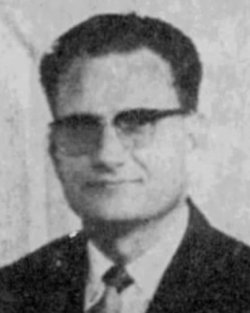
W.E. Best

#85 Predestination, Part 2

Romans 8:28-30
W.E. Best July, 1 1973 Audio
0 Comments
Remastered Oct/Nov 2024

Sermon Transcript

Auto-generated transcript • May contain errors

100%
This will complete our series
on some very deep doctrinal subjects. I suppose that I'm aware of the
depth of these subjects as much as anyone in this auditorium
this evening. We have been studying subjects
for the last several weeks that necessitate a lot of thought. The subject of predestination,
for instance, is one that has to be given a lot of thought to, in order to rather divide
the word of truth. If a person is not careful, he
will humanize the Lord in the discussion of such a subject,
and he will exalt man beyond the place to which he is to be
exalted. We begin this subject predestination
proper last Sunday evening, but only discuss the first of three
major points that we want to share with you. The last two
points tonight are very important. I'm hoping that you will take
some notes because some of the things that we will give tonight
will enable you to make proper distinctions in areas of this
subject that must be understood, distinctions must be made in
order to handle the scriptures properly. I have not arrived
at all the truth of this subject, and I never will. That's just
like the first subject that we discussed with
you, or the first message on this subject that we discussed
with you, there are a lot of deep things related to the subject
of predestination. And even though we have taken
Ephesians 1 and Romans 8, the only two passages where we find
the word predestination, yet the subject of predestination
is taught throughout the scriptures. Let us read now verses 28 through
30. And we know that all things work
together for good to them that love God, to them who are the
called according to his purpose. For whom he did foreknow, he
also did predestinate to be conformed to the image of his Son, that
he might be the firstborn among many brethren. Moreover, whom
he did predestinate, them he also called, and whom he called,
them he also justified, and whom he justified, them he also glorified. I would like to review a few
things that we discussed with some additional statements tonight,
by way of introduction into the last two major points of our
subject. You will notice, first of all,
that things still future, according to the passage which we have
just read, owing to their certainty, are spoken of as present. One
of the points we will be discussing tonight is the difference between
certainty and necessity. So things still future, owing
to their certainty, are spoken of as present. We've already
stated that the word for know could be translated for love, It does not refer to God's knowledge
of all things, generally speaking, but to his preordination of things. Those whom he foreknew, or foreloved,
or foreordained, however one might want to use the term. Whom
he foreknew means more than just intellectual knowledge. It means that God knows things
in a special way, and he knows some things in a very special
way. In talking about his own, as
the context proves, he knows his own in a redemptive sense. It is a redemptive relationship. Salvation, therefore, has its
origin in God and not in man. Some believe that men are saved
by their own will, without any help whatsoever from the Lord. There are others who believe
that man is saved by his will plus aid that comes from the
Lord. The scriptural view is that we
are saved solely and wholly by the will of the sovereign God. Distinction must be made between
intellectual knowledge and fore-decision. I would like to use a related
text of Scripture to illustrate that point. Turn with me to 1
Peter chapter 1 and verse 20. Peter said, who verily was foreordained,
talking about the Lord Jesus, after having mentioned the fact
that we are redeemed, not with corruptible things such as silver
and gold, but by the precious blood of Jesus Christ, as of
a lamb without blemish and without spot, now verse 20. who barely
was foreordained before the foundation of the world, but was manifest
in these last times for you. According to verse 20, there
was a Savior for God's people, and we have also a people for
the Father's Son. All of this having taken place
according to the text before the foundation of the world.
Thus you can see the necessity of making the distinction between
intellectual knowledge and fore-decision. This was no mere foreknowledge
of what certain men would do that we find in the first part
of verse 29, but a foredecision of what God would do for certain
people. That's simple enough, I think.
After having looked at the word foreknow, as you have it in your
King James Version, we come next to the word predestinate, or
preordain. could be used instead of predestinate. Those whom God foreknew in a
redemptive relationship are predestinated to be made or conformed in the
image of Jesus Christ. This word predestinate means
that God, in eternity past, determined to save those whom he knew are
elected to be saved. Predestination is the assurance
that the elect will be saved. Nothing can thwart God's purpose. I don't know why that there are
so many today who object to biblical doctrines, other than the fact
that they're not called of God to preach. A man was telling
me at the close of the service this morning that just before
he left, the denomination in which he had been affiliated
for a great number of years, he asked his pastor one day why
he did not preach doctrine. The pastor's reply was, oh no,
I'm not about to preach doctrine. Doctrine divides. Now any man who says that he
is a minister and would give an answer like that is not one
called of God. I made the statement to this
man that this person was not a God-called preacher. He had
just chosen the ministry for a profession. He said, you're
right, because he has several brothers that are preachers,
and his father was a preacher before him. So I guess they wanted
to keep it in the family. After he told me that, I was
reminded of an article I read in the paper this past week.
Some of you might have read it. It is the questions that are
sent in to a certain well-known evangelist, without calling his
name or giving him any publicity, and the answers are given. Did
you read the one this past week when some young girl wrote in
and wanted an explanation of the biblical view of the creation
of man? Did you read the answer? I was
appalled by the answer. You would think that a question
about evolution, and this girl was in high school and she made
the statement that one of the young men in the class ridiculed
her because she believed in the Bible statement concerning the
creation of man. And this young man had read some
works and he said that science has proved the biblical view
of being incorrect concerning the creation of man, and she
wanted an answer. You would have thought that this
man would have given a clear-cut answer, but did he do it? He
did not. If you read his answer, he got going around the mulberry
tree, and he never did give a clear-cut answer to a very simple, straightforward
question. Well, you know why? He was afraid
he might, I suppose, offend some men or some people. But beloved, these are biblical
subjects and they deserve to be explained or interpreted by
men who are called of God to preach. So when you read the 29th verse,
for whom he did foreknow, he also did predestinate to be conformed
to the image of his son. Predestination is not merely
a guarantee of the elect not perishing, but it is to be made
like Christ in a spiritual transformation. The gathered saints, according
to the context of our passage, are an organism, a living organism,
a family of God before the Holy Father. And their vital center,
according to the context, is the beloved Son, the Lord Jesus
Christ, who sees in their Sonship the fruit of the travail of his
soul in answer to Isaiah 53 and verse 11. Now predestination does guarantee
some things, but it goes beyond that. You see, we are going to
be conformed to the image of God's Son. So conformity to Christ
means the elect shall be like the Son of God, not only in character,
but also in destiny. Then the word call. The third
word that is very important in this passage is more than a general
gospel invitation to be saved. This call does not come to all
who hear the gospel proclaimed. It comes only to those whom God
foreknew and predestinated. Furthermore, it does come to
everyone of them without the loss of one whom he foreknew,
redemptively speaking. Then the word justified is used
in the sense of regarding and treating as just for the sake
of the righteousness of Jesus Christ. Finally, the word glorified. This is the consummation of the
change in the elect of God. To God the pilgrim is already
in the immortal country. Notice what I said, to God, as
far as he is concerned. He to whom time is not as it
is to you and me, sees his purpose brought to completion. What remains
of the chapter in verses 31 through 39 is the application, the expansion,
of these great truths that are contained in verses 28 through
30. That brings us to the second
point of our subject entitled, Predestination Prophets. Last
Sunday evening in the main, in the first point, the main part
of our three-point series, we discussed the difference between
angels and men, showing that God does not deal in the same
manner with men as he did with the angels, and he doesn't deal
with angels in the same manner that he deals with mankind. That
brings us now to the second point. There is a difference between
necessity and certainty. Necessity and certainty. This,
I think, is one of the main parts of the subject that we are discussing
in order to clear up some misunderstanding that exists today concerning
the subject of predestination. For The average view of predestination
is that if God has predetermined everything, then that eliminates
or that excuses mankind in general, because after all, man cannot
alter in any way God's predetermined plan. Now, there's a misunderstanding
of the subject simply because proper distinctions are not made
in reference to the subject of predestination. So we must, tonight,
study the distinction between certainty and necessity. There are two parts to this point.
First of all, certainty may or may not denote necessity. certainty may or may not denote
necessity. Now this will be rather confusing
to you unless you follow very carefully. In fact, I think this is one
of the deepest parts of the subject that we have discussed thus far
with you. Man's acts are not a series for
the divine mind. They're all present at once,
and therefore certain. I said certain. In other words,
God does not know something that may not take place. Now, that's easy for us to understand. I said God does not know something
that may not take place. Certainty has a relation not
only to divine omniscience, God's understanding of all things,
but also to his omnipotence, his ability to bring to pass
all things. God not only knows all things,
but he decrees all things. Now here is where a great mistake
is made, and if you and I are not careful, we can make a mistake
at this point. Now let's discuss this for a
few moments. I think we can simplify it to some extent. God makes things certain by an
exercise of his power. but not by the same power in
every case. Now I want that to soak in a
little bit because that is a very important statement. I rejoiced
in the study of this subject when I came across some of these
things and making the distinction between certainty and necessity. You will see before we will have
finished where we're going. and why we are making the study
we are of this particular point. Let us illustrate that. God makes
some events certain by physical power, by physical power, by
physical force, in other words. And he makes other things certain
by a spiritual power. Now we must make a distinction
between force, physical force, and spiritual power. One works
from without, the other works from within. You can already
see the importance of this distinction. You see, the Holy Spirit does
not come and just force an individual to accept Jesus Christ. In the
spiritual relationship between God and man, The Holy Spirit
works in man, and having worked a work in man, the work begins
within and extends outside of man. So we must make the distinction
between physical force without, and a spiritual power working
from within. That's why I said that God not
only knows all things, but he decrees all things. He makes
them certain by an exercise of his power, but not the same kind
of power in every case. There is physical power and there
is spiritual power. And God makes some events certain
by physical power, and we'll illustrate this in a moment,
and other things certain by what is known as either moral or spiritual
power. Within the physical sphere, things
are made certain by necessitating. Now we're going to see the difference
between necessity and certainty. I said within the physical realm,
things are made certain by necessity. But in the spiritual realm, things
are made certain without this necessity, or without necessitating. In the sphere of matter, God
decrees necessitated facts. Within the sphere of the mind
of man, God decrees self-determined acts. That's a very important
distinction. There's a difference between
physical laws and free agency. We have discussed the difference
between free will and free agency because there is a difference.
Every man is a free agent, but not every man has a free will.
Man does not have a free will because of his depraved condition. but he is a free agent. He's
a free agent because he is not forced from without, but he does
not possess a free will because he is constrained from his depraved
will within. So there's a difference between
physical laws and free agency. distinction must be made, therefore,
between physical and spiritual necessity. Notice I said between
physical and spiritual necessity. Take self-determination, for
instance. This is a subject that we have
discussed at great length, and we will have the notes for you
shortly on the subject of free will and free grace versus free
will. Self-determination of the human
will is the action of a free second cause, a free second cause. Notice how I stated that. Let
me give it again. Self-determination of the human
will is the action of a free second cause. It is therefore
decreed self-determination. Now, to predestination. Predestination
asserts that an act of the human will is free for both the divine
will and the human mind, but certain for the former and uncertain
for the latter. We're making the distinction
now between the infinite and the finite. the infinite mind
of God and the finite mind of man. It is certain in the infinite
mind of God, but not certain, and I will explain that by way
of illustration in a moment, in the infinite mind of God it
is certain, in the finite mind of man it is uncertain. God knows
the whole series of man's so-called free acts. in one intuition,
but man does not know things in that manner, because of his
finite mind. God knows, I said, all things
in one intuition. There is an alleged contradiction
between predestination and the free agency of man. You notice
I said an alleged contradiction. The alleged contradiction arises
from assuming that there is only one way in which the divine omnipotence
can make an event certain, and that is by external physical
force, but that isn't true. Thus they are assuming something
that should never be assumed. Now let's illustrate that. There
is a difference in being informed that one is to commit a crime,
and being informed that he is necessitated to commit said crime. Now, I want to pause for a moment,
and I want to repeat that. This is the best way, and we'll
use a biblical example of it in just a moment. I said there
is a difference in being informed that one is to commit a crime
and being informed that he would be necessitated to commit such
a crime. There would be no doubt about
the guilt in the former, but there would be some doubt about
the guilt in the latter. In other words, if a person has
been informed that it is a necessity that he commit such a crime,
he would say, I am not guilty because I was forced to commit
such crime. Do you see the difference? There
is a big difference. So there is a difference in being
informed that one is going to commit a crime and being told
that it is a necessity that he commit such a crime. Well where
do we go to the scriptures to find an answer to this? The Lord
Jesus saw no conflict whatsoever between his assertion, notice,
that Judas Iscariot was to be the one that would betray him,
and in the fact that he was actually betrayed by Judas Iscariot. It was predicted in the Old Testament
that the Lord Jesus Christ would be sold for thirty pieces of
silver. It was predicted that he would
be sold for thirty pieces of silver.
So the crime was predicted Now Judas was not informed that it
was a necessity that he do such an evil act. Apply that to the
death of the Lord Jesus Christ. It was predicted that Jesus Christ
would be crucified by the hands of evil men. But there was no
contradiction in the mind of our blessed Lord between that
and the actual crucifixion of the Son of God by the hands of
wicked men. So Christ saw no conflict between
his assertion that he was to be crucified in accordance with
the divine decree and his assertion that Judas Iscariot was a free
and guilty agent in fulfilling the decree. There is no contradiction,
thus, we find between predestination and free agency, providing the
difference between the infinite and the finite mind be kept before
us in the discussion of the subject. to predestinate voluntary action
is to make it certain. If it is meant, as it is sometimes
asserted, to force voluntary action, it would be a self-contradiction. To make certain is not the same
as compel. to make certain is not the same
as to compel, because there are different ways of making certain. For instance, an event in the
material world is made certain by physical force, by physical
force. everything is kept in its place
by the word of God's power, Colossians 1 and verse 16. So the physical
force of the power of God is used to keep material things
or physical things in their proper places. Now when it comes to
the spiritual realm, we find something different. In the material
realm, things are made certain by physical force. That's compulsory. However, an event in the moral
world, an event in the spiritual world, is made certain by spiritual
operation. This is voluntary and free. Thus, we see the difference.
between certainty and necessity. This must be understood. The
distinction must be made or one will attribute to God what should
not be attributed to him. I'm talking now about things
that are evil. Now in the next point, I think
this will help us to understand what we have just been discussing. There is a difference between
efficacious and permissive decrees. We have spent a great deal of
time discussing the decrees of God. Now, the difference between
an efficacious decree and a permissive decree. There are two main parts
to this study tonight, and then with some closing remarks. The
efficacious decree determines the event. The permissive decree relates
only to moral evil. Let me give that again. The efficacious decree determines
the event. The permissive decree relates
only to moral evil. Now let's go into the study of
this point. God's efficacious decree is executed
by his own efficiency. This may be by physical as well,
of course, as material causes. This includes such events as
the motions of the heavenly bodies and the phenomena of the material
world, generally speaking. Job makes a significant statement
in the 28th chapter of Job, verse 26, concerning the decree in
reference to physical things, or the heavenly bodies. Job said
he made a decree for the rain. God even made a decree for the
rain. Then he goes on to say, and a
way for the lightning of the thunder. You see, we must study all the
scriptures. Decree is used not only in reference
to spiritual things, but to physical things as well. He made a decree
for the rain. That means that when it comes
a storm, God decreed it. It's just that simple. God decreed it. It would not
happen had not God decreed it to take place. Job, therefore,
was right when he said that God made a decree for the rain. Not
only did he make a decree for the rain, but he made a decree
for the storm. He made a decree for the cyclone.
He made a decree for the tornado and on and on we could go. We find then in Colossians 1,
16 and 17 that God has made all things by the word of his power
and all things are held together by the same word that call things
into existence. So God's efficacious decree is
executed by his own efficiency. God's efficacious decree is executed
by an immediate agency upon the finite heart and will of man. Now we're looking at the difference
between that which is physical and that which is spiritual.
The new man, we're told in Ephesians 4 and verse 24, is created in
righteousness. God, therefore, works within. Within. Not by physical force. You know, there are some people
who believe when they hear us say and talk about the irresistible
grace of God. that the Holy Spirit just gets
a person by the hair of his head and the Holy Spirit just drags
that person into the kingdom of God while he's kicking and
screaming and he doesn't want to go. That isn't the way to
present the subject at all. Whenever a person presents the
subject in that manner, it is an evident fact that he does
not understand the difference, the difference that we have been
talking about. between certainty and necessity. When the Lord works in a spiritual
way, he works within the individual. Therefore, Paul said in writing
to the Ephesians, the new man is created in righteousness,
and we know that faith is the gift of God. So the work begins
within, within. A young man came to our Bible
class a few weeks ago. He had been in one of our services
several weeks before, in one of the Sunday morning services.
He came and he sat through the lesson that Wednesday night,
and after the lesson he came to me and asked me a few questions.
He wanted to know what was the basic difference between what
we believe and what the Methodists believe. I said, there is a big
difference. And so I just related to him a few brief statements
concerning some of the main points in reference to soteriology,
the science of salvation. We believe that God begins on
the inside by working a work of regeneration, giving a new
heart, a new disposition, and the person then changes, but
the change comes from within and it extends outside instead
of beginning outside and hoping to reach the inside. I said,
do you understand the difference? Yes, I do. He said, now I'll
have to admit this. I'll just have to admit that
I hear more Bible here than I do at the Methodist Church. He said,
they just don't preach much Bible. They don't teach much Bible.
And he saw the tapes over on the table in the room. He went
over and looked through those tapes. He said, what does one
have to do to get some of these tapes? I said, just ask for them. And I said, if you don't buy
it, I said, if you don't buy it, OK, if you don't buy it,
we'd like you to return the blank tape when you get through listening
to it. But all we ask for is to take and listen to the information.
Well, he picked up one on predestination, and Brother Dick put it right
off. And he took that one with him. I haven't seen him since.
Haven't seen him since. So evidently, that was too much
for us. He thought he was interested,
you see. Until evidently, he listened to the one on predestination.
And that was just too much for him, so he hasn't been back.
And he assured me when he left, I'll probably see you next Sunday
morning. So something happened. He listened to that page, and
he didn't show up the following Sunday morning, and several Sunday
mornings have passed since, and I haven't seen that young man
in one of our services. Now, should one not preach and
teach and discuss these things that are Bible subjects? Beloved,
with all of my heart, I believe that a person in whom the grace
of God has wrought a work, he doesn't raise any questions as
to any biblical subject. If he doesn't understand it as
well as he would like to, he says, I want to study it. It's
there for me. There's a purpose in God placing
it there. It is given for my spiritual
instruction. Now some of you may wonder, why
have we spent so much time with all these deep subjects? We can't
really discuss a lot of these things with people in general,
that's true. But if we discuss these things
primarily, and do not forget that we are now, as it were,
in the university of the study of God's Word. We're not in the
elementary school of some of the other points of biblical
truth. Now, even though it is true that
we cannot discuss some of these things in general, haven't you
been helped? And after all, the main purpose
for every Christian in his Bible study is not to gather information
to inform someone else, but to get information for his own spiritual
edification, in order that he might have a greater appreciation
for what the Lord has done for him, is doing through him, and
will ultimately do for him. in the eternal state. So we are
predestined to be conformed to the image of God's Son. I would say that is a tremendous
subject for the person who is passed from death into everlasting
or eternal life. Now God's efficacious decree,
I said, is executed by an immediate agency upon the finite heart
and will of man, the Lord working from within. God works in his
own to will and to do of his good pleasure, Philippians 2,
12 and verse 13. I like something that I came
across recently in the study of this subject, and I want to
share a few statements with you by this particular person. One
man said, some acts God determined causally, others permissively. We're discussing the difference
now between God's efficacious and permissive decrees. God acts
causally in some areas and permissively in other areas. His decrees may
be executed by his own efficiency, or they may be executed by the
causal efficiency of his creatures. That is a tremendous statement.
proper distinctions are being made. Then he goes on to say,
we must not assume that decreed ends can be secured only by compulsion. Eternal purposes do not necessitate
efficient causation on the part of the purposer. Free agency
may be the very means of fulfilling the divine purpose." Those are great statements, and
that brings us to this point. The permissive decree relates
only to moral evil. This decree renders the event
infallibly certain. I said it renders the decree
infallibly certain, but not causally, by God working immediately upon
man and in the finite will. That would make God the author
of man's evil actions. and that is not taught in the
Scriptures. God does not work either in angels
or in men, quote, to will and to do, end of quote, that which
is evil. We do know that God suffers nations
and men to walk in their own ways, that by the permissive
decree of God. Let us look at some scripture
that will justify that statement. The Apostle Paul, in Acts 14
and verse 16, makes this statement in one of his messages, who in
times past suffered all nations to walk in their own ways. As the Lord, in his permissive
will, has suffered nations to walk in their own ways, let us
not forget that God, even today, is suffering nations to walk
in their own ways. You know that socialistic Russia
is not walking in the way of the Lord. God is suffering Russia
to walk in her own way. Even though we say that America,
and there's no such a thing as a Christian nation, But some say, since we do have
maybe more Christians, maybe, in America than in some countries,
that the Lord is really with us in everything that is being
done in this country, but that is not so. You know that isn't
so. God, in his permissive will,
is suffering, politician, he is suffering things to be done
in America today. by his permissive decree. That's why we say that the permissive
decree of God is related only to moral evil. And we'll emphasize
that more. Paul was right when he said in
America that in some countries that the Lord is really with
us in everything that is being done in this country, but that
is not so. You know that isn't so. God in
his permissive will is suffering politicians, he is suffering
things to be done in America today by his permissive decree. That's why we say that the permissive
decree of God is related only to moral evil. And we'll emphasize
that more. Paul was right when he said that
who in times past suffered all nations to walk in their own
ways. What can be said of a nation
can be said of an individual. Listen to another statement by
Paul in Acts 17, verse 30, as he came to the close of his Mars
Hill address. He talks about the times of this
ignorance that God winked at, or it literally means overlooked. Overlooked in God's permissive
decree. So he said, The times of this
ignorance, God winked at or overlooked, but now commanded all men everywhere
to repent. Let us think about the Israelites
for a moment. In Psalm 106 and verse 15, we're
told that God gave Israel their own request. Now he gave his
own redeemed people their request. You remember what the request
was? The request was that they had become tired of the manna,
that light bread by which they had been fed from heaven. They wanted some meat. They were
hungering for the leaf, the onions, and the garlic of Egypt. They
wanted me, and God granted them their request until it ran out
of their nostrils. Now sometimes in God's permissive
decree, he suffers you as a Christian. He suffers me as a Christian
to do some things in his permissive decree. that aren't for our spiritual
good. Now, the ultimate end may be
for our good, but in the doing of that particular thing, it
is not good. So the permissive decree is a
decree. It does not hinder the sinful
self-determination of the finite will. But it does control, follow
me now, the result of the sinful self-determination. In other
words, man can only go so far even in God's permissive decree. So the permissive decree is a
decree. It does not hinder the sinful
self-determination, but it does control the sinful self-determination. Man can only go so far, just
so far. You know, I like a statement
made in Psalm 76, verse 10. Surely the wrath of man shall
praise thee, even the wrath of man shall praise the Lord. The latter part of that text
states, the remainder of wrath shalt thou restrain. The remainder of that wrath shalt
thou restrain. So you can see one, it is correct
to say that God's permissive decree does not hinder the self
the sinful self-determination of the finite will, but it does
control the result of the sinful self-determination. God is not
an unconcerned and helpless spectator. He disposes all the permissive
acts onto wise ends of his own. The permissive decree is denominated
the divine will in the Holy Scriptures. However, the term will, in connection
with this, is employed, as one has said, in the narrow sense
of volition rather than in the wider sense of the inclination. Do you remember what we stated
and the difference between inclination and volition. Now that brings
us to an interesting point. Did you know that there is one
sense in which the end justifies the means? You and I do not like that statement,
ordinarily speaking, and we are right in the dislike of that
statement, in our dislike of it. But I said there is one case,
there is one place, in which the end justifies the means. So hold your seat. Let's look
at it. The permissive decree, considered
in itself, is contrary to the holy inclination of God's nature. However, in this case, the end
justifies the means. In what case? In God's permissive
decree. The death of Jesus Christ by
the hands of wicked men proves that the end justifies the means. You cannot deny that. I said
you cannot deny it, but you can't use this as it is ordinarily
used. You see, most people today think
that the end justifies the use of any means, but that isn't
true at all. I said it is used only in the
sense of God's permissive decree. The death of Jesus Christ by
the hands of wicked men, that's the end. And the end justified
the means in the fulfillment of the permissive decree of God. In saying that evil is in accordance
with the divine will, the term will implies control, implies control. I'll illustrate
that in this manner. When one says of a physician,
for The disease is wholly at his will. It does not mean that
the physician takes pleasure in willing the disease. What
does it mean? Now think about it for a moment.
I'm trying to illustrate something that is very important. I said
when one says of a physician, the disease is wholly at his
will. It does not mean that the physician
takes pleasure in willing the disease, but that he has the
capability within his possession of curing the disease. In purposing to permit sin, going
back now to God's permissive decree, God purposes to overrule
it for good. God overruled in the death of
his Son by the hands of wicked men. He overruled for the good
of those whom he elected in Jesus Christ. No one can doubt that. That's why the psalmist said,
Surely the wrath of men shall praise thee. The wrath of wicked
men who crucified Jesus Christ praised the Lord. The remainder
of wrath shalt thou restrain. Now for a very important point,
in closing, you and I may not permit sin. You and I are never to permit
sin. Another very important distinction
now, the distinction between the infinite and the finite.
God can permit, he does permit sin. It is a permissive decree. With you and me, however, we
can never permit sin. I hadn't thought of it like this
until a recent study of this subject. And by investigating
this subject to a greater depth than I have ever done before,
I came across this subject. And I will share just a few thoughts
in closing. Why is it that you and I cannot
permit sin? It is because we are under the
command of God not to permit I said we're under the command
of God. Now the difference between man who is under the command
of God and God is because God is not under the command of any
superior. Therefore God can and does permit
it, whereas you and I are commanded not to permit it. It is never
to be permitted by you and me. When sin is permitted, we're
sinning. It is just that simple. We're
sinning. We're not permitted. That takes
us back to our message this morning. No compromise. That is to be
the language of the Christian. He's under the command of God.
He's to do what God commanded. And there is no command above
the command of God, but God is not under the command of any
superior. Therefore, he can and does permit it, whereas you and
I cannot. Let's go a little further. God, on the other hand, you and
I cannot permit it, but God, on the other hand, is not under the command of a
superior. In creating man, God was not bound in justice to make
it infallibly certain that man would not self-determine to evil. I want to repeat that. You see, there are some who raise
the question, why did God create man capable of sinning? That's
the question that is always raised. Why did he permit Adam to fall
in the Garden of Eden? Why did he create man capable
of it? In reality, men are questioning God, whereas they should never
question him. Now listen to this. In creating
man, God was not bound in justice, and I'm emphasizing justice.
to make it infallibly certain that man would not self-determine
to evil. Mutable perfection in a creature
was all that justice required of the sovereign God. There's
the answer. I said mutable perfection in
a creature was all that was required by justice. Therefore, you cannot
accuse God of being unjust in creating man capable of self-determining
to evil. All that was required by justice
I'm not talking about human concept of justice. I'm talking about
divine justice. All that was required by divine
justice was mutable perfection in a creature. God fulfilled
that requirement to the very letter of divine justice. Let's sum it up tonight by saying
we must ever make the distinction between God's dealings with angels
and his dealings with mankind. That was the first point in our
study of predestination proper. The second point, there is a
difference between necessity and certainty. Finally, there
is a difference between God's decrees, a difference,
and that difference is very important, difference between his efficacious
and his permissive decrees. And the permissive decrees of
God are related only to the realm of moral evil, only. to that realm. What God can permit,
mankind cannot permit. We're under the command of God,
and God is under no superior command. That brings us right
back where we should always begin, with the absolute sovereignty
of God. He is the one whom we worship
in spirit and in truth. We adore him. He is our all and in all.
W.E. Best
About W.E. Best
Wilbern Elias Best (1919-2007) was a preacher and writer of Gospel material. He wrote 25 books and pamphlets comprised of sermons he preached to his congregation. These books were distributed in English and Spanish around the world from 1970 to 2018 at no cost via the W.E. Best Book Missionary Trust.

Comments

0 / 2000 characters
Comments are moderated before appearing.

Be the first to comment!

Joshua

Joshua

Shall we play a game? Ask me about articles, sermons, or theology from our library. I can also help you navigate the site.