Bootstrap
W.E. Best

#86 Five Questions Raised & Answered on the Doctrine of Election, Part 1

Romans 9:1-28
W.E. Best July, 1 1973 Audio
0 Comments
Remastered Oct/Nov 2024
Bro. Best's books in pdf can be downloaded from Spring Assembly of Christ website @ http://springassemblyofchrist.org/uimages/bg1.gif

Sermon Transcript

Auto-generated transcript • May contain errors

100%
Romans chapter 9. I say the truth
in Christ, I lie not, my conscience also bearing me witness in the
Holy Ghost, that I have great heaviness and continual sorrow
in my heart. For I could wish that myself
were accursed from Christ for my brethren, my kinsmen according
to the flesh. Who are Israelites? To whom pertaineth
the adoption, and the glory, and the covenants, and the giving
of the law, and the service of God, and the promises? whose are the fathers, and of
whom, as concerning the flesh, Christ came, who is over all,
God blessed forever. Amen. Not as though the word
of God hath taken none effect, for they are not all Israel,
which are of Israel. Neither because they are the
seed of Abraham are they all children. but in Isaac shall
thy seed be called. That is, they which are the children
of the flesh, these are not the children of God, but the children
of the promise are counted for the seed. For this is the word
of promise, at this time will I come and Sarah shall have a
son. And not only this, but when Rebecca
also had conceived by one, even by our father Isaac. For the
children being not yet born, neither having done any good
or evil, that the purpose of God according to election might
stand not of works, but of him that calleth. It was said unto
her, the elder shall serve the younger. As it is written, Jacob
have I loved, but Esau have I hated. What shall we say then? I want
you to observe five questions in the next few verses. What
shall we say then? Is there unrighteousness with
God? God forbid. For he saith to Moses,
I will have mercy on whom I will have mercy, and I will have compassion
on whom I will have compassion. So then it is not of him that
willeth, nor of him that runneth, but of God that showeth mercy.
For the scripture saith unto Pharaoh, even for this same purpose
have I raised thee up, that I might show my power in thee. and that
my name might be declared throughout all the earth. Therefore hath
he mercy on whom he will have mercy, and whom he will he hardeneth. Thou wilt say then unto me, Why
doth he yet find fault? for who hath resisted his will? Nay, but, O man, who art thou
that replies against God? Shall the thing form say to him
that formed it, why hast thou made me thus? Hath not the potter
power over the clay, or the same lump to make one vessel under-honored,
and another under-dishonored? What if God, willing to show
his wrath, and to make his power known, endured with much long-suffering
the vessels of wrath fitted to destruction? and that he might
make known the riches of his glory on the vessels of mercy,
which he had afore prepared on the glory, even us, whom he had
called not of the Jews only, but also of the Gentiles. As he sayeth also in Osi, I will
call them my people, which were not my people, and her beloved,
which was not beloved. And it shall come to pass that
in the place where it was said unto them, Ye are not my people,
there shall they be called the children of the living God. Esaias also crieth concerning
Israel, though the number of the children of Israel be as
the sand of the sea, a remnant shall be saved. For he will finish
the work and cut it short in righteousness, because a short
work will the Lord make upon the earth. That completes our
reading of the greater portion of Romans chapter 9. I'm sure that you realize we
cannot give a verse-by-verse exposition of this great portion
of Scripture. I hope in the service this morning
to cover several of the main points of Romans chapter 9. There is no chapter in all the
Word of God over which there has been more controversy among
religionists than over the ninth chapter of the book of Romans.
all who have been saved by the grace of God believe that this
is a portion of God's word and it is to be studied as same as
any other portion of holy scripture. I do not have any patience whatsoever
with any person when he starts reading or studying the scriptures
and comes to a passage of scripture that is somewhat difficult for
him to understand to just slide it, or pass it by, or say it
is not important. Beloved, everything that God
has said is important. If you'll stay with us for the
next several months, you will see that all the great doctrinal
truths found in the New Testament are typically foreshadowed in
the Old Testament, and we're taking, of course, the nation
of Israel and her journeying from the time that she left Canaan,
Egypt, until she entered into the land of Canaan. I would like
to preface our study this morning of five questions that are raised
in Romans chapter 9 by giving to you who are interested in
taking notes a brief outline of this entire ninth chapter. There are, in fact, seven divisions
of the chapter, and they go something like this. First of all, we see
Paul's great sorrow for the people of Israel, verses 1 through 3. Paul's great sorrow for the Israelites,
verses 1 through 3. I'm talking about his own people
according to the flesh. Number two, we see the covenant
relationship of the Jews in verses four and five. There are eight
things given in those two verses. We'll mention them briefly later
on in our study this morning. Number three, we have the election
of the Jews, verses six through 13. Last Sunday morning, we dealt
with God's election of national Israel from the seventh chapter
of the book of Deuteronomy. Then last Lord's Day evening,
we took a passage from Ephesians 1, showing that God not only
chooses nations as he chose the nation of Israel for a special
purpose, but he also chooses or he elects individuals. We
have not only a national election in the ninth chapter of the book
of Romans, but we also have individual election, as you will see in
a few moments. So number three, the election
of the Jews, verses six through 13. Number four, we have election
which is according to the sovereign purpose of God, or we might say
it better than that, according to the purpose of the sovereign
God. There is no chapter that describes
the absolute sovereignty of God in it better than Romans chapter
9. Number five, There are elect
Gentiles as well as elect Jews. We know this is true in verses
25 and 26. Individual election is also emphasized
in some of the verses from 14 through 24. So election is according
to the purpose of the sovereign God, that's number four, verses
14 through 24. Then number five, there are elect
Gentiles as well as elect Jews, verses 25 and 26. You have the
word Gentiles in verse 24. Number six, the nation of Israel
Though in a state of unbelief in Paul's time, and that's why
he had such a desire for the people of Israel, expressed in
verses 1 through 3, has a believing remnant, even though the nation
of Israel as a whole has been set aside for a period of time,
and during this period of time, God is visiting the Gentiles
to take out of them a people for his name. That does not mean,
however, that God does not have a few people, a remnant as it
is called, from among the Israelites themselves. Finally, number seven,
the person of Jesus Christ was the stumbling block over which
national Israel stumbled, verses 31 through 33. It is necessary
that you get these things that I've given to you, these divisions. You can't remember them, therefore
we request that you take notes. It would be well for you, if
you have your wide margin Bible, to make these divisions in the
margin of your Bible. I want to give some additional
things by way of introduction into our study of the five questions
that are raised and answered by Paul in Romans chapter 9. What is sovereignty? What is sovereignty? I like what
Jonathan Edwards, the great American preacher, of some nearly 200
years ago said, and I want to give a quotation by Jonathan
Edwards. He said, and I quote, the sovereignty
of God is his absolute, independent right of disposing of all creatures
according to his own pleasure. The will of God is called his
mere pleasure. First of all, in opposition to
any constraint. Number two, in opposition to
its being under the will of another. And number three, in opposition
to any proper obligation. End of quote. Beloved, that is
one of the greatest definitions of the absolute sovereignty of
God that you will find anywhere in the works of any man who have
given expositions of the Holy Scriptures. This cannot be improved
at all. I think he has stated it in a
way that it cannot be improved upon. Notice what he said, the
will of God is called his mere pleasure. We saw that last Sunday
evening and the Sunday before in the study of Ephesians chapter
1, where there are four references in the first 11 verses of Ephesians
1 about the will of God. I cannot go back and review that.
If you took notes on that message, then, of course, you're in a
position to follow what I'm about to say in a much better way. The will of God is called His
mere pleasure, first of all, in opposition to any constraint. I'd like for us to analyze that
statement for a moment. Without any constraint, beloved,
you may do something And you may do it willingly, as far as you know, but yet there
is something that constrains you to do what you do. It cannot be said of any man,
any mortal man, that he does what he does out of his own mere
pleasure. The person outside of Jesus Christ,
for instance. may do many things that he thinks,
and he really thinks that he's doing these things out of his
own pleasure. But he is under a power superior
to himself. In other words, he is walking
according to the course of this world, according to the prince
of a power of the air. You know what I'm talking about.
Take for instance a Christian. I stand before you this morning
and I am preaching to you willingly, as far as I am concerned, but
yet it cannot be said that I am standing before you and preaching
this morning out of my own mere pleasure. You see, God is working
in me to will and to do of his good pleasure. Therefore, what
I am doing willingly this morning Yet I must not forget that I
am doing what I am under a superior will, the will of the sovereign
God. Does that make sense? Edwards
was right, therefore, when he said that God's will expresses
his absolute sovereignty. He does what he does out of his
mere pleasure, and this in opposition to any constraint. He went on
to say, God's mere pleasure is in opposition of it being under
the will of another. God is not subject to your will. Now, beloved, I want to blow
up I want to puncture that balloon that you may have blown up in
the energy of the flesh by saying that God responds to you. Beloved, you respond to God. I'll tell you what I heard last
night. I don't watch TV too often, but I turn across some of these
religious programs in order to know what's going on today. Last
night before we retired, I turned across the dial, channel 26 and
the 700 club was on, and I've never seen anything but religious
rot on the program. If you haven't learned by now,
you know that I speak very frankly, and I'm not ashamed to expose
error. They had a man on who was giving
his testimony. After he gave his testimony,
The man who is in charge of the program asked this person to
lead in prayer as they were praying for many requests that had come
in to their station. Psalm warning healing, that's
usually the thing that most people are concerned about, physical,
not spiritual healing. And so, as this man began to
pray, he wasn't praying, he thought he was, but believe me, he was
not praying. In his so-called prayer, what
did he say? He said, Lord, thou hast said,
as though the Lord didn't know. You know, you don't have to inform
the Lord. So he started out by imploring the Lord. Lord, as
thou hast said, whatsoever is bound on earth shall be bound
in heaven, and whatsoever shall be loosed on earth shall be loosed
in heaven. So then he started binding things.
He said, now, Lord, we bind things on earth because they're bound
in heaven. And we're bound. We're not through yet. And then
he said, we are to loose things. He said, now, we are going to
loose the Holy Spirit to heal some folks. Beloved, will you
listen to that a moment? We loose the Holy Spirit. Who
is man to loose the Holy Spirit? Beloved, is the sovereign spirit, is he under the direction of
the will of puny man? Beloved, that is nothing but
pure, unadulterated blasphemy, and I say that without any apology.
without any apology. We loose the Holy Spirit. And
yet, beloved, that's exactly what all of these free willers
believe today. They believe that the sovereign
will of God is subject to the will of puny man. And I read a passage of scripture
just a few moments ago from this chapter that refutes that once
and for all. It is not of him that willeth,
nor of him that runneth, but of God that showeth mercy. God
shows mercy upon whom he pleases and whom he will he harden. You say, I don't like that doctrine.
Then you don't like God. And the God that you claim to
love is not the God of the Bible. It's just that plain and simple.
It is just that plain and simple. So Mr. Edwards rightfully said,
God's good pleasure, his will, And he does what he does according
to the will of his good pleasure. This is in opposition to any
constraint. It is in opposition to the will
of any other. And finally he said, it is in
opposition to any proper obligation. God, beloved, is not obligated
to you. God is not obligated to me. One
of the first things I said to this person to whom I was witnessing
the other day, our persons, I said, let's get some things straight
at the very outset. There are five great biblical
First of all, theology, the science of God, and this is the order. Number two, anthropology, the
science of man. Three, soteriology, the science
of salvation. Four, ecclesiology, the science
of the church. And five, eschatology, the science
of coming events. I said, that is the art. Before
any person is going to be concerned about himself, he must have some
concept of the greatness, the majesty of God. That's the art. What do you think
about God? Beloved, we are at the disposal
of the sovereign God. He has a right to do what he
pleases. with his own. And this is what
the scripture says. Someone says, oh, that would
drive a person to destruction. Beloved, that's the very place
to which a person must be driven before he will ever have any
desire for salvation. What does God's sovereignty in
salvation imply? This is another important question
that I'm using by way of introduction to our study of Romans 9. What
does God's sovereignty in salvation imply? Listen to Jonathan Edwards
once again. God can either bestow or refuse
to bestow salvation on any of the children of men, without
any prejudice to any of his attributes, except where he elected to bestow
or chose to pass by. He amplifies that by saying,
God may save those he elected to save without any prejudice
to the honor of his holiness, majesty, or justice. turn that
around, he said, God may refuse salvation to those he passed
by without any prejudice to righteousness, goodness, or mercy. Then he completed
his opening remarks on the absolute sovereignty of God by saying,
since condemnation is a manifestation of justice, And you remember
what we said about the two phases of reprobation. One is preterition
passing by and the other is condemnation because of sin. Since condemnation
is a manifestation of justice, Mr. Edwards said, then mercy
may choose its own objects. Beloved, is this not the theme
of Romans chapter 9? Now let's get the setting. The
Apostle Paul had completed one of the greatest discourses on
some of the great attributes of God in Romans chapter 8, a
chapter that is familiar to all Christians who have been Christians
for any length of time. He mentions the five great links,
golden links in the chain. reaching from God's coordination
to his glorification, in verses 28 through 30. He also raised some questions.
Who shall lay anything to the charge of God's elect? Who shall
separate us from the love of Christ Jesus? And then he begins, chapter 9. There are different views about
chapter 9. Some think that it is a parenthetical
expression. But, beloved, I believe it comes
in, in the divine order, in a most unusual way. Now, Paul says in
the first three verses, let's get the picture, I say the truth
in in Christ denotes union. He was not speaking as a Pharisee
of the Pharisees. He would only say, I lie not. My conscience also bearing me
witness. Some of you remember the series
of messages we brought about a year ago on the human conscience. You cannot always trust your
conscience. Conscience must be directed by
the infallible Word of God. Conscience can lead a person
to do some awful things. Conscience only reflects what
a person knows mentally. Paul did many things as a Pharisee
of the Pharisees in good conscience, but when he was saved by God's
grace, he realized that his conscience had not been enlightened. And there being in Christ, his
conscience was enlightened. Therefore, he could say, my conscience
bearing me witness in the Holy Ghost, that I have great heaviness
and continual sorrow in my heart. His great heaviness, his continual
sorrow, we might say that these things came from a person who
had great concern for his own people, the Israelites, his own
brethren according to the flesh, not according to the Spirit.
He's talking about those who were related to him in the flesh. Verse three has been a most controversial
verse. I'm not going to leave the impression
with you that I have arrived at the truth of this text. If I had time this morning I
could give to you about twenty or twenty-five great expositors
and the differences of opinions held by most of these men on
verse 3. Yet I think we can arrive at
the truth of this text basically. Paul said, for I could wish that
myself were accursed or separated from Christ for my brethren,
my kinsmen, according to the flesh." Paul's attachment to
the Israelites was more than a natural tie. I want to emphasize
that. I said his attachment to the
Israelites was more than a natural tie. What else did he have in mind?
when he spoke of this attachment. He considered the important role
that the nation of Israel had played, and was playing, in the
blessings which he was already experiencing, and blessings which
you and I are to experience. God chose Israel for a peculiar
people. He passed by the other nations
and chose this one nation, and through this one nation, not
only has the Word of God come to us, I'm talking about the
written revelation of the mind of God, according to Romans 3,
verses 2 and 3. But the Savior also, from the
standpoint of his human nature, has also come to you and me through
Israel. Jesus Christ, of the seed of
David according to the flesh, declared the Son of God with
power by the spirit of Ptolemies, and by his resurrection out from
among the dead. Romans 1 and verse 3. So, the Israelites have been
instrumental in bringing blessings to you and to me. So, his attachment
was more than just a natural tie. He was thinking about the
spiritual blessings that had come to him and that were made
available not only for the spiritual seed of Israel, but also for
those whom the Father had chosen in Christ from among the Gentiles. There was something that broke
his heart, and that was how that the Jews subjected to the oracles
of God. knowing the Old Testament Scriptures
as they did. And yet when Jesus Christ came,
they turned their backs upon him. Yet when Jesus Christ came,
they turned their backs upon him. He became to them, according
to the last verses of the ninth chapter, a stumbling block to
national Israel. This is what bothered him. This
is what gave him great sorrow of heart. Now, what is the meaning
of the statement, I could wish that myself were accursed from
Christ for my brethren, my kinsmen, according to the flesh? The apostle
had been counting up the wealth of salvation and claiming it
all for himself and for the Roman Christians to whom he was writing.
Was this selfish? I ask the question, was this
selfish? Beloved, it is possible for you
and me to hold a creed and be selfish. Think about that for a moment.
I said it is possible for you and me to hold to a creed and
be selfish. But it is impossible for the
word of God to hold us and for us to remain selfish. The word of God grips the people
of God. That is exactly what Jeremiah
meant when he said, after becoming so discouraged on one occasion,
and he said, I'll not preach anymore. And about the time the
words came forth from his mouth, Something happened to him, and
he made the statement that he must preach. The word of God
was burning within him, and using the language of the apostle Paul,
woe is me if I preach not the gospel. Beloved, when the word
of truth holds you, it cannot hold you and you remain selfish
about what you have in your possession. Let's emphasize that because
that's a very important point. But now for the meaning of the
statement, I could wish that myself were separated from Christ. I want to give you a few quotations
by great scholars from different works on systematic theology. Charles Hodge, for instance.
says concerning the statement in verse 3, I quote, the statement
is hypothetical and conditional. I could wish were it proper,
possible, allowable, end of quote. Albert Barnes, the great Presbyterian
preacher who has A good commentary on a great portion of the Bible
makes this statement, I quote, the proper grammatical construction
of the word used here is not I did wish, that is the interpretation
placed upon it by some, I did wish, but I could wish. That is, if the thing were possible, Vincent, in his Greek word study,
says, and I quote, Paul would wish to save his countrymen,
even at such sacrifice, if it were morally possible. Now, the next statement I'm going
to give by Vincent, I think is unusually good. When I take this
statement along with some other statements, some by John Gill,
some by Robert Haldane, and others, I think we can see the basic
principle of this text of Scripture in the light, of course, of its
context. Now look, Vincent goes on to
say, the imperfect here has a tentative force. implying the wish begun,
but stopped at the very outset by some antecedent consideration
which rendered it impossible. Well, now there is some merit
in that. One conclusion we do have to come to, and that is,
it is hypothetical. Beloved, do you believe for a
moment that the Apostle Paul, after having been saved by the
grace of God, wanted to be separated from Christ eternally for the
sake of his brethren, his kinsmen according to the flesh? Would
that separation stand up in the light of his own statement in
the eighth chapter, and taking this in the light of its context
when he said, who shall separate us from the love of God which
is in Christ Jesus our Lord? Doesn't the Bible teach us, as
Robert Haldane states, that we are to love others as we love
ourselves, but it does not say that we are to love others above
ourselves. Isn't that a true statement?
Sure, we are to love others as we love ourselves, but there's
no authority coming from the Scriptures that we are to love
others above ourselves. Do you think that the Apostle
Paul wanted to go to hell if it were possible in order to
save his own brethren, the Jews, according to the flesh? Now,
beloved, I love you, but I'll tell you something. I'm going
to be honest about it. I don't want to go to hell. It
doesn't make any difference how much I love somebody. I don't
want to go to hell for others being saved. Now, John Gill and some others
say that the Greek preposition from, that is translated from
in your King James, does not come from the Greek preposition
apa, but it comes from another, which means by. And so there's
a lot of discussion as to the translation. But the question
is, can we arrive at the basic fundamental truth that is brought
out here? Yes, beloved, we can. But I want to share some of these
things with you. For instance, John Gill makes a statement.
He was quoting some man. He said, not from Christ, but
by Christ. He went on to say that the word
death, coming from the Greek word, which means, of course,
separation, and that can be explained in different ways as we have
done in the past. But in this case, death to the
people of the Old Testament, was used in a way that denoted
something being devoted to God. He was thinking primarily of
the sacrifice. The death of the sacrifice simply
meant that the sacrifice was devoted to God. Then he goes
on to say that the apostle Paul was willing to die, as it were,
to die physically. if such a death would mean the
salvation of some of his own brethren according to the flesh.
That was his thought. And so he says that it really
emphasizes not separation from Christ eternally, but to be separated
by Christ talking about physical death for the sake of his own
brethren. Well, I know this. Beloved, if
the death of Jesus Christ didn't do anything for them, do you
think that the death of the apostle Paul could do any more for them?
Do you think his being anathematized forever could do anything for
them? So let's think about it from
this point of view. Hypothetically, yes. if it were
possible. So I kind of like what Vincent
says. The imperfect here, and we have to take the Greek as
we have it, he says the imperfect here has a tentative course,
employing the wish begun, but stopped at the outset by some
antecedent consideration which rendered it impossible. rendered
it impossible. Now, Paul did have a desire.
He was thinking about what Christ had done for the elect, and there,
giving some consideration to what Christ had done for the
elect, and this is my interpretation of the life of the context, Paul
said, let's live for him and for the elect. If Christ died,
and since he died for the elect, then he behooves those who are
saved to live for the elect. How did it one verse of scripture
that will happen? Did not the Apostle Paul make the statement
in 2 Timothy chapter 2 verse 10? He said he was willing to endure
all things for the elect's sake that they might obtain salvation
which is in Jesus Christ unto eternal glory. There is one thing
for sure in the light of the first three verses of this portion
of Believers will reveal the depth of their experience. Beloved, you're going to reveal
in your life the depth of your experience. That's what I want
to emphasize at this time. I'm making it practical now.
Are you willing to endure all things for the elect's sake? as Paul said, that they might
obtain salvation in Jesus Christ unto eternal glory. Every individual who has been
saved by the grace of God is for sure going to reveal, going
to manifest the depth of his experience, the depth of his
growth in grace and knowledge of the Lord. Are we willing to suffer? to
the cause of Christ? Are we willing to go outside
the camp and bear his reproach? Paul was willing. He had been
made willing by the will of the sovereign God. Now coming to verses four and
five. We're told in these two verses
who the Israelites are. That is, who the Israelites,
according to the flesh, are. And eight things are mentioned.
These are important. Look at what he says. First of
all, he mentions adoption. Who are Israelites? To whom pertaineth
the adoption? Adoption secured relationship. Will you please put down beside
that statement in the margin of your Bible, Exodus 4, 22 and
23? Adoption denotes relationship. The Israelites were adopted.
It denoted relationship. The Israelites were related to
the Lord. We saw last Sunday how that God
chose Israel. Why did he choose Israel? He
chose Israel because he chose to choose it. You see, it's all
wrapped up in the good pleasure of his will, in the good pleasure
of his will. So, adoption. Now, there is a
difference between Old Testament adoption and New Testament adoption. I don't know if you realize this
or not. Let me give it to you in just a few words. I stated
that it denotes relationship. But I said there is a difference
between Old Testament and New Testament adoption. Old Testament
adoption was preparatory, preparatory for a greater blessing
for the Israelites. When you study the fourth chapter
of Galatians, as Paul wrote to the Gentiles, Adoption there,
as adoption in Romans 8 15, as adoption in Ephesians 1 5, adoption
in the New Testament, is more than preparatory. It is what? Not preparatory, but it is the
consummation of the blessings of God. Now secondly, he mentions
the global. We have seen first of all the
adoption, now the glory. The glory refers to God's presence. You remember how God's presence
was made known to the Israelites by coming to the mount upon which
he appeared to Moses. The cloud, the Shekinah glory,
the glory that filled the tabernacle. Throughout the Old Testament
scriptures there are many references to the glory of God. That is
a favorite expression of Ezekiel throughout his prophecy, the
glory of God, when they saw the glory of God. So the glory refers
to God's presence. Then we have number three, the
covenant. You notice the word is plural. He is not talking
about the eternal covenant, Hebrews 13, 20 and 21, that God made
eternally with the Son, but he's talking about the covenants that,
for instance, God made with Abraham, that God made with Moses, that
God made with David. He's talking about the Abrahamic
covenant, the covenant that God made with Moses, the Mosaic covenant. the Davidic covenant, so the
covenants. And number four, he speaks of
the giving of the law. This refers to the proclamation
that God gave to Moses on Mount Sinai. The law is divided into
three parts. A lot of people think that the
law refers only to the Ten Commandments. That's only one-third of the
law. one-third of the law. We have,
first of all, the ordinances that were given. The ordinances
were to be observed by the Israelites in their worship of God. The
moral law was given to restrain the Israelites. Thou shalt not
kill, thou shalt not commit adultery, thou shalt not steal, and on
and on. And then we have the judicial
part of the law. So the law is divided into three
parts, and a lot of folk don't even know that. All of this was
given to Moses on Mount Sinai. Then we have number five, the
service of God. The service refers to the worship
of God in the sanctuary, in the tabernacle, later on in the temple. Number six, the promises. The promises are those which
found their focus in Jesus Christ, the seed of Abraham, Galatians
3 and verse 16. Then we have the father. He's
talking about the patriarchs of the Old Testament. And finally,
of whom Christ concerning the flesh has come. So of whom Christ
concerning the flesh, this phrase presents a change. Observe this. I said this presents a change. All the blessings included in
the fathers belong to Israel, belong to the Jewish people,
nationally speaking. However, Christ does not belong
to the Israelites. He simply came from the Jewish
stock. I said, we have a change. Have
you observed that change? Look with me now at verse 5.
Whose are the fathers, and of whom is concerning the flesh
Christ came, who is over all God blessed forever. Amen. And then he says in verse 6,
not as though the word of God hath taken none effect, And this
refers, of course, to the word of promise in the covenants of
the preceding verses. The word of God hath taken none
effect, for they are not all Israel which are of Israel. Just as Jesus Christ came from
the Israelites but he was not of the Israelites. So those who
are spiritually born of God, even though they might have come
from the Israelites, they're not of the Israelites. So they're
not all Israel which are of Israel. You know what that means? They're
not all saved who are Jews. That's what it means in simple
language. to break it down and to use a term that we might be
better acquainted with, they're not all Christians today who
belong to some church. They may be tied on to a church,
they may be tied on to some denomination, but that doesn't give any guarantee
that they have been born of the Spirit of God. So as Jesus Christ
came from the Jews but was not of the Jews, so all who are born
again by the Spirit of God, they may be of Israel. No, from them, but not
of them. They're not all Israel, which
are of Israel. He is making a distinction, if
you'll notice, between those who are the natural seed and
those who are of the spiritual seed. I'd like for you to observe
between verses 6 and 13, there are a great number, in fact there
are about 12 different contrasts given us in this ninth chapter. I would like to mention those
contrasts. In verses 6 through 13, we have the principle, of
course, of divine election. The word of God is the word of
promise alluded to in verse 4. God's covenant has not come to
naught. God's promise has not been frustrated. So the Israel distinguished from
the Israel of national descent is the true Israel. That's what he's saying. Now
I'd like you to observe the contrast. What is it that makes men to
differ? It is the grace of God that makes men to differ. The
grace of God. We have these following contrasts
in this chapter. First of all, Ishmael versus
Isaac. Number two, children of the flesh
versus the children of God. Number three, Esau versus Jacob. Four, love versus hate. Five, hardening versus mercy. Six, man versus God. Seven, clay versus potter. Eight, vessel under honor versus
vessel under dishonor. Nine, enduring the vessels of
wrath versus riches of glory on vessels of mercy aforeprepared. 10, fitted to destruction. It doesn't
say God fitted them to destruction. Verses aforementioned on the
glory. 11, faith versus works in the
latter part of the chapter. And finally, election versus
reprobation. 12, contract. given us in the
ninth chapter. You do not notice these things
by just a mere casual reading of the book. You must learn to
study the Scripture. Now for the first question, and
we'll have time this morning to discuss, I think, only the
first question. Is there unrighteousness with
God? is their unrighteousness with
God. The thought of injustice with
God was so intolerable to Paul that he dismissed it with a decisive
denial, God forbid. You cannot find a more decisive
denial than that. Depraved minds accuse God of
being unequal in his ways. You will observe, I said, depraved
minds. Beloved, I can honestly and truthfully
say, since the grace of God has come into my heart, even though
there are questions which arise in my mind, beloved, I have never
questioned the integrity of God. I've never questioned the justice
of God. I've never questioned the righteousness
of God. And I'm not going to manifest
most patience with an individual who is arrogant and who accuses
God of not being just in his dealings with mankind. When one
understands that all men deserve hell, there is not a person on
the face of this earth that deserves the mercy of God. When he understands
that, then there is no question in his mind about the justice
or the righteousness of God. Is there unrighteousness with
God? Paul anticipated just such a
question as that. Having anticipated it, He answered
it immediately. In the Old Testament, we find
that God was accused of being unequal in his ways, Ezekiel
chapter 18, verses 25 and 29. But the answer which comes from
the word of God is this, God is just and true in all of his
ways. There is nothing unequal in him. When you think about the attributes
of God, omnipotence, omniscience, omnipresence, holiness, mercy, on and on we could go. We know,
beloved, justice is also an attribute. Wrath is an attribute. Wrath
with God is not the same as it is with man. God is perfect in
all of his attributes. He is perfect in mercy. He's
perfect in justice. He's perfect in wrath. No imperfection in God. He is
just and true. He's just and right in all of
his ways. Apostle Paul appealed to Scripture
in support of his decisive denial. Actually, he makes a quotation
by drawing from Exodus 33, verse 19. The favor shown to Moses
proved the sovereignty of God in showing mercy. God's sovereignty
is the first of all his rights. It is the foundation of all rights. It is the foundation of Christianity.
When one denies the absolute sovereignty of God, he denies
the very foundation of salvation. I heard an outstanding, supposed
to be, evangelist who talked about the limited sovereignty,
God limited himself, limited sovereignty. He talked about
limited sovereignty because he wanted to talk about the sovereignty
of man, and the sovereignty of man's
choice, the sovereignty of man's will. I want to ask you a question. What would you think of me if
you were in my home, say in the morning, and I got up and I walked
out to get the paper about the time the sun was coming up? And
I saluted the sun. I said, good morning, sun. And
then after having saluted the sun, I would take my index finger
and I would point across the sky, instead of from the east
to the west, I'd go in this direction. Now, sun, I want you to go in
this direction today. You'd say, you arrogant fool. But Beloved, I want to ask you
a question. Is that any more arrogance than religionists who
think that they determine what God is going to do by their own
will and choice? I'm asking you a question. There
is no more arrogance, Beloved, in my saluting the sun some morning
when I see it coming up and then directing the course that it
is to take for the day. And I want you to know the sovereign
God of the universe doesn't pay any more attention to puny man
than the sun pays attention to someone who might direct its
course for the day. Listen to what Paul says. He
goes on. And he says, for he saith to
Moses, I will have mercy on whom I will have mercy. And I will have compassion on
whom I will have compassion. So then it is not of him that
willeth, nor of him that runneth. Now let's pause a moment. Beloved,
I admit that the Christian does will and he does run. I admit that the unsaved person
wills and he runs, but the willing and the running of an unsaved
person, neither his willing nor his running will have anything
to do with his salvation. Salvation is attributed to the
sovereign will of God. You say, this staggers my imagination. Now, beloved, I hate to get this
far, and then not be able to complete this one, but that's
all right. If you're interested enough, you'll be back tonight,
if you're not, we'll make a difference anyway. If you want to falsely accuse
God now, you just have to do it, and you'd probably do it
later. So listen to what he says. It is not of him that willeth,
nor of him that runneth. I'm willing and I'm running as
a born-again person. But my willing and my running
doesn't gain me any additional approval as far as my position
before the Lord. You see, my position before the
Lord, my standing before the Lord, must be attributed to the
mercy, to the grace of the Sovereign God. You see, I can see some
objections to that, but if you'll stay with us for the next few
months, I assure you that every objection that will come to your
mind will be raised and answered from the Word of God.
W.E. Best
About W.E. Best
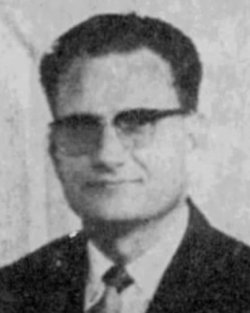
Wilbern Elias Best (1919-2007) was a preacher and writer of Gospel material. He wrote 25 books and pamphlets comprised of sermons he preached to his congregation. These books were distributed in English and Spanish around the world from 1970 to 2018 at no cost via the W.E. Best Book Missionary Trust.

Comments

0 / 2000 characters
Comments are moderated before appearing.

Be the first to comment!

Joshua

Joshua

Shall we play a game? Ask me about articles, sermons, or theology from our library. I can also help you navigate the site.