Bootstrap
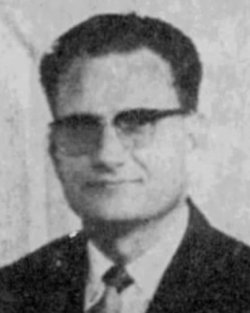
W.E. Best

#87 Five Questions Raised & Answered on the Doctrine of Election, Part 2

Romans 9:1-28
W.E. Best July, 1 1973 Audio
0 Comments
Remastered Oct/Nov 2024

Sermon Transcript

Auto-generated transcript • May contain errors

100%
Romans chapter 9. I'd like for
us to read beginning with verse 1 once again, and read through
especially verses 14 through about the 24th verse. Let's begin with verse 1. I say
the truth in Christ, I lie not. my conscience also bearing me
witness in the Holy Ghost, that I have great heaviness and continual
sorrow in my heart. For I could wish that myself
were accursed or separated from Christ for my brethren, my kinsmen,
according to the pledge. Who are Israelites? To whom pertaineth
the adoption and the glory and the covenants, and the giving
of the law, and the service of God, and the promises. Whose
are the fathers, and of whom, as concerning the flesh, Christ
came, who is over all, God blessed forever. Amen. Not as though
the word of God hath taken none effect, for they are not all
Israel, which are of Israel. neither because they are the
seed of Abraham are they all children, but in Isaac shall
thy seed be called. We know that if God had not stepped
in, there would have been no nation. Verse 8, that is, they which
are the children of the flesh, these are not the children of
God, but the children of the promise are counted for the seed.
For this is the word of promise, at this time will I come, and
Sarah shall have a son. And not only this, but when Rebecca
also hath conceived by one, even by her father Isaac. For the
children being not yet born, neither having done any good
or evil, that the purpose of God according to election might
stand, not of works, but of him that calleth. It was said unto
her, The elder shall serve the younger. As it is written, Jacob
have I loved, but Esau have I hated. Now, beginning with verse 14
through 24, we have the five questions. The first one is in verse 14. What shall we say then? Is there
unrighteousness with God? God forbid. For he saith to Moses,
I will have mercy on whom I will have mercy, and I will have compassion
on whom I will have compassion. So then it is not of him that
willeth, nor of him that runneth, but of God that showeth mercy.
For the scripture saith unto Pharaoh, even for this same purpose
have I raised thee up, that I might show my power in thee, and that
my name might be declared throughout all the earth. Therefore hath
he mercy on whom he will have mercy, and whom he will he hardeneth. Verse 19, we have the second
question. Thou wilt say then unto me, why
doth he yet find fault? For who hath resisted his will? Verse 20, we have two questions. Nay, but O man, who art thou
that replies against God? Shall the thing form say to him
that formed it? Now the fourth question. Why
hast thou made me thus? The fifth and last question is
in verse 21. Hath not the potter power over
the clay of the same lump to make one vessel unto honor and
another unto dishonor? What if God, willing to show
his wrath and to make his power known, endured with much long-suffering
the vessels of wrath fitted to destruction, and that he might
make known the riches of his glory on the vessels of mercy
which he had afore prepared on the glory? There is an important
distinction between verse 23 and verse 24. The Lord, it is said, endured
with much longsuffering the vessels of wrath, notice the expression,
fitted to destruction. It does not say that God fitted
them to destruction. More will be said on this in
a subsequent lesson. I will not have time to deal
with this tonight. I only call your attention to
it for your consideration. Then in verse 23, and that he
might make known the riches of his glory on the vessels of mercy,
which he had, now notice the language, aforeprepared unto
glory. even us whom he hath called not
of the Jews only, but also of the Gentiles." In making some
comments on the first three verses, which give to us the first of
seven divisions of this chapter, I gave to you those seven divisions
this morning, and they are important for the correct understanding
of this chapter. I want to add to some of the
things that I said this morning by commenting a little more on
the opening verses of this chapter. I made the statement this morning
that there is one thing for sure, believers will reveal the depth
of their experience. The depth of Paul's experience
is revealed in these opening verses. His heart is unveiled, so to
speak, concerning his attitude toward the Jews. Did you know
that four-fifths of this book which I hold in my hand is devoted
to the subject of the Jews? Don't forget that. four-fifths
of the Bible is devoted to the subject of the Jews. That shows
the importance of such a study as we are now making concerning
the nation of Israel, taking her from the time that she is
delivered from Egyptian bondage then through her wilderness wanderings,
and finally her entrance into the land of Canaan. Four-fifths
of the Bible is devoted to the Jewish nation, to the Jewish
people, to the Israelites. Paul was not only, as I stated
this morning, disturbed, grieved over the attitude that the nation
of Israel had toward the Lord Jesus Christ who had come through
the seed of Israel, but he was also concerned and deeply grieved
over the attitude not only did they have toward him, but also
toward the Lord God of heaven, and because of the blessings
that had not only come to the Israelites, in a material way,
but even the spiritual blessings, which many of them had enjoyed,
and then, of course, finalizing his thought by concentrating
on the blessings that have come through Israel to the Gentiles. You see, the Lord hasn't left
us out of his eternal purpose. We have in this portion of Scripture,
as I've already stated, not only national election, but also individual
election. The greater portion of professing
Christendom today despises the doctrine of divine election,
just as they abhor the doctrine of absolute sovereignty. In thinking about Paul's concern
for the Jewish people, in verse 3 when he said, I could wish.
I stated this morning that some have translated this, I did wish,
referring to Paul's attitude before he was saved from Judaism. There was a time when I thought
that was a pretty good explanation, but beloved, that will not stand
the test of the original language from which we get the words,
for I could wish that myself were a curse from Christ for
my brethren, my kinsmen, according to the flesh. I am not going
to repeat the quotations that I gave from a number of works
on systematic theology, but I want to add to what I gave this morning.
I like what John Calvin said as he commented on this text
description. He said we must take into consideration, first
of all, that true love is in Jesus Christ. Looking at this
text in the light of the context, going back to verse 1, when Paul
said, I say the truth in Christ, we know that true love is in
Christ. And not only is true love in
Christ, but true love is for the glory of God. I think that is a comment that
is worthy of our consideration. I also related to you this morning
a statement by John Gill. Not only does John Gill have
in his work, in his commentary on the Bible, an outstanding
statement, one that should be considered by every diligent
student of the Scriptures, but there are others who also agree
with him, who have written in the last 50 or 100 years. Let us look now at verse 3 for
a moment. I could wish, I stated this morning that most men, like
Barnes, Hodges, Shedd, and others, say that this is a hypothetical
statement, and I'll not argue with that. That's a thought to
consider. I could wish And then I read
to you a statement by Vincent, the outstanding Greek scholar
in many areas of biblical study and exegesis. He had a very good
comment. First of all, the word translated
of curse in our King James Version, comes not from the Greek word
thanatos, which is the word for death, but it comes from the
word that means a curse, anathema. Not from the word thanatos, but
the word anathema. The word anathema is used in
other places in the New Testament I was reading just recently,
in fact just this afternoon, I was checking one work that
I have that I had not really investigated, and he makes a
statement similar to that that was given by John Gill more than
200 years ago. I'd like you to turn with me
to 1 Corinthians 16, verse 22, and here is a text where the
word anathema which means a curse, or separated, is used. Paul said,
if any man love not the Lord Jesus Christ, let him be anathema,
let him be separated, or let him be a curse. And then he uses
the word maranatha, and maranatha means our Lord coming. So if a person doesn't love the
Lord Jesus Christ, let him be separated, the Lord is coming. That's the meaning of verse 22,
the closing statement that Paul makes in his first Corinthian
letter. Now the word translated anathema
in your King James version means, as I've already stated, either
a curse or separating. Now, here is something interesting,
and this is why John Gill and men since him have said what
they have concerning the word that is used in Romans 9 and
verse 3. Now, beloved, I'm not saying
tonight that I can convince you, and you would be very foolish
to come to any dogmatic conclusion. As I said this morning, I think
we can get the principal thought that Paul had in mind in this
passage of Scripture, and I'll relate it once again. And I think
this is the basic fault in the light of the context. Paul was
simply saying, if Jesus Christ, and I'm using the word in the
sense of S-I-N-C-E, since the Lord Jesus Christ, using the
particle in that sense, since Jesus Christ has died for the
elect, then all of those for whom Christ died that have been
regenerated, that have been born again by the Spirit of God, they
should live for the elect. And that is exactly what Paul
states in 2 Timothy 2.10 when he said that he was willing to
endure all things for the elect's sake that they might obtain the
salvation which is in Jesus Christ unto eternal glory. Now, in taking
that a step further, There is no love greater, our Lord expresses
this in the 15th chapter of the Gospel according to John, than
that which a man would express by laying down his life for his
friend. Now, I made those statements
to precede what I want to give you at this time, not only by
John Gill, but also by another Greek scholar. He takes the word
anathema. And he says anathema, transliterated
from the Greek, is frequently used in the Septuagint. The Septuagint, as you know,
is the Greek translation of the Hebrew language. In other words,
this was brought about by, and I'm sure you've noticed this
in the reading and in the study of various works on theology,
references made to the 70s, to the 70s. And when you come across
that, that refers to the 70 church fathers that translated the Hebrew
into the Greek language. And it is known as the Septuagint
version. So this man said, anathema. translated from the Greek is
frequently used in the Septuagint, where it translates the Hebrew
word, and it means what? First of all, something devoted
to God in the sense of a sacrifice that was offered up to God. and
number two, are for the destruction of an idol. In other words, it
can be used in two different ways. First of all, as something
devoted to God as a sacrifice offered up, or something destroyed
as in the sense of the destruction of an idol. Now, that statement
is not only made by John Gill, but it is made by others. I especially
like the statement made by John Calvin who said, true love is
in Christ. This is what Paul is expressing
in the opening verses of this chapter. He had a real concern
for his own people, the Israelites. And this went beyond, as I stated
this morning, natural ties. Yes, it included the blessings
of God that have come through the Israelites, not only to the
Jews, but also to the Gentiles. Thus he expressed his heart's
desire. Once again, it is expressed in
the tenth chapter. of Romans when he said, My heart's
desire and prayer to God for Israel is that they might be
saved. I bear them record that they
have a zeal of God, but not according to knowledge. They have left
the righteousness of God and have gone about to establish
their own righteousness and have not submitted themselves unto
the Lord Jesus Christ, who is the end of the law for righteousness
to every one that shall believe, verses 1 through 4 of the 10th
chapter. And then after leaving the first
division of chapter 9, we come to the second division, and in
the second division, verses 4 and 5, there are eight things, but
the eighth thing is much different from the preceding seven things
as we called attention to it this morning. But we have in
the second division, verses 4 and 5, the covenant relationship
of the Jews. Then in number 4, number 3 rather,
we have the election of the Jews, verses 6 through 13. Now this
does not mean that God does not elect individuals. There is a
national election and there is also individual election. And
then we have the fourth division, and this is the passage that
we want to consider this evening. make some study of the five questions
that are raised and then answered by the Apostle Paul. Election
is according to the sovereign purpose of God, or to the eternal
purpose of the sovereign God. I stated this morning that God
is absolutely sovereign. I want to emphasize the word
absolute for just a moment. Sovereignty is absolute control. B. B. Warfield, one of the outstanding
students of God's Word, has made a significant statement about
God's absolute sovereignty. I'll have to go through these
great men of the past and consider the outstanding statement that
they make relative to various truths of God's Word. Warfield
made the statement, it is unthinkable, he said, to believe in a God
who can create and yet not have the ability to control that which
he has created." That's a great statement. It is unthinkable,
unthinkable that God, who is the creator, can bring something
into existence and not have the ability to control that which
he has brought into existence. That means that every breath
we take, every step we take, beloved, we must consider the
statement made by the Apostle Paul in his message on Mars Hill
when he said that in him, that is in God, we live, we move,
and we have our being. Sovereignty is absolute control. Now, absolute is a term which
denotes the essence of deity. The absolute is God. That's the simplicity of the
statement. He is the last. He is the final. He is the utmost. He is the ultimate. Yes, he is
the infinite. And now looking at the first
question and then reviewing just briefly, a statement or two that
we gave this morning, is there unrighteousness with God? This question, anticipated by
Paul, would be raised by persons who would object to divine election
that is expressed in verses 6 through 13. Knowing that men would object
to the great biblical truth of divine election, he raises the
question and answers it by saying, God forbid. a decisive statement
made by Paul, God forbid, far remove any thought as that from
your minds, because God is just and right in all of his dealings
with mankind. Whether he takes that lump of
clay, and you'll notice the expression is used in verse 21, hath not
the potter power over the clay? of the same lump, the same lump. You will notice here, the mass
of fallen mankind is before the apostle Paul as he expresses
himself in verse 21. And the mass of fallen mankind,
I'm afraid, beloved, that many people do not understand this.
So, in taking fallen mankind, God sees as depraved sinners,
no one person deserves the mercy or the grace of the living God.
Now this is not understood in the supralaxarian sense. Now don't get discouraged. I
assure you, before we will have finished, that we will consider
the meaning of laxarianism and we will consider briefly and
maybe a little longer than just a brief consideration. The great
discussion between what is known as the supra and the infra positions
are theories concerning lapsarianism. Now I said this is not to be
understood in the supra-lapsarian sense. Let me explain that just
briefly at this point. The supralapsarian view of the
decrees of God is expressed in this manner. The supralapsarian theory says
that God decreed to elect some and reprobate others before he
decreed to create man and permit the fall of man. Now, we'll get
into that. Beloved, without some understanding
of that theory, one can make erroneous statements concerning
the integrity of Jehovah God. Yet, don't forget what I said
last Sunday and Sunday night as a week ago. With God there
is no such thing as a new thought. Whatever God thought, he thinks. Whatever he thinks, he shall
ever think. God thinks simultaneously. You and I think successively.
We have to. Yet that does not destroy the
idea of some order, follow me now very carefully, some order
in the thinking of Jehovah God. We know there is order in the
Godhead. God the Father, God the Son,
and God the Holy Spirit. That does not mean that the Son
is inferior to the Father. But it just naturally follows
in that order. The Father, the Son, and the
Holy Spirit. There is order. God is methodical. There is order with God. And
you and I can only think in succession We can only achieve things by
taking steps. We learn things. That reminds
me of something I must say at this point. Robert Wood knows
what I'm going to say. After the service this morning,
he came to me and he said, while they were going to Fort Worth
this past week, his sister's been operated on, they went up
to see her. He said that he turned on the radio and he got this
fellow by the name of Green. And I'll tell you, he's green,
wait till I get through. He's green in more ways than
one. He has a real good name. I've heard him, and I've read
some of his books, and they are atrocious. He said, he made the
statement, and he'd been a Christian for 40 years. And he said, my
doctrine has not changed one bit in the 40 years I've been
a Christian. Will you let that soak in for
a moment? Beloved, that means that there has been no growth. And when you listen to him on
the radio, you'll come to that conclusion. He won't even have
to tell you. There hasn't been any growth,
there hasn't been any development in all the 40 years. Now, beloved,
there is not a Christian sitting in this auditorium tonight who
would have the audacity to say that he has not grown and that
he has not had to change his mind on a lot of things since
he has been a Christian. That's true in the life of every
person. So for a person to say, in 40 years I have not changed,
my doctrine is the same today as it was the day that I accepted
Christ. But a person couldn't get any
more ridiculous than that. And this is the kind of junk
that you hear on radio today and that you'll see in watching
most of the TV programs. We all grow in grace and the
knowledge of the Lord Jesus Christ. We have to unlearn some things
as we go along. We're all steeped in tradition.
And many of those things have to be put out of our minds. Let's
use Nicodemus as an illustration. Nicodemus was a master of Israel.
He was a teacher of the Jews. He knew the Jewish law backwards
and forth. But there were some things he
didn't know. He had to unlearn a lot of things when the Lord
saved him by his grace. And after he was saved, he still
had to learn a lot of things. Let's see if this is Bible. The
apostle Peter, saved by the grace of God, acting courageously one
moment and being a coward the next. Are you following me? The Lord prayed for him and he
said, Peter, I have prayed for thee that thy faith fail not.
That thy faith fail not. The prayer of Jesus Christ, I
assure you, is ever answered. He has prayed thus for every
person who is saved by the grace of God. He prays for you. That
prayer which he prayed for Peter is for you, it is for me. I have
prayed for thee that thy faith fail not. Now we find Peter on
one occasion, the record of this is found in the 16th chapter
of the gospel according to Matthew, a saved man, a regenerated person,
one who had made a tremendous confession just a few minutes
before he made an awful statement. back in the first part of Matthew
16, when our Lord asked Peter, Whom say ye that I am? Some say,
I'm Jeremiah. Some say, I'm Jeremiah, for one
of the prophets. But whom say ye that I am?" Peter's
reply was, Thou art the Christ, the Son of the living God. The Lord answered him by saying,
Flesh and blood hath not revealed this unto you, but my Father
which is in heaven. And just a few minutes later,
when the Lord Jesus told about his approaching death, his approaching
sacrifice, Peter said, pity thyself, that can't happen to you. And
what did our Lord Jesus say to him? Get behind me, Satan. We find Peter a little later
on making the statement of the Lord Jesus Christ, all men may
forsake thee, but not me. And you know what the Lord Jesus
said to him? Before The cock shall crow, you will have denied
me three times." Sure enough, Peter denied his Lord, warning
himself by the enemy's fire, denied his blessed Lord when
he was asked, are you one of his disciples? No, not me. He was fearful for his life.
Yet that same Peter, was there any growth? Was there any development?
That same Peter on the day of Pentecost, after the Holy Spirit
had come in his abiding presence, coming into the heart and life
of Peter, empowered him and therefore he stood on the day of Pentecost
and preached in power and demonstration of the Spirit. He was a courageous
man for he stood before the Jews who were instrumental for the
death of Jesus Christ and said, ye men of Israel, pointing his
index finger at them, ye men of Israel. This one, this one
who is approved among us by signs and wonders, you have put to
death, you have crucified, you have been instrumental in putting
him to death. There we see courage. I would
say, beloved, as Christians, we grow, do we not? We grow in
grace and knowledge of the Lord Jesus Christ. But many people
do not think Seemingly that there is any growth or development.
What is your concept of God? He's absolute. He's absolute. I want to emphasize this again.
There is no subject that can ever be preached that will drive
men and women to the feet of the sovereign God like the subject
of God's absolute sovereignty. We're at his disposal. He can do with us as he sees
fit. And when a person has been driven
to the end of himself, he will say, as did the leper in the
fifth chapter of the gospel according to Luke, if thou wilt, thou canst
make me clean. You see, the leper knew that
his deliverance was in the hands of the will of the sovereign
God. If thou wilt, thou canst make
me clean." We come now to the second question. We didn't have
time to develop this at all this morning. The second question,
why doth he yet pine for? Verse 20. The objection arises
from the assertion in verse 18. This is the second objection
to Paul's doctrine of absolute sovereignty, of divine election. The reasoning is as follows. Let me give to you a quotation. If the fact that one is saved
and another is lost depends on God, how can the lost be blamed? This was the reasoning that Paul
knew that men would reason. Responsibility without freedom
strikes us as despotic and unjust. These are accusations that depraved
men bring against God. What maddens us the more is that
not being free, we should yet be called to account and held
responsible, as another has said. How can we be responsible if
no effort on our part can change our destiny? Have you ever heard
someone say, your destiny lies in your hands? You don't know
what they're saying. I said, they do not know what
they're saying. Then listen to this. The reasoning, another
has said, will go something like this. It is like charging the
rivers with guilt for their inability to run up a hill when God's decree
of gravitation forbids it. Now that's real human reasoning,
isn't And yet that's the way that the natural mind reasons.
Now the answer. I like what one great theologian
said. Quote, there would be no room
for this objection if Paul had said that God elected those whom
he foresaw would believe and reprobated those whom he foresaw
would reject the gospel. It is evident that Paul taught
no such doctrine. If he had, the offense of the
cross would have ceased. Paul does not try to satisfy
the objector, if you will notice. He doesn't try at all, but simply
rebukes the objector. Oh man, who do you think you
are to question God? That's a good way of stating
it, isn't it? How can we illustrate it? What would you think about a
little ant that crawls out of its anthill and there standing
by the anthill is a huge elephant? And the little ant starts questioning
the elephant. Do you think that would make
any impression on the elephant if the elephant could understand
it? Now, beloved, that is not even a good analogy. But what
do you think about puny, lost, depraved, sinful man questioning
the sovereign, holy, and righteous God? Who art thou, O man? Who do you think you are? Who do you think you are anyway?"
You see, he answers by rebuking the man who would even raise
such a question. Why doth he yet find fault? Who hath resisted his will? A God on his throne is not the
God that religionists love. However, this is the God Christians
love, honor, and serve. The objector seems, if you will
notice the context, to be referring to the case of Pharaoh in verse
17. I don't know about you out there,
but it's so hot up here, it's miserable. Are you too warm out
there? Boyd, would you turn on the fan? If it gets a little
too cool, watch and then turn it off. Just turn the circulating
fan off. If the Lord ever permits us to
build another building, we want a higher ceiling than this one.
Glenn knows what it is up here before he even gets through leading
the scene. It gets miserably warm, doesn't it? He's light.
It's this time of the year, it's too cool. for heat and it's too
warm for heat, too cool for air conditioning, so you're in between
and it's difficult to regulate the temperature. Notice what I said. The objector
seems to be referring to the case of Pharaoh in verse 17.
Look at verse 17. For the scripture saith unto
Pharaoh, even for this same purpose have I raised thee up. This same purpose have I raised
him, the Lord raised him up. Now what about the Lord hardening
Pharaoh's heart? I don't want to get ahead of
myself. I'll preach at least four to six messages on the positive
aspect of reprobation when we get to Exodus chapters six through
ten. I'll have at least four to six
messages on that subject. I'll be dropping a few things
for your consideration as we go along. So the objector was
looking at this, he was considering this, where God said he would
raise up Pharaoh. For what purpose? In order that
he might show his power in Pharaoh. And then he goes on in the 18th
verse by saying, Therefore have mercy on whom ye will have mercy,
And I want you to notice now that the determinative will of
God is used not only in the first part of verse 18, but it is also
used in the last part of verse 18 in reference to reprobation. Therefore hath he mercy on whom
he will have mercy, and whom he will he harden." Now, I do
not want to go any further into this tonight, except to say that
unless you are able at this point to make a distinction between
negative and positive, those two aspects of reprobation, There
is the possibility of you making a very serious mistake in trying
to explain the subject to people. Now the Bible teaches reprobation
just as clearly, just as plainly as it does divine election. If God elected some, he passed
by some. And those whom he passed by,
they are negatively reprobated, he passed by them. Now God does
not condemned them just because he passed by them. He condemns
men for their sins. Now this, as I've already stated,
cannot be understood, it cannot be explained, I'm talking about
passive reprobation, cannot be explained in the sense of supralaxarianism. That means going beyond, going
beyond what the scriptures really teach concerning the subject
of Lapsarianism. Well, what is Lapsarianism? Lapsarianism
is the doctrine of the fall of man. In other words, it points
to the fall of man. Every person who believes that
man is a fallen creature believes in the doctrine of Lapsarianism. Now supra means to go above and
impra means to remain below. In other words, the supra position
is this. They believe, as I've already
stated, God decreed to elect some and reprobate others before
he decreed to create and permit the fall. The in-fra position
is this, the in-fra remains below. The infraposition believes that
God elected, but he elected those whom he had already decreed to
create and permitted to fall. And among the fallen, God chose
some to salvation and passed by others. Now that's the main
difference between supralapsarianism and infralapsarianism. I want
to say this before I go any further. There are faults with both systems. There are inconsistencies with
both systems. Keep in mind, please, that both
are the mere systems of men. And since they are the systems
of men, anything that man systematizes, it has its good points maybe,
but it also has its bad points. I'm talking about any human system. Now, I hope that you get that.
It is important for us to make the distinction, and yet I think
it is possible for you and me to understand to some extent
how that God can formulate in his simultaneous thinking, the
whole plan, there is order even in his plan. I can illustrate
it in this manner. Did not the Father decree before
the foundation of the world to send the Lord Jesus Christ? He
surely did. Now, when we think about the
first advent of our blessed Lord, He was born first of all, he
lived in more than 33 years. Now think of the period of time
between his birth and his death on the cross. Now there are many
events and they follow in a very systematic order. He was born
of the virgin, he grew up as a child, he became a man. He
walked among the sons of men. He performed miracles. He spoke
to people. He went to the cross. He died
on the cross. He was buried in Joseph's borrowed
tomb. He arose out from among the dead.
He ascended to the right hand of the Father. Where is he today?
Now there are steps, you see. There are progressive stages,
even in the life of the Lord Jesus Christ. in the mind of
the infinite God. All of that was in his mind simultaneously. Yet, beloved, there was order.
There was order. Now it is wrong for you to say
that God created a person to them, and that is what we are
accused of if we tell people we believe in the biblical doctrine
of predestination. So I'm raising some questions
in your minds, and beloved, I assure you that they will all be answered
by the scriptures before we will have finished. Now, let's think
about the hardened. This second objection was raised,
no doubt, in the minds of those who considered what Paul had
said in verse 17. Even for this same purpose, will
God raise up Pharaoh to show his power in him? And then we
see in verse 18, the sovereign and determinative will of God,
not only in the salvation of some, but also in the reprobation
of others. God does not condemn any person
to sin, to eternal damnation, without taking into consideration
of the fact that he is a sinner. So please don't forget that.
The objector referring to what Paul had said about Pharaoh. Now there is a threefold hardness. I mention this just briefly,
and I'm going to continue to mention these things until they're
firmly established in your mind. The Bible teaches a threefold
hardness. Now, when you go back and study
Exodus, beginning with really the fifth chapter through the
fourteenth chapter, there are some sixteen or seventeen references
to the hardening of Pharaoh's heart. in a great number of those
places, it is said that Pharaoh hardened his heart. In other
words, the king hardened his own heart. But, beloved, you
cannot overlook those scriptures which specifically say that God
hardened his heart. God hardened his heart. The question
naturally comes, how does God harden the hearts of people? Now, there is a threefold hardening
of the hearts of men. I'm just going to mention them
again tonight, maybe with an additional statement under each
one as we continue to progress in our study. First of all, there
is judicial hardening. The Bible teaches judicial hardening. Proof of it is found in a great
number of scriptures, but I want to give you one that you're familiar
with. Do you remember the messages that we began bringing from Romans
chapter 1 about a year ago? And in Romans 1 24, it plainly
states that God gave them up. That is judicial hardening. It
is repeated in verse 26. The same statement is repeated
for the third time in verse 28 of Romans chapter 1. Men who
had the truth, they knew that God existed, and yet they professed
themselves to be wise. They changed the glory of the
uncorruptible God into an image made like the corruptible man,
four-footed beast, and creeping things, and God gave them up. That is judicial hardness. And even as they did not like
to retain God in their knowledge, God gave them over to a reprobate
mind. That's verse 28, the Romans 1.
That is judicial hardening. I believe there are many people
today whom the Lord judicially hardens. Now let's look at the
second. There is what is known as natural
hardening. How do we explain this? Every
person outside of Jesus Christ has a hard heart. Proof of this
is found in Ephesians 4.18. We all are hard by nature. Every person who comes into this
world, he comes as a sinner, he is depraved, and he is a hard
individual. He has a heart of stone, the
Bible says. That's why in regeneration the
heart of stone must be removed and to that person must be given
a heart of flesh, Ezekiel chapter 36. So there is natural hardening. Now what does God do with people
whom he judicially hardens? Does he infuse anything into
them, or does he just simply leave them to continue to whirl
in the hardness of their own hearts? That's as far as I'm
going tonight. Finally, there is the third aspect
of hardening. It is known as actual hardening,
and that's easily explained and understood. But whenever a person
hears the truth, he may not be a Christian, and when he hears
it, he gives some attention to it. He said, I believe that's
the word of God. And he is awestruck for a moment. And he hears it again. But after
a while, if he continues to hear that word, and nothing happens,
after a while, when he hears the word, it is just like pouring
water off of a duck's back. You see, by progressing in sin,
by rejecting, by rejecting, and a continual rejecting, that person
becomes harder and harder and harder. And you know what I'm
talking about. That's why it is so difficult to deal with
an individual when he becomes an older person if he has continually
lived and walked in a path that is sinful. He becomes harder,
he becomes more callous every day he lives. So there is judicial hardening,
there is natural hardening, and there is actual hardening as
a result of one's living and continuing in sin. Look at the
third question. Who art thou that replies against
God? Paul reminds the objector who
he is. Man has no right to dispute with
God. Old man, who art thou? Who do you think you are? I read just recently where an
Arminian made this statement as he was commenting on this
verse, the 17th verse of Romans chapter 9. He made this statement,
listen to this. The Arminian said that the Bible
does not say concerning Pharaoh, for this purpose have I made
thee, but for this purpose have I raised thee up. He is emphasizing that the Lord
didn't make him. Now, how do we explain this?
Evidently, when that person made this statement, he didn't know
that that was a verse of Scripture in the Bible that says this.
Will you listen to it? You see, this is the tragedy
today of people just reading just a little bit of Scripture
and building their ideas on a few isolated facts. Now, listen to
this in Proverbs 16, verse 4. Here's what it says, "'The Lord
hath made all things for himself, even the wicked, for the day
of evil.'" Now, you see, if that man who made this statement about
Pharaoh had known something about this text, he would have never
said what he said. Now, how can we answer this?
Beloved, I assure you there is an answer. It is true that God's
original creation was good. Yes, very good, Genesis chapter
1. However, first of all, God forms
men out of a corrupt seed and then rules over them. Let me give you a Puritan statement.
Then it seems like if you want something real good today, you've
got to go back about two or three hundred years to get it. And
I'll tell you something else. If anything real good is said
today by modern-day theologians, they got most of it from the
Church Fathers. Listen to this. God does not
make man. Follow it now. This is a teaching
of Scripture. You must be able to make proper
distinction. God does not make sin, but he
does not cease to form and multiply the nature which has been defiled
by sin. It is. Let me quote that again,
and I hope you get it down. That is the answer. that God didn't make Pharaoh,
he just simply raised him up. And in making that statement,
he overlooked a verse of Scripture which plainly states, and must
be answered, the Lord hath made all things for himself, yea,
even the wicked for the days of evil. You know he made Richard
Nixon? I'm not naming any more, there
are a lot of others. Yeah. For what day? Well, we've
witnessed it, haven't we? Haven't we witnessed the day?
Now what is the answer? You have to go back and consider
God's original creation. God created man upright. Upright. Adam fell. So God's original
creation, man was created upright, but man fell. The fall, certainly
according to God's will, but God was not directly connected
with the fall in the sense of forcing or making Adam fall. After the fall of Adam, God continues
to make men. And then the Puritan gives the
correct answer in a very short sentence by saying, God does
not make sin, He's not the author of sin, but He does not cease
to form and multiply the nature which has been defiled by sin. That's the end. When man argues, he argues to
the dishonor of the sovereign God.
W.E. Best
About W.E. Best
Wilbern Elias Best (1919-2007) was a preacher and writer of Gospel material. He wrote 25 books and pamphlets comprised of sermons he preached to his congregation. These books were distributed in English and Spanish around the world from 1970 to 2018 at no cost via the W.E. Best Book Missionary Trust.

Comments

0 / 2000 characters
Comments are moderated before appearing.

Be the first to comment!

Joshua

Joshua

Shall we play a game? Ask me about articles, sermons, or theology from our library. I can also help you navigate the site.