Bootstrap
Scott Richardson

Why We Need A Substitute

Isaiah 53:10
Scott Richardson • May, 31 1998 • Audio
0 Comments
What does the Bible say about Jesus as a substitute for sin?

The Bible clearly states that Jesus is our sin offering and substitute, bearing our iniquities to provide atonement for our sins (Isaiah 53:10).

Isaiah 53:10 confirms that God appointed Jesus' soul as an offering for sin. This matches the biblical theme that Jesus, referred to as the Lamb of God, fulfilled the Old Testament sacrificial system, where sacrifices were made to atone for sins. These sacrifices required a spotless victim, paralleling Jesus, who was without sin and perfectly suited to bear the weight of our transgressions. His sacrifice is essential for our reconciliation with God, demonstrating His role as our adequate substitute.

Isaiah 53:10, Isaiah 53:5, John 1:29

How do we know that Jesus' sacrifice is sufficient for our sins?

Jesus' sacrifice is sufficient because He was the perfect substitute, appointed by God to bear the sins of humanity (Isaiah 53:6).

According to Isaiah 53:6, the Lord laid on Him the iniquity of us all, confirming that God's appointment of Jesus as our substitute renders His sacrifice fully sufficient. The perfect obedience of Jesus, combined with His divine nature, allowed Him to bear the penalty for our sin without any debt of His own. This truth is not only affirmed in Isaiah but echoed throughout the New Testament, emphasizing the completeness of His atonement on the cross. Thus, we can be assured that our sins are entirely atoned for through faith in Christ alone.

Isaiah 53:6, Ephesians 1:7, Romans 5:8

Why is the concept of Jesus as our substitute important for Christians?

Understanding Jesus as our substitute is vital as it underscores the basis of our salvation and assurance of forgiveness (Romans 3:25).

The concept of Jesus as our substitute is central to Christian faith because it illustrates the mechanism by which we receive grace and forgiveness. According to Romans 3:25, Jesus was presented as a sacrifice of atonement through faith in His blood. This means that believers are absolved from the guilt of sin due to Christ bearing our punishment on our behalf. For Christians, this prompts gratitude and assurance, as we recognize our inability to save ourselves and Jesus' perfectly sufficient work on our behalf. Thus, understanding this doctrine instills in us a deeper appreciation for God's mercy and love.

Romans 3:25, John 3:16, 2 Corinthians 5:21

What does it mean for Jesus to be the perfect substitute?

Jesus is the perfect substitute because He is without sin and meets the qualifications required to bear our sins (Hebrews 4:15).

Being our perfect substitute, Jesus fully identifies with our human experience while remaining sinless. Hebrews 4:15 highlights that He was tempted in every way, just as we are, yet remained without sin. This unique qualification allows Him to represent humanity before God without owing any debt for His own sins. Therefore, He could take our place in judgment and bear our transgressions, ensuring that His sacrifice could satisfy divine justice. This affirmes that believers can trust in His ability to save fully and completely, offering us righteousness in exchange for our sinfulness.

Hebrews 4:15, 1 Peter 2:24, Galatians 3:13

Sermon Transcript

Auto-generated transcript • May contain errors

100%
if you will, to the 53rd chapter
of the book of Isaiah. I thought about talking about
that last part of the verse in Romans 11 there, but I kind of
got turned away. I'll go back to that some other
time. Here in Isaiah chapter 53, And there's a statement in the
middle of the 10th verse there that kind of attaches itself
to me as a statement, certainly a statement, a wonderful statement,
a statement that I cannot expound it the way it ought to be expounded. I know a few things, and the
few things that I know I want to tell you. It says, Thou shalt
make his soul an offering for sin. Thou shalt
make his soul an offering for sin. Well, there is no question
as to who he is talking about. You see, in the first verse, he said, Who hath
believed our report? and to whom is the arm of the
Lord revealed. And that's concerning the doing and the dying of the
sent one, the Lord Jesus Christ. It describes Him there in the
second verse. In the third verse it says He
was despised and rejected of men, a man of sorrows, acquainted
with grief. We hid as it were our faces from
Him. He was despised and we esteemed Him not. Surely He hath borne
our griefs and carried our sorrows, yet We did esteem him stricken,
smitten of God, and afflicted. He was wounded for our transgression. He was bruised for our iniquities.
And the chastisement of our peace was upon him. And with his stripes
we are healed. All we like sheep have gone astray.
We have turned every one to his own way. The Lord hath laid on
him the iniquity of us all." So there's no question then in
regard to whose soul this is in verse 10, that God will make
an offering for sin. Thou shalt make his soul an offering
for sin. Now, it's a sin offering, offering
for sin. If you just put the sin back
there, you say sin offering, offering for sin. A sin offering
is an offering for sin. Now, in the Old Testament, and
instituted the sacrifices which were a picture
of him who was to come in reality, God becoming a man and the Lord
Jesus Christ sacrificing himself in our stead and place and room
as our sin offering, the real sin offering, the true sin So
in the Old Testament, when a man was made conscious of his guilt
and of his shame, he became very anxious, anxious for pardon,
anxious for forgiveness. So he brought a sacrifice, and
the blood of the sacrifice, as they cut each throat and caught
the blood, the blood of the sacrifice was poured out at the foot of
the altar. the offerers, those that brought
the sacrifice, they were persuaded that without sacrifice there
was no satisfaction. And that's right. And without
satisfaction there's no pardon. So they understood the sin offering
probably better than we do. They understood it. Well, the
victim that was brought the sacrifice was the lamb or the bullock or
the he-goat or whatever animal the individual had, he brought. And the victim, the sacrifice,
must be spotless. That is, on all occasions when
the sacrifice was to be made, the victim was to be without
flaw and without blemish was to be spotless, the best that
the man had. And they brought him before the
high priest and the man who was made conscious of his guilt and
shame and anxious for pardon, he placed his hand upon the head
of the victim, the head of the sacrifice. And he did it as it
were put the sin from off his shoulders
and laid on the sacrifice, laid on the lamb, laid on the bullock
or the he-goat, whatever it was. And to complete the transaction,
after the man put his hand upon the head of the sacrifice, then
the high priest unsheathed his knife and cut the throat of the
victim, and they caught the blood. Now, the idea of this sin offering
was that a perfect victim, without any offense, that is, the sacrifice
was to be without flaw, without blemish, and denotes perfection,
had no offense on its own account, And he was to take the place
of the one that had offended, the one that was anxious for
pardon and was conscious of his guilt and his shame. The victim stood in his place. And that's the sin offering.
And throughout the Bible, in the Old Testament in particular,
we talk about the sin offering. And that's what he's talking
about here. Thou shalt make his soul a sin offering, the soul
of the Lord Jesus Christ. Now, I want to be as plain as
I possibly can in regard to this, because I think it's very important.
And I'm not going to say anything that I haven't said before, and
I'm not going to say anything that you don't know. I'm just going
to kind of lay lair upon lair over and over and over again.
as plain as I possibly can then. Let me say that God must punish
sin. He's got to do it or give up
the idea of being God, or one of the two. He's got to punish
sin. Now, you and I have got to understand
that He must punish me and you for our sin unless someone else
suffers in my place and your place. He's got to either punish
me, or if I can find a sacrifice, that's like I am without sin. A man, like I'm a man, but without
sin. If I can find one, and he'll
stand in my place, the stead and room, and bear my punishment,
then his blood shall cleanse my filthy soul." Now, the Lord
Jesus Christ, he did suffer in the room, in the stead, and in
the place of all those who ever believed on him, who do believe
in him, or ever shall believe in him, he made for them a complete
atonement. Now, that's the truth, so help
me God. That's what the Bible teaches, that the Lord Jesus
Christ is our sinner. And he made for you and I who
believe in the Lord Jesus Christ a complete atonement by giving
of his pure, spotless self in our place. Now, I say here this
evening that the Lord Jesus, God's Christ, was the best person
to be a substitute. There was no one else. like him
that could qualify as a substitute for poor sinners like you and
me. Now, for a man to be a substitute,
he must be one who owes no debt himself. If he had the Lord Jesus,
If he had been under the law naturally, if it had been his
duty to do what is our duty to do, then it is plain that he
could not have been our sacrifice because he could have only lived
and died for himself. And if he had any sin of his
own, he could have only died for himself and gave unto God
that which was due according to the righteousness and the
vengeance of God Almighty. Again, I say that the Lord Jesus
Christ is the best suited person to
be a satisfaction to holy justice and to cleanse us with his own
blood and clothe us with his raw robe of righteousness that
would stand us in good stead with God. Now, on the part of
the Lord Jesus Christ as a person, on his part there was no natural
necessity for obedience, much less for disobedience unto death. Now, who would say that the God
of heaven, the God and Father of our Lord Jesus Christ, God himself, the Son of God,
as he was in the midst of the glory of heaven, who would say
that the Son of God owed to the Father of the Lord Jesus Christ
anything? Who would say that? That the
Lord Jesus in his splendor, in the blessed Trinity, the Father,
the Son, the Holy Ghost, that the Son owed the Father anything? No. Who would say that it was
due the Father? that the Lord Jesus Christ, his
only begotten Son, should be nailed to the cursed tree to
suffer, to bleed, and to die, and eventually cast into the
dry ground and buried. No, it cannot be said, because
the Lord Jesus Christ was perfectly free, and being perfectly free,
no debt or offense or claim in him as to sin, being perfectly
free, he could undertake for others and be their substitute. Now, that's the reason I said
he's the right person to be the substitute. It was
need, it was a necessity for the right person to have the
same nature that you and I have. And that's the reason why the
Lord Jesus Christ became a man in what we call the Incarnation. He became a man for this purpose. And if you don't think that he's
a man, all you've got to read is the story in the Bible concerning
him. They handled him to see if he
was flesh and bones. They touched him. They laid their
head upon his breast. They knew that he was a man. He had become a man. And they
found out that he had flesh and bones. They found out that he
hungered. They found out that he thirsted. They found out that he feared,
that he wept. that he rejoiced, that he loved,
and that he died. He was a man, and the Bible says,
made in all points like unto us. He is suited at the substitute
to be a man, and a man that had no offense in himself. And the Lord Jesus Christ is
the only one meets the qualification. No one else could do it. Well,
being a man and standing exactly in a man's place, becoming a
real Adam, as true as Adam was in the first place, the first
Adam. The second Adam was as true as he was before he failed. He's the real Adam. So He stands
in the first Adam's place and He's a fit person to become our
substitute. And I told you several times
prior to tonight that the only way that God is going to deal
with a sinner is through a substitute. That's the way He's going to
deal with him is through a substitute. That is, as to the matter of
salvation. Those that are not in the substitute
must bear their own condemnation. He that believeth not is condemned
already. God will deal with him. A man
is in Christ. Christ is the substitute. God
has met that man's offenses in Christ in that he hath laid on
him. the iniquity of us all. He's
become our substitute. He's a fit person to become our
substitute. And his work is the most fit
work for satisfaction. Satisfaction must be made. And
here in our text it says, he shall make his soul. Now, he
did not make himself, a sin offering, it says that God shall make his
soul an offering for sin. He did not make himself a sin
offering without warrant or without authority from the Most High
God in Heaven. God made him so, and I already
read to you where it says, The Lord hath laid upon him the iniquity
of us all. So you can say this, Be sure
that it's the truth. It was the sovereign decree in
God's heaven which constituted Jesus Christ, God's Son, to be
the great substitute for his people. You can say that and
you can believe it. For the Bible says no man taketh
this office unto himself. So what he did as a substitute
and being the substitute was by the authority and the warrant
of God the Father himself. He was chosen as the covenant
head in election. He was ordained in the divine
decree of God to stand in the place of his people. God the
Father appointed him to be our substitute. It was constituted
in heaven. Now, in light of that, listen
to this. God the Father cannot refuse
the sacrifice which he himself appointed. And he appointed the
best person fitted to be a substitute was the Lord Jesus Christ. He
appointed Him. Now He cannot refuse to accept
that which He has appointed. Which leads me to say, what God
provides, God accepts. What He provides, He provided
the substitute. So if we have the substitute,
We have all that God ever desired of us. If we have Him, we are
accepted by God for the Son's sake. God cannot refuse it. There is now complete pardon
for every soul which believes in God's Christ, the Sacrifice. Complete pardon! You need not
do anything to make the atonement of the Lord Jesus Christ sufficient
to pardon you. Nothing you have to do to make
what he did sufficient to pardon you from all your sins. Nothing
you have to do. You need no money to pay the
priest to pardon you. There is no doing, no being anything,
or there is no suffering anything of yours or mine required to
complete the work of the substitute. You see, His blood filled the
fountain full. He washes us and we're clean. forever and forever. Our sin
is gone. Pardon, by the Lord Jesus Christ,
takes away our filth, the substitute. He takes away our filth, but
that leaves us naked. But justification comes along
and puts on us its royal robe and makes us accepted in the
beloved. That's the substitute. Justification requires no rags
of yours or mine. I could say this and not say
it insultingly, I could say, No rags of yours
are wanted. They are not needed. Bring nothing
of your own. Everything is complete in the
substitute. He made complete atonement. He cleanses you and I from our
filthy sins. and clothes us in his own righteousness,
takes away all of our filth, puts this royal robe upon us,
now no rags of yours are wanted, not a stitch of yours is needed
to perfect that which Jesus Christ has done himself. Your acceptance
is finished in Him. You are complete in Him. No tears of yours, no penance,
no personal mortification, no good works of yours are needed
or wanted to make yourself complete and perfect. You are complete. in the substitute and perfect
in the substitute. So he doesn't need your tears,
he doesn't need your rags, and he doesn't need your works. So
the conscious sinner needs to take this of the Lord Jesus as
freely as it's presented in the gospel of the Lord Jesus. He
that believeth on him is not condemned. If you believe on
him the substitute, you are not condemned. No judgment for you. No hell for you. Nothing but
delight and mercy upon mercy shall follow you. all the days
of your life. Trust Him. All that He did shall
cover you, while all He suffered shall cleanse you. It's complete. Don't take anything to Him. Just
come as you are. Come as you are, empty-handed. Nothing in my hand I bring. Don't carry until you get home,
but come to Him right now. In your heart, come to Him, the
substitute, who is the only fit person to qualify to be your
substitute. Come to Him. Don't bring anything
to Him. Come to Him just like you are. I might ask this question, why
did he provide a sin offering but for the sin? He could not have wanted to provide
if there was not a necessity for him to provide and you and
I are the necessity. We are poor, hopeless, helpless
sinners that cannot save ourselves. We cannot bring enough of our
tears and our penance and our spiritual mortification and our
good works so we can't bring enough of to cleanse us from our filth. But our God says, I'll deal with
you. in the person of my Son, who'll
become a man like your man, a human being. I'll deal with you in
Him. I'll lay your iniquities on Him. And by His stripes, ye shall
be healed." I say, that's pretty good. If you're a sinner, hopeless,
helpless sinner, and you haven't come to Him, if you're one of His, He'll find
you and He'll have you. He'll have you. Sure as two and
two is four. I read a scripture there the
other night. And I think it bears repeating. And I say in light of this Scripture,
may he be found of them who sought not for him, and God will be
glorified. I wasn't seeking him when he
found me. I was sought. of them. He found me. He finds you. I hope there's somebody here
this evening who will take what I said this morning and what
I said this evening to heart. You must have a substitute. You
don't have to be baptized. You ought to be baptized. You
ought to identify yourself with Him. But baptism isn't necessary
to salvation. What's necessary to salvation
is He that believeth in Him hath eternal life and shall not perish. But most of those
Scott Richardson
About Scott Richardson
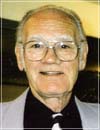
Scott Richardson (1923-2010) served as pastor of Katy Baptist Church in Fairmont, West Virginia.
Broadcaster:

Comments

0 / 2000 characters
Comments are moderated before appearing.

Be the first to comment!

Joshua

Joshua

Shall we play a game? Ask me about articles, sermons, or theology from our library. I can also help you navigate the site.

0:00 0:00