Bootstrap
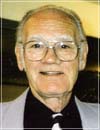
Scott Richardson

Jesus Christ, The Same Yesterday, Today and Forever

Hebrews 13:8
Scott Richardson September, 6 1987 Audio
0 Comments

Sermon Transcript

Auto-generated transcript • May contain errors

100%
If you will, the 13th chapter
of the book of Hebrews, Hebrews chapter 13. We'll try to emphasize that 8th
verse of the 13th chapter. It says, Jesus Christ, the same,
yesterday, today, and forever. That is, always the same. Always the same. It never changes. Wherever you find God, you find
him the same. God never changes. And the Lord
Jesus Christ is God in the flesh. He is the express image of the
invisible here in the beginning of the book of Hebrews in chapter
1. It says this, it says, verse
1, God, who at sundry times and
in divers manners spake in times past unto the fathers by the
prophets, hath in these last days spoken unto us by son. The his there is in italics and
has been added by the translators and the force of the expression
son is minimized a little bit by using that word his son. But nevertheless, has in these
last days spoken unto us by Son, in whom he appointed heir of
all things, by whom also he made the worlds, who being the brightness
of his glory, and the express image of his person, the express
image of the person of God." I read a little religious periodical
here This past week, the writer of
the article, the editor of the paper, he was telling why the law should
be preached and the reasons for preaching the law. And he had
some good reasons, but his first reason was this, and I think
he was in error here or hadn't thought it out real good. He
said that the first reason why we should preach the law is because
the character of God is revealed in the law. Part of the character
of God is revealed in the law. Not all of the character of God
is revealed in the law. Certainly the holiness of God
is revealed in the law. But if we want to know what God's
like, we'll not find it in the law. will find it revealed in
the face of the Lord Jesus Christ. And as I read that and he took
to task everybody that was opposed to the Sabbath day and everybody
that was opposed to this and that in regard to rules and regulations,
I thought, well, certainly God in his fullness is not revealed
in the law, because if he is, there is no mercy. Where is the
mercy of God? Where is the love of God? Where
is the tenderness of God? It is not found in the law. You
find the severity of God and the holiness in the law. It is
thou shalt do this, and if you don't do it, you are going to
pay the price. It says here that the Lord Jesus
Christ is the express image of his person. As I have said many
times, I will say it again here this morning, the only God that
we will ever see when we pass beyond this veil of flesh and
enter into eternity and bow to the feet of the Divine One will
be the Lord Jesus Christ. We will bow at his feet. He is
our God. He is God manifest in the flesh. And it says, "...the express
image of his person, and upholding all things by the word of his
power. And when he had by himself purged
our sin, sat down on the right hand of the majesty on high."
And we could go on and on in that chapter. speaking here in
the 8th verse of the Lord Jesus Christ, who is God manifest in
the flesh. And it's Jesus Christ, always
the same, unchanging. It's a character which belongs
to nothing that is found upon this earth. The unchanging God,
the unchanging Savior, the Lord Jesus Christ. A character which
he alone deserves who is Lord of Heaven, always the same, the
Lord Jesus Christ. I said, wherever you find God,
you find him the same. There is no change in him. The
world in which we live and move and have our being to an extent
has stamped upon it the marks of a tremendous change. It's
not the fair creation of which God said every part and every
portion of it is very good. We see the change. The change
is manifest in about anywhere you look and everywhere you look.
You can see that this creation in which God said every part
and portion was very good, is not very good now. Certainly,
it's a beautiful world. There's no denying that. It's
clothed with all that is lovely to the eye. It's furnished with
all that's necessary for our comfort, and that's true. It's
stored with everything that can make life enjoyable. Anywhere you look, though, you
see the traces or the signs of the Father's hand. But still,
this world is not what it once was. It's not the fair creation. In the second chapter of the
book of Genesis, when God celebrated the Sabbath, the only time God
ever celebrated the Sabbath was in the second chapter of the
book of Genesis, when He looked upon all of this fair creation
and He said, is very good. And so it was so good and so
pleasant and no sin. And he celebrated a Sabbath. God rested. God rested and celebrated
a Sabbath. Well, what I'm saying here this
morning is this. This world has gone through a
tremendous change. This world has gone through a
blighted and withering change. It's not what it once was. And because of the tremendous
change that the world has went through, we see various forms
that express this in men's tempers and in passions that are unrestrained
and intellects are degraded and lusts unbridled. affections misplaced
and powers misimplied and God neglected and disowned and rejected
and lightly esteemed because of this tremendous change, this
tragic change, this sickness which we deal with, every one
of us, in our immediate families and among our brethren and our
friends and all of that. This sickness which devours and
eats up tens of thousands of people practically every hour
of every day. And the wars on every hand which
cuts off from the youth of this world its hundreds and hundreds
of thousands in generations. The infants that are snatched
away in the springtime of life. the tears and the distresses
and the troubles and the afflictions of which God never placed in
the Garden of Eden. All these things, brethren, tell
the same sad story and the same sad tale that creation, this
world has changed. It has changed. And I've said
all that to say this, that there's only one object of trust, and
that's the Lord Jesus Christ, who never changes. He is what
the theologians say, He's immutable. That is, He is not capable of
change. Everything else changes. The whole world and creation
and men and women Everything changes, and there's only one
in all of the universe that does not change, and that's the Lord
Jesus Christ, and that's what it says here. Jesus Christ, the
same, the same yesterday. What He was yesterday, He is
today, and what He is today, He was yesterday. He does not
change. Well, let me go on. We ourselves are like unfaithful
stewards. We have marred and spoiled the
very perfect work of God Almighty. Because of Adam's transgression,
all things have suffered. So there is nothing on this earth
that is unchangeable. Where is these great cities of
the past that we read about in the Old Testament? Where is the
great city of Nineveh? Where is the great city of Babylon,
this great wonder of the world? Where is it now? Why, these cities
are desolations. They are in a dry land in the
wilderness where no man lives. They're gone. They're gone because
of decay and because of change. They are no more. They are no
more. Where's the churches here in
the Bible that so much emphasis is placed upon? The Church of
Ephesus, and the Church of Philippi, and the Church of Corinth, and
the Church of the Galatians. Where's all these churches gone
to? You don't hear of them. You can't
find them on the map. You don't know where they're
at. They don't exist anymore. The
spirit of them certainly exists, but the churches in themselves
don't exist. But what I'm saying and trying
to emphasize here this morning is this, that the Lord Jesus
Christ has always been the same, always been the same. He does
not change in regard to knowledge. If the Lord Jesus Christ were
changeable in His knowledge, that would make Him an unfit
object of trust. You can't trust me. You can't
trust me. Only by the grace of God will
I do right. Left to myself, I won't do right. Left to myself, I'll deceive
you and lead you down the primrose path. By myself, I'm an unfit
object. And you can pick out the best
man or woman or family or preacher or church that you know of and
you can write Ichabod on them because they are unfit objects
of trust. You can't trust them. You can't
trust the preacher, you can't trust your father, you can't
trust your mother, your brother, your sister, you can't trust
anybody. They are all capable of falling,
capable of deceiving you. They are not a fit object of
trust. If the Lord Jesus Christ was
changeable, in his knowledge, he's not changeable in his knowledge. There's not anything about him
that is changeable in that he is immutable, which means he
is in himself not capable of changing. He's not capable of
changing. I believe that if I ever could
get this in my heart, I believe I could trust him, don't you?
He's not capable of changing. And I was talking a little bit
about this Wednesday night, I believe that I mentioned over there in
the book of 1 Peter where it says, casting all your cares
upon Him for He cares for you. And the reason why we don't cast
our cares upon our Heavenly Father like we ought to is because we
don't know Him well enough to trust Him. If we knew If we knew
some things about our God and about our Savior, in particular
about the fact that He doesn't change, and He's not capable
of changing, and if He loved us once, if He loved us before
time ever was, if He loves us now, He'll always love us, and
He's concerned about us and for us, and we could really and truly
cast our cares upon him, if we knew him. Now, the little old
5 cent Jesus that you hear about on the television and the radio
and those that you read about, for the most part, because he's
not unchangeable, or he's changeable in his knowledge. And he's capable,
he's fickle, and he rises and falls like the temperature.
But the Lord Jesus Christ of the Bible, He's the same, listen
to me, the same yesterday, today, and He'll always be the same.
And He's a fit object for trust. Sink or swim, you can trust in
Him. Why won't men trust in Him? the immutable, the immutable
God who has revealed Himself in the face of the Lord Jesus
Christ. Oh, listen, He is unchangeable
in regard to His knowledge. Now, God has known from all eternity
all which He can possibly know. He's always known from eternity
past. All that he can possibly know.
There's nothing hid from God. He doesn't have to watch you
to find out what you're going to do next. He knows what you're
going to do next. He knows exactly the next move
that you make. He knows exactly the next thought
that you think. He knows that. He is not defected from knowledge. God does not know now any more
than he has known from eternity. And that which he now knows,
he always knew. A man is said to be changed in
regard to knowledge when he knows that now which he did not know
before. So he has changed. Now, if God
could be changed in knowledge, it would be for the want of wisdom. And therefore, in the book of
1 Timothy, I believe it is, in verse 17, where it talks about
the only wise God, it means when it says only wise, He is the
only wise being as an object of trust in the whole universe. And if he could be changed in
knowledge, it would be on the account of the lack of wisdom,
and he no longer could refer to himself as being only wise. If he knew something today which
he didn't know before, which he didn't know yesterday, he
would not be only wise. If he understood a thing at one
time which he did not understand before, he would be changed from
ignorance to knowledge. If he's changeable in knowledge,
he is defective in knowledge, and he might promise that now
which he would afterward say was unfit to be promised. He was effective in his knowledge. I'm here to declare unto you
this morning an unchanging God, an unchanging Christ, the same
yesterday, today, and forevermore. Listen, it would make, if he
was changeable, it would make him advocate the throne. because be it an unbid object
of trust. You see, what makes this so,
what makes this so, is that God has no original. He has no original. Now, I have an original. I come
from my father and my mother and on to my grandparents and
great-grandparents, but it all stops in one, the original. It stops in Adam. And what Adam
did, I did. What Adam did, I did. He stood
there as my representative. He acted in my stead and place
and room, and when he rebelled against God, I rebelled against
God. A fellow asked me not so long
ago, he said, talking about this business of Adam. is our representative. They said, well, Adam was the
sire and the father, humanly speaking, of Cain and Abel. And he said, Cain, Cain out of
a fit of jealousy and temper, unbridled temper, rose up and
slew his brother and killed his brother in the face of God himself. And they said, God didn't kill
him. Why didn't God kill him? Why didn't God kill Kings? Why not? I'll tell you why. Because
God had not made a command that says, Thou shalt not kill. You see, death reigned from Adam
unto Moses. But they all died from Adam unto
Moses. But there's no law, Charlie.
There's no law. God had not said, Thou shalt
not kill. But when he said, Thou shalt
not kill, over there in the Decalogue, a brother from there on, things
took place. Oh, listen, God has no original.
He has no original. I got an original like Adam.
You see, he has not been. His essence, his being, he has
not been from another, from somebody else. He has no original. And
he who has no being from another, who has no original, cannot but
be what he always is and always was. He's a fit object of trust. That's what I'm trying to say
here this morning. He's a fit object of trust. He
is the first being. God is the first being. An independent
being. God was not produced of himself
or by another, by nature. Now, this is not a good expression,
I know, but it's the only way I know to say it. God, by nature,
has always been what he is. Always been what he is. He has
no defect in any of his attributes. God hath no original, he has
no defect. Why? Because he was not made
of nothing. We are made of nothing. We came
from nothing. And if it had not been for the
great I AM and intervened in our behalf, we'd still be nothing. Because he was not made of nothing,
he was before all things, and therefore depends upon no other
thing by which it change can bring any change upon himself. That which is from itself cannot
be changed. And God is from himself. God
is himself. There cannot be any reason for
change in God. No reason whatsoever. When men
change their minds, it's because of a lack of foresight or a lack
of strength to accomplish that which they desire to do, but
there cannot be any weakness or defect such as that to be
found in God that would prohibit him or hinder him in doing that
which he hath desired. Man has power to devise and power
to imagine, but he has no power to effect or to execute that
which he imagines and that which he devises. God does not want
for wisdom to frame His decrees, or holiness to regulate His decrees,
or power to affect His decrees. What then could make God change?
He's unchangeable. That's what I'm saying, unchangeable.
Don't trust in these things that can change. Don't trust Him. You've got your feet in a sinking
boat. They're going to sink. Don't
trust in them. I was telling here the other
day about children, about how people... Well, isn't it fine? You ought to love your children.
You ought to rejoice in your children and consider them as
a blessing of God for you to train up in the nurture and the
admonition of the Lord and to enjoy and to pray for them that
God might be glorified in them. But don't trust in your children.
Don't trust in them. Don't rejoice in children. The
fellow said this about them. He said they're like birds in
a tree. Children are like little birds
up in a tree that make the little chirping music and presently
falls into the fowler's nest. Don't trust in them. Don't trust
in them. They'll be gone from you before
you know it. Little did Job expect such sad
news as the loss of his children. And when that messenger came
and knocked on his door, oh, he didn't expect to hear that
news. He expected to hear something,
but not the bad news that all of my children are gone. Ah,
don't trust in anything that's earthly. Anything that's earthly,
don't trust in it. It's not worthy of trust. It's not a fit object of trust. Trust only in Him who alone can
be trusted. Him who is immutable, who never
changes. The Lord Jesus Christ. Ah, listen. The Apostle Paul
had something to say about all this. Over there in 1 Timothy
6 and 17, Paul gives them a name. He said, don't trust in uncertain
riches. Uncertain riches. And all of
these things, church membership, and your money, and professions,
and baptisms, and all these things are uncertain riches. Don't trust
them. They're not fit objects of trust. So don't trust in them. Oh, listen
to me. Let me talk to you just a little
bit about the Lord Jesus Christ, a little bit about Him. The Lord
Jesus has ever been the same in His office, in His person,
and in His nature. Before the mountains were brought
forth, before the world was born, from the everlasting Jesus Christ,
like the Father, who was a very God, a very From the beginning,
he was foreordained to be the Savior of sinners. He was always,
always the Lamb slain from the foundation of the world, without
whose blood there could be no remittance, or doing away, or
forgiveness, or remission of sins. He was the hope of a believing
Enoch. He was the hope of a believing
Noah. He was the hope of a believing
Abraham. There never was but one robe
to God. He was and is the way, the truth,
and the life yesterday as well as today. He never changes. He's always the same, not capable
of changing. always the same in his love towards
men's souls. Oh, my soul, I wandered far from
God, wandered all those years far from God. But the Lord Jesus
Christ, who is faithful, faithful to my soul, faithful to that
blood covenant, Faithful to the purpose that was purposed by
God in Himself before time ever was, when He said, All the Father
giveth to me shall come to me, and him that cometh to me I will
in no wise. I have to have Him. I'll have
to have Him. He's always the same in His love
towards men's souls. It was love that made Him lay
down His life for a season. It was love that made Him give
up His glorious majesty and honor and become a man. It was love
that he took upon himself the form of sinful flesh, a form
of it. It was the love of his towards
the souls of the elect people of God. It was love that caused
him to lay down his life for the unthankful, the ungrateful. In a mess, the Bible says that
when we were yet sinners, Christ died for us. Sinners, God-haters,
Christ-rejecters. Listen to what it says here in
this familiar scripture here in the 2nd chapter, or the 3rd
chapter of the book of Romans. Let me just read it to you, just
to remind you, oh, of how God is. It says here, this describes
us, why it said that as it's written, there's none righteous,
no, not one. Not a righteous one. Not one. No, not one. There's none that
understand it. None that seeketh after God. These fellas is telling people
now that, oh, They're just, certain areas of our country and certain
areas of the world, they're just hungry after God, hungry for
the gospel. They may be hungry for something,
but they're not hungry for the gospel. There's nobody seeking
after God apart from God seeking after Him. This is the way we
are. There's none that understand
it. There's none that seeketh after God. They are all gone
out of the way. They are together become unprofitable. They're useless. This describes
every one of them. And I'm talking about the unchangeable
Christ who is the same yesterday, today, and forever. He doesn't
change in His offices. He doesn't change in His nature.
He doesn't change in His person. His purpose was, before time
ever was, to redeem them that God had chosen. And we were all
like this. There wasn't one single solitary
thing about us that would be conducive for God to bestow any
mercy upon us. There wasn't anything about us.
Most people think that there's something good about us. There's
some redeeming quality in us that constrains God to do something
for us, or God's obligated to do something for us, but there's
not one redeeming quality in us. Not one. Not a speck. God could take his finger and
go from the top of our head to the bottom of the of our feet,
and he couldn't find one sound piece of flesh in us. We're polluted
and corrupted and gone after our own inventions, despising
God, hating God, and rejecting in ourselves the very mercy of
God. Ain't nothing about us that's
commendable. There's none that seeketh after
God, and if we ever find God, it'll be because God found us. and came where we was and did
something for us. Give us of his nature, and give
us the spirit of repentance, and give us the spirit of sorrow
and godliness. If there's any of that in us,
it's because he did it. It says they are all going out
of the way, every one of them. They are together become unprofitable,
useless. There's none that doeth good.
No, not one. Not a single. I all times think
of that when it says that God looked down upon the children
of men to see if there was any that doeth good. Looked down
upon a population, not a population of heathens, but a population
of individuals that comprised a society and civilization that
was able to function and operate. And he looked down upon them.
And there was not one, not one single solitary individual to
be found among Adam's race that God could put his finger upon
and said, here's a good man. He couldn't find him. It says
that Noah found grace in the eyes of God. There's no grace
in Noah. There's no grace in Noah or nothing
good about Noah that was commendable or conducive of God to do anything
for him. If God did anything for Noah,
it was by the sovereign grace of God. God wasn't obligated
to do anything for him. He did it because he wanted to
do it, and it pleased him to do it. See what I'm talking about? I'm talking about the unchangeableness
of the Lord Jesus Christ, unchangeable in His person, unchangeable in
every office, and unchangeable in His nature. And here, this
is what we are. It says, "...their throat is
as an open sepulcher, as like an open grave, and their tongues
they have used deceit, and the poison of ash is under their
lips, whose mouth is full of cursing and bitterness. Their
feet are swift, quick to shed blood. Destruction and misery
are in their ways. And the way of peace they have
not known, despised it. And there is no fear of God before
their eyes." Ah, that characterizes every single solitary individual
that the member of Adam's race, apart from the last Adam, the
Lord Jesus Christ. Listen, he laid down his life. No one took it away from him.
He laid it down for the unthankful and the ungrateful and ungodly. Love that made him endure all
the penalty. The same love now as was then
is always the same. If God loved me then, He loves
me now. And it's impugning His wisdom
to say, to say, well, I hope God loves me. If God ever loved
me, if He ever loved me, He still loves me with the same kind of
love. It's a presumption on my part
to say, if God loves me. It's not the language of the
saints. Is that right, Charlie? It's
not the language of the saints. Oh, no. No reason. Well, I know there's a lot of
people doubt and lots said about folks doubting and a lot said
about laboring under this doubt and fear and wondering how you
stand and all that. Maybe there's something to it,
I don't know. But I know this, that it's all here. I mean, if
a man wants some assurance, it's here in the Bible. You can't
get any assurance out of your experience or you can't get any
assurance out of anything else apart from the written Word of
God. That's the only place you'll ever get any assurance is from
the Word of God. because it's unchangeable, just
like the offer. It's unchangeable. It's always
the same. And whatever it says back 6,000
years ago, it says right now. It means the same thing. It doesn't
change. And if the Word of God says that
the man who comes to God, who comes to God on the ground that
God places him, If he comes to God just as he is, just as he
is without one plea, if he comes to God on the ground of his sinnerhood,
his helplessness and hopelessness, on the fact that he's a sinner,
he knows he's a sinner, he's a rebel against God. and he desires
deliverance and help, and he desires some satisfaction to
be made to God's law, that's against. If he comes on that
ground, the Bible says, he that believeth on the Son, he that
believeth on the Son shall not perish. God believes that. That's my only hope. I haven't
got any hope and any visions, any experiences. My hope is based
on what the Word of God says, on who the Lord Jesus Christ
is, and what He did and why He did it, and where He's at and
what He's doing now. My hope is in that, based upon
the Word of God. Well, the Lord Jesus Christ, same in His power to save, it
was He, the Lord Jesus, who cast out seven devils from that woman
and raised her up in the newness of life. It was He, the Lord
Jesus Christ, who never changes, that entered the house of Zacchaeus
and declared that salvation has come to your house. It was He
that gave blessed assurance to that dying thief when he prayed
to be remembered. And our Lord Jesus Christ said,
Today shalt thou be with me. Was it not He who met that persecuting
Saul of Tarsus and cast him down on the ground with all of his
pride and put within him a heart to love him and a heart to be
obedient? Was it not the Lord Jesus Christ
that sent him forth to preach the gospel? Well, he's still
the same. He hasn't changed. That's the
burden that I'm trying to labor under here this morning. He is
the same in his willingness to receive sinners. I never read
of anyone in the Bible who ever sought the Lord Jesus Christ
sincerely, who sought Him in vain. All that sought Him sincerely,
coming to God on the ground of their sinnerhood, He heard every
one of them. He heard every one of them. Why
is the same in his power to preserve? He will not begin a work of grace
in a man's heart and then leave that work uncompleted or unfinished. He that hath begun the good work
shall accomplish it, shall finish it until the day of redemption.
Ah, did he not raise and restore the apostle after they had, in
particular Peter, shamefully forsook him and run off and went
out into the woods in the darkness of the night? Did he not turn
the heart of old Peter? I believe he did. He is the same
yesterday, today, and forever. Object of trust. No defect in
his knowledge? No defect in his character? He's a fit subject for a man
to cast his cares upon. And I cast my very soul on him. He only is the object of my trust. He only. Not this church, not my wife,
not my children, not some little sparse knowledge that a man might
have. My hope is built on nothing less
than His blood and righteousness. All of us, all of Him is synchronicity. Him and Him alone. is the object
of my trust. I've been persuaded to believe
that he's a fit object of my trust. Many, many reasons which
I haven't mentioned this morning, but this one in particular, because
he never changes. He never changes. All the Father
giveth to me will come to me, and him that comes to me I will
know why. reject him or cast him out. I
have come to him on the ground of my sinnerhood, and I have
seen him with the eyes of faith, and he is the object of my trust.
And when this thing is all over with, I expect to be like him,
for I shall see him as he is." God help us. Let's stand and
we will be dismissed. Charlie, you pray for us, will
ya?
Scott Richardson
About Scott Richardson
Scott Richardson (1923-2010) served as pastor of Katy Baptist Church in Fairmont, West Virginia.
Broadcaster:

Comments

0 / 2000 characters
Comments are moderated before appearing.

Be the first to comment!

Joshua

Joshua

Shall we play a game? Ask me about articles, sermons, or theology from our library. I can also help you navigate the site.