Bootstrap
Scott Richardson

The Priesthood

Exodus 28:1
Scott Richardson November, 17 1982 Audio
0 Comments

Sermon Transcript

Auto-generated transcript • May contain errors

100%
one of Exodus chapter 28. This 28th chapter has to do with
the priesthood. It says, And take thou unto thee
Aaron thy brother, and his sons with him from among the children
of Israel, that he may minister unto thee in the priest's even
Aaron, Nadab, Abihu, Eleazar, Ithmar, Aaron's son. Take thou unto thee Aaron thy
brother and his sons with him from among the children of Israel,
that he may minister unto me in the priest's office." This
is the beginning of the priesthood. We talked to you last Sunday,
I believe it was, or Sunday night, about about the blood, about the shedding
of the blood, about the Passover lamb, and said the Passover lamb
was a type of the Lord Jesus Christ offering himself as a
sacrifice for our sins. We have the sacrifice behind
us here, the sacrifice, the bloodshed. Now we have the institution of
the priesthood. Can we find anything in the institution
of the priesthood that would be of some interest to you and
I? I believe we can. I believe it
ought to create and cause some interest in our souls. Number
one, if you'll notice here, God speaking to Moses, And Moses,
acting in God's stead, says, God said for Moses to take Aaron,
his brother, and Aaron's four sons and dedicate them unto the ministry
of the priesthood. But notice where they come from. His sons with him from among
the children of Israel. The Aaronic priesthood was confined
unto the nation Israel. The nation of Egypt, where they
just came out of, wasn't taken into consideration. None of the
other tribes or nations that were in existence then were taken
into consideration. He didn't send anybody out to
the Egyptians or over to the Hittites or the Moabites or the
Philistines and say, well now, get a couple of good men out
of your country here, your tribe, to represent you and bring them
over to my camp where the tabernacle is and we'll choose out from
all of these selectees certain ones to stand before me as a
representative for the people." But he limited his choice to
this one nation. That's election right there.
That's election. Whether men want to see it or
not, that's election. That's a limited choice. God
chose Aaron and his four sons to represent the people of Israel
before Him. And he chose Aaron for the high
priest. You can see that, and I'll not
attempt to elaborate on it, but it's there, and I think we can
readily see it. Well, I say that the priesthood
here ought to create some interest for this reason, because it speaks
of the grace which has not only provided a way for us to get
into the presence of Almighty God Himself. But it also sets
forth and teaches of that peculiar and particular meaning of keeping
us there in His presence. Now that's a problem with a lot
of people. There's a great controversy, always has been a great controversy
and a great battle and warfare raging upon this particular truth. To get to Christ, we say we believe
in the Lord Jesus Christ. That's how we get to God, is
believe on the Lord Jesus Christ. But what keeps us there? Most people believe that once
we get there, then it's up to us to stay there. It's up to our determination,
our faithfulness, in order to keep us there. Say, well, we
know that nothing can separate the believer from the love of
God which is in Christ Jesus, except the believer himself.
The believer can separate himself. Storms can't do it, death can't
do it, hell can't do it, but the believer can. He's on the
rock of ages. And he can jump off the Rock
of Ages if he wants to. Now that's the sum and substance
of the argument that most people present in regard to the keeping
of the children of God in the presence of God forever. I think that this chapter here
is very interesting for this reason. It provides a way whereby
we might get into the presence of God, plus it provides the
means of keeping us there, of keeping us in the presence of
God. Well, you know and I know that
if it was, if there was not someone greater than ourselves, we would
not stay. We would not stay in the presence
of God. We'd fall every two seconds.
Well, let me go on with this, and I think you'll see what I'm
talking about. Well, here's the priest now. Aaron's the high priest. The
four sons make up this priesthood. Well, the first thing you've
got to do, Aaron, is to make holy garments for Aaron, holy
garments. for Aaron thy brother, for glory
and for beauty. Now, I'm not going to read all
these verses, but I'll read another verse. And thou shalt speak unto
all that are wise-hearted from whom I feel, with the spirit
of wisdom, that they may make Aaron's garment, to consecrate
him, that he may minister unto me in the priest's office. And these are the garments, which
they shall make, a breastplate, an ephod, and a robe, embroidered
coat, a mitre, and a girdle. And they shall make holy garments
for Aaron thy brother and his son, that he may minister unto
me in the priest's office." Well, the robe expresses the varied
functions and qualities of the office of the high priest. The
ephod here was a great priestly robe, and it was inseparably
connected with the shoulder pieces and the breastplate. Now, the
names here in verse 9 to 12, look there if you want to, and
the names of the twelve tribes of Israel was engraven on precious
stones and were born both on the shoulders and on the breasts
of the high priest in his ephod, or his garment. It says, verse
number 9 now, And thou shalt take two onyx stones, engrave
on them the names of the children of Israel, six of their names
on one stone, and the other six names of the rest on the other
stone, according to their birth. With the work of an engraver
in stone, like the engravings of a cygnet shalt thou engrave
the two stones with the names of the children of Israel, and
thou shalt make them to be set in settings of gold." Well, what
am I saying here? Well, I'm saying that these twelve
tribes of Israel were represented before God in these precious
stones which were born upon the shoulders and upon the breast
of the high priest in his garment, his priestly garment. Now, he
goes in unto God, that is, into the presence of God as a representative
of the people. And when he goes in, he bears
on his shoulder and on his breast He bears these precious stones,
and these precious stones have the names of the twelve tribes
of Israel engraven on these stones. In other words, the people were
represented before God by the High Priest, and the precious
stones were a representation of the people. might their failures
and their arrows be? And they had plenty of them.
They had plenty of failures, these people. Yet, in spite of their failures,
in spite of their fault, in spite of their sin, their names glittered
on this brass plate with a Fading beauty. You see what I'm saying? I'm saying that the high priest
was their representative. He represented these people.
They didn't go in. They didn't blunder or bluster
into the very presence of God apart from a representative,
apart from a substitute, apart from a go-between. Aaron represents
the Lord Jesus Christ. He's the high priest. He's a
type of Christ. Christ is the fulfillment of
the Aaronic priesthood. No such thing as a priesthood
anymore. It's been fulfilled in the Lord Jesus. He never lives
on high and out to represent His people. Aaron goes in and
represents the people who are represented in the precious stone. on the breastplate and on the
shoulder of this high priest. Now, these people have faults
and failures and sins. They have them. But their sins, their faults
and their failures are never seen because these precious stones
represent them and they glitter and shine with glory It cannot be dark. Now, they tell me, and I think
it's right, that the peculiarity of a precious
stone is that the more intense the light which is brought to
bear upon this precious stone, the more brightly it shines.
The more light you put upon it, the brighter the stone shined.
Now these people were in the very presence of Almighty God
in His spotless, immaculate purity, in a representative, represented
by these stones on Aaron's garment. The more the holy light of God
shined upon these stones, the more brightly the precious stone
shines. You see that? You see, light
can never make a precious stone dim. Never do it. It only increases
its brightness. It only increases its luster. Now, the tribes, the smallest
as well as the greatest, were born continually. continually
upon the breast and upon the shoulders of Aaron before the
Lord in all the beauty, in all the glory, in all the light of
these precious stones." That's where they were in these precious
stones. This is what I'm saying, and
I hope you can see it. I believe you can. And if you
don't know this, I want you to learn it today. I want you to
know that God only sees us in the heart of the Lamb of God,
the Lord Jesus Christ. That's where He sees us. He sees us in these precious
stones that's on Aaron's breastplate, that's on Aaron's shoulders.
He sees us there. Aaron is a type of the Lord Jesus
Christ. Our life is hid in Christ who
is God. Our life's there. We're in Christ. We're in Christ. I'm talking,
you see, about how he keeps us there. We go into the presence
of God through a substitute, through a sacrifice. After we
get into the presence of God, what keeps us there? What keeps
us there? Is it your own doing? Is it your
own faithfulness? Is that what keeps you there?
If you say yes, you've missed it a thousand miles. You've missed
it a million miles if you say yes. We're kept there by our
high priest. Our names are engraved on these
precious stones, and they're born on his shoulder and on his
breast. And the more light that's brought
to bear upon these stones, the more they shine. The more they
shine. You see what I'm talking about?
I'm saying God only sees us. God only sees the believers.
I know how you see me and I know how I see you. And that's not
what I'm talking about. I'm talking about how God sees
me. What did I preach to you last
Sunday night? see the blood. That's what counts, isn't it?
When who sees it? When I see it, when I understand
it, when I appreciate the value, when I do this, when I do that?
No. When I see the blood, God said,
when I see it, I'll pass over you. When I see it, you can't
see it, you're inside the house. You can't see it. Well, is that
fellow safe? Is the people that are in the
house, are they safe? They can't see the blood, are
they safe? They're safe as long as God's eye sticks upon that
blood. They're safe. And I'm safe this
morning. As long as God's eye rests upon
the Lord Jesus Christ, I'm safe because I'm in Him. I'm in Christ. My name has been engraven in
that precious stone. And my high priest, he goes into
the presence of God to represent me before God. And when God sees
him, he sees me! And in him is no sin. That's
how we're kept there. You see, God only sees us in the heart
of the Lord Jesus Christ. And in this view, or in this
sight, we shine. in his righteousness and in his
glory. Now, I better say that the world
don't see us this way. They don't see us this way, but
he sees us this way. Now, I know what the world thinks
about us. I know what they think about
me. Well, their criticism, And I
know of their fault findings. I know what they say. You see,
they only see what they want to see. And that's our faults
and our blemishes. That's what the world sees. The
world doesn't ever see anything good about you. It's all your
faults. Don't you talk to people every
once in a while that they'll tell you, I knew you when. Well,
I knew you when. You're religious now, but I knew
you when. They're always bringing up your
blots and your blemishes, your faults and your faith. You see,
they don't have any ability to go any farther than that. Their
judgment is always wrong, it's always one-sided, and they can't
see the sparkling jewels bearing the name of God's redeemed, engraven
by the hand of God's unchangeable love. They can't see that. They
can't see it. But God can see it. They can
see the outside. They can see your faults. They
can see your blemishes. But God doesn't see that. I'm
not saying that God can't see it. God knows all, sees all. Nothing is hidden from God. But
I'm talking about positionally. God doesn't see our faults and
our errors and our blots and our blemishes because we have
a substitute. We have a high priest. We have
a righteous high priest. We have one who does not have
spot or blemish. The Lord Jesus, He doesn't have
that. He doesn't have what I got, spots and blemishes. He's flat
out perfect. He pleases God with every breath
that he ever took was pleasing to God. Every tear, every grunt,
every bone of the Lord Jesus Christ was in perfect harmony
with the will of God. He done everything to please
God, and God said, This is my beloved Son in whom I am well
pleased. He is my substitute. He is my
Redeemer. He is my High Priest. He represents
me before God, and God sees me in His heart. You see? That's how I'm kept. I know how
I go into the presence of God through the Lord Jesus Christ,
and I am kept in the presence of God by the Lord Jesus Christ. These precious stones. Twelve
tribes of Israel enraged on these precious stones. Right there
they are. Every time he goes in, the high
priest, every time he went in, right there on his breastplate,
on his ephod, on this great priestly garment, there they was, right
there. Right there on his shoulder, right there on his shoulder and
right there. And the more clear and pure of the presence of God
that was brought to bear upon these stones, the brighter they
shone. the brighter they are. Well,
I'm saying this, men of the world, look upon our blots and our blemishes. They have no ability to go any
farther than that. Their judgment is always wrong,
it's always one-sided, but I say they can't see what God sees. They can't see that. They can
see everything that you and I can see, but they can't see the glory
of God. They can't see what I'm talking
about this morning. They can't see the gospel of
the Lord Jesus Christ. They can't see the substitutionary
work of the Lord Jesus. They can't see this. They can't
see that there's any beauty in Him that they should desire Him.
They know some facts. They've got some religions. They
adhere to their rituals and to their ceremonies and so forth,
but they can't see this. If they ever see this, in the
space of the people in our area, if they ever see this, they'll
be here. They'll be here on Wednesday night, Sunday morning, Sunday
night. They'll be knocking on the door saying, I want to hear
what that fellow's talking about. That fellow's talking about the gospel
of God's Son, and I want to hear about it. If they ever hear.
If they ever see. But up to this point, they can't.
Up to this point, they can't see it. They can't see it. They
can't see these sparkling Jews. But God can. That's the difference. God can see it. Well, it's true
now, we ought not to furnish men of this world with anything
that would tend to bring reproach upon the name of God. That's
true. I'm not saying here that just
because we are represented by God, or by Aaron and these precious
stones before God, and we shine brilliantly in His presence,
and we're kept there by the faithfulness and the blood of the Lord Jesus
Christ, that that would tend to make us careless in our lives? I'm saying the opposite. I'm
saying the opposite. Instead of that making us careless
in the manner of our living, It makes us that much more thoughtful
of how we walk for fear that we would give men an occasion
to reproach the name of God because of our unfaithfulness or our
unsightly walk. See what I'm talking about? We
ought not to give men any excuse whatsoever to reproach the name
of God because of something that we said or something that we've
done. Don't do it. They can find plenty without
you saying anything, without you doing anything, but just
looking at you, listening to you for a little while. They
can find plenty of ammunition. So be careful. That's what I'm
saying. Be careful. Don't furnish men
with anything that would cause them to dishonor or reproach
the name of God because of you or because of me. We should contrast. that we should seek by well-doing
to put to silence the ignorance of foolish men. And I believe
that the more clear that we see ourselves and see His holiness
and His righteousness, we will be more careful in our walk before
God and before men. But thank God that our judgment
is not with men, but with God. That's where our judgment is,
not with men, but with God. All right, now I want you to
see something else. Now, I'll quit. Look up here in verse number
36. Well, look at verse 33. There's
old Aaron. I'm speaking now of some things
that goes on in this priestly garment. And beneath upon the
hem of it, that is, the hem of his garment, the skirts, the
skirt, the bottom of his skirt here, and beneath upon the hem
of it thou shalt make pomegranates of blue and of purple and of
scarlet. Boy, they were pretty. They were
beautiful. round about the hymn thereof, and bells of gold between
them round about, a golden bell and a pomegranate, a golden bell
and a pomegranate upon the hymn of the robe round about. And
it shall be upon Aaron to minister." Now, the significance of this
is seen in the latter part of the 35th verse. Now, Aaron is
ministering Before God, as I represent Him, in the holies of holies,
He is there ministering for us. The Lord Jesus Christ, He represents
the Lord Jesus here. But He ministers unto God as
representative of the ten tribes of Israel, names engraved on
the precious stones, on His shoulders, on His breastplate, now, and
it shall be upon Aaron to His sound shall be heard when he
goeth in unto the holy place before the Lord, and when he
cometh out, that he dieth not." That is, if he ever stops in
there, if you ever quit hearing the golden bells ringing when
he's in there, he'll die. He'll die. If he ever goes in
there and is idle, if he quits, If he goes in there and sits
down, whether there's a chair there or not, I don't know. I
don't think there was. But if he leans up against the altar,
or he leans up against the ark of the covenant, or the mercy
seat, or if he sits down on the floor, well, he's going to die. You know that he's alive as long
as you can hear these bells, Bob, as long as these golden
bells. A golden bell of pomegranate,
a golden bell of pomegranate, every time he moves. These bells
sound out the fact that he is doing business with God in our
behalf. All right? Verse 36, look at
that now. And thou shalt make a plate of
pure gold, and engrave upon it like the engravings of a signet
holiness to the Lord. Now, make a plate of pure gold. I don't know how big it was.
big enough, solid, solid gold, and grave upon it these words,
Holiness to the Lord! Thou shalt put it on a blue lace,
and it shall be upon the miter, upon the forefront of the miter
it shall be, and it shall be upon Aaron's forehead, this miter,
went around his head and was up here. And upon it was a plate
of pure gold. And the words upon the plate
of pure gold was, Holiness unto the Lord. All right, it shall
be upon Aaron's forehead. And Aaron may bear the iniquity
of the holy things, which the children of Israel shall hallow
in their holy gifts. And it shall be," notice this
is the important part of it, and it shall be always upon his
forehead." It shall be always upon his forehead. What shall
always be upon Aaron's forehead? A solid plate of gold. What's upon this solid plate
of gold? Holiness to the Lord. Now, this
shall be always upon his forehead. Why? Look at the next sentence. "...that they," who he represents,
"...may be accepted before the Lord." What does that mean, preachers?
Well, I'll tell you. This golden plate upon Aaron's
forehead was a type of the essential holiness of the Lord Jesus Christ. Without holiness, no man shall
see the Lord. God demands absolute, immaculate,
spotless holiness. God demands it from the time
we are born until the time we die. God demands perfect, absolute,
perfect obedience to His will. God demands that and if a man
does not have it, he will die and go to hell. If a man don't
have this that God demands, there's no hope for him. I was talking
before church about something else. I said, well, I remember
when I saved. Where was you saved, my friend?
Oh, I remember when I saved back there about 25, 35, 40 years
ago, and I just cried, and I just cried. I cried all day, and I
cried all night, and I cried the next day. So I said, well,
now wait a minute. Are you dependent upon all your
weeping, all your crying, as a basis of your acceptance before
God? If that's the case, you've missed
it 20,000 miles. Man is not accepted before God
because he cries, or he doesn't cry, or he wept a week, or two
weeks 25 years ago, or six weeks ago. Man is accepted before God
because he has the holiness that God demands. That's the reason
he's accepted. Nothing less, nothing more. He's
accepted on the basis of God's perfection. God demands it. He'll have it. He'll have it. Some say, well, will he have
his ounce of flesh? He'll have it. He'll have sixteen
ounces to the pound and he'll take nothing less. It'll be perfect. It'll be perfect. This, that's
around His head, and this pure plate of gold, holiness unto
the Lord, is a type of and representative of the essential, absolute holiness
of the Son of God. That's what it represents. Listen,
it shall always be upon His forehead. It shall always be there. It
shall always be upon His head that they may be accepted before
the Lord. I am not accepted because of
my good intentions. I am not accepted because I turned
over a new leaf. I am not accepted because I accepted
Jesus. I am not accepted for this reason
or that reason. I am accepted because the Lord
Jesus Christ offered Himself in my stead and made an atonement
for my sins And He is my holiness. He ever lives on God's right
hand to make intercession for me. He's my representative. He's
my representative. I'm in Him on God's right hand. And God views me through Him,
through His absolute, essential holiness. I have no holiness. I have no righteousness. He does. He does. It shall be always. continually,
every day, every minute, every second of every minute, every
day of every week, every month of every year, every year of
every century, forever and forever and forever! It shall always
be upon His head that they may be accepted before the Lord. We are represented by and accepted
in Him. His holiness is our holiness. And I say unto you this morning,
the more deeply we become acquainted with our own personal vileness
and ungodliness, the more we'll enter into the humility of the
truth about us that there's no good in it. Only then will we
come to appreciate this holiness. righteousness of the Lord Jesus
Christ, which is the basis of our acceptance before God. That's
the basis, Bob. Right there. Right there. The
holiness. Holiness. It's on His forehead. It was
continuously before the Lord that we might... And there's
no other gospel than that. There's no other gospel than
that. The reason that some folks haven't heard The gospel of pure, sovereign,
free grace is that those that have been listened to haven't
been preached. Now, I'm not saying because I
preach it makes me better than the fellow that don't. I pity
that fellow. I pity that fellow. I believe,
brethren, if you and I this morning are recipients of this holiness,
this mercy, this grace, We ought to be so thankful unto God. We ought to be so appreciative
unto God that we'd be willing to stay here all day and praise
God. Why? Because there's a whole
lot of people, there's a whole lot of people that God just walked
on by. He didn't show mercy to them.
He showed mercy. If you have any reason whatsoever
this morning to believe that you're an object of the mercy
of God, then you ought to be thankful. You ought to be thankful
because you're probably living with some people that God just
walked on by. You're probably working with
some people that are not the objects of God's mercy. Instead,
God has hardened their hearts. You see what I'm talking about?
Oh, we ought to worship Him whom to know is life eternal. All
right? If you happen to be one who is
often tempted and harassed with doubts and fears and have your
ups and your downs as to your spiritual condition, you don't
know half of the time. I think I'm saved. I don't act
like I'm saved. I don't feel like I'm saved.
I don't know whether I'm saved or not. I don't know whether
I'm a recipient of the mercy of God or the goodness. I don't
know. Well, if you're a fellow like
that, or a boy or a girl, or man or woman like that, and you
have a constant tendency to look inward upon your cold, wayward,
wandering heart to find a basis of your acceptance before God,
I want you to quit looking inward as a proof, as trying to find
something that will engage your attention and give you some hope. I want you to quit that. I want
you to fix your eye upon this truth that the great high priest
represents you before the throne of God. I want you to fix your
eye upon the golden plate and read of your acceptance with
God. on the basis of the holiness
of the Lord Jesus Christ. And you'll find some peace. You'll
find some satisfaction. And use this expression about
being turned on, that'll turn you on right there. That'll get
you started. That'll wind you up. That'll
get every cylinder to start with you. That'll make the motor run.
If you can ever, if you can ever lift your head up, quit looking
in, you'll never find, you'll never find anything there. Inside,
that will be a basis for hope. Just a poor, wandering, wayward,
sinful heart. That's what you find there. You
just find blackness. You'll find broken promises,
broken vows. You'll find in there, well, I
said I'd do this, but I didn't That's all you'll see there. If you want something to give
you the victory, you're going to have to fix your eye on it. Huh? And it shall be always upon
his forehead that they may be accepted before the Lord. Isn't that what we want? To be
accepted before the Lord? Well, those are just, this is
just part of this chapter that speaks of some types and ceremonies
that reflect the Lord Jesus Christ. Now you see what I'm saying?
When I infer or state the truth in regard to what our Lord said
about, search the Scriptures, search the Scriptures, for they
testify of me. These Scriptures speak of the
Lord Jesus. If what I'm If what I've preached
to you this morning is not so, is not so, if that's not so,
then nothing in the Bible is so. If what I've said this morning
from the 28th chapter of the book of Exodus is not so, there's
nothing in the Bible that's so. If so, brethren, God help us
to fix our eyes on our high priest, the Lord Jesus.
Scott Richardson
About Scott Richardson
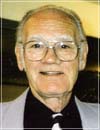
Scott Richardson (1923-2010) served as pastor of Katy Baptist Church in Fairmont, West Virginia.
Broadcaster:

Comments

0 / 2000 characters
Comments are moderated before appearing.

Be the first to comment!

Joshua

Joshua

Shall we play a game? Ask me about articles, sermons, or theology from our library. I can also help you navigate the site.