Bootstrap
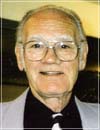
Scott Richardson

Consecration of the Priest

Exodus 28:40-43
Scott Richardson January, 31 1982 Audio
0 Comments

Sermon Transcript

Auto-generated transcript • May contain errors

100%
I want you to turn with me this
evening back to the book of Exodus, chapter 28. I want to talk to you this evening
for just a short while about the consecration of the priests
and all the ramifications. types and shadows that this consecration
points to in relationship to the believer in Christ Jesus.
I think we are all agreed that God's requirement is a perfect righteousness. That's
what God requires. Anything short of a perfect righteousness
will in no wise meet His requirements. So if He requires it, we must
have it. But we know that in ourselves
we never could come up with a righteousness that meets the requirements of
God. We just, no way, no way. We all have sinned and come short
of the glory of God. And there's no point in our experience
that we can point to in the past or in the present, and I believe
in the future, where we can say in ourselves, we have a righteousness
that will meet the requirements of God Himself. That is if we're
honest. Now, I know there's a lot of
dishonest people who say that they have this righteousness,
but I know and they know that they do not have the righteousness
that God requires in themselves. And if we ever have it, if we
ever have it, we must receive it from another. And I think
that the consecration of the priest and his sons were representative
of this divine righteousness which is fulfilled and seen and given
by the Lord Jesus Christ. It's his righteousness, the righteousness that God demands
is met in Christ Jesus. And He is the believer's righteousness. That's what we look to. That's what we live in. That's what we'll die in. And
that's what we'll stand in as we stand before a righteous God.
throughout the eternity to come. Here in this 28th chapter of
the book of Exodus, let me begin reading in verse
40. Here from verse 40 through verse
43, we have Aaron and his sons in his people, standing in the
power of one divine and everlasting righteousness. It says here,
And for Aaron's sons thou shalt make coats, and thou shalt make for them
girdles, and bonnets shalt thou make for them for glory and for
beauty. And thou shalt put them upon
Aaron thy brother, and his sons with him, and shalt anoint them,
and consecrate them, and sanctify them, that they may minister
unto me in the priest's office. And thou shalt make them linen
breeches to cover their nakedness from the loins even unto the
thighs they shall reach. And they shall be upon Aaron,
upon his sons, when they come in unto the tabernacle of the
congregation, or when they come near unto the altar to minister
in the holy place, that they bear not iniquity and die. It shall be a statue forever
unto him, and his seed after him." expresses that inherent, essential,
personal, and eternal qualities in Jesus Christ. These chapters,
chapter 28, and in particular chapter 29, and other chapters,
chapter 39, and even in the 7th and 8th chapter of the book
of Leviticus, if we had a mind to and had time to look at these
various chapters as they relate to this one particular subject,
we could see with what gracious and loving care God made provision
for the need of His people. He made provision for the need
of His people. Now you think about that for
a little bit. God made provision for the need, for the need of
His people. It's sad, isn't it, when you
talk to people and you converse with them on the subject
of eternity, and they have no realization of their need. They have no realization whatsoever
of their need. They feel that either God does
not exist, and this Bible business is all a myth and a fake, or
somehow, some way, if there is a God, that they are going to
escape a day of reckoning or judgment,
somehow they're going to get by. They just don't realize their
need, their need. In these chapters, particularly
28 and 29, I think we can see with what gentle, loving, gracious
care God made provision for the need of His people, and in that
He allowed them to see the One who was about to act in their
behalf and to represent them in God's own presence. This is a gracious provision. that God makes provisions for
the need of His people and then allows them to see the One that
He's provided to meet their needs and to represent them and to
stand in their stead as He goes in to the holies of holies to
the Ark of the Covenant, where the throne of God is, and represents
them in God's presence. I say this is a gracious provision
by a gracious God. You see, they were clothed with
all of these robes, which directly and absolutely met all of their
needs as to their condition, as their condition was known
by God. God knows what our condition
is. We really don't know what our true condition is. Only God
knows. We don't have insight enough
to know. We don't have sense enough to
know. We are so affected by the fall and by sin that we don't
know how great of sinners we are. We just don't know it. We're
so ignorant that we say we see when we don't see. We just don't
know. But God knows. God knows our
actual condition and provides the needs to take care of our
actual condition as our actual condition is known by God. We say we're sinners. We say
that if we're talking religiously to people. We say that just to
have a whip-stitch. That word, singular or plural,
runs out of our mouth. It falls off of our tongue. It
rolls from our lips. And we're really We cannot plumb
the depth of its meaning because we do not know. You see what I'm saying? That
these robes, this clothing, from the top of the head to the bottom
of the feet of Aaron and his sons, they directly and absolutely
met their actual condition as known to God. Now, He allowed
them, God Himself allowed these people, these Israelites, He
allowed them to see the one who was about to act in their behalf
and to go into God's presence for them. He allowed them to
see this man. They were clothed in robes and
clothing that was provided by God according to the command
of God given to Moses. Nothing was left out which the
heart could want or need or desire. Everything was provided. Now these people, these people
might, if they had the desire, and I suppose some of them did,
these people could survey this man that God allowed them to
see, who was acting on their behalf, entering into the very
presence of God in their stead. God allowed them to see this
man. And they could, Bob, survey this
man. And they could look from the
bottom of his feet to the top of his head. They could look
from the top of his head where the holy matter was to the bottom
of his garments where the bells and pomegranates were. And after
they looked and surveyed, after they went sideways, after they
went forwards and behind, and if they stood up on top or underneath,
they would have had to say, everything that is needful and necessary
was provided by God in the clothing as it clothed Aaron. All was
complete. That's what they'd have to say.
All was complete. Everything was as it should be. That's what they'd have to say.
Everything is as it should be. We've seen Him. We've looked
upon Him. You in your... This is the grace
of God. God did not have to do any of
this. Where can you find in the Bible any place that there was
any man in his unregenerate state, fallen man, that got down on
his knees and cried unto the God of heaven to make a way whereby
he might be redeemed by a substitute? There is not one case in the
Bible, there is not one case that's numbered in the human
race where there was any man, any woman, any boy or any girl
that ever desired God to provide for him a covering whereby he
might be able to forgive his sins and be just in doing so. When the Lord Jesus Christ came,
and I've said this time and time again, He came unasked for, and
for the most part, He came unwanted. This is the grace of God that
God would allow these people to see this One who's to represent
them. This One's all decked out. I
mean He's decked out. This High Priest, He's decked
out. I read some of them to you here
where it says, Make them coats, and it tells
us in the Scriptures here what the coats are to be made of and
the color of the coats. Make for them girdles, bonnets
thou shalt make for them for glory and for beauty. Anoint
them, consecrate them, sanctify them. Make them linen britches
to cover their nakedness from their loins even under the thighs
they shall reach. You see, God allowed them to
look at this man in all of his glory, in all of his beauty.
And they surveyed him and they said, It is as it ought to be. It's complete. It's complete. Well, why? Well, because all
that was done was done according to the pattern. Moses did this
He didn't just think this up. He didn't say, well, we're going
to have to have some religion here, so what we'll do is we'll
start here with a priest. We need a priest. No, sir. He did everything according
to the plan and pattern given to him by God. All was according to His estimate,
that is, to God's estimate of the people's need and of His
own requirement. All of this. Of their need and
His requirement. What do they need? I told you
at the outset, every man needs. This is what you need. This is
what I need. I need a perfect righteousness. to stand me in good stead with
God. That's what I need. I've got
to have it. I cannot have a Jesus who will not provide for me a
perfect righteousness. I must have a perfect righteousness
because my needs are so great. So God's, this that I've mentioned
so far in regard to these priestly garments, which templify our needs and God's co-obesion
to take care of our needs. All right, turn with me to that
twenty-ninth chapter. Got that right there. In the
consecration of these priests, I want you to notice now, the
things that's done for them in their consecration. These priests
now must be consecrated unto God. And he says here that there were
several things that was done for them. First off, in Exodus
chapter 28, And verse number 1, it tells us where these priests
came from. That's the first thing. We need
to know that. Where did they come from? These that were to be consecrated,
Aaron, who was to be the high priest, who was to represent
us before God, go into the holies of holies on our behalf, where
did he come from? Well, it says in 28 and verse
number 1, And take thou unto thee Aaron thy brother, and his
sons with him from among the children of Israel. Where did
he come from? He came from among the children
of Israel. That's where they were taken
from. This plainly points to the father's choosing of his
elect people out of Adam's race. Carl read the second chapter
of the book of Ephesians, and in the first chapter of the book
of Ephesians, it talks about the elect of God that was chosen
in Christ, the foundation of the world. This is speaking of
God's sovereign, eternal election. He chose them out from among
the people. That's where they came from.
And that's where God's elect come from, out of this race of
people. He chose them. Well, secondly,
in chapter 29 and verse number 4, It tells us that they were
brought unto the door of the tabernacle. Look at that. And
Aaron and his sons. Thou shalt bring unto the door
of the tabernacle of the congregation, and shalt wash them with water.
What's the first thing? Well, thou shalt bring them unto
the door of the tabernacle. What's so significant about that? Well, the antitype of this is
found in 1 Peter chapter 3. And I want you to turn over there
with me, and I want to show you the antitype of this. 1 Peter
chapter 3 and verse 18. And you'll see what I'm talking
about here. They were brought unto the door of the tabernacle. Notice now, and they were brought
unto the door. They were brought there. They
were chosen out of. They were brought there, listen
now, for Christ also hath once suffered for sins. The just for
the unjust substitution. the blessed Son of God who knew
no sin, suffering for sinners, willful, rebellious, ungodly,
unholy, obstinate rebels. The Lord Jesus Christ, the just,
suffering for the unjust, that he might bring us to God. There's the fulfillment right
there. That He might bring us to God.
What is the first thing that they do here in verse number
4? Aaron and his sons, thou shalt
bring unto the door of the tabernacle. That He might bring us to God.
He might bring us to God. How are we ever going to get
to God? I come by myself." No, you won't. You can't get there
by yourself. He's going to have to bring you
to God. The Holy Spirit is going to have to bring you to God through
the Lord Jesus Christ. You can't come any other way.
You can't come in yourself. You can't come. No man cometh
unto the Father except by me. No man. No man will come who
has not been made willing to come. If he remains in his natural
state, he'll continue on in rebellion against God until the very day
he dies, and then he'll raise hell in hell. He's got to be brought to God, and
they, it says over here, and thou shalt bring unto the door
of the tabernacle Aaron and his son. You bring them here. Christ
must bring us to God. Listen to what it says. For Christ also hath once suffered
for sins. That's what I need. I need someone
to pay that which I owe. I owe God something because I'm
a debtor to Him. I'm a sinner. I've sinned against
God and there's no way out. I can say right now, well, I'm
going to quit. I'll just quit! Well, I can't. I know that. But what if I could?
What's going to happen to those that have already passed by? What happens to those sins that
are already committed? They've got to be paid for. They've
got to be paid for. Oh, Christ also hath once suffered
for sins, that just for the unjust, that He might bring us to God.
He might bring us to God. Alright. Thirdly, in this same
verse now, It says they were washed. Doesn't it say that? Aaron and his sons shalt thou
bring unto the door of the tabernacle of the congregation, and shalt
wash them with water. What's that speaking of? That
foreshadows the believers' regeneration and sanctification by the Spirit. Turn with me to the book of Titus.
if you will, the book of Titus. Titus chapter 3 and verse number
5. I think, not by works of righteousness
which we have done, What's he talking about? He's
talking about regeneration. He's talking about acceptance
with God. He's talking about being born again. He's talking
about being saved. He plainly says here, not by
works of righteousness which we have done. We haven't done
any righteousness that would meet the requirements of God.
God pity the man, and He won't. Who thinks? that his righteousness
will gain him entrance into the kingdom of God. It will not do
it. Not by works of righteousness
which we have done, but according to his mercy. He saved us, how? By regeneration. He had to do
something for us. He had to change our attitude. He had to change our thinking.
He had to change our hearts. He had to give us a heart whereby
we might love Him. We were living with a natural
heart that was steeled in open, out-and-out rebellion against
God. We had to have a heart that would
be in agreement with God, would agree with God as to what He
said about us, and agree with God as to what He said about
Himself. We had to have a nature that
would permit us willingly, freely, lovingly, gladly, cheerfully
lay our weapons down. Our weapons of warfare must be
stacked up. We got to give up our swords.
Our sword is a sign of our authority, and we've got to lay our sword
down. We've got to give up our sword. But if we don't give up
our sword, God will kill us, God will damn us, God will send
us to hell. We've got to give it up. No way
we can give it up unless something takes place in here. In here,
something's got to take place in here. We've got to be quickened
by the Spirit, regenerated by the Spirit, sanctified by the
Spirit. We've got to have a new nature.
God's got to do something for us. He's got to make us love
what we once hated and hate what we once loved. He's got to make
us... We've got to go not 40 degrees,
but 100 degrees. We've got 180 degrees. We've
got to make the circle. We've got to come clean around.
We've got to change trails. We've got to change paths. We've
got to change roads. That's what He's talking about.
Bring them priests over here and wash them, wash them. Not
by works of righteousness which we have done, but according to
His mercy He saved us by the washing of regeneration and the
renewing of the Holy Ghost, which He shed on us abundantly through
Jesus Christ our Savior. Being justified by His grace,
we should be made heirs according to the hope of eternal life. Well, they were washed, and I
say this is the foreshadowing of the believer's regeneration
and sanctification by the Spirit. And also I think there's a verse
of Scripture in John chapter 3 and verse number 5 that pertains
to that. Born of water, born of water,
except a man be born of water and of the Spirit. Well, fourthly
now, And they were clothed here with official clothing, official
vestments, and official attire. It says, "...bring them to the
door of the tabernacle of the congregation, wash them with
water, and thou shalt take the garments, and put upon Aaron
the coat." This, upon Aaron, I'm going to get ahead of myself,
but I've got to. I've got to stop here and point
out that this which represents our attire, which these people
were allowed to see, They were allowed to see this man in all
his splendor, in all his glory, in all his beauty, in his garments,
in his vestments, from his mire to the pomegranates and bells
on the hem of his garment. Beauty they were allowed to see.
He represents us! He represents the Lord Jesus
Christ and His righteousness, which I need! He is the fulfillment
of the requirements of God! God has made upon me. I need
to see this. And I need to see that it is
not by works of righteousness which I have done. I need to
see that it is by the grace of God. I need to see that if I
am ever saved, it will be because God provided for me a perfect
righteousness in His Son, the Lord Jesus Christ. Notice here
now, it says, "...and thou shalt take the garments, Put upon Aaron
the colt! Put it upon him! This has its atotype and foreshadow
all typified in the sinners being saved. Put it on him. You don't put it on yourself.
He puts it on you. You see, you're passive. Not
active, you're passive. You're standing there. He doesn't
tell you to... It's not a do-it-yourself program. It's not the pattern of the coat
cut out and you get it in a package and you piece it all together
and put it on. It's not that way. That's the way a lot of
people think it is. Do this, do that, do this, do that, and
do that, and do something else, and finally wind up in the pool
of baptism, and finally hold out faithful to the end, and
then you might be saved. That's a do-it-yourself program.
That's something that you do. You're not passive in that, you're
active in it. You're active in it. You're always
doing something in order to stand you in good stead with God. But
here, he said, bring him to the tabernacle. bring him to the tabernacle's
door, wash him with water, and put this robe on him." Put it
on him! He is passive, you see that?
"...put upon Aaron the coat, the robe of the ephod, and the
ephod, and the breastplate, and gird him with the curious girdle
of the ephod. And thou shalt put the mitre
upon his head, put the holy crown upon the mitre, Then shalt thou
take the anointing oil, and pour it upon his head, and anoint
him, and thou shalt bring his sons, and put coats upon them,
and thou shalt gird them with girdles. Aaron and his sons put
the bonnets on them, and the priest's office shall be theirs
for a perpetual statue, and thou shalt consecrate Aaron and his
sons." What have I said so far? All right, this is what I'm saying.
I'm saying that the holy garments of the Lord Jesus Christ, that
His righteousness has been represented here. And I want you to notice
that all that was done in these priests' consecration That is,
Aaron and his sons, as I said prior to this, took no active
part from beginning to end, from first to last. They had no active
part in it. That's humiliating to the natural
man. When you're talking about, he
doesn't have any part of it. He doesn't have anything to do
with it. That's humiliating. Oh, surely I can do something.
Surely I can scare up a little something that would be commendable
unto God. I ain't all that bad now. I ain't
all that bad. There's something somewhere in
my life, in my makeup here that I can do. I can do something.
I can believe. You can't even believe unless
God works a work in your heart and prevails upon you. You can't
believe. Apart from the work of the Spirit,
you can't even believe the Gospel. That's right, Fred. You can't
do it. You can't even repent apart from
the work of the Spirit. You say, well, I'm just a dead
soul. That's right. That's all you
are. You're as dead as a fish. You're
as dead as a fish toward God. You can't do anything. If there's
anything ever done for you, somebody else has got to do it. You see
that? Why? Because if any man glories, let
him glory in God Almighty, not in himself. I'm telling you,
if we take the Bible literally from cover to cover, we'd find
out that there is no flesh that will glory in the presence of
God. No flesh, yours or mine. My preacher or your preacher,
my bishop or your bishop, nobody will glory in the presence of
God when this is all over with. It's going to be all of grace
or all of works. It will not be intertwined. And
that's what this is teaching. I want you to notice this. All
that was done in their consecration, Aaron and his sons. They took
no active part from beginning to end, from first to last. They
were passive in the hands of somebody else. It was bring them
here, wash them, clothe them, do this for them, anoint them.
It was always another doing something for them. It was not them taking
an active part. They were not actively engaged
by the way of cooperation in this. They didn't even cooperate
in that respect. They were not told, well now,
it does not say or indicate here that they were told to lift up
their hand and put that. I feel sure that Moses, I feel sure
when he came to put the coat on, he either had someone with
him or he himself lifted up his hand and put that coat on. You
can't destroy the type. If you destroy the type, you've
ruined it all. They were passive in the hands
of another. As a matter of fact, they did
not minister, but they were ministered unto. There was much done for
them and to them, but they themselves did nothing. It's all of grace. It's the grace of God. If I'm
saved tonight, if I'm saved tonight, if I am, I'll be saved tomorrow.
And I'll be saved the next day and the next day and the next
day if I'm saved tonight. But if I'm saved tonight, it'll
be by the sovereign free grace of God. It won't be because I
was active in this salvation. God did it all. from start to
finish. God chose me before time ever
was. It just wasn't an accident. It
just didn't happen. It wasn't because I was mama's
good little boy or some boy that was raised up in the right environment
and the right circumstance and the right situation come along
and presented to me in the right atmosphere and I swallowed it
hook, line, and sinker. God forbid. I'll tell you, it
was because God, He's the first cause of all things. It was because
God chose me and Christ. That's the reason. Just as He
said, take out from among the people Aaron and his sons. It's all of grace. That's what
I'm saying from start to finish. As it was with these priests,
they didn't have nothing to do with it. Neither did I. Well,
I know this age-old question I've already mentioned, but you
have to believe. That's right. That's right. God does not save
anybody that does not believe. But let me say this, you may
not know it now, but you may be saved and not know this, but
you'll learn it. You'll learn it if you continue
in the way. You'll learn this, that you believe,
you love Him because He first loved you. That's the reason
you believe, because He worked a work in your heart and made
you willing in the day of His power to lay your sword down
and believe the gospel. He made you willing. If He hadn't
have done that, you wouldn't have believed. You'd still been
in a state of rebellion and unbelief. Much was done for them and to
them, and they themselves did nothing. Standing in God's stead. Moses did it all. Is that right? He did it all
for what did he do for them, Bob? He chose them, he brought
them, he washed them, he clothed them, and he anointed them, and
he provided for them a perfect righteousness. And as he allowed
them to look at this high priest in all of their glory, with the
linen breeches, with the bonnets, with the girdles, with the mitre,
with the pomegranates, with the bells. When he allowed them,
they could find no imperfection. They seen beauty and glory there. And it says that, where did I
read that at? It says, And Aaron's sons, thou
shalt make coats, and thou shalt make for them girdles and bonnets,
shalt thou make for them for glory and for beauty. God did it all. Moses did it
in God's stead. Much was done for him, and much
was done to him. And they in themselves did nothing. If any man glory, let him glory
in the Lord Jesus Christ. That's the message. That's the
message of grace. That's how you're saved, by trusting
Him whom the high priest represents. the Lord Jesus Christ. God, our
righteousness. Folks want to go to heaven without
a righteousness? Can't make it. You've got to
have a righteousness. I wonder what folks think that preachers
in churches that never have anything to say about the righteousness
of God. You say, well, they say a lot
about it, because they're saying that the command says this and
the command says that, and you've missed it. And you've missed
it. That is, I'm not saying you here,
but the fellow that sits under that, and this fellow's always
saying this, the command says do this, and you're trying to
do that. You know what you're trying to
do? You know what these fellows are trying to do? They're trying
to build up a righteousness that they can stand upon and present
to God as their righteousness. And they'll miss it 10,000 miles.
Our righteousness is in the Lord Jesus Christ. He's our righteousness. To Him I shall look, to Him I
shall live, to Him I shall die, and to Him I shall stand before
a righteous God throughout eternity to come. Trust in Him and in
Noah. Cast your soul upon the mercy
and the grace of God in Christ Jesus. Trust Him. That's salvation. That's salvation. God help us. God help me. God help me. Let's stand. We'll sing a verse.
Scott Richardson
About Scott Richardson
Scott Richardson (1923-2010) served as pastor of Katy Baptist Church in Fairmont, West Virginia.
Broadcaster:

Comments

0 / 2000 characters
Comments are moderated before appearing.

Be the first to comment!

Joshua

Joshua

Shall we play a game? Ask me about articles, sermons, or theology from our library. I can also help you navigate the site.