Bootstrap
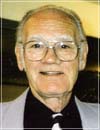
Scott Richardson

Types Of Christ

Exodus 25:1-11
Scott Richardson January, 24 1982 Audio
0 Comments

Sermon Transcript

Auto-generated transcript • May contain errors

100%
dwelling place in the midst of
this people. Now, prior to this, Moses had conversation with him
in regard to the people's promised obedience. They said this, whatever
the Lord says, this will do. But after this, the Lord has
this direct conversation with Moses and requests of Moses that
the people build a building that he might dwell in their midst. And he speaks here in these eight
or nine verses that I didn't read, which you can look at and
we might make reference to. This dwelling place is to be
made of materials which directly, and very pointedly, point to
the Lord Jesus Christ. It points to his person, points
to his work, and it points to the precious fruit of his work. Now, that's a point there that
many are confused upon, the fruit of the work of the Lord Jesus.
Now, the fruit of the Spirit is what? The Bible tells us in
what, the fifth chapter of the book of Galatians? The Bible
tells us the fruit of the Spirit, which is love and joy and peace
and gentleness and kindness and so forth, against which there
is no law. That's the fruit of the Spirit.
Not the fruit of the flesh, but the fruit of the Spirit. If we
could ever learn You and I, and it's taken me a long time to
learn it, but I think I learned it. I think I know it. That the
Lord Jesus Christ, or the Holy Spirit of God, does not work
apart from the Lord Jesus. Now, think about that a minute. The Holy Spirit doesn't work
apart from the Lord Jesus Christ. He doesn't do it. In other words,
he doesn't operate independently apart from the dear Savior. Now, what I'm saying here is
this. I'm saying that this dwelling place was made up of materials
which very directly points to the dear Savior, points to his
person, points to his work, And it points to the precious fruit
of that work. Now, the fruit of the Spirit
is the inward working of the Holy Spirit in us to produce
something. But it is only the fruit of the
Lord Jesus Christ. It's the fruit of the Gospel. That's what it is. There will
never be any fruit in our lives apart from the gospel. It all
comes from the gospel. It all comes from the Lord Jesus. And let me show you here what
I'm trying to say. Maybe I can show you here in
the Bible easier than I can say it, and a whole lot better, I'm
sure. Now, the fruit of the work of the Savior here, is found
in verse 3. Look at that. And this is the offering which
ye shall take of them. And he goes on and speaks of
the various materials which is going to be used to compose the
building of this earth. The blue, the purple, the gold,
the silver, the brass, the scarlet, the fine linen, the goat's hair,
the ram's skin, the badger's skin, the oil for the light,
the spices for anointing oil, and the sweet incense, the onyx
stones, and so forth. Now look at verse number 2. Speak
unto the children of Israel that they bring me an offering of
every man that giveth it willingly with his heart. You see, that
there is the precious fruit of His work. There cannot be any
giving unto God, any worship unto God, any praise or blessing
unto God apart from the shedding abroad in our hearts the love
of the Lord Jesus Christ. They gave of these things willingly,
from a willing heart, from a willing heart. And any service or anything
that we do in the name of the Lord Jesus Christ must be done
from a willing heart. And we'll never have a willing
heart until we first see what He is, who He is, and what He
done. You never have a willing heart.
Now, some seem to think, well, now, I can just all at once be
kind and be gentle and be tender and be forgiving and be loving
and all of this. You may do all that. You may
do all that, but it will come to naught, count for naught,
because it was not done willingly and it couldn't be done willingly
if you have not done it for His honor and for His glory. if you
have not moved in to the shadow of the cross. We can't serve and worship God
unless we know God. And we've got to know who He
is and what He is. These people knew something very
vaguely. They didn't have the light that
you and I have today. They didn't have the sixty-some
books of the Bible. They didn't have opportunities
like you and I have. They didn't have the fullness
of the Spirit of God to lead and guide and direct in all things. They didn't have all that. They
didn't have church buildings set aside for the purpose of
studying the Bible and things of that nature. They didn't have
the Bible like we've got it today, but yet they had from what they
knew, from what they knew and what they understood. They offered
willingly unto God. They give it out of a willing
heart. And that's what I'm saying. I'm
saying that this dwelling place is made of materials which directly
point to Jesus Christ, His person, His work, and the precious fruit
of that work. I'm saying that the Spirit of
God right now does not operate apart from the Lord Jesus Christ. He doesn't operate independently. He operates in cooperation with
the Lord Jesus. Now, I want you to know that,
as I've already pointed out, that these materials were the
fruits. They were the fruits of the grace
of God. I hope you're interested in this.
These materials, he said, speak unto the children of Israel,
that they bring me an offering of every man, and that giveth
it willingly with his heart." And these are the materials.
And I could show you here in the Bible, if I had time, that
they gave so much that Moses had to stop them and said, You're
giving too much. We've got all that we need. Stop it. Stop it.
Don't bring any more in. We've got enough to build to
erect this house for God. And it all came out of a willing
heart, and these materials were the fruit of the grace of God. They were not the fruit of the
law of God. I want you to see that. They
were not the demands. They demand that they do it.
They were the fruits of the grace of God, God's marvelous, wondrous,
amazing grace. They were voluntary. They were
offerings of loving and devoted hearts. Think of it for just
a second. God Almighty, whose glory and
majesty the heavens cannot contain, was pleased to dwell in a boarded
and curtained tent built for Him by men who were sinners. He is pleased to dwell with people
who were sinners, but by people who desired His very presence. Now, the Ark is designed, and
that's what we're going to talk about. We're going to talk about
the Ark here. This is the first thing that's mentioned in regard
to the furniture in the tabernacle. Now, the Ark is designed to preserve
intact whatever is put therein. That's the design of the ark,
to preserve whatever is put in that ark. That's an ark, that's
what it's for. Now, of the seven pieces of furniture
in this tabernacle, in every one of these pieces of furniture
pointed to some aspect of the Lord Jesus Christ. But the first
described in this 25th chapter of the book of Exodus is the
ark, and it is described here in verse number 10 and verse
number 11. The first thing that is described
is the ark. And then, secondly, the mercy
seat. And these two, the ark and the
mercy seat, are closely related together, so close together that
they form one. Because the mercy seat now is
the lid or the cover of the box. It's the cover on the ark. The
ark was to be filled with wood, two cubits and a half, shall
it be, the length thereof, a cubit and a half, the breadth thereof,
a cubit and a half, the height thereof. That was the dimensions
of the ark. Now there was a lid over that
ark. And the lid that was over that ark was the mercy seat. And this ark was designed to
keep intact whatever was inside that ark. And this ark points
to the Lord Jesus Christ. Now, I said that this ark was
a wooden chest. slightly over four feet in length
and about two and a half feet broad and about two and a half
feet high. And the wood which this ark was
made of was overlaid with gold. That is, not only the top, but all of it was overlaid
with gold. This ark now was made with this
wood, this chest, this box, And over top of the wood was laid
beaten gold, pure, pure, unadulterated gold. Well, it says that, well,
look at verse number 11. And thou shalt overlay it. Overlay
what? Overlay that which is described
in verse number 10. What's described in verse number
10 is a box, a chest, and it's called an ark. and thou shalt
overlay it with pure gold." Overlay it, put over the wood, pure gold. Now notice these two words, within
and without, thou shalt overlay it. Thou shalt cover that wood
within and without with pure, solid, unadulterated, uncontaminated
gold, so that nothing except gold was visible to the naked
eye. If it was accessible to you and
I right now, and we walked up to it, the only thing that we
could see with our naked eye would be pure gold. Pure gold,
that's all we'd see. If someone told us underneath
is a shit of wood, a kale wood, Well, we say, you couldn't prove
it by me because I can't see it. I wasn't there when it was
built. I don't know. The only thing
that I can see with my eye is solid gold. I see this chest. I see this chest four feet by
two and a half. And I see nothing but a solid
chest of gold there. The only thing that was visible
to the eye. Now the importance of this ark
is very clear, at least to me, from several considerations. Number one, when God gave Moses
instructions concerning the building of the tabernacle, the first
thing that is mentioned is the ark. So that must be the most
important thing in that tabernacle, if that's the first thing that's
mentioned, and it is. Well, he began with the Ark. Well, it was first in order because
it was first in importance. Now, before any details were
given concerning the whole of the sanctuary, orders were given
in regard to the ark. Before a word was told to Moses
about the courts, or the chambers, or the curtains, or the candlesticks,
or the solid rods in regard to this tabernacle, directions were
given to Moses in regard to the making of this ark. Without the
ark, The whole service of the tabernacle was meaningless without
the Ark. You could put everything else
in this tabernacle. You could put these blue and
purple and scarlet and fine linen curtains in the tabernacle, hang
them in their perspective places. You could make the solid gold
candlesticks. You could make the brazen altar.
You could make the outward fence. You could make the covering of
badger skins dyed in red. You could go through all the
details of this sanctuary, of this tabernacle. But if you had
no ark in that tabernacle, that tabernacle was meaningless. That's
how important the ark is to this building, to this temporary structure,
to this dwelling place. I'll tell you why. Because it
was upon this ark that was the throne where God was to dwell
symbolically with His people. This is the throne that God dwells
upon in the midst of His people. That's the reason it's so important.
The Ark. The Ark. The Ark was the object to which
the brazen altar pointed. What was the brazen altar? The
brazen altar is where the sacrifices are slain. But the Ark was the
object to which the brazen altar pointed. The sacrifice of which
gave right to access to the worshiper who came to the ark, representatively
in the person of the high priest. This gave, this ark was the object of the brazen
altar. When the high priest came in
to the ark, you came in with him. If you was an Israelite
back then, this high priest came in as your representative. And
he only came in through this brazen altar. But this brazen
altar pointed to the Ark. Now, the Ark was a symbol that
God was present among His people. And the whole structure was built
for no other reason but to be, as it were, a house for God,
a dwelling place for God. Now consider, again, the importance
of this ark. This ark typified the person
of our Lord Jesus Christ. Now there were two arks before
this ark, if you remember right. In the Bible there are two other
arks. We are only in the 25th chapter
of the book of Exodus, but prior to this, There's two other arcs
mentioned. The first arc that's mentioned
in the first part of this book is that little arc that preserved
the infant child Moses. You remember that little arc?
That's what that was. It was an arc. They made an arc. There was a woman, had a baby,
a boy. And the Pharaoh said, We're going
to kill all the male children. He said, We've got too many.
We're going to control the population until we're going to kill all
the children, all the male children. And there was a Hebrew woman
who was a devout woman, the mother of little old Moses. And she
said, Take that child down there where Pharaoh's daughter bathes
and build a little ark. Build a little ark and lay that
child in the ark out in the water. That ark was built to preserve
the child, to keep intact what was put inside it. And God, of
course, used that ark and preserved that little child, and by His
mercy and power and wise providence, caused the ark and Pharaoh's
daughter to come face to face, and she looked out on that probably
crying baby, And her heart was moved, and she took the child
to herself, adopted the child, brought the child into her own
household, and he became the prime minister of all Egypt,
this man Moses. That's the mention of one instance
of an ark. And the other was when the whole
world was destroyed. There was a time when God said
to Noah, He said, You've found grace. in my eyes." And he said, I'm going to give
you some instructions to make a big boat, to make an ark. And
Noah labored for what? 120 years, wasn't it? 120 years
Noah and his two sons built a large boat. And he told him the exact dimensions
of everything about that boat, an ark. And he said, take two
of all the creatures, put them on that ark. And there come a
time when Noah did exactly what God told him to. And Noah and
his wife and his two sons and their wives got on that ark,
is that right? They got on that ark. And God
shut the door, and what did He do? He preserved intact everything
that was inside that ark. What I'm telling you this morning
is that that ark was a type of the Lord Jesus Christ. This ark
here is a type of the Lord Jesus Christ. If we can ever get in
that ark, as Noah and his family got in that ark, will be saved
from the wrath of God on the judgment of sin. Will be saved. If you can get in the Lord Jesus
Christ this morning, I'll guarantee you. I'll not guarantee very
many things, but I'll guarantee you this. If you can get in Jesus
Christ the art, you'll be saved. You'll be saved from the penalty
of your sins, the power of your sins, presence of your sins,
and you'll be saved finally, ultimately, completely, and eternally,
if you can get in that ark. That ark is a type of the Lord
Jesus Christ. This ark here is a type of the
Lord Jesus. Both of these arks that I've
mentioned thus far plainly pictured our Lord Jesus Christ. This ark
here, was composed of two materials, just two, just two. Wonder why. Wonder why he said, make this
ark of shit and wood. Make it of this particular kind
of wood. Wonder why he didn't say, just
make it, just take a, go out and cut a tree down, or make
it of wood. Why this particular wood? Well,
I'll tell you why in just a second here. This ark was composed of
two materials, wood and gold. And these two materials clearly
point to the two natures of the Lord Jesus Christ, the human
and the divine. Now, all the vessels of the ark
point to some aspect of the work or the effect of the work of
the Lord Jesus Christ. That is, everything, as I mentioned,
everything in the ark points either to the person of the Lord
Jesus Christ or the work of Christ. Everything about this tabernacle. But the ark, this ark here, which
was made of wood and made of gold, which speaks of his two
natures, his human nature and his divine nature. You see, this
ark speaks not of his work, but this ark speaks of his person. Well, listen to me now. I want
you to get this because if you miss this, you'll miss everything
I'm trying to teach and preach here this morning. The ark speaks
of what He is. The ark here speaks of what the
Lord Jesus Christ is. The wood speaks of His humanity. The gold speaks of His divinity. You've got to see that. It is
the blessed person of the Lord Jesus Christ, now listen to me,
it is the blessed person of Jesus Christ that gives value to His
work. It is the person of Christ that
gives value to what Christ does. If we cannot see what He is,
we cannot trust Him completely and finely and fully. If the Lord Jesus Christ is not
human and He's not God at the same time, He can't do anything
for us. If He's just a man like I'm a
man, He can't help me. He can't help me. It's got to
be a supernatural man to help me. That's the reason here the
other Sunday that I've tried to impress upon you the importance
of a perfect sacrifice. You remember I told you about
a man's conscience? That a man's conscience demands
perfection. And one reason why many people
do not have an assurance that they're saved, is that they do
not have a perfect sacrifice. They've never... I'm not saying
they're not saved. I'm not saying that. They may
be saved, but they have not been taught, or the Spirit of God
has not illuminated their hearts and their minds with a clear
picture as to who He is and what He is. So if we can ever get
it in our hearts and in our minds as to what He is and to who He
is, then we can trust in what He done. But if we don't know
who He is and what He is, it's going to be difficult for us
to cast ourselves unreservedly on the person and the work of
the Lord Jesus Christ. You see, because if If when our conscience demands
something out of us and we cannot say, well, I have no perfect
sacrifice, our whole state of being is in
chaos and confusion and in disorder. And there cannot be any proper
outflow of thanksgiving and praise and worship unto the King of
kings. Because we're occupied, you see, with that which dwells
within. But if we've got a perfect sacrifice,
I hope we can see this. It's been a blessing to me, this
sacrifice business. A perfect sacrifice. If we've got a perfect sacrifice,
that'll silence a screaming conscience. You see what I'm talking about?
If your conscience says, well, you can't be saved because you've
done this and that. My conscience tells me that all
the time. You can't be saved because of
what you're thinking or what you've done, the mistakes and
the errors and the sins. You can't be saved. Well, if
I listen to my conscience, I couldn't be saved. But if I have a perfect
sacrifice, I can say, well, I'm not saved by what I do or what
I don't do. See what I'm saying? I'm not saved by what I do or
what I don't do. I'm saved by one who's perfect,
who stood in my stead and placed in rule. And the clearer I see
of what He done and who He is and what He is, it will move
me in the direction of God is living and holy in us, if I see
it. See what I'm talking about? If
I see that. Well, you see, that's what I
mean when I say, it is the blessed person of Jesus Christ that gives
value to His work. If we don't see that, well, we'll not appreciate His
work too much. Today, now listen to me, today
in most evangelical circles, the emphasis is placed upon what
the Savior has done for us rather than who He is and who He is. Now, we'll all agree with that,
won't we? That's what's being said in most
evangelical circles, whether they be Baptists, Methodists,
Presbyterians, Camelites, Charismatics, or who they are, anyone that
has anything to say in regard to the Bible, for the most part
now, are emphasizing what the Savior, the Lord Jesus Christ,
has done for us, that He died for us, He lived for us, He died
for us, He suffered in our stead, in our place, in our room. We
emphasize that. constantly rather than emphasizing
what he is and who he is. Now, in the ritual or ceremony
on the Day of Atonement, the high priest first entered into
the Holies of Holies with his hands full of sweet incense. He had it in his hands. Sweet
incense. gave forth a fragrant smell,
sweet incense. Now what is this saying? It is
saying this, that God would first be reminded of the fragrant,
precious person of the Lord Jesus Christ before that which speaks
of His redemptive work in our stead in our place as its place
before Him. Now, let me show you the order. Let me tell you what I'm trying
to say here. You remember John the Baptist? What was it that
John the Baptist said? What was the basis, or what consumed
him when he began to preach? What was the first thing that
he said? What was the most important thing in the life of John the
Baptist? What was the most important?
Here's a man, the Bible says, of men that are born of women. He said, there is no greater
among you than this man, John the Baptist. And what was the
most important thing in the life of John the Baptist? Jesus Christ. He said, I'm just a messenger. I'm a forerunner. I come to announce
the coming of the Lord Jesus Christ. He said, I must decrease. He must increase. I've got nothing
else to say except, behold, the Lamb. What's that speaking of? His person. Is that right? Behold the Lamb of God! Now He speaks of His person,
that's the order. When the high priest went in,
the Holies of Holies, the first thing he done, he had in his
hands the fragrance of that sweet incense, which was saying that
God would be reminded of the sweetness, the preciousness,
of the Person of Christ before the redemptive work of Christ
was brought before Him on the mercy seat. Behold the Lamb of
God, speaking of the Person of the Lord Jesus Christ. And then
what did He say? He talked about the work of Christ.
Behold the Lamb of God that does what? That taketh away the sin
of the world. Isn't that what He said? Behold
the Lamb of God, that's the person. And the work of the Lamb of God
was that He took away the sin of the world. What did the Apostle
Paul say in 1 Corinthians chapter 2 there? He said, I determined
not to know anything among you save Jesus Christ, His person. That's the order, His person.
And then what else did he say, Jack? I determined not to know
anything among you save Jesus Christ, and Him crucified." That's
His work. His person, Jesus Christ, and
Him crucified, His work. Over in the book of Revelation,
in chapter 5, John said, "...I beheld, and in the midst of the
elders stood a Lamb, the Person of the Lord Jesus Christ." And
the rest of the verse goes like this, "...stood a Lamb, as it
had been slain." That's the work of the Lord Jesus Christ. Now,
this is the order of the tabernacle. The furniture, first the ark,
which speaks of His Person, and then the mercy seat, which points
to his work. Now, let's talk about the materials
of this ark for just a few minutes here. Well, I said they were
made up of two materials, wood and gold. Now, the ark was made
of this Chittum wood, which is said to be imperishable. It speaks of the humanity of
the Savior. Not an oak tree, not a persimmon
tree, not a locust tree, but the wood was to be of a Shittim
wood. Wood that was to be found out
in the desert, in the dry, dry, dry desert in which Israel was
to pass through. There was one giant tree with
a lot of thorns on it, That was imperishable. Imperishable. They said that you could put
it down in water for year after year and year after year and
it wouldn't rot. It just wouldn't rot at all.
It would not decay. That's the reason why He said
it's to be made out of chicken wood. Because this wood depicts
and pictures the humanity of the Lord Jesus Christ. In Isaiah chapter 53, he said,
"...he shall grow up before him as a tender plant, and as a root
out of dry ground." Well, some things about this wood now. I
said to you it was the only tree that grew of any size in the
desert to which Israel passed. It was a tree that could thrive
in very dry soil. It was a wood that would never
rot. It was an incorruptible wood. And all of this speaks of the
sinless humanity of the Lord Jesus Christ. You see, the Lord
Jesus Christ was truly, absolutely, really, truly man as well as
God. And this is very clear from several
things that he says in regard to himself. Many times he referred
to himself as who? The Son of Man. The Son of Man. The Son of Man. And the Holy
Spirit said that he was a Man of Sorrows. The Holy Spirit again
said that we have only one Mediator between Man and God, and that
is the Man, Christ Jesus. So the man Christ Jesus. But his humanity was uncorrupt
and incorruptible. In him was no sin, the Scriptures
say. He was the Holy One of God. You see, disease and death had
no claim on the Lord Jesus Christ. All right, as I mentioned before,
this would. which speaks of the humanity
of the Lord Jesus. This wood was to be overlaid
with gold within and gold without. As a matter of fact, Bob, there
was to be no wood visible. The only thing visible was gold. Now, this speaks of the divinity
or the divine nature of the Son of God. While the wood gave form
and dimension to the ark, The appearance was all absolutely
gold. The form was wood. The form was
wood. But it was overlaid with gold
from the top to the bottom, without and within, with pure gold. But the wood gave form to the
gold, just as the form of the Lord Jesus Christ, which was
as a servant, which was a human, but yet he was divine. You say, well, I don't understand
it. I don't either. I couldn't understand
it. I couldn't explain it. But nevertheless,
that's what he was. The art speaks of what he was. And we find out what he is and
who he is, it will give value then to what he does. The divine nature is seen over
the form of a servant. And wherever the all-seeing eye
of God rests, he owns the Lord Jesus Christ as his equal. Let me read something to you
here, something that our Lord said about himself. which I think
is significant and important to what we are talking about
here this morning. I think maybe in the 10th chapter
of the book of John, listen to what our Lord said about Himself.
He is talking here about the Lord Jesus Christ being the good
shepherd of the sheep. And He tells some folks here,
the Jews came around Him And they said unto him, they said,
Well, now, how long dost thou make us to doubt? If thou be
the Christ, why don't you just come right out and tell us? Tell
us plainly. And Jesus answered them, and
He said, I told you. I told you who I am. I am the
Christ. I've already told you. I'm that
ark. I'm the ark of the covenant,
I'm the mercy seat, I'm the golden lamp stand, I'm everything that
the Old Testament pictured. I am the reality of the pictures
and symbols and rituals of the Old Testament. I am He. I've
already told you that, He said. Jesus answered and said, I told
you, but you believe not. He didn't believe me. The works
that I do in my Father's name, they bear witness of me. But
ye believe not, you don't believe me, because ye are not of my
sheep. As I said unto you, my sheep
hear my voice, and I know them, and they follow me. And I give
unto them eternal life, my sheep, and they shall never perish.
Neither shall any man pluck them out of my hand. My Father which
gave them me is greater than all, and no man is able to pluck
them out of my Father's hand." This is the statement. I and my Father are one. We're one. I and my Father are
one. I don't understand that either.
But that's what our Lord said. I and my Father are one. And what I'm saying to you this
morning is this. It's wherever the all-seeing
eye of God rests, he owns him, the Lord Jesus Christ, as his
equal. It's all gold. The Lord Jesus
Christ is all gold. It's wood and gold forming the
ark, which is a shadow or a picture of the great mystery of godliness. God manifest in the flesh. Here we see this great mystery,
this union of the two natures in the God-Man, the Lord Jesus
Christ. You see what I'm talking about
this morning here? I'm pointing you and I to the
blessed truth of what He is, what He is, what He is. He's
all gold on the outside, and wood on the inside. These two
unions fuse together and make one. This ark depicts and declares
that the Lord Jesus Christ is none other than God Almighty
Himself. He's all gold. That's who He is. Now, this ark of pure gold, which is representative
of the Lord Jesus Christ, God over all and above all, and God
Himself. This Lord Jesus Christ, this
God manifest in the flesh, He gave Himself as a sacrifice for
my sins. What is He? And he gave himself. He gave
himself. He wasn't forced into it. He
wasn't coerced. He wasn't coaxed. He wasn't pushed. He gave himself. He gave himself. He stripped himself of everything
and gave himself as a man. in my stead and place and room,
and bore in his own body everything that was due me." Everything! Everything that our God Almighty,
the Lord Jesus Christ, paid for! Now can you see how a man who
sees this, who sees what he is and who he is, can say, He's
my sacrifice and He's my Redeemer. He can close His eyes at night
and say, If God pleases to take me before I wake, I know I have
a perfect sacrifice. I have the Lord Jesus Christ.
And He satisfied the righteousness and the holiness of God against
me. Say, well, some folks say, well,
don't you think we ought to do this? Don't you think we ought
to do that? If we have this perfect sacrifice, we'll not leave any
stone unturned in serving Him. We won't do it. We won't do it. We'll be instant, in season and
out of season, in service to Him. Faithfulness will be found. in the man who sees what he is. You will see the love of God
manifest in his attitudes and in his actions and in his concern
for the man, for the woman, for the boy or girl who has him as
their sacrifice. It is not what you can do otherwise.
Well, I hope that this has been of some help to you. We could,
you know, make a real study of this and talk about the blue
and the purple and the scarlet. They have a meaning. Yeah, all
of this has a meaning. Every one of these things points.
Points either to His Person or His Word. One of the two. Everything
here in... Well, I told you last Sunday,
I told you where David said, Thy testimonies are wonderful."
What's he talking about? There's only five books of the
Bible written when David said that. He had to be talking about
that which was written in Genesis and Exodus and Leviticus and
Numbers and Joshua and Deuteronomy. He had to be talking about that.
That's all the Bible that they had. And all of the types in
the book of Exodus and Leviticus and Numbers and Genesis and Deuteronomy,
they're all speaking of one person, the Lord Jesus Christ. And if
they don't speak of His person, they speak of His work. But before
you can appreciate His work, you've got to know something
of His person. That's the order. Behold the Lamb of God, His person,
that taketh away the sin of the world, His work. I'm determined
not to know anything among you save Jesus Christ, His person,
and him crucified his work. There stood a lamb in the midst
of them." That's the person. As it were slain, that's his
work. That's the order. God help us. God help us.
Scott Richardson
About Scott Richardson
Scott Richardson (1923-2010) served as pastor of Katy Baptist Church in Fairmont, West Virginia.
Broadcaster:

Comments

0 / 2000 characters
Comments are moderated before appearing.

Be the first to comment!

Joshua

Joshua

Shall we play a game? Ask me about articles, sermons, or theology from our library. I can also help you navigate the site.