Bootstrap
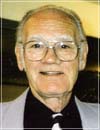
Scott Richardson

God's Remedy For Abraham's Failure

Genesis 17:1
Scott Richardson April, 5 1981 Audio
0 Comments

Sermon Transcript

Auto-generated transcript • May contain errors

100%
to Abram and said unto him,"
this was the message, "'I am the Almighty God. Walk before
me and be thou perfect.'" Now, the title for our message here
this morning would be this, God's Remedy for Abraham's Failure. Now there's not many times that
we read in the Bible or that it's even indicated that there
was any failure on the part of Abraham. He's referred to as
the man who talked with God face to face. He's a man who is referred
to as a friend of God. But yet I believe that Abraham
was like most of us? Well, I might say that he is
like all of us because he was a man. And being a man, why,
he was subject to shortcomings. And I'm not trying to dwell upon
Abraham's shortcomings, but only point out this in order that
we might understand what he means, our God, when he tells Abraham,
walk before me and be thou perfect. So here we have before us God's
remedy for Abraham's failure. Now it's evident to me in studying
two or three chapters here that Abraham had not been walking
before Almighty God prior to this particular message from
God to Abraham. Now, if you'll turn with me there
to the 16th chapter of the book of Genesis, and verse number
2, I believe that you'll see what I'm talking about. The statement that I made was
this. It's evident that Abraham had not been walking before the
Almighty God. Now, that bears or this second
verse of the 16th chapter bears witness to that statement, because
Abraham adopted Sarah's suggestion here, or Sarah's method for bringing
about God's gracious promise. And Sarah said unto Abram, Behold,
Now the Lord hath restrained me from bearing. I pray thee,
go in unto my maid. It may be that I may obtain children
by her." And Abram hearkened to the voice of Sarah. Now there's
the evidence, I believe, of the failure of Abraham, the evidence
set forth in this second verse that Abraham was not walking
before God as he should have been. Because he listened or
hearkened to the voice of his wife, God had graciously promised
Abraham and his wife a child, a child of promise. Well, several
Years had passed by until Abraham was well up in his years and
Sarah well up in her years, and nothing had happened. So Sarah
suggests to Abraham, the Lord has failed in His promise. So here's what I think we ought
to do. I have an Egyptian bond woman here is my maid. Her name
is Hagar. Now, what we ought to do is you
go in and take Hagar as your wife. And it may be that she'll
bear a child. And that child will be the fulfillment
of the gracious promise that God has promised me." Now, instead
of rejecting her suggestion, refusing to adopt her plan and
method, Abraham listened to her. And Abraham went in and Hagar conceived. And after It
was found out that Hagar conceived. Then Hagar's attitude towards
her mistress was an unexpected attitude. Instead of being gracious
to Sarah, she began to be mean. Sarah said, well, I don't know. It looks like maybe we made a
mistake in this matter. But anyhow, I think that this
is evident here in this 16th chapter that Abraham had not
been walking before Almighty God as he should have because
he accepted Sarah's plan here. Well, you
see, instead of waiting patiently for the accomplishment of the
gracious promise of our God to them, why Abraham said, that's
what we'll do. I'll just go in and we'll have
this child by this Egyptian born woman. You see, the poor, poor
natural heart of every one of us naturally prefers anything
to waiting upon God. You see, when this heart that we have
is saturated and filled with unbelief, it will turn to any
scheme rather than to wait upon God. You see, God makes promises
to His people, and they always don't come to pass just when
we think they ought to come to pass. and the spirit of unbelief
enters into our heart, and we devise schemes, and we begin
to trust in things, and we begin to trust in means rather than
lean entirely, wholeheartedly upon God. Over in the book of
Hebrews is a passage in connection with this that I want to read
to you. Hebrews chapter 6. Let me read that. Hebrews chapter
6, down there in verse 11. It's talking about the same thing.
It says, And we desire that every one of you do show the same diligence
to the full assurance of hope unto the end, that ye be not
slothful, but followers of them who through faith and patient,
inherit the promise in us. For when God made promise to
Abraham, because he could swear by no greater, he swore by himself,
saying, surely, blessing, I will bless thee, and multiplying,
I will multiply thee. And so after he had patiently
endured, he obtained the promise." Now what I'm saying is this,
that God makes promises and God made a promise here to Abram
and to his wife Sarah that they'd have a child. He made this promise. But I said the spirit of unbelief
entered into their hearts and the natural man or the natural
heart prefers anything except waiting upon God. And so instead
of patiently waiting upon God, they begin to trust in means,
in methods, and in schemes to bring the promise of God about. So what I'm saying is this. If
we're walking before God rightly or perfectly, then faith believes
what God says, hope anticipates it, and patience waits quietly
for it. Now that didn't take place in
chapter 16, so it's evident there from what's said in chapter 16
that when God said to Abraham in verse number 1, I am the Almighty
God, I'm the all-sufficient God, I'm big enough to cover any of
your problems. There's enough water in me to
float your little ship. So I am sufficient. I am. I am the Almighty God. I am all-sufficient. Now walk
before me and be thou perfect." Now, it's evident that he wasn't.
All right? Really what old Sarah was saying
here, and I think I mentioned that, was that the Lord has failed
me. He hasn't fulfilled His promise
to me like He said He would. So this Egyptian handmaid, this
Egyptian born woman, Hagar, she may prove to be a resource for
me. So you can see by what she said
here that a heart under the influence of unbelief wants anything but
God. anything but God. Walk before
me means what? Let's find out what that means.
Walk before me. This is what I think that it
means. This is what I believe that it means. And I think that
you'll agree with me once we look into this just a little
bit. It means having nothing before our hearts save God Himself. That's what it means. When the
Bible Not only in this place, but in other places, talks about
walking before Me. And be thou perfect, it means
to have nothing before our hearts, save God Himself. Nothing as
the object of our hearts, save God Himself. Now, that was not
true in chapter 16 with Abraham. His vision, or his sight, was
not filled with God. had it been filled with God,
he would not have returned or referred to these particular
means. He would have rejected the method
or the suggestion of his wife Sarah in going in to this Egyptian
bondwoman. So this is what God has reference
to here when he says, walk thou before me and be perfect. That is, have nothing, not anything
before me except me and me alone. Have God to fill and to occupy
your mind, your heart, your body, and your soul. See, if I base
my expectations upon men and things, I am not walking before
God. Now, who am I walking before? I'm walking before men and things. Now, I think that it's of the
utmost importance here this morning for you and I, who are followers
of the Lord Jesus Christ, believers in the Lord Jesus Christ, to
know a little something about what it means to walk before
God. I think we ought to be desirous
to know, because if God told Abraham to walk before Him and
be thou perfect, well then, it ought to mean something to us.
There ought to be a desire in our hearts to walk before God
and be thou perfect for this reason, that it will glorify
God, and it will certainly bolster our confidence, it will increase
our faith, and it will make life a whole lot easier for us. We'll
be able to understand some things if we understand what it means
to walk before God and be thou perfect. Well, I think it's important,
brethren, what I have before me as an object. What is my object in this life? What is my purpose? You know
that men outside of the Lord Jesus Christ have no purpose
in life. That is, no real purpose. No
real purpose. Because they have no real object. All they have in this life is
of a temporary nature. And of course, when this life
is over with, their riches, Their hopes, their happiness, their
expectation dies with this life. So really they do not have no
true object or true purpose. It's only when a man becomes
acquainted with God in the Lord Jesus Christ that his life begins
to take on meaning and his life has an object. His life has a
purpose. So it's important that we have
the right object before us. Well, what have I before me? And what do you have before you
here this morning as an object? To what am I looking? On whom
or what am I leaning? Does God entirely fill my future? Does He fill up my entire range
of sight? Is all that I see in this life,
everything that I see, does it pertain to God and to the claims
of Christ, to the purpose of God? Everything that I see is
filled with God Himself. Is He really the object of my
heart? Now, if He is the object of my
heart, then I am not going to turn to men and things. If God had been solely and wholly
the object of Abraham's heart in chapter 16, He would not have
based His hope and expectations on men and things, but He would
have rejected Sarah's method and said, No, Sarah, it sounds
good. I know that, Sarah, it sounds
good, but we will patiently wait for the fulfillment of God's
promise. But he didn't do that. So it's
evident then that he wasn't walking before God. as God would have
him to, so God tells him here in chapter 17, walk before me. That is, fill your entire range
of sight and vision with me. And if you fill your entire range
of vision with me, you can't see anything else. You can't
see anything else, therefore you won't rely upon anything
else. You won't lead upon anything
else. You won't trust anything else. Because you'll be taken up with
me. All you'll see is me. That's
the lesson we need to learn. What occupies our hearts? What
is the object of our lives? What's the object of our hearts?
Is it men and things? Do we base our expectations and
hopes upon men and things? Or does God fill our entire range
of sight? Well, He ought to. He ought to.
He's worthy. He's worthy. Well, I said, if
He does, we can see nothing else. Now, if he does, if he does,
then he ought to. And of course, I haven't got
time this morning to set before you the value and the worthiness
of the Lord Jesus Christ. You know that. You know that
there is nothing that can be compared to the beauty and the
glory and the worthiness of Jesus Christ and Him alone. Nothing
whatsoever. Let me not have to go through
that here in order for you to appreciate what I'm saying here
about having Him fill our entire range of vision. You see, if
I see Him, If I see him like I think that Abraham must seem
here in verse 17, if I see him then like that, I see him in
all of my ways. I see him dealing with me in
every turn of the path of life. Every step that I take, I see
God in him. What happens to me, I see God
in it. If I fall down, I don't say,
well, it was an accident. I say, well, God tripped me here. God had me fall down for a reason.
Let me ascertain why. You see what I'm talking about?
If God entirely fills my heart, if He is the object of my life
and my heart, the cause of God, the claims of God, the glory
of God, if I am just living for God and God alone, well then,
God fills my whole life and my whole sight and everything that
happens to me, I see God in it. I see God in it. And I see God
in it for my eternal good. for my eternal good. It's not
things that happen to me if God fills my sight. It's not something
contrary to good or the opposite of good. It's for good. All things
work together for what? For good, not for bad. All things work together for
good to them that love God, to them whose entire range of vision
is filled with God, filled with His purpose, His glory. What
is my chief end? What is my chief end? I'll tell
you what my chief end is. My chief end is to promote the
glory of Almighty God. That's my chief end. That's the
only reason I'm here. is to glorify God, whether it's
living or whether it's dying, whether it's in hell or whether
it's on the sickbed. It's to glorify God. He's all
that counts. I don't count for anything. Can
we see that? Can we be agreed on that? We
don't account for nothing in a sense. Of course, I know in
another sense, God loves us. He loves us. He loved us before
the world ever was. And He still loves us. But in
the whole focus, in the whole eternal purpose of God, eternity
is filled with God. And that's all from what I understand
of the Bible. In the heavens, the angels continually
Sing glory, glory, glory unto you, glory unto God who reigneth
omnipotent. Glory unto His name. Now, if
God fills my sight, if God fills my view, then all things work
together for good. My disappointments, my failures,
everything, my mistakes, all of these things, God uses my
mistakes for my good and for His ultimate glory. Walk thou
before me. Have me as your object. May your entire height be filled
with me, not with men and things, but me. Over here in the 60s, Psalm 62. Let me read something to you
there. If you care to turn, turn with
me. Psalm 62. Listen to this. I think that this is expressing
what I've been trying to say a whole lot better than I can
say it. David said it. He said in the first verse, truly,
truly, My soul waiteth upon God." Now that's in direct contrast
to Abraham in chapter 16 of Genesis. Abraham would not wait. The natural
heart is so filled with unbelief, it is eager to depend or trust
in anything apart from God. and will not patiently wait for
the promises to be fulfilled. David said, truly my soul waiteth
upon God, from Him cometh my salvation. I wait on Him, I wait
on Him because from Him comes my salvation, which means my
deliverance. My deliverance from the power
of sin, from the penalty of sin, and from the presence of sin.
My soul waiteth upon God. I rest. in Him, waiting upon
Him for the fulfillment of His promise. Verse number two, He
only is my rock. God only is my rock and my salvation. He only is
my rock, my place of safety, my rock of refuge, and my salvation. He is my defense. I shall not be greatly moved. Verse number 6. He only is my
rock and my salvation. He is my defense. I shall not
be moved. See, this is the second time
in this psalm that David relates to the fact that God only is
his rock and his salvation. He's his defense, and I shall
not be moved. Verse number 7, In God is my
salvation and my glory, the rock of my strength and my refuge,
is in God. Trust in Him at all times, ye
people. Now, he's saying what I've tried
to say, that to walk before God is to patiently wait upon God. It is to set God as the chief
object of our attention and our affection. It is to fill up the
whole entire range of our sight with God and His glory and wait
patiently upon Him for the fulfillment of His gracious promises. And
when I see that, and when my heart is occupied with God constantly,
perpetually, And I see nothing but God. Then I see Him in the
various ways and actings and dealings and happenings to me. I see God's hand in it. Because
I can't see anything else. God fills my vision. I can't
see nothing but God. Can't see nothing but God. Just
see Him. Him. And if I'm here on the bed
of affliction, I see God in it. If I'm on the mountaintop, I
see God in it. If I am prospering, I see God
in it. If I am not prospering, I see
God in it. Whatever way my path leads, however
many twists and turns that I take from here to glory, if my life
is filled with God and He is my object, I see God's hand in
it. I say the Lord is my shepherd. I shall not want. He's my shepherd,
my overseer. I say that the Lord Jesus Christ
is the captain of my salvation. I say omnipotence is my helper. I say God is my strength. and my refuge. I patiently wait
upon Him. I glorify Him by waiting upon
Him. He fills my vision. I want nothing
else. This world has no attraction
to me. Why? Because God fills my view
and I cannot see this world. I don't care about ambition.
I don't care about making a great name. I don't care about this.
I don't care about that. Why? Because God fills my vision. That's what we're saying. That's
what we're saying. We're not saying that the thing
that should occupy our attention is our old age, that we need
to lay in store so much money every day or every week or every
month in order to secure for us a better retirement. When we
retire, then we're independent and we don't have to depend upon
it. That's the wrong attitude. That's the wrong attitude. I'm not saying we're not to lay
by. We are to lay by. We are to put
a little away once in a while. That's nothing to do with that.
If you can do it, I never could do it, but maybe you can. So
I'm not excluding that, saying that's wrong. But I'm saying,
brethren, that our chief object is the glory of God, and our
chief object is to fill our hearts with our objects. Who is the
Lord Jesus Christ and these other things? We'll take care of themselves. You mean to tell me that God's
going to let you stop? Someone asked me one time, said,
well, what do you think is going to take place when you die? Who's
going to bury you? Well, I'm not worried about that.
They'll find a place to put me. Well, you've got to make preparations
for it. Well, if I've preached all my life and raised four boys
and been a friend to hundreds of others, if they can't find
enough money to put me away when I die, Well, then just send me
to Pittsburgh and have me cremated. Cast the dust up in the air and
say that's all of Him. God will take care of it. He'll...
That's His promise. That's His promise. I will never
leave you! I won't leave you and I won't
forsake you. And I believe that. They say, well, but... Well,
you can leave the buts off. I just believe it. I just believe
that God will never leave me or never forsake me. He'll never
do it. He'll never do it. No, sir. You
say, well, aren't you presumptuous? Call it presumption if you will.
But God said it and I believe it. I believe it. You say, how
do you know you believe it? I know I believe it. I know I
believe it. I believe it. I believe that
God will not, He will not deny me. He will not forsake me. He'll
be with me. He'll be with me. Well, that's
the attitude I believe that we ought to have. What I'm saying
is, brethren, we see Him in everything, in all of our ways, in all of
our twists and turns. That's walking before God. That's
what it means. Walk before Me! I am God! I am God Almighty, the All-Sufficient
One. Walk before Me! Fill your scene
with Me! With Me! Don't trust in Fangs don't trust
in means and methods like you did in chapter 16, but just trust
in me. Listen to what he says here.
I'll read this. Listen to what he said now. He
said, I'll take care of everything for you, Abraham. What will you
do? I'll make my covenant between
me and thee. The Lord appeared to Abraham
and said unto him, I am. That's the same expression or
the same declaration of the character of God that He gave Moses. When God appeared to Moses in
the burning bush, He said, Moses, I've raised you up, Moses, to
deliver My people from Egypt. And I want you to go down to
Pharaoh and I want you to tell Pharaoh to let My people go. And Abraham said, well, who will
I tell Pharaoh that sent me? Who will I tell him sent me?
You tell him, I am that I am hath sent thee. And that will be sufficient.
You tell him. And here he says, I am the all-sufficient one. Almighty God, walk before me
and be thou perfect, and I will. You walk before Me, fill your
entire scene of life with Me. I will make My covenant between
Me and thee, and will multiply thee exceedingly." And what did
Abraham do? He fell on his face. He fell
on his face. And when he fell on his face,
the Bible says God talked with him. Oh, that's where God can
talk to us. when all of the pride and the
boast has been wrung out of us. And when we are before God as
we are, as I said many times, when the light of who God is
shines in upon who I am, you know what the result is? I fall
on my face. I feel the sense of helplessness
and my nothingness. What can I do? What can I do? I can do nothing but pull on
my faith. And when a man is on his faith
in the dust is when God can speak to him in grace. He can't speak
to him in grace until he gets him in the dust. I will. Walk thou before me. I will make
my covenant with thee, and I will multiply thee. Listen, and behold,
my covenant is with thee, and thou shalt be a father of many
nations, a multitude of nations. Neither shall thy name be called
Abram any more, but thy name shall be called Abraham." That
means a father of a great multitude. Changed his name. Changed his
name. but thy name shall be Abraham
for a father of many nations, have I made thee. I will make thee exceeding fruitful. I will make nations of thee,
and kings shall come out of thee, and I will establish my covenant
with thee, between me and thee, and thy seed after thee, in their
generations for an everlasting covenant, to be a God unto thee
and thy seed after thee, and I will give unto thee and to
thy seed," and down in the latter part of that 8th verse, and I
will be their God. God said unto Abraham, Thou shalt
keep my covenant before thee. This is what it means, God filling
our entire range of view. I will do this for you. I'll
do that for you. Let me be the object of your
heart, the Lord Jesus Christ. Well, let's be prepared to let
God act. And when He does, all must be
well. He will not leave anything undone. Listen to me. Get this now. Get
this. When unerring wisdom When omnipotent
power, when infinite love combine and work for us, and we know
it, then the heart can rest in that and wait upon the gracious
promises of God. When the power and the love and
the mercy of God combine to work for us, And that's what's going
on. That's what's going on. Oh, fill
your life and your mind and your heart with me! With me! Let me be your object! That's
what he's talking about. Listen, unless we can find some
circumstance, too big or too little, for the Almighty God
We have no proper foundation on which to base a single anxious
thought. Can you find any circumstance
or any situation too big or too little for God Almighty? Any? Too little or too big for God?
Well, if you can't, then you've got no proper base or foundation
for a single anxious thought, none whatsoever. You see, what
I'm trying to say is, if we can fill our entire self with the
object of our hearts, which is the Lord Jesus Christ, things
will work out, if we'll patiently wait and quit. leaning and trusting
on things and men. Quit trusting there. Quit looking
for deliverance there, but just wait on God. Wait on Him patiently,
patiently. Wait on Him. That's what I'm
saying. That's what I'm saying. Well, the believer's object is the
Lord Jesus Christ. Paul said there in Philippians
chapter 3, this is what he said, He said, my object is to be like
Him. That's my object. Is to be like
the Lord Jesus Christ. And secondly, He said, my object
is to know Him. To know Christ. To know Him in
the fellowship of His sufferings. To know Christ in every turn
and twist of the road. In my experience, to know Him. To have the mind of the Lord
Jesus Christ. Oh, Paul said that I might know
Him. My object. He's my object. Now you see, I, or you, or any
believer, or anybody else, not a believer, I may make myself
a name. That is, I may work and scheme
in order to gain a particular credence to my particular name
or to have a reputation. I may make myself a name. I may
attain a high position. I speak of myself. I don't think
that will ever come to pass. But I say, I may do that. I may
make myself a great name. I may attain a high position.
I may be a big preacher. I may be regarded as a great
man, a rich man, a popular man, but none or not one of these
is the believer's object. That's not the believer's object.
A man, well, these things that I've mentioned, having a high
position, a great name, attaining respectability and all of that.
Now, I say that none of these are the believer's objects. These
things may be all right. They may be all right for a man
who's got nothing better. Now, if he hasn't got anything
better, it's all right for him to make these things his objects.
If he hasn't got anything, he's better. But for the Christian,
for the believer, these are not his objects. Because Christ is
his object, and that makes all the difference. That makes the
difference there, if Christ is the man's object. If Christ is
his object, fills his entire range of vision, then whether
he becomes a great man, a rich man, a popular man, attains some
high position, is of little or no value to him. The only thing
that he is concerned about is Christ Jesus the Lord. That's what he's concerned about.
He's not concerned about whether I have a good job of $40,000
a year. He's not concerned about that. He's concerned about being content
with what he has. He doesn't blame circumstances
on his position. He doesn't say, well, somebody
else over here had an assist along the way and the reason
that they've got a better job than I have is because someone
helped them or because of politics or because of this or because...
They don't do that! This fellow, he's got a big home.
I could have had a big home if I was born in his family or if
I had the same break. He don't talk like that. He says
that is insignificant. That's insignificant. He said,
God fills my entire range. I see Christ. I'm only concerned
about Christ. That's what Paul said. Paul said
here in Philippians 3, he said, My object is to know Him, to
see Him in every twist and turn of the way, that I might know
Him, that I might know Him. You see, the Christian, the believer,
has got the Lord Jesus Christ, and this makes all the difference.
This is a profound statement, and I want you to listen to it. Paul had one object, and that
was Christ. And Christ was his object whether
he lived or whether he died. For me to live is Christ. For me to die is gain is still
Christ. It doesn't make any difference.
If I'm building, making tents, Christ is my object. If I'm out
there on the sea and out there for 40 days, then Christ is my
object. If I'm up on the mountain, Christ
is my object. If I'm being beaten at Philippi
there with 40 stripes, then Christ is my object. Wherever I am,
whether I live or whether I die, the Lord Jesus Christ is my object. This is what God is telling Abraham
in chapter 17 of the book of Genesis, verse number 1, when
he says, Walk thou before me. Make me your object. Me and me
alone your object. That's what he's saying. I know
that's what he's saying. Now listen. Paul's one object
was Jesus Christ, whether he lived or whether he died. It is a man's object, not his
position that gives him character. Isn't that good? It's not man's
position that gives him character, it's his object that gives him
character. Let's make sure, brethren, this
morning, that the Lord Jesus Christ is our object. You say, well, preacher, I've
got to work every day. That's good. That's good. The
Bible commands you to work. It says, if a man won't work,
if a man won't work, then he can't eat. He's got to work in
order to eat. I know that. The Bible says that
that we're to take care of our families. And if a man doesn't
take care of his family, he's worse than an infidel. I know
that. I know that. You say, but I've got to live.
That's right. You've got to live, but you've got to die too. You've
got to die. It's not so much that you have
to live, it is that you have to die. You have to die. In this
work situation that we're in, let that become secondary. I
know, be honorable. For if you work eight hours,
give eight hours of good, hard, solid work. Glorifying God. Why will you do that? Why will
you do that? Why will you work constantly
there on the job without complaint? Instead of looking at the clock.
Is it time to go yet? Is it time to go and slip out
ten minutes before time and come fifteen minutes late and then
after you get there don't work half a day? You know why that
you'll give eight hours? It's because of Christ! Because
it's His honors at stake. You represent Him, and He fills
your entire range of vision. And you say, for Christ's sake,
everything I see is Christ. It's Christ whether I live, it's
Christ whether I die. I'll work. I'll work whatever
it is. See what I'm talking about? That's
what I'm talking about. I'm saying, brethren, that Paul's
one object was the Lord Jesus Christ, whether he lived or whether
he died, and it is a man's object, not his position, that gives
him character. Let's make sure he's our object. Is he the object in my salvation? Is He the object of my salvation? Well, if He's not, then you've
made men and things. Well, I belong to the church.
That's not what I'm talking about. The church is not the believer's
object. Well, I've been baptized. That's not the believer's object.
Well, I'm a man of prayer. That's not the believer's object.
I know, but I believe that that's not the believer's object. I
know, but I don't do this, and that's not the believer's object.
The believer's object is Christ! And Christ, didn't I read to
you in Psalm 60, was it, or Psalm 82, where He says, He only, He
only is mock and mercy, He only, He only. Not Him plus somebody
else. Not Him plus my religion. Not
Him plus what I do or what I think or what I believe. It's Him only. He fills my entire
range of view. I see nothing but Him. He occupies
my heart, my attention. Walk thou before me and be thou
perfect. All right, let's look at it again. We'll take another hitch at it.
Chapter 17, verse number 1. When Abraham was ninety years
old and nine, oh man, the Lord appeared to Abram. He said unto
him, I am the Almighty God. Walk before Me. Walk before Me and be thou perfect. Now, that's something else there. Be thou perfect. Now what are
we going to do about that? Well, I'll tell you, brethren,
He was not called upon to be perfect in Himself. It did not
mean here, it did not mean, nor does it mean in any place in
the Bible that a man is to be perfect in himself. He is to
strive to that direction. But he will never arrive at the
place of perfection in this body. He won't do it. He strives toward
it. That's his goal. That's his goal,
is to be like his object. He strives toward that, but he
does not pull back and say, well, I've arrived. I'm perfect. I'm
perfect now. Everybody look at me. Look at
me, do like I do, act like I act, think what I think, believe what
I think. I am the essence of perfection. I've arrived. I have no sin in
me no more. I'm through with it. It's been
burned. That's not what he's talking
about. That's not what he's talking about. And any man that says
he's a perfect is a liar. And I'll tell him that. He's
a liar and he makes good a liar. That's right. In himself I'm
talking about. His perfection has got to be
in his object, the Lord Jesus Christ. Alright, now listen to
me. I'm saying that Abram was called
upon by God to walk before Him and to be perfect, and He did
not mean to be perfect in Himself. He meant, now listen to me, He
meant He should be perfect as regards to the object before
His heart. That is, that His hopes and His
expectations were to be perfectly and undividedly centered in His
object. That's what He's talking about.
If it was, if it was, if his hopes and expectations were centered
undividedly, unreservedly in his object, then he wouldn't
revert to men and things, Pat. See what I'm talking about? He
wouldn't revert over here to Sarah's method. God's promised
me a child, but he failed me. That's what Sarah said. He failed
me. He failed me. What am I going to do? Well,
she didn't even ask that. She said, here's what we'll do.
Here's what we'll do. Abraham, I got an Egyptian handmaid. She's a bone woman. She comes
from Egypt. She's my slave. She'll do whatever I tell her.
Go in the tent with her there. We'll take care of this promise
that God promised us. Instead of Abraham rejecting
her suggestion and offer, he went right ahead. He went right
in the tent. He didn't fight. He didn't resist. He didn't say
no. He went right ahead. Which is
indicative of the fact that he was not walking before God with
undivided loyalty and patience waiting for the gracious accomplishment
of the promise of God. He wasn't doing it. So God says,
walk thou before me and be perfect. Be perfect. That is, your hopes
and your expectations were to be perfectly and undividedly
centered in Almighty God, who is your object in Christ. Look
over here in chapter 22 of this same book. I want you to see
something here. Chapter 22. I don't know what verse that
I want. Verse 5, I believe it is. This
is the spirit of worship here. Abraham said unto the young man,
This is after the fulfillment of the promise. He gave them,
in spite of their so-called ingenuity to bring about the purpose of
God, in spite of that, in spite of their heart filled with unbelief,
in spite of that, God fulfilled His gracious promise to Abraham
and to Sarah in His own good time. And when this boy was about
18 or 20 years old, God visited Abraham again one time, and He
said, Abraham, take now thine only son Isaac, the child of
promise. You see, He already made Abraham kick Ishmael out
of the house. See, Ishmael was the son of who? An Egyptian handmaid. The son
of the Egyptian handmaid could not live in the same house with
the child of promise. So the child of the handmaid
must be cast out. And so they cast him out. But
God didn't abandon him. He told him he'd make him a great
nation, that Ishmael. And he did, and that's still
the Jews' problem today, is Ishmael the wild man. But nevertheless,
nevertheless, That's what happened. And here he's about 19 years
old, 20 years old, and God tells him, says, now Abraham, here's
what I want you to do. He reminds him of his great love
to this son. Take now thy son, thine only
son Isaac, whom thou lovest. He's the darling of your heart.
Oh, how you love that boy. How you love him. Take him and
get thee into the land of Moriah and offer him, the son whom you
love, The Son that was born of the union between you and Sarah
when you was 99 years old and she was in her 90s. This miracle
child, this child of promise. This One in whose seed the whole
earth would be blessed. Take Him and offer Him up as
a burnt offering. I want you to go to a certain
place Build you an altar up there and get you some wood and build
a fire, and I want you to kill that boy and put him on that fire.
That's what I want you to do." Well, Abraham understood what
God wanted him to do. And down in verse number 5, this
was after the third day, Abraham lifted up his eyes and saw the
place far off. And Abraham said unto the young
man, that's his boy, stay here with the ass. Or said to the
young man, the servant, said, stay here, abide here with the
ass. This is the spirit of worship
right now. I and the lad will go yonder and worship and come
again unto thee. This is what I'm saying. This
is the spirit of worship. I and the lad will go yonder
and worship. That is, his eye, the eye of
Abraham, is ever on the object of his heart, not upon his service. That's what I'm saying. I'm saying
here in the true spirit of worship that Abraham, that his eye was
not upon his labor. His eye was not upon his service,
but his eye was upon his Master who commanded him to do it. And
this produced what? A spirit of worship. His entire
range of vision was filled with God. He didn't take his eye off
of God and look at his son and say, well, what in the world
am I going to do now? If he had took his eye off of God and began
to speculate here, maybe he wouldn't have carried it out. But where
was his eye? What filled his entire view? God! And so, this produced in
Abraham the spirit of worship. I and the land, we'll go there
and worship. We're going to worship. We're
going to worship God even though I'm going to offer myself. I'm
going to have to kill my boy here. I'm going to have to take
the dagger and stick it in his throat and cut his throat and
let the blood run down upon this altar up here by myself. I'm
going to have to do that. But he said, my eyes are on the
Master. And he said, I'm going up there and worship. I and the
lad will worship. That's what he said. We're going
to worship. What is worship? It's the heart devoted and occupied
with God. It's the carrying out of who
God is and what God is and what He's done for you. That's what
worship is. Bowing to Him, that's what it is. Listen, let me give
you an illustration. If two angels were sent from
heaven here, one came to rule a kingdom and the other came
to sweep the streets of that kingdom, there would not be any
argument about their respective work. Why? It is their master
that fills their vision. They wouldn't argue. They wouldn't
say, well, you've got the best job. You've got the best job.
You're ruling the kingdom and here I am sweeping the streets. Wouldn't make any difference
to them. Why? Because their master fills their
vision. Their hearts were occupied in
the glorification and the obedience to their master. So they wouldn't
make any difference. I'll sweep the streets and you rule the
kingdom. It'll all be the same. Well, I've got to get on with
it, but listen now. That's what it means to be perfect.
That's what he's talking about. That's what he's talking about.
But there's another sense, too, that I want to use this word
perfect this morning. I want to tell you, a man's got
to have a perfect conscience. Got to have a perfect conscience.
There was a preacher, I read this not too long ago, his name
was Thomas Fuller, and I'm not sure exactly who he was, but
I think he was an old reformed preacher, way back during the
time of the problems that they had in England with the Roman
Catholic Church, and he was trying to reform the church within.
And anyhow, Thomas Fuller one time asked a nearby preacher
friend or minister friend to come and preach for him on a
Sunday morning. And he asked him on a short notice. And the friend of Thomas Fuller
said this, he said, well, I can't. I'd love to do it for you, Brother
Fuller, but I can't do it because I am not prepared. I'm not prepared
to do so. Brother Fuller said, he said,
well, I'm sure that you'll preach good enough to satisfy my people. He said, I want you to come.
I want you to come. I know what you've got to say
will more than satisfy my people. Well, he said, that may be true,
but not well enough to satisfy my conscience. He said, what
I say may be well received by your people, and it may satisfy
them, but it will not satisfy my conscience. Now, it's true,
brethren, we cannot live well enough to satisfy our conscience.
We cannot pray well enough to satisfy our conscience. We cannot
love well enough to satisfy our conscience. Listen to me now.
I'm going to show you something. Listen to me. You can't preach
well enough to satisfy your conscience. You can't pray well enough to
satisfy your conscience. You can't live in your whole
entire life well enough to satisfy your conscience. You can't love
well enough to satisfy your conscience. You can't do it. I'll tell you
why. Conscience always asks for perfection. That's the reason you can't satisfy
it. Doesn't make any difference what you do. It's not enough. as far as conscience says. Conscience
says that's not enough. Make you feel good for a while,
but it's not enough. It's not enough. Why? Because
conscience demands
Scott Richardson
About Scott Richardson
Scott Richardson (1923-2010) served as pastor of Katy Baptist Church in Fairmont, West Virginia.
Broadcaster:

Comments

0 / 2000 characters
Comments are moderated before appearing.

Be the first to comment!

Joshua

Joshua

Shall we play a game? Ask me about articles, sermons, or theology from our library. I can also help you navigate the site.