Bootstrap
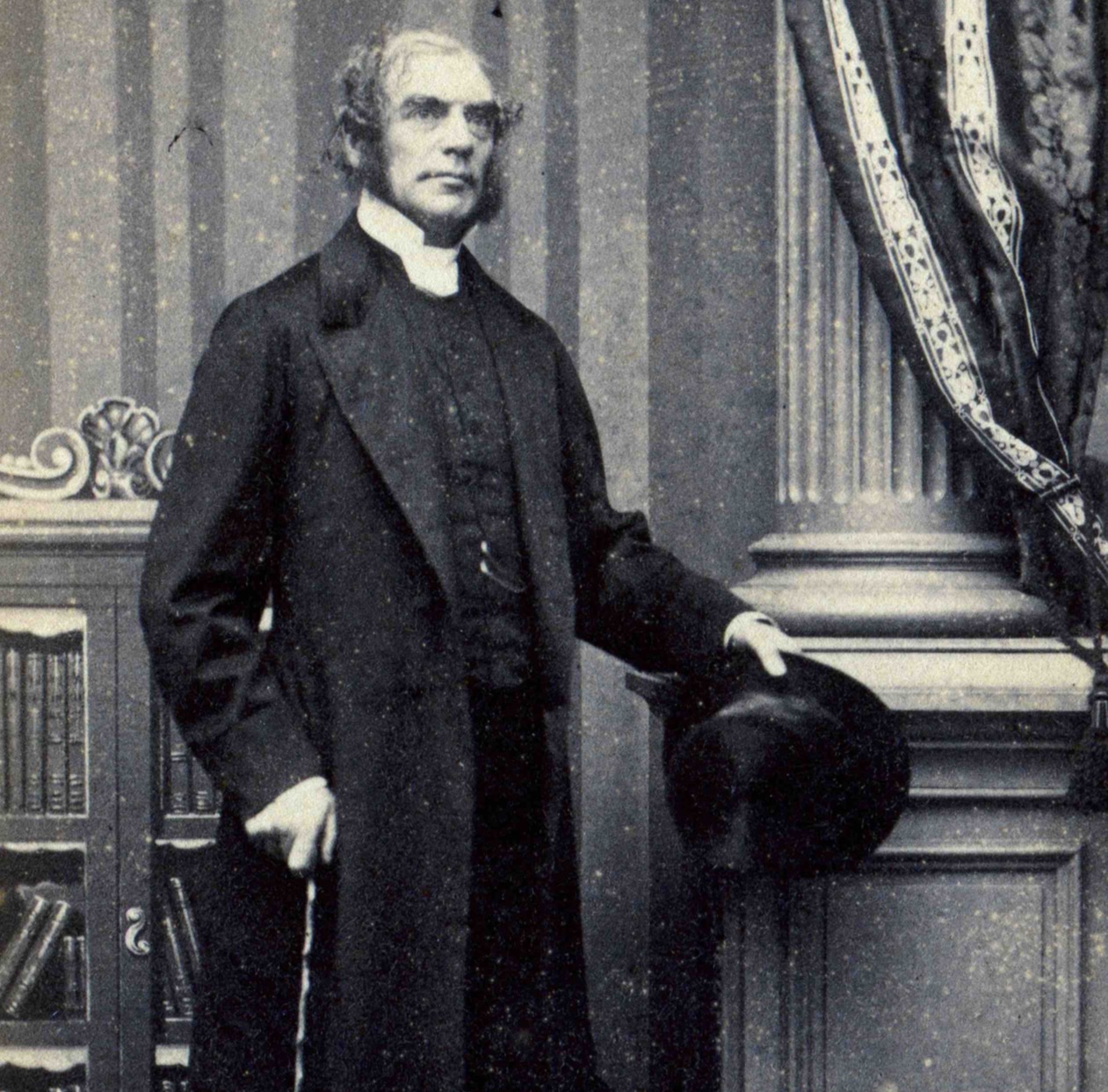
Bill Parker

Imputation & Impartation

Psalm 32
Bill Parker July, 15 2000 Audio
0 Comments
Bill Parker
Bill Parker July, 15 2000

Sermon Transcript

Auto-generated transcript • May contain errors

100%
Thank you, Mark. It is a joy
and a pleasure to be here and finally put some faces to the
names and the voices. As most of you know, we're living
in a terrible age as far as the truth is concerned in the preaching
of the gospel. What we're finding is small groups
of people all over the place, all over the country, who are
meeting to worship the true and living God. And the vast majority
have forsaken the truth. But I'm amazed, I'm always remembered,
constantly reminded, and I'm amazed at what the Apostle John
wrote in the book of Revelation when he describes the gospel
as the bittersweet gospel. And that's just exactly what
it is. There is some bitterness, but there's also a sweetness
in the truth and the joy and the fellowship of God's people
when we meet around this truth and when we met together to worship
God in spirit and in truth. And we have some people who've
come very far away, including myself, but thou came the farthest
from the Philippines. And it's just amazing to me that
God has raised up people who so love his truth, but for the
grace of God, you know, and remember, as Isaiah said, the pit from
which we were dug. that it's only by his grace and
his mercy that any of us know and love his truth. And with
that in mind, we are so privileged not to hear me or hear any individual,
but to hear God's gospel. So many millions have never even
heard the gospel. We need to think about that.
And it's just amazing when I see men like Bob who come from the
Philippines who are in the Bernard from Canada and different parts
of this country that stand for the truth. Because that's the
issue and that's what we want to do. There was a young preacher
one time who was having a conference and he had an older man, sort
of his mentor there to preach for him with several other men. After the meeting was over, the
older man told the younger man, he said, you know what you ought
to do next year is assign topics. And the young man said, well,
OK. So he invited them back the next year and he assigned each
one of them a topic, including the older man. And the older
man came back that next year to stand up and preach. And the
first thing he said, he said, you know, one thing I hate is
somebody tell me what to preach. But that's not the case here
today. Because Mark, when he asked me to come up, he said,
would you mind if I suggest some topics? And I said, no, go ahead.
I feel very comfortable with that, knowing what Mark believes.
I pretty much knew that he wasn't going to bring some off-the-wall
topic, such as where did Cain get his wife or anything like
that. So he sent me an email and he suggested four topics
and I thought they were all good and I thought they were all needed,
things that we need to understand, need to hear, and need to fellowship
around. And today's first message has
to do with the subjects of imputation and impartation. And he asked
these three questions. What is imputed and what is imparted
in salvation? And then both imputation and
impartation are necessary in salvation, which is true. And
then why is it deadly to confuse the two? So I'm going to deal
with that subject. I want you to turn to Psalm 32
to begin with. Psalm 32. And we'll read a couple
of passages of scripture in Psalm 32. virtually the only passage
in the Old Testament where you see the actual word impute or
imputed. But it's certainly not the only
passage that teaches the doctrine of imputation. The truth of imputation
is prevalent from Genesis to Revelation. It's one of the basic
gospel principles, representation Substitution, imputation, satisfaction,
these are all basic, the ABCs of the gospel. And of course,
what we've seen in religion today is a total ignorance of these
basic gospel principles, the gospel itself. And a total ignorance
of these basic gospel principles which would impart to our minds
the knowledge which is necessary to serve God and to worship him
aright according to his will. through the Lord Jesus Christ.
And look at verse 1 of Psalm 32. The psalmist here, David,
writes, Blessed is he whose transgression is forgiven. And then it says,
whose sin is covered. And that covering there, the
idea that the truth of pardon, of remission, of forgiveness
of sin in the Old Testament and the New Testament is never, never
considered a part from the issue of law and justice being satisfied.
You'll never find the forgiveness of sin, pardon, mercy displayed
by God towards a sinner apart from law and justice being satisfied. That's why we talk about righteousness
so much. See, that's the theme of the
scripture. Somebody says, well, Christ is the theme. Well, that's
true. But if you don't put any definition or meaning of that,
the Jehovah Witness could agree with you just as much as the
Mormon. I heard a preacher say one time, he was making a point
about, do we love Christ? And he looked at a man in the
audience and he said, now all I need to know about you is do
you love Christ? And he said, I don't need to know anything
else. And the first thing that popped into my mind, well, go
ask a Jehovah's Witness if they love Christ. And what would they
say? Well, of course they do. But which Christ do they love?
They don't love the same one I love. They don't love the same
one you love. And of course, we're going to
talk about this as we come in throughout today and tomorrow.
You know, the only way we can know which Christ we love is
by the doctrine of Christ. And that's it. Now, there's no
other way. That's what the apostles, one of the points he was making
in 2 Corinthians 5 that you read. We know no man after the flesh.
An outward appearance and reputation, that means nothing in the kingdom
of God. So when he says, blessed is the man, is he whose transgression
is forgiven, He's talking about a pardon and forgiveness of sin,
which is perfectly consistent with law and justice being satisfied. A righteousness provided, therefore,
look at the following verse. Verse 2, and this blessedness
is a state now. It's a state of justification.
It's a state of being not guilty, not defiled, no longer owing
a debt to God's law and justice, having our debt paid. All right,
now look at it. Blessed is the man unto whom the Lord imputeth
not iniquity, and in whose spirit there is no guile." In other
words, God does not charge this person with their sin. Now, that's
an amazing statement, and we may just wash right over it. God does not charge this person
with their sin. Now, can you imagine the blessing?
of God who knows all and sees all, who knows your thoughts
right now, my thoughts, every moment, not charging us with
our sins. Now, this is an amazing truth. This is something we need to
think about and ponder. Well, what does David mean? Let's
go to Romans chapter 4. Someone said, well, the New Testament
is the best commentary ever written on the Old Testament. And that's
true. But God the Holy Spirit, I keep
referring to these things, not to be negative, but just to make
the point that we need to understand. You know, a man once said, he
was talking about Abraham, not David. He said, a man's foolish
to try to figure out what Abraham believed. And the first thing
that popped into my mind was Romans 4, Galatians 3, Hebrews
11. God the Holy Spirit tells us
what Abraham believed. And God the Holy Spirit's not
foolish. He tells us when God spoke to Abraham in Genesis 12,
Genesis 15, and Genesis 17, he told us, God the Holy Spirit
tells us exactly what Abraham heard, understood, and believed
at that point in time, even though it's not explicitly written out
in detail in Genesis 12, 15, and 17. Well, here God the Holy
Spirit is telling us exactly what David had in mind. Look
at verse 6. Even as David also describeth
the blessedness of the man unto whom God imputeth righteousness
without works." So when David said, blessed is the man to whom
Lord imputeth not sin, this is what David understood. The non-imputation
of sin automatically meant the imputation of righteousness in
David's mind, David the theologian. And he says, Righteousness without
words, saying verse seven, blessed are they whose iniquities are
forgiven and whose sins are covered. Blessed is the man to whom the
Lord will not impute sin. Now, this these issues of imputation
and impartation, let let me first just simply define the term.
What does imputation mean? Well, imputation is a legal term,
period. It is a legal term, literally
imputation, to impute something. It has to do with charging to
the account of another the demerit or the merit of an action. Okay? It is to charge to another
something that that other person did not personally or previously
have, legally accounted to his account, That's the merit or
the merit of an action. And that's what it is. It's strictly
legal. Now, impartation, you might say
it this way in this light, is a moral term. Or in some sense,
you could say, I hesitate to say strictly moral because there
are other situations we'll look at in a minute. But impartation
means to infuse. It has to do with a quality of
character. infused into a person. I was
a teacher for 13 years, and when I was learning to be a teacher
in the college courses, we'd always talk about imparting knowledge. And what we were saying there
is that we wanted our knowledge to go from our brain into the
brains of our students. Something infused into their
minds, into their understanding to where it became a part of
them. So to impart something is to infuse a quality of character. And when I said I hesitate to
use the term moral, it doesn't necessarily have to be a moral
quality of character. It can be an immoral quality
of character. For example, what we inherited
from Adam was a principle of what? Sin. Isn't that right? And that is imparted, and we'll
talk about that. So to impute is a legal term. All right, it
means to charge to the account of another something that that
other did not previously have. All right, to account it. Impart is strictly has to do
with the quality of character infused. Now that which is imputed
cannot be imparted. And that which is imparted cannot
be imputed. You cannot, you cannot confuse
the two. And we'll see that. And one of
the greatest debates among those who claim to be Christian, quote
unquote. Amongst various denominations
is this. Are we saved based on an imputed righteousness, or
are we saved based on an imparted righteousness, or are we saved
based on a combination of both? Now, that's been the debate.
Well, let's first talk about the issue in Romans chapter 5.
Look across the page here. The Bible basically teaches a
threefold imputation. It teaches the imputation of
Adam's sin to all whom Adam represented. In other words, legally, God
charged to the account of all whom Adam represented the guilt
and the defilement of Adam's sin in the garden. You see, Adam,
when he acted, Adam, when he walked and talked, when he acted
in the garden, he did not act as a private person, as an individual. He was a representative. He was
appointed of God. He was the first man. He was
the crown of God's creation who was given dominion over the whole
earth. He was given dominion over everything except God. God
said, Adam, I'm the creator. You're the creature. I have dominion
over you. Now, I've given you dominion over the whole earth.
But I have dominion over you, and I'm the one who sets the
rules. I'm the one who determines the standard of good and evil,
and that was represented in the tree of the knowledge of good
and evil. So Adam was set up to be a representative of a people. Who? All whom he represented,
which the Bible tells us is the whole human race. Everyone who
came from Adam, his posterity. Everyone who is born of Adam.
So Adam's sin, Adam's guilt, was imputed. legally charged
to the account of all of his prosperity. In other words, we
became guilty not based upon our personal sinning and not
based upon anything infused into us, but we became guilty strictly
by imputation. Now look at Romans chapter 5
and verse 12. It says, Wherefore, as by one man sin entered into
the world, And death by sin, and so death passed upon all
men, literally for that all sin. Now, how could it be said that
I sinned when I wasn't even there? How can that be said at all and
God be just? Is God just, is he just playing
games with us? Is he just, as we used to do
on the playground, just let's play like. Let's play like you
sinned, but you really didn't. Well, God's not a play-like God.
God deals in reality. God deals in truth and justice. Well, we weren't there personally,
but we were there representatively. That's the key. I wasn't there
personally because I wasn't even born yet, but I was there, really,
in reality, in the person of my representative, Adam. And that is so real that when
he sins, I sin. And the guilt and the defilement
of the sin that Adam committed was legally imputed, legally
charged to my account. Now look at Romans chapter 5
and verse 18. Therefore, as by the offense
of one. Okay, and then you see the word
judgment came in italics there. But the sense is, the truth of
it is there, judgment, that is God's just sentence against sin. God's wrath. came upon all men
to condemnation. Now, who are the all men here?
You know, people want to argue back and forth about the word
all and every and world in the scripture. Well, context determines
the meaning of each one of them. Well, who are the all men? Well,
he says, here's one by the offense of one, the sin of one, the disobedience
of one. All came under condemnation.
You've got one, you've got all. Who's the one? Well, that's Adam.
Obviously, Adam. Who are they all? All whom Adam
represents. The guilt and the defilement
of his sin was charged to their account. And that's the first
imputation that the Bible teaches. And we'll look back at these
verses in just a moment. But look at verse 19. It says, for as by
one man's disobedience, many, literally the many, a specific
many, were made, and that term, were made there, is a legal term.
It's literally constituted. So, by the disobedience of, by
one man's disobedience, the many, now who are, how many? Who are
the many? All whom this one represented.
However many that is, we don't know. Some of them haven't even
been born yet. And we don't know how long this
world's going to last. So we don't know how many. That's not
our business. We're not counting how many. I just know it's this.
However many Adam represented. That's how many. So the many
were legally constituted, legally accounted sinners. That's talking
about imputations. And that's the first imputation.
Now the second imputation has to do with the sins of God's
elect. his church, his sheep legally
accounted to the person of Christ who went to the cross of Calvary
and died for our sins. Now you read about that in Isaiah
53. If anybody reads chapter 53 of
the book of Isaiah and understands that it's a messianic prophecy
of the suffering Messiah, the language of representation, substitution
and imputation and satisfaction almost jumps out from the page
and hits you in the face. I had a man in Charleston, West
Virginia, who wrote me one time, he says, you're not going to
find the preaching of your gospel of substitution in the book of
Acts. And I merely just referred him to to the book of Acts, chapter
seven, the chapter seven, Philip and the Ethiopian eunuch. Am
I making a wrong reference there? Chapter seven, that is where
That's Stephen in chapter 7, chapter 8, Philip in the Ethiopian eunuch.
And the Ethiopian eunuch was reading from Isaiah 53. He quotes
it there. And the eunuch says, who is he
talking about here? And Philip began at that scripture
preaching unto him Jesus, the anointed one, the Messiah. And do you suppose that Philip,
and it's not explicitly written there, you know, actually it's
a history book. And a lot of times in history books, you don't
have all the details written down. I've often told people,
if you want to find the details of what Paul preached when he
stood on Mars Hill and when he went to Galatia and Thessalonica,
just read Romans, Ephesians, Galatians. That's what he preached
to them. But do you suppose that Philip
stood there and preached to that man and didn't mention The issues
of representation and substitution and imputation and status. How
could you preach from Isaiah 53 and not mention that? He was
bruised for our iniquity. Not for his own. Well, don't
you suppose that the man would have asked, well, now, how could
he take my place? How could that be right? That
doesn't sound... I know they say it today in religion, but
it's become nothing more but empty phrases today. People don't
think today. They're not taught to think.
And they're taught from the pulpit to let him do your thinking for
you. And don't question it. Don't
ever dare do that. Don't touch God's anointing. So, these issues are coming forth,
you see. Well, this person who was preached
and prophesied and typified in the Old Testament, the God-man,
the second person of the Trinity, who was appointed as a father
from the foundation of the world, the Lamb slain from the foundation
of the world. That means this doctrine of substitution,
representation and imputation is older than us. It's older
than this world. It's as old as the covenant of grace. And God revealed this from Genesis
on that this person would come and would stand as a representative.
and that he would take their place as their substitute, and
that their sins would be legally accounted his. Sins that he had
no part in producing. Because he's sinless. Now look
back at Romans 5, in verse 18. We read the first part. Therefore,
as by the offense of one, judgment came upon all men, the condemnation,
the one being Adam, the all men being all whom Adam represented.
All right? They're guilty by him. Even so,
by the righteousness of one. This righteousness came upon
all men. The free gift, it says, that's in italics, is supplied
by the translator of the King James Version. And it came upon
all men unto justification and life. Now, who are the all men
here? Well, it says, by the righteousness of one. That's Christ. Now, righteousness is a legal
term also. Righteousness literally means
satisfaction to God's law and justice. Precept and penalty. If you were born innocent, which
we're not, if you were born innocent, and you could keep the law from
the cradle on up, I started to say from the cradle to the grave,
but if you were born innocent, there would be no grave. But
if you could keep the law continually, that's righteousness. precept
of the law. Now, if there's any sin that
comes into the picture, then justice comes in and demands
satisfaction, justice. So that's why the soul that sinneth
must die. That's why without the shedding
of blood, there is no remission of sin. That's why Christ not
only had to keep the law, but he had to die. That's why the
burial of Christ is part of the gospel, because it's telling
us that he did die. He didn't just go to sleep. But
he actually shed his blood unto death. He was obedient unto the
death of the cross. And he was resurrected from the
grave based upon the fact that he, not as a private person,
but as a representative, satisfied law and justice. Now, who did
he do it for? Well, it says here that the free
gift came upon all men under justification of life. Well,
who's the all men here? All whom Christ represented.
Who are they? All who come to justification
of life. Now anyone who comes to justification
of life can honestly, based upon God's testimony, say that when
Christ came into this world, when he obeyed the law, when
he went to the cross of Calvary and suffered and bled and died
on that tree, when he was buried and rose again, he did it for
me. He represented me. He substituted himself for me.
His righteous might. My guilt was imputed to him,
legally accounted his. He didn't have any part in producing
that guilt. He was holy, harmless, undefiled, set for consent. He never had a sinful thought.
He was impeccable, as the theologians say. There was no possibility
that he could have committed sin. Absolutely no possibility. How do I know that? Because he's
God. And God cannot commit sin. God, by his very nature and essence,
is everything that holiness entails. We can't even imagine it. There's
not a second of it that the closest I believe that we can get to
imagining strict holiness is Christ on the cross, seeing how
much God hates sin, that when it was legally accounted to the
person of his son, he punished it. To the point to where the
Lord said, my God, my God, why have you forsaken me? That was
a legal separation between the Father and the Son as God-man,
as our representative, based upon sin imputed. And so the
all here is everyone whom he represented. Look at verse 19.
For as by one man's disobedience the many were legally constituted
sinners, so by the obedience of one, that's Christ, shall
the many be legally constituted Righteous. That's imputation. So Adam's guilt imputed to all
whom he represented. The guilt of sin imputed to Christ. Whose guilt? All whom he represented. And then here's the third one
too. The imputation of his righteousness to all whom he represented. Now
go to 2 Corinthians 5 and verse 18. Now this is the portion that
Chris read. And think about this. He's speaking here in 2 Corinthians
chapter 5 of the ministry of reconciliation. Now, you know,
there's churches all over this town. You come to Albany, there's
one on every street corner and one probably starting up today.
Everybody's got to preach. Everybody's got to hold their
own little patch. And a lot of times what we find
in the South, it may be the same up here, but it's usually somebody
that wants to preach and they can't sit under anybody else
that preaches the same message. And they just have their family
around. In other words, their separation from the other group
has nothing to do with the truth. But it just has to do with the
desire to stand up and say what you want to say, if you can get
anybody to want to hear you. But it has nothing to do with
the truth. And the issue, you think about this, a man told
me one time, he said, well, he said, I've been called to preach
and I'm thinking about starting a church. And I said, why? You
mean there's not one in this town you can go to? Because you're
just going to go out and preach the same false gospel that the
others are preaching? But they don't think that way.
But here's the thing, Paul is describing something here. called
the Ministry of Reconciliation. Now, what does reconciliation
mean? That means peace between God and sinners. You know, down
South, they'll say, well, he made his peace with God. Well,
the problem is that sinners cannot make their peace with God. Sinners,
since Adam fell, have been trying to make their peace with God
in failing miseries. Adam was the first to do it,
and that's represented by the fig leaf apron, I believe. That
was his first attempt at trying to make peace with God, you might
say. The first recorded attempt. And then Cain took over where
Adam left off on that issue. And he tried to make his peace
with God, and he failed miserably. Then we see the Tower of Babel,
and then it goes on down through the generations of man. And that's
what I think the preacher in Ecclesiastes, Solomon, meant
when he said vanity is vanity, is all is vanity. And that's
right. And he concluded it with this,
well, here's the conclusion of the whole matter. And that is
trust in God and keep his commandments. In other words, the only way
to God is God is to trust in God for all grace and all power
and all glory. But man's trying to make his
peace with God. But the ministry of reconciliation doesn't tell
sinners to seek to make their peace with God. The ministry
of reconciliation tells sinners to enter into a rest of a peace
already made with God. already established. And the
way that you know the ministry of reconciliation is by the word
of reconciliation. And in essence, it goes something
like this. All right. You say that we're sinners, we're
lost, we need salvation. Well, everybody says that. Everyone
I know says that in the south. All right. Now, here's the question. How can peace with God be made
up? On what basis will God Be the merciful and gracious toward
me of Sam. Well, the only way you can know
if this is a ministry of reconciliation is by the word of reconciliation,
by the doctrine of reconciliation. My friend, don't go around putting
down doctrines. God doesn't. Not right doctrine.
I've heard people say about the Pharisees, well, they were straight
in their doctrine, straight as a gun barrel and justice. They
were straight in their doctrine. Christ told the disciples to
beware of their doctrine. He called it the doctrine of
devil. He called it the leaven, which is a type of sin. Oh, I
know they had their system and all that, but God has his system,
too. It's just the right system. But here's the thing, the only
way we can know is by the word of reconciliation. Now, here
it is. Look at verse 18. He says, If any man be in Christ,
he's a new creature, a new creation. And he says in verse 18, And
all things of God. This new creation is of God.
It's not of man. Salvation is of the Lord. All
right? If I'm a new creation, I can't
attribute any of it to me. I've got to attribute it all
to God. He says, "...who hath reconciled us to himself by Jesus
Christ." So now here he tells us that reconciliation can only
be made between God and sinners by Jesus Christ and has given
to us the ministry of reconciliation to when or namely or whereas.
That God was in Christ. Now look at this next phrase.
Reconciling the world unto himself. Now, that word world, does that
mean every individual that has ever lived and ever will live?
Even those who are in hell? Is that a universal all here?
Well, certainly you cannot say that God is reconciled to any
sinner who perishes in hell. If that's reconciliation, I want
no part of it. You mean to tell me that God
has been reconciled to those who are in hell just as much
as he's been reconciled to those who are in heaven? Well, what
is salvation then? What is this blessedness? Well,
basically, it's something you can't put your finger on then.
It's mystical. You know what you have. And that's about the
size of it. You'll know when you die. Maybe
it'll all come out in the end. I don't know. Well, that's not
the word of reconciliation. Here's what he says. Who is the
world here under whom God is reconciled? He says it in this
phrase, not imputing their trespasses under them. This world here refers
to a class of people to whom God does not charge with sin. That's amazing, isn't it? Now
he says, and hath committed unto us the word of reconciliation.
Now then, we are ambassadors for Christ. That is, we carry
forth this word of reconciliation as though God did beseech. And
the you there is supplied by the translators. I believe he's
not calling on the Corinthians here to be reconciled to God,
the believers, because they've already been reconciled to God.
What he's doing is describing the ministry that's been given
to them. And he's saying we take this word out and we tell all
sinners, be ye reconciled unto God. We pray you in Christ's
stead, that is, as ambassadors of Christ, as those who are preaching
his word, as his ministers, be ye reconciled to God. Now look
at verse 21. For he, that is God the Father,
hath made him who knew no sin, that is the Lord Jesus Christ,
that person who knew no sin, who committed no sin, to be sin
for us. Now how was he made to be sin?
Not in his character and conduct, not in anything that he thought,
not in anything that was infused into him, but totally based upon
an act of imputation. God charging him with our sins. He became cursed for us. He suffered the just for the
unjust. And so he who knew no sin was
made sin for us, that we might be made the righteousness of
God in him. So the doctrine of imputation teaches that great
exchange, that the Lord Jesus Christ, as the representative
of God's elect, went to the cross based on sins imputed to him,
sins which he personally had no part in committing, and he
suffered, bled, and died, satisfied law and justice, and brought
forth an everlasting righteousness, Which would, number one, enable
God to be a just God and a savior, to enable God to be both a righteous
judge and a loving father, to enable God to justify the ungodly
and still be God and still be righteous and holy. Number two,
a righteousness that would secure and demand the salvation and
final glory of all whom he represented. And number three, that would
give them a full right and title to the whole inheritance of grace.
so that they cannot perish. His righteousness imputed to
them, so that sinners, God's elect, are saved. They are preserved. They are entitled to all of salvation
based on a righteousness that they personally had no part in
producing, but one which was totally outside of themselves.
The old theologians called it an alien righteousness. And what that simply meant was
it was a righteousness that did not come from us or in us, it's
nothing that we previously had or personally worked up. But
it was totally outside of us, totally from God. It's called
the righteousness of God. Look at Romans chapter one. Romans
chapter one. Now, this is imputed. Imputed
is legal, strictly legal. It has nothing. Listen, and I
know some of the older theologians and they use the term imparted
righteousness. Well, that's not a scriptural
term. Righteousness is the merit of a work. The merit of a work
cannot be imparted. It can only be imputed. All right? Now, by that, some of them meant,
when they said imparted righteousness, some of them simply meant the
work of the Holy Spirit in them, which I'm going to talk about
in just a second. And that is necessary for salvation, but
not for the same reason. But they're using a wrong term
for it. The Bible never calls the work of the Holy Spirit imparted
righteousness. Now, the work of the Holy Spirit
in us is necessary, but that's not what it's called. That's
a misapplication of a term. Righteousness is what Christ
produced. And to some, it meant this when they said imparted
righteousness. To some, it means that the Holy Spirit enabled
them to produce a righteousness. Now, that is anti-gospel. That
is deadly. That's why it's deadly to confuse
the two in that realm. But look here, in chapter 1,
verse 16, For I am not ashamed of the gospel of Christ, for
it is the power of God unto salvation to everyone that believeth that
gospel, to the Jew first, and also to the Greek. Now, we've
already seen the gospel is the revelation of the righteousness
of God. Verse 17, For therein is the righteousness of God revealed
from faith to faith, as it is written, The just shall live
by faith. Now, what is this righteousness of God? Some say it's the essential
holiness of God. Well, it is not. Now, the gospel
certainly preaches the essential holiness of God. Don't get me
wrong. You cannot preach the doctrine that identifies and
distinguishes God without preaching his essential holiness. The law
of God is an expression of God's holiness. The gospel reveals
that God must be holy and yet still save sinners. He cannot
save sinners at the expense of his holiness or his justice or
his truth. He must be both a just God and
a savior. So what is this righteousness of God revealed in the gospel?
We'll look at Romans 3 and verse 21. Or verse 19, rather. First of all, he excludes anything
done by the sinner or in the sinner. He says, Now we know
that what thing soever the law saith, it saith to them who are
under the law, that is guilty, that every mouth may be stopped
and all the world may become guilty before God. Therefore,
by the deeds of the law, there shall no flesh be justified or
declared righteous in his sight, whereby the law is the knowledge
of sin. So the first thing he does is he excludes anything
and everything that is that comes in that is done in us or comes
from. As forming any part of this righteousness revealed in
the gospel, so here it is in verse 21, but now the righteousness
of God without the law, that is, without our deeds of the
law. Somebody asked me, well, how do you know that without
our deeds there? Well, verse 19 and 20 tells us that. All
right? Without the law is manifested,
it's made known, being witnessed by the law and the prophets,
the same gospel that we're preaching today is what Isaiah and Jeremiah
and Samuel, all of them preached. Verse 22, even the righteousness
of God by the faithfulness, literally, of Jesus Christ. Unto all, that
is preached unto all. And look here, upon all, imputed
to all them that believe, for there's no difference. So he
tells us there plainly that the righteousness revealed in the
gospel is an imputed righteousness, not an imparted righteousness.
Now, let me just briefly deal with this issue of impartation.
Now, the gospel is the revelation of a righteousness imputed. But
along with, and here's what we're talking about, when we talk about
in the gospel, in salvation, When we talk about what is imputed,
we're talking about the ground of salvation. When we talk about
what is imparted, we're talking about the result, the fruit,
the effect. Now, that which is imparted in
salvation is the work of the Holy Spirit within us. It includes
regeneration, the Holy Spirit giving life, spiritual life,
which wasn't there before, giving spiritual life to spiritually
dead sinners. And that regeneration is a work
of the Holy Spirit without the use of any means whatsoever.
It's a sovereign work of God. That's why Christ, when he told
Nicodemus, you must be born again or you'll not see the kingdom
of God. You cannot enter the kingdom of God. He said, he said
the Holy Spirit is like the wind. In other words, it comes and
it goes. You don't know where it's coming from, where it's
going, but you realize it's there by its effects, by the evidences. So regeneration is the first
result. of Christ's righteousness imputed.
Christ's righteousness alone, you've heard me say this several
times, I'm sure, his righteousness imputed alone, all right, results
in or entitles sinners to all of salvation, including the work
of the Holy Spirit in them. I want you to turn to John chapter
16. The work of the Holy Spirit in
them is what we're referring to when we talk about impartation. That is a moral quality of character. All right, let me show you this
way. When sinners are born into this world and Adam's guilt is
imputed to those sinners, all right, to those persons born
into this world, Adam's posterity, as a result of Adam's guilt imputed,
there is a sinful principle imparted. It's a principle of ungodliness.
Some people say it's a sinful nature. I don't necessarily like
the term nature. Because when you're talking about
nature, you're talking about it's either deity or human. You
know, Christ is the only person who ever had two natures. One
deity, one human. We have one nature. But we do
have, as believers, two principles. Two powerful principles. Paul
called it a law in Romans 7. That's a powerful principle.
that are seeking to influence our minds, our affections, our
will, our nature, our human nature. And thank God in regeneration
and conversion, that new principle, that principle of life and godliness
dominates. But before we're converted, before
we come to a saving knowledge of Christ, all we have is that
one principle of sin and unrighteousness, unbelief. It evidences itself,
mainly in two ways. First of all, it evidences itself
in seeking to make judgments of saved and lost based on Satan's
lies rather than God's testimony. That's what Adam did in the garden. And it evidences itself in unbelief
of God's truth, ignorance and unbelief of God's truth. It evidences
itself in sinners seeking to establish a righteousness of
their own before God. And that sinful principle is
what we inherited from Adam. Total depravity. All of these
things, inability, all of these things that we confront, that
is the result, that is the fruit of Adam's guilt imputed. Adam's
guilt imputed, you might say, is the ground of that imparted sinful principle. By
the same token, Christ's righteousness imputed is the ground, you see,
of the Holy Spirit's work imparted. infused into our human nature,
infused into our minds, our hearts, our minds, our affections, and
our wills. The Spirit gives life, a principle of life. John called
it an unction in 1 John 2. You remember those who went out
from it? He said, but you have an unction. You have a principle
within you. You have a powerful principle
of godliness and life. And that's evidenced by faith,
which is the gift of God. Faith is imparted. Repentance,
which is the gift of God. Repentance is imparted. All the
work of the Holy Spirit in us, in regeneration and conversion,
the new birth, is imparted. What we're talking about there
are moral qualities of character which involve knowledge of God,
which comes through the gospel, the Holy Spirit working in us
to bring us to faith in Christ and repentance of dead works
and idolatry. So we see them. That faith is
not the ground of our salvation. God does not save us based on
our faith. God saves us based on the righteousness
of Christ imputed, and as a result, he gives us faith to receive
it and to believe it. That's what's imparted. Faith
is a moral quality of character. It cannot be imputed. God doesn't
impute faith to us. That's not what it's talking
about in Romans. Chapter 4 says his faith is counted as righteous.
Literally, his faith is counted unto righteousness. Man believes
unto righteousness. In other words, his faith in
Christ was evidence that he had a righteousness imputed to him.
His belief of the gospel. We'll look here in John chapter
16. And we'll close with this. He says, in verse 18, he's talking
about the Holy Spirit's work in us. And he says, when he has
come the comforter, he will reprove or convince the world of sin
and of righteousness and of judgment. Who's the world there? Not all
without exception. It's the world that he convinces
of sin and righteousness and of judgment. Of sin, because
they believe not on me. In other words, the Holy Spirit
is going to convince us that everything before we heard and
believed this gospel were submitted to the righteousness of Christ.
Even our best efforts to establish a righteousness of our own were
sinful. You'll see an illustration of that in Philippians chapter
3. Paul said, All that I highly esteemed and thought recommended
me unto God I now count but done. In light of what? The righteousness
of Christ. He says in verse 10, A righteousness
because I go to my Father and you see me no more. Christ went
to his Father as the representative of the people who fulfilled and
finished the work that he was sent to do. What was that? To establish a righteousness
that would enable the Father to be just and justify and demand
their salvation. So he's going to convince us
that God will save us, God will preserve us, God will bless us,
God will favor us, God will fellowship with us, God will give us the
whole inheritance of grace and glory based on one thing, the
obedience and death of Christ, his merits alone, his righteousness. And then verse 11, of judgment,
because the prince of this world is judged. Now I don't believe
he's talking about final judgment there. I believed in a final
judgment before I was saved. Most do. I think the judgment
that he's talking about here, is the judgment that is opposite
of Satan's work in the garden. The prince of this world is cast
out. What did Satan do? God pulled out and he said, look.
He said, I'm the sovereign here. I'm the creator. I set the standard. And here's the standard. It's
the tree of the knowledge of good and evil. And the day that
you eat thereof, you shall surely die. What did Satan do? He said,
you shall not surely die. You can set your own standard,
Adam. You don't have to go by God. You've got dominion over
the whole world. You can determine for yourself
what's good and what's evil. You can determine for yourself
who's saved and who's lost. And that's what he's talking
about here, our judgment concerning issues of good and evil, of saved
and lost. The Holy Spirit is going to convince
us of right and proper judgment in that area. Now, the whole
Bible will bear that out. Christ told Nicodemus in John
chapter 3, he that hath the Son hath life. He that hath not the
Son hath not life." You know, the condemnation. The world's
condemned, you know. Why? Because they believe not
on the Son. Paul said in Romans chapter 10, Israel's law, if
my heart's desire and prayer for them is that they be saved.
I bear them record that they have a zeal of God, but they're
ignorant. They're ignorant of God's righteousness. Going about
to establish a righteousness of their own, they have not submitted
themselves unto the righteousness of God. What is that righteousness?
Verse 4, for Christ is the end of the law. For righteousness
to everyone that believes. And so he convinces us of judgment.
Now look at verse 12. He says, I have yet many things
to say unto you, but you cannot bear them now. How be it when
he, the spirit of truth, has come, he will guide you into
all truth, for he shall not speak of himself, but whatsoever he
shall hear, that shall he speak. That's speaking of the Holy Spirit's
office, his official subordination. You see, in his nature, he's
co-equal with the Father and the Son in every essence and
being a deity. But in his official capacity in the covenant of grace,
he was subordinated to the father and the son. He's proceeding
from the father and sent by the son into the world to apply what
the father purposed before the foundation of the world and what
the son purchased for them. And so that shall he speak, and
he will show you things to come. And look at verse 14. He shall
glorify me. For he shall receive of mine
and shall show it unto you. The main work of the Holy Spirit
in us And what he imparts to us is to cause us to know and
submit to the righteousness of Christ worked out for us, to
glorify him and give him the preeminence as the one who established
the only ground upon which a holy God will meet with me and bless
me and save me. So righteousness imputed is the
ground. The Holy Spirit's work within
us is imparted. That's the fruit and the result.
That's the evidence. Now to get the two confused is
deadly because what you're doing then is denying the work of the
Holy Spirit. You're denying His main work
in us is to point us to Christ and give Him the preeminence
as the Lord our righteousness. If you say or if anyone says
that God saves us and blesses us and preserves us and entitles
us to salvation based on the Holy Spirit's work in us, then
you're denying Christ and His righteousness and the proper
place that the Father and the Spirit Which, in essence, is
denying the Father, the Son, and the Holy Spirit. You see
that? God, the Holy Spirit, if any
person, and you know people in the charismatic movement today,
you know, they're all, they want to talk about the Holy Spirit.
And what they do is they replace the work of the Holy Spirit in
us, in essence, for the work of Christ for us. Well, the moment
they do that, you can know it's not the Holy Spirit doing it,
it's an evil spirit. It's another spirit, because the Holy Spirit,
his work in us, is going to point us to Christ, where we'll sit
at his feet, submit to his righteousness, and plead him as our only grantor.
All right, let's close with a word of prayer. Our Heavenly Father,
we do thank you for the blessings of Christ and all that he accomplished
on behalf of his sheep. We do pray, dear Lord, that you
would edify each and every one of us, cause us to grow in grace
and knowledge and establish our hearts with grace, showing us
the way of all things in salvation through Christ and based on his
righteousness alone. And as you establish our hearts
with grace, we pray that you would enable us, dear Lord, to
seek after your will in our lives and to be motivated to love and
obedience and good works, not in a legal way, but as those
who have been being unworthy recipients of all that you have
freely given in Christ. We pray this in his name and
for his sake. Amen.
Bill Parker
About Bill Parker
Bill Parker grew up in Kentucky and first heard the Gospel under the preaching of Henry Mahan. He has been preaching the Gospel of God's free and sovereign grace in Christ for over thirty years. After being the pastor of Eager Ave. Grace Church in Albany, Ga. for over 18 years, he accepted a call to preach at Thirteenth Street Baptist Church in Ashland, KY. He was the pastor there for over 11 years and now has returned to pastor at Eager Avenue Grace Church in Albany, GA

Comments

0 / 2000 characters
Comments are moderated before appearing.

Be the first to comment!

Joshua

Joshua

Shall we play a game? Ask me about articles, sermons, or theology from our library. I can also help you navigate the site.