Bootstrap
Mike McInnis

An Old Commandment

1 John 2
Mike McInnis April, 13 2025 Audio
0 Comments
First John Series

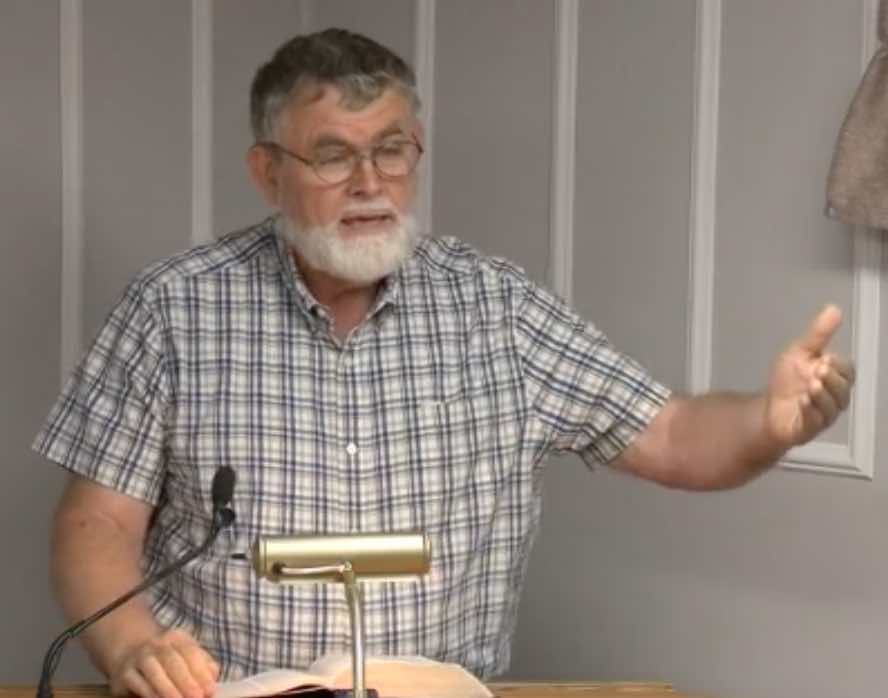
The sermon "An Old Commandment" by Mike McInnis addresses the Reformed theological topic of the necessity of recognizing both human limitations and divine grace as it relates to obedience and worship. The key arguments emphasize that true worship comes from an understanding of one’s sinful nature and reliance on Christ's atoning work, rather than mere adherence to legalistic obedience to the commandments. Scripture references from 1 John 2, specifically highlighting verses about sin, advocacy in Christ, and the call to keep His commandments, illustrate that true knowledge of God is reflected in a heart that seeks to obey out of love, not obligation. The practical significance of this message is that Christians are encouraged to acknowledge their spiritual poverty and reliance on Christ’s perfect obedience, which provides assurance of forgiveness and the impetus for genuine worship and love for others.

Key Quotes

“Until a man is brought down from his perch of thinking he is something when he is nothing, he’ll never worship God.”

“If we say we have not sinned, we make him a liar and the truth's not in us.”

“Keeping the commandments is that which the Spirit of God works in the sons of God. He makes those things precious to us.”

“The law never can bring any comfort to the people of God. We don’t keep the law because it brings us comfort.”

What does the Bible say about keeping God's commandments?

The Bible teaches that keeping God's commandments is a sign of knowing Him.

In 1 John 2, we are reminded that keeping God's commandments is integral to our relationship with Him. The Apostle John states clearly that we know Him if we keep His commandments, and those who claim to know Him but do not keep His word are considered liars. This emphasizes the importance of obedience not just as a checklist but as a reflection of the love of God perfected within us. True obedience stems from an inward transformation that the Spirit of God effects in the hearts of believers, affirming our identity in Christ.

1 John 2:3-5

How do we know that Jesus is our advocate?

The Bible assures us that Jesus Christ is our advocate with the Father.

In 1 John 2:1, John writes about Jesus as our advocate, emphasizing His role in our relationship with the Father. He intercedes for us, and His righteousness is the basis of our justification. Understanding Jesus as our advocate brings comfort, as it signifies that even when we fail and sin, we have someone who pleads our case before God. This assurance is rooted in the belief that Christ’s perfect obedience fulfills the demands of the law on our behalf, allowing us to stand justified in the eyes of God.

1 John 2:1-2

Why is the concept of grace important for Christians?

Grace is foundational to the Christian faith, as it highlights God's unmerited favor toward us.

Grace is vital in Reformed theology because it underscores the truth that our salvation is not earned by our works but given freely by God. It is through grace that we are saved, and this salvation is not contingent upon our performance but solely upon Christ’s finished work on the cross. The Apostle Paul emphasizes this in Ephesians 2:8-9, where he reminds us that it is by grace we have been saved through faith. This understanding fosters humility and gratitude in believers, recognizing that we are saved not by our own merits, but by the rich mercy and kindness of God.

Ephesians 2:8-9

Sermon Transcript

Auto-generated transcript • May contain errors

100%
Praise God for a song of such praise to the Lord. The Lord is able to use a multitude
of things. I heard a man say one time, quite
erroneously, that the Lord never draws a straight line with a
crooked stick. And that's a foolish thing to
say. Well God made the straight sticks and he made the crooked
sticks. And he uses whatever he sees
fit to use. And that song that we sang a
moment ago, of course the original lyrics of the man that wrote
the song not fit to sing in my estimation. because it was written
by a man who's an agnostic Jew, and he was more or less angry
at God, but then, you know, he said, praise God. Now I don't
know what the man's motivations or what, you know, light he might
have had, but it's amazing to me that out of the mind and from
the lips of a man with a, you know, a perhaps tainted view
of what the truth is, yet glory and truth would come forth. And
you know, that's an amazing thing. I mean, I can't do anything but
fall down and worship the Lord and say, even so, Father, for
so it seemed good in thy sight. You know, some might be critical
and say, oh, you should never sing, you know, a song written
by somebody like that. What they don't understand is
that probably 50% of the tunes that have been passed down through
the ages of hymns that are sung did not originate uh... in among god's people they originated
in bars and places you know where people got together and made
merry but you see god uses all things unto his glory and uh... you know that doesn't mean that
we we uh... uh... recommend or that we uh... support the foolishness of men
We decry it. We understand we're foolish men.
But you know the Lord, He uses whatever He wills. And He brings
His truth in whatever fashion He sees fit to do it. And He
can bring the truth to a man by somebody that doesn't know
the truth. He can do that. He doesn't need, you know, a
man that's well-versed in the Word of God. to bring forth the
truth of the word of God. Absolutely, I mean he can speak
however he wishes to speak. So let us never be caught up
and enamored by either the things of men that seem to be worthwhile
or those that seem to us to be useless. The Lord has a use for
all things. And he will, in his own time,
bring all things to light. And when that light has shined,
we'll see that all of the earth has been raised up to the glory
of God. Let everything that hath breath
praise him. We just thank the Lord that he
has shown us what we are by nature. Because it's only as a man knows
what he is by nature that he can rightly worship the true
and living God. Because until a man is brought
down from his perch of thinking he is something when he is nothing,
he'll never worship God. Now, he may do what he calls
worshiping God, and he may have in his mind some religious sense
of duty in doing those things, but it's only as the Lord humbles
man that he's brought to a place of true worship. May the Lord
lay these things on our heart and mind today, especially as
we come to perhaps among the saints of God, the pinnacle,
of worship, that which the Lord commanded us to do. He didn't
say, if you feel like doing this, he said, do it in remembrance
of me. And he said, as often as you
do it, you do manifest the death of the Lord Jesus Christ. And
I know of no other message that we need than Jesus Christ and
him crucified. There's many things that a man
can preach out of the Bible, but if he fails to preach that,
he has not preached the truth of God. May he ever give us a
mind to do so. Now John's been writing to us,
or to us, to the Ephesians, and to all of the saints, of course,
that these words, And we've read some of this before,
but we'll read a few of these verses again. It says, my little
children, these things write I unto you that ye sin not. And if any man sin, we have an
advocate with the Father, Jesus Christ the righteous. And he
is propitiation for our sins and not for ours only, but also
for the sins of the whole world. And hereby we do know that we
know him if we keep his commandments. He that saith, I know him, and
keepeth not his commandments is a liar, and the truth is not
in him. But whoso keepeth his word, in
him verily is the love of God perfected. Hereby know we that
we are in him. He that saith he abideth in him
ought himself also so to walk, even as he walked. Brethren,
I write no new commandment unto you, but an old commandment,
which ye had from the beginning. The old commandment is the word
which ye have heard from the beginning. Again, a new commandment
I write unto you, which thing is true in him and in you, because
the darkness is past and the true light now shineth. He that
saith he is in the light and hateth his brother is in darkness
even until now. He that loveth his brother abideth
in the light, and there is none occasion of stumbling in him. But he that hateth his brother
is in darkness, and walketh in darkness, and knoweth not whether
he goeth, because that darkness hath blinded his eyes. I write
unto you, little children, because your sins are forgiven you for
His name's sake. I write unto you, fathers, because
ye have known Him that is from the beginning. I write unto you,
young men, because ye have overcome the wicked one. I write unto
you, little children, because ye have known the Father. I have
written unto you, fathers, because ye have known Him that is from
the beginning. I have written unto you, young
men, because ye are strong and the word of God abideth in you,
and ye have overcome the wicked one. Now those, you know this
is a glorious chapter, a glorious setting forth of the truth by
a man who was well seasoned in the gospel. John was quite aged
by historical accounts by the time that this was written, perhaps
as much as 90 years old. And so what he's writing here
is not just simply words that he's heard along the way, but
the truth of God that has been burned into his very soul. Which
thing is that which the Spirit of God is doing to the people
of God? Now he uses different temperatures
with different people. You know, he doesn't burn as
deep in some as he burns in others. But the same word, it's the same
word that's given to all of God's people. Now he begins this second
chapter by writing my little children. Now in a minute, as
we read there, he's gonna address the fathers and the young men.
But he's really addressing them all when he says, my little children. Because that's all that we are
is little children. You remember the Lord said that
except a man come as a little child, he cannot enter the kingdom
of heaven. That doesn't mean that you have
to come to Christ when you're a young person. But it means
that the characteristics of a child is that which the Lord is working
in a man when he brings him unto himself. We know nothing as we
ought to know nothing. You know, a child doesn't have
any understanding. Now, you know, of course, I guess
we'd have to qualify that as to an age bracket, but there
is a stage in a child's life, which I consider to be a true
child, when they don't have any real knowledge of anything except
that which you tell them. Now, unfortunately, they grow
up pretty fast and they become those that know more than their
teacher. They come to know more than the
one whom they had perfect reliance on at one time. But as a small
child, there is a complete and total reliance on his father
and his mother. I mean, if something happens,
that's where he goes. I mean, he has no other thought. When fears grip him, He doesn't think about picking
up a book and reading it. But he runs to his mama, or he
runs to his father. And so it is, that's the place
where God's people are. We run to him, we don't have
any other place to go. Men of religion, they've got
a lot of things. They've got a lot of resources,
you know. They can read this book or they can read that book.
If they have trouble, they can find out the answer from some
spiritual leader that has the answers. And there's plenty of
them out there. I mean, and I'm not saying that
there's not a lot of spiritual wisdom among many teachers out
there. But brethren, we don't run to
teachers when we need help. We run to the Lord. I mean, when
the Lord is pleased to bring the right kind of burden upon
you, if you belong to Him, you're not thinking about trying to
get help from somebody. You know, the help you need comes
from the Lord. Recently, when I was in my health
situation, and the Lord, in His mercy and kindness, I say visited
me, I mean, He wasn't literally there. I didn't see him or anything
like that, but I can tell you he was there with me. And he
reminded me that I had absolutely no power
to do anything. I didn't know from one minute
to the next if that would be my last breath or if I was going
to be healed. But I can tell you this of a
surety, in those moments I did not care. It mattered not to me whether
I lived or whether I died, I just wanted to be with Him. I wanted to be in His presence. And His presence was real. And in His mercy, He restored
me to health. And so here I am before you. as one who confesses that he
doesn't know much about anything. But I have learned that he is
all that we stand in need of. Now he speaks here about keeping
the commandments. He says, but whoso keepeth his
word, in him is the love of God perfected. Hereby know that we
are in him. He that saith, I know him, and
keepeth not his commandments is a liar, and the truth is not
in him. And then the verse before that
says, hereby we do know that we know him if we keep his commandments. Now most people when they read
the words and think of what it means to keep the commandments
of God, their mind generally runs towards having a matter of obedience, that they
obey the commands of God, that they are found faithfully adhering
to the commands of God. But that's not what it is to
keep the commandments of God. Because those to whom he writes
here, he just got through saying, if we say we have not sinned,
we make him a liar and the truth's not in us. So if keeping the
commandments that he's speaking about here has to do with day
by day looking at the commandments and having a little checklist,
we check off, we did this, we did that, or whatever, then brethren,
we've all failed. Not one of us in here has ever
kept the commandments of God in that way. But at the same
time, keeping the commandments is that which the Spirit of God
works in the sons of God. He makes those things precious
to us. And while a man may be a child
of God and not be obedient, to his commandments. A man cannot
be a child of God and not keep his commandments. That is, not
recognize that this is the truth of God and have a desire to walk
in it. See, that's what the Spirit of
God does. He works in his people both the
will and to do of his good pleasure. And quite often, our willingness
exceeds our doingness. You know, I mean, that was evidence,
was it not, with the disciples. I mean, every one of them, when
the Lord said, watch with me for an hour, every one of them,
when they got down on their knees or laid out prostrate or whatever
it was there in the garden, they all had the intention, did they
not, of watching with him. They didn't understand exactly
what was going on, but they said, well, you know, we're going to
stand with you. I mean, Peter, he said, Lord,
I'll stand with you to the end. He meant that. He wasn't, you
know, he wasn't just making an empty boast. He honestly believed
that he would. He thought he would, but he didn't. And neither did any of the disciples
stay awake. But you know, the Lord did not
condemn them, did he? He said, the spirit is willing,
but the flesh is weak. And some use that as an expression
of excuse for their sin. Oh, well, you know, spirit's
willing, but the flesh is weak. There's never an excuse. Not
given to us as an excuse. I mean, the Lord was disappointed,
was he not? I mean, wouldn't you say, couldn't
you watch with me for an hour? And I'm sure they had much shame. They didn't just brush that off
and say, oh, well, you know, spirit's willing, pleasure's
weak. No, their hearts were broken. As they ought to be, dear brethren,
when we consider the weakness of our flesh. Because it is the
weakness of our flesh that drove the Savior to the cross. for
our sake. Because we're sinners. Christ died. Now he did not die
reluctantly. He gladly undertook our redemption
when we didn't even know we needed redemption. I mean You know,
it's so foolish for men to think that they had anything to do
with their salvation when we consider that Christ came into
the world for the purpose of dying for sinners and paying
their sin debt when none of them had any knowledge at all of it. Oh, what a glorious Savior He
is. And he brings us today to remember his death till he comes. And indeed it is true that we
have broken the commandments many times and we will continue
to do it. I mean, you know, when the Lord
summed up the law And he said, thou shalt love the Lord thy
God with all thy heart, with all thy soul, with all thy mind,
and thy neighbor as thyself. That's like a dagger in the heart
to the man who knows what he is by nature. The law never can
bring any comfort to the people of God. We don't keep the law
because it brings us comfort. But what he means when he says
we keep the law is that we know it's right. We know it's true. Because it came from the lips
of our Lord. And it's to him that we want
to render our praise and it's to him we want to worship. It's to him we want to be obedient. We want to satisfy him. And we
find ourselves so far from it. But that's what he said. If any
man sin, we have an advocate with the Father, Jesus Christ,
the righteous. That's our hope, dear brethren,
not that we ever have any measure of obedience to the commandments
of God, but that Christ is perfectly obedient. to all commandments,
to the jot and tittle of the law, every jot and tittle, he
fulfilled for his people's sake, so that there's nothing left
to pay. I mean, if you wanted to pay something, you couldn't.
You know, if something is given to you freely, you cannot pay
for it. I mean, if somebody comes and
they give you something, There's not a thing in the world you
can do to buy it. You can take all the money out
of your pocket and throw it down at their feet. Doesn't matter. It's freely given. And while
salvation on the one hand was certainly not free, because it
cost the blood of the Lord Jesus Christ, it is freely given. freely given to all those for
whom He died. And they are known as those who
call upon Him. They are those who are known
as those who believe Him. And as such, we come today to
the time when we have set aside to do something that the Lord
told us to do, And it's not a ritual, but we would not neglect it. The Lord said to do it. And we
don't really come saying, well, we may or we may not. He said
to do it, we do it, as often as we do it. And the same night
in which he was betrayed, he took the bread, he blessed it,
he broke it, and he gave it to his disciples. Even as Brother
Al was speaking there earlier of that same betrayal. And you know the Lord lets that
play out in technicolor, as we might say, as Judas carried out
a dastardly deed, but yet one which was ordained of Almighty
God, so much so that the Lord said it would have been better
if this man had never been born. Now some might find fault with
God for such a thing. They would say, well, it's a
terrible thing for God to ordain that a man should be the betrayer. of Christ. But you see the thing
about that is that in the heart of every man that's ever been
born is the same seed, the same wickedness, the same propensity. And the only reason that we were
not numbered with Judas is because of the grace of Almighty God. It's the only thing that makes
any of us different. Just the mercy of God. The kindness
of God. He sought us out when we weren't
seeking Him. He bought us when we did not
even know we were enslaved. We were happy in the slavery
in which we walked. And yet the Lord saw us. As he
says over there, and I believe it's Ezekiel, I saw thee when
thou wast in thy blood. And when thou wast in thy blood,
I said unto thee, live. Oh, what a glorious thing. The
Lord has made us to live, and he is setting forth before us
today the reason that that price that was given that we might
have life. And so Paul writes to us that
that very same night, which he was betrayed, that he took the
bread and he blessed it, broke it and gave it to us. In like fashion, after they had
supped, after they had eaten the bread, he said, this cup
is the New Testament in my blood. I'm sure at that moment in time,
they had little understanding of that which he meant. And in time, they would come
to completely understand what that meant. And thus he gave this memorial
before they had understanding. But it was that which was ordained
and purposed by him from the beginning. You know, I've thought of this
often when he first planted a vine. and he caused the grapes to grow
upon it. He did so for the purpose of
manifesting the blood of Christ poured out for sinners. And so we come to seek to remember His blood shed for us.
Mike McInnis
About Mike McInnis
Mike McInnis is an elder at Grace Chapel in O'Brien Florida. He is also editor of the Grace Gazette.
Broadcaster:

Comments

0 / 2000 characters
Comments are moderated before appearing.

Be the first to comment!

Joshua

Joshua

Shall we play a game? Ask me about articles, sermons, or theology from our library. I can also help you navigate the site.