Bootstrap
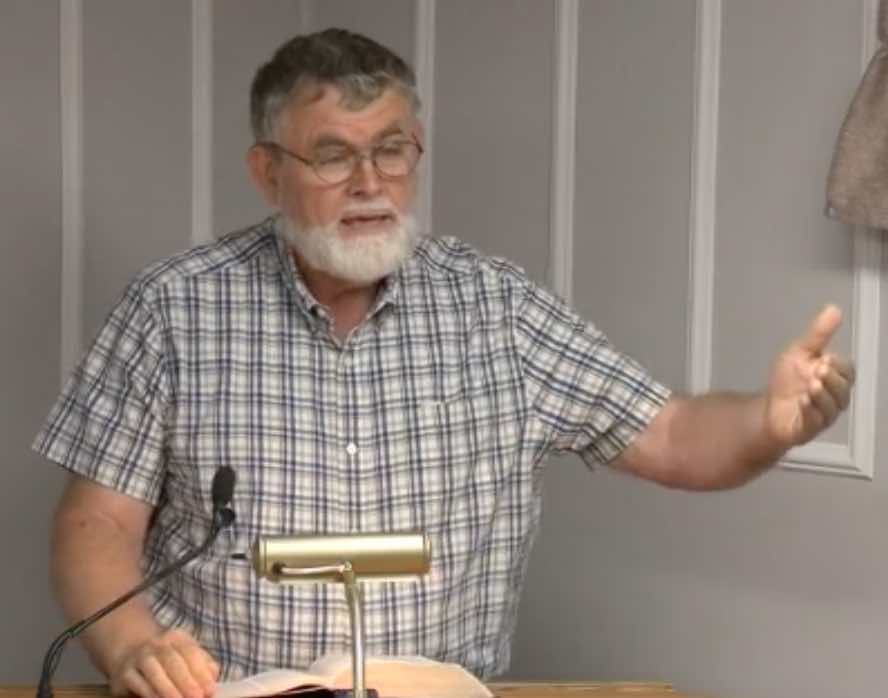
Mike McInnis

Widows Indeed

1 Timothy 5
Mike McInnis July, 2 2023 Audio
0 Comments
First Timothy Series

In the sermon titled "Widows Indeed," Mike McInnis expounds upon the biblical teachings found in 1 Timothy 5, focusing on the responsibilities of the church and individual believers toward widows, particularly those who are "widows indeed." He emphasizes that true widows are those who have demonstrated faith and good works, highlighting the necessity of taking care of one's family before seeking church assistance. McInnis cites specific Scripture references including verses that detail the characteristics of deserving widows and the importance of generational care for family members, supporting his argument with the premise that neglecting these duties is tantamount to denying one's faith. The significance of this doctrine lies in the church's responsibility to uphold family honor and service, reflecting God's care for the vulnerable through the community.

Key Quotes

“Honor widows that are widows indeed... a widow indeed is someone who's lost her husband and she has no means of support.”

“If any provide not for his own, and specifically, and especially for those of his own house, he hath denied the faith, and is worse than an infidel.”

“Better not to start something than to start something and quit.”

“Some men's sins are open beforehand, going before to judgment, and some men they follow after.”

Sermon Transcript

Auto-generated transcript • May contain errors

100%
how often it is that we know what needs to be said,
but we know not how to say it. May the Lord give us grace as
we look into his word, and he might teach us from it, and that
he might lead us in paths of righteousness
for his name's sake. We're continuing looking here
in the book of 1 Timothy, and we had looked at the fourth chapter. The Lord reminded Timothy of
the gift that was given to him from Paul's hand, as well as
that of the other of the apostles, as he said that The gift that
was in thee told him not to neglect it. He didn't mean by that that he
was to improve it, as I have heard some men say this teaches. That's not what he's saying at
all, I don't think. I believe what he's telling Timothy
is use the gift God has given you. You can't improve that which
God gives to you. And it's folly when men think
that they can. Now that doesn't mean that we
don't take heed unto those things that we're taught. For sure we
must. But we cannot improve on that
which God's pleased to give us because what he gives us, he
gives us specifically for a moment in time. And you know, we're
blessed. You know, we were not there on
the day of Pentecost when Peter spoke. those words that are recorded
in the scripture which we profit from. But we can be sure of this,
and that is that every one of those who were appointed to be
in Jerusalem that day and to hear the message that Peter spoke
were there. Every one of them. And they heard
the word of God. Scripture says every man, and
of course it doesn't mean that every individual, but it means
every man that heard. heard in his own language. He
heard it in such fashion that it went into his ear. But it
didn't just go in there and cause his eardrum to vibrate, but it
went into the hearing. See, there's a difference in
hearing and hearing. And so they heard the word of
God. And when they heard the word
of God, they said, men and brethren, what shall we do? And so it is,
when the Spirit of God is pleased to speak to a man, he'll begin
to ask such questions as that. It's not going to be a thing
that he thinks is just unimportant, or something he needs to take
care of at some point in time. But he'll wait a little while,
just like the Ethiopian eunuch. When he desired to be baptized,
he said, well, hey, what do we want to wait around here for?
He says, here's water. What do you think of me to be
baptized? He said, the Lord said, do it. I want to do it. And so
it is, as the Spirit of God works in his people. Now we're
in things that, of course, Peter, Paul is writing to Timothy concerning
how he needs to be, things, doctrines, and things that he needs to be
teaching, that church to which he had given, that Timothy's
charged to, or the Lord had given Timothy a charge to. They're
in Ephesus, and so he is speaking to him. And he gives him quite
a few general teachings, things that we would
profit from. And so we'll begin reading in
verse five, chapter five. It says, Rebuke not an elder,
but entreat him as a father, and the younger men as brethren.
The elder women as mothers, the younger as sisters, with all
purity. Honor widows that are widows
indeed, and if any widow have children or nephews, let them
learn first to show piety at home and to requite their parents,
for that is good and acceptable before God. Now she that is a
widow in deed and desolate trusteth in God, and continueth in supplications
and prayers night and day. But she that liveth in pleasure
is dead while she liveth. And these things give in charge
that they may be blameless. But if any provide not for his
own, and specifically, and especially for those of his own house. He
hath denied the faith, and is worse than an infidel. Let not a widow be taken into
the number under three score or 60 years old, having been
the wife of one man, well reported of for good works. If she have
brought up children, if she have lodged strangers, if she have
washed the saints' feet, if she have relieved the afflicted,
if she have diligently followed every good work. But the younger
widows refuse, for when they have begun to wax wanton against
Christ, they will marry. having damnation because they
have cast off their first faith. And with all, they learn to be
idle, wandering about from house to house, and not only idle,
but tattlers also, and busybodies, speaking things which they ought
not. I will, therefore, that the younger
women marry, bear children, guide the house, give none occasion
to the adversary to speak reproachfully, for some are already turned aside
after Satan. If any man or woman that believeth
have widows, let them relieve them, and let not the church
be charged, that it may relieve them that are widows indeed.
Let the elders that rule well be counted worthy of double honor,
especially they who labor in word and doctrine. For the scripture
saith, thou shalt not muzzle the ox that tradeth out the corn,
and the laborer is worthy of his reward. Against an elder
receive not an accusation, but before two or three witnesses.
Then that sin rebuke before all that others also may fear. I charge thee before God and
the Lord Jesus Christ and the elect angels that thou observe
these things without preferring one another. without preferring
one before another, doing nothing by partiality. Lay hands suddenly
on no man. Neither be partaker of other
men's sins. Keep thyself pure. Drink no longer
water, but use a little wine for thy stomach's sake and thine
often infirmities. Some men's sins are open beforehand,
going before to judgment, and some men they follow after. Likewise
also the good works of some are manifest beforehand and they
that are otherwise cannot be hid. Now there's quite a few
things in this passage of scripture that are needful for us as we
look at them to understand what it is Paul is charging Timothy
with here. Now some of these things that
he charges him with, the principles of the Word of God, never change. Times change. and cultures change,
and situations change, but the principles that are taught in
the Word of God are applicable to all cultures, to all situations,
and at all times. That doesn't mean that they're
always applied in the same exact manner. But nonetheless, we learn
many things. Now he starts off by saying,
rebuke not an elder. Now, I might say this, and I
think the context clearly bears this out, that he's not speaking
here about the office of an elder. He's spoken about that. There
is an office of an elder, for sure. But what he's speaking
about here is rebuke not those who are older than us, that is,
have respect. Now everybody that is older has
not necessarily earned respect by their actions. But it is a
true thing, nonetheless, we are to give deference, as I think
it's in the Proverbs, to those with the hoary head, or the white
head. That is, as you get older, and
you can tell the older people because their hair has either
fell out or turned gray or white, And so you can kind of see that,
you know, as time goes on. And we're told to respect our
elders. It's a good thing that children
are taught to do that. And I think that's very commendable. to teach children to know their
place. Now, when I was growing up, not
so much when I was growing up, but to some extent when I was
growing up, but it has always been a principle, I think, that
is good is children should be seen and not heard. Now, that
always didn't sit well with me because I had plenty of things
to say and I thought everybody needed to listen to what I had
to say. So we never really grow out of
that. And I believe that's some of
what he's saying here when he says, rebuke not an elder. We
are to have respect unto those who the Lord has put over us. And he has given us those who
are older than us, who have wisdom in the world that we can't get. There's certain things you can't
get without age because you just
don't see it. You can't clearly vision things
as you can as you get older and you're more able to sit back
and look at this in a bigger picture. You know, when a man
is young and full of vim and vigor and vitality and he's seeking
about making a living and going out and, you know, earning money
and those kind of things, he looks at things very narrowly
because he's focused on that goal and he's going towards it. And nothing wrong with that,
per se. But as a man gets older, He started
to say, well, wait a minute, you know, everything that I thought
was really important is not really all that important. And though
it seemed at the time that it just had to be this way, I say,
well, wait a minute, maybe it didn't have to be that way. And
so in that consideration, rebuke not an elder. You know, listen. Listen more, as we've all heard
the old saying, you know, the Lord gave you two ears and one
mouth, and that means you need to listen twice as much as you
speak. And so it is, in essence, some
of what Paul is teaching Timothy here. Rebuke not an elder. Don't
disrespect those who are older than you. but entreat him as
a father. Now what he's talking about is
if a person who happens to be older than you is overtaken in
a fault, as he speaks about in other plays, he says don't openly
rebuke him. Now a younger man, you might
openly rebuke him so that others may fear, but he says don't disrespect
your elders. He says take them aside, even
as you would your father. and speak to them in a private
way. And the younger men, as brethren,
we're not to lord ourselves over others. Now this is specifically
given to those, as Peter speaks about, to those who are called
to the office of elder. We're not called to be lords
over God's heritage, but rather as examples, and so it is that
we are to entreat our brethren when they are overtaken in a
fault as our fathers and as our brothers, that is with love.
But you treat your father differently than you would your brother,
do you not? I mean, your brother, you're
more straightforward with him. With your father, you're probably
a little more deferential, or should be. The elder women as
mothers. Now here again, the reason why
I'm speaking here or believing this is specifically speaking
about an elder in terms of age, the elder women as mothers, same
way, most especially. The younger as sisters with all
purity. And we are to consider all of
those who are of the different sex than ours with purity in
our thought and mind. That goes really without saying,
but nonetheless needs to be said. Honor widows that are widows
indeed. Now this is where I'm, when I'm
speaking here about cultural things. Now, our situation is
a little different than their situation was in their cultural
times. A woman that was without a husband
was greatly limited in her abilities to provide for herself. It's not like it is in our day
and time. I think there's good things to
be said about that and not so good things to be said, but nonetheless,
we do live in a different time. And so it is, but the principle
is still nonetheless there. He says, honor widows that are
widows indeed. Now what is a widow indeed? A
widow indeed is someone who's lost her husband and she has
no means of support. She is a faithful member of the
body, and she is willing and has demonstrated, as he says,
and as he determines who are with us indeed, that she has
given service to the church, that she has devoted herself
to the church. in the sense that she would be
a servant and has been a servant. It says honor widows and widows
indeed. Now that is, and honor is often
another word here or another term used to denote monetary
help. Not just honor in the sense of
you know, respecting someone, but giving honor to them, help
them as you can. Honor widows that are widows
indeed, those that truly need help. But if any widower have
children or nephews, let them learn first to show piety at
home, to requite their parents, for that is good and acceptable
before God. In other words, if we have family
members that are in need, we don't need to go call up the
brethren in the church and say, hey, y'all need to do something
to help these people. No, it's your responsibility to do something
if they're your kinfolks. See, we have that responsibility. Even as children, whether they
like it or not, have the responsibility to take care of their parents
if their parents are not able to take care of themselves. And
so it is, as this is good and acceptable before God, even as
the Lord said, honor your mother and father. And so that is a
principle which is taught, this is good and acceptable before
God, can't be overturned. And it is a sad thing, if for
any reason, that a person should neglect their parents. And we
see it happen. How often it is that through
whatever reason, sometimes parents are put off in facilities, and
I'm not saying that's not ever going to happen or not as always
a bad thing, but a lot of times, People put their parents in nursing
homes and stuff so they don't have to bother with it. They
can go on about their life. Well, that's a poor reason to
do it. Now, sometimes it's impossible to carry on, and people need
specific care, and I understand all of that, but there's never
a time when it comes where we just forget about Our parents
are those who are our relatives. They don't have to be our parents,
but those whom we're closely acquainted with. He says here,
nephews, if they have children or nephews,
in other words, we can't escape from that responsibility. Now she that is a widow indeed,
now here it is, and desolate, trusteth in God. This is a spiritual
woman. This is not just somebody who happens to be a
widow, but this is a spiritually minded woman. And continueth
in supplications and prayers night and day. But she that liveth
in pleasure is dead while she liveth. In other words, if she
doesn't have any concern for these things, she's just going
through the motions, then that's pretty strong words, is it not? She's dead while she liveth.
She's really, you know, there doesn't appear to be any spiritual
life there. And these things give in charge
that they may be blameless. So what he's speaking about here
is a specific group of widows. Not just any widow, but he says
here a widow if she is at least 60 years old. Let not a widow
be taken into the number under 60 years old. Now, we don't think
of 60 as being really all that old now, or at least I don't.
I mean, you might think that's really old to hell, but 60 doesn't
seem as old as it did even in these times because You know,
people do enjoy better health and whatnot in our culture and
time than they did in that time. And so it is that someone who
was 60 was probably maybe more like somebody that was 75 or
80 now. I'm not trying to get specific
here, but basically what he's saying is, you know, There is
a certain cutoff point here. This is not just anybody that
he's speaking about, but he's speaking specifically of some
who should be cared for. But if any provide not for his
own, now listen to this, and specifically, especially for
those of his own house, he hath denied the faith. Now that's serious business there.
If a person doesn't care for their own family, especially
the children caring for their mothers and aunts and immediate
family, if they don't have any concern for them, to provide
for them. I mean, if they just say, well,
you know, they just have to fend for themselves. He says worse
than infidel. You see, because even the infidels,
many of them care for their parents. And how much worse would it be
if you as a believer did not do so? Let not a widow be taken
into the number, having been the wife of one man. Now this
is something that probably needs to be touched on. That doesn't
necessarily mean that she has never had more than one husband. It means that she's never lived
in adulterous relationship. It means that she has not been
like the woman who the Lord spoke there at the well, where he said,
you've had five husbands, and the one you're living with now
is not your husband. That's what he's saying. This is not to be a loose woman,
but it is to be, having been the wife of one man, a faithful
woman, well-reported of for good works. Now, that'd be nice, wouldn't
it, for somebody to have a report of us of good works? You know, a lot of times when
people die, Somebody will come out of the woodwork that you
never knew and they'll bring up something that somebody did
for them that you never knew anything about. Well, see, we
need to be well-reported of for good works. May the Lord give
us grace that we might be such a people. That not that people,
when we die, people say, well, man, I'm glad to be rid of him. No, that people would actually
be sad when you go. I often laugh about these things,
but it's really very seldom that the death of somebody really
affects anybody to a great extent, especially in the day and age
in which we live. Because, you know, it's just
well, you know, they're gone, that's it. But you know, those
that, and using this as an example, those that are well reported
of for good works have went about doing good in their life. You
do miss them. You know, you do think of the
kindnesses that they've shown and the things that they did
where they went out of their way to help somebody. As the old saying, you know,
he'd give you the shirt off of his back. Some people actually
will do that. And those things ought to be,
ought to be how God's people are known in the world. even
as he's speaking about this widow, if she have reported for good
works, if she have brought up children. Now not just that she
had children, but he said if she had brought up children.
Now there's a difference in having children and bringing up children. And bringing up children has
to do with teaching them, leading them, showing them, helping them. And I think, you know, especially
even as the Lord, or as Paul points out Timothy's mother and
his grandmother, and he said how they taught him the scriptures
from a child. Oh, what a blessing it is to
be taught the word of God as a child. I can't think of any
greater blessing that a parent can give their child than to
teach them the truth of God. Now, they might not like it,
and they might not even believe it. They might not care for it.
Nonetheless, it is a gracious and good thing for children to
be taught in the home. And as he speaks about this widow
indeed is one who has brought up children. If she have lodged
strangers, if she have washed the saints' feet, if she have
relieved the afflicted, if she have diligently followed every
good word. And she is a servant. And that's
who he's speaking about here, those that are servants to the
people of God. Hospitality, you know, it says
of the elders that they are to be, those who are to occupy the
office of elder, that they are to be lovers of hospitality. And so it is. But then he says something here
that's pretty strong, and I think we need to look at it. It says,
but the younger widows refuse. He said those that are under
60, he said, they're not to be taken in to this number that
the church is going to support. But he said, because he said,
when they have begun to wax wanton against Christ, they will marry.
Now what he's saying here, they might begin as this desire to
serve the church, but that's not the thing that's on their
mind. Now he doesn't condemn that, and I'm gonna show you
why I believe that to be true, because he does not say it is
wrong for the younger women to remarry. Those of their husbands
have died, and they're still young. He's not saying it's wrong
to remarry because he says here, let them, he says, I will therefore
that the young women marry their children. Do those things that
the Lord has called them to do. So when he says here, the younger
women refuse because they will marry having damnation because
they've cast off their first faith. Now that's probably a
stronger word than we probably would use. It's not a stronger
word than Paul used and it can mean utter damnation, but that's
not what he's saying here. He's speaking about she'll fall
into reproach. Because here she is, she says,
well I'm going to remain a widow and I'm going to serve Christ
as a widow and I'm making this declaration that I'm going to
come in among this number and be supported by the church. And
then later on she changes her mind because that's not the thing
that she should have been doing anyway. That's what he's saying
here. But having damnation is a stronger word. It doesn't mean
that she's done something she can't ever be forgiven for. But what it means is that she
will be brought into reproach because she cast off her first
face. She turned back. See, better not to start something
than start something and quit. And so he said rather than do
that, let the younger women marry. Go on and, you know, carry on
as we, because, you know, Paul didn't condemn marriage. Some
people have said that he did, but no, he never condemned marriage. He said, you know, if a man,
when a man takes a wife, then he has to, he's hindered in some
ways with a wife. Paul said he didn't have a wife,
so he was not hindered. He could go and do whatever he
needed to do. And the Lord called him that.
And the Lord gave him that ability to do that. But there was certainly
nothing wrong with those that did have a wife. Peter had a
wife. And so he said it's not wrong for a man to have a wife. But there are hindrances that
do come with having a wife, even as there are hindrances to women
having a husband, probably more. They're probably hindered more
than men are hindered, you know, in that relationship. I better quit on that. So she will have damnation because
she's cast off her faith and because she's supported by the
church and not having to see about either having a husband
or trying to have some gainful thing to do, she goes wandering
about from house to house, not only idle, but tattlers, busybodies,
speaking things which they ought not, being a gossip, basically.
She don't have anything else to do because she don't have
to be concerned about it, so she's gonna spend her time in
idle things. So he says, I will, therefore,
that the younger women marry, bear children, guide the house,
give none occasion to the adversary to speak reproachfully. Now,
we live in an age when that guidelines are considered pretty ridiculous. But that's the thing the Lord
called women to do. Now whether you like it or you
don't, it doesn't make any difference. That's just what the scripture
is saying here. It doesn't mean, you know, when
you read the, what Solomon said about the virtuous
woman who could find that she doesn't appear to be someone
who, you know, you know, doesn't do anything. She does many things,
but there are things that she's called to do specifically, and
she must do those. That doesn't prevent her from
doing other things, but she must do these things, which is guide
the house, give none occasion to the adversary to speak reproachfully,
for some already are turned aside after Satan. Sometimes even those
who begin in the faith turn aside, walk no more with the Lord. If
any man have or woman that believeth have widows, let them relieve
them. And let not the church be charged
that it may relieve them that are widows indeed. So here we
go again. He's saying, take care of your
own. And then he says, let the elders
that rule well be counted worthy of double honor, especially they
who labor in word and doctrine. Again, this is an interesting
passage of Scripture. I believe that In the context in which he's
speaking of elders here, again, he's speaking about those older
men who were in the church and guided the church, okay? But
then he specifically speaks about those who labor in word and doctrine. Now, so, an elder can be someone in the
church And I'm not talking about in the office of an elder, but
I'm talking about an elder in the church that guides the church
through their wisdom. Let's have, as he says here,
rebuke not an elder, but have respect unto them. And so he's
speaking of the same thing here. He says, let the elders that
rule well be counted worthy of double honor. They're worthy
of respect. And then he says, especially
if they are also those who are called to the office of an elder
as those who would guide the church through the teaching of
the word of God. And so those two things there
are spoken of. For the scripture saith, thou
shalt not muzzle the ox that tradeth out the corn, and the
laborers worthy of his reward. He's just simply saying that
the Lord has made provision for those who are teachers of the
Word of God to have respect from the congregation, not only in
word, but in deed, even as the widows of a man's family is taken
care of, so in the same fashion. Now again, Paul, he said he had
the right to be supported by the church, did he not? But he
said he wasn't gonna do it because he'd rather be chargeable only
unto Christ and not unto the saints of God. And so that's
a man's prerogative. But those who are ministered
to must never think that they are all scot-free. Now a lot of people, and I'm
kinda hesitant to even speak about this, If you go to a restaurant
and somebody serves you a meal and they do a good job, you give
them a tip because you have consideration of their effort. And that's all
he's saying here is you should have consideration of the effort
that's put forth by those that do these things. Now this is
not a commercial and I've never sought support from the church
and not doing it now. But I do would have, and especially
when I, I know there are some who are in need of these things.
And whenever you see a brother who is faithful minister of the
word in need, you must take care of him. If a person has ministered
to you of their spiritual things, as Paul says, why would you not
minister to them of your material things? And so there again, this
is a principle taught in the word of God. I didn't make it
up, because he told them, he put this in the law, you've knocked
the muzzle of the ox, it treads out the corn. In other words,
the ox, if he's gonna be working, treading out the corn, he's got
a right to eat some of the corn. And that's just a principle that's
taught throughout the word of God. The labor's worthy of his
reward. So he says, against an elder,
receive not an accusation, but before two or three witnesses.
Now I would say this about that before I leave that subject.
Now we live in an age when there's very few people that are reluctant
to let folks know that you need to pay the preacher. Because
they're gonna make that a central point of their uh... presentation usually uh... you know you need to send the
cards and letters in to help us keep going here and uh... you know uh... you get your seed
gift and all that kind of stuff that goes on and I'll say this
the gospel has nothing to do with money money doesn't keep
the gospel going it can't prevent the gospel from doing what it's
going to do the money or the lack thereof the lord doesn't
need your money But he gives you the privilege, he gives you
the privilege to promote the gospel and to help those that
would promote the gospel according to the good pleasure of his will.
Gough said, against an elder receive not
an accusation, but before two or three witnesses, and them
that sin, that sin rebuke before all that others Now, he's saying
if an older person, or could be an elder in office, don't
just take an accusation. Somebody comes up and says, well,
so-and-so, he was doing this out of the other. He stole something
or did something openly wicked. Okay, believe it the first time
that you hear it, but he said, be sure. that this thing is true. Man's innocent until, that's
where the concept of innocent until proven guilty comes from.
And it says, received but before two or three witnesses. And then
it says, them that sin, rebuke before all that others may fear.
For even those who are elders, if these things, if the accusation
comes and it is a proven thing, then it needs to be brought before
the church. Any of us, doesn't have to be an elder, can be a
younger. You know, we are our brother's
keeper. We're responsible for one another. And that's the thing that Paul,
I think, is teaching Timothy through this, is that we have
responsibilities to one another in our family relationships,
but in our spiritual relationships as brethren in Christ. I charge
thee before God in the Lord Jesus Christ and the elect angels.
Look at that. Now a lot of people don't ever
think much about that, but the Lord has an elect, some of the
angels are elect just like some of the inhabitants of the earth. As he chose them according to
the good pleasure of his will. That thou observe these things
without preferring one another, doing nothing by partiality.
In other words, we're to love one another even-handedly. We're not to give one a break
that we don't give the other. Lay hands suddenly on no man,
neither be partaker of other men's sins. Keep thyself pure. That is not quickly because somebody
comes among you saying I'm a believer and you need to listen to what
I've got to say. You don't need to just say okay,
well great, he said he was a believer, so I'm a believer. I'm gonna
listen to what he has to say. We are to weigh the spirits. We're to be those that are careful. Now he speaks of this in another
place. concerning a novice being brought
into the office of elder. He said, not a novice. So we're
not to quickly take somebody because he speaks with a silver
tongue. See, a lot of people are great
orators, but they don't have the spirit of God within them.
And we're not to quickly make a decision about that. Neither
be partakers of other men's sins. Don't follow men to do evil.
And then he says, drink no longer water, but use a little wine
for thy stomach's sake, not often infirmities. Now, obviously,
Paul, speaking to Timothy here, was not promoting the concept
that some people do that drinking wine is an evil thing. There's
no substance that is evil. What men use substances for is
evil. And so when he tells, there is
a natural and good use of wine. And he's speaking here to Timothy
in that good use of it. Now we're not to be given to
wine, that is we're not to be drunkards. And the Lord never,
the scripture never gives a commendation to those that would be overindulgers
of wine or strong drink. It doesn't do that. And neither
can anybody else. There's no time or place when
these things, such a conduct as that, is an acceptable thing. But it certainly, there are uses
for wine. One is a medicinal thing. And
evidently, I don't know what kind of stomach problems that
Timothy obviously had, but some kind of an issue that he had.
And he was told to drink a little wine. Evidently, probably the
water in some cases was not very good, so maybe had parasites
in it or something. And so he was giving Timothy
this recommendation. Now some people, because the
scripture does not condemn the use of wine, they say, oh, well,
good. That's not how we're supposed
to look at it. I'm glad that the scripture doesn't
condemn the use of wine. I don't really care that much
for wine as far as the taste of it. Some people really like
it. But we ought to be careful. Wine is a mocker and strong drink
is raging. And so it is that which brings
men into many woes and troubles and is certainly not a good testimony
for the people of God to be walking around inebriated. No place for
that among the saints of God. Some men's sins are open beforehand,
going before the judgment, and some men, they fall after. Now
that's, in some ways, it's kind of straightforward. Some men's
sins are open. You can, some men, you know,
their sin's right out in the open, and they just go right
on to judgment. And some men, they fall after. That is, some men seek to hide
their sin. They're holding it back. Some men's sins are open, some
men's sins are hidden. And then he says, likewise also
the good works of some are manifest beforehand. That is, in contrast
to those whose sins are open, he said some men's works are
manifest beforehand. And they that are otherwise cannot
be hid. That is, those good works which
are done in secret can't ultimately be hid, just like what we were
talking about there a moment ago. You know, if you do good
unto men, those things cannot ultimately be hid because if
the things that you go about doing in your life are beneficial
to other people, it won't be hid. Not that you're seeking
to get glory from it or anything, but it is a true thing that the
good works of God's people benefit not only themselves, but those
around them. And so that's what we're called,
to love and good works. I mean, the Lord ordained us
unto good works. That's what he said in the book
of Ephesians.
Mike McInnis
About Mike McInnis
Mike McInnis is an elder at Grace Chapel in O'Brien Florida. He is also editor of the Grace Gazette.
Broadcaster:

Comments

0 / 2000 characters
Comments are moderated before appearing.

Be the first to comment!

Joshua

Joshua

Shall we play a game? Ask me about articles, sermons, or theology from our library. I can also help you navigate the site.