Bootstrap
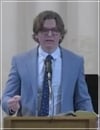
Gary Shepard

Free From What To Do What

John 8:31-36
Gary Shepard July, 4 2010 Audio
0 Comments

In his sermon "Free From What To Do What," Gary Shepard addresses the theme of spiritual freedom through the lens of John 8:31-36. He argues that true freedom requires liberation from the bondage of sin and the deceptive nature of self-righteousness, a concept grounded in Reformed theology. Shepard references various Scriptures, including Romans 8:1 and Colossians 1:13, to demonstrate how Christ, the Son, is the only true liberator who sets individuals free from both the penalty of sin and the power of Satan. The sermon emphasizes the importance of acknowledging our spiritual bondage and the necessity of God's grace for true freedom, functionally leading to a life that glorifies God through service, not as a means to earn salvation but as a grateful response to His grace.

Key Quotes

“The whole idea of liberty or freedom has with it the necessity of liberation from former slavery.”

“You can know a lot of true things... but they were in bondage. Only Christ could set them free.”

“The truth has to do with what God in Jesus Christ has already done for you.”

“If the Son make you free, you'll be free indeed. You shall know the truth, and the truth shall make you free.”

Sermon Transcript

Auto-generated transcript • May contain errors

100%
All right, turn back in your
Bibles to the Gospel of John in the eighth chapter. John 8, and I want to begin reading in
verse 31. to those Jews which believed
on him." That is, to these Jews who, it appeared, were believing
on him and beginning as his disciples. If you continue in my word, then
are ye my disciples, indeed, for then are you my disciples
genuinely. And ye shall know the truth,
and the truth shall make you free.' They answered him, We
be Abraham's seed, and were never in bondage to any man, how sayest
thou, Ye shall be made free? Jesus answered them, Verily,
verily, I say unto you, Whosoever committeth sin is the servant
of sin. And the servant abideth not in
the house for ever, but the Son abideth ever. If the Son therefore shall make
you free, ye shall be free indeed." Now, I call this message this
morning. Free from what? To do what? And I realize that today, since
it is the 4th of July and Independence Day in this country, that there
will be a lot said about freedom. There will be a lot said about
liberty. But sometimes we fail to realize
that the whole idea of liberty or freedom has with it the necessity
of liberation from former slavery. If we are set free, we've been
set free from something. If we've been liberated, we've
been delivered or rescued from a state of bondage or slavery. As far as a nation is concerned,
we celebrate liberation or freedom from a bondage we had being connected
and lorded over by another nation. So it implies being liberated
or set free from a former slavery. But by nature, like these very
people, these Jews, men and women deny ever having been in bondage
or being in it now. and also especially spiritual
bondage. Because that's what our Lord
was talking about. If you look back at verse 33,
when He says that, when He implies the fact that they need to be
set free or liberated, they answered Him, we be Abraham's seed, and
were never in bondage to any man, what do you mean by saying,
you shall be made free? But although that was the case,
that was what they said, and whether or not they or us might
think like they did, or speak as they did, that doesn't mean
that that's the real situation. They said, we're Abraham Seed,
and we've never been in bondage to anybody. What a big lie. What self-deceiving. Not only had the history of this
people been dotted year after year with bondage and captivity
and slavery, they were at this very minute under the Roman bondage. So though we deny our situation,
though we say that we're not bound in any way, that we don't
need to be liberated by anyone That doesn't really change the
reality of our situation. We can be as we live in what
we call a free country and still not be free. Now, I personally tend to believe
that that's very much the case actually, but it is even more
so the case spiritually. We can live in a free country
and not be free. And as a matter of fact, as we
find out from this book, every descendant of Adam, which is
every one of us, is by birth, is by nature, likewise in spiritual
bondage and slavery. That's why God used this nation
to picture everyone He saves and showed them to be in this
situation. We all are, apart from the grace
and power of God, a slave to sin. We are described in this
book as being a slave or in bondage to the devil, to Satan himself. And we are slaves, each and every
one of us, to a fallen nature. We are slaves to our own flesh. We are in ourselves in bondage
to the offended justice of God, and heaped upon all of that,
as if that wasn't the worst bondage, we also are for the most part
slaves to false religion and to the superstitions of false
religion. And one of those superstitions,
one of those false notions, one of those very binding things
is the notion of what they call free will. In other words, we're
told that we have this. We're told that we can decide
for God any time that we want to, that we can make our decision
And by virtue of something we do, we'll be saved. But free will, since it is simply
our will naturally, cannot be anything but a will in bondage,
and all we are is those who possess a freedom a whole lot like a
fish in a fishbowl. Well, we can wiggle our little
fins like that fish will, and we can swim to one side of that
fishbowl, and we can swim to the other side, and we can swim
up and swim to the bottom. We can do all these things. We
have a limited sphere of activity, but we can't will to get out
of the fishbowl. And we're in this fishbowl of
sin. We're in this bondage to sin
and to self and to the devil. We're in this bondage to all
our superstitions and imagination, and apart from God's grace, we'll
die in that bondage. What we have to have is deliverance
from the condemnation of sin. We have to have deliverance from
the penalty of the law, from the wrath of God, and the only
way that that is, is in Christ. Paul says in Romans 8, there
is therefore now no condemnation. to them that are in Christ Jesus. Not only that, but what we have
to have is a deliverance from the power of Satan himself. Turn over and look with me very
quickly in the book of Colossians, in Colossians chapter 1. chapter 1 and verse 13. Paul writes this to believers,
not to everybody in general, not to religious people. All
these Jews that Christ was talking to, they were everyone religious. But he says in verse 13, he says
to these believers at Colossae, He gives thanks to the Father
who hath delivered us from the power of darkness and hath translated
us into the kingdom of His dear Son. Not only that, we have to
be delivered, we have to be rescued and set free from the bondage
of sin, from that dominion of sin. Look over in Romans chapter
6, Romans 6, and look down at verse 14. He says to these believers
in Rome, For sin shall not have dominion over you, for you are
not under the law, but under grace. What then? Shall we sin because we are not
under the law, but under grace? God forbid. Know ye not that
to whom you yield yourselves servants to obey, his servants
you are to whom you obey, whether of sin unto death, or of obedience
unto righteousness? But God be thanked. that you
were the servants of sin, but ye have obeyed from the heart
that form of doctrine which was delivered you. Being then made
free from sin, you became the servants of righteousness." Now
I'm going to say a little bit more about that in a minute,
but not only that, Fourthly, we have also need to be delivered
from the authority and power that man has over us. You remember what the Scripture
says? The fear of man, not that he'll
kill you necessarily, but the fear of losing his approval,
the fear of being talked about by him, the fear of not having
a place of recognition with him. The fear of man brings a snare. That's a trap. But look over
in Galatians chapter 5. Listen to what Paul says in Galatians
chapter 5 to these believers in the churches at Galatia. He
says to them, Stand fast, therefore, in the liberty wherewith Christ
hath made us free, and be not entangled again with the yoke
of bondage." Stand fast in a liberty which he says is in and through
and by the Lord Jesus Christ. And so not only are we in this
state naturally, but we also imagine freedom and liberty to
be the right to do what we want to do. You know what most liberty
and most freedom is in the mind of the natural man. That is what
we are by nature, our natural way of thinking. What it boils
down to is this. It is a freedom or a liberty
to do what we will. It is a freedom and liberty from
God. That's what we always do with
every kind of freedom and liberty that we have naturally. We exercise that freedom just
like our father Adam did in the garden in sinning against God. Sinning against God. But note what Christ says in
these two verses, verses 32 and verse 36. He says, And ye shall know the
truth, and the truth shall make you free. Verse 36, If the Son therefore shall make you free,
ye shall be free indeed." Now what we have stated in those
two verses is on the one hand we have the liberator himself, and on the other hand we have
the means that he uses. Now, if you had been present
there in Nazareth on what is the very first occasion, you
might say, of the public ministry of Christ, you would hear him
standing there in that synagogue in Nazareth, and he would have
been reading from a portion of Scripture from the book of Isaiah
and telling those people that that prophecy was fulfilled in
their sight that day. Do you know what a part of it
was? He said the Spirit of the Lord
had anointed him to preach deliverance to the captives, and to set at liberty them that
are bound." Now, I'll tell you what that
means. That means that neither Christ nor me nor any true gospel
preacher has any message or any good news for anybody that has
never fitted that description. Captives. Those that are bound. What we have is that Christ is
stating what is the very essential elements of the gospel, and that
is, he alone, the Son, is the liberator, and he sets his people
free through his death, which is the message of the truth. Now, I want to tell you something.
You can know a lot of true things. These Jews knew a lot of true
things about God. I dare say that most of them
could quote from memory many, many more passages from the Old
Testament Scriptures then you and I could quote from the whole
Bible. But they were in bondage. They
were slaves to sin. They were slaves to their own
lust and flesh and nature. They were slaves to the devil. They were in bondage. And only
Christ could set them free. He Himself and His gospel alone
can set us free. Now, I want you to think about
how the truth is spoken of in Scripture. I know on the one
hand, Christ Himself referred to Himself as the truth. That tells me that the truth
has to do with one person, one particular person. But there
is no way that you and I could ever, ever know this one particular
person, were it not of what this book says about him in identifying
him and showing how it is that He liberates and sets these captives
free. One of the most fearful things that I fear above everything
else is when I ever see anybody, any preacher especially, beginning
to talk about Jesus in some general sense. You just got to believe
on Jesus. Well, here is one over here that
describes Him this way. Here's another over here that
describes Him another way. Paul warns and says that I fear
that you Corinthians, if somebody comes along and preaches another
Jesus, they preach another gospel, and you're led by another spirit,
you might just fall for it. So what is it that describes
and distinguishes and sets forth the one who is called the truth? It is the Word of truth. There is not a true thing here
and a true thing there. I knew a lot of true things. I knew so many true things. that
a people actually called me to be their pastor, and for three
years I stood there, stated three true things to them. Nobody could
question some of the true things I said from the Scriptures to
them, but I didn't know the truth. Because the truth is the sum
body of these true things as they pertain to the person and
the accomplishments of the Lord Jesus Christ. Now, you think
about this. Now, I'm going to send you out.
I'll send you out to Albert Ellis Airport this morning, and I'll
say, I want you to pick up Joe Schwartz for me. That's his name,
Joe Schwartz. It would be easy, just Joe Schwartz. Well, how are you going to know?
I'll say, well, he's a man of average height, a man of light
build. I could say a whole lot of things
about him that would be true. But when you got there, you could
not in any way distinguish him. But if I said he'd be wearing
bright orange suit, and white shoes, and he'll have a sombrero
on his head. If I said distinguishing things
about him, you wouldn't have any trouble
picking him out. And do you think the Lord of
glory, the God of heaven, whose very glory depends on this salvation
of his people. Do you think that he has thrown
his people out in this world with such an obscure description,
with such a general, vague description of who he is? How do we know
him? By what this Bible says that
he is. and most especially by what this
book says that he has done. Well, men stand and say, well,
the Lord wants to save you. Wrong one. They say things like
this, Jesus is trying to get your attention. nor He has made
something wonderful available for you. Wrong Jesus. Did you know that the very first
occasion, as I can recall now, wherein the name of Jesus is
actually spoken, it is spoken from the lips of an angelic being,
as he speaks to Joseph and then to Mary as to what this holy
thing that is to be born from her womb, what is to be called. He says, Thou shalt call His
name Jesus. But even then, he immediately
follows that name with a description of how it is that he will be
identified and why it is that he's given this name. What does the name Jesus actually
mean? It's actually virtually basic,
the same thing that we find in the name Joshua of the Old Testament. What was the difference in Moses
and Joshua? Moses, who was a type of the
law, was not able to take the children of Israel into the land
of promise, into the land of Canaan. But when Joshua comes
along and Moses is slain by the Lord and buried, the Scripture
says that Joshua took all the things that Moses was unable
to do, and he led them into the land of promise. You see, the
name Joshua, as well as the name Jesus, basically means this. Jehovah the Savior. Not Jehovah the possibility maker. Not Jehovah the One who makes
available, not the Jehovah waiting for your decision or waiting
to see if you hold out or waiting to see what your works are, but
Jehovah the Savior. And that angel said, Thou shalt
call His name Jesus, for He shall save His people from their sins. Matthew 121. How do we know Jesus? The One
who saves His people from their sin. So the truth has got something
to do with how that God saves His people from their sins in
such a way as to be true to Himself and to exalt the glory of His
grace, essentially how it is that Jesus saves His people from
their sins and God remains a just God and a Savior. That's what the truth's about.
Listen to what Paul writes to the Colossians. He speaks of
the hope which is laid up for you in heaven. That's what we
want, isn't it? He says, the hope which is laid
up for you in heaven, whereof you heard before in the word
of the truth of the gospel. Now, I could stand up here and
tell you Bible stories, or I could stand up here and tell you how
you're to live, or a hundred thousand other things. I could
stand up all and tell you so many things, but it wouldn't
be the gospel. It wouldn't be the word of the
truth. Because the truth, as Paul says
in Ephesians 1, is that which identifies Christ, the true Christ. He is the true. And he says to
these Ephesian believers, he said, in whom you also trusted. You trusted the true Christ. When did you trust the true Christ?
Well, I was really born a Christian. No. An old preacher said that's
a little bit too long. Or, I've done this, or I've done
that, or I remember having that feeling. You can't tell me it
wasn't real back in Bible school days, or in that revival, I'm
not saying it wasn't real, it wasn't true. That's the problem. Because Paul
says, in whom you trusted. You trusted the same one that
God trusts in this matter, in whom you trusted after that you
heard the word of truth." What's the word of truth? He says, the
gospel of your salvation. Now, let me tell you what gospel
I heard. I heard the gospel of do good. I heard the gospel of
do your best. I heard the gospel of quit this. I heard the gospel of quit that.
I heard the gospel you ought not to do this. I heard the gospel
of how to be saved. I'm going to tell you this. The
gospel of how to be saved is a false gospel. And if we didn't know it any
other way, We know it by that verse, Ephesians 1, 13. He says
the word of truth is the gospel of your salvation. You see, the gospel, the truth,
has to do with what God in Jesus Christ has already done for you. It has to do not with what you're
to do, but it has to do with what He's already done. If all He did was to die on a
cross as a man, like a multitude of others have done, if all He
did was to die there and make something possible, if you'll
do something, we'll all be lost forever. Because
we as sinners can never do anything that a holy God will accept. You say, well, I'm doing the
best I can. You ought to, but that's not
good enough. You say, I try. I'm trying to
do all these things, and I'm trying to do what people say.
You see, believing the gospel is not believing what people
say about God, it's believing what God says about His Son. Paul writing to the church at
Thessalonica, he says, for this cause also think we God without
ceasing. Because when you received the
Word of God, which you heard of us, you received it not as
the Word of men, but as it is in truth the Word of God, which
effectually worketh also in you that believe." James, in that
one statement in verse 18 of chapter 1, says this, of his
own will, Begat He us, or brought us forth. That kind of sounds like a liberation,
doesn't it? With the Word of Truth. Of His own will. He brought us forth with the
Word of Truth. Now, there's something else we're
confronting here with, and that's the sovereign grace of God. You see, the Lord Jesus, unlike
these preachers stumbling over their feet to please everybody,
He said it just like it is. He says, if the Son make you
free. you'll be free. I'll tell you this, Christ didn't
set everybody free, but he did his people. And one
of the first things he brings them to acknowledge is that they
deserve nothing, that they can do nothing, and if they're to
be saved, It will be all together by His grace. It will all be
together by His work. And it will be according to His
will, if the Son make you free. And I remember that's one of
the first things that the Lord confronted me with, this reality
that God doesn't have to do anything to me but damn me as a sinner.
He doesn't have to give me anything but His just judgment casting
me into outer darkness. He doesn't have to do anything
if it is based on what I am or what I do. He doesn't have to
do anything if the Son makes it right. And I'll tell you this,
if He hadn't, you can claim like these Jews all the liberty you
want to. You can walk around there in
this fishbowl like a fish and bang your head on one side and
go to the other side and up and down and claim what you will,
you'll still be in bondage. But if the Son, Lord, you don't have to save
me, but if you will, like that man said, if you will, you can
make me whole. And you know, it's an amazing
thing what happened. If we ever acknowledge that,
it's because the Lord has brought us to acknowledge it, and immediately
there will always be the same words he heard. He says, Lord,
if you will, you can make me whole. You know what he said? I will. I will. You see, this freedom, and this
liberty that Christ is talking about. That's what redemption
is all about. This is what the word of truth
has to do with. This is what the good news of
the gospel is all about. It's about redemption. The fact
that Christ has redeemed a people from all these things. The truth
has something to do with what He's already done. What did He say on that cross?
Just recite it in your mind. What did He say? Not what these
preachers say, not even what I say. What did Christ say on
that cross? He said, It is finished. Finished. And I'll tell you this,
if you ever find out the bondage, the slavery that you're in of
yourself and the inability you have to ever get yourself out
of it, to hear somebody else say concerning that salvation
and redemption, it is finished. That will be good news to you.
Finished. Complete. In something that he did. Now, I know the Bible says all
so many times it speaks as Paul does of us being in Christ. But what that means is not simply
that we have a positional salvation that has to do only with our
some way being mystically in Christ, but it has to do with
our being in Christ from that covenant of grace before the
world began all the way through his cross death. and resurrection
in Christ. You see, redeem or redemption
means to release from bondage or slavery by the paying of a
price. How did Christ redeem His people? By the praying of a price. When He hung on that cross, He
paid the debt of their sin before the justice of God. He redeemed
them. He gave Himself that ransom payment
on their behalf. And you can mark it down. Everyone
that Christ bought with His precious blood, He's going to have them
because He set them free. You see, that's why it's good
news. You find out what he did. And you find out that the reason
God accepted it was because of who he is, God manifest in the
flesh, and what he actually did, which was to satisfy what justice
required in the matter of our sins, which was the soul that
sinneth shall surely die. What did he do? He died a God-satisfying
death. You see, that's why hell is eternal,
because you can die forever and it will never meet the requirements
of God and satisfy the claims of His justice. That was what was pictured in
the book of Ruth. Do you remember the book of Ruth?
I wonder how many books have been written on the book of Ruth.
And they made Ruth this kind of celebrity girl. The main character
in the book of Ruth is not Ruth at all. It's Boaz, the kinsman
redeemer that pictured Christ. Ruth was in a state of bondage
and rejection. She was virtually a slave under
the law. She couldn't do anything. She
didn't have any money. She's out there. scrap it just
to survive." And Boaz saw her. And he went down, because he
fitted all the requirements under the law to be that kinsman redeemer,
and he went down to the gates of the city and stood there before
the elders and made every payment, satisfied every claim. There
was one who had a claim for her first. But he, because of what
she was, he couldn't redeem her. He wouldn't redeem her. So Boaz satisfied him and every
claim, and she became his, redeemed. Same case with Gomer, Hosea's
wife. Sold herself into slavery. There
on the slave market, of sin, here she is, turned herself to
the whoredoms and did everything vile and ungodly and even attributed
the very food and necessities that Hosea laid at her door to
her lovers. So there she is. She's so ugly
and old and vile and wretched that not anybody wants her. And
what does Hosea do? He goes down there and he redeems
her. He pays the price. See, that's
what this book is about. It's about this price for this
people. It's about God coming in human
flesh and redeeming this people, setting them free from all their
enemies and from all their bondage. It is a redemption that is clearly
always in the Scriptures by blood. Peter said, not by corruptible
things such as silver and gold received from the vain tradition
and conversations of your fathers. Those things even under the law
that pictured redemption, the silver or the price of redemption
or the blood, he said it's not those things, but you're redeemed
by the precious blood of Christ as of a lamb without spot and
without blemish. What's Christ doing on that cross? He's setting His people free.
He's sat spying every claim that is against them. All the curse
of the law, Paul says, Christ hath redeemed us from the curse
of the law, being made a curse for us, for it is written, Cursed
is every one that hangs on a tree. Paul writing to the Ephesians,
speaking of Christ, he says, in whom we have redemption through
His blood, the forgiveness of sin according to the riches of
His grace. The apostle to the Hebrews in
chapter 9, neither by the blood of goats and calves, but by His
own blood He entered in once into the holy place, having obtained
eternal redemption for us. And that's why when John is given
that vision in Revelation 5 of the church, of the bride of Christ,
of spiritual Israel, of this people that are pictured as already
being in heaven, he said, they sung a new song.
Say, thou art worthy to take the book and to open the seals
thereof, for thou wast slain, and hast redeemed us to God by
thy blood out of every kindred, and tongue, and people, and nation." That's what Israel was a picture
of. people that Christ would redeem
from every nation, kindred, tribe, and tongue, Jews and Gentiles. He said, I've taken away that
thick cloud that was over you. How'd you do that? I redeemed
you. If you ever for one second cast
your eye upon yourself or anything that you think you might be or
have done, whether it doesn't matter what it is, that moment
you have no basis or assurance or hope or anything. Christ set his people free. paid the debt, stood in their
place. You remember when they came to
get him in the garden? He said, if you seek me, if you're
coming after me, you let these go. And just as sure as that was
the case then, so it is truly, spiritually, especially before
divine justice. That same justice that requires
payment for sin, when that sin debt is paid, that same justice
requires, let my people go. All right, quickly. But there's also
another liberation that's necessary. You see, we must be delivered,
liberated by power as well as blood. Here's a man sitting in
the, let's say he's sitting on death row, he's a goner. And all of a sudden, the judge makes a decree, the president
makes this decree, stays his sentence, not guilty. That, in
our court, would be a matter of injustice in most cases. But in the court of heaven, God
makes that decree based on true justice. His son's death in our
place. Here's this man sitting in the
prison. They're just lock after lock.
When I was growing up in school, they took us on a field trip
to Raleigh. Some of you are old as I am.
You remember to the central prison in Raleigh. That was one of the
things you did. And they took you to that prison
and you could just hear those doors clanking and clanging as
they shut and locked one right behind the other. Well, here's this just paperwork
done. On paper, the judge agrees to
free. But the man's still sitting down
there in the jail. Somebody's got to go. And on the basis of
that decree, of that just act, somebody's got to go and actually
set him free. And you see, our Lord died on
that cross 2,000 years ago. But when we come into this world
in ourselves, we're still by this nature and by the devil
actually really in bondage. And especially, as I said, to
this false superstitions of religion that we grow up with, he has
to come and by power set us free. Same picture in Egypt. What happened? The death angel passed over those
houses in Egypt, but because God had appointed that Passover
lamb there in the land of Goshen where Israel was, and they had
shed that blood and sprinkled it on the lintels and doorposts
of their homes, God had said, He said, when I see that blood,
I'll pass over you. Well, that happened. They were
still right there in Egypt, weren't they? But there came a time when
he sent Moses down there and they were delivered by power. Power working in the enemy, power
working in their own hearts and mind, power giving them one who
took them and led them actually out of Egypt through the Red
Sea to liberty. And we have to be delivered from
the grip of Satan and from the ignorance and blindness and rebellion
of unbelief. We have to be delivered from
self-will and self-righteousness and self-glory. How is that accomplished? By the one who is called the
Spirit of Truth. Christ said, I'm going to send
the Spirit of truth, and when He's come, He'll take the things
of mine and show them to you. Give you sight, give you faith,
enable you to see who He is, who you are, and what Christ
has done. You see, God has said long before
to his king, thy people shall be willing in the day of thy
power. One day I was with Brother Bill
Clark, and he was kind of showing me around some places. to the Olney Parish there in
England. That was where John Newton preached
and ministered. John Newton is the man that is
most noted for being the writer of Amazing Grace. It's amazing that a man writes
a song sung in so many places, but if he were here today, he'd
preach about 15 minutes probably in most places, and they'd just
say, out of here. Because he was a preacher of
God's grace. Not only that, he was himself,
before the Lord saved him, he was a sea captain involved in
actual slave trade. But when Christ revealed himself
to him, he found out that these he hauled, they weren't the slaves,
but he was a real slave. And he says, amazing grace, how
sweet the sound that saved a wretch like me. I once was lost, but
now am found, was blind, but now I see. We went to the old house where
Newton lived in, the old parsonage there in the only parish, and
everything was closed, locked up, but the caretaker was there.
He said, would you fellas like to go in? Well, we said, yeah.
Well, we went upstairs to Newton's study. And I'd read about this
before, but I saw it. There on one wall of his study
was this plaque that had An inscription from Scripture from the book
of Exodus. A writer from the book of Deuteronomy.
Deuteronomy 15, 15. And it's something that's found
again and again in the Old Testament. God reminding Israel of this. Deuteronomy 15. Why don't you
turn there? It was like a reminder to him. And thou shalt remember that thou wast a bondman in the
land of Egypt. Don't ever forget that. And the
Lord thy God redeemed. The Lord thy God redeemed thee. He is the Lord thy God which
brought thee out of the land of Egypt, out of the house of
bondage. But why does he sit and pray?
He comes to where we are. in our bondage, our ignorance,
our blindness, our superstition. Hardly a soul in our day has
managed to brush by religion without it tarring and feathering
them and binding them and filling their minds with superstitious
anti-biblical notions. But he comes where we are somehow. He's going to get all his sheep. to hear this Gospel. And He sets them free. He enables
them to believe on Christ, to believe the truth, to know the
truth, to have some understanding of the truth. He sets them free.
Why? Well, just like it was with Israel. In Exodus 8 it says, And the
Lord spake unto Moses, Go unto Pharaoh, and say unto him, Thus
saith the Lord, Let my people go, that they may serve me." Why does he free and liberate
his people? that they might serve Him, worship
Him, glorify Him, because only a redeemed people, a people set
free in Christ from all bondage, can worship God. I don't care who you are. It
was the same with me. If we are ever doing anything
in order to gain God's favor and acceptance, we cannot worship
Him. Because worship has to do with
ascribing all the praise, all the honor, all the glory to God
alone. And the only way we can ever
do that is when we know and are assured that our salvation is
already accomplished, finished, a righteousness is established
before God on our behalf, and He's imputed it to us, not in
any way deserved by us or can be bettered by us. We work, we
serve because He has saved us, not to be saved. But you see, religion operates
on two principles, fear and threat, promise of reward. If you don't do this, you'll
go to hell. If you'll do this, God will bless
you. The gospel has to do with a finished
salvation. Paul says it like this, For he
that is called in the Lord, being a servant, is the Lord's free
man. Likewise, also he that is called,
being free, is Christ's servant. Isn't that something? The believing
child of God is free and at the same time a servant. He's not
serving to get free. He's serving because he is free.
He's like that willing bond servant in Exodus 21. When the time comes, the scripture
says he has to be set free. But if he loves his master, wants
to stay in his house, He's got a good master. He loves him.
He's done so much for him. It says that they take him down
for all justice. And they bore a hole in his ear. And he goes back to his master's
house and he serves his master. But everybody that sees him,
they know because of that hole bored in his ear that he is serving
his master not in order to gain his freedom, but because he already
has it. He's serving him not to get from
him, but because he loves him. If the Son, if the Son make you free, you
shall be free indeed. You shall know the truth. And
the truth shall make you free. Free from sin and Satan and self
and every other enemy. Free to serve, worship, love,
glorify God. That's what the liberty of Christ
is, that's what liberty in Christ is. God make us, in Christ, free
indeed. And the person that takes the
liberty that's in Christ and they go out and they do the most
God dishonoring things and stuff like that, they don't really
know anything about liberty in Christ. It's liberty to honor
Him and obey Him and serve Him, worship Him, free people. Father, we thank You this day
for Your Word, for Your Son, For him who is the truth, and
for the word of the truth, the gospel, which has to do with
who he is and what he has actually done. Grant us rest in him, liberty
in him, peace in him, joy in him. Deliver us from self-will
and self-glory, and most especially from self-righteousness, that
we might plead His righteousness alone. The gift of righteousness. We thank you and we pray your
watch, care, and safety in His name. Amen.
Gary Shepard
About Gary Shepard
Gary Shepard is teacher and pastor of Sovereign Grace Baptist Church in Jacksonville, North Carolina.

Comments

0 / 2000 characters
Comments are moderated before appearing.

Be the first to comment!

44
Joshua

Joshua

Shall we play a game? Ask me about articles, sermons, or theology from our library. I can also help you navigate the site.