Bootstrap
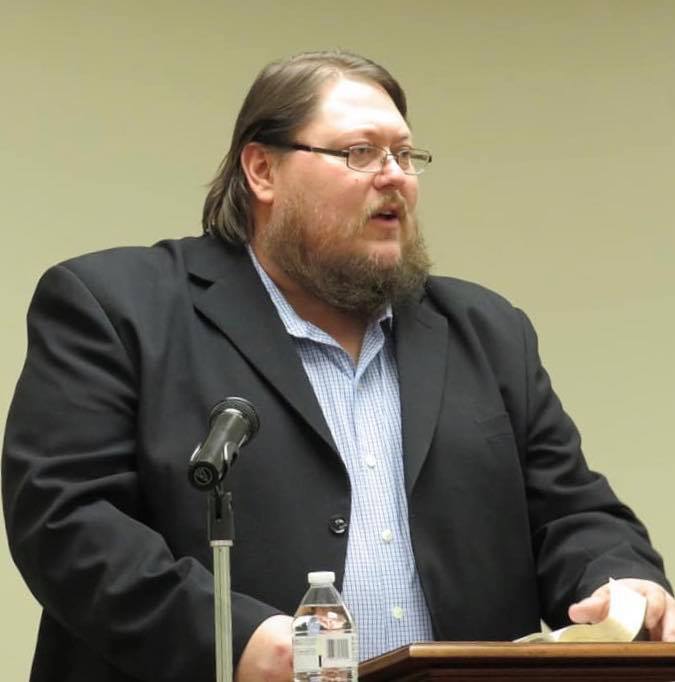
Mikal Smith

Is Faith A Work?

Romans 4:16
Mikal Smith June, 4 2023 Video & Audio
0 Comments

In the sermon titled "Is Faith A Work?" preached by Mikal Smith, the primary theological topic revolves around the definition and nature of faith in relation to salvation, particularly as understood through the lens of Reformed theology. Smith argues that faith is not a human work but a divine gift granted by God, emphasizing that justification cannot arise from human effort or merit, as supported by Romans 4:16. He highlights the necessity of the Holy Spirit in imparting understanding and enabling true belief, asserting that those who are not spiritually alive cannot comprehend spiritual truths. The sermon also addresses the distinction between natural man and the regenerate, clarifying that only those chosen by God—whose names are written in the Lamb's Book of Life—will possess saving faith. This has practical significance in reminding believers of their reliance on divine grace for salvation rather than their own actions or understanding.

Key Quotes

“This is the work of God, that ye believe on him whom he hath sent.”

“Faith is not something that we can control. Faith is something that God enables. It's a work of God.”

“It is of faith that it might be by grace; and because it was Christ who did it, and not dependent upon us accomplishing something, it can be sure to all the seed.”

“All men are created natural, not spiritual... Therefore, we cannot have activity within the spirit. We cannot have knowledge within the spirit.”

Sermon Transcript

Auto-generated transcript • May contain errors

100%
Church really isn't a spectator
sport. It's an all-playing game. That's why I ask every week,
when we meet, if you guys have anything that you'd like to say,
or any scripture that you'd like to read, or any hymns that you'd
like to sing, it's because this isn't just come to watch the
preacher day. why we always do that and that's
why at the end of the messages we always ask for questions and
corrections and rebukes because it's an open an open thing the
preacher isn't the main thing all right well if you would then
turn with me this morning uh over to romans chapter four Some passages of Scripture that
have been on my mind the last couple of days. On the outset, I'll just say
it again, I've said it here before, of the importance, number one,
of the Holy Spirit being the teacher. The Word of God, the Scriptures, are not able to be understood
in their spiritual sense, in their right application and sense
without the Spirit of God teaching us. And the Spirit of God teaches
us whenever the Spirit of God is in us. So, not everybody is
taught of God. Not everybody has the understanding
or the mind of Christ. Not everybody is able to understand
and believe the gospel because they do not have that spiritual
teaching. That's very clear throughout
scripture. Jesus made that very clear in the book of John whenever
he was speaking to the religious leaders there because there were
some that were not believing. And Jesus made very clear, you
don't believe because you're not my sheep. And we're gonna
get into some of that, Lord willing, maybe this morning. But he said,
there is a distinction. There is believers and there
is non-believers. These are groups of people. They are distinguished by their
activity. They're distinguished by the
grace that has been bestowed upon them. They are a believer
or they are not a believer. They are of God or they're not
of God. They are sheep. or they are goats. They are the seed of Christ,
or they are the seed of Satan. They are a vessel of glory, or
they are a vessel of wrath. They are a vessel of salvation,
or they are a vessel of destruction. There are two groups of people.
There are those whom the Lord, before the foundation of the
world, has set His love upon. And before anything was ever
done, the Bible says their names were written down in the Lamb's
Book of Life. Meaning, what's the Lamb's Book
of Life? The Lamb's Book of Life. Now, is it a physical book? I
don't know. Does God need to write things
down in a book? No, He knows everything. He's
omniscient. These are terms, these are things
that are given to us to help us understand, to visualize,
okay? They're for us to grasp as God
gives us understanding of these things. But is there actually
something there? I don't know, maybe there is.
We'll know one of these days. However, the Bible says that
before the foundation of the world there were names written
down and there were names that were not written down. That's,
I believe, over in Revelation somewhere. I can't right off
the top of my head remember the passage verses. But in Revelation
it says those whose names were not written down in the Lamb's
Book of Life. And so that right there precludes
the fact that there were names written down in the Lamb's Book
of Life. So if there were names written down and names not written
down, and God was the one who made that choice, chose to write
these down and these not down, then that is God's determination
on both destinies of people. Those whose names were written
down were written down in the Lamb's Book of Life. They would
be the ones who would be given life. They were ordained to eternal
life. those whose names were not written
down in the Lamb's Book of Life, were ordained to eternal death. One was for salvation, one was
for destruction. God had a purpose for His glory
in creating those who were for the salvation. He had a purpose
in those who would be for destruction. The Bible says that God has created
all things Yea, even the wicked for the day of destruction, for
the day of evil, for the day that he would show his wrath
upon them. So God has made a delineation before the foundation of the
world. He has split all of his creatures as far as mankind is
concerned into those who are his. And those who are his was
given to Christ. are those who are not His, and
those, they are Satan's. Now, that's not the topic that
I would like to talk about today, but that is the truth of Scripture.
And so, as that being the truth of Scripture, there are some
things that we need to understand, as I mentioned a flow ago. When
we come to God's Word, without the Spirit's teaching, we can't
know what these things are talking about, what the Bible talks about,
the spiritual application of these things. Second of all,
when we come to God's Word, we must look at it in its entirety,
in its full context. We must look at it, and if there's
something that contradicts something else, or if there's something
that is being preached and it contradicts God's Word, and there's
nowhere in Scripture that that contradiction is ever removed,
then we're wrong. Something's wrong. Brother Tom Armstrong made that
clear yesterday in our men's breakfast. He said, you know,
whenever I search the scripture, I come across something that
doesn't seem right and it seems to contradict something else
that I know. I know one thing is a fact. He said, God's word
is not contradictory. God can't contradict himself
because he is truth. And truth doesn't contradict
itself. The only way that something can be contradictory is if something's
right and something's wrong. Or something is both wrong. But
you can't have something right and something wrong and they
both be in agreement. You can't have that. Either both
of them are right, both of them are wrong. One of them is right,
one of them is wrong. Right? So if God says something
and it seems to be contradictory, that cannot be. because God cannot
contradict himself. So what does that mean? Well,
if there's a contradiction in what we understand or what we
read or what we hear, then somebody is in misunderstanding. Someone does not have any understanding
as to what is being said, right? That's all it can be. Because
we know God's word is not contradictory. We know that it doesn't lie. We know that it doesn't say one
thing here and then all of a sudden it says just the opposite over
here. If there's not any way for that to be reconciled and
it remains a contradiction, the contradiction is in the mind
of whoever is listening. The contradiction is in whoever
it is that is saying it. The contradiction comes on man's
part. Let God be true and every man
a liar. Everything that God says is truth.
Not everything that man says is true. And the only truth that
man can ever say is the truth that God has already revealed.
So, brethren, it all comes down to this is a spiritual book.
We are spiritual people if we are the children of God. We are
spiritual people. And these things are understood
in spiritual ways, by spiritual teaching. So whenever we come
to the Word of God, we have to take everything that the Word
of God says, and whenever we find that one place in Scripture
doesn't line up with what somewhere else in Scripture is saying,
then there is a contradiction And that contradiction is on
my understanding. So what do I do? I pray and I
ask the Lord to give me clarity on this. I seek the Scriptures
and I search the Scriptures and I continue praying that the Lord
would reveal this, that the Lord would teach this to me. Lord,
this right here doesn't seem to jive with what you said over
here. Or this preacher here is saying
this but what I'm reading in Scripture. It seems to me to
be something different. Can you give me clarity on that?
Can you give me understanding on that? Because I know that
the contradiction is in my understanding and is not in your word. And
so we pray that the Holy Spirit would give us that understanding. Now, I say all that because whenever
we come to the Scriptures, most of us, if not all of us
in some way or another, We have predispositions. Does everybody
know what a predisposition is? Know what a disposition is? If
I have a predisposition, or if I presuppose something, that
means I already have a mindset towards it, right? I'm already
predisposed to this. That means I'm already leaning
that direction, or I'm already influenced in this way, or I'm
already thinking like this. That's what a predisposition
is. We have predispositions. Why? Because of the way that
we're raised. Because of the way that we, what
we listen to, what we read, what we find as entertainment. All these things are information
that is coming into us. And all this information that
comes into us can affect the way that we think. Now none of
this can override anything that God does. I'm not saying that
it's superior to God. But what I'm saying is we have
all these influences in our lives. And me teaching you children,
growing up the scriptures and teaching you correct doctrine,
correcting incorrect doctrine, that isn't me thinking that I
can implant that into your mind and that you're going to be able
to understand that. I'm doing that because The Lord
has commanded me to raise up my children in the nurture and
the admonition of the Lord, that I'm to train them, train you
up in the way that you should go, to teach you the things of
Scripture, the truth, to proclaim the gospel. Now, whether or not
that comes to an understanding in you guys than anybody else
here, that's up to the Lord. That's up to Him to give that.
Whenever we train, we influence, right? Now that's why it's important
that we train through God's Word and not through philosophy. That's
why it's important that we don't train through, you know, secular
psychologists and sociologists and all these kind of things.
That's why it's good that we don't train in the curriculums
of the schools because these are all man-made institutions
and they're all done through the natural man. That's why we
do these things is we train and influence you in these things.
Now, that's not going to make any difference in your life.
It's not going to save you. It's not going to do anything.
Only Christ can do that. But that is an influence. And so
how we are raised is an influence on us. And so our mind begins
to mold in that. So there may be times whenever
we come and we hear something, And we hear it over and over
and over again to the point that, well, that's got to be the truth.
And then we hear that. Now, all of a sudden, we come
and we hear somebody preaching, or we read. We're sitting and
we're studying our Bibles, which I hope you guys do. We study
our scriptures, and then we see, man, that right there does not
sound like what my dad was preaching last week. That something's wrong. Well, if that's the case, you
know you're wrong, not me. That's not true either. If I
say anything that's against Scripture, I need to know that. I need to
be corrected about that, okay, with Scripture. But whenever
you hear those things and you go and you see the Word of God
is saying this and the Holy Spirit is teaching you these things,
then we have to put away those presuppositions, those predispositions. We need to put those away And
we need to submit ourselves to the Word of God as the truth,
because this is the truth. We're not, right? Now, there are, in this world, many
theological systems, okay? Now, we usually group these theological
systems into two groups, right? You hear me speak of this often.
You know, we break them into two groups. There's Arminianism,
And then there's the Doctrines of Grace. Some people call it
Calvinism. We don't call it Calvinism because
we don't care anything about Calvin or Calvinist or anything
about that stuff. Or some would call it Arminian
and Reformed. Well, we don't call ourselves
Reformed either. We're not Reformed. We didn't come from the Reformation. We don't believe anything about
the Reformation to be that much really helpful, to be honest
with you. It clouded the waters more than
anything. But anyway, we don't consider ourselves reformed,
but doctrines of grace would be good, you know, sovereign
grace, that's why we call ourselves sovereign grace, bandit. But
we group ourselves in two things, Armenians or sovereign gracers.
But even within those, there are different groups of people,
even among the sovereign grace people. That's why I say, and
there's some that are reformed that say they believe in sovereign
grace, but yet we believe different than they do. There are those
who say that they're Calvinists, and we agree with some things,
There's a lot of things we disagree with. Okay, so there's subgroups
within that. Well, every one of these groups
has their predispositions and their theological systems. And
those theological systems, the way that they've been taught
and the way that they've been molded, That has made an influence on
the way they view certain scriptures. And I'm telling you, brethren,
apart from the grace of God, we can't get away from that.
It's hard to get away from that. Even one who has been born from
above, even today, I'm still, whenever I go through scriptures,
I have to ask the Lord to give me guidance and direction on
what does this mean because I have so many predispositions, presuppositions
from things that I grew up with. I grew up my whole entire life
through a church system. All my family, all my relatives
and all went to church and grew up and my grandpa was my preacher
and my family was all, you know, involved in church and everything
like that. And the influence that was there is great. But
whenever there are things that does not line up with God's word,
We can't stay just because we love our brothers and sisters
or aunts and uncles, moms and dads, grandpas and grandmas.
We love them, but if the word of God is saying something different,
we have to submit to the word of God. It's not that we don't
love our family or love what they've done, and even maybe
just the fact of being brought up in a moral sort of environment
is great, because there's a lot of children out there now not
being taught the morals that they ought to be taught, we can
say, yeah, we love that, but is it the truth? That's what
it comes down to. What is the truth? And so when
we come to scripture, we pray that God would give us the truth
on these things. And there is one truth, okay? You can't have, like I said,
opposing things and they both be true. So, in Romans chapter
4 and verse 16, we see a passage of scripture that says, therefore,
it is of faith that it might be, and that word might be is
in italics, so that means it isn't actually in the Greek that
it's added there for ease of reading. It says, therefore,
and so it is, by the way, if you see all that in italics.
That's what it means. Whenever you see that in your
Bible, those italics there, Those words are not found actually
in the Greek manuscripts from which these things are translated,
the King James Bible. Those words there are supplied
by the translators because there is no direct translation of that
passage or that word that's being translated into something that's
coherent in English, okay? Sometimes that, Any of y'all
ever use Google Translate to translate something and whenever
you read it, it kind of sounds wonky? Well, that's because it's
doing a direct translation of the words, and sometimes the
words it's being translated from, there's not an English word for
it. Or the English word that's for it means something a little
different to us. Remember me telling you about
the Russian guy that I used to email and he was talking about,
oh, we had a little frost this morning, ended up telling me
their tires froze in Siberia, their tires froze, the rubber
tires froze. Well, I thought he was making
a joke, you know, about it was really, really, really cold,
but he just called it a little frost, making a sarcastic joke.
Well, I found out later that he was using a translate type
thing, and it was translating whatever his word for really
cold or icy or whatever to frost here. So, it didn't make sense
to me. Well, sometimes that's why the
translator puts in these italic words, is because there was no
direct translation. Oh, now there's a whole lot packed
in here that we could probably talk about. Matter of fact, the fact that
Abraham is the father of us all, referring back to verse 11, where
he was already justified before God before he was ever circumcised. It wasn't after
circumcision. So actually, Abraham was a Gentile
whenever he was justified before God. He was already justified
and he was a Gentile. So actually the Gentile experience of justification was
before that of the Jew. But in speaking in Romans Paul
is showing that Abraham is not just the father of the Jews but
also of the Gentiles because he was already justified by Christ
before he ever did anything. Before he was ever under the
law, which the law of circumcision, which Abraham was justified before
the law ever came in by Moses. So therefore we see that justification
has nothing, absolutely nothing to do with our law keeping. has nothing to do with us following
the commands. There's no command that we can follow that can justify
us. The Bible says, by the deeds of the law shall no flesh be
justified. The way of principle is scripture.
So therefore, we're not justified by doing anything. By any obedience. And that includes repentance
and faith. Okay? That includes those things. We're not justified by any of
those things. Now, when we come to clear teachings
of scripture, those clear teachings of scripture always shed the
light on the things that seem to be vague, especially whenever
we are under predispositions. Now it says here, therefore it
is of faith that it might be by grace. And so I read that
and I asked a few questions like that part from the beginning
there. It is of faith. What is of faith? It says, therefore,
so it means there's something that was said before this that
it's tying that together. Therefore, the reason of all
this, therefore, it is of faith that it might be of grace. So
what is it that the it is talking about there? Therefore, it is
of faith. What is a faith? Well, if we
look at some predispositions, they will say, well, the it there
is talking about Abraham believing. It is a faith. It is Abraham's
believing. It is Abraham's believing that
it might be by grace. If Abraham believes that therefore
it's by grace, okay? But what does the context tell
us? Therefore, it is of faith, or
therefore of faith, now again, the it is is not there, it's
in italics, but the gist of that is in the wording of the verse,
therefore of faith, that by grace, to the end, the promise might
be sure to all to see. So I mean, it's implied there,
even though it may not be actually there in the manuscripts, it's
implied there because of the wording. Therefore, of faith,
what is of faith? The promise. So where do you
get that preacher? Well, if you look and you go
back up to verse 13, it says for The promise that he should
be the heir of the world was not to Abraham or to his seed
through the law, but through the righteousness of faith. Now
someone's going to say, ah, well, there you go. It's through the
righteousness of faith. So then therefore, our believing
is counted for righteousness because that's the righteousness
of faith that he's talking about here. He's talking about the
righteousness of faith. So is scripture teaching us that
the righteousness of faith is our belief whenever we believe
on Christ, whenever we have faith in Christ alone for our salvation. Is that the righteousness of
faith that is being spoken of here?
I would say no, it's not. Because the overwhelming context
before we even get to here In Romans chapter 3, and if you
would just look over there, verse 20, it says, for the deeds of
the law, there shall no flesh be justified in the sight, for
by the law is the knowledge of sin. But now the righteousness
of God without the law is manifested, being witnessed by the law and
the prophets. What was witnessed by the law
and the prophets? You remember Jesus said to the
men on the road to Emmaus after his resurrection when he was
walking and they didn't even recognize him. And he's walking
along beside them and they was talking about all what going
on. Jesus said, what are y'all talking about? And he said, oh,
have you not heard? Where have you been? Have you not heard?
And they started talking about all this. And the Bible says
that he took those men and he said, in the beginning with Moses,
he taught them everything that the law and the prophets were
about him. There's several places in the
scripture where it talks about the law and the prophets. What
is that? The things that Moses wrote? The things that the prophets
wrote? That could mean that. It could mean everything in the
law as that symbolic, as that type, as that shadow. And all the prophets, what they
were preaching. Because the Bible said that the gospel was preached
in the Old Testament. He said that all of that was
speaking of So who was made manifest? Who was manifested? But now the
righteousness of God without the law is manifested, being
witnessed by the law and the prophets. Even the righteousness
of God, now it's fixing to tell us what the righteousness of
God is. The righteousness of God is not our believing in Christ. The righteousness of God is what? by faith of Jesus Christ, even the righteousness of God,
which is by faith of Jesus Christ, not in Jesus Christ. Now, if
you have a modern translation Bible that's based off of corrupt
Greek text, it says in Jesus Christ. But the correct translation
of that is of Jesus Christ. The faith of Christ is the righteousness
of God. See, the righteousness of God
is not us believing on Christ. That does not manifest the righteousness
of God. Christ manifested the righteousness
of God. God is righteous in and of Himself. God in His divinity is righteous. That's who He is. He isn't righteous
because He did something righteous. He's righteous because He is
the essence of righteousness. And Christ is that God manifested
in flesh. All of the Godhead was in Christ
Jesus and Christ Jesus manifested the righteousness of God. And
what was the righteousness of God? The faith of Jesus Christ. Or we could say the faithfulness
of Jesus Christ. Faithfulness to what? faithfulness
to the covenant. See, Christ covenanted to save
his people before the foundation of the world. He covenanted to
be the surety, to be the mediator, to be the substitute for his
people. And he didn't make that covenant
with us. The new covenant is not a covenant with men. He didn't covenant with us. His
covenant was a unilateral covenant. Meaning that he made a statement
that I will do this. And because God is not like man
who can lie, God swore an oath by himself and he couldn't swear
by anyone greater. Therefore, God saying that he
would do this, made sure that it would be done and he did that
by manifesting himself in the flesh and coming himself in the
flesh and producing in the flesh a righteousness that we in the
flesh cannot produce. He substituted his righteousness
that he performed for our righteousness that we cannot perform. Our righteousnesses
are what? A filthy rag. Filthy rags. The
Bible says there, as a matter of fact, look there at Romans
3.11. There is none that understandeth God. Why? Verse 10. There is
none righteous. No, not one. And it says there, there is none
that understandeth. Now, is that not clear? How clear
is that? Now, that clear verse should
shed the light on all those unclear verses. Whenever the Bible says in 1
Corinthians 2.14, that the natural man receiveth not the things
of the Spirit of God, nor can he understand them. Why? Because
they are spiritually discerned. There are some that say that,
well, people that are lost or that are not saved or that are
not born again, they can understand the scriptures and the gospels.
Well, let's compare that predisposition with the Word of God. There is
none that understand it. Well, there are some that can
understand. There are some that understands. Well, they have
to understand or they can't get saved. That's what they say.
Well, we have to have some understanding to believe. There is what? None that understand it. What
does God's Word say? There is none that understand
it. There is none that seeketh after
God. Now, that right there tells me
there is none that understand, and there is none that seek after
God. Now, someone who disagrees with us would say, well, wait
a minute, we understand and we sought after God, so obviously
that's not true. Your predisposition is now taking
over. Well, wait a minute. If the Bible
says there is none that seek after God, and there is none
that understand, and then it says that there are some that
seek, and there are some that understand, So now what we gotta
do? There can't be a contradiction
between God's word because God doesn't contradict himself. So
where's the contradiction at? It's in our understanding. It's
in our ignorance. It's in our lack of understanding.
We lack the understanding of what this or this means. Or there's
something in between that we don't know So we pray to God,
well, what is it? Because over here you say none
understand, none seeks, but over here you say that there are some
that understand and some that seek. Seek the Lord while he may be
found. Well, why would God say that unless someone could seek?
None seek after God. That seems to be contradictory,
doesn't it? Something is going on in the middle between those
things that we are ignorant of and we need the Holy Spirit to
teach us about. So what is it? Well, it is the fact that the
understanding and the seeking by the natural man can't be done. It can only be done when one
is made spiritually alive. The Bible says that we are dead
in trespasses and sins. Now that's not talking about
our physical fleshly body. That's talking about who we are
in spirit. We are created as all men have
been since the beginning with Adam. All men are created natural,
not spiritual. And that is where the predisposition
evades almost every religion that claims to be Christian.
It evades every religion that Adam was made spiritual and lost
it in the fall. But the Bible doesn't teach that
Adam was ever spiritual. Corinthians 15 says that Adam
was made natural and that which was spiritual came after that. Being made natural means being
made without the Spirit of God. Adam was made without the Spirit
of God. That is why Adam did what he
did because this natural man cannot keep the law of God. The natural man cannot receive
or perceive the things of the Spirit of God. They're foolishness
to him. They don't understand it. They
don't receive it. They don't believe it. They can't
hold it. They can't trust it. They can't
love it. They can't do anything. Why?
Because it's foolishness to them because they're ignorant. of
the truth. And when I say ignorant, I'm
not talking in a derogatory way. I'm talking about they are ignorant
of the truth. I'm ignorant of a lot of things.
I'm sure that I've yet to be taught. And I've been ignorant
of things in the past until the Lord taught me those things.
It's ignorance. It means lack of understanding. I am ignorant of that fact. And
some people are ignorant of the fact because they have yet to
be taught by the Holy Spirit of God. So we now have these
two contradictions. is the thing in the middle that
makes things where they're not contradictory. Well, the natural
man receiveth not the things of the Spirit of God, nor can
he. That speaks of ability, doesn't
it? Nor can he. Why? Because they are spiritually
discerned. The Bible also says, I don't
want to misquote it here, let me turn over. 1 Corinthians chapter
2. But it says here, But God hath revealed them unto
us. Who's us? Children of God. The people of God. But God hath
revealed them unto us. How? by our reading, by our seeking,
by our searching, by our coming to church and listening to the
preacher preach, by memorizing Scripture, how has God revealed? But God hath revealed them unto
us by His Spirit. The Spirit searches all things,
yea, the deep things of God. For what man knoweth the things
of man, save the spirit of man which is in him. things of God
knoweth no man but the Spirit of God. Now, we have received
not the Spirit of the world, but the Spirit which is of God.
For what purpose? Read it in your scriptures there
with me. We all got King James Bibles. Let's all read it together.
Why do we receive the Spirit of God? That we might know. that we might know. Why is it that some understand
and some don't? Because the Spirit of God has
revealed it to them. Whenever the Spirit of God reveals
that to the person, they now come from this category. There
is none that seeketh after God. Because why? They're natural
man. But whenever they become the spiritual man. When the spiritual
man comes alive in them and teaches them and reveals them truth,
they now understand why. Because God has taught them. Man can't teach. Natural man
can't hear. Natural man can't understand.
That's not me trying to be a Calvinist. That's not me trying to be a
Reform. That's not me trying to be a
Sovereign Gracer. That's not me trying to find
any theological system or creed or confession or anything else.
That is what the Spirit says. That's what the Bible says. It's
very plain here that these things are not understood except for
the Spirit revealing them. And the Spirit reveals them when
the Spirit is in you. Paul began this, he said, And my speech and my preaching was
not with enticing words of man's wisdom, but in demonstration
of the Spirit of power, that your faith should not stand in
the wisdom of men, but in the power of God. See our faith doesn't
stand in what men do through preaching and listening and hearing
and responding and mission work. That's not where our faith stands.
Our faith stands in the power of God to be able to come into
a person without having to ask, without having to knock on the
door of the heart, that he can come in and create life in that
person and teach that person and reveal truth to them so that
they can know truth that they couldn't have known in their
natural self. And that, brethren, is grace.
That was grace. All of us was under that same
condemnation because we were in Adam. The condemnation of
being we are sinners. And as being sinners, we are
dead in trespasses and sins. We have no spirit of God in us.
And therefore, we cannot have activity within the spirit. We
cannot have knowledge within the spirit. We cannot have hope
within the spirit. We cannot have assurance within
the spirit. We cannot have spiritual life
and spiritual things coming and flowing into our understanding
because we are dead spiritually. Dead in trespasses and sins.
Unable to come. Unable to believe. Unable to
repent. We couldn't do it. Why? Because
it's against our nature. I mean, that dog right there,
can it take off and fly and land up in that tree? No. Why? Because it's against his
nature. He's a dog. That bird that's out there on
the post, can it dive underwater and breathe
and swim around? No. Why? Because it's against
his nature. It's not a fish. The natural man cannot receive
the things of the Spirit of God. Why? Because it's against His
nature. That's why Paul is making this argument here. That for
what man knoweth the things of man, save the Spirit of man in
him. He's saying the nature of man knows the nature of man.
But the Spirit of God is the only one that knows the Spirit
of God. Only those that are spiritual know spiritual things. Those
who are of the flesh know fleshly things, but they can't know spiritual
things because it's not their nature. That's why Jesus told
Nicodemus, you must be born again. No one can see the kingdom of
heaven unless they're born again. No one can receive or enter into
the kingdom of heaven unless they're born again. Why? Because
you're natural. And this kingdom is spiritual.
These things are spiritual. And so we have to be made spiritual.
And so that's why Paul said, that we have not received the
spirit of the world, but the spirit which is of God. So that's
not our spirit, right? That's God's spirit. He said
that we might receive, we have not received the spirit of the
world, but the spirit which is of God. This is a spirit that
is outside of us, that comes into us. And it's only when that
spirit is in us that we can understand spiritual things as God reveals
them and teaches them to us. But it says there, that we might
know. The Spirit has given that we might know the things that
are what? Freely given to us. Not things
that we have to work for, not things that we have to meet a
condition or earn. That is not what this is saying. It's saying
that we might know what is freely given to us Which things also
we speak, not in the words of man's wisdom, which man's wisdom
teacheth, but which the Holy Ghost teacheth, comparing spiritual
things with spiritual." See, again, it's all about the spiritual
application, not the physical. It's not about you physically
doing anything. It's about a work of God in you
that is a spiritual work. Now, we're going to get into
that in just a second, Lord willing. Verse 14, But the natural man
receiveth not the things of the Spirit of God, for they are foolishness
unto him, neither can he know them, because they are spiritually
discerned. So that's a clear principle of
Scripture. That isn't Paul trying to correct
wayward Christians and telling them that there are some that
are not saved that can understand. That's not what this is saying.
Yes, is Paul correcting the Christians in Corinth? Absolutely. Did he
call them carnal? Absolutely he did. They were
acting carnal. But Paul right here is laying
down spiritual principles in why some believe, why some understand,
and why some don't. Because in Corinth, There were
those who were associating with those Christians who may not
have been truly Christians. Just as in today, in our churches,
there may be some tares that come in among the wheat, some
goats that come in among the sheep. You see a herd of goats
and sheep out in the pasture, sometimes it's hard to tell which
one's a goat and which one's a sheep until you get up real
close to them. But sometimes they look kind
of similar. A wheat and a tare. Whenever
you see a wheat and you see a tare, they look almost identical. But here Paul is saying that
the natural man is not going to receive, cannot receive. It's
an inability. He cannot know them. There's
a causal factor on why they cannot know them. It's not because somebody
hasn't got to them yet and told them. It isn't because they're
not smart enough. It isn't because the preacher
isn't educated enough. It isn't because they haven't
been under some program that the Southern Baptist Convention
has thought up to make people saved. The causal factor of them not
knowing Knowing is because they are not spiritual. The things
of God are spiritually discerned. Therefore, you have to be spiritual
to know those things. So back to my question. It is
a faith. What is a faith? Well, the promise. Go back to our passage in Romans
chapter four. is of faith. What is of faith? The promise. The promise of what? What is the promise? I mean we
even see in verse 16. Therefore it is of faith that
it might be by grace to the end the promise might be sure to
all to see. What promise? The promise that they would be
heirs of righteousness. The promise that they would be
heirs. For the promise that he should be the heir of the world, Abraham was made a promise. He was promised that he would
be the father and that there would be heirs that would come
after him and that there would be a seed and out of that one
seed that he would bless the whole entire world. Not just
of the Jews, but of the Gentiles, not meaning every person head
for head. that he would be the father of all the faithful. All those who were of faith.
Does that mean that that's where faith began? With Abraham? No! God called him the father
of faith, so to speak, but Abraham wasn't the first one to believe.
There were people before Abraham that believed. So the promises of the righteousness
of faith. But the righteousness of faith
is not us believing, it's Christ and His faith. Look at that again
over in Romans 3. For if the righteousness of God,
which is by faith of Jesus Christ unto all, and upon all them that
believe, for there is no difference. There you go, upon all them that
believe. So this righteousness of God only comes upon those
that believe. That's true. I don't have a problem
with that. It's absolutely true. But that's
not saying that the reason they got the righteousness of God
was because they believed. That's not what that's saying.
That's what people want to make it say because of their what?
Predisposition. But the scripture here is saying
that these people are the ones that this righteousness is applied
to. They're a group of people. They're the ones who believe.
For God so loved the world that he gave his only begotten son,
that whosoever believeth on him shall not perish, but have everlasting
life. You remember a few weeks ago,
we talked about the world, who the world was. And we found out
that the world that Christ died for is not everybody head for
head, but it was those who was given by the father to the son. That that was the world and that
they would be the ones who would be given to Christ and all that
was given to Christ shall come, and that word come means believe.
It shall come to be. So who are the believing ones?
The ones who were given to the Father. So that is a group of
people. That is a name that God has given
to his people, believers. Those who believe. The only ones
who believe are the ones who have been given that belief. So the righteousness of God,
which is by faith, not because of faith, but by faith of Christ
Jesus. So it was His faithfulness. Faithfulness
in doing what? Faithfulness in coming and keeping
and fulfilling the law for us. He fulfilled all righteousness
All the law and all what the law demanded Christ fulfilled
in His obedience for our justification and in His death to appease the
wrath of God for our debt that we owed. The wages of sin is
death. No man, no wicked person is going
to be acquitted. The Bible says God will not acquit
the wicked. The wicked is going to be taken
care of. Every sin is going to be taken
care of. Every sin is going to be paying
that debt. And it's either going to be by
Jesus or it's going to be by the person. If Jesus substituted
for you, none of your sin is going to be counted towards you. But those who are not Christ's
children, they're going to stand and give
an account for their own sins. And those sins are going to be
ever before them. Those sins are not going to be
wiped away. God's not going to turn His blind
eye He's not going to fuss just a little and say, well, you were
pretty good most of your life. He's not going to give any lenience. He will destroy all who sin. You say, well, that's not fair. The Bible nowhere says anything
about fairness. It talks about God's right as
the sovereign creator to choose some vessels under wrath and
some vessels under destruction and others to life and salvation
and glory. Have not the power over the clay
to make one vessel a vessel unto glory and one vessel unto destruction? Yes, the answer is always yes.
God has that right. Do you have a right to ask back,
why did you make me this way then? You can't find fault with
me, you made me this way, so you can't judge me. You can't
send me to hell for something that you predestinated me to
do. Who art thou, O man, to reply back to God, Why hast thou made
me thus? We don't have that right. You
think you have the right, and you can claim that right all
you want and shake your fist in God's face and say, You made
me this way and that's not fair. I will never serve a God like
that who predestines people for this or predestinates people
for that. I'm never going to serve a God
that loves some and doesn't love others, and saves some and doesn't
save others. Well, brethren, you're denying the God of Scripture.
And the reason that you don't receive that is because you're
still in the natural man state. And the natural man cannot receive
the things of the Spirit of God because they're foolishness to
him. And the predestination of God of some to life and some
to death is foolishness to those who are lost. Correction, to those who are
reprobate. We learn also that lost is achieved. To those who
have not been given understanding, these things are foolishness.
So therefore it is a faith that it might be by grace. So my other
question is this. How is it made sure? Because
it says right there that it might be made sure. That the promise
might be made sure. Now let me ask you this. Let
me ask you this. We're getting close to time here. We may have to pick up with this
maybe again next week if the Lord wills. If this promise is of faith, and that means our
having faith in Christ, then how in the world is it made
sure to every seed that they're going to get that promise. Have you ever thought of that?
What if some don't believe? I mean, there's all kinds of questions
that come to my mind. How do we know who the seed is? Well,
who's the seed? Is the seed talking about everybody?
Because the promise is made to the seed. It's not made to everybody. It's made to the seed. So who's
the seed? Are you thinking that the seed
is everybody? Because if it is, then that means everybody that
is the seed, the Bible says, this promise is made sure to
all of them. Well, if that's the case, guess
what? You've now crossed over into our lane, God's predestination. If you're the seed, how is it
that you're determined to be the seed? Because the promise
was made to the seed before the seed was ever made manifest. Because we were predestinated
that. And he says it's going to be sure to everyone. That
promise was made to the seed before anybody was ever created. Why? Because the seed was Christ
Jesus. Galatians tells us that. He was not talking about seeds
as in plural, but seeds singular. The promise was made to the seed. and then all those who were put
in Christ Jesus as our representative. We receive the promises, why?
Because we are heirs in Christ Jesus. Ephesians chapter one,
we are blessed with all spiritual blessings in heavenly places
as God has chosen us in Him. So if the seed is made If it's
made sure to the seed, then that means there is no wavering. If
they're part of that seed, if they're in that seed, then there
is no way that that promise is not going to be made to them
and not going to be kept from them. So there's no way that
they can falter, right? But if it's by our faith, what
if somebody doesn't believe? So now the Arminian who says
that this is talking about our faith here, are believing is
in a quandary. Because they say that if it's
made sure, now what are they going to do with that? If it's
made sure to all the seed, then how do you get to be the seed?
Is it by belief? Well, how is it by belief? Because
the promise is made to the seed before the seed was ever made
manifest. The promise was made to the seed
before any of its children were made manifest. The promise was
made before Adam fell. It was revealed in time, for
He has saved us, called us and saved us with a holy calling,
not according to our worth, but according to His purpose and
grace, which He gave us in Christ Jesus before the foundation of
the world, but now has been made manifest in the appearing of
our Lord and Savior, Jesus Christ. It was made before it was ever
manifested. The promise was there. Abraham looked to Christ who
was way far off and he's singing from afar and he believed in
God. And Abraham reckoned that seed,
the promise, the righteousness of faith that was to be for him
as his righteousness. That's what Genesis 15 is talking
about. Now Pastor, why do you say all
that? Because if it is by our faith, it is not made sure because
how many of you has had perfect faith? Anybody? Anybody had perfect
faith? Matter of fact, we're told that
we're given faith in measure. Not in full, not in totality.
We're given it in measure by the scripture. And if we're unit
and measured, then that means that some have less faith and
some have more faith. Some days I may have more and
some days I have less. Therefore, I have a wavering
faith. And how can that be sure if my faith wavers? Hey, maybe
I don't have faith today. Hey, I have doubts. How many
of y'all have ever doubted your salvation? But not only that, It can't be made sure because
some may never believe. There again, the Arminian comes
into a quandary because they believe that anybody can believe.
You just gotta convince them. You just gotta keep working at
it. Work on them. Keep preaching the gospel to
them. That anybody can believe as long as they will freely choose
to believe. But there's where this whole
verse comes down to the nitty gritty. The reason that Jesus,
by way of Paul here, says that it is of faith that it might
be by grace to the end the promise might be sure to all to see.
The reason he says that and the reason that it's made sure is
because the faith that is in view is not our faith. There's only one person's faith
who was ever sure. There is one person's faith who
was perfect, and that was Jesus. And we are clearly told that
it is His faith that justified us. By the faith of Christ. It is by the faith of Christ
that the righteousness of God is revealed. God's righteousness
is revealed in Christ's faithfulness. faithfulness to the covenant,
faithfulness to the law, faithfulness to all that God had given him
to do, he did. It was his faithfulness that
is the righteousness of God that is imputed, put on our account. It is his righteousness that
is imputed to us, not because we believe in him, but because
he accomplished it for us. And then he gives us faith to
receive it. to believe it. Not to receive
it by choosing it and taking it and say, well, I'll make a
choice and take it. That's not what I mean by receiving.
By receiving meaning that it's no longer foolishness to me.
I received that as truth before I was rejecting it as foolishness. But now that I have a spiritual
mind, I see I had an inability. I don't have faith. Matter of
fact, the Bible clearly states that all men have not faith.
There's another quandary for the Arminian who wants to say
that this is talking about Abraham's faith. Our faith is what justifies
us. Our faith is what gives us the
righteousness of God. That our righteousness is counted
to us, or God's righteousness is counted to us because we believe. That's the quandary. All men
have not faith. And how do men have faith? Just
like knowledge. All men have not knowledge. All
men don't understand. None understand. How is it? There's that contradiction again.
If all men have not faith, and the Bible talks about us having
faith, then how is it that there is those two things in Scripture
and they not be contradictory? There has to be something in
the middle that clears it all up. One, we're ignorant of the
fact we must be taught by the Spirit. And what's the facts say? Well,
the facts say this in John chapter 6 and verse 28. John chapter 6 and verse 28. I'm just going to preach until
the Lord releases me here rather than if it goes long, it goes
long. John chapter 6 and verse 28,
I believe. Yes. It says, then they said unto
him, what shall we do that we might work the works of God?
See, that's the other question that I had about that verse.
When I was thinking about that verse, because there are some
that say that faith is not a work. Therefore, whenever the Bible
says that we are saved by faith, which the Bible doesn't say that
we're saved by faith, it says we're saved by grace through
faith. And that, not of yourselves.
Everybody in the world seems to apply Ephesians 2 to our faith. For by grace are you saved through
your faith and that not of yourselves. That's a contradiction in and
of itself. By your faith. That's what the
Arminian says. But guess what? The Reform says
this. For by grace are you saved through Your faith, but it's
not really your faith, it's the faith that Christ gave you whenever
he caused you to be born again, that life precedes faith, so
therefore you were born again, and now you have faith, but now
your faith has to be exercised, and once you exercise that faith,
then what God has provided for you, then God will bestow upon
you. There's no difference between
the Reformed belief and the Arminian belief, both of them say faith
is the hinge pin to either get you saved or to show that you're
saved. Both of them say that God can't
justify, God can't save, God can't declare you just until
you believe. Well, brother, it says right
here, faith is a word. But they'll say, wait a minute,
wait a minute, wait a minute. That's a gift of God. The gift
of God is the faith of Christ on your behalf. Not your faith
being an activity. It's the faith of Christ keeping
the covenant, keeping the law, being your substitute, faithing,
if you would allow me this term, faithing on your behalf. That's
what is the gift of God. Christ is faith. Whenever you
see that word faith, look at it as Christ. Christ is your
gift. Isn't that what was promised
to Abraham? I will be your shield and your,
keep your hand in John. I'm gonna misquote this. Genesis 15. Genesis 15, look at verse one.
After these things, the word of the Lord came unto Abraham
in a vision, saying, Fear not, Abraham, I am thy shield and
thy exceeding great reward. And what did he say? Look at
verse four. And behold, the word of the Lord
Who's the word of the Lord, by the way? Who's the word of the
Lord? Anybody? Jesus. The word of the Lord is
Jesus. Now, remember, God came and talked
to Abraham face to face. He came to him, talked to him
face to face. Who is it that's talking to him
face to face? The Word of the Lord. Who's the
Word of the Lord? Jesus. Are you saying that Jesus
existed before the New Testament? I don't know. I'm not saying
it. The Bible says it. The Word of
the Lord came to Abraham. What did it say? The Lord came unto him saying,
This shall not be thine heir, but he that shall come forth
out of thine own bowels shall be thine heir. And he sought
him forth abroad and said, look now toward heaven and tell the
stars if thou be able to number them. And he said unto him, so
shall thy seed be. Now in Galatians, we are told
that this seed is not all the peoples of the world, It's not
talking about the 12 tribes. It's not talking about ethnic
Israel. It was talking about Christ.
So shall thy seed be, seed being singular, not plural. And he
believed in him. Now pay close attention because
this is what Paul is quoting in Romans chapter four. Paul
is quoting from here. So let's look at the context
here. God has already promised him,
fear not, Jesus said, I am thy shield and thy exceeding great
reward. And he said that if thou be able
to number them, so shall thy seed be. And he, who's he? Abraham. Believed in the Lord. Who's the
Lord? Christ. And he, Abraham, counted it. What is it? We'll go back. What is it before
that? That it can be referring to? The seed. And he counted it. Who? The seed. Well, who is the
seed? The seed is the one who is going
to be the shield and the exceeding great reward. Your shield and
exceeding great reward. Your shield from the wrath of
God. Your shield from all that is
going to befall you in judgment in the natural land. Christ is
going to be your shield. And He's also going to be your
exceeding great reward. He's going to be your gift. He
is going to be what's bestowed upon you, given to you. And so we see that to be called
the seed, in verse 5. Therefore Abraham, in verse 6,
and Abraham, he believed in the Lord Christ, and he, Abraham,
counted it, the seed, to him, Abraham, for righteousness. Why? Because he was preached just
exactly what we have seen in Romans chapter 4 and why Paul
is referring back to Genesis chapter 15 is that, let me get
back over here, that the righteousness of God is by faith of Jesus Christ. He is their faith. He is faith. for all have sinned and come
short of the glory of God. This is why it can't be by faith. It can't be by faith because
we have all sinned and fallen short of the glory of God. And
everything that we do in this flesh is tainted with sin. And
any faith that is given to us is an exercise of God in us. Faith is a spiritual work and
is worked in by the Spirit of God. It can't be mustered up.
It can't be decided upon today. I want to be strong in faith. It can't be built up by listening
to multitudes of messages. It can only come as it's given
in measure by Jesus Christ through the Spirit of God. being justified freely by His
grace through the redemption that is in Christ Jesus. We are
justified by Christ. Justified by Christ. Justified
by Christ, not justified by our faith. Justified by Christ alone. His faith was part of that justification
process. His faith, His obedience, His
blood, His righteousness, His grace, His resurrection. All
these things are said to be what justified us. What does that
mean? All that work of Christ on our behalf, whether it be
for our substitute as our keeper or our substitute as our sacrifice. Christ fulfilled in all for us. That was the righteousness of
God. And that was what was accounted
for. That was what was accredited
to. That was what was reckoned to
Abraham for righteousness. Not Abraham's coming out of the
earth account is not Abraham's believing that he was going to
give him a son, not Abraham's believing that Anything else
was going to happen. But Abraham believed that God
was going to keep his promise that this man, the Lord, would
be his shield and be his reward and that it would be unto him.
And through that sea, there would be others who would come and
believe and be part of this spiritual family. And he believed in the Lord and
he counted it to him for righteousness. It isn't that God counted faith
to Abraham for righteousness, because the righteousness of
God is not got by faith of us, brethren. It is not by our faith. That's why when we were back in John chapter
6, Jesus said, or the people said, what shall we do that we
might work the works of God? Jesus answered and said unto
them, this is the work of God, that ye believe on him whom he
hath sent. So is faith the work of God?
Look at your verse there, John 6,
28, 29. This is the work of God that
ye believe on him whom he hath sent. So, what's the work of God? You guys know this. It's not hard. What's the work
of God? Huh? Right there. Read it. Come on. Speak up. The Word of God, the
work of God, is that ye believe. So is faith a work? The answer would be yes, right?
Does God's Word tell us that faith is a work? Yes, it is. So if someone tells you that
faith is not a work, that's contradictory to God's Word. Contradict your
Mike or Mike's system, Calvin's system, Hewitt's system, Spurgeon's
system, or any other preacher that you want to set up or theological
group you want to join. This is the Word. They said, what must we do to
do the works of God? Jesus didn't tell them to do
anything, did he? That would have been a good place for Jesus
to say, believe on him. If you believe on him, you're
doing the works of God. But Jesus didn't say that. He
said, this is the work of God that ye believe. So faith is
a work. It's just not your work. It's
not something that you can do. Why? Because all men have not
faith. Faith is a gift and it can only
be received. It can only be used. done if
the Spirit of God gives it to you. It has to be given to you. It's a gift. And the Bible says that that
gift of faith is given to us in measure. So that means that
we can't puff up or build up our faith on our own. That it
has to be done in a spiritual way. So faith is a work. Why does
it have to be a work of God? Why? I mean, don't you guys have
faith? Every one of you came in here
this morning and you had faith that those things that you're
sitting in would hold you up. You didn't come in here and think
that you were going to fall on the floor when you sit down, did
you? No, why? Because our couches look pretty
sturdy, right? We had faith that would do that. You had faith whenever Zach come
pick you up, that car was going to get you here, right? I don't
know, you might have had a little doubt there that it was going
to run off the road, but it could have been. But we all have natural
faith, right? We all have faith, you know? Every time I go into an x-ray
room and I start troubleshooting a thing, I have faith that I'm
going to be able to do that without getting shot. We all have natural faith. That's
not what we're talking about. There are some that say, well,
we just take that faith and we move it from this object to that
object. No siree bob, Georgie. That's not what we're talking
about. If faith is something that is already inherent in man,
then it's not a gift, right? Whose Bible is this? Whose Bible is this? Of course.
Got my name on it. It's my Bible. The next door neighbor comes
up to me and says, hey, how do you like that Bible I gave you?
It's a gift for me. What are you talking about? You can give me that. It's mine.
I already had it. You didn't give me that Bible. I already
possessed it. It's not a gift. I already possessed it. You didn't
give that to me. So, what do we think whenever
someone says that faith is something that every man has, that they
can just exercise, they just have to change the object of
their faith? From trusting in their works to trusting in the
Christ. We just change the object of our faith. Well then, was
faith really a gift? No, it was already there and
they just decided to trust that no more and that from now on. That's what they're saying. Is
that what the scripture says? John 6, 44. It says, no man can come or believe
except the Father which hath sent me draw him." No man can
believe. Paul, he said the same thing
to the Philippians. John said it, or actually Jesus
said it, John wrote it down there in John, but in Philippians chapter one, Philippians chapter 1 verse 29
says, for unto you it is given in behalf of Christ not only
to believe on him but also to suffer for his sake. Now don't
let the rest of that verse and everything surrounding that tear
away from the fact that it says here that unto you, Philippian
believers, it is given in behalf of Christ not only to believe,
but to suffer for his sake. That is given by God. To believe is to be given belief. So what is the work of God that
you believe? God works faith in us. It's a
spiritual fruit. It's a spiritual work. That means
it's worked in the Spirit, by the Spirit, not by you. Why? Because you're flesh and
you cannot please God. You are flesh and everything
that is in the flesh is full of sin. There is nobody in the
flesh that can please God. The works of the flesh are all
unpleasing and sinful before God. So, to kind of summarize all this. back at our hearts. We see here
that faith isn't something that anybody can act on their own.
It's something that has to be given by God. To be able to believe
on Christ Jesus, I have to be first made spiritual so that
I might understand what's been freely given to me. And whenever
I understand what's been freely given to me, I'm given that faith
to believe that that's sufficient. There's no need, Michael, for
you to keep having to keep all these laws to be righteous before
God. There's no need for you, Michael,
to do all these things that you think you have to do so that
God will be pleased with you so that you guys can hold hands
and walk down the beach. You know, the old pictures that
everybody's got in their house called footprints and Oh, here
I am walking along beside Jesus and all of a sudden it goes from
two footprints to one. Oh, that's the part where he
had to pick me up and carry me. But then all of a sudden there's
the two footprints again. I stood on my own feet. Now I'm
walking with Jesus. I am getting to carry me. No,
no, no. It's not got anything to do with
anything that we do. It's got to do with everything
Christ has done. That faith is what has worked
in us So, in Romans 4, and I turned to the wrong place, Romans 4
again, it is of faith that it might be by grace. The reason
it says that. It is of faith, the faith of
Jesus, that it might be by grace. Why does it say that? Because
what Jesus did was outside of and apart from anything that
any people did. It was him alone that did it. Therefore, if anybody gets that
righteousness of God imputed to them, it's by grace. Why? Because he's the only one
that has it. He's the only one that has that
righteousness. And he's the only one who can
disperse that righteousness in the accounts. He's the only one
that can say, I'm giving it to you. I'm giving it to you. Doesn't
the Bible say that he will have mercy on whom he will have mercy?
And I will have compassion on whom I will have compassion?
Doesn't it say that Jesus has been given power over all flesh
to give his eternal life to as many as God has given him? So he has the power over all
flesh to give that life to everyone that God has given him. Why?
Because God wrote it down in the book of life before the foundation
of the world. That was God's purpose and decree. These are
the people that are going to get life. Who's going to get
life? Everyone's written in the book of life, okay? They're the
ones getting in the book of life. How is that possible? Because
they're going to be sinners. They're going to be sinners.
How can God give life to sinners? Someone has to substitute for
them. Someone has to perform everything that they're not going
to be able to do because they're sinners. Someone's got to pay
their debt that they owe because they actually were sinners. Jesus, the substitute, the mediator
between God and man, came and took all of God's wrath, did
all of man's obedience. But who did he do it for? Everyone
whose name was written in the Lamb's Book of Life. Why? Because
he had to do that for them before God could give life. Before God could justify. Christ
had to be their substitute. And thank God for the Old Testament
saints. that God considered that even
before Christ came in time and died on the cross, that he stood
as the lamb slain before the foundation of the world. Therefore,
good old Abraham was saved even though Christ had not yet died
on the cross yet. And he was saved exactly the
same way that we're saved today. He was saved by the work and
obedience of Jesus Christ and his death on the cross, his resurrection,
his mediatorial work, That's what saved Abraham, not his faith,
not the gospel, not the church, not baptism, not the law. The objective work of Christ
alone saved him. So, therefore it is of faith
that it might be by grace Grace is something that is given to
us that we don't deserve. That is not ours. God gives us
grace. How can he give us grace if it's
something that we worked for? And if we were the ones who did
the believing, if we were the ones who had the faith and just
changed the object, then we have done the work instead of God
doing the work. But the Bible says the work of
faith, as far as putting it in Christ Jesus, is not a work that
we can do because all men have not faith. But the work that
is that one that looks to Jesus alone is a gift of God. And the
Bible says this is the work of God, not your work. It's the
work of God that you believe. How is it a work of God? Well,
for one, it was a work of God who came in the flesh and faked
for you 100 percent and laid that to your account. And then
what faith we have now in experience, in measure, God has given to
us as a gift so that we might know what has been freely given
to us. So that we might have hope that
what Christ did has been ours. Let me go back. So that we might
know that we have been shielded from the wrath of God, which
by the way, never was upon the elect child of God, ever. But
that there was the shield of God's wrath against us, which
was the blood of Christ on the mercy seat. But it was also our
exceeding great reward of His righteousness being given to
us. Christ Himself. It's all about
Christ. Everything's about Christ. All
of salvation is about Christ. It is Christ, Christ, Christ,
Christ, Christ. Not us. So therefore it is of faith that
it might be by grace, and because it was Christ who did it, and
not dependent upon us accomplishing something, it can be sure to
all the seed. Why? Because whenever he died,
he died only for the seed. Those who would believe. All
those who were ordained to eternal life believed. Who are the believers? The ones
who are ordained to eternal life. Who are the believers? The ones
who were given to Christ by the Father. They shall come to me. They shall believe on me. They shall come to me. Jesus
said, all that come to me I will in no wise cast out. That wasn't
an open invitation offer to anybody and everybody. That was an open
invitation offer to his sheep who hear his voice and follow
him. Everybody else don't follow him.
They get on that broad road and they walk the broad road because
everything else on this narrow road is foolishness to them. The only way that he can be sure
to all the seed is if Christ accomplishes it.
Because he's the only one that can do it to perfection. He's
the only one that can make sure that it's done. God said, I will
do all my purposes. I will accomplish all my pleasure. He said, I will be the one that
does it. Brethren, if he does it, then
you can be sure it's going to be to everyone. It was sure to
His seed because it was for His seed that He actually came to
do it. So therefore, every one of that seed is going to have
faith given to them. Every one of that seed is going
to believe on Him. And everybody that is not part
of that, they're going to remain in unbelief because it will not
be mixed with faith. Not them mixing it with faith
because God didn't give them faith. Faith is not something
that we can control. Faith is something that God enables. It's a work of God. Is faith a work of God? It's
faith a work. Absolutely it is, but it is a
work of God. And it is because it is a work
of God that it is sure to all. All right, well, way, way over. That's all right. We don't care
about time constraints here. At least I hope we don't. what we're here for today, right?
All right, let's pray. Anybody have any questions or
any comments or anything? All right. Lord, we thank you
for this day and we thank you once again for the gospel of
Jesus Christ. We thank you for sovereign grace.
We thank you for irresistible grace coming to sinners who could
not understand, who could not come, who could not believe,
who could not do anything righteous, who could not keep your law,
who despised you, who rejected you. You came and did all that
for sinners. We know, Father, that we are
unworthy of everything that you have done on our behalf. But,
Father, we're grateful that you have given it to us. you are
our shield and our exceeding great reward. We thank you, Father,
that you have imputed your righteousness to us. We are thankful that you,
by your faithfulness, obeyed God on our behalf. We're thankful
that you took our death for us and that the wrath of God that
you experienced for us is not given to us. We know that you
have declared that we have not been appointed under wrath, but
we surely, surely deserve it. And it is only by grace that
we have it. Only by grace that we experience
it. So Father, Lord, I just pray
today that this has been a comfort to your people that you have
spoken to them, that you instructed them. Father, I pray that your
grace and mercy might be given to those that are here, to those
that are listening or watching, wherever they might be. Father,
we pray that you just might glorify yourself through Christ Jesus.
Lord, that you might keep us faithful. Again, we thank you
for all these things. Again, we wanna pray for these
brethren that has contacted us from Africa, Zambia, Africa,
and from Australia. Lord, we pray that you would
be with them, keep them safe, Lord, that you would strengthen
them and that you would grow them in the grace and knowledge
of the Lord Jesus Christ. And if it be your will, Lord,
that you might raise up others. They might worship together.
They might be edified one to another, Lord, and they might rejoice in the blessedness of
being a part of a local church. Father, again, we thank you for
all these things, and we ask that you bless them. For Christ's
sake, it's in his name that we pray. Amen.

Comments

0 / 2000 characters
Comments are moderated before appearing.

Be the first to comment!

14
Joshua

Joshua

Shall we play a game? Ask me about articles, sermons, or theology from our library. I can also help you navigate the site.