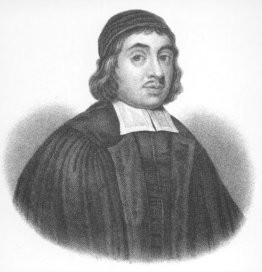
Precious Remedies Against Satan's Devices, Chapter 7
2 Corinthians 2:11; Ephesians 6:11-12
In Chapter 7 of "Precious Remedies Against Satan's Devices," Thomas Brooks addresses the dangerous influence of false teachers as agents of Satan seeking to deceive the faithful. He illustratively outlines seven characteristics that identify these false prophets, including their tendencies to pursue popularity over truth, undermine true servants of God, invent misleading doctrines, prioritize trivial matters over essential gospel truths, and exploit their followers. Scripture references such as Matthew 7:15 and 2 Peter 2:1-3 support these points by warning against false prophets and their deceptive practices. The practical significance of Brooks' sermon lies in equipping believers to discern true teaching from error, urging them to remain vigilant against the spiritual dangers posed by false teachers in both historical and contemporary contexts.
“False teachers are men-pleasers. Such are not true teachers. They preach more to please the ear than to profit the heart.”
“Flattery undid Ahab and Herod, Nero and Alexander. Such smooth teachers are sweet soul poisoners.”
“False teachers cover and color their dangerous principles and sole deceptions with very fair speeches and plausible pretenses.”
“False teachers strive more to win over men to their opinions than to better them in their lives.”
The Bible warns against false teachers, describing them as men-pleasers and soul murderers who promote error and lead people away from the truth.
Matthew 7:15, Jeremiah 23:13, Micah 3:5, Galatians 1:10
False teachers can be identified by their love for flattery, disregard for Scripture, and focus on trivial matters over essential truths.
Matthew 23:23, Jeremiah 14:14
Bewaring of false teachers is crucial because they lead believers away from the truth, potentially jeopardizing their spiritual lives and eternal destiny.
2 Peter 2:1-3, 1 Thessalonians 2:1-4
Auto-generated transcript • May contain errors

Comments
Your comment has been submitted and is awaiting moderation. Once approved, it will appear on this page.
Be the first to comment!