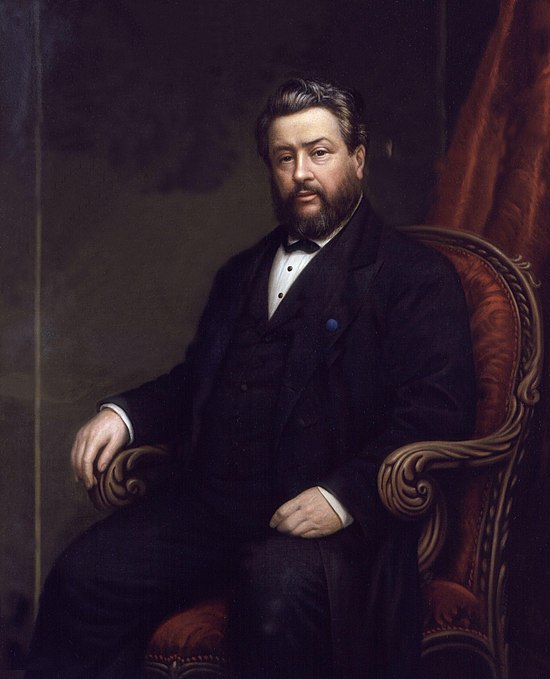
The sermon titled "The Holy Spirit and the One Church" by C. H. Spurgeon centers on the essential role of the Holy Spirit in the life of believers and the unity of the Church. The main theological assertion is that the presence of the Holy Spirit distinguishes true believers from mere natural men who rely solely on human instincts. Spurgeon highlights three critical points: the necessity of having the Holy Spirit for salvation, the caution against self-deception in moral living without the Spirit, and the suspicion of those who separate themselves from the community of faith without justification. He supports his arguments through references to Jude 19 and the metaphorical descriptions of the Holy Spirit's work as wind, fire, oil, and water, illustrating the transformative and purifying effects of the Spirit. The sermon underscores the importance of spiritual discernment and emphasizes that true membership in Christ's Church is contingent upon possessing the Holy Spirit, which is vital for both individual salvation and the unity of the Church.
Key Quotes
“Do we have the Holy Spirit within us? This is a question so important that the philosopher may well suspend all his other investigations just to find an answer to this question for his own personal benefit.”
“He that does not have the Spirit, be he ever so orthodox, be his creed as correct as scripture… is still unsaved.”
“Once the Holy Spirit gets into our hearts, He will not rest until he has turned every sin out.”
“The Church is a company of men and women who have received the Holy Spirit. If you cannot say that you have the Holy Spirit, go your way and tremble.”
The Bible teaches that the Holy Spirit is essential for true salvation and spiritual life.
The Holy Spirit is described in Scripture as the divine presence that transforms and empowers believers. In John 3:5, Christ states that one must be 'born of water and the Spirit' to enter the kingdom of God, highlighting the necessity of the Spirit's work in regeneration. The Holy Spirit operates in a mysterious and supernatural manner, akin to wind, fire, oil, and water, each conveying different aspects of His transformative power in the lives of believers. Without the Holy Spirit, one's spiritual state is in jeopardy, revealing that one's nature and actions are merely driven by natural instincts devoid of divine influence.
John 3:5, Ephesians 1:13-14
The presence of the Holy Spirit is evident through transformation, conviction of sin, and joy in the believer's life.
To discern whether one possesses the Holy Spirit, a believer should observe the fruits of the Spirit actively working in their life. Key indicators include a deep conviction of sin and a subsequent desire for holiness, as the Spirit purifies the heart like fire (1 Peter 1:7). Additionally, the believer will experience the comforting presence of the Spirit, which is symbolized as oil in Scripture, providing inner joy and peace that transcends circumstances (John 14:16-17). If these attributes are absent, one must critically examine their spiritual condition and seek the Lord earnestly. It is crucial to affirm, as per Romans 8:9, that 'if anyone does not have the Spirit of Christ, he does not belong to him.'
1 Peter 1:7, John 14:16-17, Romans 8:9
The Holy Spirit is essential for salvation, sanctification, and empowering believers for service.
The significance of the Holy Spirit for Christians cannot be overstated. Firstly, He is the agent of regeneration; without the Holy Spirit, one cannot be born anew, as indicated in John 3:6. This rebirth is fundamental for entering into a relationship with Christ. Furthermore, the Holy Spirit plays a critical role in sanctification, purifying the believer and guiding them toward holiness (2 Corinthians 3:18). Lastly, the Holy Spirit empowers believers for ministry, equipping them with spiritual gifts for service within the body of Christ (1 Corinthians 12:7). Therefore, the Holy Spirit is indispensable for both personal faith and the communal life of the Church.
John 3:6, 2 Corinthians 3:18, 1 Corinthians 12:7
Being filled with the Holy Spirit refers to a believer's total submission to His influence and guidance.
Being filled with the Holy Spirit is not a one-time event but an ongoing state of being where the believer yields fully to the will and work of the Spirit. This filling is characterized by active dependence on the Spirit for guidance, resulting in a life marked by obedience, fruitfulness, and bold witness (Ephesians 5:18). Just as wine intoxicates, the Holy Spirit fills and empowers a believer's heart, enabling them to live out their faith authentically. Moreover, this fullness often leads to manifestations of spiritual gifts, encouraging growth within the Church. Thus, continual filling is essential for spiritual vitality and effective ministry.
Ephesians 5:18, Galatians 5:22-23
Comments
Your comment has been submitted and is awaiting moderation. Once approved, it will appear on this page.
Be the first to comment!
